Alaskan Klee Kai
An active small northern companion who benefits from secure outings, gradual social experiences, cooperative care, and appropriate health screening.
How these guides are researched and reviewed
- UKC sizes
- Toy, Miniature, Standard
- AKC height range
- 12–17 in at the shoulder
- Care priorities
- Security, confidence, and company
General information for owners. These articles have not been reviewed by a veterinarian. Medical decisions need your dog's history and an examination.
Living with an Alaskan Klee Kai
An Alaskan Klee Kai needs a household willing to support an active small dog who may be cautious about unfamiliar people and places. Appearance draws attention, but being repeatedly approached can be difficult for a reserved individual. Choose a dog because its needs fit your routine, including quiet space, secure outings, gradual learning, and care during absences. A compact body does not establish an easy social life or a low exercise requirement.
Before placement, describe an ordinary day to the breeder or rescue. Mention shared entrances, visitors, children, resident animals, and the hours when nobody is home. Ask what the individual does in those situations and how it recovers when worried. An adult with a detailed foster history can offer different information from a puppy whose behavior is still developing. Make room for uncertainty and avoid committing to a plan that requires immediate confidence everywhere.
A distinct companion breed from Alaska
Linda Spurlin and her family developed the Alaskan Klee Kai in Alaska as a companion-sized northern dog. The United Kennel Club's account describes a deliberate breeding program, with dogs becoming available to others in the late 1980s. The breed has its own standard and history. It is not a general label for any small Husky-looking dog or for a recent cross involving a Siberian Husky.
That distinction matters when searching for a puppy. Ask for documented parentage, the relevant registry, and an explanation of the breeding program. A facial mask and curled tail cannot verify ancestry. For a rescue dog with uncertain background, the lack of a precise label does not prevent a thoughtful placement. Observed behavior, medical findings, and a realistic account of care needs remain useful even when someone cannot confirm the pedigree.
Size descriptions depend on the registry
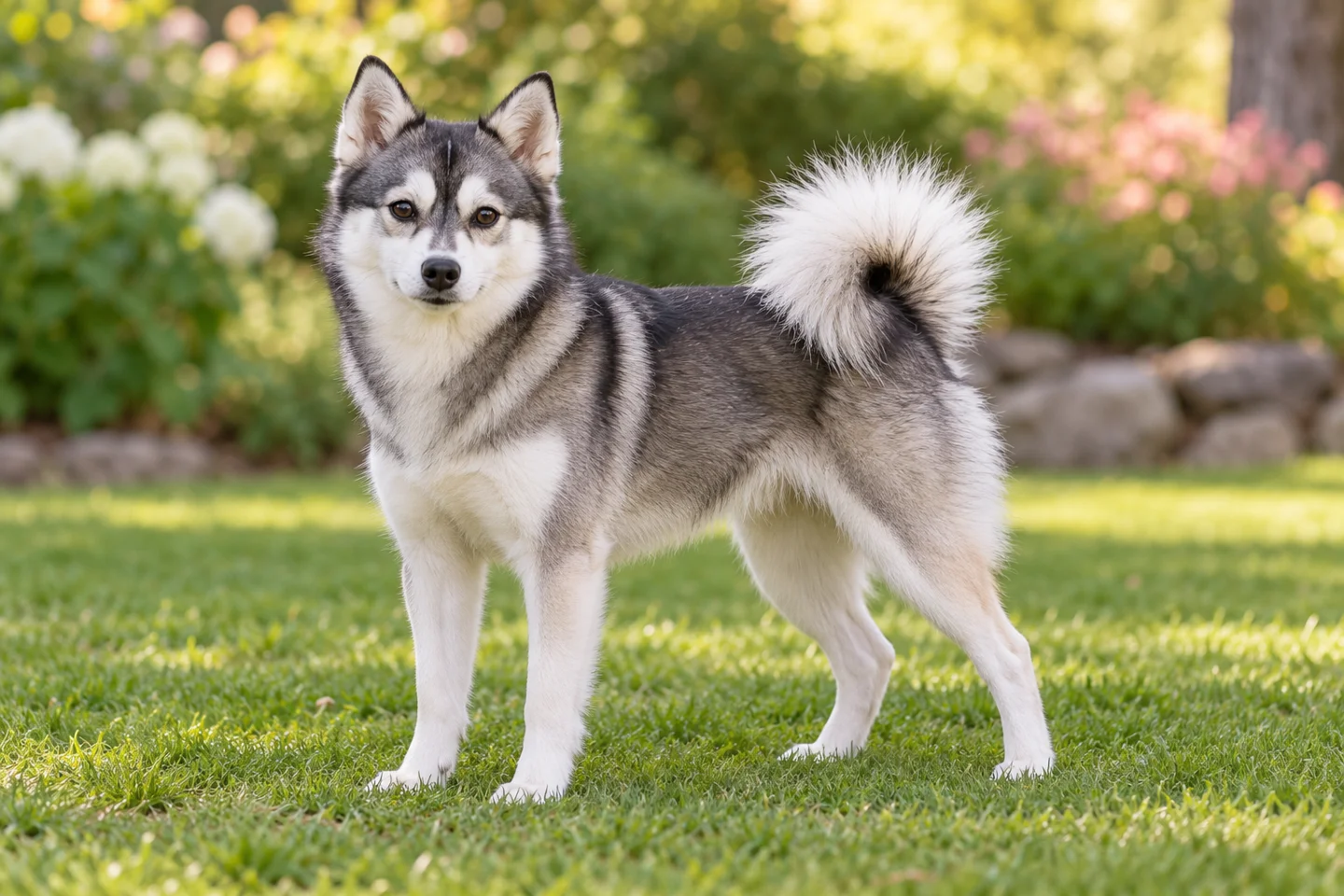
UKC describes Toy dogs up to and including 13 inches at the shoulder, Miniatures over 13 through 15 inches, and Standards over 15 through 17 inches. The AKC standard gives an overall height range of 12 to 17 inches rather than those three divisions. Identify the standard being discussed so the labels do not sound like separate breeds or a universal system used by every organization.
A puppy's adult size still carries uncertainty. Ask about the parents and relatives without treating an estimate as a promise. Evaluate body condition with a veterinarian rather than trying to keep the dog within a preferred label through feeding. A healthy companion's care should follow its actual frame and development. An advertisement emphasizing exceptional smallness needs the same careful questions about health, behavior, and long-term support as any other placement.
Coat, markings, and realistic images
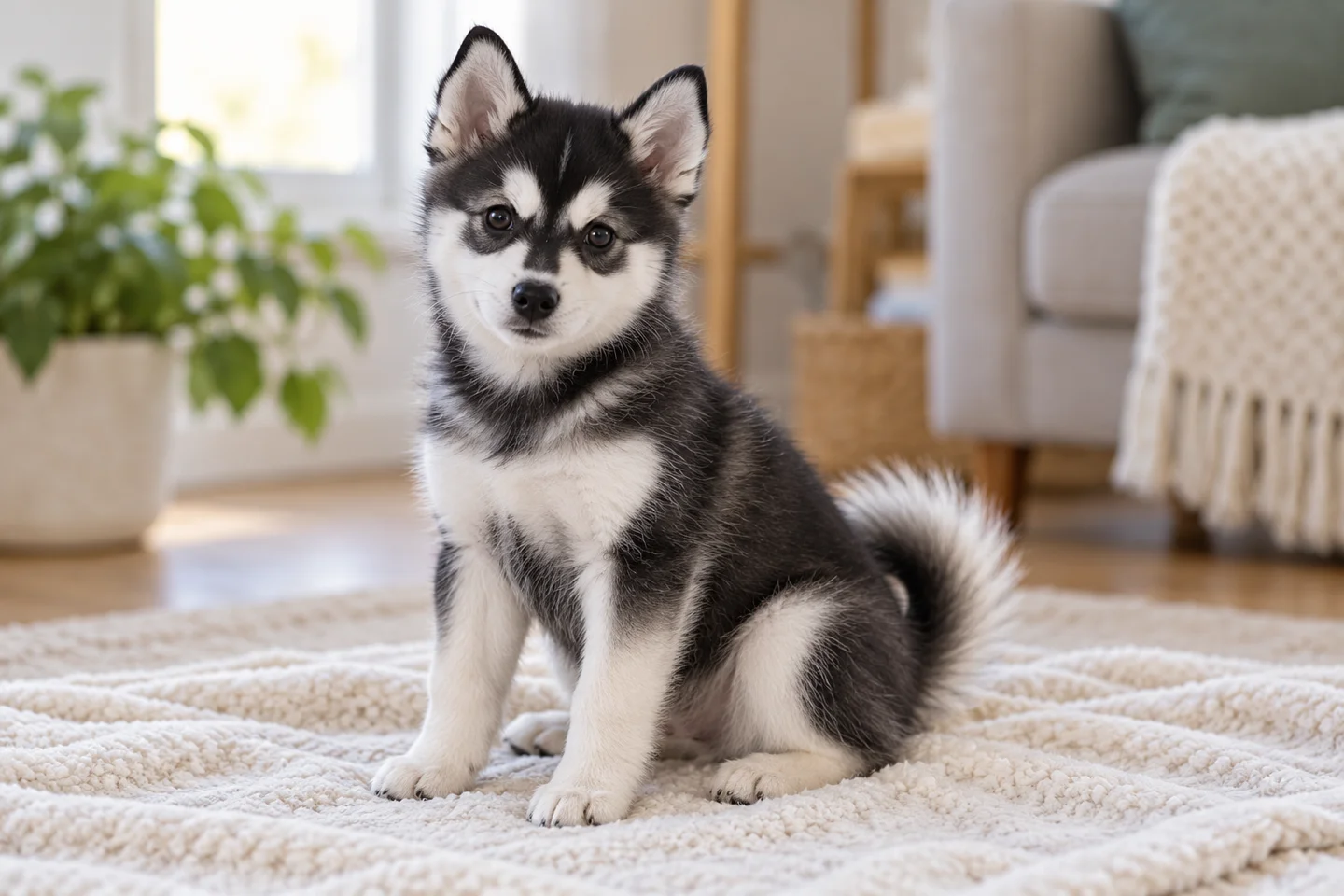
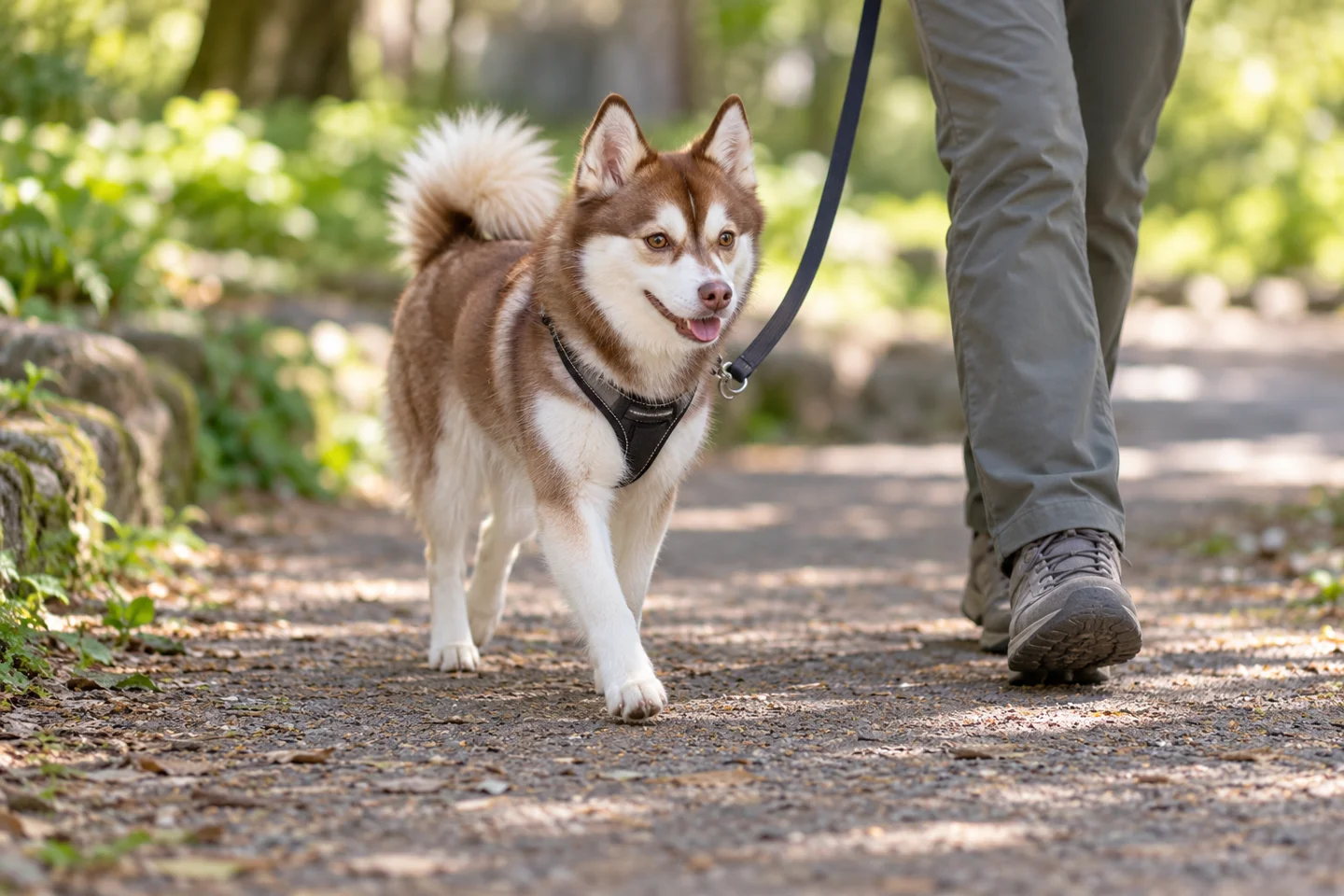
The breed has a double coat, upright ears, a wedge-shaped head, and contrasting facial and body markings. Black and white, gray and white, and red and white are familiar patterns in the standard. Eye color can vary. The images in this guide show different coat colors, with dark eyes, without suggesting that those eyes are required for every Alaskan Klee Kai.
These are generated breed illustrations rather than documentary photographs. They cannot establish the real size, pedigree, medical status, or temperament of a particular dog. Meet the animal and examine its records instead of choosing through resemblance to a picture. A coat pattern does not predict confidence with strangers, tolerance of grooming, or compatibility with another pet. Those questions need observations from the dog's actual life.
Secure exits and well-fitted equipment
Small size can make an escape route easy to overlook. Check fence gaps, spaces beneath gates, damaged screens, and doors that visitors may leave ajar. The Alaskan Klee Kai Association of America cautions that the breed can be skilled at escaping and running. Supervise access when the dog first arrives and review boundaries as it learns about the property. A boundary that worked for a previous pet may need changes.
Fit harnesses and collars carefully and check the arrangement in a controlled space. A frightened dog may move backward or twist, so ask for help if equipment can slip off. Attach the lead before opening an exterior door and keep identification current. Teach a pause at the entrance as an additional skill. The physical setup should continue protecting the dog during a sudden noise, an unexpected visitor, or a moment when attention slips.
Children, larger dogs, and other animals
Children should learn to let the dog approach, avoid hugging and carrying, and leave meals and sleep alone. A retreat must remain available without a child following. Adults need to supervise actively and separate when their attention shifts. An Alaskan Klee Kai who tolerates familiar children may still be uncomfortable with a visiting group. Make the plan around the current interaction rather than assuming past tolerance covers every situation.
Choose dog partners with attention to size, movement, and consent to play. A larger dog's enthusiasm can overwhelm or injure a small companion. Begin controlled introductions and watch for hiding, stiffening, or repeated escape attempts. Cats and smaller pets need secure separation and appropriate escape routes. Northern ancestry does not tell you exactly how the individual will behave, but it is a reason to ask about pursuit rather than assuming appearance or small size makes access safe.
Aggression, fear, and protecting choice
A worried Alaskan Klee Kai can growl, snap, or bite. Do not dismiss the behavior as cute or insist that the dog accept handling because it is small enough to restrain. Move away from the pressure and examine the circumstances. Was a stranger reaching, was escape blocked, or did touching an area appear painful? Precise observations help a professional assess the problem and help you prevent another incident.
Food guarding and handling concerns need their own plans. Avoid taking possessions repeatedly as a test, provide quiet meals, and teach exchanges through achievable rewarded practice. New irritability deserves a veterinary examination. If there is a bite history, discuss the actual event and management with a qualified professional before arranging greetings. A small dog still needs safeguards that protect both its welfare and the people or animals around it.
Training confidence in manageable steps
Begin in places where the dog can pay attention and feel comfortable. Reward checking in, moving with a loose lead, returning when called, and settling on a familiar mat. The American Veterinary Society of Animal Behavior recommends reward-based methods. Clear tasks and useful rewards support learning without adding intimidation. If the dog repeatedly withdraws or cannot recover, make the environment easier before asking for more performance.
For unfamiliar situations, let observation count as participation. Standing at a comfortable distance from a quiet street may be more useful than being carried into a busy market. Teach equipment fitting and brief handling through voluntary approaches and small steps. When progress stalls, look at fear, fatigue, pain, and the difficulty of the task. Repeating a cue loudly does not resolve those causes or tell the dog how to feel safer.
Visitors and the pressure of public attention
Prepare a simple instruction for visitors: ignore the dog initially and allow distance. Use a barrier when necessary so the dog does not need to navigate a crowd near the front door. A guest can enjoy a visit without touching the animal. Avoid encouraging people to lure a reluctant dog into reaching distance and then pet it unexpectedly. The option to leave should remain clear.
On outings, move away from unwanted attention before it becomes overwhelming. The dog does not owe a stranger a greeting or a photograph. Reward calm observation and choose quieter routes while building comfort. Persistent fear or a worsening response deserves veterinary and behavior support. The aim is a dog who can cope with its daily environment, not a public demonstration that every unfamiliar person can handle it.
Exercise, enrichment, and recovery
Plan activity around the individual's fitness, age, health, and weather. Walks should provide time to sniff and explore as well as move. A healthy adult may enjoy suitable training games, hikes, or other activities introduced gradually. A puppy needs age-appropriate movement and plenty of rest. Avoid using a small companion's enthusiasm as a reason to expect it to complete an adult endurance schedule.
Offer manageable searches, food puzzles, and play at home when the dog enjoys them safely. Check toys for damage and supervise new items. Choose secure areas for off-lead activity and do not assume recall will hold when wildlife appears. More stimulation is not always the answer to restlessness. Review sleep, worry, and physical comfort when the dog struggles to settle despite a busy day.
Vocal behavior and time apart
Some Alaskan Klee Kai use a wide range of vocal sounds. Learn the context rather than assuming every sound is an amusing conversation. Alerting at a window, frustration during preparation for a walk, and distress when alone can require different responses. Reducing access to a triggering view or making departures less chaotic may help a particular situation. Observe what changes instead of adding more shouting to the sound.
Build time alone through brief, manageable practice in a familiar area. Use a camera when helpful to see whether the dog actually rests. Repeated pacing, sustained distress vocalization, or attempts to escape needs attention and a support plan. Arrange care while addressing persistent difficulty. A crate should not become a place where a distressed dog repeatedly injures itself trying to get out. Discuss the safest arrangement with the veterinarian and a suitable behavior professional.
Grooming, shedding, and comfortable handling
Brush and comb the double coat regularly, with more attention when loose undercoat increases. Check beneath equipment and in areas where tangles can form. Use tools appropriately and avoid scraping the skin or pulling on a tight mat. Ask a groomer to demonstrate a manageable technique. A small body can still require a meaningful grooming routine, especially when a nervous dog needs short sessions and gradual practice.
Routine shaving is not a solution to shedding or summer heat. Discuss medical clipping with the veterinarian when needed. Introduce nail care, tooth brushing, ear observation, and body checks with small rewarded steps. Pain, odor, redness, or a sudden objection to handling deserves assessment. A care routine should make discomfort easier to notice, rather than teaching the household to accept a struggle every time equipment appears.
Feeding and monitoring body condition
Choose a complete diet suited to life stage and individual needs. Measure meals and include training rewards in the daily intake. A succession of small snacks can be significant for a small dog, particularly when several people offer them. Ask the veterinary team to show you how to assess body condition beneath the coat. Track changes without turning a preferred size category into a weight-loss target.
Keep unsafe foods, rubbish, and medication inaccessible. Discuss persistent changes in appetite, thirst, digestion, or weight instead of switching foods repeatedly without a plan. A medical condition can change nutritional needs, including which treats fit the diet. Supplements should meet an identified need with professional advice. A broad promise about immunity or coat quality does not establish that a product is appropriate for this dog.
Health screening and the records to request
The Alaskan Klee Kai Club of America's September 2024 statement recommends thyroid, patella, cardiac, and specialist eye screening for breeding dogs, and lists Factor VII DNA testing as optional. Request the reports, dates, and the dogs' identification. Ask which cardiac assessment was performed and which laboratory interpreted testing. A general promise of health does not show the actual methods or findings.
Read results even when a CHIC number is supplied. The number records completion and disclosure of specified testing, not a guarantee that every result was normal. Clinical examinations and DNA tests address different questions. Ask about illness in relatives and any further assessment recommended for the individual. For rescue dogs with gaps in the history, gather what is available and make a care plan based on the present examination rather than treating uncertainty as proof of good or poor health.
Factor VII deficiency and procedure planning
UC Davis describes Factor VII deficiency as an inherited blood-clotting disorder and lists Alaskan Klee Kai among breeds appropriate for testing. A dog may need a specific clinical plan when bleeding risk is relevant. Ask the veterinarian to interpret the actual result and make sure it is available before a planned procedure. The club's optional screening designation does not mean an existing abnormal result should be ignored.
Report unusual bleeding, easy bruising, or a prior complication during treatment. Significant bleeding needs prompt veterinary attention. Avoid assuming a healthy appearance rules out a clotting concern, and do not change medication without advice. If a procedure is planned, provide all previous findings rather than relying on the clinic to retrieve them automatically. The practical aim is an informed plan for this dog, including preparation and monitoring appropriate to its results.
Kneecaps, eyes, thyroid, and medical changes
Patella assessment concerns the position and function of the kneecap. A skipping step or intermittent held-up leg warrants examination rather than an assumption that a small dog naturally moves that way. Eye redness, squinting, altered vision, or apparent pain also needs prompt advice. These signs can have multiple causes, and the correct response depends on the examination. Avoid copying another dog's treatment because the outward sign looks similar.
Thyroid results need clinical interpretation alongside history and other findings. Keep records of changes in activity, body weight, coat, and appetite so you can describe a pattern. Collapse, severe breathing difficulty, poisoning, or sudden inability to stand requires urgent advice. Know where emergency care is available and how to transport the dog safely. Previous screening is useful information for a clinician, but it cannot make a new emergency impossible.
Mixes, miniature Husky labels, and uncertainty
A cross involving an Alaskan Klee Kai can inherit varied traits from both parents. A Pomeranian and Husky cross, commonly called a Pomsky, is a different cross rather than another name for this breed. Ask sellers to explain documented parentage and registration plainly. Treat vague miniature Husky advertising as a reason for questions, not as enough information to determine ancestry, adult size, or future behavior.
Mixed ancestry does not guarantee easier social behavior, normal joints, or a coat that an allergic person will tolerate. Consider known parental health concerns and the actual dog's findings. A rescue may have good information about household routines while ancestry remains uncertain. Use that evidence honestly. A successful placement depends on a manageable care plan and suitable behavior, not on obtaining a more appealing label for the same animal.
Choosing a source and planning the long term
Ask a breeder about early handling, manageable exposure to ordinary sounds, screening, and support if problems develop. Read the agreement and clarify return arrangements. Avoid being rushed by unusual coloring, eye color, an especially small puppy, or immediate availability. For adoption, ask which observations were made in a home and which details are unknown, including time alone, escape attempts, handling, and animal relationships.
Budget for training support, preventive care, grooming, suitable holiday care, and unexpected illness. Review insurance terms and obtain local estimates. Choose a backup carer who understands the dog and can follow its boundaries. In later life, adapt footing, access, activity, and grooming duration to comfort. A small dog still needs opportunities to make choices, explore, and receive clinical attention when ordinary behavior or movement changes.
A dogsDating introduction with less pressure
Describe your Alaskan Klee Kai's preferred pace, comfortable distance, play style, and any handling or medical restrictions in its dogsDating profile. Choose an owner willing to respect those details. Keep exact home coordinates private and select a public meeting place with space and an easy exit. A quiet walking companion may be a better fit than a dog who immediately seeks close physical play.
Begin with parallel walking under separate handlers and let the dogs observe without forced contact. Skip shared food and toys. If both remain loose and able to disengage, allow brief investigation before moving on. Increase distance or end the meeting when either freezes, hides, repeatedly pursues, or tries to escape. A comfortable first walk can be enough. Let the next plan follow the dogs' responses rather than a demand for immediate friendship.
Sources and editorial notes
Sources checked October 21, 2026. Breed measurements describe reference ranges, not a diagnosis or an individual dog's ideal weight. Images are AI-generated breed illustrations and do not document a particular dog or health condition.
- Alaskan Klee Kai Club of America: AKC breed standard
- VCA Animal Hospitals: Hypoallergenic dog breeds
- American Kennel Club: Alaskan Klee Kai care and characteristics
- Orthopedic Foundation for Animals: CHIC program and interpretation of numbers
- UC Davis Veterinary Genetics Laboratory: Factor VII deficiency
- American Kennel Club: Care of double-coated dogs
- VCA Animal Hospitals: Common emergencies in dogs
- VCA Animal Hospitals: General feeding guidelines for dogs
- VCA Animal Hospitals: Food aggression in puppies
- Alaskan Klee Kai Club of America: Health statement approved September 30, 2024
- Alaskan Klee Kai Association of America: Frequently asked questions
- VCA Animal Hospitals: Aggression toward unfamiliar dogs, diagnosis
- PetMD: Pomsky parentage, health, and care
- VCA Animal Hospitals: Luxating patella in dogs
- United Kennel Club: Alaskan Klee Kai standard and history
- Cornell University College of Veterinary Medicine: Canine thyroid testing
- AVSAB: Humane Dog Training Position Statement
Keep getting to know dogs.
Read another guide or return to your dogsDating community.
Explore breed guidesBack to dogsDating