American Bulldog
A strong farm-utility breed whose care needs reliable handling, suitable activity, comfortable breathing and movement, and clear health records.
How these guides are researched and reviewed
- Identity
- Distinct from American Bully and Bulldog
- Coat
- Short; regular skin checks needed
- Care priorities
- Handling, function, and inherited health concerns
General information for owners. These articles have not been reviewed by a veterinarian. Medical decisions need your dog's history and an examination.
Living with an American Bulldog
An American Bulldog needs a home prepared for a strong, substantial dog and the ordinary work that comes with it. Think about the narrow pavement outside, the door opened for a delivery, the visitor carrying food, and the person available when the usual handler is ill. Set up those situations before choosing a puppy. A workable routine should remain safe when people are busy, the weather is poor, or the dog is excited.
Meet the individual and ask how it behaves in daily life. An adult with a detailed foster history may offer more information about visitors, handling, and other animals than a puppy can provide. A puppy brings different demands, including frequent care and uncertainty about adult behavior. Choose the life stage and needs you can support rather than expecting training to turn any dog into the companion you imagined.
Identity, farm work, and similar names
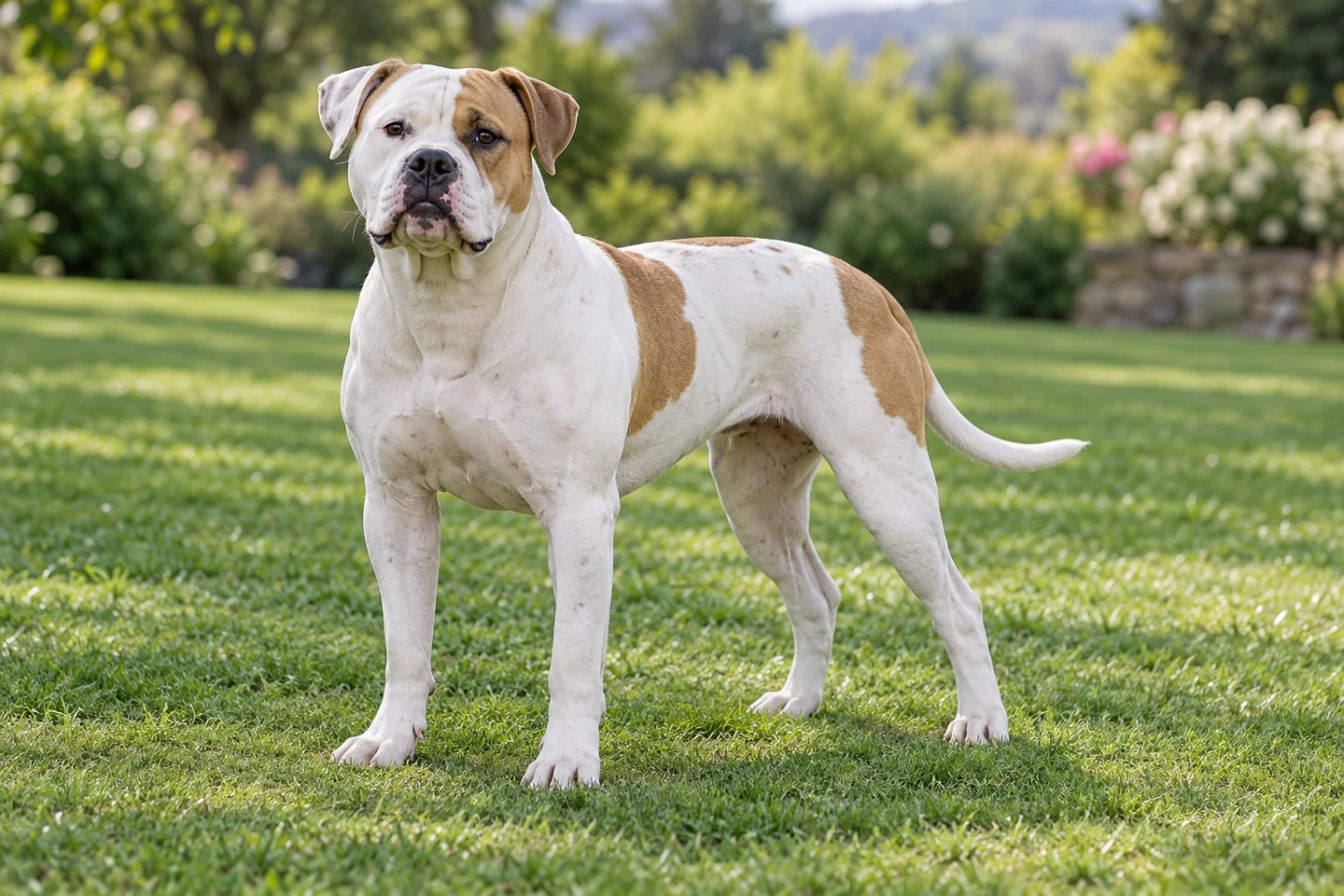
The American Bulldog developed in the United States from working bulldog stock, with a history of farm utility work. It is distinct from the Bulldog, French Bulldog, and American Bully. Similar words in advertisements can conceal different pedigrees and physical types, so ask which breed and registry the source means. A large white dog with a broad head cannot be assigned an exact background from appearance alone.
The United Kennel Club describes lines often called Johnson and Scott, with differences in build and head proportions. Many American Bulldogs combine lines. These names are useful historical context, but they are not separate species or a promise about temperament. The word hybrid in discussions of these lines may mean a combination within American Bulldogs. Ask for a clear explanation instead of assuming every use of that word describes a cross with another breed.
Build, muzzle, and comfortable movement
Look for an individual who can walk, turn, rise, breathe, and rest comfortably. A muscular appearance should not require excess weight or exaggerated proportions. Head and muzzle shape vary, which makes direct assessment important. Ask about noisy breathing, limited stamina, previous joint problems, and any surgery. A seller's statement that a feature is typical does not establish that it is comfortable or harmless.
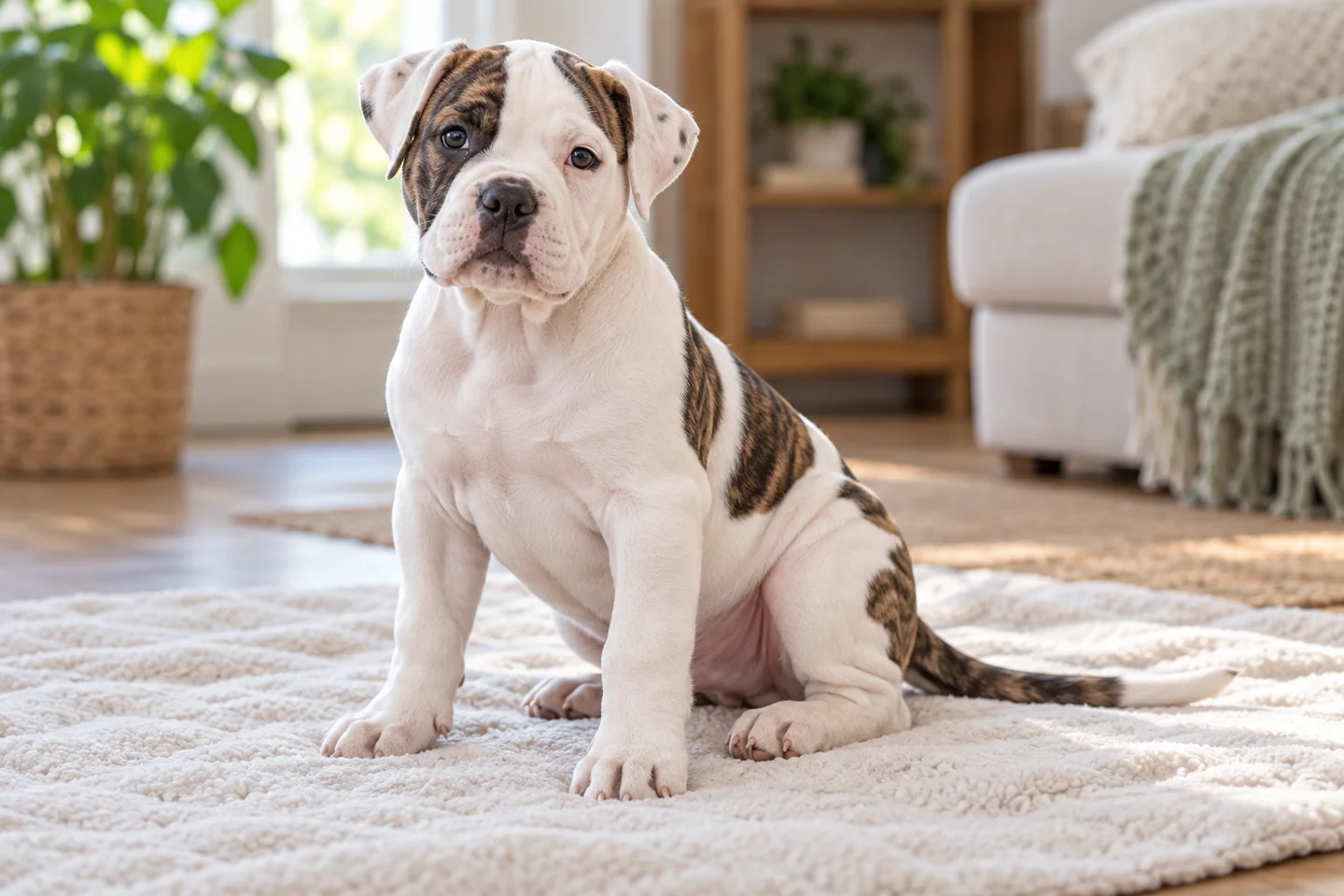
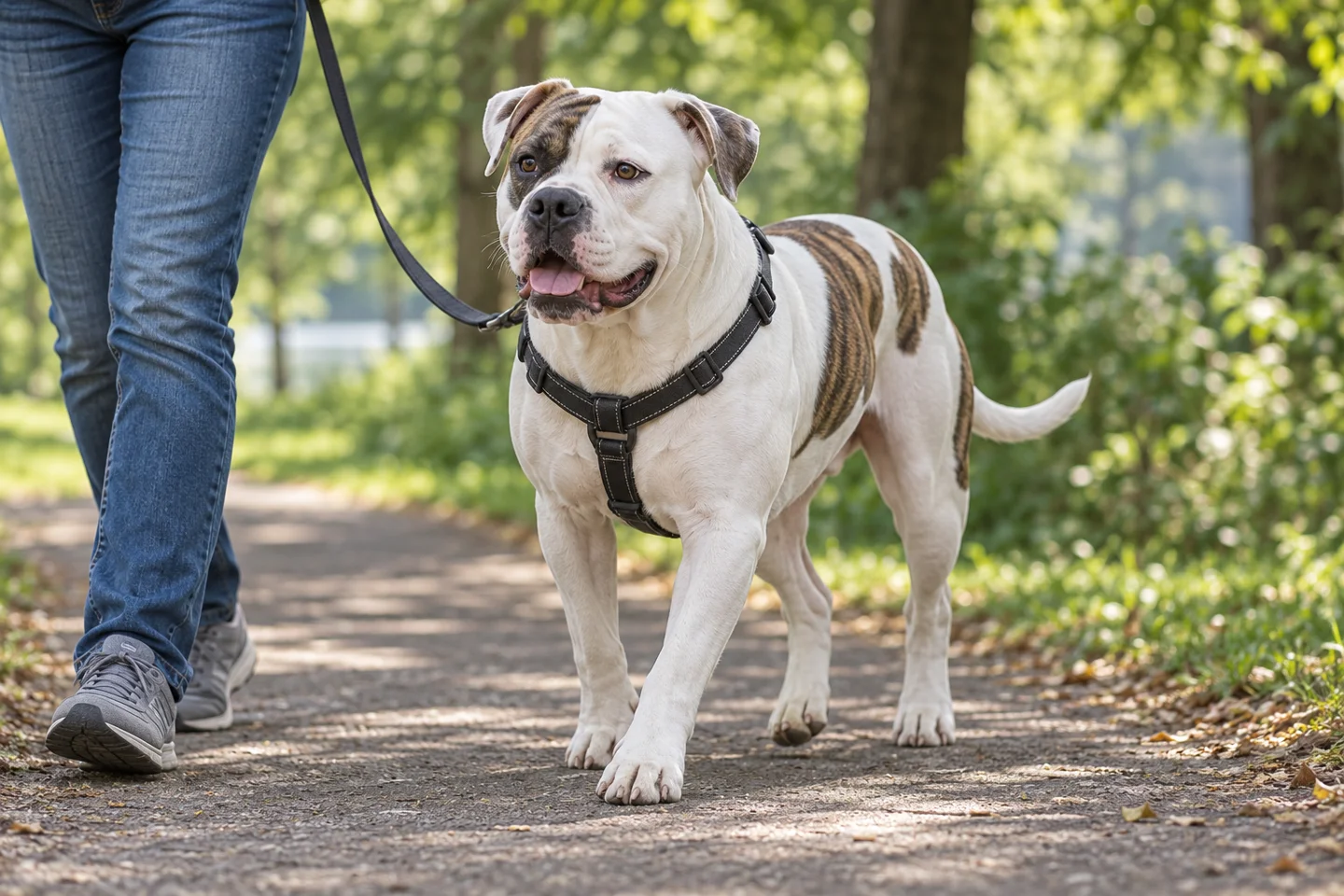
The images in this guide are generated breed illustrations with moderate anatomy, natural ears, and long tails. They do not document an actual dog's health, pedigree, or temperament. Use them to understand general appearance, then examine real records and movement. A posed image can conceal an awkward gait or difficulty recovering from mild effort. Arrange a veterinary assessment when something concerns you before making a commitment or beginning a new exercise plan.
Entrance routines and household boundaries
A gate or separate room can make the entrance manageable while someone brings in shopping or admits a visitor. Practice going to that space on calm days, using rewards and familiar comforts. Keep a lead within adult reach and check equipment before it is needed. Avoid depending on grabbing the collar of an excited dog while the exterior door remains open.
Inspect garden boundaries, including latches, weak panels, gaps, and places where digging could create an exit. Explain the arrangement to guests and contractors. Give the dog a sleeping place outside the busiest route through the home and protect it from repeated disturbance. The aim is a predictable routine that prevents conflict and escape. It also gives visitors and household members a way to move comfortably without requiring an immediate greeting.
Temperament, visitors, and settling
Ask for examples of the dog's behavior rather than descriptions such as loyal or protective. What happens when an unfamiliar adult enters? Can the dog rest behind a barrier? Does it recover after a surprise? A responsible source should distinguish direct observations from assumptions. Do not choose a companion primarily to intimidate strangers or encourage the dog to decide who belongs in the home.
Teach calm household time as well as activity. A dog who has had a suitable outing can learn to rest while people cook or work. If it repeatedly paces, patrols, or cannot relax, review sleep, anxiety, stimulation, and physical comfort. Seek help when the pattern persists. New withdrawal or irritability also deserves medical attention, particularly when it appears alongside changes in appetite, movement, or tolerance of touch.
Children and other household animals
Children need an attentive adult, clear boundaries, and a dog-free place for energetic games. Prevent climbing, hugging, grabbing, or interference with sleep and food. A strong dog's friendly movement can still knock a child down. Provide a retreat children cannot enter, and separate when adult attention shifts. A previous pleasant interaction does not remove the need to supervise the next one.
Discuss animal relationships in detail before placement. Ask about pursuit, previous fights, guarding, and actual experience with cats or small dogs. Introduce residents gradually and prepare reliable separation. Some dogs will need a home without particular animals, and that limit should be respected. Do not rely on the resident pet to tolerate pressure indefinitely. Shared living needs comfortable rest, individual meals, and a way for every animal to disengage safely.
Aggression, guarding, and bite prevention
Assess risk from the dog's history, current behavior, health, and the situation. Neither a reassuring breed description nor a frightening stereotype establishes an individual's safety. Freezing, rigid posture, hard staring, growling, snapping, and attempts to escape call for reduced pressure and space. Stop the interaction rather than asking someone to continue touching or approach to prove confidence.
Manage meals and valued items to prevent disputes. Repeatedly removing a bowl as a test can add conflict without teaching a useful response. Teach exchanges at a manageable level and seek professional help for established guarding. Sudden handling sensitivity needs a veterinary examination. If there has been a bite or serious attempt, describe the circumstances honestly and obtain a plan before repeating them. The household must be able to follow safeguards consistently, including during visits and absences.
Training useful skills with rewards
Teach loose-lead walking, returning when called, waiting at thresholds, and resting on a mat where distractions are low. Reward small successes and increase difficulty gradually. The American Veterinary Society of Animal Behavior recommends reward-based methods. A powerful dog needs clear teaching and practical management. Using confrontation to force compliance can introduce fear while leaving the task unexplained.
Practice turning away during quiet walks so you have a familiar response before another dog appears nearby. Use leads and secure space where recall is uncertain. Handling practice can include voluntary approach to a harness and brief touches followed by a pause. If a qualified professional recommends a basket muzzle, introduce it gradually and check fit. Equipment should support a complete plan rather than becoming permission to force the dog into situations it cannot manage.
Exercise, development, and recovery
Match activity to age, fitness, health, and weather. A healthy adult may enjoy exploratory walks, appropriate games, and training that uses attention as well as strength. Growing dogs need movement and play without an adult endurance schedule. Discuss running, repeated jumping, or demanding sport with the veterinarian. Enthusiasm does not establish that joints, breathing, or conditioning are ready for every task.
Allow pauses and watch recovery after an outing. New stiffness, limping, reluctance to rise, weakness, or unusual fatigue needs assessment. Do not exercise through a problem to build toughness. Choose secure footing and increase effort gradually after a break. Sniffing, easy searches, and quiet company can provide useful variety. The routine should leave the dog able to rest comfortably, rather than needing exhaustion to prevent activity indoors.
Breathing, heat, and body condition
A shortened muzzle can be accompanied by airway problems in some dogs. Cornell's veterinary guidance describes brachycephalic obstructive airway syndrome and the need to assess affected individuals. Persistent noisy breathing, difficulty sleeping comfortably, or poor recovery from mild effort deserves discussion with the veterinarian. Avoid treating those signs as amusing breed sounds or assuming that every American Bulldog has the same breathing capacity.
Choose cooler hours, shade, drinking water, and an easy way home during warm weather. Reduce effort when conditions or the dog's response make the plan unsuitable. Never leave a dog in a parked vehicle. Severe breathing difficulty, marked weakness, collapse, or suspected heat illness requires urgent veterinary advice. Stop activity and contact the clinic promptly for immediate instructions while arranging appropriate transport. Previous success on a route does not make today's conditions safe.
Grooming, folds, and skin observations
A short coat still sheds and needs regular gentle brushing. Check beneath the harness and collar and around any skin folds. Keep areas clean and dry using the approach appropriate for the individual. Persistent odor, redness, discharge, itching, or soreness requires examination. Repeatedly trying stronger cleaning products can irritate skin and delay identifying the cause.
Look at paws, nails, ears, and mouth as part of ordinary care. Introduce tooth brushing and nail work through short, rewarded sessions. A dog who suddenly resists a familiar task may be painful. Ask for help before handling becomes a recurring struggle. Record a dated photograph of a changing skin area when useful, but do not use a picture to decide that a lump, rash, or hair-loss pattern is harmless.
Feeding a growing or adult dog
Use a complete diet suitable for the dog's life stage and review the amount with your veterinarian. Measure meals and include training rewards, chews, and household snacks. Track growth and body condition without feeding toward maximum bulk. A muscular dog can also carry excess fat, so ask to be shown how to assess condition by touch and outline.
Keep a shared record when several people feed or give medication. Secure rubbish, unsafe foods, and tablets, including items left in visitors' bags. If appetite, thirst, weight, or digestion changes, describe the pattern instead of repeatedly changing foods without a plan. Supplements should address an identified need with professional guidance. An established medical condition may also affect treats and other additions, so review the whole intake rather than only the food in the bowl.
Health records and screening questions
Ask which clinical and genetic assessments were performed, on which dogs, by whom, and when. Request identifiable reports rather than accepting a general promise of health or a screenshot of a panel with no context. Discuss joint evaluation, eye findings, cardiac history, skin disease, and relevant inherited conditions with your veterinarian. The appropriate assessment depends on the dog's background and findings.
Screening and diagnosis answer different questions. Joint imaging, an examination, and a DNA test do not replace one another. Read actual results and discuss illness in close relatives as well as the parents. A normal finding at one time cannot exclude every future problem. For a rescue adult with missing information, state what is unknown and arrange current care around the examination. Missing paperwork is a gap to manage, rather than evidence that every condition is present or absent.
Ichthyosis and inherited neurological disease
Research in American Bulldogs has linked a form of congenital ichthyosis to NIPAL4. This inherited skin condition can affect the skin barrier and produce abnormal scaling. Genetic testing exists for the relevant variant. Scaling has other possible causes too, so ask the veterinarian to assess the dog and interpret the exact test rather than diagnosing from coat appearance or applying an online treatment recipe.
The University of Missouri lists American Bulldog testing for neuronal ceroid lipofuscinosis, designated CLN10. Ask what condition and variant a report covers; a broad claim that a dog is clear of neurological disease is insufficient. New changes in coordination, vision, behavior, or function need examination regardless of parental reports. Clinical signs can have several causes. Give the veterinarian the history and results and follow advice about investigation, referral, and appropriate activity.
Medical changes and emergency planning
Watch how the dog rises, turns, climbs, and recovers after exercise. A reduced willingness to move may indicate discomfort even when the dog remains eager for food. Persistent ear problems, skin changes, altered thirst, or reduced stamina also deserve assessment. Keep observations concise and dated so the clinic can understand progression. Do not attribute every symptom to the breed or assume a large dog is simply lazy.
Establish the nearest emergency service and a way to move an adult who cannot walk. Severe breathing difficulty, collapse, suspected poisoning, or unsuccessful retching with abdominal swelling requires urgent veterinary advice. Keep medication and previous findings accessible. Do not give human pain medicine or leftover prescriptions while deciding what to do. Preparation matters when the usual driver is away or more than one person is needed for safe transport.
American Bulldog mixes and uncertain labels
A cross involving an American Bulldog can vary in body shape, coat, adult size, behavior, and medical needs. Informal mix names do not create recognized varieties of this breed. Ask whether parentage is documented or estimated, and keep that distinction clear. A rescue may know the dog's household behavior much better than its ancestry, which can still support a careful placement.
Consider known parental health concerns alongside the actual dog's findings. Mixed ancestry cannot guarantee an easier temperament, comfortable breathing, normal joints, or compatibility with children and animals. Likewise, a short coat does not guarantee that a person with allergies will tolerate the dog. Assess the actual situation and seek appropriate advice for the affected person. Choose through reliable observations and a care plan that works even when ancestry remains uncertain.
Choosing a source and a supported placement
A breeder should discuss adult temperament, relevant health results, early handling, and support after placement. Ask for time to read records and terms, including return arrangements. Avoid being rushed by color, unusually large size, or a claim that a pedigree makes the dog suitable for every family. The source should be willing to describe limitations and the kinds of home that would be unsuitable.
For adoption, clarify bite incidents, fights, guarding, escape attempts, medication, and veterinary follow-up. Ask which observations came from foster care and which details are unknown. Explain your household accurately, including children who visit and space for separation. Plan a predictable adjustment period with quiet rest and manageable outings. A placement should not depend on the dog tolerating a crowded first weekend or immediate unstructured access to all resident animals.
Housing, costs, travel, and later life
Check applicable housing conditions, insurance terms, and local requirements before placement or travel. Breed labels and physical type can be treated differently in different places, so obtain information relevant to your actual situation. Budget for food, equipment, training help, ordinary care, and unexpected illness. Ask holiday-care providers about individual handling and separation rather than assuming communal play will suit the dog.
Plan transport restraint and vehicle access while the dog is well. A heavy dog with an injury may need a different arrangement and extra help. In later life, review flooring, beds, steps, grooming duration, and comfortable walks. Keep interesting smells, easy learning, and familiar company available as demands change. Report new difficulties instead of accepting reduced function without assessment. A backup carer should understand medication and boundaries before an emergency makes that help necessary.
A practical dogsDating introduction
Describe your American Bulldog's actual play style, comfortable distance, animal relationships, guarding concerns, and exercise restrictions in its dogsDating profile. Keep exact home coordinates private and choose an agreed public place with enough room to separate. Discuss the other dog's size and behavior in advance. A calm walking partner may be more suitable than a dog who immediately seeks close, physical play.
Begin with separate handlers and parallel walking at a comfortable distance. Avoid food, favorite toys, and crowded face-to-face greetings. Allow brief investigation only when both dogs remain loose and can disengage. End the meeting if either stiffens, hides, persistently pursues, or repeatedly tries to leave. Future plans should follow observed comfort and both owners' ability to manage the dogs. A quiet first walk can provide enough useful information without any demand for play.
Sources and editorial notes
Sources checked October 21, 2026. Breed measurements describe reference ranges, not a diagnosis or an individual dog's ideal weight. Images are AI-generated breed illustrations and do not document a particular dog or health condition.
- Cornell University College of Veterinary Medicine: Brachycephalic obstructive airway syndrome
- VCA Animal Hospitals: Hypoallergenic dog breeds
- VCA Animal Hospitals: Common emergencies in dogs
- VCA Animal Hospitals: General feeding guidelines for dogs
- VCA Animal Hospitals: Food aggression in puppies
- Orthopedic Foundation for Animals: Disease screening and research guidance
- VCA Animal Hospitals: Heat stroke in dogs
- United Kennel Club: American Bulldog standard and line history
- VCA Animal Hospitals: Aggression toward unfamiliar dogs, diagnosis
- University of Missouri Canine Genetics Laboratory: DNA tests by breed, including American Bulldog CLN10
- Research study: Autosomal recessive congenital ichthyosis in American Bulldogs and NIPAL4 deficiency
- AVSAB: Humane Dog Training Position Statement
Keep getting to know dogs.
Read another guide or return to your dogsDating community.
Explore breed guidesBack to dogsDating