American Eskimo Dog
A white-coated spitz with three size varieties, an alert voice, and care needs that include eye screening, company, and double-coat grooming.
How these guides are researched and reviewed
- Size varieties
- Toy, Miniature, Standard
- Coat
- White or white with biscuit cream
- Care priorities
- Alert barking, eyes, and coat care
General information for owners. These articles have not been reviewed by a veterinarian. Medical decisions need your dog's history and an examination.
Choosing an American Eskimo Dog
An American Eskimo Dog needs daily engagement, coat care, and a household prepared for an alert companion. Start with your schedule and surroundings. Can the dog get outside comfortably before work? Where will it rest when people arrive? Who provides care during a long absence? A white coat and an expressive face do not answer those questions, and a smaller variety still needs opportunities to learn and explore.
Meet adults when possible and ask about the individual rather than relying on a description of the breed as clever. Ask what happens around visitors, on walks, during brushing, and when the household goes quiet. An adult in foster care may have useful experience in circumstances similar to yours. A puppy requires more frequent care and leaves more uncertainty about adult preferences. Choose a workable arrangement for ordinary weeks, including the days when time and energy are limited.
Identity, history, and the three sizes
The American Eskimo Dog developed from European spitz dogs in the United States. Its name should not be taken as evidence that it was developed by Inuit people or that it is an Arctic sled breed. The AKC places it in the Non-Sporting Group. Historical accounts include performing dogs, but that history does not mean a companion needs to entertain people continuously or accept strangers handling it.
The American standard describes Toy, Miniature, and Standard varieties. Their height ranges are approximately 9 to 12 inches, over 12 through 15 inches, and over 15 through 19 inches at the shoulder. These are varieties of one breed. Ask which variety and registry a source means, and allow uncertainty when estimating a puppy's adult size. A veterinarian should assess healthy weight for the actual frame rather than using a size label as a feeding target.
White coat, dark features, and the real dog
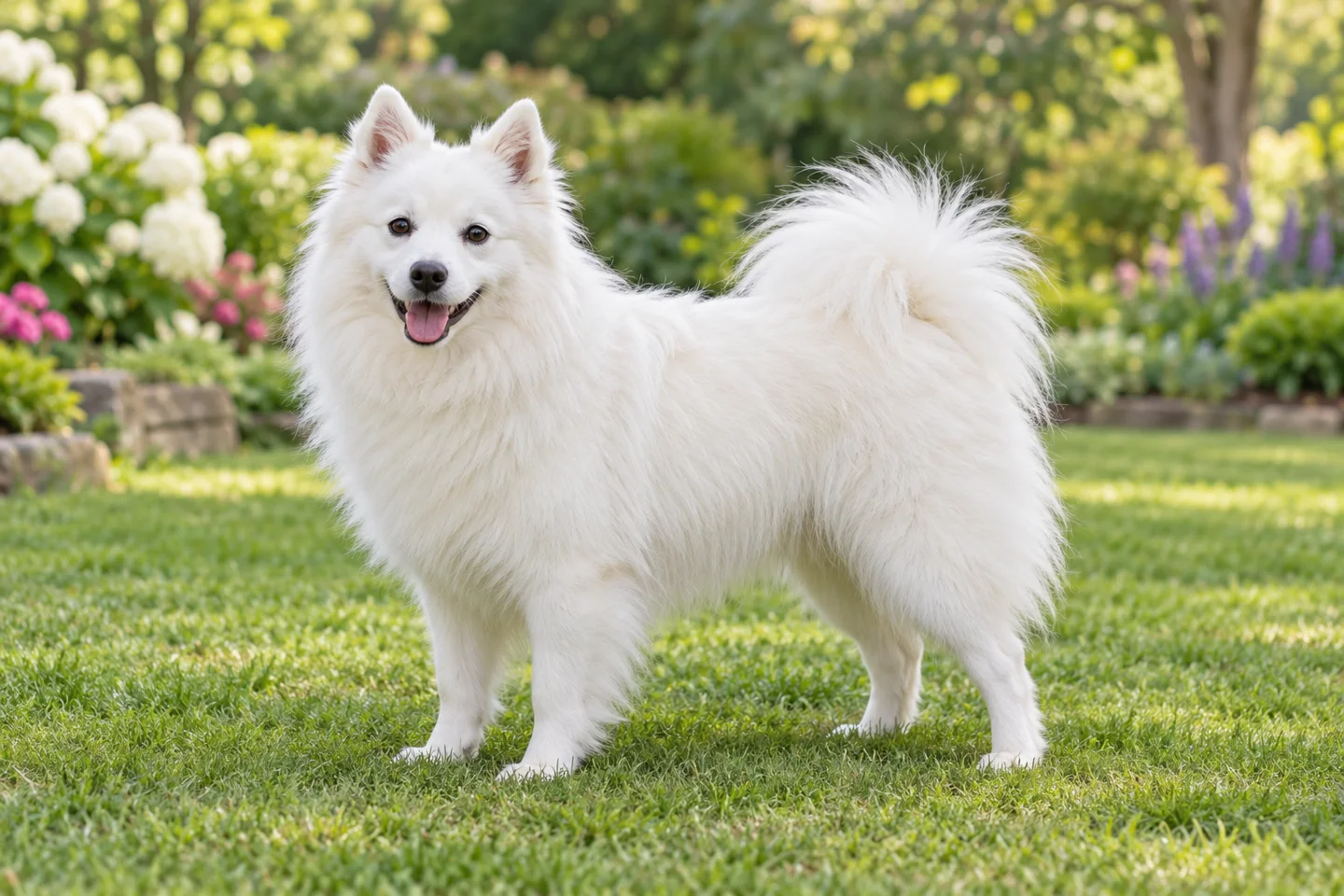
The familiar outline includes upright ears, a curled plume of tail, dark eyes and nose, and a full double coat. White and white with biscuit cream are described in the standard. Similar-looking dogs include other spitz breeds, so appearance alone cannot establish pedigree. A rescue can describe ancestry as an estimate while still offering reliable information about medical findings and everyday behavior.
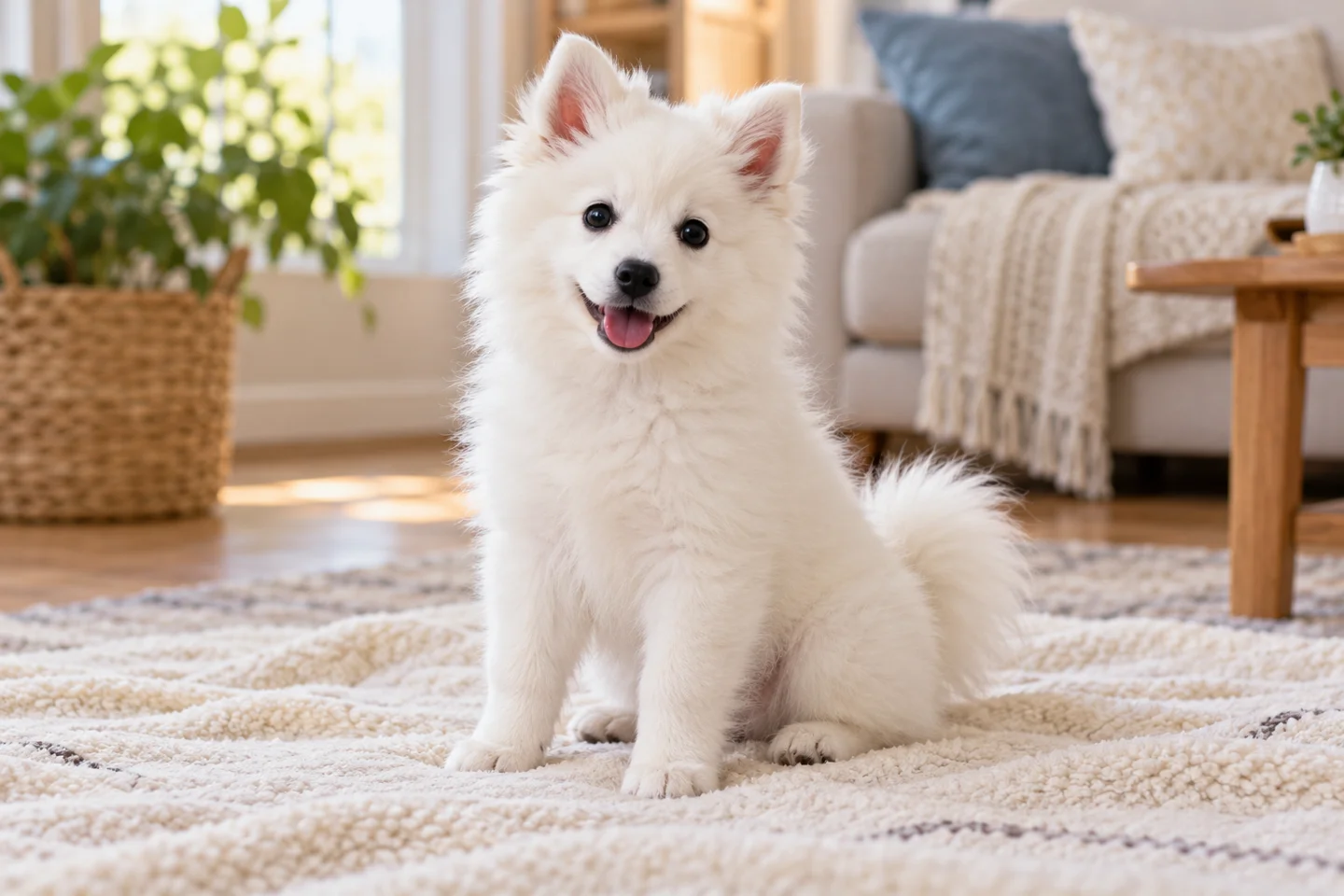
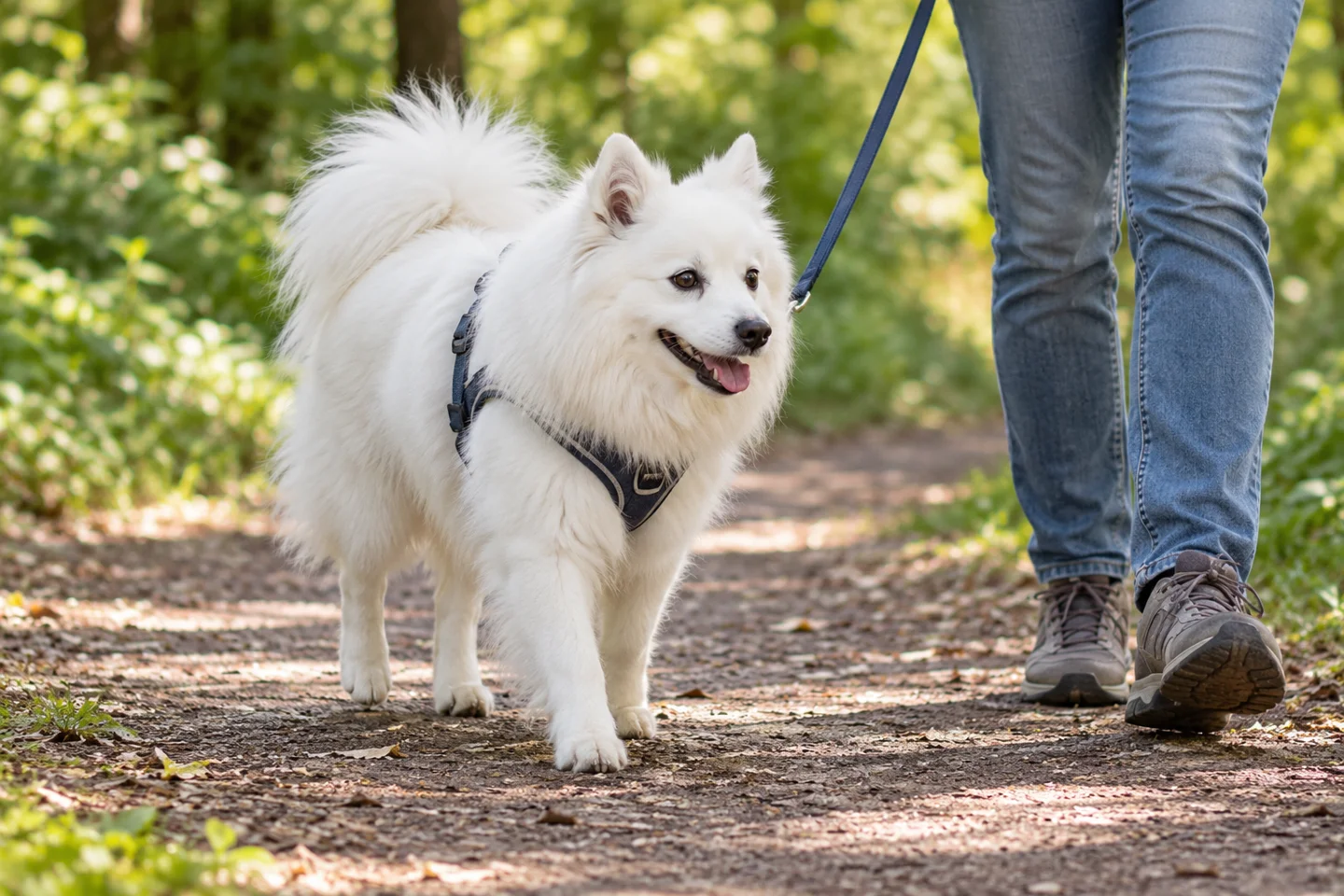
Watch the real dog walk, turn, and rise, and ask how comfortable it is after activity. Coat volume can disguise body condition. Do not assume a round silhouette means excess weight or that a fluffy dog must be sound beneath the hair. The images in this guide are generated illustrations, not evidence of an actual animal's health. Use them for general appearance and return to records, examination, and observation when choosing a companion.
Home arrangements and alert barking
Arrange a resting place away from the busiest doorway and the window with constant passing traffic. An alert dog may repeatedly respond to sights and sounds that a person has stopped noticing. Curtains, a different room, or more distance can make rest easier. Teach the dog where to go after an alert instead of repeatedly shouting over the noise. Practice when distractions are manageable, using rewards for the response you want.
Discuss noise honestly before placement if you share walls or have close neighbors. Ask the source when this dog vocalizes and how long recovery takes. Barking at a visitor, anticipation of an outing, and distress when alone need different responses. Keep a brief record rather than treating every sound as the same problem. A housing arrangement that depends on complete silence may be unsuitable for a particular dog even when the available floor space seems adequate.
Children and relationships with other animals
Children need attentive adult supervision and clear rules around sleep, meals, chews, and retreat. Prevent chasing, hugging, pulling hair, and uninvited lifting. A small variety may be physically vulnerable; a larger one can collide with a child during play. Provide a resting area children cannot enter. Separate when the responsible adult's attention moves elsewhere rather than expecting either child or dog to manage an increasingly busy interaction.
Assess other animals individually. A pleasant response to a familiar dog does not establish comfort with a running cat or a crowded group. Introduce residents gradually, retain reliable barriers, and provide separate meals and resting places when needed. Watch whether each animal can disengage without being followed. If a proposed placement depends on unrestricted shared access immediately, slow the plan down. Some combinations need ongoing management or a different home, and that limit should be acknowledged before commitment.
Aggression, guarding, and signs of discomfort
An American Eskimo Dog can bite when frightened, painful, guarding, or overwhelmed. Neither its size nor a friendly breed description settles the risk. Freezing, avoidance, stiff posture, growling, and snapping mean pressure should stop. Create distance and look at the context. Repeatedly reaching into a bed or taking an item to prove tolerance can create conflict instead of providing useful reassurance.
Manage food and valued objects to prevent disputes and teach exchanges through achievable rewarded practice. A new objection to handling deserves a veterinary assessment, particularly when coat care has become uncomfortable. If there has been a bite, obtain a detailed professional plan before repeating the circumstances. Tell carers what is known and what safeguards are needed. A practical plan should work for the people who will actually provide care, not depend on one confident person always being available.
Training and exercise that include rest
Reward recall, loose-lead movement, waiting at doors, and settling on a mat in easy settings before adding distraction. The American Veterinary Society of Animal Behavior recommends reward-based methods. A quick learner may also learn unwanted routines quickly, so prevent repeated opportunities to rush the door or jump for food. Show the dog a useful alternative and reward it often enough to make that alternative worth choosing.
Match activity to age, health, fitness, and weather. Walks can include sniffing, short exercises, and time to look around. Suitable games and easy searches at home add interest without requiring endless physical effort. Puppies need developmentally appropriate movement; older dogs may prefer shorter routes with good footing. Notice stiffness, fatigue, or reluctance to rise and seek assessment. Comfortable rest belongs in the routine. A dog who struggles to settle may need a different environment, help with anxiety, or medical care rather than another exhausting session.
Grooming a full double coat
Brush and comb regularly, reaching the coat beneath the visible surface without scraping skin. Areas behind ears, beneath equipment, and around the hindquarters need attention. Seasonal undercoat shedding can require more time. Ask a groomer to demonstrate suitable technique and tools. Pulling at a tight mat during a long session can make the next attempt harder and may conceal skin that already needs examination.
Bathing and drying should include secure footing, comfortable temperatures, and breaks as needed. Routine shaving is not a substitute for shedding management or warm-weather planning; discuss medical clipping with the veterinarian. Inspect skin for persistent irritation, odor, sores, or lumps. Introduce ear checks, nail work, and tooth brushing gradually with rewards. A sudden change in tolerance can indicate pain. Stop and investigate rather than treating resistance as a reason for stronger restraint.
Food, body condition, and warm weather
Feed a complete diet appropriate for the dog's life stage and individual needs. Measure meals, count training rewards, and keep a shared record if several people feed. Ask the veterinarian to demonstrate body-condition assessment beneath the coat. Adjust portions to actual growth, activity, and findings instead of trying to match a photograph or another dog's weight. Keep unsafe food, rubbish, and medication inaccessible, including items left in visitors' bags.
A dense coat does not remove the need for careful heat decisions. Choose cooler hours, shade, drinking water, and an easy way home when conditions are warm. Reduce effort according to the individual. Never leave the dog in a parked vehicle. Severe distress, breathing difficulty, weakness, or collapse needs urgent veterinary advice. Stop activity and contact the clinic promptly for instructions. A familiar walk can become unsuitable when humidity, temperature, health, or conditioning changes.
Health screening and eye disease
The national club's health statement identifies hip assessment, specialist eye examination, and DNA testing for prcd-PRA among its screening recommendations. Request actual reports with identities, dates, and findings. Eye examination and a genetic test answer different questions. A clear result for one variant does not exclude every cause of vision loss, and a parent's report cannot substitute for investigating new signs in the dog you own.
Discuss hesitation in dim light, collisions with familiar objects, squinting, or changes in visual confidence with the veterinarian. Painful eye signs need prompt attention. Do not test vision by placing obstacles or taking the dog near traffic. A CHIC number records completion and public disclosure of specified screening, rather than guaranteeing all results were normal. Read the underlying reports, discuss family history, and ask what current follow-up is appropriate. The screening plan should support informed care without promising lifelong freedom from illness.
Medical changes and an emergency plan
Keep track of movement, appetite, thirst, weight, and willingness to interact. A change beneath a fluffy coat may be easier to notice through a dated weight record than a casual glance. Persistent lameness, skin problems, altered digestion, or reduced stamina deserves assessment. Give the clinic a concise account of onset and progression. Avoid assuming an active dog cannot be uncomfortable because it still comes when food appears.
Know the nearest emergency service and how to transport the dog. Severe breathing difficulty, collapse, suspected poisoning, repeated vomiting, or sudden inability to stand requires urgent advice. Keep current medication and prior findings accessible. Do not give human pain medicine or leftover prescriptions while deciding what to do. Arrange backup care before it becomes necessary, with written instructions and a person familiar with the dog's handling boundaries. Preparation matters for a small dog too, especially when its usual caregiver is unavailable.
Mixes, allergies, and choosing a source
An American Eskimo Dog crossed with a Poodle, Pomeranian, or another breed can vary in coat, size, behavior, and medical needs. Informal cross names are not additional recognized Eskimo varieties. Ask which parentage is documented and which details are estimates. Mixed ancestry cannot guarantee easier coat care or a predictable temperament. Nor does coat type establish whether a person with allergies will tolerate the animal. Seek appropriate advice for the affected person and assess the actual situation.
Ask a breeder about health records, early handling, ordinary household experiences, and support after placement. Read the agreement and return arrangements without pressure. For adoption, clarify time alone, guarding, escape attempts, veterinary follow-up, and the source of observations. Describe your household accurately. A quiet adjustment period with predictable care is more useful than a first weekend full of visitors who all want to stroke the white coat. Let necessary relationships develop at a manageable pace.
Toilet habits and the arrival period
Give a new dog frequent opportunities to use an appropriate toilet area and reward success calmly. A puppy cannot be expected to manage the schedule of a settled adult. Keep access predictable and supervise without punishing accidents discovered afterward. In a shared building, allow enough time for lifts and corridors. A small variety may be particularly easy to overlook until it has already moved behind furniture, so arrange the space to make supervision practical.
An adopted adult may also need support learning a new routine. Ask what surfaces and timing it knew before arrival, and arrange a quiet first week. Sudden accidents, straining, changed thirst, or a regression after reliable habits needs veterinary advice. Avoid interpreting every change as unwillingness to learn. Clear information about timing and circumstances helps distinguish a schedule problem from a possible medical concern.
Learning tricks without constant performance
An owner may enjoy teaching an Eskie small tasks or tricks. Choose actions appropriate for the dog's body and work on a stable surface. Start with simple choices, reward willingly offered participation, and stop while the dog remains comfortable. Avoid repeated jumping or awkward balancing simply because an audience enjoys it. Historical performing roles do not create a duty for an individual companion to tolerate difficult positions or lengthy sessions.
Ask whether the dog is engaged or merely unable to leave. Turning away, slowing down, or avoiding the setup should lead to a break and a review of difficulty. A training diary can record the useful step that succeeded, rather than counting how many repetitions the dog completed. This makes the next session easier to plan and preserves time for ordinary exploration and rest alongside learning.
Travel and unfamiliar care settings
Practice short journeys before a long trip and use suitable restraint or a secure carrier with appropriate ventilation. Check that the dog can enter comfortably and that opening the vehicle door does not create an escape route. Bring water, familiar bedding, identification information, and veterinary contacts. A full coat can make a dog look settled while it is becoming hot, so monitor the actual conditions and response throughout travel.
Introduce a sitter or boarding provider before an urgent absence. Explain grooming tolerance, alert barking, feeding arrangements, and what happens around unfamiliar dogs. Ask whether individual walks or quiet accommodation are available when needed. A place advertising abundant communal play may be unsuitable for a dog who prefers one familiar partner. Written instructions should explain medication and emergency decisions clearly enough that a substitute caregiver can act without guessing.
Equipment that fits the actual variety
Choose a harness, carrier, bed, and vehicle restraint around the dog's measured body and behavior, rather than buying by the breed name alone. The three varieties create a meaningful range. Check fit again as a puppy grows and after weight changes. A thick coat can make loose equipment look secure, so test the arrangement carefully in a controlled place before relying on it near traffic or an unfamiliar entrance.
Show the backup carer how clips, barriers, and restraint work. Written instructions help when the usual person is absent, particularly if the dog has handling sensitivities. Replace damaged equipment and make sure identification remains readable. These small checks reduce the need to improvise when a visitor opens a gate or a journey becomes stressful.
Costs, later life, and a dogsDating meeting
Budget for food, preventive care, grooming equipment or appointments, training support, holiday care, and unexpected illness. Review insurance terms and ask local providers for estimates. In later life, adapt flooring, vehicle access, walks, and grooming duration to comfort. Keep interesting smells and gentle learning available even when physical effort changes. New accidents, avoidance, or reduced function deserves assessment rather than being accepted automatically as age. A long-term plan includes the less active years as well as a lively young adult.
Describe your dog's real preferences, play style, medical limits, and handling concerns in its dogsDating profile. Keep exact home coordinates private and choose an agreed public place with space. Start with separate handlers and parallel walking, avoiding shared food, toys, and crowded greetings. Allow brief contact only when both dogs remain loose and can disengage. End if either freezes, hides, persistently pursues, or repeatedly tries to leave. A calm first outing can be enough; further plans should follow the dogs' comfort and the owners' ability to manage them.
Sources and editorial notes
Sources checked October 21, 2026. Breed measurements describe reference ranges, not a diagnosis or an individual dog's ideal weight. Images are AI-generated breed illustrations and do not document a particular dog or health condition.
- VCA Animal Hospitals: Hypoallergenic dog breeds
- Orthopedic Foundation for Animals: CHIC program and interpretation of numbers
- American Kennel Club: Double-coated dog care
- VCA Animal Hospitals: Common emergencies in dogs
- VCA Animal Hospitals: General feeding guidelines for dogs
- VCA Animal Hospitals: Food aggression in puppies
- American Eskimo Dog Club of America: Health screening statement
- VCA Animal Hospitals: Heat stroke in dogs
- American Kennel Club: American Eskimo Dog identity and history
- VCA Animal Hospitals: Aggression toward unfamiliar dogs, diagnosis
- American Kennel Club: Official American Eskimo Dog standard
- AVSAB: Humane Dog Training Position Statement
Keep getting to know dogs.
Read another guide or return to your dogsDating community.
Explore breed guidesBack to dogsDating