American Water Spaniel
A curly or wavy-coated American retrieving spaniel whose care combines suitable land activity, supervised water access, grooming, and documented health screening.
How these guides are researched and reviewed
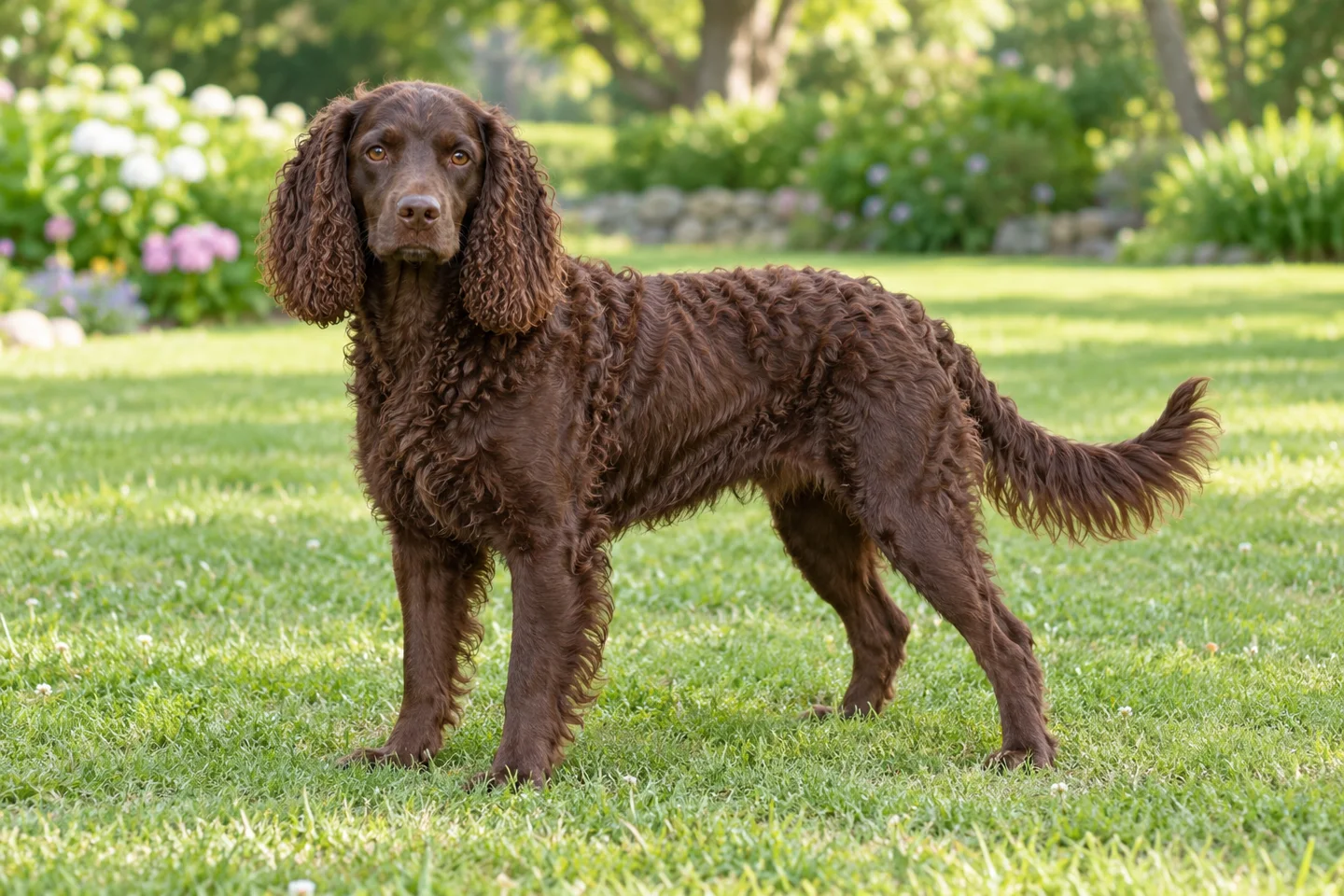
- Standard height
- 15–18 in for either sex
- Coat
- Liver, brown, or dark chocolate; wavy to curly
- Care priorities
- Water safety, ears, coat, and screening
General information for owners. These articles have not been reviewed by a veterinarian. Medical decisions need your dog's history and an examination.
Living with an American Water Spaniel
An American Water Spaniel needs a household prepared to combine outdoor activity, useful learning, coat care, and ordinary companionship. A moderate size does not make the breed a low-demand choice. Think about the daily walk, the wet dog coming home, time alone, and how the dog will rest while people work. A workable plan should fit the real week rather than depending on an exceptional weekend outing to meet every need.
Meet adults and ask for direct observations about home behavior, handling, visitors, and other animals. An adult from foster care may offer information a puppy cannot yet provide. A puppy needs frequent care, patient teaching, and room for uncertainty about adult preferences. Choose a source willing to describe difficult details and support the placement. The dog's interests and comfort should guide the plan rather than an expectation that every Water Spaniel will enjoy exactly the same activities.
Identity and working background
The American Water Spaniel developed in the American Midwest as a versatile hunting and retrieving dog, including work from small boats. It belongs to the AKC Sporting Group. Its name is distinct from Irish Water Spaniel, Boykin Spaniel, and curly-coated Poodle varieties, despite some similarities in appearance or work. Ask for the actual pedigree and registry when those names are used loosely in advertisements.
History gives context for retrieving, water, and activity but cannot establish an individual's confidence or skill. A companion does not need to hunt to have a satisfying life, provided its needs are met through appropriate activity and learning. Avoid pushing a reluctant dog into water or demanding retrieval because of the breed name. Ask what the actual dog enjoys now and introduce new tasks gradually, with suitable equipment and attention to health and recovery.
Size, coat, and the real dog
The standard describes a medium-sized dog, roughly 15 to 18 inches at the shoulder, with a coat ranging from waves to curls. Liver, brown, and dark chocolate are familiar colors. Long ears and a protective coat help create the outline, but appearance alone cannot identify every curly brown rescue dog. An estimate should remain clearly labeled when ancestry is not documented.
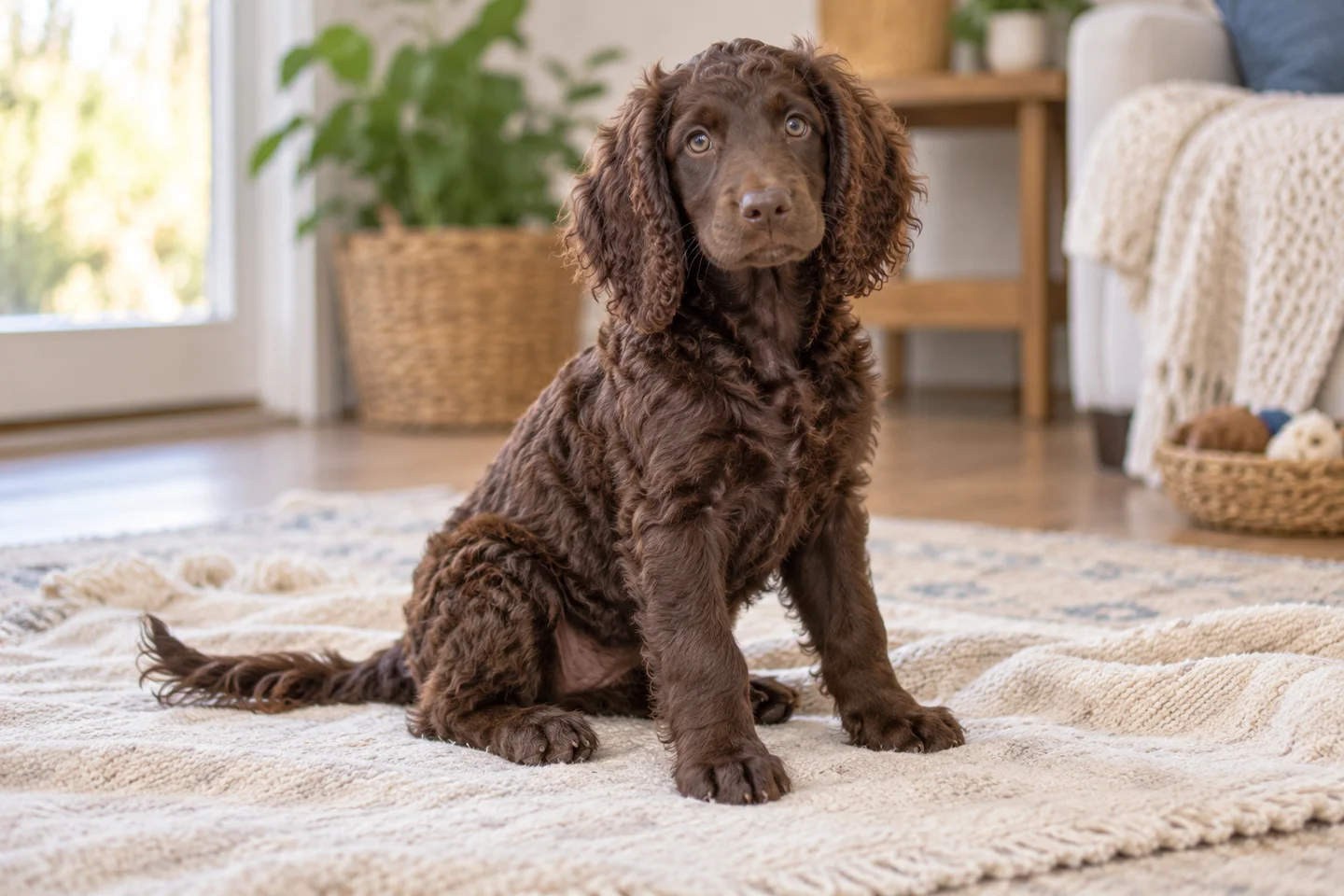
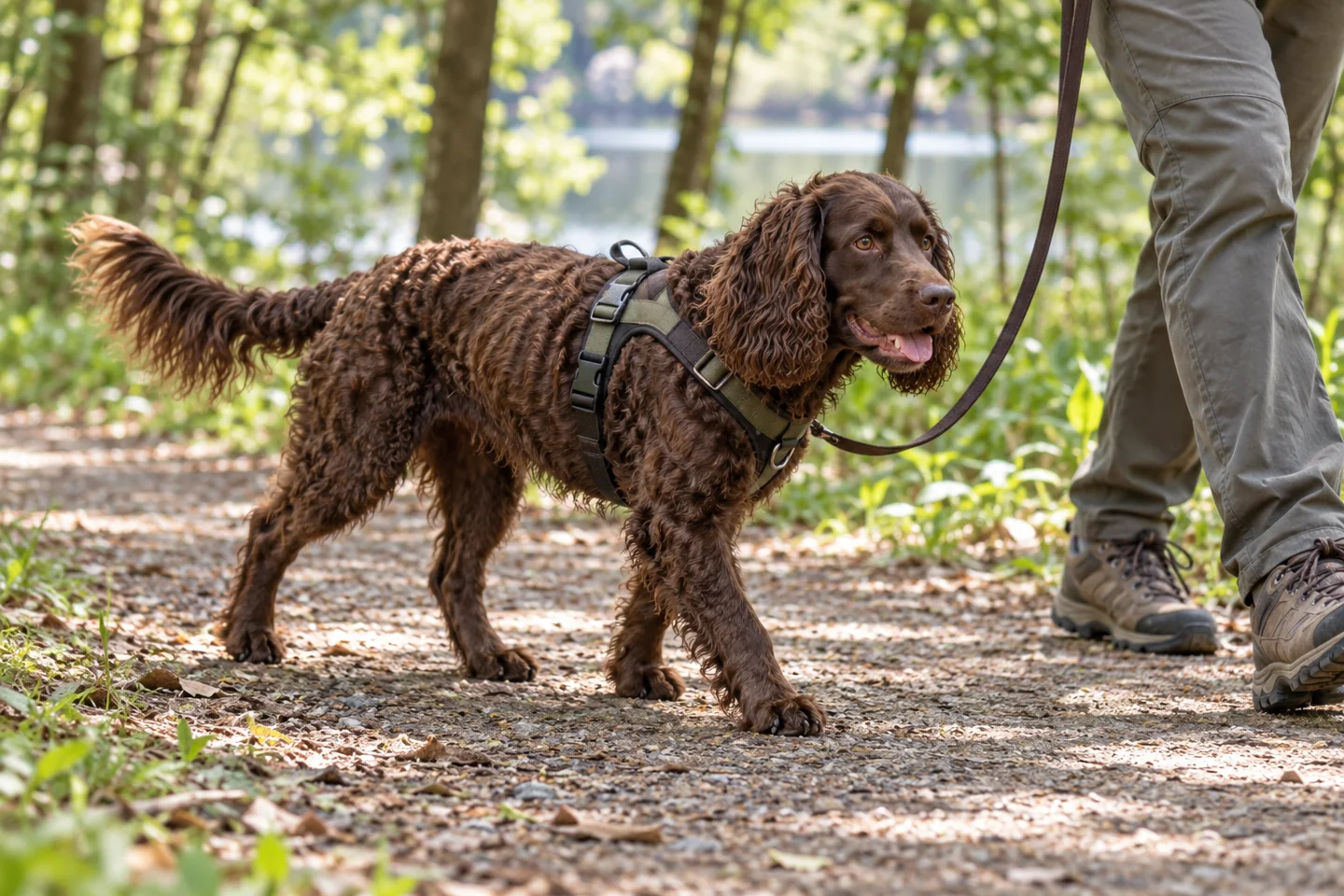
Watch movement, rising, turning, and recovery after suitable activity. Ask about prior injuries, lameness, and any clinical restrictions. A working pedigree cannot establish healthy joints or unlimited endurance. The three images here are generated breed illustrations with liver-brown coats and natural ears and tails. They show general features without documenting an actual dog's health, temperament, or ancestry. A veterinary assessment and real records remain more useful for decisions than resemblance to a picture.
A routine with outlets and quiet time
Plan a mix of walks, suitable games, short training, and comfortable sleep. A garden can support that routine, but time outdoors alone does not automatically provide enough engagement. Let the dog investigate suitable scents and make choices during part of a walk. At home, provide a resting place outside constant foot traffic and protect it from repeated handling or invitations to play.
If the dog cannot settle, consider sleep, worry, overstimulation, and physical comfort before simply adding effort. Persistent pacing, repeated alerting, or new irritability deserves review. Keep a brief record of timing and what precedes the behavior. A veterinarian and suitable behavior professional can help when the pattern persists. A dog who looks ready to join every activity may still need guidance and a quieter environment to rest comfortably between outings.
Water confidence and safe access
Introduce water through calm, manageable experiences with secure footing and an easy exit. Do not throw the dog in or assume it can judge currents, steep edges, cold, or exhaustion. Choose safe conditions and supervise directly. A retrieving history does not make swimming automatic for a particular individual. Ask a knowledgeable instructor for help when planning boating or water activity beyond a simple supervised introduction.
Use appropriate flotation equipment for the activity and check its fit before relying on it. Keep the dog away from visibly contaminated water or areas with official warnings, including harmful algal blooms. Provide clean drinking water rather than encouraging it to drink from every location. Stop when confidence, stamina, or conditions deteriorate. A successful outing can be brief and uneventful; reaching the other side or retrieving one more object has no value when the dog is struggling.
Children, cats, and other dogs
Children need attentive adult supervision, a dog-free area for energetic play, and boundaries around food, sleep, and chews. Prevent hugging, ear pulling, climbing, and interference when the dog retreats. A lively adult can knock a child over without intending harm. Separate when the supervising adult needs to focus elsewhere. The child should not be responsible for reading subtle warnings or managing a dog near open water.
Assess animal relationships individually. A friendly response to one dog does not establish comfort with every play style or crowded group. Ask about pursuit around cats and smaller animals and prepare reliable separation where needed. Introduce residents gradually and give each animal food, rest, and ways to disengage. Pack or retrieving history cannot guarantee a suitable match. Some arrangements need ongoing management or a different placement, and that should be decided before the household depends on unrestricted access working immediately.
Aggression, guarding, and warning signs
No breed description guarantees that a particular interaction is safe. Consider history, health, current behavior, and context. Freezing, avoidance, stiff posture, growling, snapping, or repeated escape attempts means pressure should stop. Give space and look at what happened beforehand. A hand near food, painful ear touch, or blocked retreat can matter. Avoid repeating the intrusion to test whether the dog will tolerate more.
Manage meals and valued objects to prevent conflict and teach exchanges through achievable rewarded practice. A new dislike of handling needs veterinary assessment for pain or illness. If there has been a bite or serious fight, obtain a detailed qualified plan before recreating the situation. Tell carers and other owners about relevant restrictions. A safeguard should remain practical for the actual household, rather than relying on one confident person to control every interaction physically.
Training retrieving and household skills
Reward recall, loose-lead walking, waiting at thresholds, and settling on a mat in easy settings. The American Veterinary Society of Animal Behavior recommends reward-based methods. Increase difficulty gradually and practice a comfortable turn away before needing it near another dog or wildlife. Keep physical management where recall is uncertain. A response learned in a quiet room cannot be assumed to hold beside moving birds or an interesting water edge.
For retrieving, begin with suitable objects and short distances on safe ground. Teach release through exchanges rather than repeatedly forcing the mouth open. Stop before the dog becomes exhausted or frustrated, and inspect toys for damage. A spaniel who prefers another activity can still learn useful cooperative skills. If progress stalls, review task difficulty, rewards, fear, fatigue, and possible discomfort. Clear teaching should make the next step understandable rather than turning a mistake into a conflict.
Exercise, growth, and conditioning
Match activity to age, fitness, health, weather, and prior experience. Puppies need opportunities to explore and play without an adult endurance schedule. An adult returning after illness or a quiet period needs gradual conditioning. Discuss demanding running, jumping, retrieving, or water work with the veterinarian, particularly where previous injury or incomplete history creates uncertainty. Enthusiasm alone cannot establish readiness for every task.
Watch recovery and the next day's movement. New stiffness, lameness, weakness, unusual fatigue, or reluctance to rise deserves assessment. Do not add effort to prove the dog is sufficiently tough for its ancestry. Easy scent searches, short learning tasks, and quiet company provide variety alongside physical activity. A useful routine leaves the dog comfortable enough to sleep and participate normally afterward, instead of relying on exhaustion as the only way to manage it indoors.
Coat grooming and care after wet outings
Brush and comb regularly, working gently through waves or curls and checking beneath equipment and around ears, legs, and feet. A protective coat can still tangle and conceal skin irritation. Ask a groomer familiar with the breed to demonstrate suitable maintenance. Avoid pulling tight mats during one long session. A coat-care plan should be manageable throughout the year, including muddy weeks and periods when the usual caregiver is busy.
After water or wet terrain, dry the dog appropriately and inspect skin and contact areas. Use bathing products and frequency suited to the individual rather than repeatedly treating odor cosmetically. Persistent redness, itch, sores, discharge, or hair loss requires examination. The coat may change with age or medical conditions, so new findings deserve attention. A show presentation is not a reason to continue grooming through pain or keep a style that the household cannot maintain comfortably.
Ears, teeth, nails, and cooperative handling
Observe ears for redness, odor, discharge, head shaking, or sensitivity, especially after outdoor activity. Ask the veterinary team about cleaning this dog's ears and use only the recommended approach. Avoid putting objects deep into the canal or using leftover medication for a new episode. Different causes of discomfort may need different treatment, so recurring problems deserve an examination and a plan rather than repeated guesswork.
Introduce tooth brushing, nail work, paw checks, and brief body examinations in small rewarded steps. Use secure footing and clear pauses. If the dog suddenly resists a familiar touch, investigate discomfort before assuming a training problem. Ask about cooperative care and appropriate clinical handling when tasks become difficult. Necessary care should become predictable enough that the household can notice changes, and the dog should not need to struggle through every appointment to receive it.
Food and body condition through changing activity
Choose a complete diet suited to life stage and individual needs. Measure meals, count rewards and chews, and monitor condition beneath the coat with veterinary guidance. A companion's needs can differ from those of a heavily working dog. Adjust thoughtfully when the season, age, exercise, or health changes. Keep a record when several people feed or administer medication so extra portions and duplicate doses do not confuse the history.
Secure rubbish, unsafe foods, tablets, and cleaning products, including items left by visitors. Provide quiet meal space and manage competition between animals. Persistent appetite, thirst, digestion, weight, or energy changes needs advice. Avoid adding supplements based on broad promises about coat, joints, or working performance without an identified need. A therapeutic diet also requires review of treats and extras so the entire feeding plan fits the dog's clinical findings.
Health screening and clearances
The American Water Spaniel Club recommends screening for hips, eyes, and cardiac abnormalities. Its guidance explains that the examinations have specific methods and timing. Request actual reports tied to the relevant dogs' identities, with dates and findings, and ask your veterinarian to explain unclear results. A puppy check cannot replace adult screening records or investigation of a new symptom.
Read underlying reports rather than treating a CHIC number as a promise that every result was normal. The number records completion and public disclosure of specified testing. Genetic tests, imaging, and specialist examinations answer different questions. Discuss relevant family illness and appropriate follow-up. For a rescue adult with incomplete history, state the gaps and make a plan based on current findings. Screening helps reduce specific uncertainties without guaranteeing lifelong freedom from inherited or acquired disease.
Interpreting changes in coat or movement
The breed club discusses several health concerns and emphasizes clinical investigation when signs develop. A changed coat, reduced stamina, altered gait, or new weakness should not be diagnosed from breed alone. Keep a concise dated account of what changed and how it progressed. Previous screening remains useful information, but it cannot make every future problem impossible. Provide the reports to the clinician instead of relying on a verbal summary.
For neurological concerns, a genetic result can be one part of an assessment rather than a substitute for excluding other causes. Avoid assuming that every older dog with hind-limb difficulty has degenerative myelopathy. Injury, orthopedic pain, spinal disease, and other conditions need consideration by the veterinarian. A short video can help describe an intermittent change if recording does not delay care or provoke symptoms. Severe weakness or breathing difficulty needs urgent advice.
Emergency planning and outdoor judgment
Know where emergency care is available and how to transport a wet, injured, or non-ambulatory dog. Keep medication, identification, and veterinary contacts accessible during outings. Collapse, severe breathing difficulty, suspected poisoning, heavy bleeding, or abdominal swelling with unsuccessful retching requires urgent veterinary advice. Do not give human painkillers or old prescriptions while deciding what to do. Arrange backup help before the usual driver or handler becomes unavailable.
Check conditions before going out rather than assuming every water-loving dog tolerates heat, cold, or a long journey equally. Provide water, shade, appropriate breaks, and a manageable return route. Do not leave the dog in a parked vehicle. A routine that worked last season may need adjustment after a health change or time off. Returning early is a useful decision when comfort or safety deteriorates, even if the planned activity has barely begun.
Mixes and uncertain ancestry
An American Water Spaniel crossed with a Poodle, Labrador, or another breed can vary in coat, size, behavior, and medical needs. Informal cross names do not establish recognized varieties. A curly brown rescue dog may resemble several breeds, so keep appearance-based estimates clear. A source's direct observations about household life may be more reliable than a precise ancestry claim, and those observations remain useful for choosing a suitable placement.
Mixed ancestry cannot guarantee an easy coat, normal joints, swimming confidence, or compatibility with children and small animals. Coat type also cannot guarantee that an allergic person will tolerate the dog. Consider known parental concerns and actual findings, and seek appropriate advice for the affected person. A realistic care plan should work for the individual in front of you, rather than depending on an ideal selection of traits from each possible parent.
Sources, costs, and the older spaniel
Ask a breeder about records, adult behavior, early handling, environmental experience, and support after placement. Read terms and return arrangements without pressure. For adoption, clarify bites, guarding, animal relationships, escape behavior, medication, and veterinary follow-up. Describe your own routine and limits accurately. Allow predictable care and quiet rest during adjustment instead of expecting immediate participation in crowded outings or a demanding first week of training.
Budget for ordinary care, equipment, grooming, training support, holidays, and unexpected illness. Review insurance terms and request local estimates. Practice vehicle restraint and introduce a carer before an urgent absence. In later life, adapt flooring, beds, access, walks, water activity, and care duration to comfort. Preserve gentle exploration and familiar company while reporting changes. A dog who needs shorter outings still benefits from choices and interest, without being expected to perform its younger workload.
Sources and editorial notes
Sources checked October 21, 2026. Breed measurements describe reference ranges, not a diagnosis or an individual dog's ideal weight. Images are AI-generated breed illustrations and do not document a particular dog or health condition.
- Orthopedic Foundation for Animals: CHIC program and interpretation of numbers
- American Water Spaniel Club: Health information and diagnostic considerations
- VCA Animal Hospitals: Ear infections in dogs
- VCA Animal Hospitals: Common emergencies in dogs
- VCA Animal Hospitals: General feeding guidelines for dogs
- VCA Animal Hospitals: Food aggression in puppies
- American Water Spaniel Club: Recommended health clearances
- American Kennel Club: American Water Spaniel working background
- American Kennel Club: American Water Spaniel care and identity
- VCA Animal Hospitals: Aggression toward unfamiliar dogs, diagnosis
- AVSAB: Humane Dog Training Position Statement
- VCA Animal Hospitals: Water sports for dogs
Keep getting to know dogs.
Read another guide or return to your dogsDating community.
Explore breed guidesBack to dogsDating