Appenzeller Sennenhund
An alert Swiss cattle dog whose care requires suitable activity, training around movement, realistic noise management, and clear joint-screening records.
How these guides are researched and reviewed
- Also called
- Appenzell Cattle Dog
- Coat
- Tricolor double coat; black or Havana ground color
- Care priorities
- Movement, alert barking, and joint records
General information for owners. These articles have not been reviewed by a veterinarian. Medical decisions need your dog's history and an examination.
Living with an Appenzeller Sennenhund
An Appenzeller Sennenhund suits an owner who can provide regular activity, clear household routines, and patient teaching around movement and noise. This is a compact, athletic Swiss cattle dog with an alert manner and a voice that deserves serious consideration before adoption. A household that enjoys walks and training may still struggle if the dog spends every afternoon barking at a shared fence. Look at your daily environment, including neighbors, visitors, and the amount of supervision available.
Meet adult dogs where possible and ask their owners about ordinary days. Find out what happens when a bicycle passes, a visitor arrives, or the family leaves the house. An energetic puppy can be appealing while revealing little about mature responses to unfamiliar people. Choose an individual whose needs you can meet, and ask for help early when behavior becomes difficult. The breed's working background makes purposeful activity useful, but it does not excuse unsafe chasing, uncontrolled barking, or rough handling.
Build, coat, and the curled tail
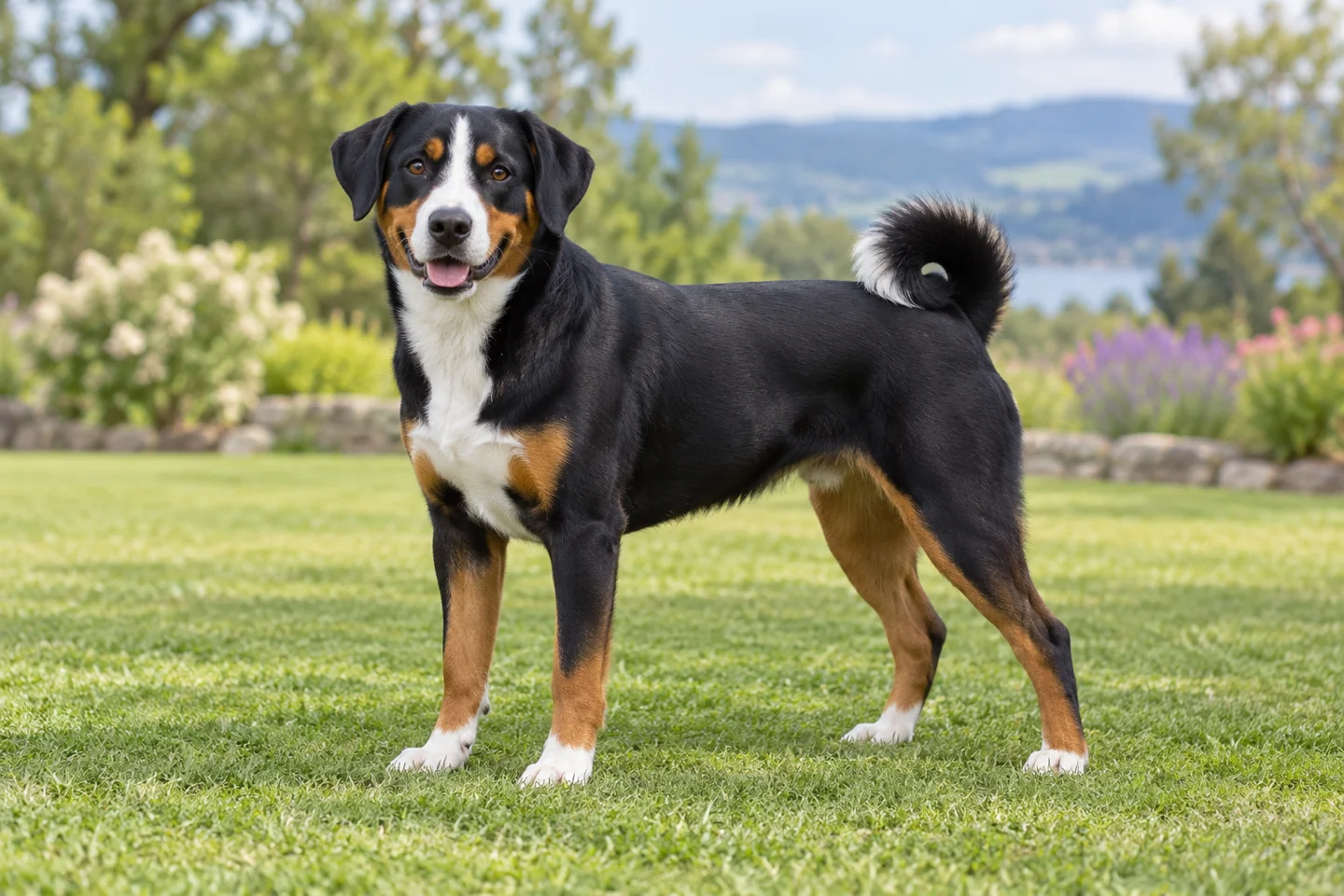
The Appenzeller has a medium-sized, sturdy, roughly square outline, dropped ears, and a tail carried curled over the back when moving. The FCI standard describes a black or Havana-brown ground color with tan and white markings. A correct coat pattern cannot tell you whether a dog has healthy joints or a suitable temperament. Watch the individual move on level ground, turn comfortably, and rise from rest. Ask about any repeated stiffness rather than overlooking it because the dog remains enthusiastic.
The double coat can shed noticeably. Its practical care differs from the long coat of a Bernese Mountain Dog, even though both may share familiar facial markings. Natural ears and a long curled tail are normal features to expect in illustrations and everyday dogs. Check equipment against the actual chest, neck, and body measurements. A puppy needs repeated harness adjustments, and an adult needs enough shoulder freedom to walk comfortably. Replace worn fasteners and check that identification remains readable.
Alertness, noise, and neighbors
An alert Appenzeller may respond quickly to a sound at the door or movement outside. First work out what the dog is noticing. Repeated exposure to a busy window or fence can create a daily routine of running and barking. Reduce that exposure where possible and give the dog a quieter place to rest. Reward a turn toward the handler or movement to a familiar station before arousal becomes difficult to interrupt. Closing a curtain can be a practical management choice.
Talk with household members about how arrivals will work. Ask visitors to wait while the dog is secured, and practice the sequence outside busy social occasions. If barking happens during absences, investigate distress and the surrounding triggers rather than assuming the dog needs a stronger correction. A recording can help show what occurs after people leave. Persistent noise can affect both welfare and neighbors, so include suitable professional help in the plan when simple environmental changes do not resolve the problem.
Children, running games, and supervision
An Appenzeller may be interested in fast movement, including children running through a garden. Teach an alternative response and arrange separation before excited games begin. Do not allow chasing or grabbing clothing to become a routine simply because the dog has cattle-working ancestry. An adult needs to supervise and intervene early. Children should have a clear route away from the dog and should never be expected to correct it, restrain it, or protect younger children from unwanted attention.
Keep meals, chews, and sleeping places free from children's interference. Show children how to invite contact calmly and stop when the dog moves away. Avoid hugging, face-to-face contact, and climbing over a resting animal. Visiting children may behave differently from those the dog knows, so use barriers and a separate resting room when close supervision is impractical. A friendly history does not remove the need for these arrangements. The same rules should apply when adults are distracted by cooking or conversation.
Resident dogs, cats, and farm animals
A dog that has lived peacefully with one familiar animal may need a careful introduction to another. Begin dog introductions with space on suitable neutral ground, then manage resources and narrow doorways at home. Watch for repeated blocking, hovering near another dog's bowl, or inability to settle in separate resting places. Keep early interactions short enough that both animals can recover. Seek qualified help when one repeatedly pursues the other or when either dog shows threatening behavior.
Cats need escape routes and areas the dog cannot access. Introduce them gradually, controlling the dog while allowing the cat to choose distance. Chasing can become dangerous even when the owner describes it as play. Livestock requires a different assessment again. A cattle-dog pedigree does not make a puppy ready to work stock safely, and rough behavior can injure animals or the dog. Use an experienced stock-training mentor, appropriate facilities, and the ability to separate animals promptly.
Aggression, fear, and practical prevention
A watchful dog can become defensive when an unfamiliar person comes too close, especially near a boundary, resting area, or valued object. Notice stiffness, sustained staring, growling, and attempts to increase distance. Respond by creating space and securing the dog. Do not invite someone to continue approaching to test its tolerance. The owner should remove the pressure and arrange help when warnings recur. Breed labels and descriptions of family loyalty cannot determine the safety of an individual encounter.
Pain or illness can change behavior, including tolerance of handling and proximity. Arrange a veterinary examination when a dog suddenly reacts differently. Record what happened, where it happened, and what preceded the response, then share that information with a qualified behavior professional. Reward-based training and physical management can reduce exposure while a treatment plan is developed. Avoid punishing growling, which may remove an observable warning without making the situation comfortable. Introduce a basket muzzle positively when professional advice or practical circumstances make it useful.
Training attention around movement
Start training in places where the dog can respond without competing with intense distractions. Reward attention to the handler, a hand target, and a comfortable turn in the opposite direction. Those skills become useful when a cyclist approaches or another dog appears on a narrow route. Practice at sufficient distance to prevent repeated lunging. Reduce the difficulty if the dog cannot eat, listen, or recover after the trigger passes. Progress is measured by calmer choices, not by how close you can stand.
Short, clear sessions can fit into ordinary routines. Ask for a station while a door opens, reward loose-lead walking before reaching an interesting scent, and teach an exchange for an object using something the dog values. Give the dog time to learn the task before adding duration or distraction. Everyone handling the dog should understand the cues and reward plan. Physical strength and rapid corrections can make a sensitive or aroused dog harder to manage, so obtain practical coaching when timing or handling is difficult.
Exercise that fits the dog's body
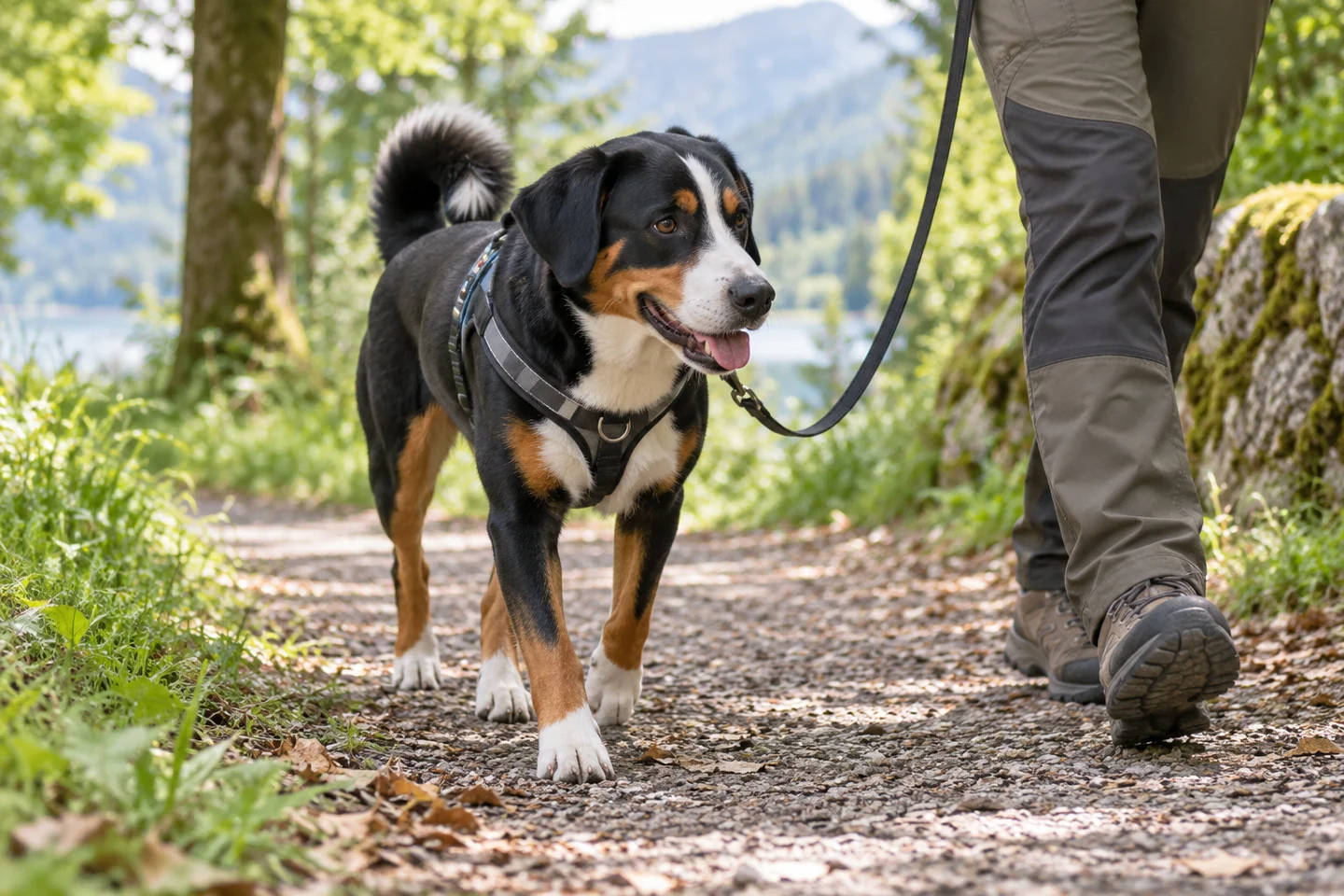
An adult Appenzeller generally needs regular opportunities to move and use its attention, with the amount tailored to health and fitness. Walks that include sniffing, controlled exploration, and changes of pace can provide more variety than a repeated march around the same block. A secure garden offers useful space, but access alone does not establish that the dog receives enough suitable activity. Observe what it actually does there and whether it can settle afterward without constant stimulation.
Build conditioning gradually before long hikes, demanding sports, or repeated jumping. Young dogs need an age-appropriate plan discussed with their veterinarian rather than being exercised until exhausted. Check paws and movement after unfamiliar terrain. Shorten outings in heat and choose surfaces that remain comfortable underfoot. Persistent limping, reluctance to jump into a vehicle, or unusually slow recovery needs veterinary attention. Enthusiasm can continue despite discomfort, so the handler must make decisions that the dog may not make for itself.
Useful outlets beyond running
Scent searches, finding a hidden toy, and learning practical household skills can give an Appenzeller an absorbing task. Begin with simple searches and increase difficulty gradually. A dog that enjoys retrieving can learn to deliver a toy calmly and wait while it is put away. Keep sessions cooperative and stop before frustration builds. The aim is a routine the household can maintain, including on days when weather, work, or the owner's health prevents a longer outing.
Sports should suit the individual dog's body and emotional comfort. A busy class may need more distance, shorter attendance, or a quieter starting group. Ask the instructor how they manage dogs that bark or become excited near movement. Do not assume that a working breed benefits from every high-speed activity. Teaching a comfortable settle and a predictable end to play is part of the exercise plan. Rest remains necessary even when the dog eagerly offers to continue.
Grooming, teeth, and cooperative care
Brush through the double coat regularly, increasing attention during heavier shedding. Check the skin beneath the coat for redness, wounds, ticks, and irritated areas where equipment rests. Bathe when needed with dog-appropriate products and dry the coat sufficiently for comfort. A short-looking coat can still hide skin problems, so look and feel carefully during routine care. Avoid shaving simply to reduce shedding or address warm weather without discussing the specific situation with a veterinarian or experienced groomer.
Introduce nail trimming, tooth brushing, and gentle ear inspection in small steps with rewards. A dog that accepts a brief touch today may learn to accept a more complete procedure later. Stop and reassess when pain or fear appears rather than holding the dog down to finish. Persistent ear odor, discharge, head shaking, or discomfort needs veterinary assessment. Keep a record of new lumps or recurring skin irritation so changes can be described accurately at an appointment.
Feeding, body condition, and household resources
Feed a complete diet suited to age and health, then adjust the amount using the dog's body condition and weight trend. Measure meals and include training rewards in the daily allowance. Active days and quiet periods may require different amounts, but appetite alone is an unreliable guide. Ask the veterinarian to demonstrate how to assess ribs and waist. Avoid chasing a heavier appearance because a working dog is expected to look strong. Excess weight can make activity and handling harder.
Provide meals in a place where children and other animals will not disturb the dog. Put chews away before introducing a visitor's dog and avoid shared bowls during early meetings. Teach an exchange rather than repeatedly removing food to test tolerance. Changes in appetite, thirst, digestion, or weight deserve medical attention when they persist or occur with other symptoms. If using a home-prepared diet, seek qualified veterinary nutrition advice so the recipe meets the needs of this particular dog.
Health screening and the Swiss club requirements
The Swiss Appenzeller Sennenhund club describes hip and elbow radiographs and a patellar examination as part of its breeding requirements. Those requirements belong to a specific breeding program. They should not be presented as a universal rule applied by every registry or breeder worldwide. Ask what program the breeder follows and request the actual results for both parents. Check identity, age, issuing organization, and the findings rather than accepting an undated statement that the dogs were tested.
Screening informs breeding decisions while leaving uncertainty about an individual puppy's future health. A routine vaccination visit is different from a formal orthopedic assessment. Discuss family health, any movement concerns, and the appropriate examinations with your veterinarian. Avoid treating a broad commercial DNA panel as proof that all important conditions have been excluded. Ask which conditions were tested, why those tests were selected, and what the results mean for the particular mating. There is no useful substitute for readable records and a clear explanation.
Illness, injury, and older dogs
Arrange preventive care for your location and lifestyle, including vaccination, parasite control, dental assessment, and routine examinations. Tell the clinic about handling concerns before a visit so staff can prepare. A dog that dislikes restraint may benefit from a quieter appointment and a gradual cooperative-care plan. Report new stiffness, weakness, persistent scratching, or changes in behavior promptly. Do not wait for a lively dog to stop all activity before taking an apparent problem seriously.
Know where to obtain emergency care after hours. Collapse, major injury, severe breathing difficulty, or rapidly worsening illness requires urgent veterinary advice. Keep transport equipment and contact details available. As the dog ages, review footing, vehicle access, walk length, and resting surfaces. Difficulty rising or irritability during grooming can reflect pain. A veterinary assessment can help distinguish treatable problems from assumptions about ageing, and a revised routine can allow continued activity without repeatedly asking the dog to struggle.
Appenzeller mixes and similar-looking dogs
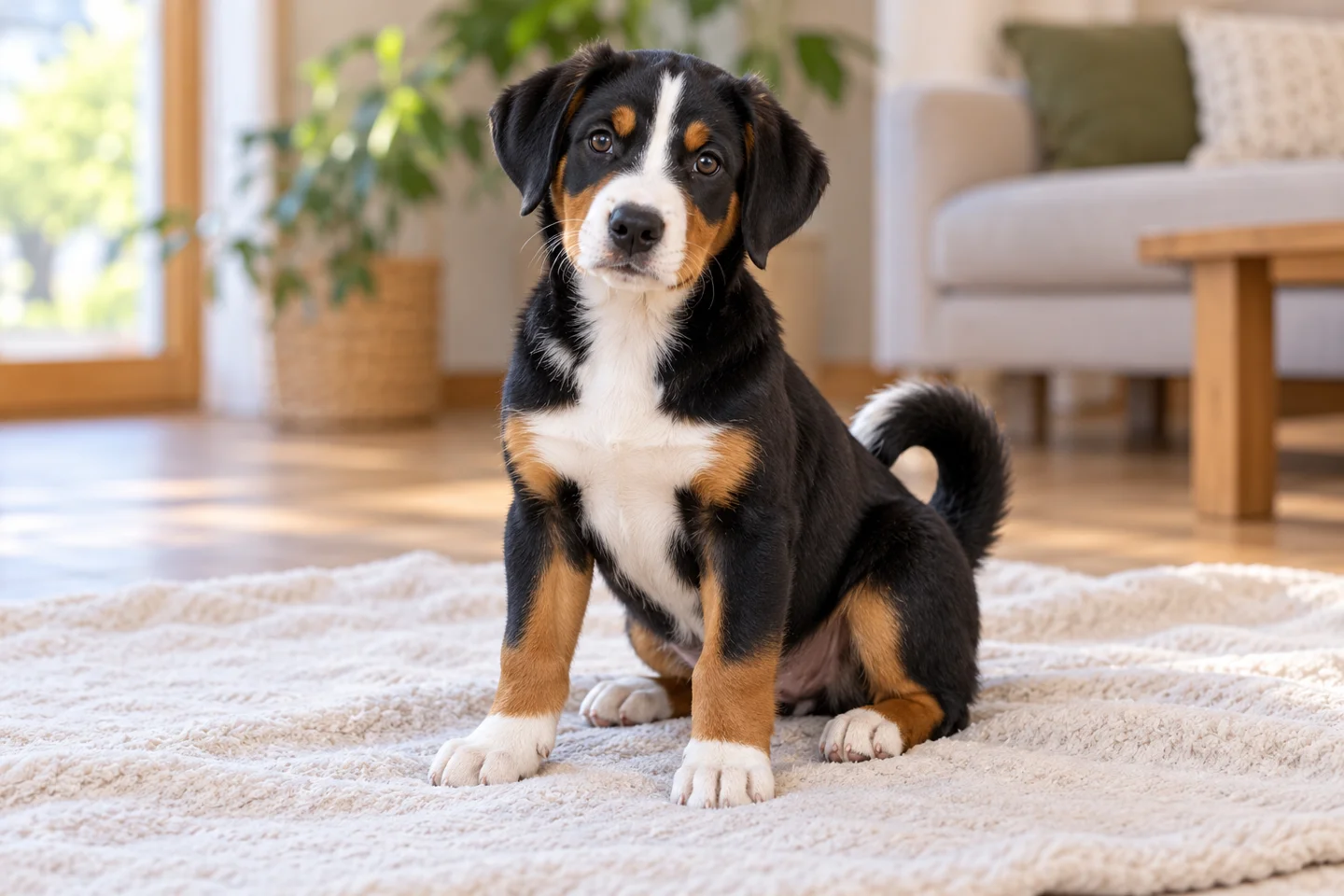
An Appenzeller mix can vary in size, coat, voice, and response to movement. A tricolor face and curled tail cannot establish a precise cross. Ask an adoption organization which parts of the description are documented and which are visual guesses. A DNA test can provide ancestry information without predicting every behavior or health outcome. Plan around the dog's observed needs, including how it handles visitors, absences, traffic, and other animals in a foster or home setting.
The four Swiss Sennenhund breeds are separate breeds, and a seller should not use their names interchangeably because a puppy has familiar markings. Crossbreeds also lack the consistency implied by a recognized breed standard. Meet the individual, request health records, and ask about the parents where known. Mixed ancestry does not guarantee freedom from inherited disease or difficult behavior. An adult with a well-described daily routine may provide clearer information for a household than a puppy marketed through an appealing combination of breed names.
Costs, housing, and backup care
Include food, preventive veterinary care, suitable equipment, training help, insurance where appropriate, and emergency treatment in the budget. Fencing and sound management can become meaningful costs for an alert, active dog. Consider the time involved as well. Someone needs to supervise arrivals, maintain exercise when work is busy, and continue training during adolescence. A household should agree on these responsibilities before adoption rather than relying on whichever person is home when a problem occurs.
Check lease terms and local requirements, then assess the practical layout. Shared entrances, thin walls, and heavy foot traffic may make alerting harder to manage. Identify a trusted backup carer who can follow the dog's routine and handle it calmly around distractions. Arrange a trial walk and short stay before a necessary absence. Leave written instructions about meals, medication, gates, and emergency contacts. A familiar, practiced arrangement reduces the uncertainty of handing an energetic dog to someone during a stressful week.
A dogsDating walk with room to settle
Describe the individual Appenzeller's activity level, response to unfamiliar dogs, and preferred walking distance in its dogsDating profile. Keep exact home coordinates private. Choose a quiet route with space to walk in parallel and move away from bicycles or crowded entrances. Each dog needs an adult who can handle it comfortably. Begin far enough apart that both can sniff and respond to their own person, then adjust gradually if their behavior remains loose and relaxed.
Leave shared toys, food bowls, and rough games out of the first outing. If barking escalates, chasing starts, or either dog repeatedly tries to leave, increase distance or end the meeting. A short calm walk provides more useful information than forcing a greeting to complete the plan. Discuss what each handler observed afterward, including the setting and distance. Comfortable behavior on that route does not automatically establish that the dogs can share a house, a vehicle, or an exciting off-lead game.
Sources and editorial notes
Sources checked October 21, 2026. Breed measurements describe reference ranges, not a diagnosis or an individual dog's ideal weight. Images are AI-generated breed illustrations and do not document a particular dog or health condition.
- American Kennel Club: Double-coated dog care
- VCA Animal Hospitals: Ear infections in dogs
- VCA Animal Hospitals: Common emergencies in dogs
- VCA Animal Hospitals: General feeding guidelines for dogs
- VCA Animal Hospitals: Food aggression in puppies
- Swiss Appenzeller Sennenhund Club: Breeding eligibility and health examinations
- FCI: Appenzeller Sennenhund, standard number 46
- VCA Animal Hospitals: Aggression toward unfamiliar dogs, diagnosis
- American Kennel Club: The four Swiss Sennenhund breeds
- AVSAB: Humane Dog Training Position Statement
Keep getting to know dogs.
Read another guide or return to your dogsDating community.
Explore breed guidesBack to dogsDating