Austrian Pinscher
A sturdy Austrian farm and companion breed whose care includes controlled arrivals, suitable activity, double-coat care, and clearly described health records.
How these guides are researched and reviewed
- Background
- Austrian country pinschers
- Build
- Sturdy medium-sized dog with button ears
- Care priorities
- Visitors, cooperation, activity, and coat care
General information for owners. These articles have not been reviewed by a veterinarian. Medical decisions need your dog's history and an examination.
An Austrian Pinscher in an ordinary home
An Austrian Pinscher needs activity, company, and clear teaching around arrivals and unfamiliar people. Its farm-dog background can help explain alert behavior, but it does not supply a complete household education. Before choosing one, consider the layout of your home and the amount of passing activity. A dog watching a shared entrance all day faces different demands from one with a quiet resting area and a predictable visitor routine. Practical arrangements matter more than a general description of loyalty.
Meet adults where possible and ask what happens during an ordinary week. Find out how the dog settles, travels, handles necessary care, and spends short periods without its usual people. A puppy's outgoing approach is encouraging without predicting every adult response. An adult already living in a home may provide clearer observations for some households. Choose an individual whose needs fit the people and space available, and make sure everyone agrees on boundaries, training, and backup care before placement.
Austrian country-dog origins and naming
The FCI describes the Austrian Pinscher as descending from Austrian country pinschers used as versatile farm dogs. It records organized breeding beginning in 1921, recognition in Austria in 1928, and the change from Austrian Shorthaired Pinscher to Austrian Pinscher in 2000. Those dates refer to a documented modern breeding history, not proof of a precisely known ancient lineage. For an owner, the practical connection to farm alerting and companionship is more useful than an unsupported ancestry story.
The Austrian Pinscher is distinct from the German Pinscher, Miniature Pinscher, and Doberman. Shared naming does not mean they are size varieties of the same breed. Ask which registry issued a pedigree and how the source identifies an adult with missing records. A short red coat or folded ears alone cannot confirm ancestry. Keep a rescue's visual estimate visible as an estimate, and assess the actual dog rather than importing expectations from a better-known breed with a similar name.
Build, coat, and the natural outline
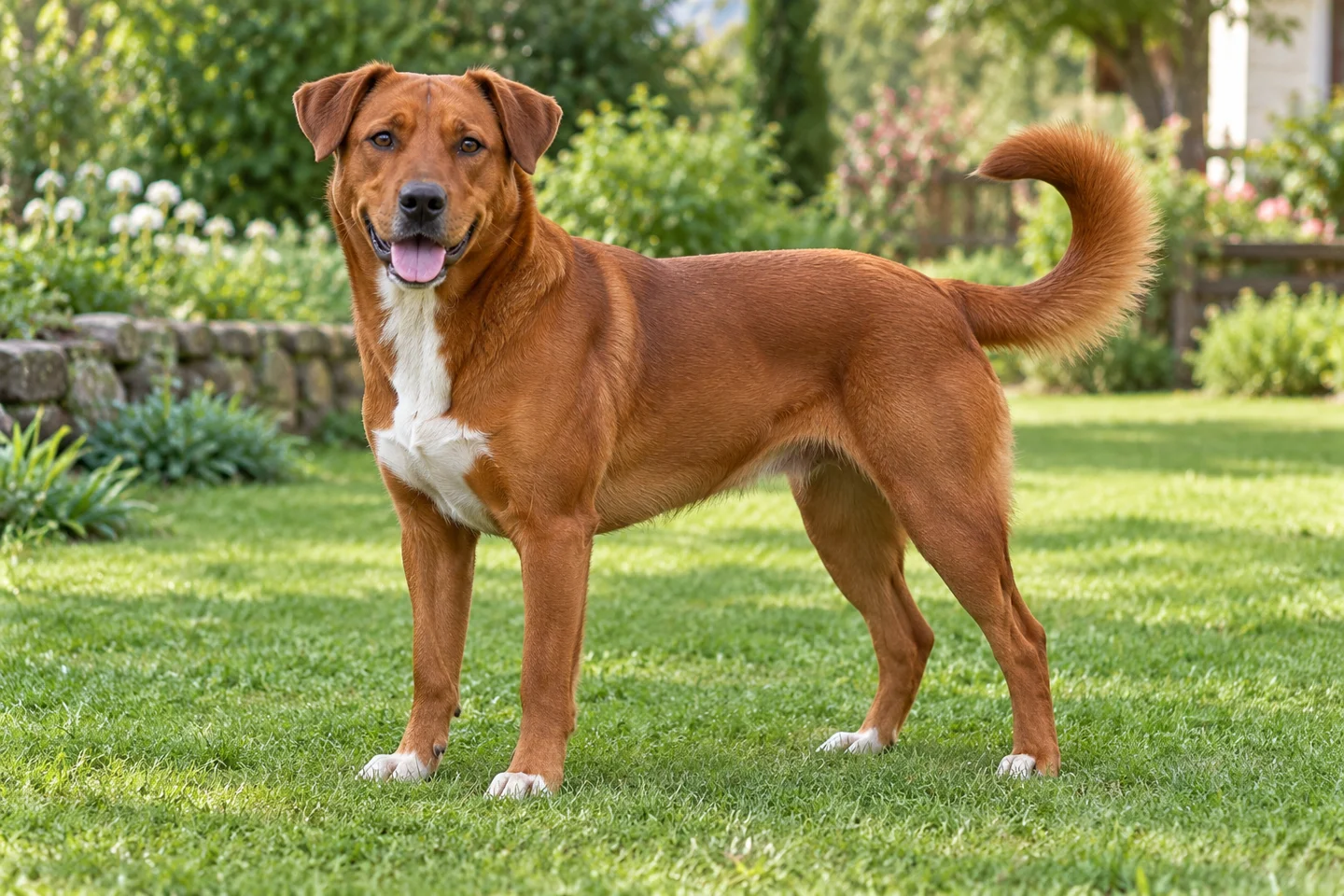
The breed has a sturdy medium-sized outline, a broad pear-shaped head, small high-set button ears, and a thick double coat. The standard permits several red or yellow-based colors and black with tan markings, with white markings possible. The illustrations show one red example with a white chest and natural tail. They are generated examples rather than documentary records, medical evidence, or a complete guide to every permitted marking and tail carriage.
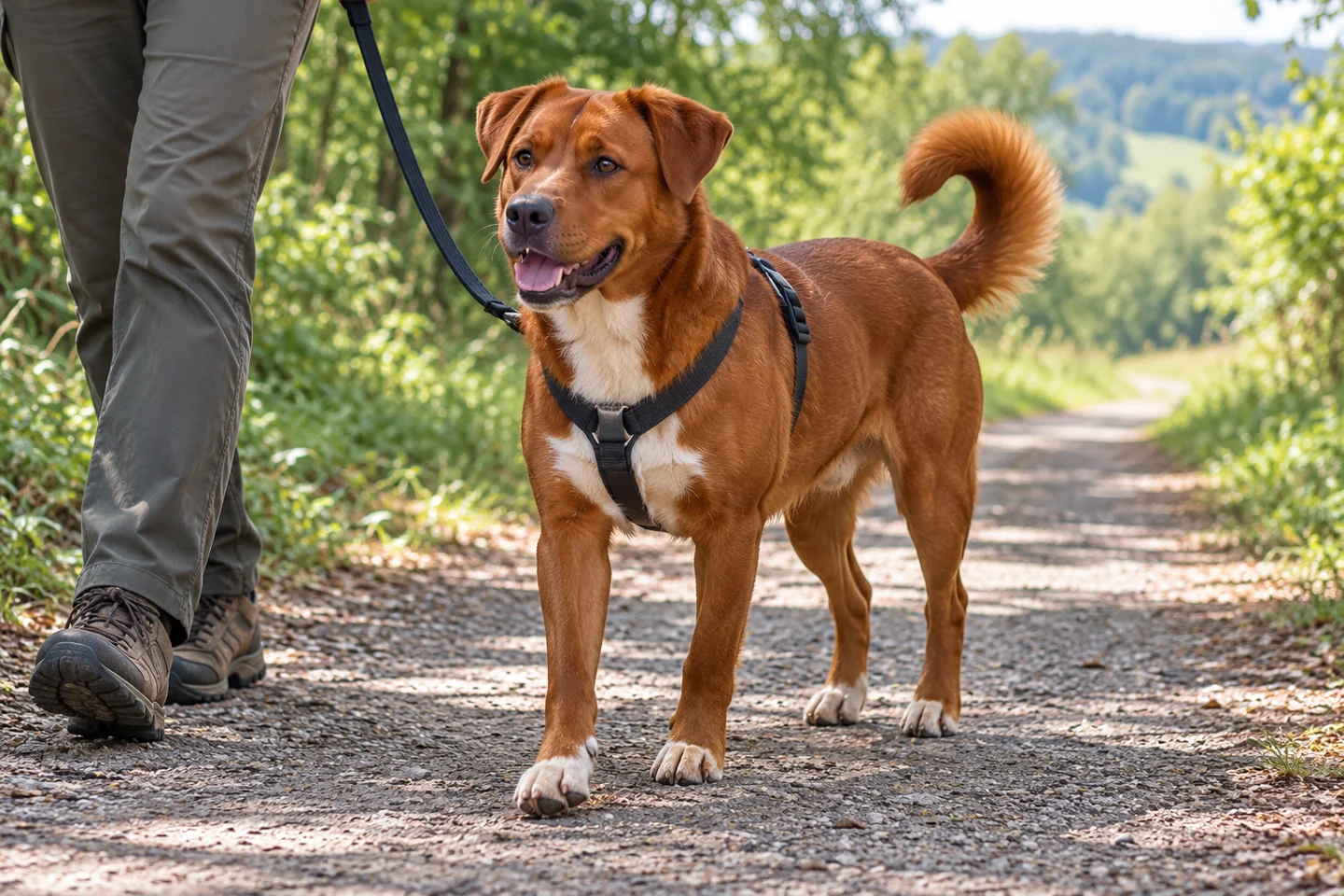
Look for comfortable movement, suitable body condition, and ease when rising or turning. A broad build should not become an excuse for excess weight or restricted movement. Ask about repeated stiffness or a persistent uneven gait. Fit a harness to actual chest and shoulder measurements, check it through growth, and inspect equipment before walks. Teach calm fitting and waiting at doors. Reliable clips and identification are useful, but a practiced routine reduces the number of situations that depend on catching a moving dog at the last second.
Alerting at the door and boundary
A watchful dog may react to footsteps, vehicles, or people approaching the property. Identify the repeated triggers and reduce unnecessary exposure where possible. A quieter resting location or screening at a busy window can help. Teach movement to a familiar station and reward attention to the handler before the dog is fully occupied by the arrival. Practice with mild versions of the event rather than trying to teach the whole sequence while guests are waiting outside.
Use a barrier before opening an exterior door and give visitors clear instructions. They should not approach, lean over, or reach toward a dog that is uncertain. The owner manages access and creates space. A dog being comfortable with familiar people does not establish comfort with every contractor or delivery driver. If threats or repeated inability to settle occur, obtain professional help. Calling the dog a good watchdog does not resolve the safety and welfare concerns of an uncontrolled visitor encounter.
Confidence, familiarity, and rest
A breed description can mention reserve with strangers without explaining how a particular dog feels. Observe whether it can watch calmly, move away, and recover after an unfamiliar event. A dog that remains tense long after a visitor leaves may need a different environment and support. Avoid forcing contact to make it sociable. Comfortable observation from behind a barrier can be a useful result, especially when the household does not need the dog to greet every person physically.
Build a rhythm of activity, meals, company, and sleep. Provide a resting area that does not require constant monitoring of passing people. Practice short absences gradually and investigate persistent pacing, calling, or escape attempts. A recording can help show what happens when the owner is absent. Another dog is not a dependable solution to separation-related distress. If rest remains difficult despite an appropriate routine, discuss medical and behavioral causes rather than simply increasing exercise indefinitely.
Children and a predictable family routine
Children need adult supervision and clear rules around a dog, including one affectionate with its own family. Keep meals, chews, and sleeping spaces free from interference. Teach children to invite contact calmly and stop when the dog leaves. Avoid hugging, climbing, pulling ears, or leaning over its face. A child should call an adult when an object is near a resting dog rather than trying to move the dog or take something from its mouth.
Visiting children create a different situation from the familiar household. Running, shouting, and opening doors can increase excitement or uncertainty, so arrange separation before energetic games. Adults need to supervise actively, and barriers are useful when attention is divided. A dog should have a quiet retreat children cannot enter. Comfortable behavior on previous occasions does not establish a permanent guarantee. Review the plan when the dog develops pain, children become more mobile, or new friends change the patterns of movement and noise.

Dogs, cats, and the limits of general tendencies
Introduce dogs according to their individual histories and comfort. Start with parallel walking in suitable neutral surroundings, allowing enough room for disengagement. At home, separate bowls, chews, entrances, and resting places during assessment. Watch for repeated blocking, hovering, or pursuit. A dog can enjoy another's company outside while preferring space around resources indoors. Do not wait for a fight to confirm that one dog is persistently preventing the other from resting or reaching people.
The standard describes a relatively limited hunting tendency, but that statement cannot establish safety with cats or small pets. Cats need gradual introductions and escape routes, while smaller animals require secure protection. Familiarity with one animal does not predict responses to an unfamiliar one running outside. Stop access if stalking, fixation, or chasing appears and seek qualified advice. A farm-dog background also does not make a puppy automatically safe around livestock, poultry, or vulnerable young animals without supervision and teaching.
Aggression, fear, and bite prevention
Stiffness, hard staring, freezing, growling, snapping, or attempts to retreat mean pressure should stop. Create space and consider what preceded the response. Fear, pain, and resource concerns require assessment rather than a demonstration of authority. Avoid cornering the dog or repeatedly taking an object to test its tolerance. A description of family devotion cannot decide the safety of an encounter. Physical arrangements should prevent repeated conflict while the owner learns what needs to change.
New irritability or sensitivity to handling warrants a veterinary examination. Keep a factual record of recurring incidents and consult a veterinary behaviorist or qualified reward-based professional. Punishing warnings can leave the underlying concern unresolved while making future risk less visible. A basket muzzle introduced with rewards may add protection in appropriate circumstances, alongside barriers and treatment. It cannot make close contact comfortable by itself. Everyone providing care should understand the same rules rather than testing different approaches on a dog already struggling with the situation.
Training everyday cooperation
Reward attention to a name, a hand target, waiting at a door, and releasing an object for something worthwhile. Begin in quiet conditions and add difficulty gradually. Food, an appropriate game, and access to an interesting sniff can all function as rewards. Clear consequences help the dog understand which choices work. If barking or jumping reliably produces attention, review that sequence and teach an alternative rather than assuming repeated verbal correction has explained the desired behavior.
Practice standing for equipment and settling while people move nearby. Keep sessions brief enough that owner and dog remain patient. A dog that does well in the garden still needs preparation before a busy street or unfamiliar visitor. Ask a reward-based instructor for help adjusting difficulty and handling when progress stalls. Avoid relying on physical force to put the dog into positions it has not learned. Comfortable cooperation in ordinary care often provides more practical value than a complicated trick performed only with one familiar person.
Exercise and suitable tasks
Provide daily movement matched to health, age, and fitness. Walks with time to investigate, simple scent searches, and controlled games can create variety. Build conditioning before long hikes or repeated high-impact activity. A garden supplements care but does not show whether the dog receives enough suitable exercise or spends its time reacting at the fence. Observe the actual routine and its ability to rest afterward. Puppies need sleep and age-appropriate activity, with demanding exercise discussed with their veterinarian.
Check movement after activity and after rest. Persistent limping, reluctance to jump, or an altered gait needs assessment. In warm conditions, shorten outings and provide shade and water. A dense coat and farm heritage do not prevent heat illness. Collapse or severe breathing trouble requires urgent veterinary advice. Quiet days can include manageable walks and learning without trying to compensate through frantic games. A sustainable plan needs to fit work commitments, poor weather, and temporary limitations in the owner's health.
Grooming a thick double coat
Brush regularly and inspect beneath the outer coat, especially where equipment rests. Loose undercoat, damp areas, and small wounds can be easy to miss when the dog looks tidy from a distance. Bathe when needed with suitable products and dry comfortably. Avoid routine shaving simply to reduce shedding or address warmth without discussing the specific need. Water, shade, airflow, and adjustments to activity remain important parts of care regardless of grooming choices.
Introduce nail care, tooth brushing, ear inspection, and body checks gradually with rewards. A sudden objection to familiar handling can indicate discomfort. Stop to assess the change rather than increasing restraint to finish. Persistent ear odor, discharge, head shaking, or skin irritation needs veterinary advice. Tell the clinic or groomer about handling concerns before arrival. Cooperative care is useful preparation for illness, when the dog may need examination of an area that is painful or unfamiliar to touch.
Health information and the club's adult examination
The Austrian breed club asks owners to contribute health information through an adult veterinary examination. It describes this as a general examination rather than a procedure requiring anesthesia. That initiative is useful evidence of health-data collection, but it should not be expanded into a claim that every member of the breed has received a comprehensive inherited-disease clearance. Ask what was examined, which dog the report identifies, and what findings were recorded.
A routine examination, joint imaging, specialist eye assessment, and DNA test answer different questions. Discuss the breeder's program and family health history with your veterinarian. Avoid presenting a universal international checklist where programs differ or reliable prevalence data are limited. A panel covering selected variants cannot exclude all inherited or acquired illness. For an adult with missing records, state the gaps and make a preventive plan from current findings. New symptoms need investigation regardless of the breed's general reputation for robust farm-dog function.
Medical changes and emergency decisions
Arrange preventive care suited to location, travel, age, and lifestyle. Keep vaccination, parasite, dental, and medication records accessible. Report persistent changes in appetite, thirst, weight, skin, movement, or behavior rather than waiting for the dog to lose all interest in its routine. A lively dog can remain active while uncomfortable. A short safe video may help describe an intermittent movement problem, provided recording does not provoke symptoms or delay necessary care.
Know which clinic provides urgent treatment and how the dog would travel if it could not walk normally. Collapse, serious injury, severe breathing difficulty, or rapidly worsening illness needs prompt advice. Avoid diagnosing a new problem from a breed list or using another dog's medication. Tell professionals about handling concerns in advance whenever possible. A practical emergency plan includes an available carer and transport equipment, not only a telephone number saved on a device nobody else in the household can access.
Feeding and resource management
Choose a complete diet appropriate to life stage and medical needs. Measure portions and account for training rewards, then adjust using weight trends and body condition. A sturdy outline is different from excess body fat. Ask the veterinarian to demonstrate how to assess ribs, waist, and muscle condition. A companion with moderate activity may need less than a dog spending long days moving around a property. Appetite alone cannot determine a suitable allowance.
Feed separately from children and other animals, and remove shared chews during early introductions. Teach exchanges with rewards rather than repeatedly taking meals away to test tolerance. Secure rubbish, medications, and unsafe foods. Do not add supplements to a complete growth diet without a veterinary reason, and obtain qualified nutritional advice for home-prepared meals. Persistent digestive changes or altered thirst require assessment. During injury or reduced activity, review intake promptly instead of continuing the old amount automatically while the dog rests more.
Austrian Pinscher mixes and source selection
A crossbreed can vary in coat, size, alerting, and social comfort. An Austrian Pinscher mix label does not establish a standardized outcome, especially when parentage was guessed from appearance. Ask what is documented and what is inferred. DNA ancestry information can add context while leaving individual behavior and many health questions unresolved. Mixed ancestry does not guarantee fewer concerns or remove the need for suitable training, secure access, and veterinary care.
Ask a puppy source about the parents, early handling, household exposure, and support after placement. For an adult, request observations about visitors, absences, cats, other dogs, transport, and grooming. A candid description of limitations is more useful than a claim that the dog adapts to everyone. Read contracts and records carefully and avoid selecting primarily because the breed is uncommon. A suitable source should help the household decide when a particular individual would be a poor fit as well as explain its appealing qualities.
Costs, later life, and a dogsDating meeting
Budget for food, preventive care, secure equipment, training support, emergency treatment, and backup care. Practice a short stay with a trusted carer who can follow the door and visitor routine. Leave written instructions and veterinary contacts. As the dog ages, review flooring, resting surfaces, vehicle access, and recovery after activity. New reluctance to rise or sensitivity during grooming may reflect pain. Retain suitable exploration and learning while adjusting demands to current comfort rather than previous stamina.
For dogsDating, describe individual experience and preferred distance while keeping exact home coordinates private. Meet on a quiet public route outside the dog's own boundary, using separate capable adult handlers and parallel walking. Leave shared food and toys out of the first outing. Increase space or end if either dog becomes stiff, persistently pursued, or unable to recover. A calm walk can be useful without greeting. It does not establish that the dogs can share a house, vehicle, or valued resource without further assessment.
Sources and editorial notes
Sources checked October 21, 2026. Breed measurements describe reference ranges, not a diagnosis or an individual dog's ideal weight. Images are AI-generated breed illustrations and do not document a particular dog or health condition.
- Austrian Pinscher Club: Adult veterinary examination and health-data collection
- VCA Animal Hospitals: Ear infections in dogs
- VCA Animal Hospitals: Common emergencies in dogs
- VCA Animal Hospitals: General feeding guidelines for dogs
- VCA Animal Hospitals: Food aggression in puppies
- Orthopedic Foundation for Animals: Disease screening information
- VCA Animal Hospitals: Heat stroke in dogs
- FCI: Austrian Pinscher history and standard number 64
- VCA Animal Hospitals: Aggression toward unfamiliar dogs, diagnosis
- AVSAB: Humane Dog Training Position Statement
Keep getting to know dogs.
Read another guide or return to your dogsDating community.
Explore breed guidesBack to dogsDating