Barbet
A curly-coated French water dog whose care combines substantial grooming, supervised water access, suitable activity, and clear joint and eye screening records.
How these guides are researched and reviewed
- Origin
- French water-retrieving dog
- Coat
- Long curly coat with a beard
- Care priorities
- Coat maintenance, water safety, eyes, and joints
General information for owners. These articles have not been reviewed by a veterinarian. Medical decisions need your dog's history and an examination.
Choosing a Barbet
A Barbet needs suitable activity, company, training, and a coat-care routine that the household can maintain for years. The curls can make the breed appealing before an owner has considered brushing to the skin, drying after wet outings, and professional grooming costs. Start with a realistic weekday. Decide who will walk the dog, maintain the coat, teach calm handling, and provide rest. A friendly reputation does not remove individual differences in confidence, social comfort, or ability to spend time alone.
Meet adults and ask to see ordinary care as well as play. Find out how the dog behaves during grooming, travel, visitor arrivals, and the end of an exciting game. A puppy's easy coat and enthusiastic greeting can conceal how much work adult maintenance and settled household life may require. An adult with a well-described home history can offer useful information for some owners. Choose the individual and care routine that fit your resources rather than a promise of a universally easy water-loving companion.
French water-dog identity and history
The Barbet is a French water dog with a history connected to waterfowl work. Its name is linked to the beard, which remains a recognizable feature of the breed. Historical relationships among European water dogs can be complicated, so avoid treating every popular ancestry account as a precise documented family tree. For a present-day owner, the useful connection is to retrieving, outdoor activity, and a coat that requires maintenance after exposure to water and vegetation.
The Barbet is distinct from the Poodle, Portuguese Water Dog, Spanish Water Dog, and other curly-coated breeds. A similar appearance does not make them interchangeable registration categories or guarantee identical grooming needs. Ask which organization issued a pedigree and how the source identifies an adult with missing records. A rescue may reasonably use an uncertain ancestry description, provided the uncertainty remains visible. Assess the actual dog's behavior and coat rather than importing assumptions from a better-known breed with similar curls.
Outline, curls, and the bearded face
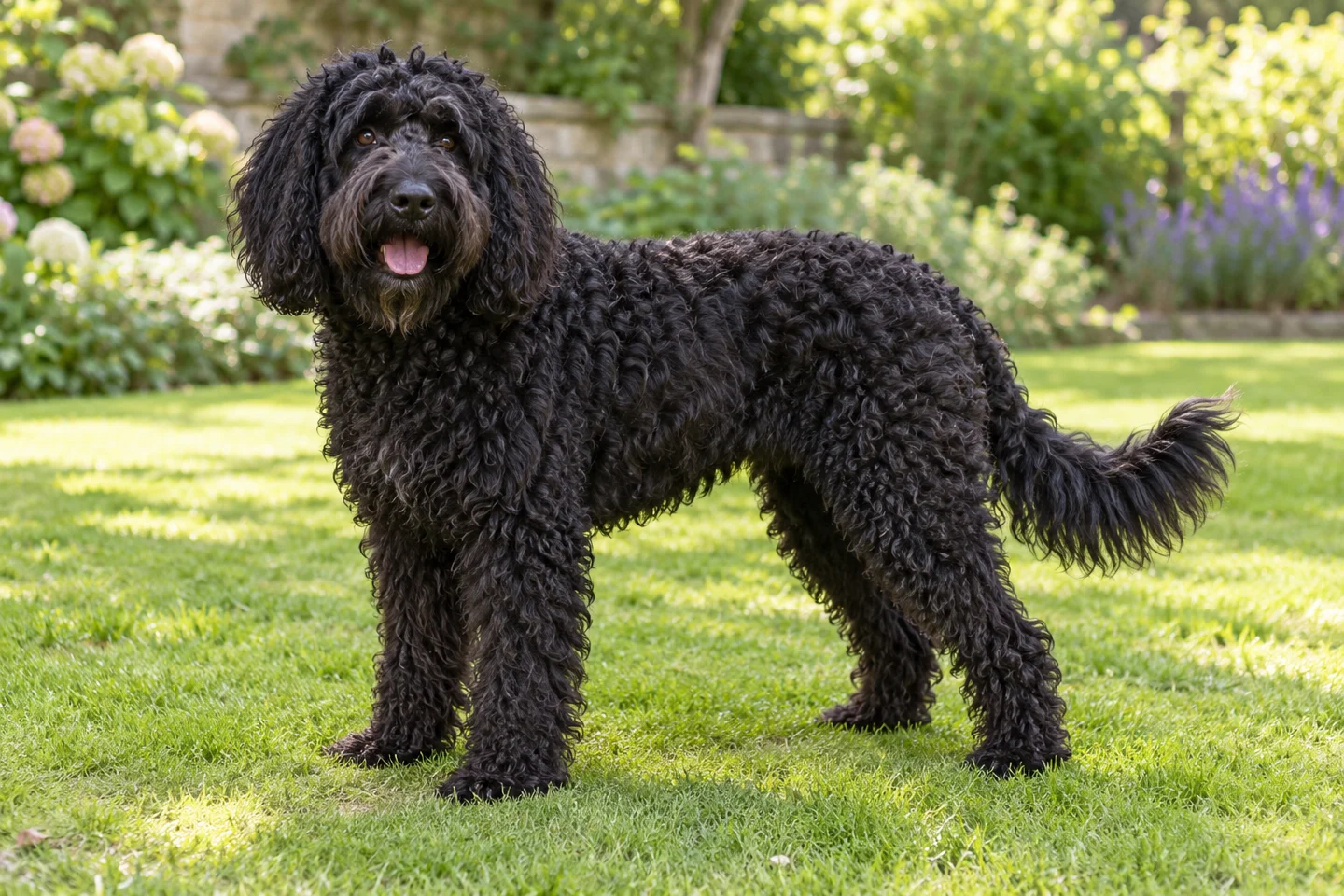
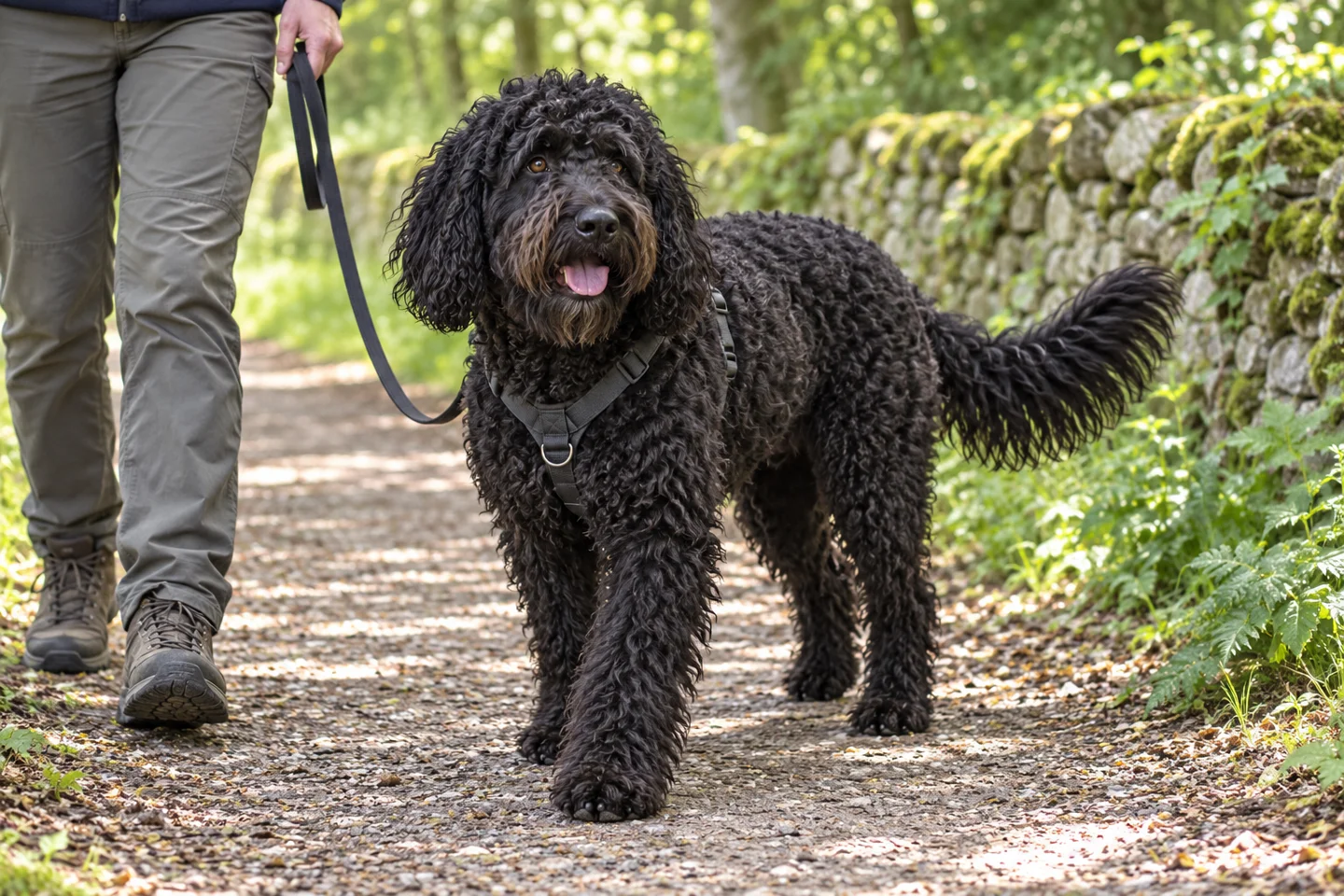
The Barbet has a substantial athletic outline, dropped ears covered in hair, a beard, and a long curly coat. Colors vary within the relevant standard. The illustrations show black-coated examples with natural ears and tails. They are generated illustrations rather than documentary records, medical reference images, or proof of ancestry. A dark coat can make the eyes and skin harder to see, so an owner needs to look beneath the hair rather than relying on the impression of a tidy outer silhouette.
Watch comfortable movement, suitable body condition, and ease when rising or turning. A full coat can conceal excess weight, poor muscle, or irritation under equipment. Use hands as well as sight during routine checks, and ask the veterinarian to demonstrate body-condition assessment. Fit a harness to actual measurements and check it as the puppy grows or the grooming style changes. Teach calm fitting before an exciting outing, and inspect clips and identification so safe access does not depend entirely on catching a moving dog at a doorway.
Water interest does not replace water safety
Some Barbets enjoy water readily, while others need gradual learning or prefer to remain on land. Introduce shallow, calm conditions with a safe exit and close supervision. Never throw a dog into water to teach confidence. A suitable flotation aid can be useful in boating or appropriate open-water activities, but it needs correct fit and does not replace supervision. Assess currents, access, temperature, fatigue, and the owner's ability to retrieve the dog safely if something changes.
Avoid water with warnings about harmful algae, contamination, or unsafe conditions. Prevent repeated swallowing during games and stop before fatigue becomes obvious. A dog repeatedly retrieving may continue despite reduced coordination or stamina. Keep access controlled near steep banks and boats, including when a familiar dog becomes excited by wildlife. Afterward, check the coat and ears and dry the dog appropriately. Breathing difficulty, collapse, or illness following water exposure needs prompt veterinary advice, with details of the location and activity.
Coat grooming that reaches the skin
The Barbet Club of America emphasizes that low shedding does not mean low maintenance. Curls can tangle and mat, and a quick pass over the surface may leave problems underneath. Learn a suitable brushing and combing technique from a groomer familiar with the coat. Work in manageable sections and check areas behind ears, around elbows, beneath equipment, and near the beard. Set a routine based on this dog's coat, activity, and chosen trim rather than one rigid interval copied from another owner.
Puppy-to-adult coat transition can require extra attention. Ask the breeder and groomer what changes to expect and arrange help before matting becomes extensive. Pulling through painful tangles can damage comfort and future cooperation. Seek professional assistance when needed, and discuss a practical companion trim that the household can maintain. Show preparation and everyday care may involve different choices. The aim is healthy skin, comfortable movement, and a manageable routine, not preserving coat length regardless of the dog's experience.
Baths, drying, and care after outdoor activity
Inspect the coat after vegetation, mud, or swimming. Remove loose surface debris carefully and investigate persistent licking or discomfort rather than assuming curls merely look untidy. Use appropriate products and a drying method suited to the dog. A damp, tangled coat can make skin assessment difficult. Ask a professional how to manage bathing in relation to existing mats and the particular texture, rather than repeatedly soaking a coat whose condition you cannot assess properly.
Keep the beard and mouth area comfortable, and make sure hair does not obstruct ordinary vision. Introduce dryers and grooming equipment gradually with rewards and distance where needed. Avoid using scissors close to skin hidden by a tight mat without the skill to do so safely. Persistent redness, odor, discharge, or pain needs veterinary advice. Tell a groomer about handling concerns before arrival so the appointment can be planned, including shorter sessions or clinical support when fear or discomfort makes routine maintenance difficult.

Ears, teeth, feet, and cooperative handling
Hairy dropped ears deserve regular observation for odor, discharge, redness, head shaking, or discomfort. Ask the veterinarian whether cleaning or hair management is appropriate for the individual. Do not turn a grooming recommendation into an automatic medical procedure for every dog, and avoid deep insertion of objects or reused medication. Painful or recurring ear problems need assessment. A history of swimming can be relevant without establishing the cause of every episode or making a particular treatment suitable.
Teach nail care, tooth brushing, foot inspection, and standing for examination in brief rewarded stages. A dog should learn what happens next and have manageable practice before a full procedure is necessary. Stop to investigate new sensitivity rather than assuming it requires stronger restraint. Check pads and between toes after rough ground. Cooperative care can help during illness, but needed treatment should not wait for perfect training. Give clinic staff accurate information about previous handling difficulties and current medication before an appointment.
Children and comfortable family contact
Children need active adult supervision with a Barbet, including one that readily approaches people. Enthusiastic greetings and sudden movement can knock over a small child. Teach calm invitations and let the dog move away. Avoid hugging, climbing, pulling curls, or leaning over its face. Keep sleeping areas and meals free from interference. Children should call an adult when something is near a resting dog instead of trying to move it or take an object from its mouth.
Visiting children create different conditions from the usual household. Use separation before energetic games if excitement or chasing becomes difficult to manage. Explain rules and provide a quiet retreat children cannot enter. A dog comfortable with familiar family members may still be overwhelmed by a crowded gathering. Supervision needs to be active, with barriers when adult attention is divided. Review arrangements when children become mobile, the dog develops pain, or a new activity changes the noise and movement it experiences at home.
Aggression, guarding, and recognizing discomfort
No breed reputation can determine the safety of a specific interaction. Notice stiffness, freezing, growling, snapping, and attempts to withdraw. Create space and remove the immediate pressure. Grooming discomfort, fear, pain, or resource concern may contribute, and the cause needs assessment rather than a demonstration of authority. Avoid repeatedly reaching for guarded food or forcing handling to test tolerance. Practical barriers and separate resources can prevent further conflict while the owner seeks a clearer understanding.
Sudden irritability or a new objection to touch warrants veterinary examination. Record the context of recurring problems and consult a veterinary behaviorist or qualified reward-based professional. Punishing warnings can obscure risk while leaving the underlying concern unresolved. A basket muzzle introduced gradually with rewards may be useful within an appropriate plan, alongside treatment and management. It cannot make painful grooming comfortable or replace the dog's opportunity to keep distance. Everyone caring for the dog needs to follow the same practical arrangements.
Training retrieving and household manners
Reward attention to a name, a hand target, waiting at doors, and settling during household activity. Begin in quiet conditions and add difficulty gradually. A retrieving game can include calm delivery, an exchange for a reward, and a clear finish. Avoid forced mouth handling or repeated pursuit of the dog to obtain a toy. Teach the release as a cooperative task and use an item the dog can carry comfortably. The game should remain manageable for both dog and owner.
Keep sessions short and reward useful choices outside formal lessons. If barking or jumping reliably starts activity, the dog may learn those behaviors as a request. Review the sequence and teach a calmer alternative. Reward-based coaching can help with timing, equipment, and difficulty without escalating restraint. A dog described as intelligent still needs clear instruction and practice in new settings. Success in a quiet room does not establish reliability beside water, wildlife, unfamiliar dogs, or an exciting visitor arrival.
Exercise and a body ready for the task
Provide daily movement suited to age, health, and fitness. Walks with time to investigate, scent searches, controlled games, and appropriate swimming can create variety. Increase distance and intensity gradually before long hikes or demanding sports. Puppies need suitable activity and sleep, with repeated high-impact exercise discussed with their veterinarian. A keen retriever may continue despite fatigue, making gait and recovery more useful information than its willingness to chase one more toy.
Persistent lameness, reluctance to jump into a vehicle, or slow recovery needs assessment. In heat, shorten activity and provide water and shade. A water-dog name and thick coat do not protect against heat illness. Collapse or severe breathing difficulty requires urgent veterinary advice. On quieter days, manageable walks and calm learning can fit the plan. Avoid compensating for every missed outing through frantic indoor play that leaves the dog anticipating more activity instead of learning a comfortable end to the day.
Health screening and the club's requirements
The Barbet Club of America describes hip and elbow assessments, regular specialist eye examinations, and prcd-PRA DNA testing within its health program. Request the actual reports for both parents, linked to identifiable dogs, and read dates, methods, and findings. Imaging, eye examination, and a genetic result answer different questions. Ask the issuing organization or veterinarian to explain a report you do not understand rather than accepting a summary that the parents were fully tested.
The club also notes that screening cannot guarantee freedom from future joint or eye problems. A CHIC number records completion and disclosure of specified tests; it does not mean every finding was normal. A DNA panel covers selected variants and cannot exclude every inherited or acquired disease. Ask about relevant illness in close relatives and discuss current recommendations with your veterinarian. An adult adopted without full records needs an honest account of the gaps and a preventive plan based on examination and observed needs.
Eyes, joints, and other medical changes
Progressive retinal atrophy and a specialist eye examination concern different aspects of assessment. A clear result for the prcd variant cannot exclude every cause of visual change. Report hesitation in dim light, collisions with familiar objects, painful eyes, redness, or sudden changes promptly. Joint screening also does not diagnose a current limp. New stiffness or reduced willingness to rise needs clinical assessment, even when a parent had reassuring records or the dog remains eager for play.
The club's health statement mentions epilepsy, immune-system problems, and tick-related illness without providing a diagnosis for any particular symptom. Seizures, weakness, persistent appetite changes, unexplained weight loss, or major behavioral changes require veterinary advice. A short safe video may help describe an intermittent event, but recording should not delay care. Keep health records and medication details available, and avoid using another dog's treatment plan. Local parasite prevention and travel history can matter alongside inherited concerns when the veterinarian evaluates a change.
Feeding and body condition beneath curls
Use a complete diet appropriate to life stage and health and measure portions. Include training rewards within the daily allowance, then adjust using weight trends and hands-on body assessment. A full coat can hide gradual weight gain or muscle loss. Ask the veterinarian to demonstrate a suitable ribs-and-waist check rather than judging by the outer silhouette. A companion taking moderate walks may need less food than a dog doing sustained outdoor work, despite similar appetite and enthusiasm.
Feed separately from children and other animals, and teach exchanges without repeatedly removing meals. Keep rubbish, medications, and unsafe foods inaccessible. Do not add supplements to a complete growth diet without a veterinary reason. Home-prepared meals need qualified nutritional guidance. Persistent digestive changes, altered thirst, or unexplained weight change should be investigated rather than managed only through repeated food switches. Review intake during injury, quieter seasons, and ageing so the old activity allowance does not continue automatically while the dog rests more.
Mixes, shedding, and allergy claims
A Barbet mix can vary in coat texture, size, activity, and social comfort. A crossbreed name does not define a standardized grooming routine or temperament. Ask what parentage is documented and what is inferred from appearance. DNA ancestry information can add context without predicting every trait or excluding inherited disease. Mixed ancestry does not guarantee fewer concerns. Meet the individual and ask about daily handling, absences, visitors, cats, and other dogs rather than relying on an appealing combination of breed names.
Low shedding does not guarantee tolerance for a person with allergies. Allergens are not confined to loose hair, so claims of a hypoallergenic Barbet or cross should not become medical promises. Discuss the situation with the affected person's clinician and assess contact with the actual dog appropriately. The same low-shedding description also cannot establish low grooming effort. A household needs to consider both personal tolerance and the time, cost, and handling required to keep that particular coat comfortable over its lifetime.
Costs, later life, and a dogsDating outing
Budget for grooming tools or appointments, food, preventive care, training support, secure equipment, and emergency treatment. Arrange a backup carer who can maintain coat checks and follow the water, resource, and walking routines. Practice a short stay before a necessary absence and leave written instructions with veterinary contacts. As the dog ages, review footing, bedding, vehicle access, and recovery. New handling sensitivity or reluctance to rise can indicate pain, and enjoyable searches or walks can continue with demands adjusted to comfort.
For dogsDating, describe individual experience and preferred distance while keeping exact home coordinates private. Begin with parallel walking on a quiet public route and separate capable adult handlers. Avoid starting beside an exciting swimming area, and leave shared toys and food out of the first meeting. Increase distance or end if either dog stiffens, pursues persistently, or cannot recover. A calm walk is useful without greeting or play. It does not establish that the dogs can share a home, vehicle, or high-arousal water game without further assessment.
Sources and editorial notes
Sources checked October 21, 2026. Breed measurements describe reference ranges, not a diagnosis or an individual dog's ideal weight. Images are AI-generated breed illustrations and do not document a particular dog or health condition.
- VCA Animal Hospitals: Hypoallergenic dog breeds
- Orthopedic Foundation for Animals: CHIC program and interpretation of numbers
- VCA Animal Hospitals: Ear infections in dogs
- VCA Animal Hospitals: General feeding guidelines for dogs
- Barbet Club of America: Coat maintenance and grooming
- VCA Animal Hospitals: Food aggression in puppies
- Barbet Club of America: Health screening and known concerns
- VCA Animal Hospitals: Heat stroke in dogs
- Barbet Club of America: Breed history
- American Kennel Club: Barbet identity and appearance
- VCA Animal Hospitals: Aggression toward unfamiliar dogs, diagnosis
- AVSAB: Humane Dog Training Position Statement
- VCA Animal Hospitals: Water sports for dogs
Keep getting to know dogs.
Read another guide or return to your dogsDating community.
Explore breed guidesBack to dogsDating