Bavarian Mountain Scent Hound
A German tracking specialist whose care needs secure scent outlets, appropriate conditioning, company, and a clear distinction between working ability and household suitability.
How these guides are researched and reviewed
- Origin
- Germany
- Background
- Leash tracking of wounded hoofed game
- Care priorities
- Scent, conditioning, company, and secure access
General information for owners. These articles have not been reviewed by a veterinarian. Medical decisions need your dog's history and an examination.
A specialist hound in everyday life
A Bavarian Mountain Scent Hound needs suitable scent activity, regular company, secure access, and an owner who understands the difference between a working specialist and a casual walking companion. Before choosing one, describe the ordinary week you can provide. Decide where the dog will move, rest, learn, and spend time when work or illness changes the routine. A countryside address does not by itself meet those needs, and a garden cannot show whether the dog receives useful activity or merely waits for people.
Ask about the individual's actual background. A dog raised for tracking may need help learning household sounds, indoor rest, vehicles, and short absences. An adult already living in a home can provide useful observations, while a puppy brings uncertainty even with known parents. Choose according to the care you can maintain rather than a romantic image of mountain work. A suitable source should explain limitations, expectations, and support after placement as clearly as it describes the dog's scenting ability.
Bavarian development and the tracking role
The FCI identifies German origins and a specialized role following wounded hoofed game, commonly working on a line. The breed's development is connected with the need for a tracking dog suited to mountain terrain. This is a distinct working background, and the name should not be treated as a general label for any red hound from Bavaria. Historical details need evidence rather than expansion into an exact ancestry story for every modern line or an assumption about every individual's ability.
The Bavarian Mountain Scent Hound is separate from the Hanoverian Scenthound and other regional tracking breeds. Ask which organization issued a pedigree and which work or assessment the family actually performs. A working title can document a particular achievement without establishing household comfort or health. When rescue ancestry is uncertain, keep that distinction visible. A dark muzzle and red coat cannot confirm a pedigree, and care decisions should follow observed needs rather than a confident visual guess.
Build, coat, and comfortable function
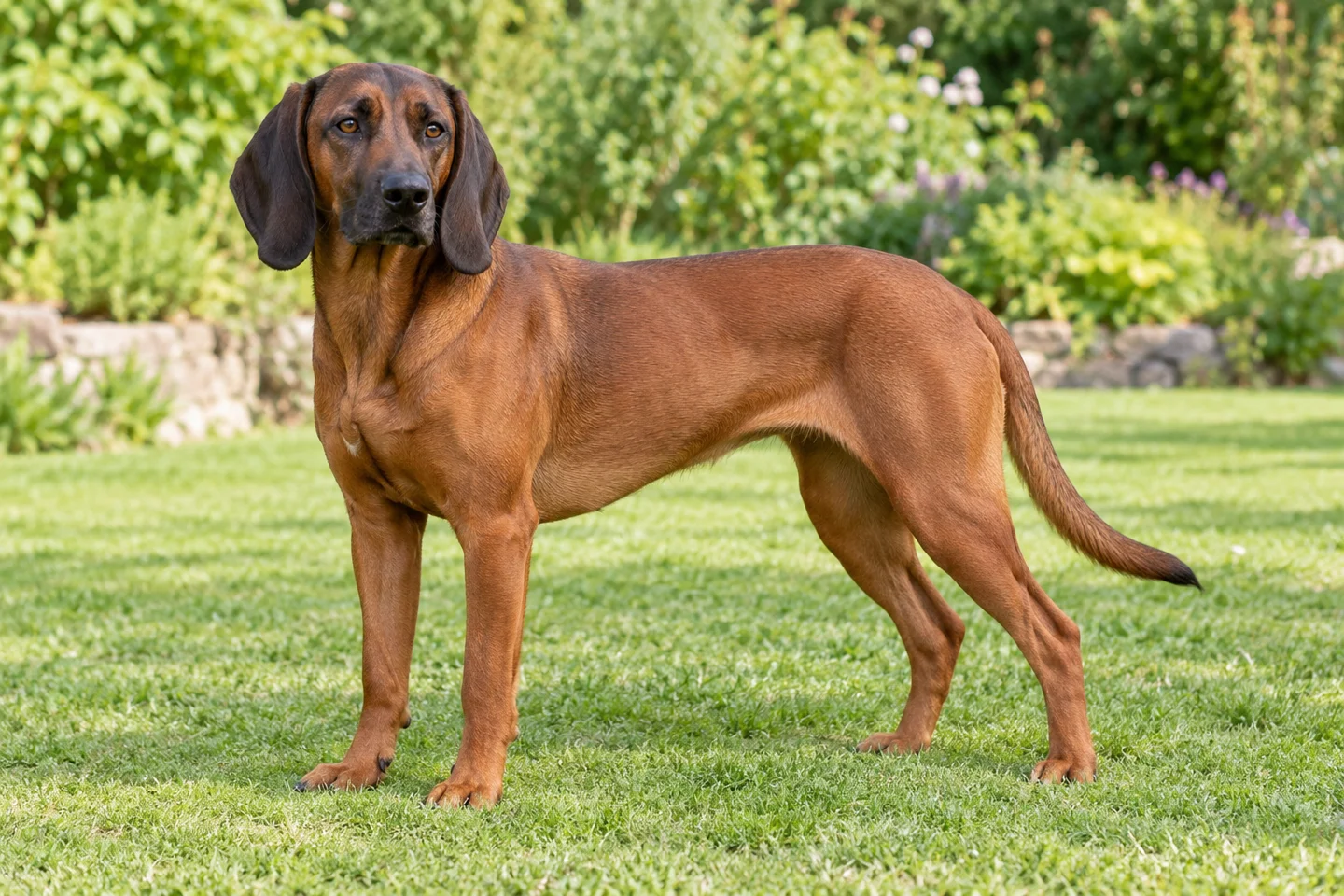
The breed has a medium athletic outline, dropped ears, a short dense coat, and a long natural tail. Red or fawn shades with a darker face are familiar, within the relevant standard's description. The illustrations show generated examples rather than records of particular dogs or ideal medical condition. Assess the actual dog walking, turning, rising, and recovering after activity. An enthusiastic response to a trail cannot rule out pain elsewhere in the routine.
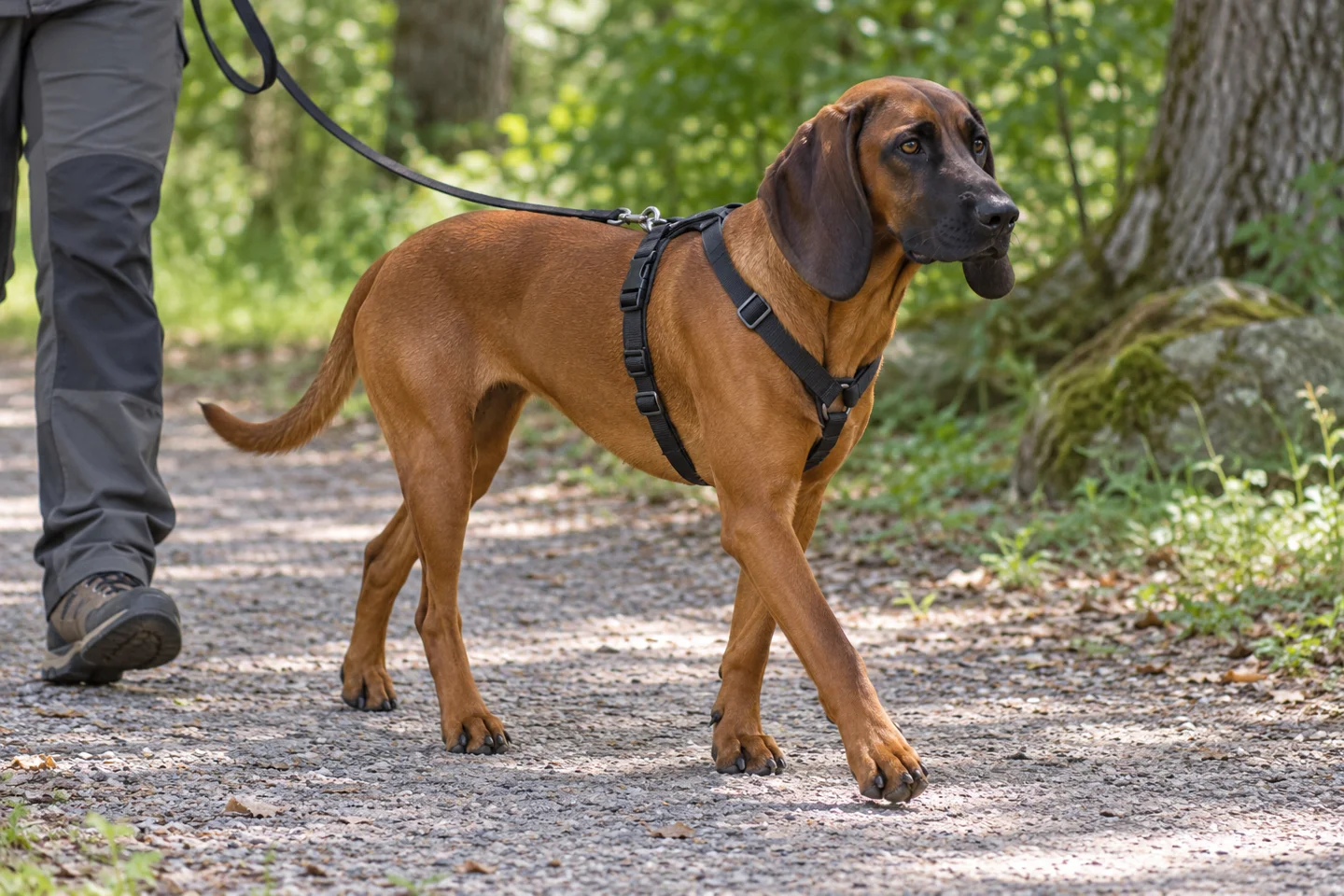
Fit equipment to the chest and shoulders, making sure it remains secure when the dog lowers its head or reverses away. Check for rubbing after wet or prolonged use. A growing puppy needs repeated adjustment, and worn fasteners should be replaced before a difficult outing. Teach standing for fitting and waiting at doors in quiet conditions. Identification and a microchip support recovery after an escape while reliable access routines and attached equipment prevent the initial risk to the dog and other animals.
Tracking work and suitable instruction
A dog with inherited scent interest still needs education, conditioning, and an experienced handler. Working with wounded game has legal, welfare, and practical requirements that vary by location. Obtain instruction through an appropriate local organization rather than experimenting with wildlife or assuming a puppy is ready for difficult work. The owner needs to manage the line, read the dog, assess terrain, and know when the task exceeds current ability. A pedigree does not supply those human skills.
For companion outlets, choose controlled scent searches or a well-managed tracking class suited to the individual. Start with achievable tasks and increase difficulty gradually. Prevent access to dangerous materials or animals, and separate dogs if food searches could create competition. A useful activity should leave the dog able to rest afterward. The aim is a sustainable routine, including quiet days, rather than an escalating challenge that makes the dog and owner dependent on ever longer sessions to finish feeling settled.
Secure exploration and trail decisions
Practice recall in enclosed surroundings and reward it well, retaining a lead where traffic, wildlife, or stock create danger. A familiar cue can be less effective when a compelling trail occupies attention. Do not test reliability through a risky release. A long line may provide room when managed carefully, with attention to speed, footing, branches, and entanglement. It should support safe exploration rather than become a way to stop a fast dog abruptly at the end of a long run.
Teach a comfortable turn away, a pause at a gate, and checking in with the handler before difficult encounters arise. Choose routes with enough room to move aside from unfamiliar animals. Respect local access rules and prevent contact with stock. If the dog cannot respond, reduce difficulty rather than increasing command volume. A tracker adds information after an escape without making release safe. Secure boundaries, reliable equipment, and a decision to keep the dog attached remain necessary where a mistake would have serious consequences.
Mountains, weather, and physical preparation
Build conditioning before long distances, steep routes, or demanding ground. A breed associated with mountains still needs an individual assessment of age, fitness, and health. Check weather, water access, footing, and the possibility of an early return. A dog may remain keen while fatigued or uncomfortable. Monitor gait and recovery rather than waiting for refusal, and discuss persistent stiffness or slower recovery with the veterinarian before repeating a demanding outing.
In heat, shorten activity and provide drinking water and shade. Collapse or severe breathing difficulty requires urgent veterinary advice. Cold rain also needs attention to comfort, drying, and a suitable resting place. Inspect paws, nails, ears, and skin after rough vegetation or rocky ground. Remove loose surface debris carefully, but seek help for embedded material, painful swelling, wounds, or persistent lameness. A working reputation should inform preparation without becoming a reason to dismiss signs that the individual dog is struggling.

Company, visitors, and quiet rest
Ask how the actual dog responds to familiar people leaving and unfamiliar people arriving. A close working relationship does not establish tolerance of long isolation, and reserve does not automatically mean aggression. Provide a comfortable resting area away from repeated window activity. Teach settled periods while someone remains nearby and build short absences gradually. A recording can reveal pacing, calling, or escape attempts. Seek help for distress rather than assuming another dog or more exercise will resolve it.
Arrange visitors so the dog can observe at a comfortable distance or rest separately. Guests should not follow, loom over, or reach toward an animal trying to withdraw. Calm observation can be a useful outcome without greeting. If threats or inability to recover recur, obtain qualified advice and review the environment. A dog changing homes may need gradual learning about appliances, indoor surfaces, and closed doors. Initial quietness can reflect adjustment rather than a complete picture of its settled behavior.
Children and respectful interaction
Children need active adult supervision with a Bavarian Mountain Scent Hound. Teach calm invitations and let the dog leave. Avoid hugging, climbing, pulling ears, or leaning over its face. Keep meals, chews, and sleeping places free from interference. A child should call an adult when something is near the dog rather than trying to move it. Familiar affection does not remove the need for boundaries, especially when the dog is tired after activity or uncomfortable with handling.
Visiting children create different movement and noise from the usual routine. Use separation before energetic games if adult attention will be divided, and provide a retreat children cannot enter. Watch turning away, freezing, hiding, or repeated efforts to leave. A dog should not need to escalate warnings to obtain rest. Review arrangements as children become mobile or health changes. Comfortable behavior with one familiar child cannot establish tolerance of every crowded gathering, unfamiliar person, or sudden attempt to touch a resting animal.
Other dogs, cats, and prey-sized animals
Assess dog compatibility individually. Begin unfamiliar meetings with parallel walking in a neutral area and enough room to disengage. At home, separate food, chews, and sleeping areas while observing comfort. Watch repeated blocking, hovering, or pursuit. A dog can enjoy another's company outside while preferring space around resources indoors. Both should be able to pause and leave, and an owner's description of enthusiasm does not establish that the other animal welcomes repeated attention.
Cats need gradual introductions and escape routes the dog cannot follow. Familiarity with one household cat does not predict safety with an unfamiliar animal running outdoors. Rabbits and similar pets require secure protection rather than an informal test. Stop access if stalking, fixation, or chasing appears and seek professional advice. Tracking background does not establish safety with every animal encountered at home. A household needs reliable separation while assessing the individual and should acknowledge when its resident animals and the dog's needs cannot be accommodated safely.
Aggression and recognizing pressure
Stiffness, freezing, hard staring, growling, snapping, or attempts to retreat mean the interaction needs to change. Increase space and review what preceded the response, including handling, resources, and escape routes. Avoid cornering the dog or repeatedly reaching for a valued object to prove authority. A breed description cannot determine safety in a particular encounter. Practical management protects people and animals while the owner obtains an assessment instead of asking someone else to test the same unresolved boundary.
Sudden irritability or new handling sensitivity warrants veterinary examination. Pain and sensory changes can affect tolerance. Record recurring incidents and consult a veterinary behaviorist or qualified reward-based professional. Punishing warnings can obscure risk while leaving fear or discomfort unresolved. Barriers, separate resources, and a basket muzzle introduced gradually with rewards may form part of an appropriate plan. They support treatment and management without making unwanted contact comfortable or replacing the dog's opportunity to maintain distance.
Training useful cooperation
Reward attention to a name, a hand target, waiting at doors, and exchanging objects. Begin in quiet settings and add difficulty gradually. Food, a suitable game, and access to an appropriate sniff can all matter. A delayed response may indicate an unclear task or overwhelming environment rather than deliberate resistance. Keep sessions brief and understandable. Skills learned at home need practice elsewhere, with safeguards retained near hazards even when the dog has responded well in easier conditions.
Teach standing for equipment, gentle foot inspection, and settling during household activity. Consistent cues and access rules across carers help the dog understand what works. A reward-based instructor can improve timing and line handling without repeated jerks or forced positions. Avoid using demanding tracking work as the only occasion for learning. Ordinary cooperation makes veterinary visits, travel, and care easier, and a manageable daily routine is more valuable than an elaborate performance that occurs only with one familiar handler in one quiet location.
Grooming, ears, and body checks
Brush the short coat regularly and inspect beneath equipment for irritation. A dense coat can hide scratches, parasites, or small wounds. Bathe when needed with suitable products and dry comfortably. Dropped ears need observation for odor, discharge, redness, head shaking, or pain. Ask the veterinarian whether cleaning is appropriate and which method suits the dog. Avoid deep insertion of objects or reusing medication from another episode, because similar signs can have different causes requiring assessment.
Teach tooth brushing, nail care, and body handling through brief rewarded steps. Stop to investigate a new objection to familiar touch. Tell clinic staff about handling concerns before arrival so the appointment can be planned. A complete grooming session is less important than avoiding repeated painful struggles. Cooperative care can help during illness, while necessary treatment should not wait until every training exercise is perfect. Keep a note of new lumps, skin changes, or intermittent discomfort so observations can be described accurately at the visit.
Health evidence and screening decisions
The FCI standard describes identity and working function rather than providing a population-wide disease survey. Ask which health program the breeder follows and request actual reports and family information. Do not invent a universal international checklist or accept unsupported percentages from a general breed page. A dog that works enthusiastically may still have an inherited concern or develop illness later. Conversely, the existence of a test report does not imply disease until its actual finding has been read and interpreted.
Discuss relevant joint, eye, hearing, and family concerns with the veterinarian. Routine examination, imaging, specialist assessment, and DNA testing answer different questions. A broad panel covers selected variants and cannot exclude every inherited or acquired condition. Confirm identities, dates, methods, and results. For an adopted adult with missing history, acknowledge gaps and plan from current findings. New symptoms still need investigation, alongside ordinary preventive care for vaccination, parasites, teeth, and local travel risks. A working reputation cannot substitute for that individual plan.
Feeding, mixes, and lifelong planning
Feed a complete diet suited to life stage and health, using measured portions and body-condition trends. Include training rewards in the allowance and adjust for actual work rather than a breed's job title. Feed separately from children and other animals and teach exchanges without confrontation. Avoid supplements without a veterinary reason and seek qualified guidance for home-prepared meals. Persistent appetite, thirst, weight, or digestive changes needs assessment rather than repeated unplanned food changes or an assumption that an athletic dog is naturally thin.
A Bavarian hound mix can vary in size, coat, scent interest, and social preferences. A red coat and dark muzzle cannot confirm ancestry. Ask what is documented and assess observed needs. Budget for suitable equipment, preventive care, instruction, emergency treatment, and backup care. Practice a short stay with a trusted carer and leave written routines. In later years, review footing, transport, rest surfaces, and recovery so pain receives attention rather than being interpreted as reluctance to work or ordinary ageing without examination.
A considered dogsDating introduction
Describe this dog's actual experience and preferred distance in its dogsDating profile, keeping exact home coordinates private. Choose a quiet public route outside its home boundary, with room for parallel walking and separate capable adult handlers. Start far enough apart that both dogs can investigate and respond. Avoid crowded entrances and narrow trails where moving away would be difficult. A meeting should fit the dogs' current abilities rather than become a test of whether an owner can insist on a close greeting.
Leave shared toys and food out of the first outing. Increase space or end if either dog stiffens, becomes overwhelmed, or is persistently pursued. Both should be able to disengage and recover. A calm walk can provide useful information without physical greeting or play. Discuss the setting and distance that worked rather than declaring compatibility everywhere. A successful public outing does not establish that the dogs can share a home, vehicle, or valued resource without a separate assessment and suitable management.
Sources and editorial notes
Sources checked October 21, 2026. Breed measurements describe reference ranges, not a diagnosis or an individual dog's ideal weight. Images are AI-generated breed illustrations and do not document a particular dog or health condition.
- VCA Animal Hospitals: Hypoallergenic dog breeds
- VCA Animal Hospitals: Ear infections in dogs
- VCA Animal Hospitals: Food aggression in puppies
- Orthopedic Foundation for Animals: Disease screening information
- VCA Animal Hospitals: Heat stroke in dogs
- Fédération Cynologique Internationale: Bavarian Mountain Scent Hound official breed standard
- VCA Animal Hospitals: Aggression toward unfamiliar dogs, diagnosis
- AVSAB: Humane Dog Training Position Statement
Keep getting to know dogs.
Read another guide or return to your dogsDating community.
Explore breed guidesBack to dogsDating