Bolognese
A small Italian companion whose daily care includes gentle handling, comfortable absences, sustained coat maintenance, and dental attention.
How these guides are researched and reviewed

- Origin
- Italy
- Coat
- Long, fluffy white coat
- Care priorities
- Coat maintenance, gentle handling, comfortable absences
General information for owners. These articles have not been reviewed by a veterinarian. Medical decisions need your dog's history and an examination.
Living with a Bolognese
A Bolognese offers small-dog companionship with a coat that needs sustained attention. Its portable size can make travel and household access easier, but daily care still includes walking, training, grooming, dental attention, and arrangements for company. Plan how those jobs will fit an ordinary working week. If your main reason for choosing the breed is that a little white dog looks easy to carry, spend time with adult dogs and their owners before deciding whether the less visible work suits you.
People often describe companion breeds through affection. Ask more practical questions: can this dog relax while its owner works, accept brushing without distress, and recover after hearing a noise in the hallway? Individual answers differ. A puppy's habits develop through experience, while an adult rescue brings an existing history that deserves patient assessment. Neither age nor pedigree guarantees a quiet, sociable household member. The best match depends on the dog's actual needs and the care a person can reliably provide.
Italian identity and similar white dogs
The Bolognese is an Italian companion breed with a long white coat. It belongs to the wider family of small bichon-type dogs but has its own identity. It is distinct from the Bichon Frise, Maltese, and Toy Poodle, even though grooming or a photograph can make those dogs look similar. A seller's claim that every small fluffy white puppy is a Bolognese deserves scrutiny. Request clear parent identification and registration information when the dog is represented as a registered purebred.
For a rescue, a thoughtful description can be useful even when exact ancestry is unknown. Calling a dog a small white companion mix may be more accurate than attaching a confident rare-breed label based on coat alone. Focus on its behavior, physical condition, and care history. Historical prestige or stories about noble households offer little guidance about grooming tolerance or separation needs. Modern health documentation and honest observations should carry more weight in an adoption decision than a decorative account of ancestry.
A small body with ordinary canine needs
A Bolognese can fit on a lap, yet it still needs chances to walk, sniff, investigate, and make choices on the ground. Check that harnesses sit comfortably without rubbing under the front legs or tangling the coat. Lead weight and clip size should suit the dog. In the car, use an appropriate secured arrangement rather than allowing the dog to roam between passengers. Small size makes an unrestrained dog easier to overlook; it does not make sudden braking harmless.
Make the home accessible and predictable. Watch for gaps under gates, unsecured balcony spaces, and furniture from which the dog might attempt an awkward jump. Teach a comfortable route on and off permitted resting places, using suitable steps or assistance where needed. Family members should agree about doors and garden access. A tiny puppy can disappear behind a person's feet or through an opening unnoticed. Clear routines help prevent those ordinary accidents without confining the dog to someone's arms throughout the day.
Companionship and comfortable independence
A dog bred for companionship may enjoy staying close, but proximity alone does not tell you whether it can cope with brief separation. Build a resting area near everyday household activity, then reward settling there while you move around. Practice closing a door for a moment and returning while the dog remains comfortable. Change one difficulty at a time. The first experience of being alone should not be an unexpected full workday after a week of uninterrupted contact.
Observe the individual response rather than assuming fussing is a necessary stage to ignore. Frantic scratching, sustained pacing, persistent vocalizing, or attempts to escape require a different plan. A veterinary professional or qualified behavior practitioner can help distinguish distress from other needs. Arrange a sitter or other support when your schedule exceeds what the dog currently manages. Another pet may provide company, but adding a dog is a separate long-term commitment and does not guarantee that the original dog's separation difficulties will resolve.
Children and respectful handling
A small dog can be frightened or injured when picked up awkwardly. Teach children to sit on the floor and invite interaction instead of chasing the dog around the room. An adult should demonstrate support under the body when lifting is necessary and remain responsible for carrying. Avoid passing the dog between children as though it were a toy. If it turns away, hides, or tries to climb down, give it a clear exit rather than tightening the hold.
Keep the bed in a place where the dog can sleep without being touched. A resting Bolognese should not have to growl repeatedly before an adult stops an interaction. Protect meals and chews from curious hands, and teach children to ask for help when the dog has picked something up. Supervise closely enough to intervene before handling becomes rough. During busy visits, a comfortable separate area may be kinder than expecting the dog to tolerate continuous attention from children who are still learning.
Meeting dogs and living beside cats
Size differences matter when planning play. A larger friendly dog may overwhelm a Bolognese through body contact, even without aggressive intent. Watch for pauses, reciprocal approaches, and opportunities for the smaller dog to leave. Choose companions by their actual style rather than assuming all small dogs play gently or all large dogs are unsuitable. Interrupt repeated pinning, chasing without escape, or crowding at a person's feet. A walk together may suit a pair better than wrestling in a confined room.
In a home with cats, arrange places where either animal can retreat without crossing the other's bed or food. Early encounters can happen across a secure barrier with enough distance for calm observation. The dog should learn to disengage rather than follow every movement. Cats also need protection from persistent small-dog attention. When considering an adult adoption, ask what was observed around particular animals and how introductions were managed. Do not turn an uncertain first meeting into an experiment with free access throughout the house.

Aggression and taking warnings seriously
A small dog's snap can be dismissed as comic, but it signals a problem and can still injure someone. Handling, approach to a valued place, fear of a larger animal, or pain can contribute to defensive behavior. Notice the sequence before a reaction. Does the dog move away when a brush appears, stiffen when lifted, or freeze as someone reaches toward its bed? Stop the pressure, arrange safer handling, and discuss new or worsening behavior with a veterinarian.
Avoid repeatedly picking up a resisting dog to prove that people control it. Use a cue, a reward, and a suitable route where possible, then work on cooperative handling in small steps. Professional advice should address both management and the reason for the behavior. Reward-based methods allow the dog to learn a different response without deliberately frightening it. Preserve useful warnings by responding early. A dog that no longer growls after punishment may still be uncomfortable when someone reaches toward the same sore or guarded area.
Training beyond decorative tricks
Teach behaviors that protect the dog in ordinary places: returning when called, waiting while a door opens, following a hand target, and settling on a portable mat. Practice at ground level without leaning over the dog continuously. Small rewards and brief sessions can keep learning clear without filling a small stomach. Increase distractions in manageable steps. A cue learned in a quiet kitchen will need further practice before it works in a building entrance where people and dogs pass closely.
Toilet training requires access and observation rather than assumptions about stubbornness. Offer frequent opportunities after waking, meals, play, and transitions, then reward success promptly. Keep a consistent plan if the household uses an indoor toilet area as well as outdoor trips. Sudden accidents in a previously reliable dog warrant medical consideration. Make the correct place easy to reach and clean accidents appropriately. Punishment after the event supplies little useful information and can make the dog avoid toileting in a person's presence.
Exercise for a little companion
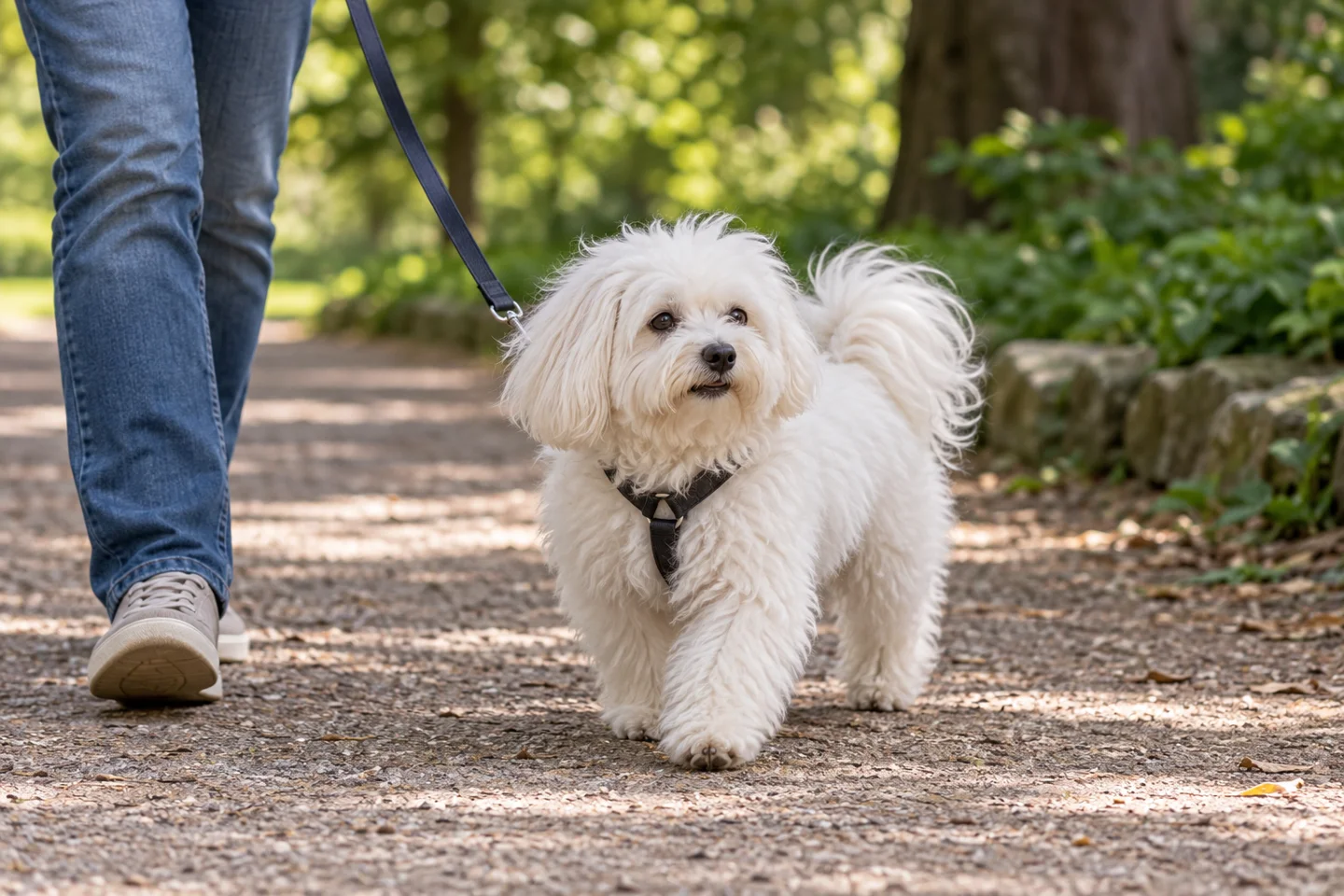
Offer daily walks matched to the dog's fitness, weather, and interest. Sniffing a verge, searching for a few food pieces, and exploring a quiet route can provide useful activity without athletic spectacle. Small size does not mean indoor pacing supplies everything the dog needs. Check paws and equipment after outings, particularly when vegetation or damp ground catches in the coat. An older dog or one recovering from illness may need several brief walks rather than one longer trip.
Keep play on comfortable surfaces and avoid repeatedly encouraging leaps from furniture. Give the dog chances to stop and rest rather than letting an enthusiastic person dictate every repetition. In warm weather, choose cooler times and watch recovery carefully. If the dog is unusually weak, distressed, or breathing with difficulty, seek veterinary help. Exercise needs can change, so unexplained reluctance should prompt investigation. Carrying the dog home may solve the immediate journey while leaving the reason for its discomfort unanswered.
Grooming a long white coat
The Bolognese coat needs a routine that reaches beneath the outer fluff. Divide the hair into manageable areas and check close to the skin, especially under the legs, behind ears, and beneath a harness. Tangles tighten when ignored and can make later care painful. Ask a knowledgeable groomer to show suitable tools and technique on your own dog. A practical trim may fit a household better than maintaining a long presentation coat, provided the dog's skin and comfort remain the priorities.
White hair can show staining and debris easily. Clean gently and investigate persistent wetness, irritation, odor, or discharge instead of repeatedly treating appearance alone. Keep the mouth area comfortable after meals and dry damp coat. Do not use harsh bleaching products or put unprescribed preparations near the eyes. A dog that resists face care may be anticipating discomfort. Reduce the task to small rewarded steps and seek veterinary advice when the skin or eyes look abnormal, rather than holding the head more firmly.
Teeth, nails, and allergy expectations
Introduce tooth brushing with dog-safe products in small stages, including brief contact around the lips before attempting a longer session. A veterinarian should assess bad breath, painful chewing, or changes in the mouth. Coat and size do not protect a dog from dental disease. Include nail checks and ear inspection in the routine, and seek help before nails become difficult to manage. Care should leave the dog able to cooperate again tomorrow, rather than ending only when it stops struggling.
No breed guarantees freedom from human allergy. Reactions involve allergens beyond visible shed hair, and individual people respond differently. Spend time with the type of dog you are considering and discuss significant allergy concerns with your own clinician before committing. A low-shedding marketing claim does not establish a safe medical outcome. Grooming, cleaning, and household arrangements may influence exposure, but they do not turn the Bolognese or one of its crosses into a reliably hypoallergenic option for every prospective owner.
Health questions and named tests
The Bolognese Dog Club UK discusses patella checks, visual eye examinations, and testing for the prcd-PRA variant. Its article dates from 2020, so verify current advice with the relevant club and your veterinarian rather than treating that page as a universal present-day rule. Ask which dogs were examined, when assessments occurred, and what the actual results say. Patella assessment concerns kneecap stability. An eye examination and a DNA result answer different questions and should not be presented as interchangeable certificates.
Keep the limits of a result clear. A negative result for one PRA variant does not establish that every cause of impaired vision is absent. Likewise, a reassuring kneecap assessment does not explain a later limp without an examination. Ask about the health of adult relatives and the reasons for any additional tests used in a particular family. A seller should be able to provide documents without promising that screening prevents all future illness. Bring those documents to your veterinarian after adoption for an individual care plan.
Feeding and noticing changes early
Choose complete food appropriate to the dog's age and measure it with the whole day's intake in mind. Small portions make extra treats easy to overlook. Use part of the measured ration for training when appropriate, and monitor body condition beneath the coat. Ask a veterinarian to help assess weight rather than relying on the appearance of a freshly groomed silhouette. Avoid changing foods repeatedly in response to every missed mouthful before considering the dog's routine, treats, dental comfort, and overall health.
Persistent appetite loss, repeated vomiting, painful movement, unusual drinking, or a marked behavior change deserves medical attention. Contact an emergency service promptly for collapse, severe breathing difficulty, or major injury. Keep a suitable carrier and an accessible record of medications and clinic numbers. Older Bolognese may need changes to household access and activity, but gradual decline should still be discussed with a veterinarian. Timely assessment can identify a treatable problem that an owner might otherwise attribute simply to being small, fussy, or old.
Mixes and long-term household fit
A Bolognese cross can differ from either parent in coat texture, grooming demands, and behavior. Do not assume that crossing with a Poodle guarantees easy grooming or prevents allergies. Both parent histories matter, and a catchy cross name does not create a consistent standard. For a rescue of uncertain ancestry, assess current coat care and temperament directly. Ask whether the dog has tolerated brushing, travel, visiting children, and normal absences under conditions similar to those in your own home.
Include professional grooming, dental care, training help, and a sitter in the budget. A small dog may eat less than a giant breed while still needing expensive treatment or regular appointments. Consider who will care for it during travel and whether that person can follow its handling and coat routine. The breed can suit many homes that provide companionship and gentle consistent care. Suitability depends on those concrete arrangements, including care during busy periods, rather than the assumption that a compact dog always fits any lifestyle.
A small-dog dogsDating outing
Use dogsDating to find a companion whose play style and handling needs fit your Bolognese. Describe whether the dog likes walking beside another animal, enjoys gentle play, or needs extra distance from boisterous approaches. Meet in a quiet public place with room to separate, and keep the first outing short. Avoid beginning inside a crowded small-dog enclosure where the newcomer has little control over contact. Observe both dogs rather than assuming a shared size establishes mutual comfort.
Share an approximate area while keeping exact home coordinates private. Agree on a visible meeting point and bring equipment that allows comfortable movement. Leave prized toys and shared treats out of the initial greeting. If one dog hides behind its owner or repeatedly tries to escape the interaction, create space and end calmly. Owners can communicate honestly about what happened and choose a different arrangement next time. A profile match supports that conversation, while the dogs' behavior determines whether another walk or closer play is sensible.
Sources and editorial notes
Sources checked October 21, 2026. Breed measurements describe reference ranges, not a diagnosis or an individual dog's ideal weight. Images are AI-generated breed illustrations and do not document a particular dog or health condition.
- AVSAB: Humane Dog Training Position Statement
- VCA Animal Hospitals: Food aggression in puppies
- VCA Animal Hospitals: Aggression toward unfamiliar dogs, diagnosis
- VCA Animal Hospitals: Ear infections in dogs
- VCA Animal Hospitals: Common emergencies in dogs
- VCA Animal Hospitals: Heat stroke in dogs
- Orthopedic Foundation for Animals: CHIC program and interpretation of numbers
- VCA Animal Hospitals: Hypoallergenic dog breeds
- American Kennel Club: Bolognese breed identity and care
- Bolognese Dog Club UK: Health checks, patella assessment, and eye testing
- VCA Animal Hospitals: Grooming and coat care for your dog
- VCA Animal Hospitals: Feeding guidelines for dogs
- Washington State University: Gastric dilation and volvulus and bloat in dogs
Keep getting to know dogs.
Read another guide or return to your dogsDating community.
Explore breed guidesBack to dogsDating