Bracco Italiano
A substantial Italian pointing dog whose companion life needs scent outlets, cooperative handling, secure walking, and documented kidney and orthopedic screening.
How these guides are researched and reviewed
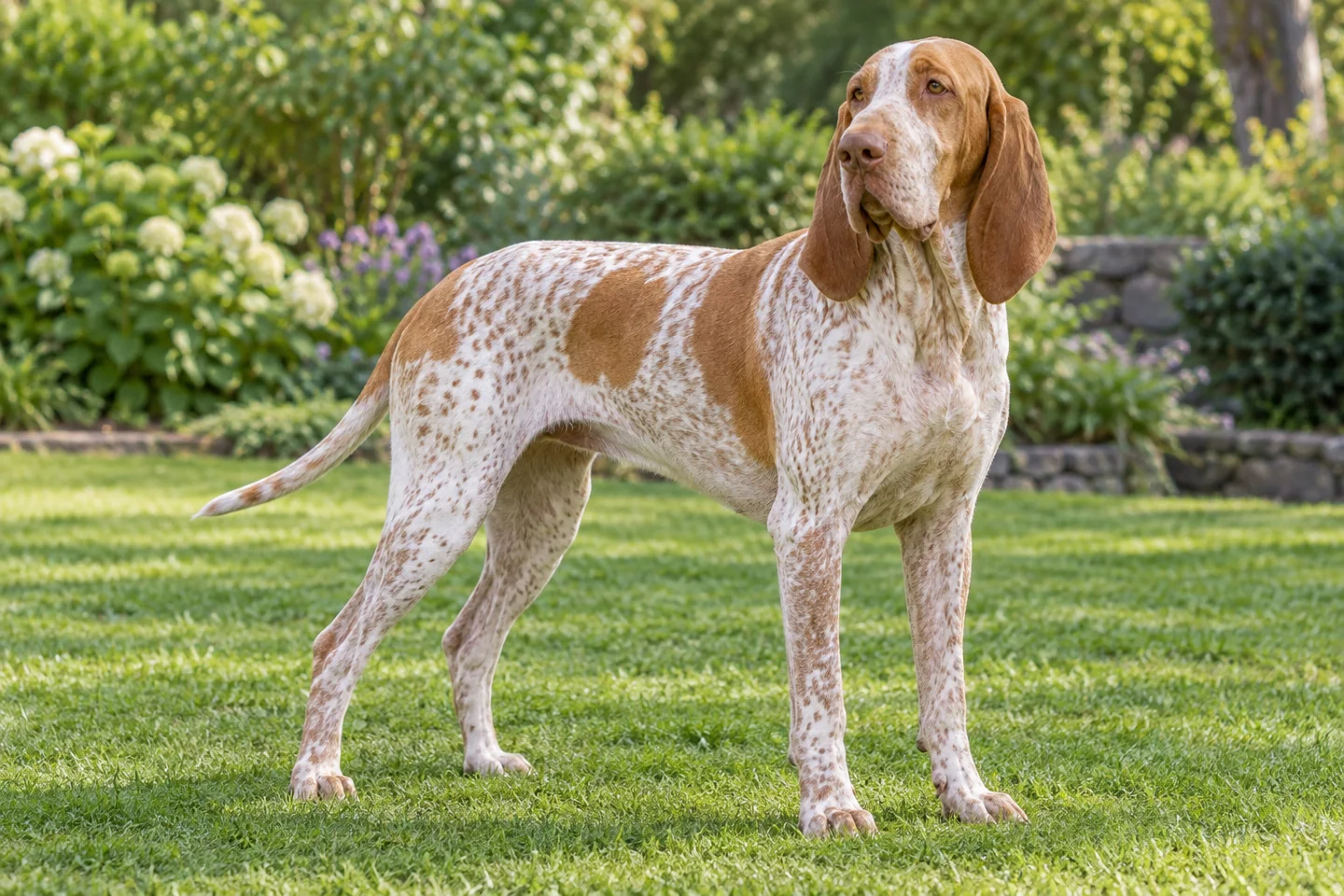
- Origin
- Italy
- Coat and identity
- Short white coat with orange or chestnut markings
- Care priorities
- Kidney records, ear care, and adult-size transport
General information for owners. These articles have not been reviewed by a veterinarian. Medical decisions need your dog's history and an examination.
Choosing the Bracco you can care for
Plan for the adult Bracco before meeting a litter. Where will a wet dog dry after a walk, how will it enter the car, and who can manage it if you hurt your shoulder? These questions matter for a substantial pointing breed whose interests extend beyond the living room. A short coat can simplify some maintenance, but it cannot provide exercise, companionship, or secure outdoor access. Walk through your busiest weekday and identify which parts of the routine need another person rather than an optimistic promise.
Ask to accompany an owner on an ordinary outing and remain for the return home. You may learn more from watching equipment come off and the dog settle than from a field demonstration. Find out how the dog behaves when a familiar activity is cancelled, when someone else holds the lead, and when an unfamiliar person enters. For a rescue, request observations from the current living arrangement. An adult may have known preferences that help a placement, while a puppy brings more uncertainty about its eventual size, tolerances, and social choices.
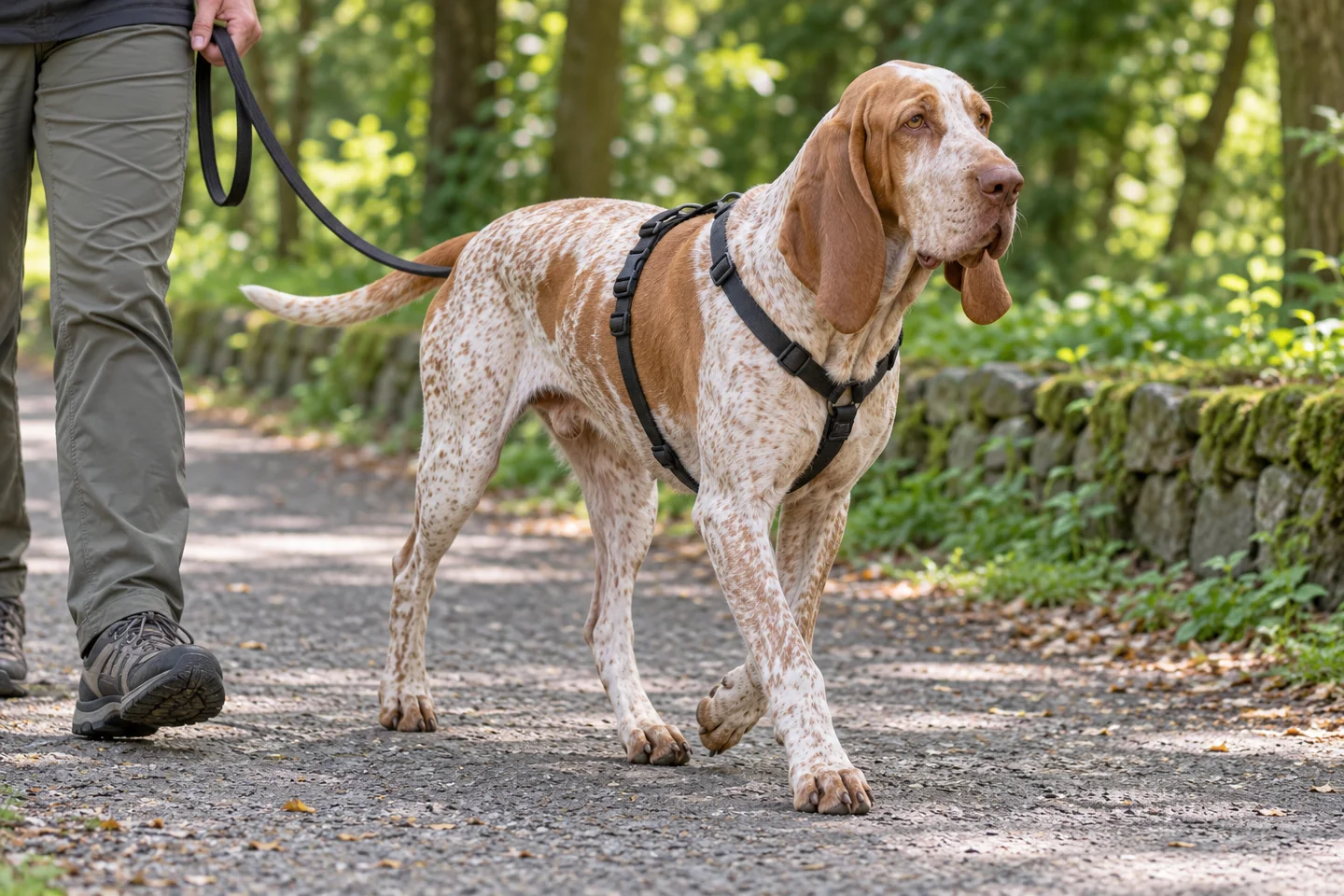
Practical equipment deserves a trial before a long outing. Adjust the harness so the dog can reach its nose toward the ground without pressure across the throat. Check whether the car opening allows a comfortable entry and whether a travel crate leaves room to stand and turn. Practice loading in a parked vehicle, then build up to short journeys. A dog that freezes at a tailgate needs a different approach from one that rushes forward. Ask someone to help with a calm demonstration rather than pulling on the lead. These ordinary details determine whether daily enrichment remains manageable when the weather changes or the usual walker is unavailable.
Italian pointing history and breed identity
The Bracco Italiano is an Italian pointing breed with a long documented association with bird hunting. The FCI describes its development through changing hunting practices, including the transition to hunting with firearms. That broad history helps explain why scent, cooperative field tasks, and sustained movement can matter. It does not provide a precise pedigree for every modern dog. Recent information about family health, work, and everyday behavior is more useful for placement than unsupported claims about a remote ancestor.
Italian Pointer is another English description of the breed. Bracco does not make every Italian hunting dog the same breed, and the Spinone Italiano has a separate identity and coat. Ask which registry issued a pedigree and what supports a rescue identification. Long ears and a white-and-orange coat cannot confirm ancestry alone. When records are missing, keep a visual estimate visibly uncertain and assess actual needs. A plausible label can add context while leaving important health and household questions unanswered.
Reading the body beneath the expression
The strong muzzle, long ears, and substantial outline give the Bracco an appearance that can draw attention away from practical function. The standard includes white coats with orange or chestnut markings and roaning. Watch a prospective dog on level ground before focusing on a head study: does it turn comfortably, distribute weight evenly, and rise without hesitation? Ask about recurring movement changes even if excitement makes them less obvious during your visit. A veterinarian can help distinguish normal variation from something that needs investigation.
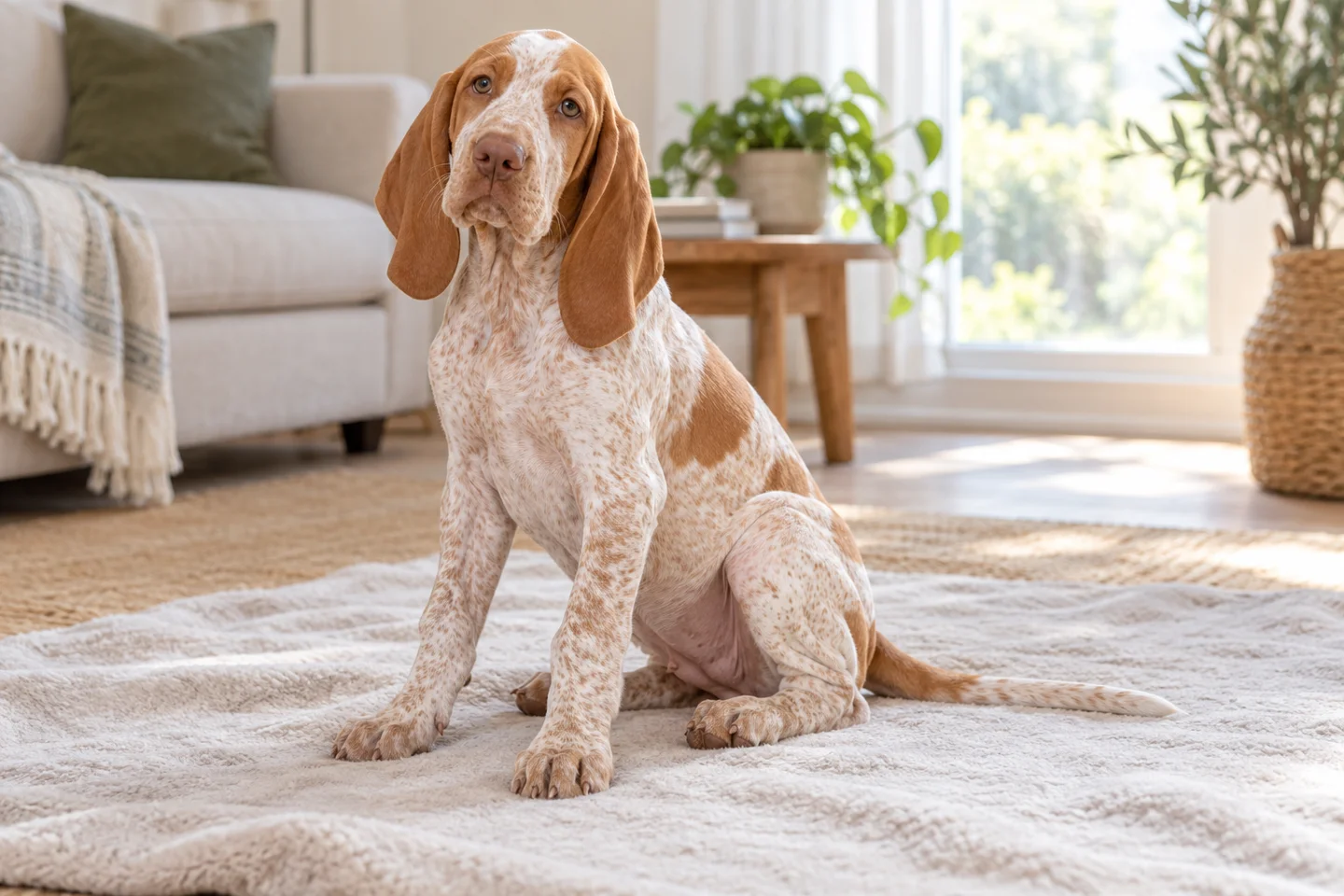
The generated illustrations show undocked breed examples. They are a visual aid, not evidence of pedigree, soundness, or a particular animal available for adoption. Try equipment on the actual dog and look at the contact points under its chest and behind its elbows. Arrange the lead so an unexpectedly lowered nose does not pull the collar against the throat. A practice fitting in a quiet room lets you discover loose clips or uncomfortable straps before the dog is distracted by a new route.
Training around a pointing dog’s attention
On a quiet path, reward the Bracco when it notices you without being called. Then permit investigation of another suitable patch. This makes human attention useful within the walk instead of a signal that every interesting smell is about to disappear. Teach a simple turn away at an easy distance from distractions and repeat it where you can still obtain a response. If the dog has already become absorbed, the first solution may be a different route or more space rather than a louder instruction.
For owners interested in field work, find qualified instruction before introducing difficult terrain, live game, or gunfire. Both members of the partnership need education. A young dog showing a point has displayed an interest, not completed training or conditioning. Companion owners can offer controlled searching tasks without reproducing a hunting day. Use safe objects and appropriate areas, and teach how a session finishes. AVSAB supports reward-based approaches; intimidation and painful corrections can create additional welfare and behavior problems without explaining the task clearly.
Exercise from the dog’s current starting point
Ask what distance and terrain the dog has managed recently before booking a walking holiday. A Bracco accustomed to short local walks needs preparation for hills or a long field outing. Increase the demand in stages and check its movement later that day and the following morning. Carrying on eagerly does not show that the feet or joints will remain comfortable afterward. For a growing dog, discuss appropriate exploration and any proposed repetitive sporting exercise with the veterinarian who knows its development.
On brushy routes, allow time at the car for a careful foot and body inspection. Seek help for an embedded object rather than digging into a painful area yourself. Keep an alternative short route for heat or a dog recovering from illness. Shade, water, and an early return are part of the plan. Heavy distress, breathing difficulty, or collapse needs immediate veterinary attention. A route recorded on a phone is less important than the animal’s condition, even when other walkers want to complete it.
The first week and a routine for rest
Bring familiar food and ask the previous carer to write down the timing of outings and sleep. In the first days, keep visitors limited and observe what happens between activities. Does the Bracco stretch out and sleep, or follow every person from room to room? Those observations help you decide whether it understands the new routine. Give it a quiet location away from repeated door traffic, and avoid treating every approach with a toy as a request that must restart an energetic game.
Practice leaving briefly while someone can observe or a camera records the response. Returning to a quiet home does not reveal whether the dog spent the preceding time pacing. Build from durations it handles comfortably and arrange practical help if your schedule would exceed them. Distress calls for veterinary and behavioral advice. Before a trip, let the proposed carer rehearse feeding, equipment, and a short outing. A trial reveals manageable problems while you are still available to explain rather than during an unavoidable absence.
Children and a substantial dog at home
Imagine a Bracco returning excitedly through the same doorway where a toddler is waiting. Change that arrangement before a collision happens: an adult can take the dog to a separate space while another helps the child. Doorways, narrow halls, and the area around the water bowl deserve particular attention. Make the bed a place children do not enter. Tell visiting families how contact works and supervise closely enough to stop an uncomfortable interaction immediately, rather than checking occasionally from another room.
Long ears and loose facial skin can invite handling that a dog finds unpleasant. Teach a child to invite contact with an open posture and accept a refusal to approach. Keep faces away from the dog’s face and let an adult handle anything lying beside a chew or bowl. If the dog turns away, follows an escape route, or remains unusually still, end the contact. Arrange separation during boisterous games. Familiar affection does not remove the need to notice fatigue, pain, or an unfamiliar child’s different behavior.
Birds, cats, and canine companions
For a bird-oriented pointing breed, poultry or a pet parrot deserves a deliberate management decision before adoption. A confident report about retrieving game does not establish safety beside a vulnerable household bird. Housing must remain secure during cleaning and feeding, not merely when the cage door is shut. Ask exactly which animals the Bracco has encountered and under what conditions. If those facts are unknown, use reliable separation and qualified advice instead of holding an animal close to see what happens.
With cats, plan elevated routes and areas that the dog cannot reach, then introduce sight and movement in controlled stages. Prevent pursuit while assessing compatibility. For a resident dog, consider whether it wants another large energetic companion in its resting space. Start outside the home, observe both animals, and make household resources separate at first. One dog continually following another can be uncomfortable even without noise. Interrupt the interaction when the recipient tries to withdraw, and arrange pauses rather than asking it to defend its own space.
Aggression, discomfort, and safer handling
A Bracco that suddenly objects when its ear is touched needs a medical question answered before a training conclusion is reached. Stop the procedure safely and describe the change to the veterinary team. Similar care applies to stiffness around a resting place or reluctance to move. Write down the setting and what preceded a growl, snap, or bite. An accurate account helps professionals assess risk; a label such as dominant or normally gentle does not explain the incident.
While obtaining help, remove the immediate source of conflict and use doors or gates so people do not repeat it accidentally. Do not confiscate food routinely to demonstrate authority. VCA’s guarding guidance supports teaching safe exchanges rather than manufacturing competition. Repeated threats require a behavior plan with qualified support. If a muzzle is advised, teach it gradually so the dog can wear it comfortably. It adds a safeguard within a plan and never justifies pushing through fear, painful touch, or an unwanted greeting.
Grooming the ears, short coat, and mouth
Keep a simple care kit where you dry the Bracco after an outing. Brush loose hair as needed, inspect places where straps sit, and look for outdoor debris before it is carried indoors. The long ears deserve a visual check without assuming they require a particular cleaning product. Odor, discharge, head shaking, or sensitivity should prompt advice. Leftover ear medicine may be wrong for the next episode, and probing deeply can injure the canal. Let the clinic demonstrate the method appropriate to this dog.
Teach a short chin rest and a comfortable foot presentation when nothing is wrong. These skills can make a tooth check or nail trim less surprising. Use appropriate dental equipment and build tolerance gradually, paying attention if chewing or mouth handling changes. A clinic or groomer should hear about past difficulties before an appointment starts. When treatment is needed, ask how immediate care and longer-term learning can work together; waiting indefinitely for perfect cooperation is not an acceptable response to a painful problem.
Health screening and kidney questions
The AKC lists hip, elbow, eye, and kidney health assessment among national club recommendations for Bracchi. Ask for actual identifiable reports and read dates, methods, and findings. A routine puppy examination answers different questions from formal adult screening. The breed information discusses renal amyloidosis among concerns worth understanding. Ask what kidney assessment involved and what is known about close relatives, rather than accepting a vague statement that a general blood test or DNA panel cleared every possible kidney problem.
A normal result at one point cannot guarantee lifelong kidney health, and the word screened does not identify which condition was evaluated. Increased thirst, altered urination, unexplained weight change, appetite loss, or ongoing illness needs veterinary assessment. Those signs have multiple causes and cannot be diagnosed from breed identity. Keep records available for other clinics and carers. A broad DNA panel covers selected variants rather than every inherited or acquired disease, so current symptoms still need investigation regardless of reassuring family reports or an athletic appearance.
Eyes, joints, and a useful veterinary record
Loose features are not a reason to overlook an uncomfortable eye. The AKC discusses eyelid and eye concerns for the Bracco alongside joint screening. Report squinting, redness, cloudiness, or a change in vision promptly. Take the actual specialist and orthopedic reports to an appointment rather than relying on a seller’s summary. Ask what each result answers and what it cannot establish. A parent’s record supplies family information, while a current problem in the offspring still needs its own examination.
Keep a folder with test reports, medications, vaccination dates, and emergency contacts that another carer can access. For intermittent lameness, a brief video taken during normal movement can help if recording neither worsens pain nor delays care. Plan transport before an adult is unable to walk to the car. Discuss lifting aids or assistance with the clinic. With incomplete rescue records, mark the gaps and start from a current clinical assessment. Unknown information should lead to clear questions, not an automatic assumption of illness or perfect health.
Feeding, mixes, and choosing a puppy
Discuss an appropriate growth diet before bringing a large Bracco puppy home. Measure an initial portion and ask the veterinary team to demonstrate body-condition assessment. The aim is comfortable development, not the largest possible outline. Count rewards offered during searches and care practice, then review the allowance against the dog’s actual condition. A quiet recovery period can change food needs. Persistent appetite or digestive changes deserve assessment; repeatedly buying a different food can make it harder to see what is happening.
When considering a mix, ask which ancestry is documented and which was inferred from appearance. Orange roaning and long ears are insufficient proof. Mixed parentage can change the adult coat, size, and behavior and does not cancel inherited concerns. For any source, request information about the dog’s experience of cats, children, travel, handling, and time alone. Notice whether answers distinguish observation from hope. A responsible placement conversation includes what the household will find difficult and what support is available if the transition does not proceed as expected.
Lifetime plans and dogsDating meetings
A substantial dog needs a budget that includes suitable transport, preventive care, unexpected treatment, training help, and someone capable of managing it during your absence. Ask a proposed sitter about real experience rather than relying on willingness alone. As the Bracco ages, a step into the car or a slippery hallway may need modification. Keep comfortable exploration in its routine while reviewing new stiffness or sensitivity medically. The useful plan is specific about people, access, and money rather than assuming an affectionate breed will fit every future change.
On dogsDating, describe the individual’s known social experiences, chase interests, and preferred pace. Share only an approximate area and keep exact home coordinates private. Select a public route with room for each handler to change direction and start without direct contact. A walking partner need not become a play partner. Avoid valued items during early meetings and end when either dog struggles to disengage. If an outing goes well, assess a future home visit separately; walking alongside another dog gives no complete answer about sharing a vehicle or resting beside a food bowl.
Sources and editorial notes
Sources checked October 21, 2026. Breed measurements describe reference ranges, not a diagnosis or an individual dog's ideal weight. Images are AI-generated breed illustrations and do not document a particular dog or health condition.
- AVSAB: Humane Dog Training Position Statement
- VCA Animal Hospitals: Food aggression in puppies
- VCA Animal Hospitals: Heat stroke in dogs
- VCA Animal Hospitals: Aggression toward unfamiliar dogs, diagnosis
- VCA Animal Hospitals: Common emergencies in dogs
- AAHA: Feeding plans for healthy, appropriate weight cats and dogs
- Fédération Cynologique Internationale: Bracco Italiano breed standard
- Orthopedic Foundation for Animals: CHIC health screening programs
- VCA Animal Hospitals: Grooming and coat care for your dog
- VCA Animal Hospitals: Ear infections in dogs
- VCA Animal Hospitals: Amyloidosis in dogs
- American Kennel Club: Bracco Italiano care and recommended health tests
Keep getting to know dogs.
Read another guide or return to your dogsDating community.
Explore breed guidesBack to dogsDating