Braque Français
One catalog guide covering the distinct Gascogne and Pyrénées types, their different builds, and their shared practical needs as pointing companions.
How these guides are researched and reviewed
- Origin
- Southwestern France
- Coat and identity
- Short brown-and-white coat; two distinct types
- Care priorities
- Identify Gascogne or Pyrénées before comparing records
General information for owners. These articles have not been reviewed by a veterinarian. Medical decisions need your dog's history and an examination.
Braque Français requires a second question
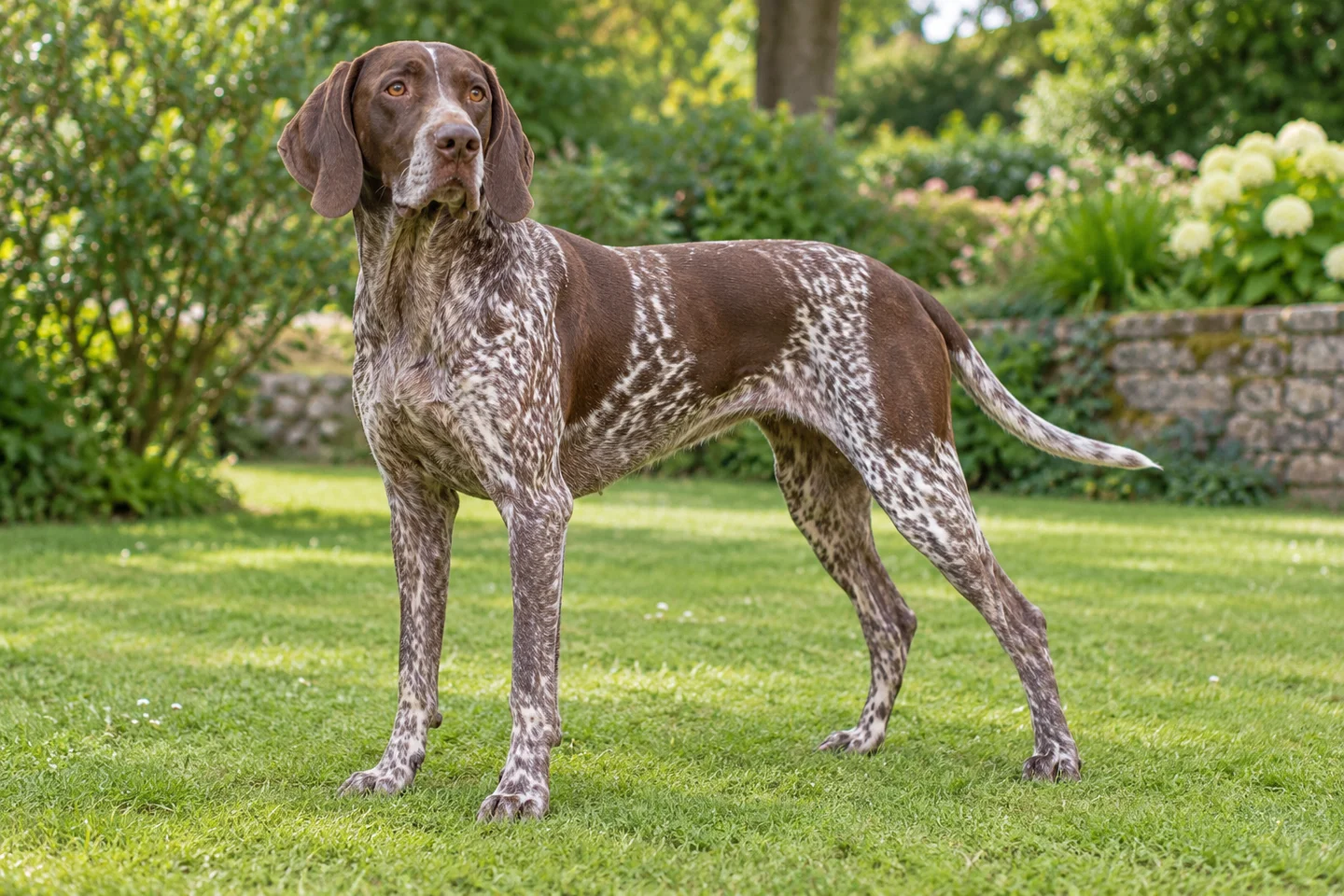
Ask which type is meant whenever you see Braque Français in a listing. The Fédération Cynologique Internationale recognizes the Gascogne type under standard 133 and the Pyrénées type under standard 134. This catalog uses one shared entry, but those separate identities matter when you compare build, registry records, and family information. The generated illustrations represent the Pyrénées type. They cannot show both types equally, and they are not evidence that a similar-looking rescue has a particular pedigree.
Once identity is clear, ask how the individual lives. A smaller outline does not supply a shorter to-do list for the owner. Both types come from pointing-dog backgrounds and need appropriate outlets, teaching, and everyday care. Write down your housing, work routine, existing animals, and available help before contacting a source. Then use that information in the placement conversation. It is easier to choose a suitable dog when the discussion includes the actual household rather than an abstract comparison of which type is supposedly easier.
Gascogne and Pyrénées history and structure
The FCI places these French pointing dogs in the southwest of France and central Pyrenean background. Its Gascogne standard describes the larger, stronger form. The Pyrénées standard describes a smaller, lighter form, with tighter skin and finer coat. These distinctions are useful for recognizing what a source is discussing, without turning physical differences into unsupported claims about character. A compact dog can still have substantial outdoor interests, and an individual larger dog may have its own preferences about pace and activity.
Keep each dog's full recorded identity on veterinary and placement paperwork. If a report says only French pointer, ask whether a more precise registry entry is available. Where parentage is unknown, leave the uncertainty visible. Color, size, or a single photograph cannot resolve ancestry reliably. A person may use the familiar shared name casually, but that does not justify merging all family or screening information into one population. Ask about the line and the actual animals behind the dog you are considering.
Appearance in the illustrations and in person
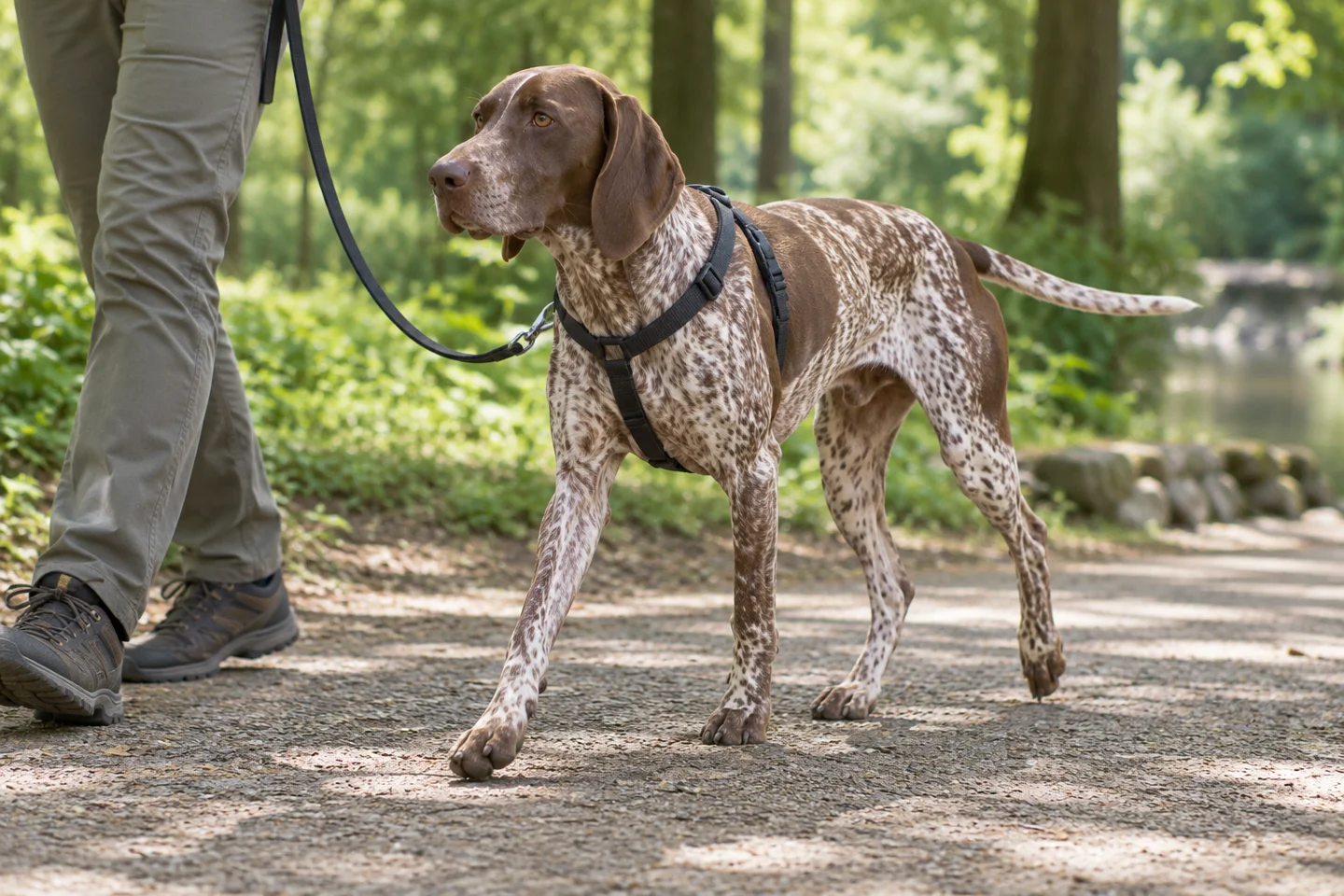
Brown-and-white coloring, sometimes ticked, can look similar across several pointing breeds. The images here show AI-generated Pyrénées-type examples with natural tails. Their role is illustration. Do not use them to judge a real puppy's future size, demonstrate correct movement, or infer a clinical finding. When meeting a dog, step back from the attractive markings and observe how it uses its body. Ask to see an ordinary walk and a comfortable transition from resting to standing.
Equipment decisions should follow measurements and movement. A harness suitable for one adult may rub or slip on another, including within the same recorded type. Check security when the dog reverses and allow space for the shoulders. Trial the fitting quietly, then inspect contact points after use. For household access, measure the car entrance, available travel space, and narrow indoor turns. Planning for the actual adult is more helpful than assuming the lighter type will automatically fit every arrangement advertised for a medium-sized dog.
Selecting a source and reading family information
Invite the breeder or rescue to describe what they do not know. A useful response separates verified ancestry, repeated observations, and estimates. Ask about handling, travel, previous living arrangements, and any bite or serious guarding incident. For a puppy, find out which early experiences were provided and how the source follows up on older offspring. Seeing a parent can contribute information, but a brief meeting does not establish every aspect of temperament or predict the puppy's entire future.
For an adult, request concrete examples from the current home. How does it respond when someone leaves, when another dog rests nearby, or when an ear needs examination? A dog may have performed field work without encountering stairs or a busy apartment entrance. Those are learning needs to plan for. Read placement agreements and return arrangements before paying. If a source focuses entirely on which type is rare or desirable, bring the conversation back to records, welfare, and the support available when real-life difficulties arise.
For a household comparing available dogs of both types, use the same practical questions during each visit. Write the answers beside the individual’s name so a general impression does not erase an important difference. One dog may travel comfortably but lack experience of cats; another may have a useful household history but need help with handling. Those details can decide suitability more accurately than choosing the lighter outline first and assuming everything else follows. Allow time to review the answers away from the excitement of meeting a litter.
The home itself deserves a trial plan. Mark where the bed, water, and barriers would stand and check that people can move without crowding the dog. Find a safe place to remove muddy equipment and store it out of chewing reach. Check whether a carer could use the same arrangement without improvising. If the plan requires a future move or a promised change in working hours, establish those changes before taking responsibility rather than making the dog wait for them.
Training based on the dog in front of you
Begin with one useful response at a time. A movement toward a familiar hand can help guide a dog away from a doorway, position it for equipment, or move through a clinic. Reward the first easy version before adding excitement. Choose food, games, or appropriate sniffing access that matters to this individual. If a task fails outside, simplify the setting and identify which part changed. A cue learned in a quiet room has not automatically been taught beside birds or moving traffic.
Avoid using the two types as opposing personality categories. Instructions should respond to the dog's confidence, previous learning, and current ability to concentrate. AVSAB recommends reward-based teaching and warns about aversive methods. An owner who repeatedly pulls or shouts may need help with timing and task design rather than more force. Practice routine transitions as well as outdoor work: waiting while a clip is fastened, accepting a towel, and settling after an outing. These small skills make necessary care more manageable for every person who helps.
Pointing interests and companion activities
An inherited interest in birds does not provide complete field education. Owners considering work need suitable instruction on handling, conditioning, wildlife welfare, and local access requirements. Ask what training the dog has actually received rather than assuming an adult has experience because it carries a pedigree. Do not experiment with frightening sounds or uncontrolled game contact. A safe introduction considers both the animal's preparation and the owner's ability to manage events if things do not proceed as planned.
Companion homes can provide structured searching without making every weekend a hunting exercise. Use a safe area, an appropriate object, and an achievable hiding place. Keep other animals separate where rewards or objects might create competition. Finish while the dog remains successful and teach a recognizable end to the session. An engaging activity should sit within a sustainable week. If the household can only maintain an increasingly elaborate program by exhausting itself, ask an instructor to help balance useful outlets with learning how to rest.

Exercise and the difference between build and fitness
The larger Gascogne and lighter Pyrénées descriptions concern structure; neither sets an exercise prescription for every dog. Ask what the individual currently manages and increase demands gradually. A new owner should not make a long hike the first test of a promising companion. Look at recovery after sleep as well as energy during the outing. A dog eager to continue may still develop discomfort afterward. Puppies need age-appropriate movement and rest, with individualized advice about repetitive impact or planned sport.
Consider weather and the route's escape options before leaving. Bring water, identify shade, and shorten the plan when the dog struggles. Collapse, severe respiratory distress, or marked weakness requires urgent veterinary attention. After dense vegetation, inspect the feet and coat, seeking help for embedded material or a painful swelling. Cold rain can also change the practical plan, including drying and comfortable rest afterward. The point is to maintain enjoyable movement while protecting the actual animal, not to prove that its recorded type deserves a working reputation.
Countryside boundaries and recall practice
Separate a successful training exercise from a safe decision about access. A dog that returns in a quiet enclosure has completed that exercise, not demonstrated reliability near every trail, bird, or herd. Work with an appropriate lead or line where the consequence of pursuit would be serious. Keep lines clear of limbs and other users and avoid allowing a running dog to reach the end abruptly. An instructor can help choose handling arrangements appropriate to your surroundings.
Door security matters just as much as outdoor instruction. Agree who clips the lead before the vehicle opens and how visitors enter the house. Inspect a rented exercise enclosure rather than relying on its description. A gap or shared gate can change an otherwise useful setting. Maintain identification and microchip details, but remember that recovery tools only help after escape. Respect land-access rules and protect livestock and wildlife. These responsibilities apply to either type and to dogs of uncertain ancestry; they cannot be delegated to a hopeful belief that a cooperative breed will return.
Aggression and a record that helps assessment
A useful incident record says where the dog stood, what approached, what resource or body area was involved, and how it responded. It avoids conclusions based solely on type, size, or reputation. If a dog threatens during touch, stop safely and discuss possible pain with the veterinarian. If it guards an object, prevent access to the conflict while you obtain advice. Do not repeatedly reproduce an incident for friends or family to confirm what has already happened.
VCA's guarding guidance supports avoiding confrontational removal of food and teaching safer exchanges. Set meals apart from traffic and other animals. Recurrent threats, escalating fear, or a bite warrants a qualified behavior plan alongside clinical assessment. Use reliable barriers while work proceeds and inform anyone providing care. Punishing a growl can make the warning less apparent without removing the reason for it. If a professional recommends a basket muzzle, introduce it with a gradual reward-based process and retain the other safeguards. Equipment does not make an unwanted interaction acceptable.
Grooming and a type-aware health discussion
The Pyrénées standard's finer coat and tighter skin are identity details, not a promise of zero maintenance. Inspect either type after outdoor activity, brush loose hair, and check areas beneath equipment. For dropped ears, seek advice about odor, discharge, tenderness, or repeated shaking. Ask the veterinarian to demonstrate appropriate care rather than applying a general ear-cleaning schedule. Nail and dental routines should be introduced with short, predictable steps. New resistance to a familiar procedure is a reason to investigate discomfort.
When discussing health, identify the precise type and family before asking which assessments are recommended. The FCI standards are not disease-prevalence surveys. A screening policy borrowed from another French pointer may omit relevant family information or include tests with unclear purpose. Request reports with identifiers, dates, methods, and findings, then ask your veterinarian to interpret them. Specialist examination, imaging, clinical checks, and selected DNA variants answer different questions. Keep missing records marked as unknown, and investigate present symptoms regardless of what earlier screening showed. Plan routine prevention and urgent-care access around the dog's actual activities and location.
Feeding, mixes, costs, and dogsDating
Feed a complete diet appropriate to growth, adult condition, and any medical requirement. Compare portions with the individual's body condition rather than assuming that every Gascogne needs one amount and every Pyrénées another. Count rewards and arrange separate meals so intake is visible. A Braque Français mix may have uncertain parentage and different adult needs; ticking cannot verify ancestry, and a crossbreed name cannot guarantee health. Include suitable transport, preventive care, emergencies, instruction, and backup help in the budget. Rehearse the backup plan before relying on it.
On dogsDating, name the recorded type when known and describe the individual’s actual preferences and relevant history. Keep exact home coordinates private. Meet on a public route with space for separate handlers to adjust distance, leaving shared food and toys out of the plan. Begin with walking rather than an immediate close greeting. If one dog cannot disengage, add room or finish. A pleasant outing is useful information about that situation. Shared housing, travel, breeding decisions, and access to valued resources require their own assessment instead of an assumption drawn from one successful introduction.
Sources and editorial notes
Sources checked October 21, 2026. Breed measurements describe reference ranges, not a diagnosis or an individual dog's ideal weight. Images are AI-generated breed illustrations and do not document a particular dog or health condition.
- AVSAB: Humane Dog Training Position Statement
- VCA Animal Hospitals: Food aggression in puppies
- VCA Animal Hospitals: Heat stroke in dogs
- VCA Animal Hospitals: Aggression toward unfamiliar dogs, diagnosis
- VCA Animal Hospitals: Common emergencies in dogs
- AAHA: Feeding plans for healthy, appropriate weight cats and dogs
- Fédération Cynologique Internationale: Braque Français breed standard
- Orthopedic Foundation for Animals: CHIC health screening programs
- VCA Animal Hospitals: Grooming and coat care for your dog
- VCA Animal Hospitals: Ear infections in dogs
- FCI: French Pointing Dog Pyrénées type, standard 134
Keep getting to know dogs.
Read another guide or return to your dogsDating community.
Explore breed guidesBack to dogsDating