Briard
A large French herding dog with a demanding long coat, double rear dewclaws, and important eye and hip screening questions.
How these guides are researched and reviewed

- Origin
- France
- Coat and identity
- Long coat and double rear dewclaws
- Care priorities
- Coat maintenance, rear dewclaws, and specialist eye screening
General information for owners. These articles have not been reviewed by a veterinarian. Medical decisions need your dog's history and an examination.
Living with a Briard begins with hands-on care
Choose a Briard only if the household can make time for both a large dog's daily life and a substantial long coat. The appealing shaggy outline comes with practical work around brushing, drying, foot care, and handling. Arrange to watch an experienced owner maintain an adult coat before deciding. Ask to see what happens around the ears, armpits, belly, and feet, where a quick pass over the surface can miss tangles. Consider who will do that work during illness or travel.
The coat also affects decisions about transport and household space. Wet hair carries water into the car and onto floors. A grooming area needs stable footing, suitable light, and enough room for the dog to change position. Paying a professional can help, but the dog still needs routine care between appointments. Make those arrangements before a puppy's manageable coat becomes an adult's responsibility. An honest assessment of your time is kinder than discovering later that necessary handling has become a weekly conflict.
French sheepdog identity and history
The FCI standard identifies the Briard as the Berger de Brie, a French sheepdog selected for driving and guarding livestock. It records the use of the name chien de Brie in an agricultural text in 1809 and describes later military work. These are parts of the breed's documented history, not evidence that every modern dog instinctively performs a particular job. A companion still needs deliberate teaching about people, movement, boundaries, and the household routine.
Ask about the recent family behind a prospective puppy. Find out what the parents actually do and how they behave when work finishes. A working achievement, show result, or attractive pedigree does not describe tolerance of grooming or comfort with a busy home. If adopting a dog without reliable ancestry, acknowledge the uncertainty instead of treating its long hair as proof. Breed identity provides context; current observations explain what support this individual needs when it moves into your life.
The long coat, natural tail, and rear dewclaws
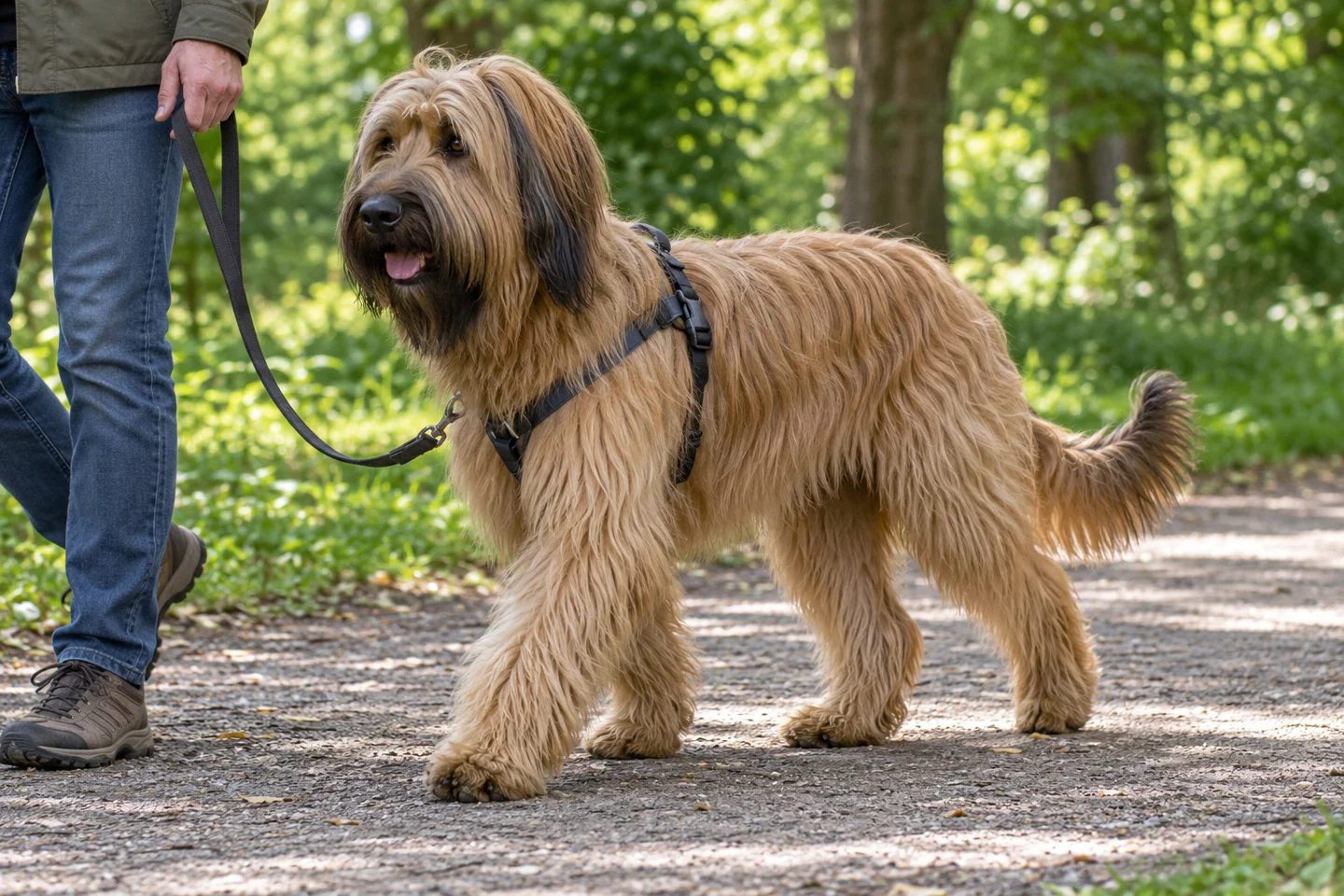
The Briard standard describes long hair with a dry, supple texture, a strong body, and a natural tail that reaches at least the hock and ends in a slight hook. It also calls for double rear dewclaws. These additional nails are a practical inspection point, not decorative trivia. Ask a veterinary professional to show you each nail and establish an appropriate maintenance routine. Long hair can conceal a nail that is becoming uncomfortable or catching on fabric.
The illustrations show generated breed examples with natural tails. They cannot demonstrate an actual dog's movement, vision, dewclaw anatomy, or suitability for breeding. Look beneath the hair when assessing condition: feel the ribs appropriately, observe a waist, and ask a veterinarian about muscle and weight. A large coat can make a lean dog look bulky or disguise weight gain. A dog that hesitates to turn on a slippery floor may need better traction or medical assessment rather than encouragement to move faster.
Grooming that reaches the skin
A useful grooming demonstration should show how to separate hair into manageable sections and check the coat all the way down, without scraping or pulling the skin. Ask your breeder or groomer which tools suit the current coat. Keep sessions short enough for the dog to remain comfortable, and change position before either of you becomes tired. An adult that cannot tolerate a long session may need several smaller appointments and a coordinated training plan.
Do not try to cut a tight mat away with household scissors. Skin can be drawn into it and injured. Painful matting needs professional help and sometimes a different maintenance style. Ask about the welfare implications of any proposed clip and how regrowth will be managed. A practical coat plan depends on the individual, the owner's ability, and veterinary needs. Maintaining a show outline is never a reason to leave a painful tangle, conceal irritation, or postpone an essential examination.
Grooming around the face and feet
Facial hair needs regular attention after eating, drinking, and outdoor exploration. Check for trapped material without tugging at the muzzle. Introduce a soft cloth and reward the dog for resting its chin comfortably while you work. Around the eyes, ask a professional how to maintain clear access and cleanliness safely. Tearing, squinting, redness, or an eye held shut requires veterinary advice. A hairstyle does not explain away signs of discomfort.
At the feet, look between toes and around every dewclaw after brambles, mud, or snow. Long hair can hide plant material and wet skin. Dry as necessary and seek help for painful swelling or an embedded object. Practice lifting one foot for a moment, then putting it down, before attempting a full maintenance session. Tell a groomer about any previous snapping, painful area, or difficulty standing. Advance information allows a safer appointment than discovering an unresolved problem while the dog is already restrained.
Training a large dog to participate
A Briard needs practical skills that remain usable when a person cannot physically move it. Teach backing away from a door, standing on a mat, stepping onto a stable surface, and turning toward a hand target. Reward these actions in ordinary moments so they are available during a veterinary visit or a busy arrival. A dog that understands where to stand is easier to help than one repeatedly pushed into position.
Reward-based teaching also applies to brushing and equipment. Break the task into visible steps and let the dog learn what predicts a pause. AVSAB recommends reward-based methods and warns that aversive handling can compromise welfare. A firm grip and repeated correction can make a large sensitive handling problem more difficult to resolve. If the dog becomes distressed, review pain, the environment, and the task with appropriate professionals. Necessary medical treatment and long-term cooperative learning may need different plans.

Movement, herding interests, and exercise
Provide outdoor movement and mental tasks that suit this dog's age and condition. A herding background can give useful context when movement attracts attention, but it does not excuse chasing cyclists, circling children, or controlling other animals. Work at a distance where the dog can notice a moving object and return attention to you. Reward a turn away before the situation becomes difficult. Use barriers and route choices to prevent rehearsal around a busy playground.
Build hiking or sporting demands gradually. A weekend outing over rough ground should follow suitable conditioning, not substitute for it. Puppies need varied, sensible exploration and sleep; seek individual advice before repetitive high-impact work. Check recovery as well as performance. A dog may continue because the group is moving even when it is tired. Choose shade and cooler conditions in heat, keep drinking water available, and arrange a route that allows an early return. Distress or collapse needs urgent attention.
Children and household traffic
Think about the path between a child's bedroom, the kitchen, and the front door. A large dog resting in that narrow route may be stepped over repeatedly. Give the Briard a comfortable place outside the busiest flow and teach children to call an adult rather than climbing across it. Gates can separate a dog from running games while allowing family members to move easily. Review the arrangement when a baby begins crawling or a child invites friends home.
Supervision means an adult can notice and interrupt an uncomfortable interaction. It does not mean checking from another room. Children should avoid grabbing facial hair, pulling a tail, or putting their faces against the dog. A shaggy face can make early changes in expression harder for an inexperienced observer to notice. Watch the whole body and the dog's effort to leave. Provide quiet separation before the dog needs to protest, including when a friendly visitor wants repeated photographs or hugs.
Visitors, aggression, and guarding concerns
A history of guarding work is a reason to plan entrances carefully. It is not permission to let a dog decide who can enter a shared hallway. Before opening the door, place the dog somewhere comfortable and secure. Explain the arrangement to visitors and delivery workers. For planned guests, begin with low-pressure observation and reward calm behavior at a workable distance. A person reaching into the coat or leaning over the head may create unnecessary difficulty.
If the Briard stiffens, growls, blocks access, or lunges, stop the interaction and make space. Keep a factual record of who approached, where the dog stood, and what happened immediately beforehand. Seek veterinary assessment for new irritability, especially around touch or movement. Repeated threats or a bite require a qualified behavior assessment and a reliable management plan. Punishment of a warning can obscure the problem. Never recruit an unsuspecting visitor to test whether the dog has become safer.
Health screening and Briard eye questions
The American Kennel Club's published Briard recommendations list hip evaluation, ophthalmologist evaluation, and a DNA test for congenital stationary night blindness, also labeled CSNB or LCA. Ask for the actual reports and check the dog's identity, date, and result. An eye examination and a DNA test answer different questions. A result for a named inherited variant cannot rule out every cause of visual difficulty, and a clear appearance during an ordinary visit cannot substitute for a specialist examination.
Discuss the family's results with your veterinarian before interpreting breeding claims. Ask what information is missing and whether more recent examination is appropriate. If a dog hesitates in unfamiliar lighting, bumps into objects, or changes its willingness to move, describe the circumstances rather than diagnosing CSNB yourself. Keep routes safe while seeking assessment. An adult adopted without screening paperwork still benefits from a current clinical plan; uncertainty about ancestry should be recorded honestly and should not prevent treatment of an observed problem.
Health records, pain, and urgent changes
Hip screening provides information about the hips examined under a particular protocol. It does not guarantee lifelong freedom from pain or every mobility problem. Ask about family history, relevant clinical findings, and how symptoms have been investigated. Keep dated notes when the dog struggles to rise, avoids stairs, or resists a previously comfortable grooming position. A useful video of natural movement may help the veterinarian, provided obtaining it does not require provoking pain.
Plan dental care, parasite prevention, vaccinations appropriate to exposure, and follow-up for ongoing conditions. Obtain urgent advice for collapse, breathing difficulty, serious trauma, or repeated unproductive retching with distress. A thick coat can make an examination less convenient, but convenience cannot determine whether treatment is needed. Keep a transport plan for an adult that cannot walk to the car. Ask the clinic about safe assistance rather than assuming one family member will be able to lift a distressed large dog.
Nutrition and a coat that can hide weight
Use a complete food suited to age and medical needs, and assess body condition beneath the hair. Ask the veterinary team to demonstrate what to feel and compare at future visits. Measure portions while establishing a baseline and account for rewards used during training and grooming. Adjust according to actual activity, growth, and condition. A long day outdoors may differ from a wet week spent mainly at home, and the portion can be reviewed accordingly.
Feed in a place where children and other animals cannot crowd the dog. This also lets you notice appetite and eating speed. Seek advice about persistent appetite changes, vomiting, altered thirst, or difficulty chewing. Add supplements only for a clear reason after discussing the complete diet. A puppy's growth plan deserves particular care; adding minerals because the dog will become large can unbalance an appropriate food. Store food and medicines where an inquisitive adult cannot open a cupboard or reach them from a counter.
Briard mixes, placement, and lifetime costs
A Briard mix may have a very different coat, adult outline, or level of interest in movement from either parent's familiar image. Mixing breeds does not guarantee a simpler grooming routine or remove inherited concerns. Ask for verified parent information if ancestry is claimed and discuss relevant testing for both sides of a planned cross. With a rescue, current behavior and care needs may be clearer than the exact family tree. Choose on that available evidence.
Budget for grooming equipment, professional assistance when needed, large-dog transport, food, preventive care, training, and emergencies. Ask a carer to demonstrate the coat routine before relying on them for a long trip. Consider how life would work if your own mobility changed. An adult adoption may suit someone who wants more information about coat maintenance and temperament, but it still requires time to adjust. A responsible source discusses difficulties openly and offers clear support or return arrangements when a placement cannot continue.
dogsDating with a realistic introduction plan
A dogsDating profile should explain how this Briard handles unfamiliar dogs and people in practical terms. Mention whether it prefers walking before greeting, needs space at entrances, or has a professional behavior plan. Keep exact home coordinates private and arrange an initial meeting away from the property's boundary. Choose a roomy route where separate handlers can walk without trapping the dogs between fences or parked cars. Do not ask a visitor to enter the home as the first assessment.
Allow the meeting to remain a quiet walk if that works best. Avoid shared chews and toys, and leave room for either dog to disengage. The coat's appearance can attract hands, so remind unfamiliar people to ask before touching. End while both dogs are coping, and assess any later home visit separately. A pleasant social outing does not establish breeding suitability or eliminate resource conflicts. Accurate information, comfortable handling, and a clear way to leave make the encounter more useful than a forced close greeting.
Sources and editorial notes
Sources checked October 21, 2026. Breed measurements describe reference ranges, not a diagnosis or an individual dog's ideal weight. Images are AI-generated breed illustrations and do not document a particular dog or health condition.
- AVSAB: Humane Dog Training Position Statement
- VCA Animal Hospitals: Food aggression in puppies
- VCA Animal Hospitals: Heat stroke in dogs
- VCA Animal Hospitals: Aggression toward unfamiliar dogs, diagnosis
- VCA Animal Hospitals: Common emergencies in dogs
- AAHA: Feeding plans for healthy, appropriate weight cats and dogs
- Fédération Cynologique Internationale: Briard breed standard
- Orthopedic Foundation for Animals: CHIC health screening programs
- VCA Animal Hospitals: Grooming and coat care for your dog
- VCA Animal Hospitals: Ear infections in dogs
- American Kennel Club: Herding group breed health testing requirements
Keep getting to know dogs.
Read another guide or return to your dogsDating community.
Explore breed guidesBack to dogsDating