Broholmer
A large Danish mastiff whose care needs accessible space, calm handling, practical visitor arrangements, and clear breeding-health records.
How these guides are researched and reviewed
- Origin
- Denmark
- Coat
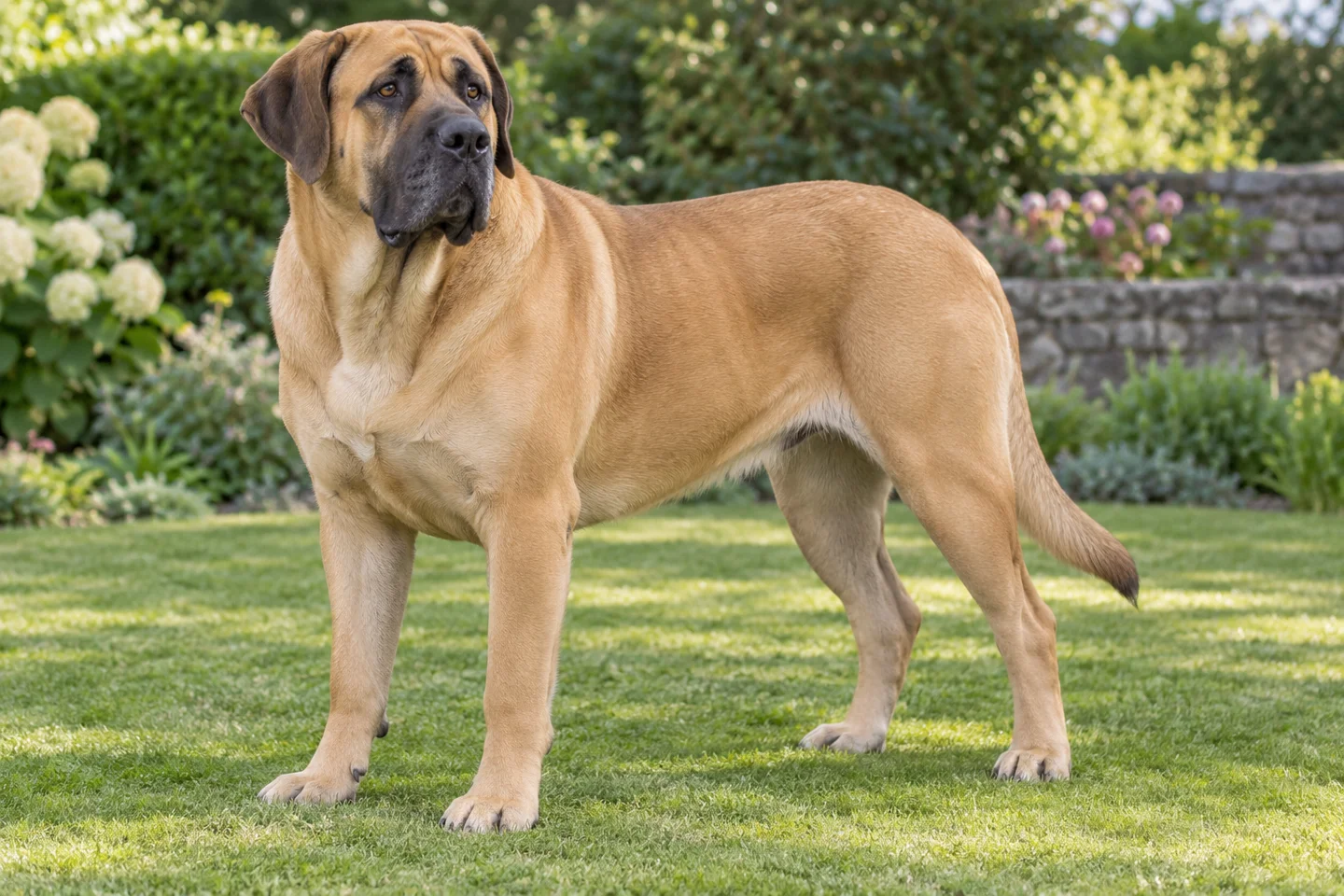
- Short yellow-fawn with dark mask illustration
- Care priorities
- Adult-size access, visitor routines, identifiable health reports
- Adult size reference
- FCI: males about 75 cm, 50–70 kg; females about 70 cm, 40–60 kg
General information for owners. These articles have not been reviewed by a veterinarian. Medical decisions need your dog's history and an examination.
A Broholmer needs an adult-size plan
A Broholmer can occupy a surprising amount of everyday space. Before choosing a puppy, measure the car, consider the route to the garden, and picture a large adult standing while someone opens the front door. A composed expression does not make those physical needs disappear. The household needs suitable barriers, reliable handling, and enough room for the dog to lie comfortably without becoming an obstacle everyone steps over. Affection and enthusiasm should lead to preparation for that actual body throughout its life.
Meet adult Broholmers where possible and ask about their ordinary routines. A visitor should learn how a dog behaves after the initial greeting, whether it settles when the owner is occupied, and what care becomes difficult during illness. Ask who handles it when the main owner is away. A second person who enjoys dogs may still need instruction and practice with this individual. Choosing the breed responsibly includes arranging practical support, rather than assuming its reputation for calmness will make every substitution easy.
Danish identity and reconstruction
The Broholmer is a Danish mastiff-type breed. The FCI standard links its name to Broholm and describes a serious population decline after the Second World War followed by reconstruction beginning around 1975 with Danish Kennel Club support. That history is more specific than calling any large fawn dog a Scandinavian mastiff. It also helps explain why records and responsible breeding decisions matter in a comparatively small population. Ask which registration organization holds a dog's pedigree when identity is important to the purchase.
A Broholmer is distinct from a Bullmastiff, Boerboel, and English Mastiff. Shared features such as short coat, broad chest, or a dark mask are insufficient to identify a rescue animal confidently. Use estimated ancestry honestly when documents are absent. Historical farm and guard roles provide context, but they do not establish the temperament of a particular puppy. Recent relatives, upbringing, and the individual dog's responses supply more relevant information about how it may fit a home with visitors, children, neighboring dogs, or frequent travel.
A rectangular body and comfortable access
The breed has a large rectangular body, a substantial head, strong forequarters, and a short coat. Natural dropped ears and a long tail belong to its ordinary anatomy. The yellow-fawn dog with a dark mask shown in the illustrations represents one appearance, rather than every color in the standard. Look at a real dog's movement and ability to turn, rise, and rest. Excess weight or exaggerated bulk should not be mistaken for desirable strength when it makes those basic activities harder.
A hallway or kitchen can become crowded quickly when a dog this large meets another animal there. Arrange passing space and avoid putting the bed at a pinch point. Non-slip flooring helps the dog change direction without scrambling. Vehicle access should permit comfortable loading, secure restraint, and rest during travel. Introduce a suitable ramp before it becomes urgently necessary. Consider how an injured adult would reach care if it could not climb or support its weight, including who could assist safely at short notice.
The FCI places males at approximately 75 cm at the withers and 50–70 kg, with females approximately 70 cm and 40–60 kg. That range makes substitute care and emergency loading substantial practical questions. Measure the individual before selecting a restraint or ramp, rather than buying equipment on the assumption that every dog will sit near the middle of the standard.
Watchfulness without improvised confrontations
Teach a predictable routine for arrivals. A useful arrangement might place the dog behind a secure barrier with a comfortable bed while the owner admits a visitor and removes coats. The guest can then enter a settled setting instead of meeting a large animal in the doorway. Some Broholmers welcome contact readily; others need more time or continued separation. Decide by observing the individual rather than expecting a stranger to persuade the dog through touching, staring, or an attempt to appear dominant.
Reduce repeated opportunities to rush a window or fence at passing people. Reward moving toward an alternative place before the dog becomes too aroused to respond. If it remains fixed on a visitor or cannot settle at a distance, use separation and obtain qualified advice. Guarding ancestry does not justify exposing a delivery worker to a threatening encounter. Contractors also need clear access instructions. Check gates during repairs and keep the dog's space separate from areas where someone may leave tools, open doors, or move unpredictably.
Children beside a large companion
The physical difference between a Broholmer and a young child requires planning even when the dog is friendly. A tail, turn, or step backward can knock a child off balance. Give children room to move without squeezing past the dog's resting body. An adult should manage busy entrances and separate the dog before rough play begins. Children can learn simple respectful interaction, but they should not be assigned responsibility for controlling a strong animal or deciding whether it is comfortable with an unexpected approach.
Keep the bed, meals, and chews free from interference. A child who wants a dropped object near the dog should ask an adult, who can move the animal safely before retrieving it. Demonstrate gentle contact without hugging or climbing, and accept the dog's choice to leave. A family gathering changes noise and movement, so review the setting rather than relying on yesterday's quiet behavior. New stiffness or pain may also reduce tolerance. Supervision means noticing these changes and acting before the dog must escalate to obtain space.
Other dogs and animals sharing the home
Can two dogs relax without one continually monitoring the other's movements? That question matters more than whether they tolerated a brief greeting. Plan enough beds and separate feeding locations before bringing another animal home. Introductions need room to turn and handlers who can maintain comfortable distance. Avoid beginning in a confined vehicle or beside a valued chew. A large dog can unintentionally overwhelm a smaller companion through weight and persistence, so watch whether both animals can pause and choose to leave the interaction.
For cats, organize protected rooms and routes that do not depend on running past the dog. Reward calm observation across a suitable barrier and prevent chasing while the relationship is assessed. A rescue's experience with one cat is useful context, not a promise about every animal in a new home. Rabbits and other small pets need physical protection. Ask carers to describe actual encounters and the management used. Gradual access should follow observed comfort, including a decision to maintain permanent separation where reliable safety cannot otherwise be established.

Aggression and a realistic safety response
A large calm-looking dog can still react when frightened, guarding something, or experiencing pain. Record the sequence around an incident: who approached, what the dog had, whether escape was possible, and what contact occurred. Protect the next person from repeating that situation while the cause is assessed. New resistance to touching or moving the dog warrants veterinary attention. Do not corner it or recreate a threat to obtain a clearer demonstration for a visitor, trainer, or online discussion.
A qualified reward-based professional can help change the environment and teach safer responses. Punishing a growl risks losing a warning while the discomfort continues. For handling, the goal is willing cooperation at a level the dog can manage, with veterinary support when pain or necessary treatment complicates the task. A basket muzzle may be appropriate for specified situations if introduced gradually and fitted comfortably. It must permit suitable panting and remain part of a supervised plan. Its presence cannot make a threatening close encounter harmless.
Training cooperation before strength matters
Practice moving to a mat, following a hand target, and waiting while a gate opens when the puppy is easy to guide. Later these skills help an adult navigate domestic space without being pushed by the collar. Reward standing for a harness and stepping onto a scale. Break each task into small understandable pieces, then add a little duration or distraction. A handler should be able to explain what success looks like and make that response worthwhile for the dog.
A slower response is an invitation to examine learning and physical comfort, not proof that more force is needed. Is the floor slippery? Does standing for the cue hurt? Has the behavior ever been practiced beside a visitor? Adjust the task accordingly. Professional instruction should help the owner understand those questions. Agree on cues and access routines among carers so the animal receives consistent information. Training does not need to consist of long formal sessions when useful repetitions fit naturally into meals, walks, care, and arrivals.
Exercise and conditioning for a heavy dog
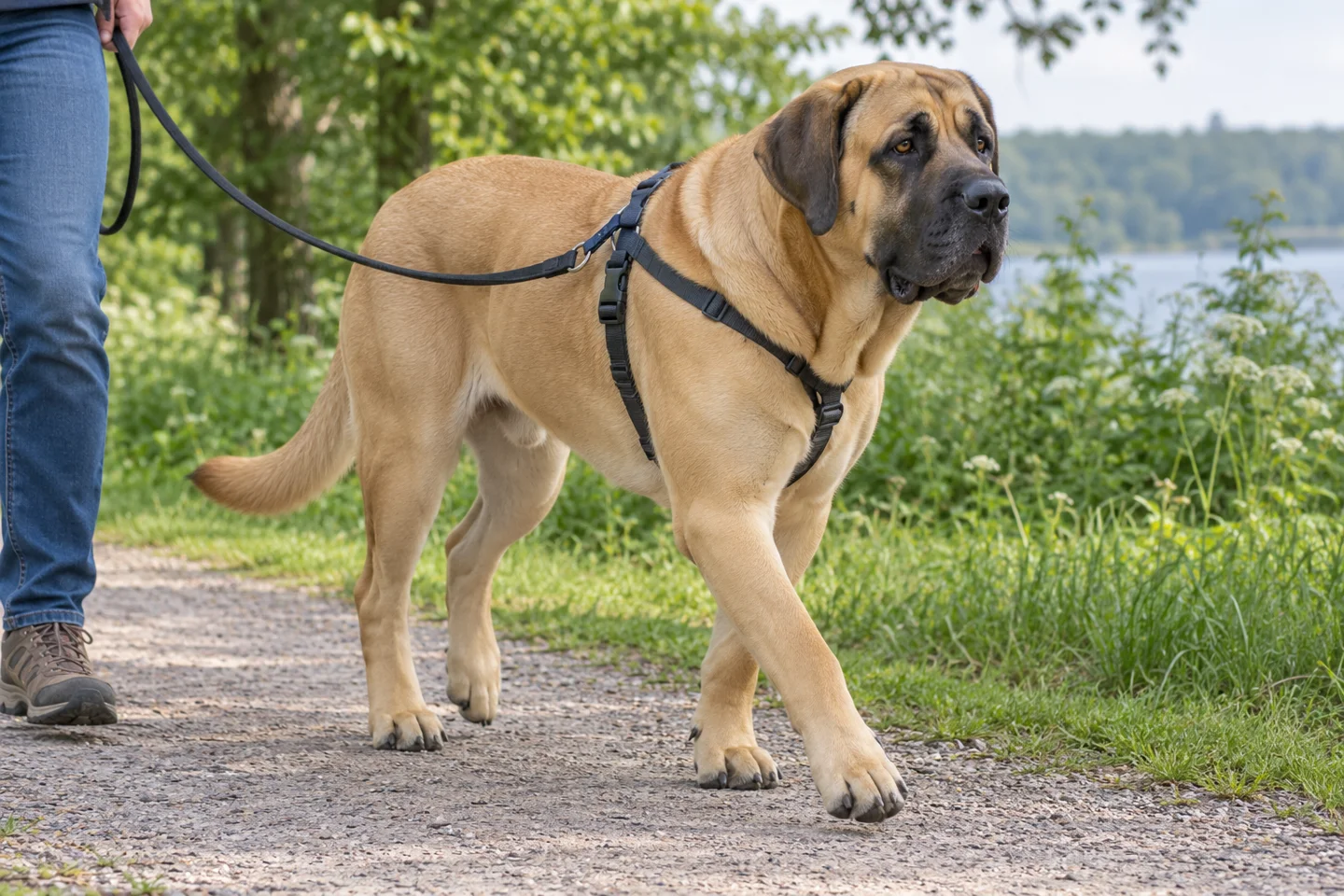
Offer regular walks with opportunities to sniff and move at a suitable pace. A Broholmer's substantial body benefits from activity it can recover from comfortably, rather than repeated jumps or exercise intended to maximize bulk. Puppies need age-appropriate exploration and rest while they develop. Discuss strenuous repetitive work with the veterinarian. For an adult, increase workload gradually after a quiet period and consider slopes, footing, and heat as well as the length of the route.
Observe the hours after an outing. Reluctance to rise, a shortened stride, or difficulty getting into the car can reveal discomfort even if the dog seemed enthusiastic outside. Seek assessment when those changes persist or recur. Choose cooler conditions when needed and provide water. Serious weakness, breathing difficulty, or collapse calls for urgent clinical help. A quieter day can include appropriate searches or handling practice without trying to compensate through frantic play. Useful fitness allows enjoyable movement and recovery, rather than requiring exhaustion before the household permits rest.
Grooming and the checks a short coat allows
A short coat makes it easier to see some skin changes, but inspection still needs to be deliberate. Brush gently, check beneath the collar and harness, and examine feet after muddy or rough ground. Dry wet areas and bedding so the dog is not left resting against persistent dampness. A recurring sore patch, odor, or itch should prompt veterinary advice. Repeatedly applying cleaning products without identifying the problem can make the history harder to interpret and may leave discomfort untreated.
Introduce nails, ears, and tooth care as separate small lessons. A large paw is easier to manage when the dog has learned to offer it willingly and the person knows when to pause. Ask a professional to demonstrate suitable tools. Check ears for discharge or tenderness without inserting objects deep into the canal. A sudden objection to a previously comfortable task deserves investigation. Inform veterinary or grooming staff about any handling concern before an appointment so people can prepare support without surprising the dog during necessary care.
Health evidence from the Danish breed program
The Danish Broholmerselskabet publishes health information and a breed-specific breeding strategy. Its material addresses orthopedic concerns such as hips and elbows and includes heart-related topics. Ask the breeder which current requirements and recommendations apply to its registration program, then request the corresponding reports for the actual parents. Rules can change and differ by country. A translation should preserve the original result and identifying details, rather than turn a foreign document into a vague assurance that the dog passed everything.
Use the veterinarian and issuing organizations to interpret unfamiliar grading or indexes. A hip index, for example, should not be casually treated as the same item as an individual radiographic result. Ask about the health of close relatives and any additional assessment used because of family history. Screening contributes evidence about particular concerns, while a current symptom still needs examination. Keep reports accessible after purchase or adoption. Reliable records are especially valuable when a relatively uncommon breed moves between countries and later receives care from a clinician unfamiliar with its breeding program.
Growth, meals, and urgent medical changes
Choose complete food appropriate to large-breed growth when feeding a puppy and obtain individual guidance if you are unsure about the product. Do not add calcium simply because the puppy's feet look large. Measure meals and account for rewards used during training. Assess body condition by touch and veterinary advice rather than aiming for the heaviest possible outline. As activity changes, review portions. A holiday full of walks and a month recovering from injury do not necessarily justify identical feeding amounts.
Keep emergency numbers and transport arrangements where another caregiver can find them. Repeated unproductive retching, abdominal enlargement, collapse, or marked distress requires urgent contact with a veterinary service. Avoid waiting for a social-media discussion to identify a cause. For less dramatic but persistent changes in thirst, appetite, weight, or mobility, record what you notice and arrange assessment. Large dogs can make gradual difficulties visible only when an ordinary task fails, such as getting up from a smooth floor. Earlier observations help the veterinarian understand how the problem developed.
Mixes and ownership resources
A Broholmer mix may differ considerably in adult size, handling needs, and response to unfamiliar people. Crossbreeding does not create a guaranteed midpoint or remove every inherited risk. Ask what is known about both parents, which results are documented, and how puppies were raised. For an adult of uncertain ancestry, evaluate present behavior and function directly. A broad head and fawn coat may suggest several backgrounds, so avoid building a care promise on a precise breed claim that nobody can substantiate.
Budget for suitable transport, durable equipment, veterinary care, instruction, and help with a large adult during illness or travel. Check any practical housing or insurance conditions that affect your situation before committing. Later-life care may require ramps, supportive bedding, easier routes through the house, and changes to walking demands. The family's own abilities can change too. A sound plan identifies who can help without assuming that affection supplies the physical capacity to lift, restrain, or transport the dog when ordinary independent movement is no longer possible.
A spacious dogsDating introduction
Describe the Broholmer's actual social preferences on dogsDating, including whether it enjoys contact or prefers walking with room. Find a quiet public meeting point where two separate handlers can move away without squeezing through a narrow opening. Keep the first session simple and avoid bringing a new dog directly into the home or garden. Observe whether each animal can look away and resume comfortable exploration. A good initial walk may contain no physical greeting at all, especially where size or uncertainty makes close contact unnecessary.
Share only an approximate area and keep exact home coordinates private. Agree in advance how to end the outing if either animal becomes tense or persistent. Leave prized objects out of the introduction and avoid crowding dogs together to photograph a successful match. A profile can help owners communicate relevant details; it cannot certify compatibility. Compare the actual response afterward and decide what setting, distance, and duration would be appropriate next time. Continuing with parallel walks can be a useful relationship even when close play does not suit the pair.
Sources and editorial notes
Sources checked October 21, 2026. Breed measurements describe reference ranges, not a diagnosis or an individual dog's ideal weight. Images are AI-generated breed illustrations and do not document a particular dog or health condition.
- AVSAB: Humane Dog Training Position Statement
- VCA Animal Hospitals: Food aggression in puppies
- VCA Animal Hospitals: Aggression toward unfamiliar dogs, diagnosis
- VCA Animal Hospitals: Heat stroke in dogs
- VCA Animal Hospitals: Common emergencies in dogs
- VCA Animal Hospitals: Grooming and coat care for your dog
- VCA Animal Hospitals: Ear infections in dogs
- VCA Animal Hospitals: Feeding guidelines for dogs
- Orthopedic Foundation for Animals: CHIC program and interpretation of numbers
- AVSAB: Humane Dog Training Position Statement
- Fédération Cynologique Internationale: Broholmer official breed standard
- Broholmerselskabet: Breed-specific breeding strategy and English version
Keep getting to know dogs.
Read another guide or return to your dogsDating community.
Explore breed guidesBack to dogsDating