Brussels Griffon
A small Belgian companion whose care needs respectful handling, variety-specific grooming, suitable company, and attention to breathing and eyes.
How these guides are researched and reviewed

- Origin
- Belgium; Brussels
- Coat
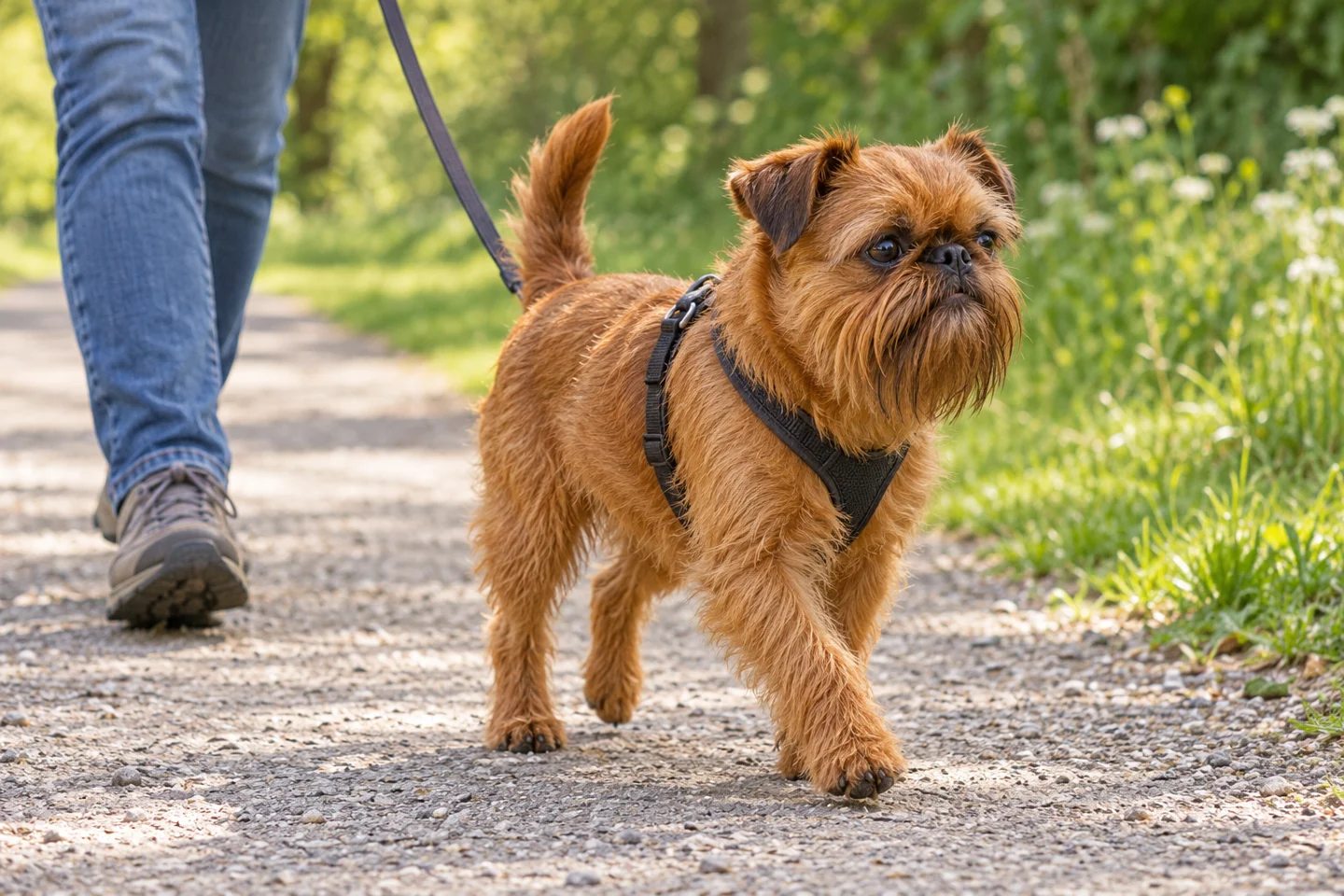
- Red rough-coated variety illustrated
- Care priorities
- Comfortable breathing, eye protection, gentle cooperative handling
- Adult size reference
- FCI adult weight: 3.5–6 kg
General information for owners. These articles have not been reviewed by a veterinarian. Medical decisions need your dog's history and an examination.
A Brussels Griffon is a small household companion
A Brussels Griffon needs people who enjoy close companionship and will take a little dog's training and physical comfort seriously. Its expressive face can draw attention before a buyer asks about breathing, handling, or time alone. Begin with those practical questions. A portable body may simplify travel arrangements, yet the dog still needs opportunities to walk, investigate, and rest without being touched. The right home recognizes it as an animal with choices and limits, rather than expecting it to provide constant entertainment from someone's arms.
Observe an adult in a quiet setting if possible. Notice whether it can settle when nobody is offering attention and how it responds to gentle necessary care. Ask the owner about noise, absences, grooming, and veterinary visits. Puppy behavior is still developing, while an adult rescue may bring habits that need patient support. Plan the care around the individual. A household with a busy social calendar or long daily absences should examine the practical arrangements before committing to a dog whose company it expects to enjoy mainly in brief intervals.
Brussels roots and different naming systems
The breed's name connects it with Brussels in Belgium. The FCI standard describes small local rough-coated dogs, including a type called the Smousje, and later contributions from other small breeds. It also discusses their work around stables and carriages. That is a specific historical background, rather than evidence that every modern Griffon will be a reliable rodent hunter or an effortless apartment pet. Today's needs should be assessed through health information, temperament, and the upbringing of the particular dog.
Breed names differ across registries. The FCI distinguishes Griffon Bruxellois, Griffon Belge, and Petit Brabançon, with coat and color distinctions. Elsewhere, Brussels Griffon can encompass rough and smooth presentations within one breed framework. Check the relevant registry before treating a naming difference as an error. The illustrations here consistently depict a red rough-coated dog. A smooth-coated dog may need less coat maintenance, but the change in hair does not itself establish different medical safety, confidence, or comfort with children and unfamiliar animals.
A face that must function comfortably
A short muzzle, prominent expression, and large eyes make this small dog recognizable. Those features should never be exaggerated at the expense of comfortable breathing or protected eyes. Look at a real dog's ordinary activity and rest, and ask about veterinary assessments. A photograph cannot reveal how it recovers after walking or whether sleep is disturbed. Do not accept persistent breathing difficulty as an amusing characteristic simply because it occurs in a short-faced breed. Clinical assessment is needed to understand what is happening.
An owner should know the difference between routine observation and signs requiring help. Squinting, rubbing the eye, new cloudiness, or obvious ocular pain warrants prompt veterinary advice. Avoid reusing old drops before the cause is identified, particularly when the eye surface may be injured. Keep vegetation and vigorous face-to-face play in mind when planning outings. The aim is ordinary sensible protection without diagnosing disease from appearance. Any dog can develop an eye problem, and a recognizable face is no substitute for an examination of the individual.
The FCI weight range is 3.5–6 kg. Even within that small span, equipment and handling need to fit the individual body. Avoid a seller making extreme tininess the principal goal. A carrier should allow comfortable positioning, and the household should provide safe ground-level activity instead of treating portability as a reason to carry the dog through every experience.
Handling a little dog without taking away choice
Invite the Griffon toward you instead of routinely reaching down and lifting it without warning. A simple cue followed by a reward can make necessary carrying more predictable. Support the body securely when lifting and put the dog down on a stable surface. Teach comfortable approaches to a carrier and harness so travel preparation is less intrusive. Frequent unwanted grabbing can make even a physically small dog difficult to care for, particularly if people dismiss avoidance until it becomes a snap.
Arrange the home so the dog does not need to jump from an awkward height to leave a lap or sofa. Suitable access steps or an adult's assistance may help, depending on the animal. Use barriers without gaps a puppy can squeeze through and check door routines at foot level. It is easy to overlook a little dog behind a visitor's legs. A household can prevent many ordinary accidents by assigning someone to secure it before doors open, rather than relying on everybody noticing where it has moved.
Children and a dog that needs gentle contact
Teach children to sit quietly and let the dog approach rather than chase it across a room. An adult should handle necessary lifting and prevent repeated passing between children. The Griffon's face should not be pulled toward another face for a kiss or photograph. Small stature does not make restraint harmless, and a child's affectionate intention cannot tell you whether the dog feels safe. Watch for turning away, crouching, or trying to climb down, then help it leave before pressure increases.
Food, resting places, and valued chews should remain outside children's interference. If the animal takes a toy, an adult uses a suitable exchange instead of asking a child to pull it away. Plan separation when a gathering becomes loud or supervision divides. An established family routine may not predict comfort with visiting children whose movements and touching differ. Update arrangements as children become mobile and as the dog ages or experiences pain. The useful standard is a comfortable interaction today, rather than a story about how patient it was on a previous occasion.
Choosing canine company by play style
A small-dog label does not guarantee gentle play. Some little companions rush, pin, or chase persistently, while some larger dogs are careful and responsive. Observe the actual pair with enough room to separate. Check whether the Griffon voluntarily returns to contact after a pause. Repeated hiding behind a person's feet is information that the setting needs changing. Avoid a crowded enclosure as the first assessment, since too many approaching animals can make it difficult for either owner or dog to create space.
With a resident dog, arrange separate feeding and comfortable rest before introductions expand into the whole home. Size mismatch can make an accidental collision significant, so do not rely solely on the absence of growling. Cats also need protected access to food and resting places. Reward calm observation across a barrier when a relationship is new, and stop persistent pursuit. Ask a rescue which interactions it has actually observed. A broad statement about friendliness should lead to more questions about context, not immediate unrestricted access to every household animal.

Aggression and the cost of ignoring discomfort
A snap from a tiny dog should not become a joke repeated for visitors. It is a warning that something about the interaction is failing, and it can injure someone. Note whether the reaction follows lifting, face care, approach to a bed, or another identifiable event. Protect the next person from the same encounter while arranging assessment. Pain can change tolerance, so a new response during previously comfortable care merits veterinary attention rather than a label such as spoiled or bossy.
Use qualified reward-based support to teach alternatives and adjust the environment. Do not deliberately challenge the dog over an object or hold it down until it stops resisting. Those actions can leave the fear or discomfort intact while reducing useful communication. Teach movement through a cue, target, or reward where possible. Necessary clinical procedures may require additional veterinary handling support. The owner's goal is a dog that can participate comfortably in care over time, with management that protects people while difficult tasks are being addressed.
Training at the dog's own height
A small animal may find a person looming overhead distracting or intimidating. Sit or stand at a comfortable distance, use an easy-to-see target, and deliver rewards where the dog can reach them without jumping. Teach practical skills first: returning toward you, waiting behind a doorway, and resting on a mat. A familiar cue then needs gradual practice in different locations. The hallway with a barking neighbor may be much harder than the kitchen where the behavior first succeeded.
Use tiny suitable rewards and include them in the daily food allowance. Short clear practice is easier to fit into home life than long sessions that leave both participants frustrated. Keep signals consistent among family members. If the dog does not respond, consider distraction, unclear instruction, fatigue, or physical discomfort before increasing pressure. A useful trainer should explain how to make the next repetition more understandable. The breed's expression may tempt people to attribute complicated motives, while an observable learning problem often has a much simpler practical solution.
Toilet habits and brief separations
Make toilet opportunities easy to predict. Take a young dog to the intended area after waking and other natural transitions, reward success promptly, and avoid leaving it to work out a long complicated route alone. If indoor and outdoor options are both used, keep the location and expectations clear. Sudden accidents in an otherwise reliable adult deserve medical consideration. Punishing a discovered puddle does not explain where to go next time and may discourage the dog from toileting while a person watches.
Practice time apart when no urgent departure depends on success. A comfortable resting area and a brief manageable interval allow you to observe the response before extending it. Persistent calling, escape efforts, or inability to settle calls for a revised plan and professional guidance. Human support may be necessary while learning develops. A companion breed can enjoy closeness without being expected to tolerate a sudden full day alone. Another pet might provide company, but acquiring one should not be represented as a guaranteed treatment for separation distress.
Exercise with attention to breathing and weather
Offer walks and opportunities to sniff at a pace the individual manages comfortably. The dog should have ground-level experiences as well as being transported. Adjust for weather and seek veterinary advice about any limitation, particularly noisy or effortful breathing. Short-faced anatomy makes respiratory discussion relevant; it does not establish a diagnosis for every Griffon. Do not push through distress to prove the dog can keep up. Choose a route with an easy return and enough flexibility to stop when recovery is not comfortable.
At home, use gentle games and simple searches on suitable surfaces. Avoid repeated jumping from furniture or continuous chasing just because the dog still appears interested. Watch how it settles afterward and report concerning changes. Collapse, severe weakness, or difficulty breathing needs urgent clinical help. An older animal may prefer several shorter outings and easier access to familiar resting places. The plan should preserve enjoyment while respecting current ability, rather than measuring success against a younger dog's habits or a generic claim that small breeds need almost no exercise.
Grooming the red rough-coated variety
A rough-coated red Griffon needs a grooming approach suited to that coat. Ask an experienced groomer how brushing, trimming, or hand-stripping applies to your individual dog and the presentation you want to maintain. Avoid assuming that a sculpted show appearance is necessary for comfort. Check the beard after meals and drinking, clean gently as needed, and dry damp areas. Tangles around equipment or beneath longer furnishings can be missed when an owner brushes only the outer coat before taking a photograph.
Face care should leave the eyes protected and the dog able to cooperate. Do not cut close to an eye while holding a struggling animal, and avoid harsh staining products. A sore or wet area warrants investigation rather than repeated cosmetic treatment. Introduce combs and handling in small rewarded steps, including pauses. The smooth presentation has different coat work but still needs skin inspection. Keep the selected variety clear when reading advice or looking at illustrations, so expectations come from the actual coat rather than the name alone.
Health screening and meaningful follow-up
The national breed-club recommendations listed by the AKC include patella, hip, and ophthalmologist evaluations for Brussels Griffons. Ask the breeder for the reports of the proposed parents, including identities, dates, and findings. A basic examination of a puppy cannot stand in for those different assessments. Nor does a dog's ability to run briefly demonstrate that every orthopedic concern has been excluded. Discuss unclear paperwork with a veterinarian or issuing organization before treating it as evidence for an important purchase decision.
Ask about breathing, neurological signs, and other serious illness in close relatives without assuming a prevalence figure or a diagnosis from a family anecdote. Your own dog needs an examination and preventive plan after adoption, with follow-up when symptoms occur. A screening report supplies defined information; it does not make squinting, a new limp, or an altered gait safe to ignore. Store documents where another caregiver can find them. This is especially useful when the dog receives care away from home or a new clinician needs to understand previous findings.
Meals, dental care, and household costs
Measure complete food appropriate to life stage and account for the rewards used throughout the day. In a small dog, apparently tiny extras can represent a substantial part of intake. Use body-condition assessment rather than a flattering groomed silhouette to judge weight, with veterinary help if needed. Dental care also deserves a plan. Introduce dog-safe tooth brushing gently and arrange assessment for painful chewing or changed breath. Avoid assuming reluctance to eat is simply fussiness before considering discomfort or illness.
Budget for grooming, dental and other veterinary care, instruction, and a capable sitter as well as food. A compact dog may consume less than a giant while still requiring expensive treatment. Keep a suitable carrier available for emergencies and share clinic details with substitute carers. Older dogs may need changes to access and activity, while a new difficulty should still be investigated. Planning around those possibilities protects the animal better than choosing solely on the expectation that a little dog will always be cheap or easy to accommodate.
Mixes, allergies, and finding the right match
A Brussels Griffon cross can vary in muzzle shape, coat, size, and behavior. A Poodle or other cross name does not provide a fixed medical or grooming guarantee. Parent histories and appropriate health assessment remain relevant. No breed or cross reliably eliminates human allergy, because visible shedding is only part of the issue. People with important allergy concerns should discuss them with their own clinician and spend suitable time around dogs before committing, rather than relying on a seller's confident description of a hypoallergenic puppy.
For an adult of uncertain ancestry, observe current care and temperament directly. Ask how it responds to being lifted, face cleaning, travel, normal absences, and visitors. A little dog that needs handling support may still fit a patient home with suitable help, while a household expecting constant public interaction may be inappropriate for that individual. Choose according to what can be sustained through ordinary busy weeks and health changes. The most useful promise from a source is candid information and support, rather than a claim that affection will solve every mismatch.
A gentle dogsDating outing
Use dogsDating to describe the Griffon's actual comfort around unfamiliar dogs and its preferred style of contact. Look for a partner whose owner understands physical mismatch and is willing to keep the session quiet. A public walking place with room to separate can be easier than a busy small-dog enclosure. Start with distance and watch for voluntary approaches and pauses. Do not repeatedly lift the dog into another animal's face or encourage a close photograph when it is trying to stay behind its owner.
Keep exact home coordinates private and share an approximate area for planning the outing. Agree how to end the meeting before beginning. Avoid shared treats or prized toys that create an unnecessary resource dispute. If either dog hides, stiffens, or repeatedly pursues the other, adjust the distance or finish. Owners can compare observations honestly afterward and decide whether another setting would work. Compatibility may mean pleasant parallel walks rather than wrestling. A profile match facilitates communication, while the dogs' responses determine whether continued contact is appropriate.
Sources and editorial notes
Sources checked October 21, 2026. Breed measurements describe reference ranges, not a diagnosis or an individual dog's ideal weight. Images are AI-generated breed illustrations and do not document a particular dog or health condition.
- AVSAB: Humane Dog Training Position Statement
- VCA Animal Hospitals: Food aggression in puppies
- VCA Animal Hospitals: Aggression toward unfamiliar dogs, diagnosis
- VCA Animal Hospitals: Heat stroke in dogs
- VCA Animal Hospitals: Common emergencies in dogs
- VCA Animal Hospitals: Grooming and coat care for your dog
- VCA Animal Hospitals: Feeding guidelines for dogs
- VCA Animal Hospitals: Hypoallergenic dog breeds
- Orthopedic Foundation for Animals: CHIC program and interpretation of numbers
- VCA Animal Hospitals: Brachycephalic airway syndrome in dogs
- VCA Animal Hospitals: Corneal ulcers in dogs
- AVSAB: Humane Dog Training Position Statement
- Fédération Cynologique Internationale: Brussels Griffon official breed standard
- American Kennel Club: National breed-club toy group health testing recommendations
Keep getting to know dogs.
Read another guide or return to your dogsDating community.
Explore breed guidesBack to dogsDating