Bucovina Shepherd Dog
A very large Romanian flock guardian whose companion care requires secure public boundaries, capable handling, and realistic expectations about unfamiliar arrivals.
How these guides are researched and reviewed
- Origin
- Romania; Bucovina
- Coat
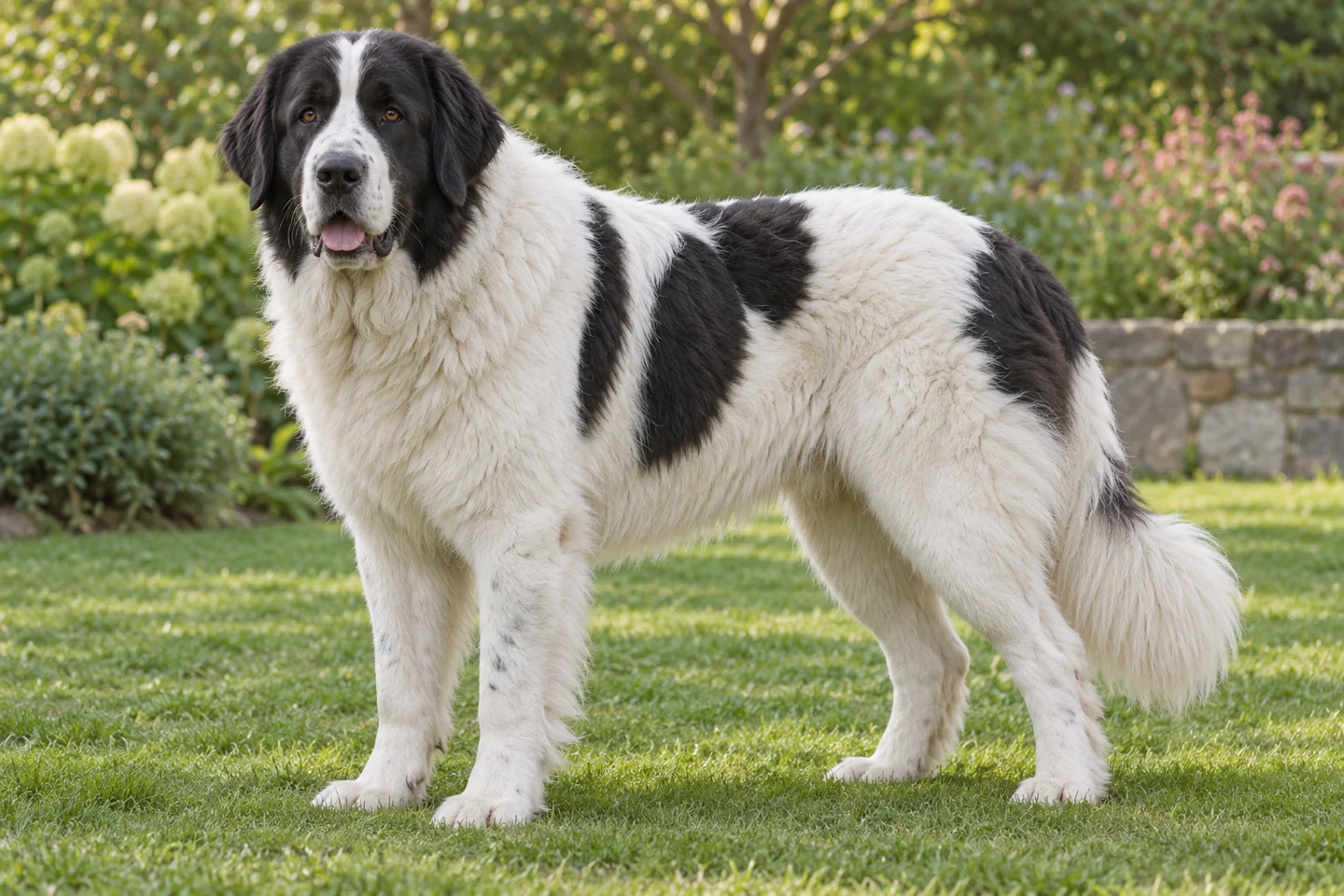
- Dense white coat with black patches illustrated
- Care priorities
- Public boundaries, large-dog handling, undercoat access
- Adult size reference
- FCI height: males 68–78 cm; females 64–72 cm, with tolerance
General information for owners. These articles have not been reviewed by a veterinarian. Medical decisions need your dog's history and an examination.
A Bucovina Shepherd needs more than spare space
A Bucovina Shepherd Dog is a very large flock guardian, and choosing one for a companion home requires a concrete management plan. The dog may become deeply familiar with its household while remaining watchful about unfamiliar arrivals. A broad garden alone does not answer the questions of visitors, neighboring dogs, or who can handle an emergency. Think about the full adult before looking at puppies: its access routes, secure boundaries, resting arrangements, transport, and the people available when the usual owner cannot provide care.
Meet experienced owners and ask to understand an ordinary week. Discuss barking, moving the dog away from a gate, accepting veterinary handling, and settling while a tradesperson works nearby. Those details are more informative than dramatic accounts of courage. A suitable source should explain the demands candidly and ask about your circumstances. If the intended home depends on constant close encounters with unfamiliar people or shared access through a busy communal entrance, examine that mismatch carefully rather than expecting affection to overcome every difficulty.
Romanian identity and the guardian role
The breed is identified in its FCI standard as Ciobănesc Românesc de Bucovina, the Romanian Bucovina Shepherd. Its stated work is guarding flocks and acting as a watchdog. The Romanian origin and guardian identity distinguish it from herding breeds selected primarily to move animals in response to a handler. A companion owner should therefore avoid assuming that the word shepherd promises a dog that naturally looks to people before making every decision about its surroundings.
It is also distinct from the Romanian Carpathian Shepherd and other regional guardian breeds. White coat with dark patches is useful descriptive information, but appearance cannot verify the ancestry of an undocumented rescue. Ask about registration, parent identities, and the basis of any identification. Where records are incomplete, keep the uncertainty visible and assess the individual. Recent handling, household experience, and health matter more to a placement than a confident regional label or a story linking a particular dog to distant historical stock.
A large white-and-patched body
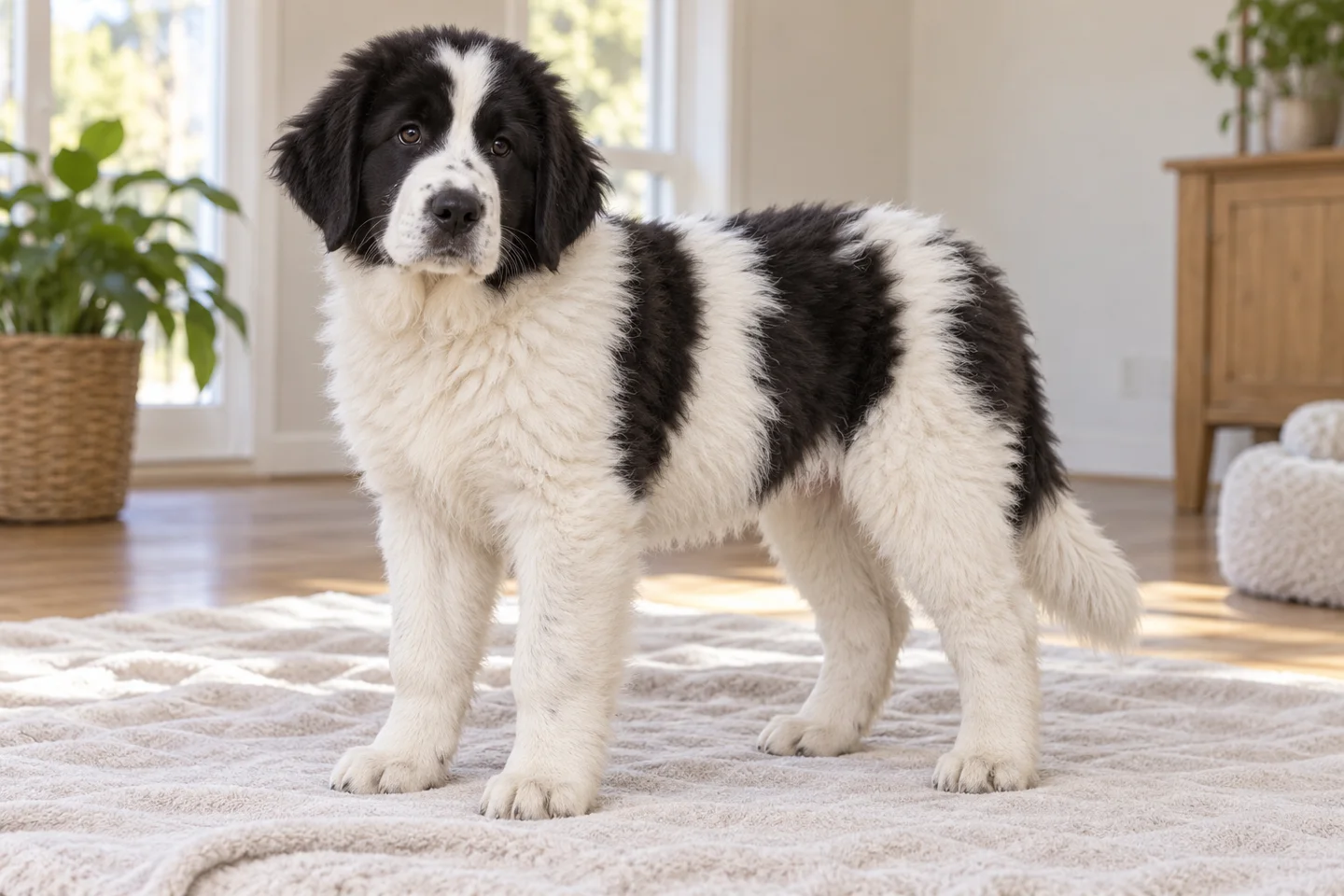
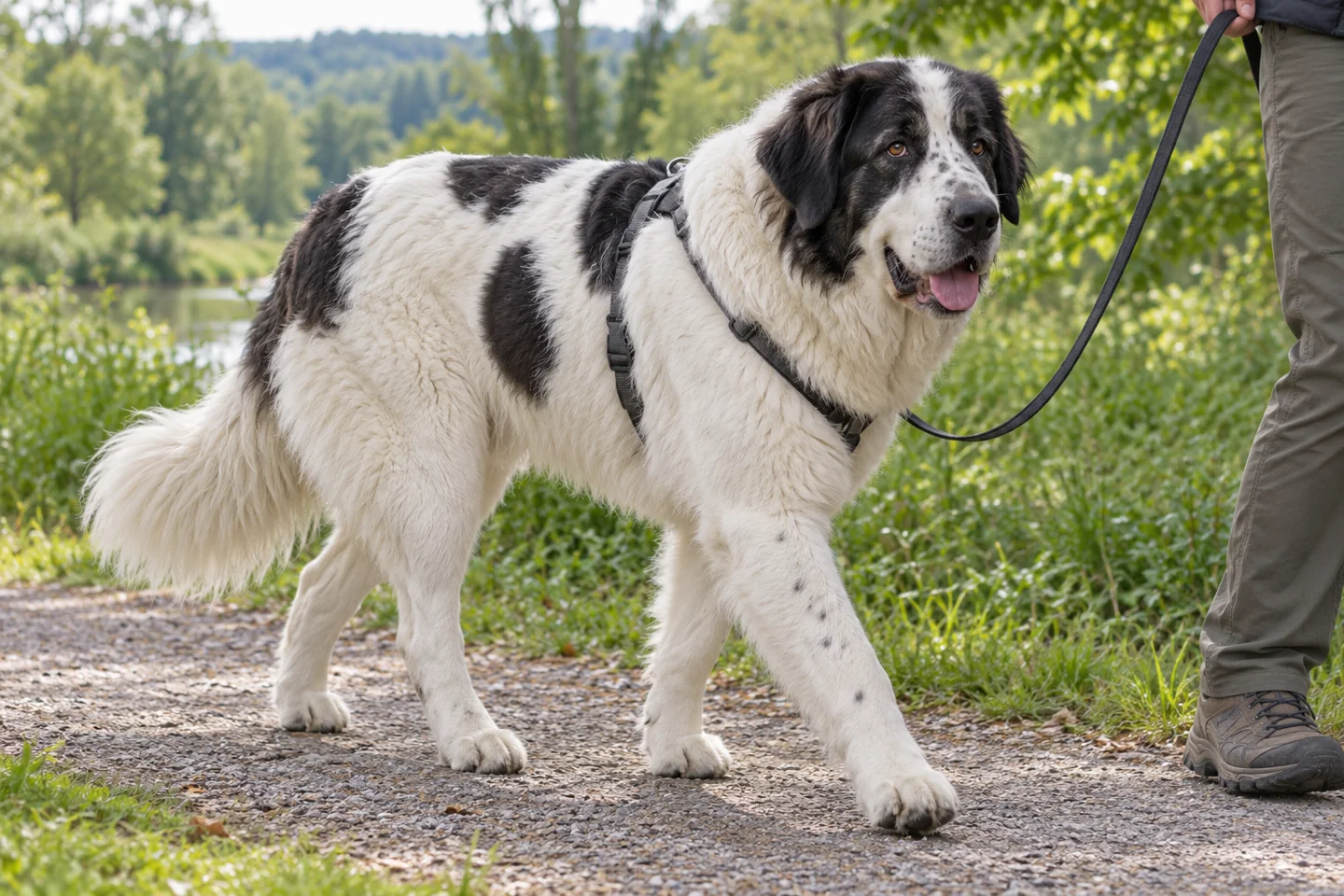
The illustrations show a white Bucovina Shepherd with black patches, natural dropped ears, a strong body, and a long well-haired tail. This is a chosen appearance within the breed, rather than a medical reference or a photograph of a real specimen. On a living dog, assess comfort and function. Watch it rise, turn, and walk on ordinary ground. Maximum bulk and exaggerated head size are poor selection goals when they interfere with movement or make day-to-day care harder.
The dense coat can hide body-condition changes, so use touch and veterinary guidance instead of judging only a silhouette. Fit equipment beneath the hair without pressure or friction and revisit measurements as the puppy grows. Plan generous space in the vehicle and at home. Narrow stairs, slippery flooring, and a bed located where everyone must step over the dog can become lasting problems. Consider routes that will still be accessible if an older adult becomes stiff, rather than building the whole plan around a young animal's current agility.
The FCI lists 68–78 cm for males and 64–72 cm for females at the withers, with a stated four-centimeter tolerance and weight proportional to height. These are substantial adult dimensions. Do not add excess weight to pursue an impressive guardian outline; assess condition and actual measurements when arranging vehicle access and a safe route through the home.
Boundaries between the dog and the public
Map access before arrival. If a delivery driver must open the same gate the dog uses, change the arrangement so an unfamiliar person never needs to enter an occupied enclosure. Use secure internal separation during maintenance and brief every person who may leave a gate open. A flock guardian should not have the task of deciding whether a visitor is entitled to enter. The owner remains responsible for preventing an encounter that places either the person or the animal under unnecessary pressure.
Observe fence-line activity and reduce opportunities for repeated rushing at passersby. A barrier that contains the body can still allow sustained conflict through it. Provide a quieter area and reward moving away from the trigger before excitement takes over. If the dog cannot disengage, obtain qualified advice and change the setting. Do not invite a stranger to demonstrate control or confidence at close range. A calm separated dog is an acceptable result for a visit, even when the owner hoped the animal would greet everyone warmly.
Working livestock and modern household expectations
A guardian background should lead to informed questions about the particular breeding program. Were the parents working with livestock, living as companions, or doing both? What experiences did the puppy actually have? Do not assume that genetic background alone teaches safe behavior around any species. A young dog needs appropriate supervision and instruction for real livestock work, and the welfare of the animals being guarded remains central. Unsupervised experimentation can harm the dog, the livestock, and the owner's ability to manage both.
For a companion household, provide meaningful daily contact and suitable activity without turning the garden into an unattended patrol assignment. A dog left outside to bark at every movement may become difficult for neighbors and harder to settle. Bringing it indoors also requires learning, including toilet routines, access boundaries, and comfortable rest. Ask for support from people who understand guardian management and use humane methods. The goal is an arrangement the dog can navigate predictably, rather than a romantic attempt to reproduce an imagined rural life in an unsuitable setting.
Children and the room to rest
A Bucovina puppy will not remain a convenient size for a child to guide or carry. Establish adult responsibility for leads, doors, meals, and interruptions from the start. Set aside a sleeping place away from children's busy routes and prevent games that involve climbing onto the dog or pulling its coat. A friendly large animal can cause injury through a turn or collision. Plan separation before children begin running or playing with wheeled toys, rather than waiting until the dog joins the excitement.
Teach children to call an adult when a toy falls beside a bowl or chew. An adult can move the dog appropriately before retrieving it. Visitors' children may behave differently from those in the household, so a familiar history cannot establish safety at a gathering. Watch withdrawal, stiffness, or attempts to leave and stop contact early. If you cannot give the interaction close attention, use secure separation with the dog's needs still met. Expecting children to recognize every warning would place responsibility on the people least equipped to carry it.
Other dogs and access to resources
Introduce dogs where each can move without being trapped by the other's body. Separate handlers and a generous distance allow observation before contact. Look for the ability to turn away and resume ordinary exploration. At home, allocate beds and feeding places so neither animal needs to approach the other to rest or eat. A guardian's presence can be intimidating even without a physical confrontation, so notice repeated blocking or following instead of defining success only as the absence of fighting.
Manage size mismatch during play. A smaller dog may be unable to stop a heavy companion that keeps returning, and a friendly intention does not prevent an accidental injury. Give both an easy exit and interrupt persistence. Cats require protected routes and rooms, while small pets should remain physically inaccessible when necessary. Ask about exact previous encounters and the supervision involved. Adapt access to what is observed in your home; neither livestock experience nor a breed description can certify safe contact with every unfamiliar animal.
Aggression and management after an incident
Do not explain a threatening incident only by saying that the dog is protective. Record the actual trigger, distance, people present, and opportunities to retreat. A response to an arriving stranger differs from a snap during painful grooming or a conflict over food. Prevent a repetition while veterinary and behavioral assessment is arranged. A large guardian makes the consequences serious enough that management cannot wait for complete certainty about the explanation. Secure barriers protect everyone while a workable longer-term plan is developed.
Choose professional support that uses reward-based methods and understands the dog's setting. Intimidation, forced submission, or provoking the animal to assess bravery can increase risk without explaining a safe response. Preserve warnings by responding to them early. Handling and muzzle training may form part of a plan, with fit and panting needs addressed for the individual. A muzzle must be conditioned gradually and used under supervision. It cannot make close exposure to a feared person comfortable or replace treatment when pain contributes to the behavior.
Training for cooperative movement and care
Useful training starts with tasks that become difficult to improvise at adult size. Teach moving to an inner area when called, following a target through a doorway, and waiting while equipment is fitted. Reward walking beside a handler before asking for the same behavior around distractions. The dog needs enough successful practice to understand the request in each setting. Repeating a cue louder after it fails does not necessarily supply new information or reduce the competing interest that captured attention.
Care lessons deserve a place alongside walking. Introduce standing on a nonslip surface, allowing brief contact with a paw, and having a brush touch a comfortable area. Progress in manageable amounts and pause when tension appears. Veterinary support may be needed if a necessary procedure exceeds current comfort. Agree on handling and cues among carers so the animal is not given contradictory information. An owner's physical strength should not be the main method for moving or holding a mature dog that could instead learn willing participation.
Exercise without treating size as athletic readiness
A Bucovina Shepherd needs movement suited to its age, condition, and environment. Walks, safe exploration, and appropriate tasks can provide variety without demanding repeated high-impact work. Growing puppies need rest as well as activity. Ask a veterinarian about strenuous plans and adjust after illness or a sedentary period. Large body size does not indicate readiness for a long hike, while an eagerness to continue does not guarantee that joints, feet, and conditioning are keeping pace with enthusiasm.
Examine recovery over the rest of the day. A shorter stride, reluctance to rise, or difficulty entering the vehicle warrants attention when it persists or recurs. Provide cooler outings and water when weather makes exercise demanding. Severe weakness, collapse, or breathing distress requires urgent veterinary help. Use quieter days to maintain suitable mental engagement and comfortable contact instead of trying to exhaust the dog indoors. A manageable ongoing routine is more useful than occasional extreme outings followed by several days in which the animal struggles to move comfortably.
Grooming beneath a guardian's coat
Work through the coat in sections and check close to the skin, particularly beneath equipment, behind ears, and where limbs move against the body. Dense hair can conceal tight tangles, retained moisture, and small wounds. Teach short comfortable sessions before seasonal coat changes create a larger task. Ask an experienced groomer to demonstrate suitable tools if you cannot reliably reach the undercoat. A surface brushed for a photograph can look tidy while leaving the dog's actual skin and coat care incomplete.
After wet or muddy activity, dry the areas that need attention and check bedding. Persistent odor, itching, discharge, or a sore patch deserves veterinary advice. Do not treat every skin change as an ordinary consequence of living outdoors. Include nails, ears, and teeth in separate cooperative routines, allowing time to build tolerance. If an area suddenly becomes painful to touch, seek assessment before attempting a prolonged session. Tell professionals about handling concerns in advance so necessary care can be planned rather than turning into a surprise restraint problem.
Health evidence in an uncommon breed
A breed standard describes identity and desired structure; it does not establish that the population is free of disease. Ask a Bucovina breeder to explain its health program with actual reports, including any orthopedic, eye, or other assessments performed and the reason each was selected. Clarify which organization issued a document and how the tested animal matches the parent in the pedigree. For imported records, obtain an accurate translation when needed. An unreadable certificate should not become persuasive merely because it carries an official-looking stamp.
There is no justification for inventing prevalence figures or a universal test checklist where reliable evidence is limited. Discuss the family history and available results with a veterinarian and ask what would be useful for this individual. Keep records after placement and arrange prevention appropriate to location and outdoor exposure. New lameness, appetite change, or reduced tolerance of handling needs examination on its own merits. A breeder's report of long-lived relatives is relevant background but cannot diagnose the current dog or guarantee that a future illness will not occur.
Feeding and care when the adult changes
Select complete food suitable for growth or the adult's needs, and discuss large-breed puppy nutrition with the veterinary team. Extra supplements should have an identified purpose instead of being added to accelerate size. Measure meals and assess condition beneath the coat. Feeding toward the heaviest possible body can make care harder without providing a useful benefit. Account for treats and adjust when activity changes. Persistent digestive trouble, altered thirst, or unexplained weight movement should prompt medical advice rather than a series of unplanned food replacements.
Keep emergency contact and transport information accessible to another caregiver. Repeated retching without producing vomit, a newly enlarged abdomen, collapse, or serious breathing difficulty requires urgent veterinary contact. Older dogs may also need improved footing, accessible beds, and a different loading arrangement. Gradual stiffness still deserves clinical discussion. Notice how the animal uses the home before a task becomes impossible, such as standing on a smooth floor. Earlier changes to access and treatment can help preserve comfort while giving the veterinarian useful observations about function.
Mixes and an honest ownership budget
A Bucovina Shepherd mix may vary in size, guarding responses, coat, and compatibility with the intended setting. Crossing with another breed does not guarantee an easier animal or protection from inherited illness. Ask what is documented about both parents and how the dog has actually lived. An adult adoption permits direct observation of present needs, though a new environment can change behavior. Keep uncertain ancestry explicit rather than building a placement promise around an estimated label and an expectation that training can remove every management demand.
Budget for fencing, suitable transport, equipment, veterinary care, instruction, and backup handling. A large rural property may still be unsuitable if access is insecure or neighbors and visitors cannot be protected from unwanted encounters. Check practical housing and insurance arrangements before committing where these apply. Consider whether another adult can manage necessary routines during your illness. The breed's appeal should be weighed against a care plan that remains viable through busy periods and the dog's older years, including occasions when medical needs replace a previously simple outdoor routine.
A carefully arranged dogsDating walk
Use dogsDating to state the individual guardian's current social experience and the space it needs around unfamiliar dogs. An initial meeting belongs in a quiet public setting, with separate competent handlers and room to move away. Avoid beginning at the dog's own gate or inviting a new animal straight into its enclosure. Parallel walking can reveal whether both dogs are able to look away, investigate, and recover. A calm shared route may be a complete success without a close greeting or play.
Keep exact home coordinates private and share an approximate area when seeking local contacts. Agree on the meeting point and how the outing will end if either animal becomes fixed or tense. Leave treasured objects out of the encounter and avoid crowding the dogs for a picture. Owners should compare what happened in that setting without declaring universal compatibility. Future contact may preserve generous distance, and sharing a garden, vehicle, or valuable resource requires separate consideration. A match facilitates communication; observed behavior determines which arrangements actually suit the pair.
Sources and editorial notes
Sources checked October 21, 2026. Breed measurements describe reference ranges, not a diagnosis or an individual dog's ideal weight. Images are AI-generated breed illustrations and do not document a particular dog or health condition.
- AVSAB: Humane Dog Training Position Statement
- VCA Animal Hospitals: Food aggression in puppies
- VCA Animal Hospitals: Aggression toward unfamiliar dogs, diagnosis
- VCA Animal Hospitals: Heat stroke in dogs
- VCA Animal Hospitals: Common emergencies in dogs
- VCA Animal Hospitals: Grooming and coat care for your dog
- VCA Animal Hospitals: Ear infections in dogs
- VCA Animal Hospitals: Feeding guidelines for dogs
- Orthopedic Foundation for Animals: CHIC program and interpretation of numbers
- AVSAB: Humane Dog Training Position Statement
- Fédération Cynologique Internationale: Bucovina Shepherd Dog official breed standard
Keep getting to know dogs.
Read another guide or return to your dogsDating community.
Explore breed guidesBack to dogsDating