Bull Terrier
A muscular British terrier whose practical care includes hearing information, clear play boundaries, individual dog introductions, and prompt attention to persistent spinning.
How these guides are researched and reviewed
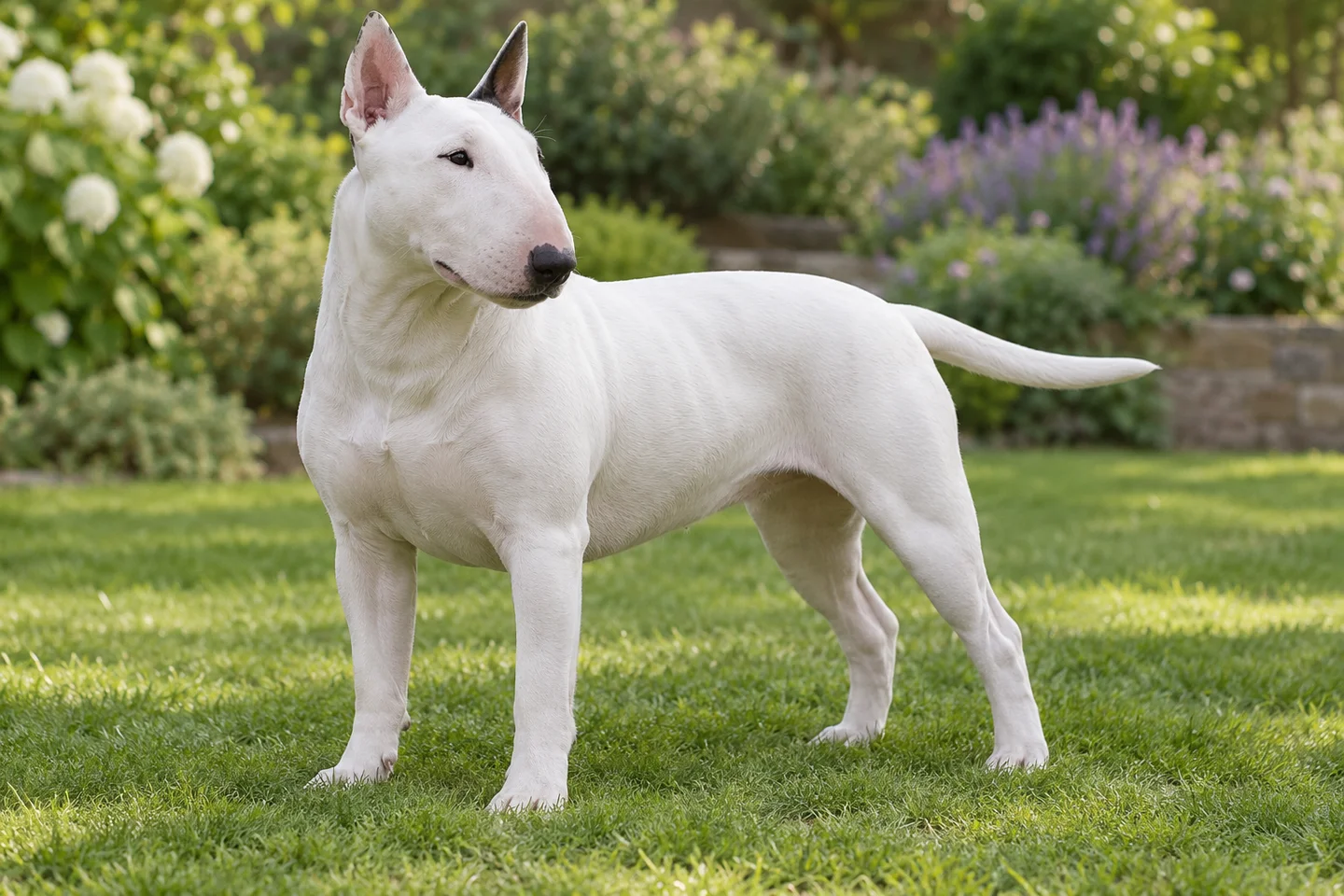
- Origin
- Great Britain
- Coat
- Short smooth white example illustrated
- Care priorities
- Hearing results, cooperative handling, play and repetitive-behavior monitoring
- Adult size reference
- FCI standard sets no fixed height or weight limits
General information for owners. These articles have not been reviewed by a veterinarian. Medical decisions need your dog's history and an examination.
Choosing a Bull Terrier beyond the familiar face
A Bull Terrier needs an owner prepared for a strong, active dog whose enthusiasm may require careful guidance. The egg-shaped head makes it easy to recognize, but recognition is a poor basis for a household match. Ask how the individual plays, rests, accepts handling, and responds when an activity ends. Plan for walks that protect other animals, a home where valuable objects can be managed, and instruction that makes ordinary cooperation clear. Physical strength should not become the main method of negotiating daily life.
Spend time with adults and ask about the parts of ownership that do not appear in amusing videos. Does the dog settle while the owner works? What happens when a toy is put away or an unfamiliar animal approaches? A breeder or rescue should discuss those questions candidly. Consider the whole working week and who can provide care during travel or illness. A puppy offers a chance to teach routines early, while an adult may provide useful information about existing preferences and the environments in which it is comfortable.
British development and the Miniature distinction
The Bull Terrier is a British breed. Its FCI standard describes James Hinks's role in establishing the type during the nineteenth century. The recognizable curved head developed within that history; it is not a feature shared by every dog colloquially called a bull terrier. Distinguish the registered breed from broad descriptions of muscular terrier-type dogs. An undocumented rescue label may be an estimate, and an owner should retain that uncertainty rather than treating a familiar silhouette as conclusive pedigree evidence.
The Miniature Bull Terrier has a separate identity and a height distinction in its standard. A small young Bull Terrier is not automatically a Miniature, and a mixed dog advertised as a mini version does not acquire predictable adult size through the name. Ask which registry and parent records support the description. This matters for health information too, because testing advice for related breeds is not necessarily identical. Read recommendations for the correct breed and the specific breeding program instead of combining every condition found under similar names online.
Head, eyes, ears, and balanced movement
The breed's head has a smooth downward curve in profile, with small dark triangular-looking eyes and naturally upright ears. Its muscular body and short coat should still permit comfortable movement. Avoid rewarding exaggeration simply because a more extreme head or heavier frame looks striking. Observe the dog walking, turning, and rising, including after it has rested. Comfortable function matters more than a photograph showing maximum substance, and unexplained stiffness deserves assessment even when the animal remains keen to play.
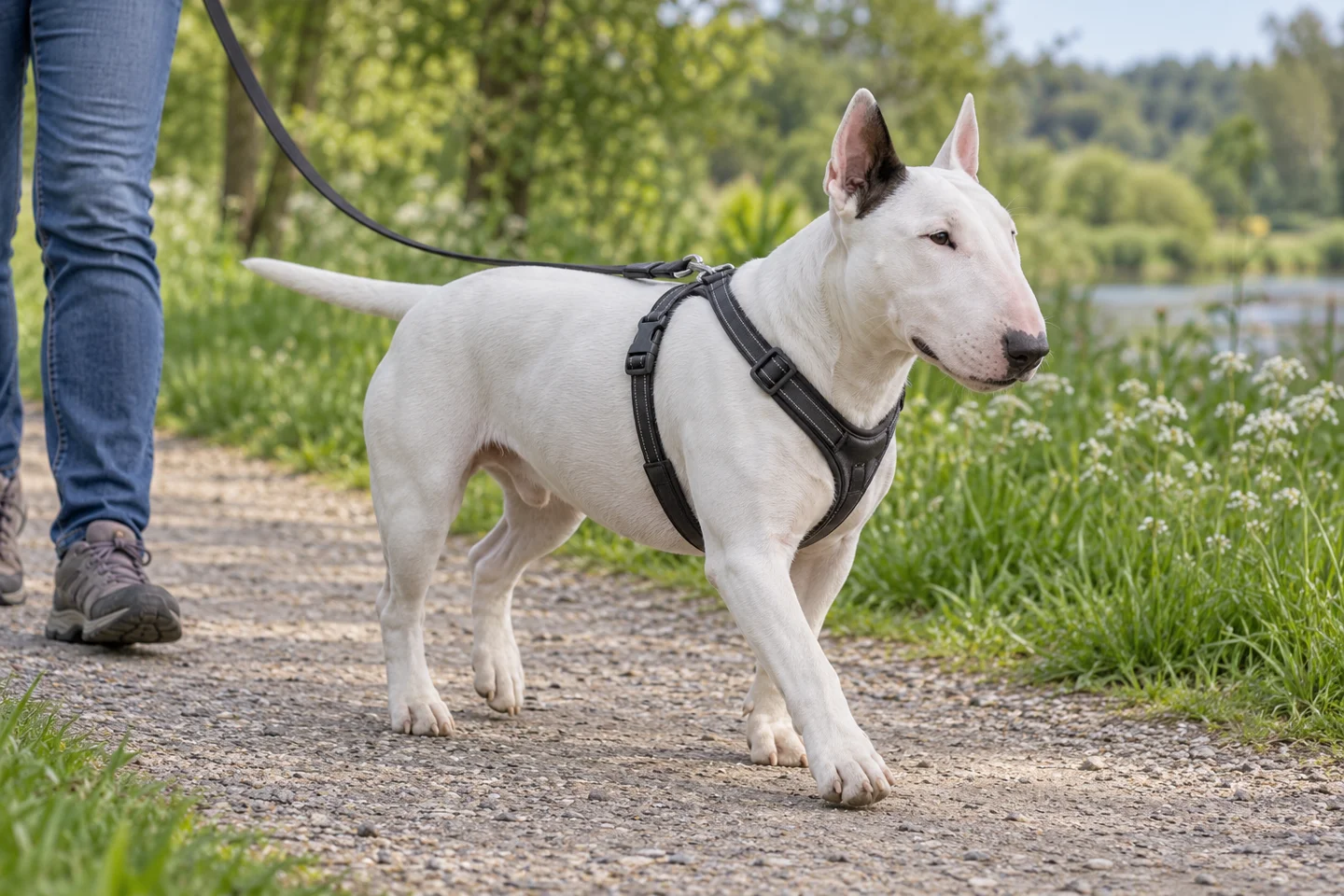
White and colored dogs occur. The illustrations choose a white example, rather than implying that coat determines personality or hearing. A living animal needs an individual assessment. Fit equipment to its chest, neck, and head without relying on a generic size category, and check that it cannot back out during a surprise. Introduce calm harnessing before adding a busy environment. Car travel needs a secure arrangement that accommodates the adult body. A compact muscular dog can still become a dangerous distraction if allowed to move freely beside a driver.
The FCI standard deliberately sets no fixed height or weight limits for the Bull Terrier, emphasizing balance and substance appropriate to the individual. That is a reason to ask about the actual adults in a line instead of promising one universal mature size. Weigh and measure the dog for equipment, and assess condition without trying to maximize bulk.
Hearing information before training assumptions
Ask for BAER hearing-test documentation rather than accepting a clap behind the puppy as proof of normal hearing. The test assesses auditory responses and can help identify one-sided as well as bilateral deafness. A dog may respond to household events without hearing equally through both ears. Coat color alone cannot tell an owner the result. Request the report for the actual dog and discuss its interpretation with a veterinarian, including what is known about the parents when considering a litter.
A dog with reduced hearing can learn through visual signals and thoughtful routines, but safety planning needs to reflect its abilities. Keep a lead near traffic and arrange ways to obtain attention without startling a sleeping animal. Teach everyone in the household how to approach comfortably. Do not interpret failure to respond to a voice as deliberate opposition before considering hearing and the learning history. Ask a qualified professional for help adapting instruction. Consistent signals and secure access remain useful whether hearing is typical, partial, or absent.
Children and energetic body contact
A Bull Terrier can become very enthusiastic during play, so separate children's fast games from dog play before jumping or collisions develop. Teach a useful pause and an adult-directed return to a resting place. Children should not wrestle, pull a toy from the mouth, or try to control the dog by its collar. An adult needs to manage the interaction closely enough to stop rising excitement. Friendly intent does not remove the risk created by strength, speed, and a child's limited ability to protect balance.
Keep the sleeping area and meals undisturbed. Children can help with simple reward-based tasks under guidance, but a dropped toy beside a chew belongs to an adult to retrieve safely. Watch the dog for withdrawal, stiffening, or repeated attempts to leave. If hearing is reduced, explain the approach routine especially carefully so children do not surprise it with touch during sleep. Visiting children may create unfamiliar conditions even when family life has been calm. Adjust the arrangement to the current participants instead of relying on a general description of the breed as affectionate.
Other dogs and the right kind of play
Assess dog compatibility individually and provide room for disengagement. An exuberant dog can find itself unwelcome when it repeatedly returns for contact another animal has declined. Watch the recipient's choices, not only the Bull Terrier's enthusiasm. A selected walking companion may be more suitable than a crowded enclosure where many play styles compete. First meetings should allow separate handlers to increase distance without pulling animals past each other in a narrow entrance or trapping them beside a person with food.
At home, distribute resting places and feed separately while a relationship develops. Do not leave dogs to resolve resource disputes without help. For cats, use protected routes and barriers, reward the dog's ability to look away, and prevent pursuit. Familiarity with one resident animal cannot establish safety with a different one running outdoors. Small pets require secure protection. Ask a rescue for detailed observations of previous encounters, including restraints and distance, so the new household can plan from evidence rather than a broad and potentially misleading compatibility label.

Aggression and a plan people can follow
When an incident occurs, describe it concretely. A growl over a chew, a snap during a painful nail trim, and a reaction to a loose dog have different contexts. Prevent another exposure while arranging veterinary and behavioral assessment as needed. Do not encourage a person to challenge the animal to demonstrate authority. A strong dog deserves a plan that works for every caregiver, including clear separation and handling instructions, rather than one owner believing that personal confidence will prevent anything serious from happening.
Punishing a warning can make discomfort less visible while leaving its cause unchanged. Create distance, protect vulnerable people and animals, and seek reward-based professional support. Teaching an exchange can address possession without confrontation, while painful handling may require treatment before training can progress. A basket muzzle can add protection for specified tasks if the animal learns to wear it comfortably. Fit matters with this head shape, including room for appropriate panting. Supervision and a realistic management plan remain necessary even when the equipment is secure.
Training an enjoyable start and a clear finish
Teach practical transitions such as moving to a mat, following a hand target, and waiting while a door opens. These tasks give an energetic dog understandable alternatives to rushing or jumping. Reward success where distraction is manageable, then expand the setting. A cue learned indoors needs further practice outside. If the dog struggles, change difficulty, reinforcement, or duration instead of turning the session into a test of will. Clarity and repetition help an owner see progress without relying on physical contests.
Play can become a useful lesson in pausing and resuming. Choose equipment appropriate to the dog's chewing and supervise its condition. Teach a voluntary release through a reward rather than repeatedly prying the mouth open. End before either participant is too frustrated or tired to remain comfortable, and provide a predictable quieter activity afterward. Family members should agree on the same rules. A cheerful relationship depends partly on these ordinary details, including respecting occasions when the dog is tired or sore and should not be invited into rough contact.
Spinning and repetitive behavior need attention
Do not encourage repeated tail chasing because it looks entertaining. VCA's veterinary discussion identifies intense spinning as a behavior seen in Bull Terriers and explains that repetitive patterns need assessment when they interfere with normal life, become difficult to interrupt, or cause injury. Record when episodes arise and how long they last without provoking another event for video. A veterinarian should investigate possible physical contributors as well as behavioral factors. A breed tendency cannot establish the cause for a particular animal.
Keep the household response calm and avoid shouting, laughing, or creating an audience around the episode. Follow the clinician's plan for safe interruption and suitable alternatives. Provide predictable rest and appropriate activities while seeking help; a simple promise of more exercise does not replace evaluation. Do not diagnose a compulsive disorder from an isolated turn during ordinary play, either. The useful information concerns persistence, context, recovery, and effects on daily function. Early candid discussion gives the veterinary team more opportunity to understand the pattern before injury or severe disruption develops.
Exercise that respects the actual dog
Provide regular physical activity alongside learning and quiet company. Choose walks, suitable games, and exploration that fit age and conditioning, building gradually after inactive periods. A puppy should not be exercised toward maximum bulk, and repeated high-impact tasks deserve veterinary discussion during development. An adult's enthusiasm can outlast comfortable physical capacity. Observe how it moves afterward and the following morning. Recurrent stiffness or lameness merits assessment rather than another session intended to improve discipline through fatigue.
Plan for heat and footing. Carry water, choose cooler conditions when appropriate, and stop if recovery becomes abnormal. Severe weakness, collapse, or breathing difficulty requires urgent veterinary help. Not every day needs to be exciting. Comfortable sniffing, appropriate chewing, and simple learning can complement more active sessions, including periods when activity is medically restricted. The owner should develop a routine sustainable through work commitments and changing health, instead of depending on a daily level of exertion that neither person nor dog can maintain for years.
Grooming and examining short-coated skin
A short coat can make care quick enough to overlook. Use gentle brushing as an opportunity to notice irritated areas, sore feet, and changes beneath equipment. After outdoor activity, examine spaces between toes and any area the dog repeatedly licks. Persistent itch or a recurrent patch warrants veterinary advice rather than a new unprescribed product each week. Keep a record of timing and exposure when a problem recurs. A white coat can make some redness visible without revealing its cause or severity.
Introduce nail care, tooth brushing, and ear inspection gradually. Practice calm touch before trying to finish a whole task, and investigate new sensitivity rather than simply holding harder. Ask a professional to demonstrate tools if you are uncertain. Ears with discharge, odor, or pain need assessment, and old medication may be unsuitable for a new episode. Necessary clinical care should not wait indefinitely for home training to catch up. Tell the veterinary team what the dog can tolerate so it can plan appropriate support for the appointment.
Health screening beyond a hearing result
The AKC's national breed-club list for Bull Terriers includes patella evaluation, cardiac examination, BAER testing, and a urine protein-to-creatinine ratio for kidney screening. Ask how and when the proposed parents were assessed and obtain identifiable reports. A normal result for one item cannot stand in for the others. In particular, a genetic marketing panel does not replace a hearing examination or the listed clinical evaluations. Your veterinarian can help interpret unfamiliar wording and explain which results need continuing follow-up.
Discuss any serious family illness and keep records after adoption. A urine measurement supplies information that must be interpreted clinically; an owner should not diagnose kidney disease or change to a restrictive diet solely from an isolated online number. The same principle applies to a murmur or a new limp. Current signs deserve assessment even when screening was reassuring in the past. Document changes in drinking, appetite, movement, or tolerance of care and bring that history to appointments. Defined evidence is useful without becoming a promise of lifelong freedom from illness.
Feeding, ingestion risks, and later-life support
Choose complete food suited to life stage and measure portions against body condition and workload. Treats used during frequent training count toward intake. Do not chase a heavy muscular appearance with unnecessary calories or supplements. Arrange separate meals where the animal can eat undisturbed. Select toys and chews for the individual and remove damaged items that could be swallowed. Contact a veterinary service if ingestion is suspected instead of waiting for a clear symptom or trying an unadvised home treatment.
Persistent vomiting, abdominal pain, a major change in appetite, or altered drinking needs clinical advice. For collapse, serious breathing difficulty, or another acute emergency, seek urgent help. Older Bull Terriers may require improved traction, gentler outings, and easier access to beds and vehicles. Gradual change should still be discussed with a veterinarian. Review the budget for treatment, instruction, secure equipment, and substitute care. A familiar dog can acquire new needs, so care should adjust to its present function rather than relying on the active adult routine that worked years before.
Mixes and promises a name cannot make
A Bull Terrier mix may vary considerably in head shape, size, hearing, activity, and social responses. A cross is not guaranteed to inherit the most convenient traits or avoid inherited illness. Ask what is actually known about each parent and which assessments were performed. For an adult of uncertain ancestry, observe present behavior in relevant settings and acknowledge gaps in the history. A rescue label helps description when used honestly, but it should not determine a safety prediction that the available evidence cannot support.
Consider whether every regular caregiver can follow the management plan. Discuss practical housing, access, and insurance conditions that apply to your circumstances before adoption. Seek help early when ordinary care feels difficult instead of waiting for an incident to make the issue urgent. An active home may offer useful outlets while still being unsuitable for a particular dog that struggles with its resident animals or daily environment. Choose according to concrete compatibility and available support, including a realistic understanding of training, medical needs, and the limits the individual may retain.
A measured dogsDating introduction
Describe your Bull Terrier's actual preferences on dogsDating, including whether it enjoys body contact, needs distance at first, or finds shared toys difficult. Meet in a quiet public space with independent capable handlers and a route that permits separation. Start with a shared walk at a comfortable distance rather than an intense face-to-face greeting. Watch whether both animals can pause, look away, and respond to their people. A first outing does not need wrestling or close play to provide useful information.
Keep exact home coordinates private and share an approximate area for planning. Agree how to leave if either dog remains tense or repeatedly crowds the other. Put valued items away and avoid using food between the animals to obtain a photograph. Afterward, compare what happened in that context rather than declaring complete compatibility. Future contact may remain structured walking, and sharing a vehicle, living space, or resources needs additional thought. The matching feature supports owner communication while the dogs' observed comfort determines what arrangement is appropriate.
Sources and editorial notes
Sources checked October 21, 2026. Breed measurements describe reference ranges, not a diagnosis or an individual dog's ideal weight. Images are AI-generated breed illustrations and do not document a particular dog or health condition.
- AVSAB: Humane Dog Training Position Statement
- VCA Animal Hospitals: Food aggression in puppies
- VCA Animal Hospitals: Aggression toward unfamiliar dogs, diagnosis
- VCA Animal Hospitals: Heat stroke in dogs
- VCA Animal Hospitals: Common emergencies in dogs
- VCA Animal Hospitals: Grooming and coat care for your dog
- VCA Animal Hospitals: Ear infections in dogs
- VCA Animal Hospitals: Feeding guidelines for dogs
- Orthopedic Foundation for Animals: CHIC program and interpretation of numbers
- Louisiana State University Veterinary Medicine: Deafness in dogs and cats and BAER testing
- VCA Animal Hospitals: Compulsive disorders in dogs, tail chasing and spinning
- AVSAB: Humane Dog Training Position Statement
- Fédération Cynologique Internationale: Bull Terrier official breed standard
- American Kennel Club: National breed-club terrier group health testing recommendations
Keep getting to know dogs.
Read another guide or return to your dogsDating community.
Explore breed guidesBack to dogsDating