Cairn Terrier
An active Scottish terrier whose care combines safe investigation, cooperative grooming, protected small animals, and careful interpretation of its detailed health checklist.
How these guides are researched and reviewed

- Origin
- Scotland, Great Britain
- Coat
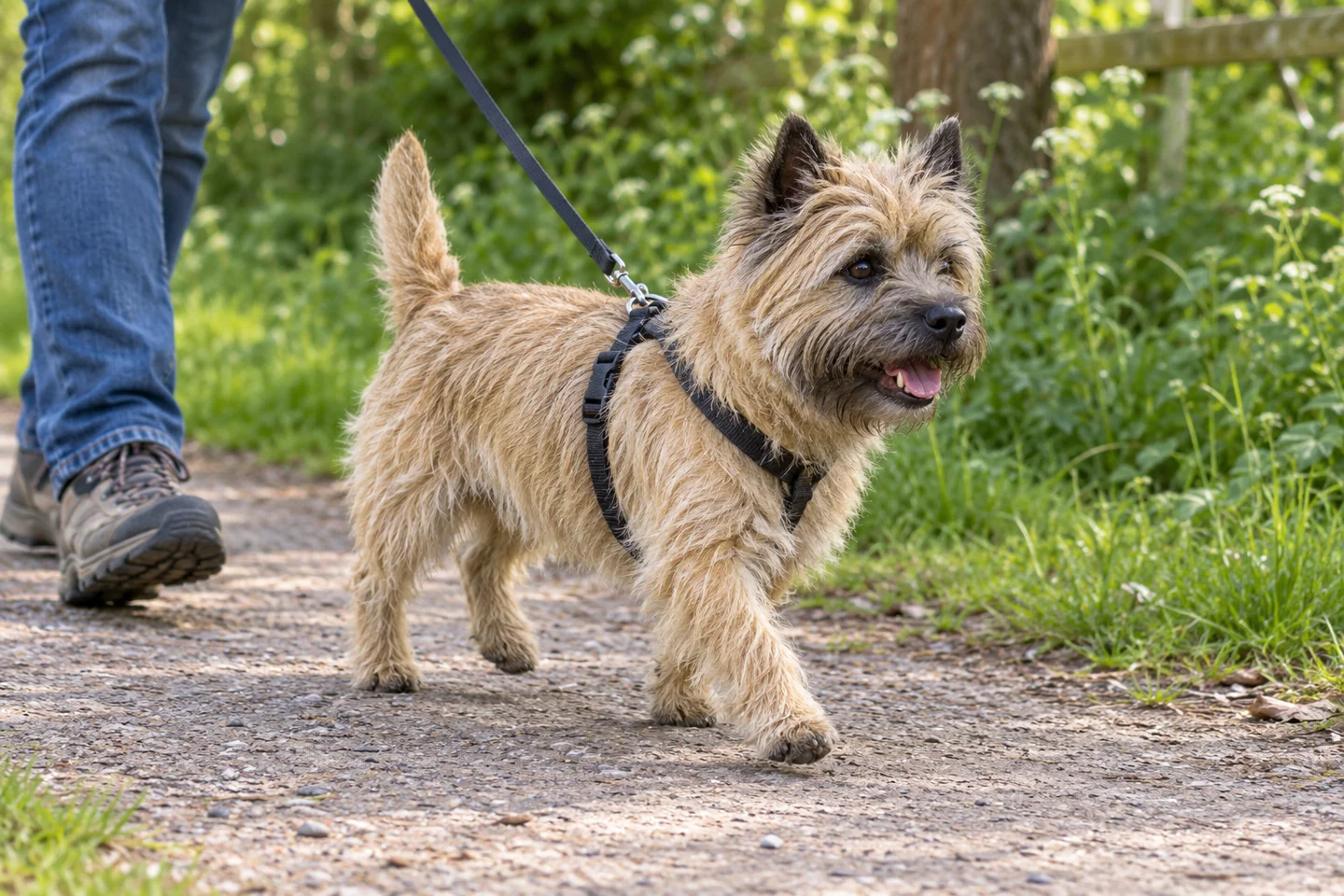
- Harsh wheaten double coat with dark shading illustrated
- Care priorities
- Pursuit management, rustic coat care, eyes and kidney screening
- Adult size reference
- FCI adult size: about 28–31 cm; ideal 6–7.5 kg
General information for owners. These articles have not been reviewed by a veterinarian. Medical decisions need your dog's history and an examination.
A Cairn Terrier is an active small dog
A Cairn Terrier needs the freedom to investigate safely and an owner who enjoys teaching a lively little dog. Its compact body can fit comfortably into many homes, but the household still needs a plan for digging, chasing, doorways, and calm rest. Choose it for the life you can provide on ordinary weekdays. An appealing shaggy face cannot tell you whether the dog will cope with the local walking environment, resident animals, or periods when its usual person is away.
Meet adult Cairns and ask owners about the practical details behind that appearance. How is the coat maintained? What happens when a squirrel runs across the path? Can someone else fit the harness or provide holiday care? A puppy leaves more to be learned than an adult with a detailed foster history, although either needs support in a new home. Think through the available time and help before committing. Small size can reduce some equipment demands without removing training, medical, or behavioral needs.
Weather-resistant coat and a practical outline
A Cairn has a harsh outer coat over a softer undercoat, with a furnished head, small upright ears, and a naturally carried tail. Colors vary, and brindling can occur. The illustrations choose a wheaten example with dark muzzle shading. The dog should look capable of free movement rather than sculpted into an exaggerated toy shape. Watch a living animal walk, turn, and rise. Comfortable function is a better assessment target than the amount of hair covering its legs or the dramatic darkness of its face.
Fit equipment around the actual body beneath the coat. A shaggy outline can conceal rubbing or an overly loose harness. Check fit after grooming, growth, or weight change and select lead hardware that is secure without being unnecessarily heavy. Provide a safe travel arrangement so the dog cannot move toward the driver. At home, inspect gaps under barriers and balcony access from a puppy's height. A little dog can pass through an opening that an owner noticed only as a harmless space around furniture or a garden gate.
The FCI describes approximately 28–31 cm at the withers and an ideal weight of 6–7.5 kg in proportion to the body. A little dog still needs a comfortable harness and enough carrier space to change position. Use condition and individual measurements rather than trying to fit every adult to one fixed weight within that reference range.
Digging, scent, and controlled opportunities
If the dog enjoys digging, decide where it can do so before the garden becomes a repeated argument. An appropriate designated area and supervision may provide an outlet while vulnerable beds remain protected. Check fences below ground level as well as at the latch. A hole near a boundary is a management issue, even when the activity looks entertaining. Avoid leaving the dog to rehearse escape attempts while assuming that its affection for the household will keep it nearby.
On walks, protect against sudden pursuit near roads and wildlife. Teach a turn toward the owner in easier conditions and reward it before distraction becomes overwhelming. A secure line allows practice without gambling on an unproven recall. Let suitable sniffing be part of the outing rather than requiring uninterrupted close marching. Structured searches can offer variety when introduced sensibly. A terrier's interest in investigation does not authorize access to someone else's animals or land, and an owner remains responsible for choosing settings in which both the dog and its surroundings are protected.
Children and a dog that can leave
Children often find a Cairn's size inviting for carrying and close cuddling. Teach them to interact at floor level and let the dog approach voluntarily. An adult should handle necessary lifting and prevent ear pulling, climbing, or pursuit when the dog withdraws. A child who intends affection may not recognize the animal's discomfort. Watch for turning away, hiding, stiffening, or attempts to get down, and change the interaction promptly rather than waiting for a more forceful warning.
Protect sleeping places and meals. If a toy ends up beside a chew, an adult arranges a safe retrieval instead of asking a child to take it. During energetic play, the dog may become excited by running or moving clothing, so separate activities before they become difficult to stop. Visiting children introduce new movements and noise even in a familiar home. Reassess supervision and the available retreat for each gathering. A dog that has tolerated past contact still needs the opportunity to decline today's interaction, especially when tired or sore.
Dogs, cats, and terrier pursuit
Choose canine company by observed behavior rather than size alone. A small dog can still crowd or chase persistently, and an otherwise friendly larger animal can overwhelm a Cairn through contact. Watch whether each participant takes breaks and returns willingly. A quiet shared walk may be easier to assess than a crowded enclosure. If one repeatedly hides or attempts to leave, create space. The owner of the enthusiastic dog should respond to the other animal's preference, not insist that continued play is harmless.
Cats need protected access and gradual introductions. Prevent chasing while rewarding calm observation at a distance. A resident cat sitting quietly and an unfamiliar animal running outdoors create different circumstances, so earlier calm contact cannot support a universal safety claim. Keep small pets in genuinely secure arrangements and avoid testing a terrier's intentions with free access. Ask carers which interactions they have seen and how they were supervised. At home, distribute feeding and rest so neither dog nor cat needs to pass close to a guarded resource merely to reach its own space.

Aggression and possession without a contest
A Cairn holding a valued object should not be repeatedly challenged to prove that people control everything. Teach an exchange in an easy setting, using a worthwhile reward and management that prevents children from joining. If the dog freezes or growls, create space and seek appropriate advice. Other reactions may arise from fear or pain, so record the context rather than putting every snap under the label of terrier temperament. A little dog's warning deserves the same practical attention as a larger animal's.
New handling sensitivity warrants veterinary assessment, particularly when a task was previously comfortable. Until the cause is understood, prevent repetition and tell professionals what happened before an appointment. Choose reward-based behavioral support that explains both the management and the learning task. Punishment can suppress warning signals without resolving discomfort. Care should become more predictable, not a series of escalating holds. If additional equipment is advised for safety, introduce it gently and use it within a supervised plan that respects the dog's anatomy and ability to remain comfortable.
Training a useful response to the world
Teach attention, a hand target, a wait behind a doorway, and settling in a designated place. Those behaviors offer alternatives when the dog notices something interesting or needs to move through a busy home. Start with a task it can understand, then change distraction or duration in small amounts. A response in one room does not establish the same learning beside another dog. When progress stalls, examine the setup and the reward before assuming the animal's independent character makes instruction impossible.
Play can reinforce cooperation when both participants can pause. Choose suitable toys, inspect damage, and teach a voluntary release instead of pulling continuously at an object. A calm finish helps the dog learn that activity can end without conflict. Maintain the same cues across carers, including someone who only occasionally provides care. A qualified instructor can help the person improve timing and choose manageable tasks. Practical success means the dog can navigate ordinary outings and care comfortably, rather than perform a trick while essential household transitions remain a struggle.
Exercise for a small working body
Offer regular walking, investigation, and suitable games. A Cairn's manageable size does not mean its world should be limited to the interior of a flat or being carried everywhere. At the same time, inherited activity does not prove readiness for a strenuous expedition. Build conditioning according to age and health, including recovery after unfamiliar terrain. Puppies require appropriate movement and rest, and repeated high-impact tasks need thought during development. Ask a veterinarian when the right workload is uncertain or a medical issue changes the plan.
Examine feet after rough ground and watch movement after the dog rests. Persistent stiffness, a shortened stride, or reduced enthusiasm should prompt assessment rather than an automatic increase in exercise. Adapt to warm weather and carry water; severe weakness, collapse, or breathing difficulty needs urgent help. Quiet days can include suitable food searches and learning without a frantic effort to tire the animal indoors. A sustainable routine includes periods when work, weather, or the owner's health makes a favorite long outing impractical.
Grooming a rustic double coat
Ask a groomer familiar with the Cairn coat to demonstrate maintenance suited to your dog and intended presentation. Brushing, removal of loose coat, and appropriate trimming or stripping decisions should preserve comfort and access to the skin. A neat surface can conceal tangles underneath. Work gently around furnishings and under equipment, giving a young dog short lessons before a larger task becomes necessary. Avoid treating a heavily styled outline as proof that the underlying care is complete.
Check the skin after outdoor activity and investigate persistent itch, odor, redness, or a painful patch. Dry wet areas and bedding appropriately. Do not repeatedly apply new products without understanding why irritation returns. Keep tools and handling safe around eyes and ears, particularly when the dog moves unexpectedly. If grooming becomes painful or frightening, get professional support and change the task. The goal is a routine the animal can tolerate again tomorrow, rather than completing every area in one session after it has already become too uncomfortable to cooperate.
Health screening and the unusually detailed checklist
The AKC's Cairn recommendations include patella and cardiac evaluations, kidney ultrasound, an ocular melanosis eye examination, testing for globoid cell leukodystrophy, and assessment concerning liver vascular anomalies. Read the current breed-club guidance with the breeder and your veterinarian instead of treating every term as interchangeable. Ask which reports belong to the actual parents and what findings they contain. A broad DNA panel cannot replace clinical imaging or an eye examination merely because its list of abbreviations looks comprehensive.
The named kidney assessment concerns absent or malformed kidneys in the published list; it is not a claim that an owner can diagnose every future urinary problem from a puppy's outward health. Likewise, an ocular melanosis examination addresses a particular concern rather than all causes of eye pain. Discuss how often follow-up is recommended in the program used. Avoid inventing a prevalence figure from the existence of a test. The useful outcome is identifiable evidence and a clear understanding of what it answers, with appropriate uncertainty retained about other illness.
Eye changes, preventive care, and dental routines
A dog squinting, rubbing an eye, or developing visible cloudiness needs prompt veterinary advice. Do not assume that a breed-specific screening result explains the cause or makes the sign unimportant. Avoid old eye medication unless the current episode has been assessed. Keep clinical and screening documents together so a veterinarian can understand previous findings. At ordinary appointments, discuss prevention appropriate to the dog's location and outdoor interests, including parasite exposure. There is no universal schedule that replaces an individual care plan.
Tooth brushing, nail care, and ear inspection should develop through small cooperative steps. A sore mouth or foot can change tolerance, so new resistance should be taken seriously. Ask for demonstration of suitable products and tools. Persistent odor, discharge, or repeated head shaking deserves assessment rather than unadvised cleaning deep inside an ear. Make clinic and emergency contacts available to substitute carers. A little dog is easier to transport than a giant in some circumstances, but it still needs a suitable carrier and someone who recognizes when care cannot wait.
Feeding and the dog's changing condition
Measure complete food appropriate to age and health, including rewards offered during frequent training. A small extra can be a meaningful part of a small dog's daily intake. Assess condition beneath the coat with veterinary guidance instead of relying on a groomed silhouette. Do not add supplements simply because the animal is active or belongs to a working breed. Persistent changes in thirst, appetite, weight, or digestion need clinical attention, with a factual history of timing and recent changes.
Older Cairns may need different access to beds and vehicles and gentler versions of activities they still enjoy. Notice difficulty rising or changed recovery before stairs become impossible. Gradual change is still worth discussing with a veterinarian. Adjust routines around present comfort rather than demanding that a familiar dog keep up with its younger habits. Budget for dental care, diagnostic work, grooming assistance, and support during absences. Food is only one cost, and compact size does not guarantee that every medical need will be simple or inexpensive.
Mixes and claims about low-maintenance terriers
A Cairn mix can vary in coat, size, pursuit, and social preferences. Crossing with a Poodle or companion breed does not guarantee simple grooming, easier temperament, or freedom from human allergy. A marketed cross name is not a fixed standard. Ask which parent histories and health assessments are documented, then evaluate what can actually be observed. For an adult rescue, practical information about care and daily behavior can be more useful than trying to identify every ancestor from the face and coat.
Choose a home match based on the routines you can sustain. A rural garden needs secure boundaries, while a city home needs suitable walks and a plan for close encounters. Either may work for the right individual with appropriate support. Check housing or insurance conditions relevant to your situation and identify who can provide backup care. The dog should not be selected on a promise that training will remove all hunting interest or that a small body makes every household compatible. Honest limits make preparation and long-term care more realistic.
A terrier-aware dogsDating meeting
Use dogsDating to describe the Cairn's actual play style and ability to pause around unfamiliar dogs. Choose a public walking route with space for separate handlers rather than beginning in a crowded small-dog enclosure. Avoid a venue where wildlife repeatedly draws the dog's attention away from the meeting. Start far enough apart for comfortable observation, then change distance only if both animals remain able to disengage. A calm shared outing can be useful without an intense greeting or chase game afterward.
Keep exact home coordinates private and use an approximate area to find local contacts. Agree on the meeting point and an exit before arriving. Put prized toys away and avoid creating competition with treats between the animals. If either becomes stiff, overwhelmed, or persistent, provide room or finish. Compare observations honestly rather than treating a profile match as proof of compatibility. Another walk may preserve distance, and closer play should follow the individuals' preferences. One pleasant encounter does not establish readiness to share a vehicle, food, or unsupervised time at home.
Sources and editorial notes
Sources checked October 21, 2026. Breed measurements describe reference ranges, not a diagnosis or an individual dog's ideal weight. Images are AI-generated breed illustrations and do not document a particular dog or health condition.
- AVSAB: Humane Dog Training Position Statement
- VCA Animal Hospitals: Food aggression in puppies
- VCA Animal Hospitals: Aggression toward unfamiliar dogs, diagnosis
- VCA Animal Hospitals: Heat stroke in dogs
- VCA Animal Hospitals: Common emergencies in dogs
- VCA Animal Hospitals: Grooming and coat care for your dog
- VCA Animal Hospitals: Ear infections in dogs
- VCA Animal Hospitals: Feeding guidelines for dogs
- VCA Animal Hospitals: Hypoallergenic dog breeds
- Orthopedic Foundation for Animals: CHIC program and interpretation of numbers
- VCA Animal Hospitals: Corneal ulcers in dogs
- AVSAB: Humane Dog Training Position Statement
- Fédération Cynologique Internationale: Cairn Terrier official breed standard
- American Kennel Club: National breed-club terrier group health testing recommendations
Keep getting to know dogs.
Read another guide or return to your dogsDating community.
Explore breed guidesBack to dogsDating