Canaan Dog
An alert medium-sized dog whose companion care needs predictable support, gradual social experiences, suitable exploration, and clear clinical screening records.
How these guides are researched and reviewed
- Origin
- Israel
- Coat
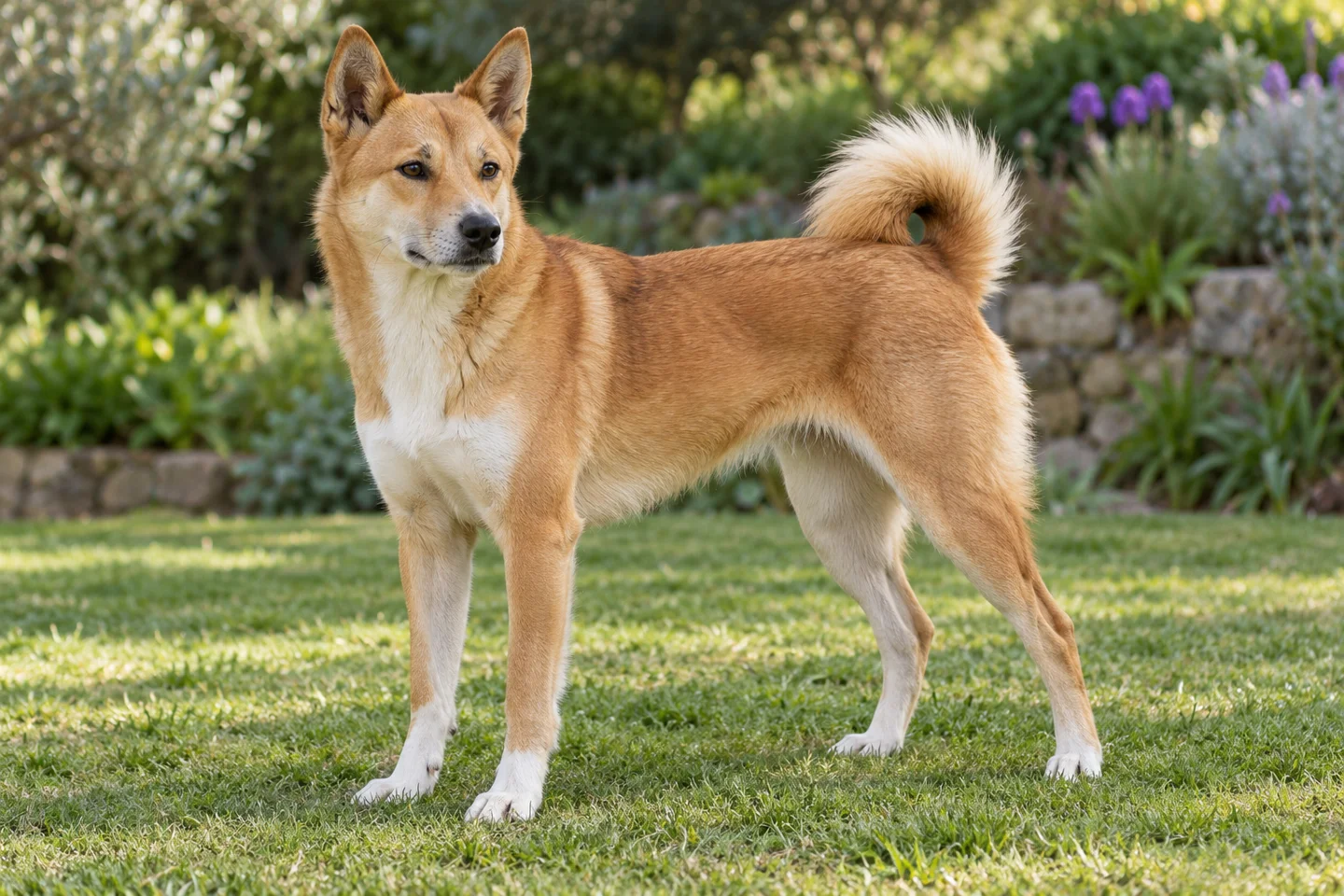
- Dense sandy-red coat with modest white illustrated
- Care priorities
- Comfortable social distance, alerting routines, identifiable screening
- Adult size reference
- AKC height: males 20–24 in; females 19–23 in
General information for owners. These articles have not been reviewed by a veterinarian. Medical decisions need your dog's history and an examination.
A Canaan Dog needs predictable support
A Canaan Dog suits an owner who can provide activity and patient teaching without demanding immediate friendliness toward everyone. Alertness and reserve can be practical considerations in a busy neighborhood. Before adopting, consider entrances, nearby dogs, visitors, and where the animal can observe at a comfortable distance. A secure home routine is useful whether the dog lives in a flat or beside open land. Space alone cannot explain how to settle after a noise or cope with an unexpected encounter in a narrow passage.
Meet adults with experienced carers and watch ordinary recovery after something changes. Ask what happens when a guest arrives, the owner leaves, or another dog approaches on a walk. A breeder's broad description of confidence should lead to specific examples. An adult rescue may provide observations of current habits, while a puppy remains a developing individual. Choose the match according to what your household can sustain through busy periods, including support during travel and the ability to maintain a consistent handling plan when several people share care.
Israeli identity and modern preservation
The FCI identifies Israel as the Canaan Dog's country of origin. The modern breed developed from regional free-living dog populations and dogs associated with people and their flocks. UKC's account identifies Rudolf and Rudolphina Menzel and their arrival in the territory then known as Palestine in 1934 as important to the organized preservation work. These are useful concrete reference points. Claims that a pictured ancient dog proves an unbroken pedigree for today's animal require much more evidence than visual resemblance can provide.
The Canaan Dog is distinct from the Carolina Dog and from an arbitrary village-dog or shepherd mix. Similar upright ears and a sandy coat occur in many populations. Ask how identification was established, particularly when a rescue has no documents. A dog can be an excellent individual adoption prospect without a precise pedigree. Keeping that uncertainty visible prevents unsupported promises about behavior and health. Recent family records, early experience, and direct observation supply more practical information for a companion placement than a dramatic narrative about unchanged ancient ancestry.
Square outline, erect ears, and a bushy tail
The breed has a medium-sized balanced body, upright ears, a wedge-shaped head, and a bushy tail that can be carried over the back when alert. Its short-to-medium dense coat comes in varied colors and patterns. The illustrations select a sandy-red dog with modest white areas, rather than presenting one appearance as the whole breed. A natural athletic outline matters more than exaggerated resemblance to a wild animal. Evaluate comfortable movement and the animal's ability to rest, rise, and turn without apparent difficulty.
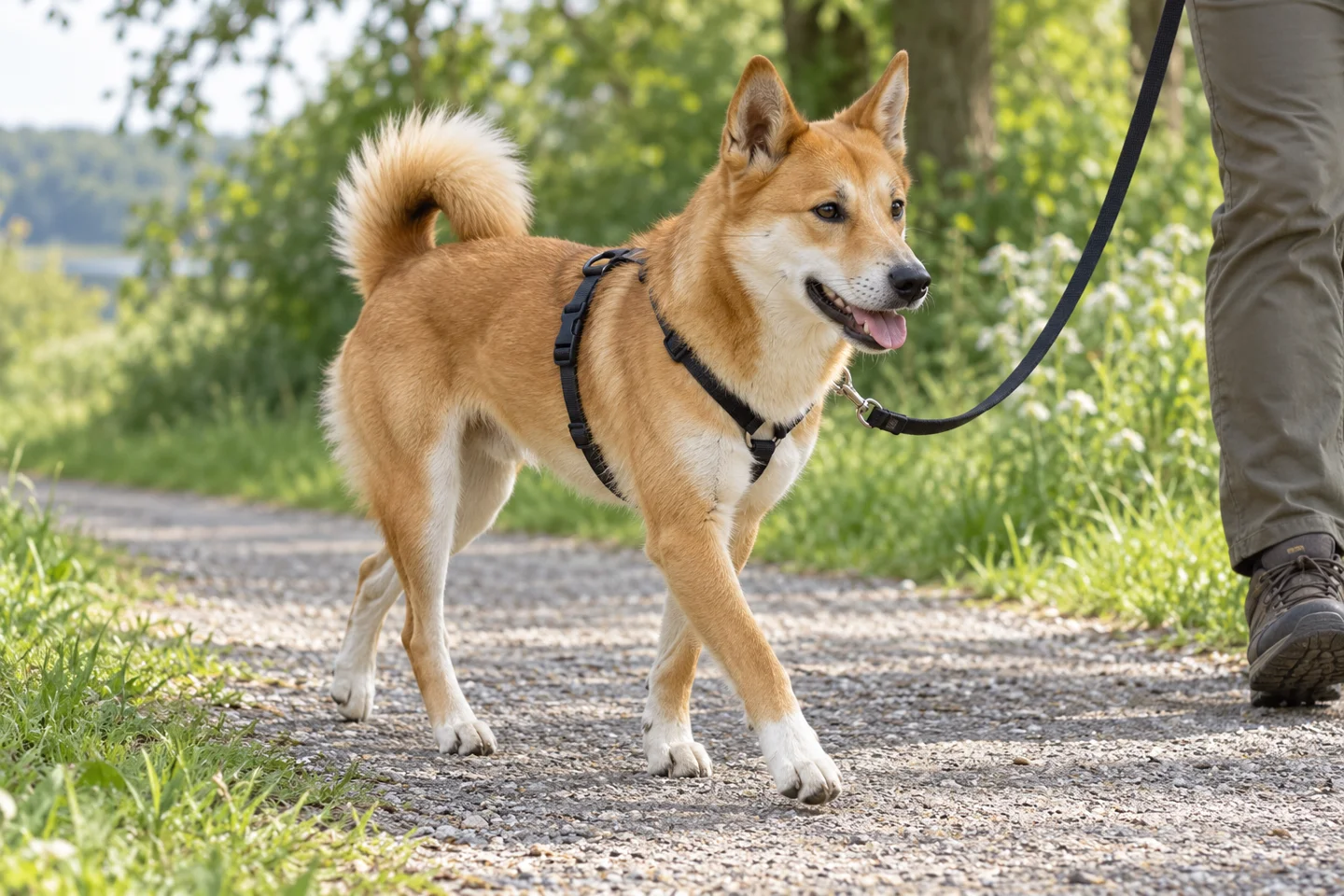
Measure equipment against the real dog beneath its coat. Check whether a harness rubs near the front legs or becomes loose when the animal backs away. Secure fitting and calm handling matter especially when an unexpected sound or encounter startles it. Teach the equipment routine in a quiet setting before expecting cooperation outdoors. Arrange safe vehicle restraint and a suitable resting space at home. Physical comfort and reliable containment reduce situations in which the owner's only option is a hurried attempt to grab a moving dog.
The AKC lists males at 20–24 inches and 45–55 pounds, with females at 19–23 inches and 35–45 pounds. Those sex-specific reference ranges help convey the adult scale but do not forecast an exact puppy outcome. Allow for individual variation when planning travel and barriers, and reassess equipment as the dog develops.
Alerting and the sounds beyond the window
A dog that notices every passing movement may rehearse barking repeatedly if given unlimited access to a busy window. Change the setting before trying to explain a quieter response: reduce the visual trigger, offer a comfortable resting area elsewhere, and reward returning toward the owner. Ask what typically prompts calls and how long recovery takes. In shared housing, that information affects practical fit. Do not assume the owner can remove an alerting tendency whenever neighbors find it inconvenient through a stern command or an automatic device.
Visitor routines can be equally specific. Secure the dog away from the entrance while coats and bags are handled, then assess whether an approach would be comfortable. Guests should let the animal choose contact rather than repeatedly reaching toward it. A calm period behind a barrier can be a successful visit. If fixation or distress persists, create more space and seek qualified help. The dog's reserve should not be challenged as a test, and an unfamiliar person should not be assigned the task of proving that the home is safe.
Children and respect for a reserved dog
Teach children that a dog looking away or leaving has declined contact. A Canaan Dog should not need to growl before someone stops following it. Demonstrate gentle brief interaction from a calm position, with an adult responsible for supervision. Avoid hugging, cornering, or reaching into a sleeping space. A dog may be comfortable with the family's children while finding a visitor's fast approach difficult. Review the actual setting and participants rather than expecting a general family-friendly description to settle every question.
Give the dog a protected resting area and separate it before busy running games begin. Meals and valued chews also need freedom from interference. If a toy falls nearby, an adult can move the dog or arrange a safe exchange before retrieval. Children should not hold the lead in a setting where an unexpected reaction exceeds their control. Their enthusiasm can be directed toward simple supervised reward-based tasks instead. New pain, fatigue, or sensory change deserves attention because it may alter tolerance even within a previously familiar and comfortable household routine.
Other dogs and the importance of an exit
A sociable dog still needs the ability to stop an interaction. Start introductions where separate handlers can move apart and observe whether both animals take pauses. Avoid making the first encounter a crowded entryway or a competition for toys. At home, place beds and feeding stations so access to one does not require crossing the other's chosen space. Repeated following or blocking deserves attention before an obvious confrontation develops. Quietness can coexist with discomfort when an animal has little opportunity to leave.
A Canaan Dog's compatibility with cats or small pets depends on the individual and the circumstances. Use protected routes and secure separation during assessment. Reward calm disengagement rather than waiting for a chase and trying to stop it. Previous contact with one animal supplies context, not a universal prediction. Ask carers what happened, at what distance, and with which barriers. Continue management in the new environment and remain willing to keep separation where that is the practical route to safety. Neither ancestry nor a successful photograph establishes reliable unsupervised coexistence.

Aggression and making the encounter easier
If a dog stiffens or growls when a person approaches, increase distance and record the context. Was it unable to retreat, protecting an object, startled from sleep, or being handled near a painful area? Different circumstances call for different assessment. Prevent a repeat while veterinary or behavioral help is arranged. Do not force the animal to remain beside a trigger until it gives up responding. The owner needs to protect people and animals while developing a plan the dog can manage without escalating pressure.
Use qualified reward-based support and tell professionals about previous incidents before an appointment. Punishing warnings can conceal discomfort without changing its cause. Clinical assessment matters when a new reaction appears or tolerance of touch changes. A plan may involve barriers, gradual learning, or a positively conditioned basket muzzle for particular tasks. Equipment needs suitable fit and supervision. It cannot transform an overwhelming close encounter into a useful lesson or remove the need for treatment if pain contributes. The practical aim is safe participation with a clear opportunity to recover.
Training choices without a dominance contest
Teach specific useful responses: following a target, returning to a station, pausing at an entrance, and turning toward the owner on a walk. Reward them in conditions where success is likely before adding difficulty. If the dog hesitates, examine what it understands and what changed in the setting. A loud cue may be less useful than more distance from another animal or a smaller task. Household members should agree on expectations so the dog does not receive different instructions for the same situation.
Avoid explaining every problem through independence or a supposed need to establish rank. Reward-based teaching can make cooperation clear while respecting the animal's response to pressure. Include handling lessons that predict brief gentle contact and a pause. A dog that can stand for a harness check or step onto a scale willingly offers more practical cooperation than one expected to tolerate force because it knows unrelated commands. An instructor should help the person identify those manageable steps, including when veterinary advice is needed before handling can become comfortable.
Absences and the practical working day
Start with comfortable brief periods apart while the household is otherwise calm. Provide a safe resting area and increase distance or duration according to the response. Observe what happens after departure, using a recording if appropriate. Persistent calls, pacing, or attempts to escape deserve help and a revised arrangement. A dog may rest quietly in an owner's presence yet struggle when that person disappears, so daytime settling alone does not establish readiness for the first full workday left without company.
Arrange human support when work exceeds the animal's current ability to remain comfortable. A second dog is a further commitment and cannot be guaranteed to resolve separation distress. Consider practical access for the sitter, especially if unfamiliar arrivals are difficult. The person providing care should know the dog and follow the same entrance routine. This planning matters before travel becomes urgent. A care arrangement that works only when the main owner is available is fragile, even if the home offers ample space and the dog receives enjoyable outings at weekends.
Exercise and outlets beyond repeated excitement
Provide daily walks and opportunities to investigate at a level suited to age and condition. A Canaan Dog can enjoy learning and selected activities without a requirement to become a runner or athlete because it has a lean outline. Build fitness gradually, including after illness or inactivity. Puppies need rest between appropriate movement and experiences. Ask a veterinarian about strenuous repetitive tasks or an unexplained change in endurance. An enthusiastic response does not establish that the body is ready for every activity an owner hopes to pursue.
Mix movement with quiet exploration and rest rather than relying entirely on increasingly exciting games. Check feet after unfamiliar terrain and notice how the animal rises later. Persistent stiffness or a shortened stride needs assessment. Adapt warm-weather outings and provide water; serious weakness, collapse, or respiratory distress requires prompt help. A sustainable routine works during busy weeks and poor weather as well as ideal outdoor days. When medical restriction changes activity, ask which quieter tasks are suitable instead of improvising something physically demanding in the name of mental exercise.
Grooming a practical double coat
The Canaan Dog's dense coat still sheds and needs inspection, even if it often looks naturally tidy. Brush with attention to loose undercoat and the skin beneath equipment. During heavier shedding, adjust the routine rather than waiting until a large buildup makes care more prolonged. Check after outdoor activity for debris, irritation, or damaged feet. A clean-looking surface does not tell the owner that every underlying area is comfortable. Introduce tools through brief rewarded sessions so routine work does not arrive as an unexpected restraint task.
Bathe as needed with appropriate products and dry the dog properly. Persistent odor, discharge, redness, or itch should be investigated instead of treated automatically as ordinary coat change. Include tooth brushing, nails, and ear checks through small cooperative steps. Avoid cleaning deep in an ear canal or using old medication for a new problem without advice. Tell veterinary or grooming staff about handling difficulties before an appointment. Necessary treatment should be arranged promptly when pain prevents comfortable home maintenance, while training can continue at a manageable level elsewhere on the body.
Health records for the named evaluations
The AKC's Canaan Dog list includes patella, hip, elbow, ophthalmologist, and thyroid evaluations. Ask for the actual results and how the identified parents match the pedigree. A generic health guarantee does not explain which evaluations occurred or whether findings were normal. Nor does a dog moving briskly for a short demonstration answer every orthopedic question. If documents use an unfamiliar registry or language, ask the issuing organization or a veterinarian to interpret them before relying on a breeder's abbreviated summary.
Discuss the broader family history and the current program rather than inventing a disease prevalence from a small collection of anecdotes. A thyroid screening result is not a reason to medicate a dog without clinical interpretation, and an eye assessment does not explain every later episode of squinting. Your own animal needs preventive care and assessment for new signs. Keep original reports accessible to a new clinician or substitute carer. Records are most useful when they clarify what was tested and when, while leaving other questions open for appropriate investigation.
Feeding and an older dog's comfort
Use complete food appropriate to life stage and monitor the actual body condition beneath the coat. Measure meals and include training rewards rather than allowing small extras to accumulate unnoticed. Activity changes may require portion changes too. Avoid supplements added merely because the dog has an ancient or natural image. Such descriptions do not identify a nutritional need. Ask a veterinary professional for guidance if growth, weight, appetite, or a proposed diet raises questions, particularly before attempting a home-prepared or restrictive plan.
Persistent digestive changes, altered drinking, or unexplained weight movement deserve assessment. Seek urgent help for collapse, severe breathing difficulty, or major injury. As the dog ages, review flooring, resting places, vehicle access, and recovery from walks. Gradual stiffness should still be discussed clinically. Reduced hearing or vision can also change how people should approach, especially during sleep. Adjust handling and supervision around present abilities. The aim is continued comfort and suitable engagement, with care informed by current function rather than a fixed picture of how the animal behaved when young.
Mixes and choosing a realistic setting
A Canaan Dog mix can vary in appearance, alerting, reserve, and interest in other animals. Crossbreeding does not guarantee a convenient midpoint or remove every inherited risk. Ask what is documented about both parents and distinguish estimates from records. For an adult with uncertain ancestry, evaluate current needs directly. A sandy coat and upright ears cannot establish a special ancient lineage or a promise of robust health. No breed or cross should be marketed as reliably free from human allergy either.
Budget for instruction, secure access, veterinary care, equipment, and backup help as well as food. A city home may offer good support while requiring careful management of close encounters; a rural home may provide room while still needing boundaries and company. Consider the actual individual and routes available. Check practical housing or insurance conditions where relevant. Responsible fit depends on routines that remain workable through employment changes, illness, and older age, including an honest understanding of which situations may continue to require distance or separation despite useful training progress.
A respectful dogsDating introduction
State your Canaan Dog's actual preferences on dogsDating, including whether it likes walking with space or needs time before contact. Choose a quiet public route with separate handlers and room to move aside. Do not begin by inviting another animal into the dog's own boundary. Watch whether each participant can look away and resume investigation. If one stays fixed or uncomfortable, increase distance. A successful introduction may be a peaceful walk, with no need to finish through close greeting or physical play.
Use approximate location information and keep exact home coordinates private. Agree where to meet and how to end the outing before starting. Leave valued toys out of the first encounter and avoid creating competition with shared food. Owners should compare the actual responses rather than treating the profile match as proof of universal compatibility. Future walks may remain spacious and structured. Sharing a vehicle, home, or resources asks different questions, so those arrangements need separate planning based on the individuals' demonstrated comfort and the management both households can reliably maintain.
Sources and editorial notes
Sources checked October 21, 2026. Breed measurements describe reference ranges, not a diagnosis or an individual dog's ideal weight. Images are AI-generated breed illustrations and do not document a particular dog or health condition.
- AVSAB: Humane Dog Training Position Statement
- VCA Animal Hospitals: Food aggression in puppies
- VCA Animal Hospitals: Aggression toward unfamiliar dogs, diagnosis
- VCA Animal Hospitals: Heat stroke in dogs
- VCA Animal Hospitals: Common emergencies in dogs
- VCA Animal Hospitals: Grooming and coat care for your dog
- VCA Animal Hospitals: Ear infections in dogs
- VCA Animal Hospitals: Feeding guidelines for dogs
- VCA Animal Hospitals: Hypoallergenic dog breeds
- Orthopedic Foundation for Animals: CHIC program and interpretation of numbers
- AVSAB: Humane Dog Training Position Statement
- Fédération Cynologique Internationale: Canaan Dog official breed standard
- United Kennel Club: Canaan Dog breed standard and preservation history
- American Kennel Club: National breed-club herding group health testing recommendations
- American Kennel Club: Canaan Dog adult height and weight ranges
Keep getting to know dogs.
Read another guide or return to your dogsDating community.
Explore breed guidesBack to dogsDating