Canadian Eskimo Dog
A powerful Canadian northern working dog whose care needs suitable conditioning, secure exploration, climate planning, and an honest account of available health evidence.
How these guides are researched and reviewed
- Origin
- Canada; Canadian Inuit Arctic working-dog history
- Coat
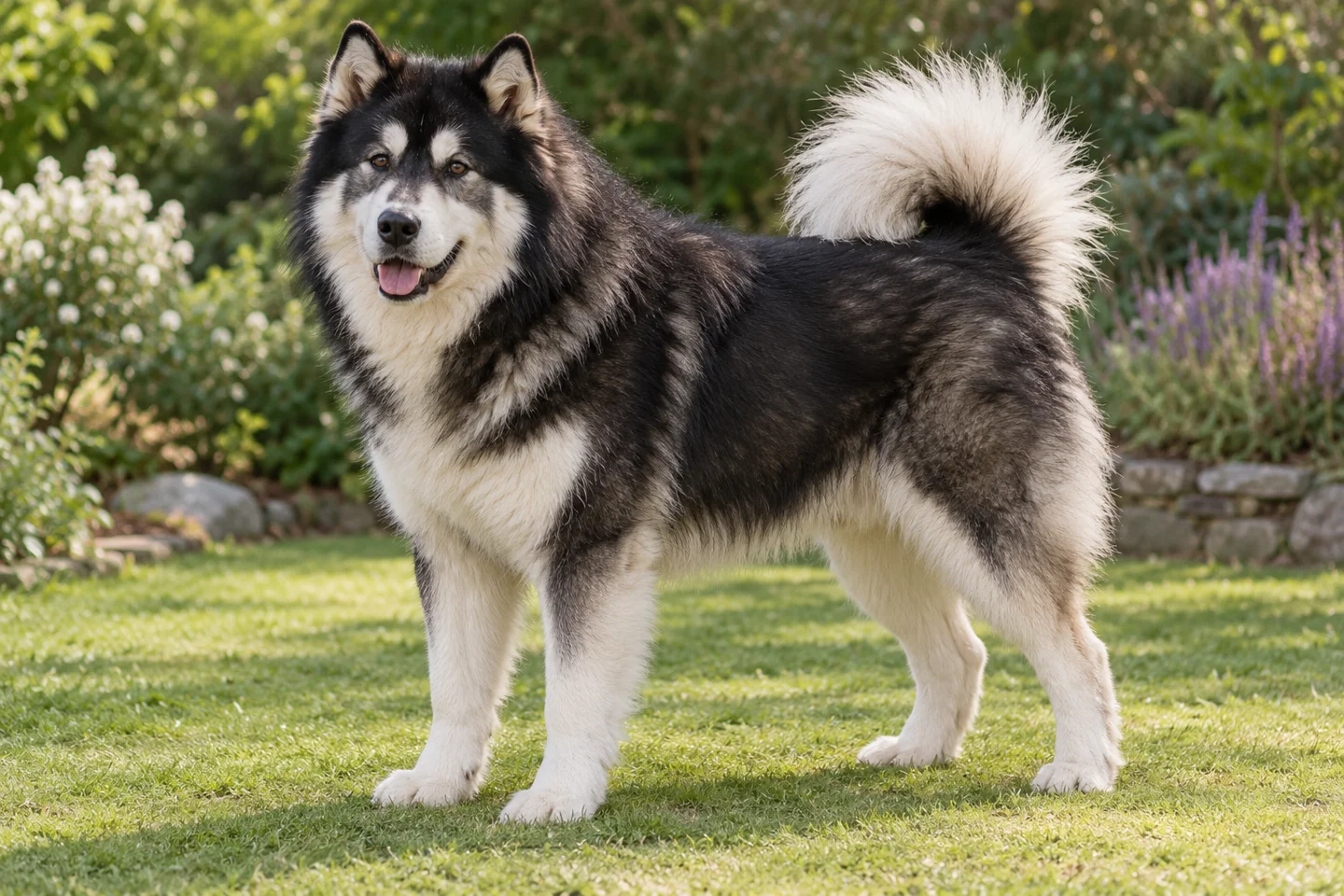
- Dense black-and-white double coat; male illustrated
- Care priorities
- Secure access, conditioned work, climate and undercoat management
- Adult size reference
- FCI: males 58–70 cm, 30–40 kg; females 50–60 cm, 18–30 kg
General information for owners. These articles have not been reviewed by a veterinarian. Medical decisions need your dog's history and an examination.
This northern working dog needs a suitable home
The Canadian Eskimo Dog needs a home prepared for a strong northern working animal with a dense coat and substantial outdoor interests. It is a poor choice to make solely from an appealing sled-dog photograph. Consider secure containment, appropriate activity, climate, transport, and the ability of everyone providing care. A household must be able to meet those needs on ordinary working days, including periods when the usual owner cannot participate in a favorite outdoor activity or provide every walk personally.
Meet knowledgeable owners and ask about routines away from a team or demonstration. How does the animal rest indoors? What happens around unfamiliar dogs or small animals? What support is needed when a new person provides care? An adult with reliable observations can offer more immediate information than a puppy, though adjustment to a new home still matters. Choose according to actual temperament, conditioning, and care requirements. A historic ability to perform difficult work cannot promise easy domestic behavior or establish that an inexperienced household will find management straightforward.
Canadian Inuit history and breed identity
The FCI identifies Canada as the country of origin and describes the breed's close history with Inuit communities. Its traditional work included hauling and other tasks within Arctic life. These relationships deserve more precision than a generic claim that the dog is a wolf-like ancient survivor. The standard also records organized preservation work using dogs from remaining Canadian Arctic populations. That gives a concrete modern reference point while leaving much deeper ancestry outside what an owner can establish from a pedigree or appearance.
Names used for northern Inuit dogs can vary by community and context. The registered Canadian Eskimo Dog is distinct from the Siberian Husky, Alaskan Malamute, and Greenland Dog, even where history or anatomy invites comparison. Ask what records support the identity of an individual offered for sale or adoption. A broad head, upright ears, and curled tail occur in many dogs and mixes. Preserve uncertainty when ancestry is estimated, and evaluate current function and behavior rather than turning a northern-looking rescue into a confident rare-breed identification.
Power, coat, and a functional sled-dog outline
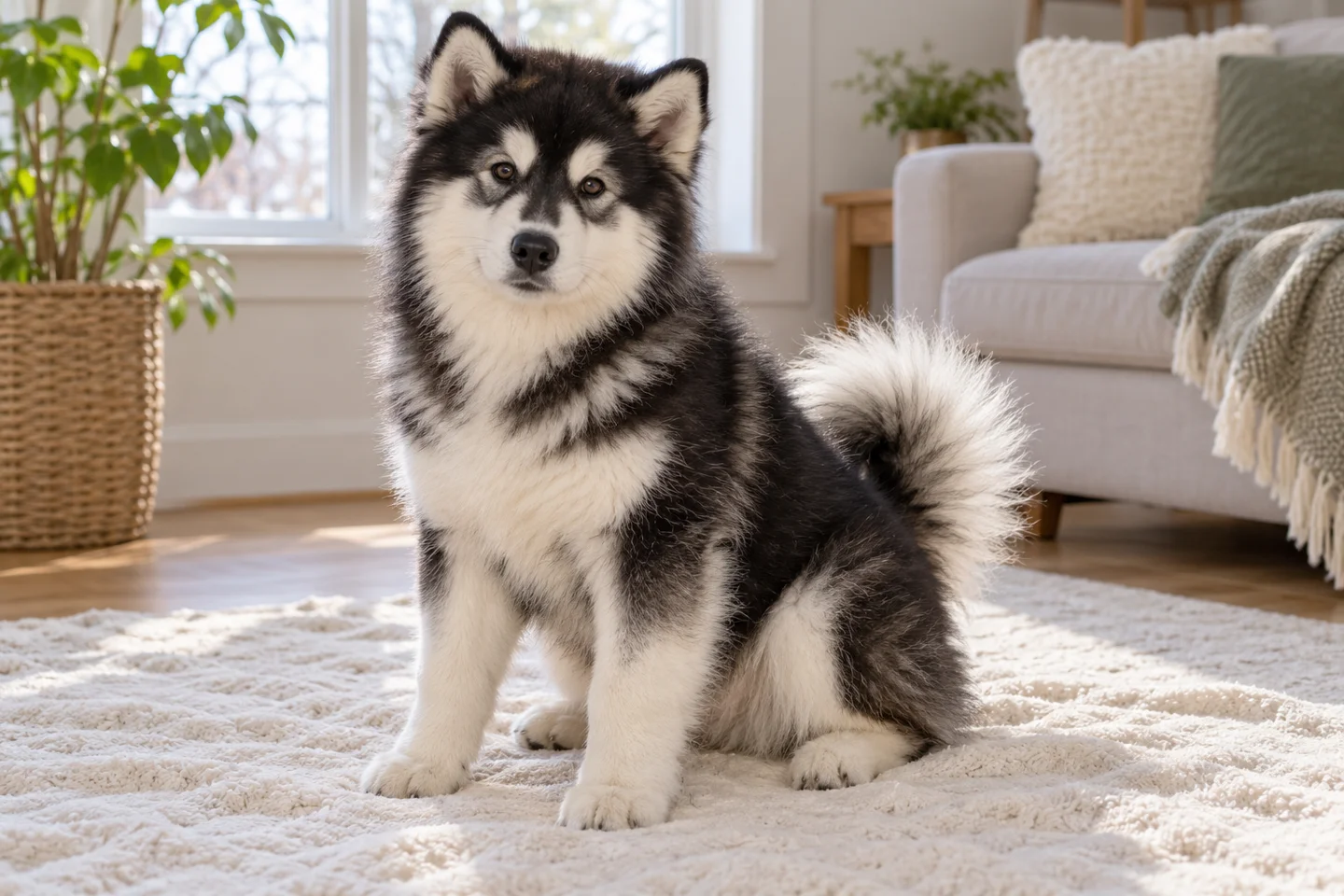
The breed has a powerful body, thick neck and chest, erect ears, and a heavily haired tail that can curl over the back. Its dense double coat contributes to the characteristic outline. The illustrations select a black-and-white male with a pronounced neck ruff; individuals vary in color, build, and coat. A thick coat should not conceal excess weight or poor movement. Watch the living animal walk, turn, and rise, and use hands with veterinary guidance to understand condition beneath the hair.
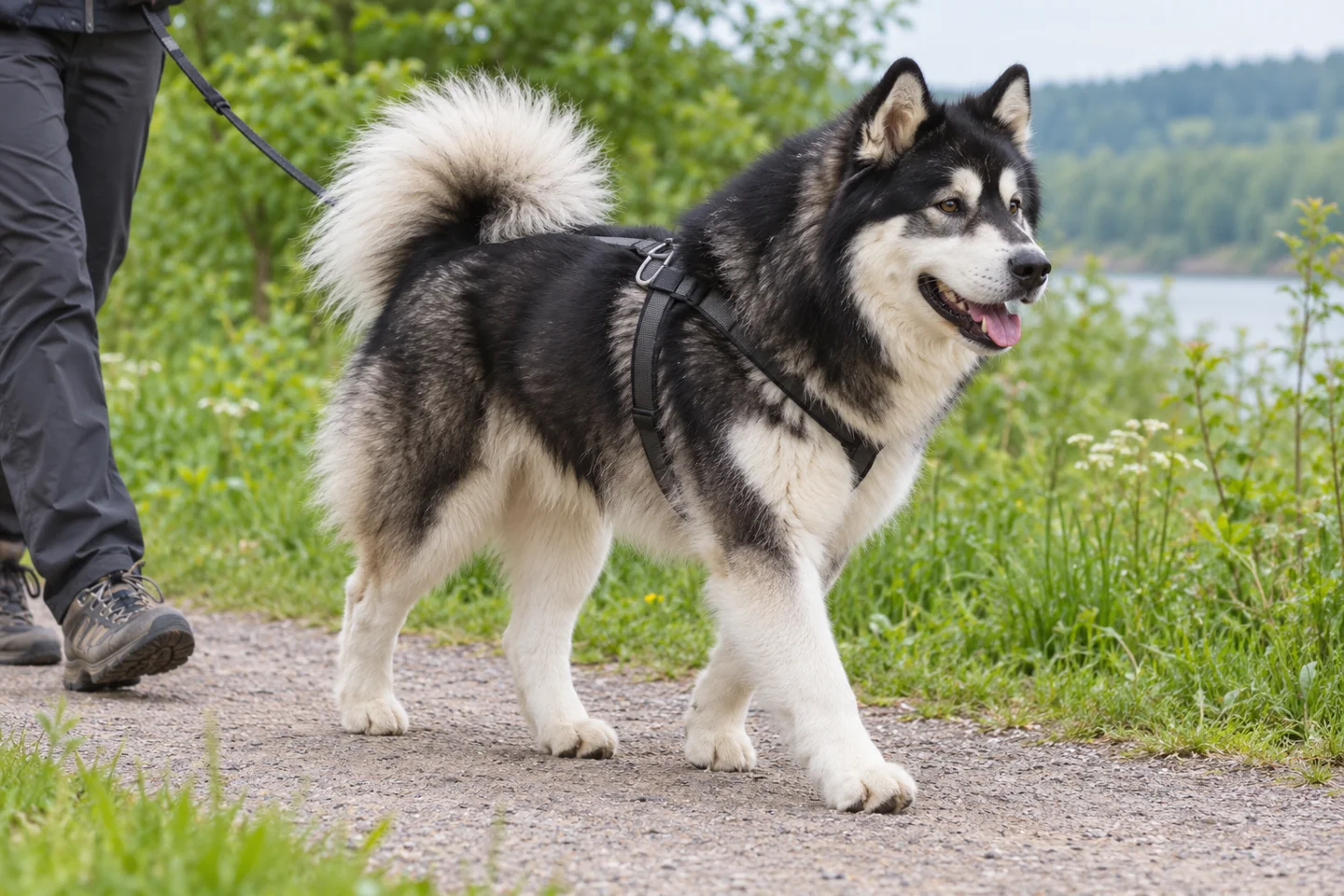
Fit equipment for the actual body and task. A walking harness and specialist pulling equipment may have different purposes and fitting requirements, so obtain instruction rather than assuming one item safely serves every activity. Inspect straps and skin after use. A secure vehicle arrangement needs room for comfortable rest while preventing movement toward the driver. Plan how a dog that becomes injured or unable to climb will reach care. Adult strength and willingness to move independently may not be available during the emergency for which transport is needed.
The FCI adult ranges are 58–70 cm and 30–40 kg for males, compared with 50–60 cm and 18–30 kg for females. Sex therefore makes a meaningful difference to expected scale, while individuals still vary. Plan equipment and handling around the actual dog, particularly when a dense coat makes its weight and chest dimensions difficult to judge by sight.
Containment before a trail becomes interesting
Check the boundary in detail before allowing free access. A northern working dog's desire to investigate cannot be managed by assuming it will remain close to familiar people. Inspect ground-level gaps, latches, and objects that change the height or security of fencing. Make the exterior-door routine explicit for visitors and substitute carers. Secure the dog first, manage the opening second, and confirm closure before access resumes. An escape can happen while people are distracted by an ordinary delivery or a vehicle being loaded.
Near roads, wildlife, and livestock, retain a secure lead arrangement rather than testing recall under dangerous conditions. Practice returns and changes of direction where difficulty is manageable, with rewards that matter to the individual. A long line may provide useful space when handled appropriately, but should not become a way to stop a running animal abruptly at full extension. Watch footing and entanglement. Organized activities can offer controlled outlets; an owner's curiosity about working ability is not permission to release the dog toward animals beyond the handler's control.
Teamwork and companionship are separate questions
A history as a sled dog does not guarantee comfortable interaction with every dog in a home. Working beside selected team members in a structured setting differs from sharing a narrow kitchen, a chew, or a resting place. Ask how this individual behaves in each relevant context. Introductions should allow distance and separate competent handlers. Observe whether both animals can pause and move away rather than assuming sustained contact proves compatibility. Do not leave a newcomer to negotiate an established group's resources without management.
Provide separate meals and enough undisturbed rest, particularly when dogs differ in size or confidence. Cats and other small animals need secure protection. A familiar animal resting indoors can prompt a different response from one running outdoors, so earlier calmness cannot support a universal promise. Ask previous carers for the actual circumstances of encounters, including barriers and restraint. If the household cannot maintain reliable separation where needed, that is a significant placement concern. Affection toward people does not answer the safety question for prey-sized animals or unfamiliar dogs.
Children and a strong outdoor companion
Teach children to interact calmly and let the dog choose whether to approach. Dense coat and a curled tail are not invitations to grab or climb. A large active animal can knock a child down during ordinary movement, so keep fast games separate and give the dog a retreat outside children's play routes. An adult should manage doors, leads, and outdoor access. A child's confidence cannot replace the physical capacity and judgment needed when the dog suddenly pulls toward an interesting animal.
Meals, chews, and sleep should be protected from interference. If an object is beside the dog, an adult organizes retrieval safely. Watch turning away, withdrawal, or stiffness and stop pressure before the animal needs to escalate. Visitors' children bring unfamiliar movement and handling, even in an otherwise settled home. Review arrangements when pain, fatigue, or aging changes tolerance. Shared time can be enjoyable without close embraces or constant touching. When active supervision is unavailable, comfortable secure separation is a practical part of care rather than a failure of the relationship.
Aggression and a clear account of events
A threatening response needs a specific description. Was the dog being crowded beside food, startled during sleep, restrained for painful care, or approached by another animal? Protect people and animals from repetition while veterinary and behavioral help is arranged. Do not provoke a second incident to establish how serious the first one was. A powerful body makes the consequences significant enough that management should not wait for the owner to feel certain about a complete explanation or an eventual diagnosis.
Use qualified reward-based support and share the relevant history before appointments. Intimidation and forced confrontation can increase fear while leaving the practical problem unresolved. A growl supplies useful information about discomfort; suppressing it does not make the situation safe. Handling or a conditioned basket muzzle may form part of the plan for specific tasks, with fit, panting, and supervision addressed. The dog still needs distance and treatment where appropriate. Equipment should support a humane workable routine, rather than permit continued exposure to an encounter it cannot comfortably manage.
Training practical responses outside specialist work
Teach a few useful tasks clearly: coming toward the handler, waiting behind a doorway, following a target, and resting in a designated place. These behaviors serve ordinary life whether or not the dog ever pulls. Begin in easy conditions and increase distraction gradually. A strong response during a familiar activity does not mean an unfamiliar household cue is understood. If the animal struggles, reduce difficulty and examine timing and reinforcement rather than responding to its working reputation with greater physical pressure.
Cooperative care deserves deliberate practice too. Brief paw contact, standing on a nonslip surface, and accepting equipment checks can become predictable rewarded tasks. Pause when comfort changes and consider veterinary assessment for new sensitivity. Every regular carer should know the same cues and boundary routine. Specialist instructors can help fit equipment and develop appropriate work, while a humane approach remains essential throughout. The goal is an animal that participates safely with people in varied necessary tasks, not a dog that performs an impressive activity while transport, visitors, and clinical handling remain improvised.
Exercise and introducing pulling responsibly
A traditional hauling role does not establish that any young or unconditioned dog is ready to pull a load. Obtain appropriate veterinary guidance and skilled instruction, with equipment fitted to the task. Develop fitness gradually and consider age, health, footing, weather, and recovery. Puppies need suitable movement and sleep, not an attempt to reproduce historical workloads. An owner should resist treating old accounts of endurance as a modern target. The welfare of the individual matters more than demonstrating what the breed is said to have done.
Walking, investigation, and other suitable learning can contribute alongside chosen activities. Monitor the animal after exertion and later that day. Persistent lameness, altered stride, or unusual fatigue needs assessment. A dog may continue eagerly while the person should be setting limits. Quiet days should remain part of the routine, including during temporary medical restrictions. Ask which alternatives are appropriate rather than improvising demanding indoor work. A practical long-term plan can cope with changing weather, employment, and the owner's own health without leaving the animal's needs entirely unmet.
Cold-weather ancestry and present-day temperature
A coat suited to Arctic conditions requires thoughtful planning in warmer environments. Provide access to comfortable shelter and avoid demanding activity during unsuitable heat or humidity. Carry water and choose routes with an easy way to stop or return. Do not assume that a dog willing to work is cooling effectively. Serious weakness, collapse, or respiratory distress needs urgent veterinary help. Discuss the individual climate and activity plan with a clinician rather than relying on a photograph of the breed in snow.
Cold-weather ancestry also does not remove the need for care in winter. Wetness, injury, age, illness, or an unsuitable environment can change the animal's ability to remain comfortable. Check the actual conditions and the dog's response. Housing must provide security, hygiene, rest, and appropriate company, not simply exposure to a supposedly natural climate. Boarding facilities and carers need to understand those arrangements. A generic assurance that northern dogs live outdoors can conceal substantial differences in health, conditioning, shelter, and the quality of supervision available at a particular place.
Grooming dense undercoat without a struggle
Teach the dog to accept short sessions before seasonal coat release creates a larger job. Work through sections so loose undercoat and the skin beneath equipment are accessible. A tidy outer surface does not establish that moisture, debris, or tangles have been addressed underneath. Ask a knowledgeable groomer to demonstrate suitable tools if needed. Plan enough time and pauses rather than trying to finish a heavily shedding coat in one prolonged session after the animal has already become tired of handling.
After wet or dirty activity, check feet and dry areas that need attention. Persistent itch, odor, redness, discharge, or a sore patch warrants veterinary advice. Avoid treating every problem as ordinary shedding. Include nails, teeth, and ears in separate cooperative routines. Do not push objects deep into an ear canal or reuse old medication for a new episode without clinical guidance. Tell professionals about handling concerns before an appointment. Necessary treatment may need additional veterinary support while the household continues teaching comfortable participation in easier tasks at home.
Health evidence where population data are limited
Ask breeders to describe the current health program and supply reports for identified parents, including which orthopedic, eye, or other evaluations were used and why. A rare breed does not become disease-free because widely published prevalence estimates are limited. Likewise, a standard describing strong working structure is not a medical certificate. Ask a veterinarian to help interpret unfamiliar records and translate important findings accurately. The useful document preserves the animal's identity, date, assessment method, and actual result rather than reducing everything to a reassuring phrase.
Discuss known serious illness in close relatives and retain uncertainty when histories are incomplete. Do not invent a universal screening checklist or a percentage risk from anecdotes. A commercial DNA panel answers questions about named variants, not every possible illness or the current condition of a dog showing symptoms. After adoption, arrange prevention appropriate to location and activity. New weakness, lameness, appetite change, or sensitivity to touch deserves clinical attention regardless of previous performance. Keep records accessible when traveling or changing clinicians so relevant information does not disappear between care settings.
Nutrition should meet current requirements
Historical Arctic diets describe a particular way of life and available resources. They do not establish that a companion today should receive an improvised raw-meat diet or copy a working dog's ration. Choose complete nutrition appropriate to age, health, and the real workload, with veterinary advice when specialist work changes needs. Measure portions and include training rewards. Body condition beneath a thick coat needs hands-on assessment. A substantial-looking silhouette can hide excess fat just as easily as it hides muscle loss.
Discuss home-prepared feeding with a suitably qualified veterinary nutrition professional instead of adding ingredients to match a romantic image of ancestry. Persistent digestive changes, altered drinking, or unexplained weight shifts need assessment. Activity can vary greatly between seasons or after injury, so review intake when routine changes. Do not add supplements merely because the dog is strong or northern. An identified nutritional or medical purpose is more useful than a promise of extra endurance. Keep substitute carers informed of the actual measured plan, including any restrictions or prescribed products.
Mixes, cost, and older-dog support
A Canadian Eskimo Dog cross may vary in coat, body, pursuit, calling, and tolerance of the intended setting. Parent history remains relevant, and crossing with another northern breed does not guarantee easier handling or reduced medical uncertainty. For an adult of estimated ancestry, assess current needs without claiming a precise origin from erect ears and a curled tail. A source should explain what is documented and what is inferred. The animal's suitability depends on its actual behavior and the household's capacity to care for it.
Budget for secure facilities, specialist equipment where used, instruction, veterinary care, transport, and capable backup handling. Older dogs may need accessible beds, improved traction, and a changed exercise plan while retaining enjoyable investigation and company. Gradual difficulty still warrants clinical discussion. Prepare for periods when the animal cannot climb into the car or work as before. The home should remain viable then too. A commitment based entirely on shared athletic activities is fragile if it lacks a plan for illness, retirement, or changes in the owner's own mobility.
A northern-dog dogsDating walk
Use dogsDating to describe the individual dog's preferred pace, social distance, and play style rather than expecting another northern dog to be automatically compatible. Meet in a quiet public place with separate capable handlers and enough room to move apart. Avoid heat or terrain that adds unnecessary physical demand. Begin with comfortable parallel movement and watch whether both animals can disengage. A peaceful first walk can provide useful contact without a close greeting, intense chase, or a shared toy.
Keep exact home coordinates private and share an approximate area for planning. Agree how to finish if either dog becomes fixed, tense, or persistent. Do not bring valued items into the first session or crowd the animals together for a photograph. Compare observations afterward and decide what arrangement would suit another outing. A matching feature helps owners communicate relevant details; it cannot establish safety across all contexts. Sharing a vehicle, resources, or unsupervised space requires further thought based on the individuals' responses and the management both households can maintain.
Sources and editorial notes
Sources checked October 21, 2026. Breed measurements describe reference ranges, not a diagnosis or an individual dog's ideal weight. Images are AI-generated breed illustrations and do not document a particular dog or health condition.
- AVSAB: Humane Dog Training Position Statement
- VCA Animal Hospitals: Food aggression in puppies
- VCA Animal Hospitals: Aggression toward unfamiliar dogs, diagnosis
- VCA Animal Hospitals: Heat stroke in dogs
- VCA Animal Hospitals: Common emergencies in dogs
- VCA Animal Hospitals: Grooming and coat care for your dog
- VCA Animal Hospitals: Ear infections in dogs
- VCA Animal Hospitals: Feeding guidelines for dogs
- Orthopedic Foundation for Animals: CHIC program and interpretation of numbers
- AVSAB: Humane Dog Training Position Statement
- Fédération Cynologique Internationale: Canadian Eskimo Dog official breed standard
Keep getting to know dogs.
Read another guide or return to your dogsDating community.
Explore breed guidesBack to dogsDating