Cão de Castro Laboreiro
A watchful northern Portuguese guardian whose care requires managed boundaries, practical company and handling, and honest interpretation of limited population health evidence.
How these guides are researched and reviewed
- Origin
- Portugal; Castro Laboreiro, Melgaço
- Coat
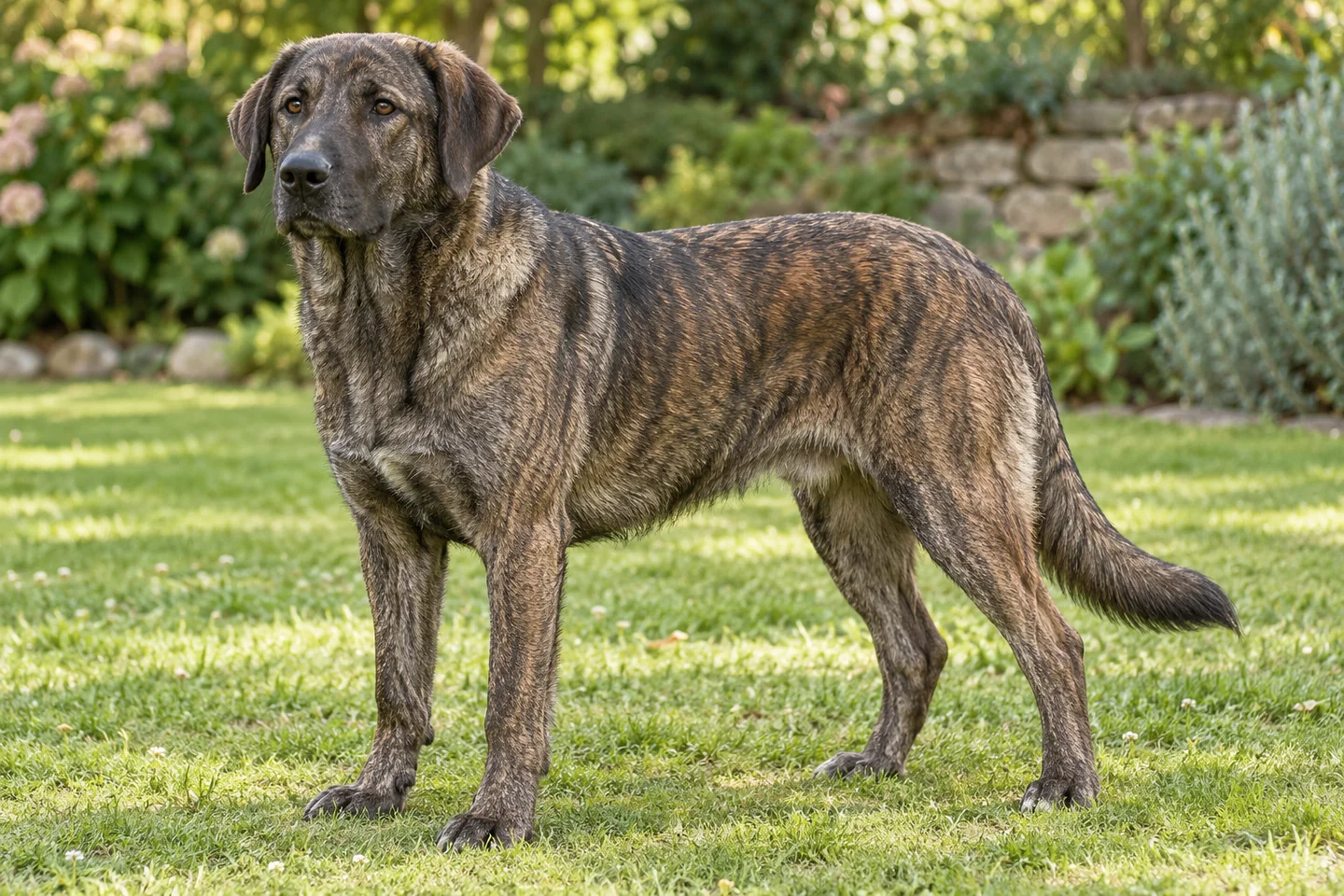
- Short thick brindled mountain-color coat illustrated
- Care priorities
- Secure visitor access, compatible setting, verifiable health reports
- Adult size reference
- FCI: males 58–64 cm, 30–40 kg; females 55–61 cm, 25–35 kg; +2 cm tolerance
General information for owners. These articles have not been reviewed by a veterinarian. Medical decisions need your dog's history and an examination.
Choosing a Castro Laboreiro Dog for its actual needs
A Cão de Castro Laboreiro needs a home prepared for a watchful Portuguese guardian. Its comparatively athletic outline should not be mistaken for a promise of easy social handling. Before adopting, work out who enters the property, how the dog will be separated during visits, and which adult can provide care if the usual person is away. A rural address can offer useful space while still leaving significant problems if access is insecure or the dog spends its day confronting every passing animal.
Seek owners who can describe a normal week in detail. Ask about quiet indoor rest, gate routines, walking near unfamiliar dogs, veterinary handling, and response to substitute carers. An impressive account of guarding ability offers little guidance for these tasks. A puppy's future is uncertain, while an adult's known experience can help assess fit. Choose according to the individual and the support you can sustain through employment changes, travel, illness, and older age. The right decision may be to wait until those arrangements are concrete.
A Portuguese village name and a distinct identity
The breed takes its name from Castro Laboreiro in the Melgaço municipality of northern Portugal. The FCI identifies it as a guard, watchdog, and livestock-guarding breed. Those specific regional and functional details are more useful than a vague claim that it is an ancient mountain dog with automatic protective judgment. A modern companion lives among people who may enter for legitimate reasons, and the owner needs a plan that does not ask the animal to decide the legal or social rights of every arrival.
It is distinct from the Cão de Gado Transmontano, Estrela Mountain Dog, and other Portuguese guardians. Color and a serious expression cannot establish identity in an undocumented rescue. Ask about registration and parent records when a dog is presented as a purebred. Retain uncertainty when the description rests on appearance. Care should follow the present body and behavior even where ancestry is known. Historical use cannot guarantee tolerance of children, safe livestock work, or comfort with unfamiliar dogs without examining the individual's experience and responses in the relevant setting.
Mountain coloring and a mobile body
The FCI describes a characteristic brindled mountain color involving grey with darker and warmer shading. The coat is short and thick rather than a long fluffy guardian coat. Natural hanging ears and a full curved tail are part of the outline shown in the illustrations. Avoid selecting for an exaggerated head or extra bulk. A practical assessment includes walking, turning, rising, and comfortable rest. A dark coat can conceal minor skin changes, so inspection should go beyond admiration of its striking pattern.
Males are listed at 58–64 cm at the withers and 30–40 kg, with females 55–61 cm and 25–35 kg; the FCI allows a positive two-centimeter height tolerance. These figures describe standard adult scale, not an exact puppy forecast. Fit equipment to actual measurements and review it through growth. Think about how the dog will travel and negotiate the home if injured. Its current ability to jump into a vehicle should not be the only emergency-loading arrangement the household has available.
Watchfulness and the home boundary
Draw the access routine before the dog arrives. If a delivery worker needs to open the same gate the animal uses, change the arrangement or provide secure separation. Admit guests only after a capable adult has organized the dog. A calm comfortable inner room can be more useful than an improvised encounter at a narrow threshold. Visitors should not be asked to prove confidence by approaching a tense guardian, and the animal does not need to accept immediate touching for a visit to proceed successfully.
Reduce opportunities for repeated fence-line confrontations. Containing the body does not necessarily stop sustained arousal through a barrier. Offer a quieter area and reward moving away while the dog can still respond. Ask for qualified assistance if it remains fixed or cannot recover. The standard notes a distinctive alarm voice, but the owner still needs a plan for the effect on neighbors. Do not assume that a breed's historical task excuses unlimited calling or makes a device a reliable substitute for addressing the situation.
Livestock work requires more than ancestry
If the intended role includes livestock, discuss the actual parents, rearing, and supervision with experienced people before placing a dog with animals. Genetic background cannot supply every practical skill or establish safety around every species. A youngster needs appropriate management while learning, and livestock welfare matters throughout. Do not use a neighbor's animals as an experiment to discover aptitude. Specialist advice should explain how the dog is introduced and monitored, including which behaviors mean the arrangement must change or the animal should be removed.
A companion home should offer suitable activity and meaningful human contact without leaving the dog to create its own patrol assignment all day. Indoor learning may include toilet routines, rest, and access to household rooms, particularly for an adult previously kept differently. Introduce these tasks patiently rather than assuming physical maturity means familiarity with domestic expectations. Reliable boundaries and cooperative skills make care easier. A realistic working or companion arrangement can respect the breed's background while still adapting to the actual environment in which the individual must live now.
Children and an undisturbed place to sleep
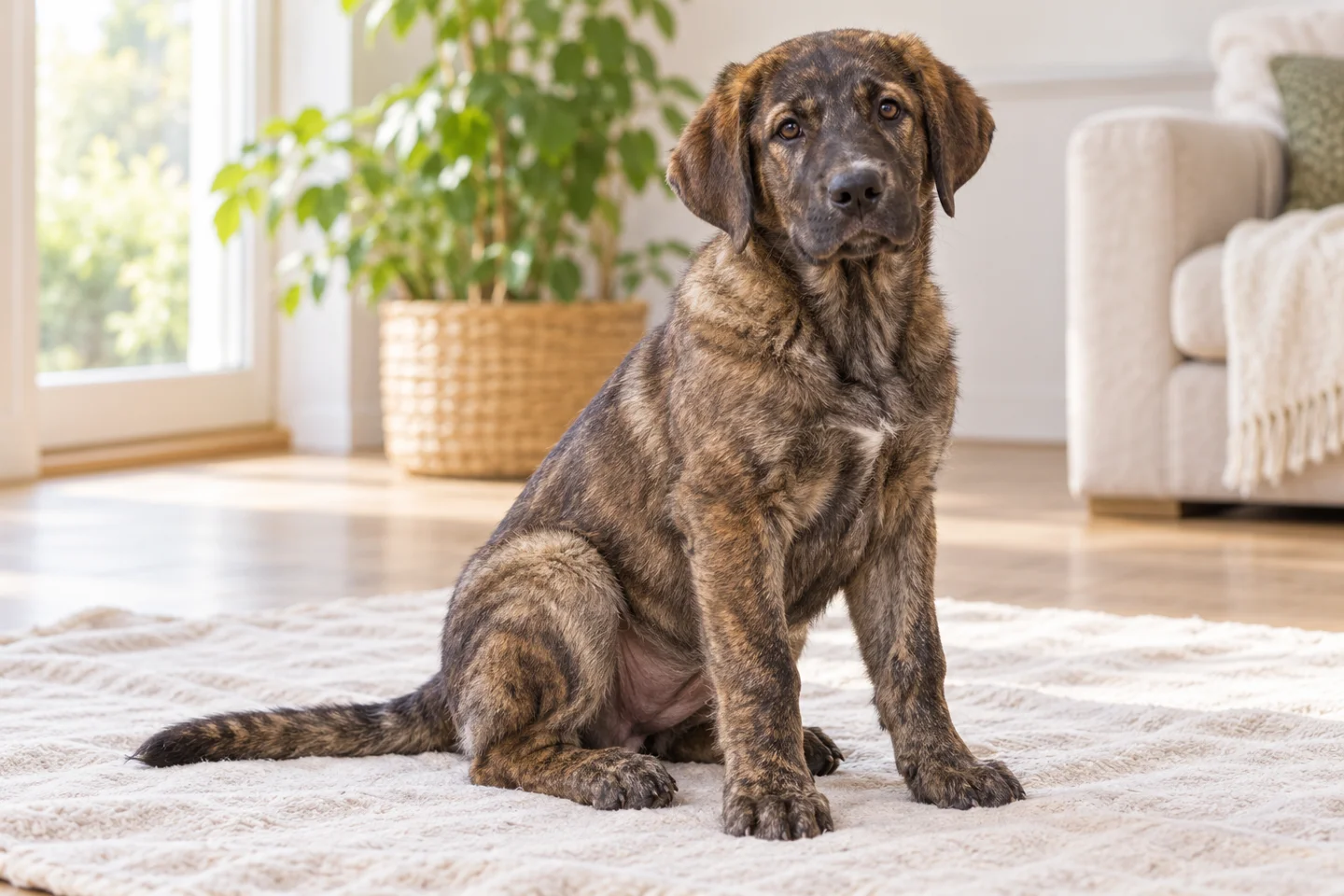
A child should not have to pass close to a resting guardian every time it moves between rooms. Place the bed away from busy routes and teach children to leave the dog there undisturbed. Prevent climbing, pulling coat, or close embraces. An adult should guide brief gentle contact and allow the animal to step away. Turning away, withdrawing, or becoming stiff is enough reason to stop pressure. Do not wait for an obvious snap before accepting that the interaction has become uncomfortable.
Separate energetic children's play from the dog's space before running or wheeled toys generate excitement. Adults handle leads, doors, and resource retrieval. If an object lands beside a chew, an adult can move the dog or arrange an exchange safely. Visitors' children create unfamiliar conditions even when the animal has a calm history with the family. Review the setting for each gathering and whenever pain or age affects tolerance. Comfortable secure separation is appropriate when close supervision is unavailable, with the dog's own rest, water, and company needs still considered.
Aggression and an owner's responsibility to intervene
Describe an incident without hiding behind a guardian reputation. A rush at a person, a reaction to handling, and conflict over a possession have different contexts. Note distance, preceding actions, and whether retreat was possible. Prevent repetition while veterinary and behavioral help is arranged. Do not recreate the encounter to prove courage or obtain a clearer video. The household must protect people and animals before an explanation is complete, rather than asking someone else to test whether the animal really intends to bite.
Choose qualified reward-based support that addresses practical management as well as learning. Punishment may suppress visible warnings without resolving discomfort. New intolerance of touch warrants clinical assessment, particularly around a specific body area. A plan may include barriers, exchanges, cooperative handling, and a positively conditioned basket muzzle for defined situations. Fit, panting, and supervision still matter. Equipment cannot make sustained exposure to a feared person comfortable or replace treatment when pain contributes. The aim is predictable safe participation with enough space for the dog to recover and the person to act.
Training a reliable route through ordinary tasks
Teach movement toward a hand target, a station away from the front door, and waiting while equipment is adjusted. These tasks provide useful alternatives to physically steering a strong adult by the collar. Begin with manageable distractions and reward a clear response. A request learned in one room needs additional practice near visitors or outdoors. If it fails, review what the animal understands in that setting and reduce difficulty instead of treating the moment as a contest over which participant can apply more pressure.
Care lessons should be included from the start. Practice brief paw checks, standing on a stable nonslip surface, and calm contact with grooming tools. Stop to investigate new sensitivity. Necessary veterinary procedures may require support before home training is complete, so explain limits candidly to staff. Household members should agree on cues and access routines. A helpful instructor improves the person's timing and decisions as well as the dog's skills. Practical cooperation is a better ownership target than a striking performance while ordinary transport, guests, and medical care remain difficult to organize.
Exercise and terrain the dog can recover from
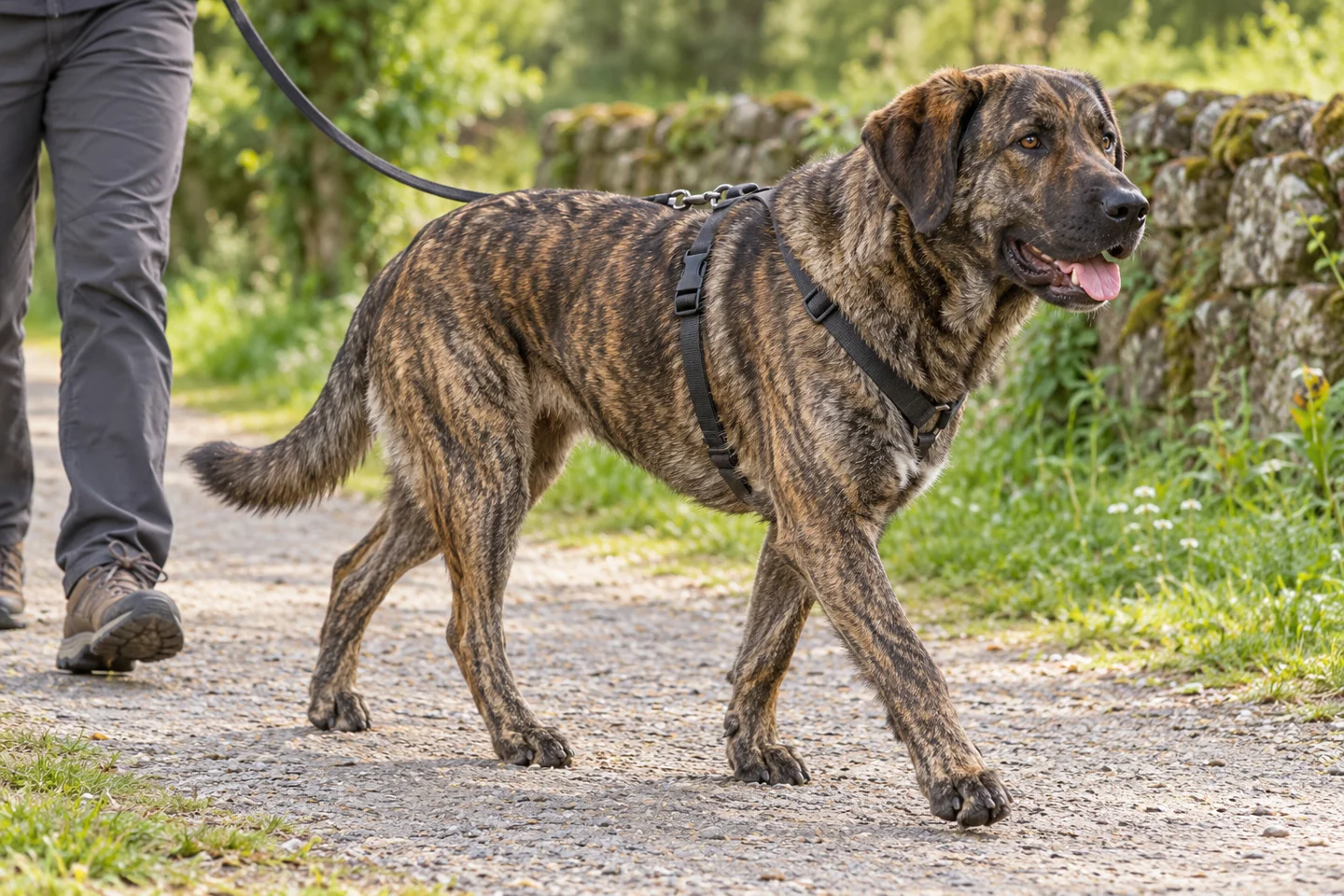
Provide regular movement and investigation suited to age, health, and fitness. A mountain origin does not establish that an unconditioned individual is ready for a demanding hike. Build workload gradually and discuss repetitive high-impact activity with a veterinarian, particularly during growth. Puppies need sleep as well as exploration. The terrain changes effort: slopes, rough ground, and soft surfaces can make a modest route harder than its distance suggests. Keep enough flexibility to alter the outing when the dog or conditions differ from expectations.
Check feet and observe movement after rest. Persistent stiffness, reduced stride, or reluctance to load into the car deserves assessment instead of another session intended to work through it. Carry water and change activity in unsuitable heat. Severe weakness, collapse, or respiratory distress needs urgent clinical help. Quiet days can retain appropriate sniffing and learning without an attempt to exhaust the dog indoors. The routine should remain viable when employment, weather, or the owner's own health interrupts a favorite activity, so welfare does not depend on one inflexible plan.
Grooming a short mountain coat
A short thick coat still needs inspection. Brush gently and look beneath equipment, between toes, and at areas the dog repeatedly licks. After a wet outing, remove debris and dry relevant regions rather than leaving the animal in damp bedding. Introduce tools through brief comfortable sessions before a larger maintenance task becomes necessary. A tidy surface cannot identify every skin problem, and a dark pattern may make a small sore area less obvious until someone checks directly.
Persistent itch, odor, discharge, or redness deserves veterinary attention. Do not repeatedly change products without understanding why the problem returns. Include tooth brushing, nail care, and ear checks as separate cooperative tasks. Ask for technique demonstrations if uncertain and avoid cleaning deeply inside an ear canal. Old medication may be inappropriate for a new episode. A painful area may need treatment before comfortable maintenance can resume. Tell professionals about handling concerns in advance so essential care can be organized without an unexpected struggle or pressure on an already sore dog.
Health evidence and the limits of rare-breed claims
Ask breeders for a clear account of their health program and the reports supporting it. Which orthopedic, eye, or other examinations were performed, and why were they selected? Verify the tested dogs' identities and dates. An uncommon breed should not be advertised as free of illness merely because published population data are limited. A standard describes the desired animal; it does not medically evaluate every member of the population. Your veterinarian can help interpret unfamiliar certificates, including documents issued in another language or registry.
Discuss serious family illness and keep gaps in the history explicit. Do not invent prevalence figures or a universal test requirement where evidence does not support one. DNA panels answer questions about named variants, while a current symptom may need a different investigation entirely. Arrange prevention suited to location and outdoor exposure after adoption. New lameness, loss of appetite, weakness, or changed tolerance of handling deserves assessment regardless of a report that relatives worked for years. Keep clinical records accessible so travel or a change of veterinarian does not erase relevant context.
Feeding, emergencies, and aging
Use complete nutrition appropriate to age and health, measuring portions against actual body condition and workload. Treats used during instruction contribute to intake. Avoid adding supplements simply because the breed has a robust rural image, and ask for qualified guidance before a restrictive or home-prepared plan. Persistent digestive signs, unusual thirst, or unexplained changes in weight need medical attention. Record timing and recent changes rather than replacing food repeatedly while hoping the latest product will explain the entire problem.
Keep emergency contact details and a transport plan available to another caregiver. Collapse, severe respiratory difficulty, major injury, or marked distress requires prompt help. Older dogs may need improved floor traction, easier access to beds, and a different vehicle-loading arrangement. Gradual stiffness still deserves clinical discussion, especially when it changes tolerance around children or other pets. Maintain suitable exploration while adjusting demands to present comfort. A familiar adult routine should evolve when the animal's abilities change, rather than remaining fixed because the dog once managed everything independently.
Mixes and what a household can sustain
A Castro Laboreiro mix may vary in size, coat, guarding responses, and compatibility with the intended environment. Crossing with another dog does not guarantee an easier temperament or eliminate inherited uncertainty. Ask what is documented about both parents, and assess current needs directly for an adult. A brindled coat cannot establish a precise regional ancestry. Responsible descriptions distinguish records from estimates and avoid using a confident label to promise that the animal will be safe with every person or pet.
Budget for secure access, transport, veterinary care, instruction, and competent substitute handling as well as food. Consider practical housing and insurance conditions where relevant before adoption. A large garden may still be unsuitable if visitors cannot enter safely or the dog lacks regular company. An experienced household may also be wrong for a particular individual whose needs differ from its current routine. Choose according to the plan that can actually be maintained through busy periods and health changes, including an honest understanding of which situations may continue to require distance or separation.
A thoughtful dogsDating introduction
Use dogsDating to describe the individual guardian's preferred social distance and current experience with unfamiliar dogs. Choose a quiet public meeting point where separate capable handlers have room to move apart. Avoid beginning beside the dog's own fence or in a confined shared vehicle. Parallel walking can reveal whether each animal can look away and resume exploration. A first outing need not end in close contact; a comfortable shared route may supply all the information and social opportunity appropriate for that session.
Keep exact home coordinates private and use approximate location information to find local contacts. Agree on a visible meeting point and an exit before starting. Leave valued toys out of the introduction and avoid crowding dogs for a photograph. If either becomes fixed, tense, or persistent, increase distance or finish. Compare observations afterward without declaring universal compatibility. Sharing a home, vehicle, food, or unsupervised space asks additional questions. The profile supports communication between owners while the animals' demonstrated comfort determines what arrangements are sensible for future contact.
Sources and editorial notes
Sources checked October 21, 2026. Breed measurements describe reference ranges, not a diagnosis or an individual dog's ideal weight. Images are AI-generated breed illustrations and do not document a particular dog or health condition.
- AVSAB: Humane Dog Training Position Statement
- VCA Animal Hospitals: Food aggression in puppies
- VCA Animal Hospitals: Aggression toward unfamiliar dogs, diagnosis
- VCA Animal Hospitals: Heat stroke in dogs
- VCA Animal Hospitals: Common emergencies in dogs
- VCA Animal Hospitals: Grooming and coat care for your dog
- VCA Animal Hospitals: Ear infections in dogs
- VCA Animal Hospitals: Feeding guidelines for dogs
- Orthopedic Foundation for Animals: CHIC program and interpretation of numbers
- AVSAB: Humane Dog Training Position Statement
- Fédération Cynologique Internationale: Cão de Castro Laboreiro official breed standard
Keep getting to know dogs.
Read another guide or return to your dogsDating community.
Explore breed guidesBack to dogsDating