Cão de Gado Transmontano
A giant Portuguese flock guardian whose care needs generous functional access, reliable separation from public entrances, appropriate work, and capable lifelong support.
How these guides are researched and reviewed
- Origin
- Portugal; Trás-os-Montes
- Coat
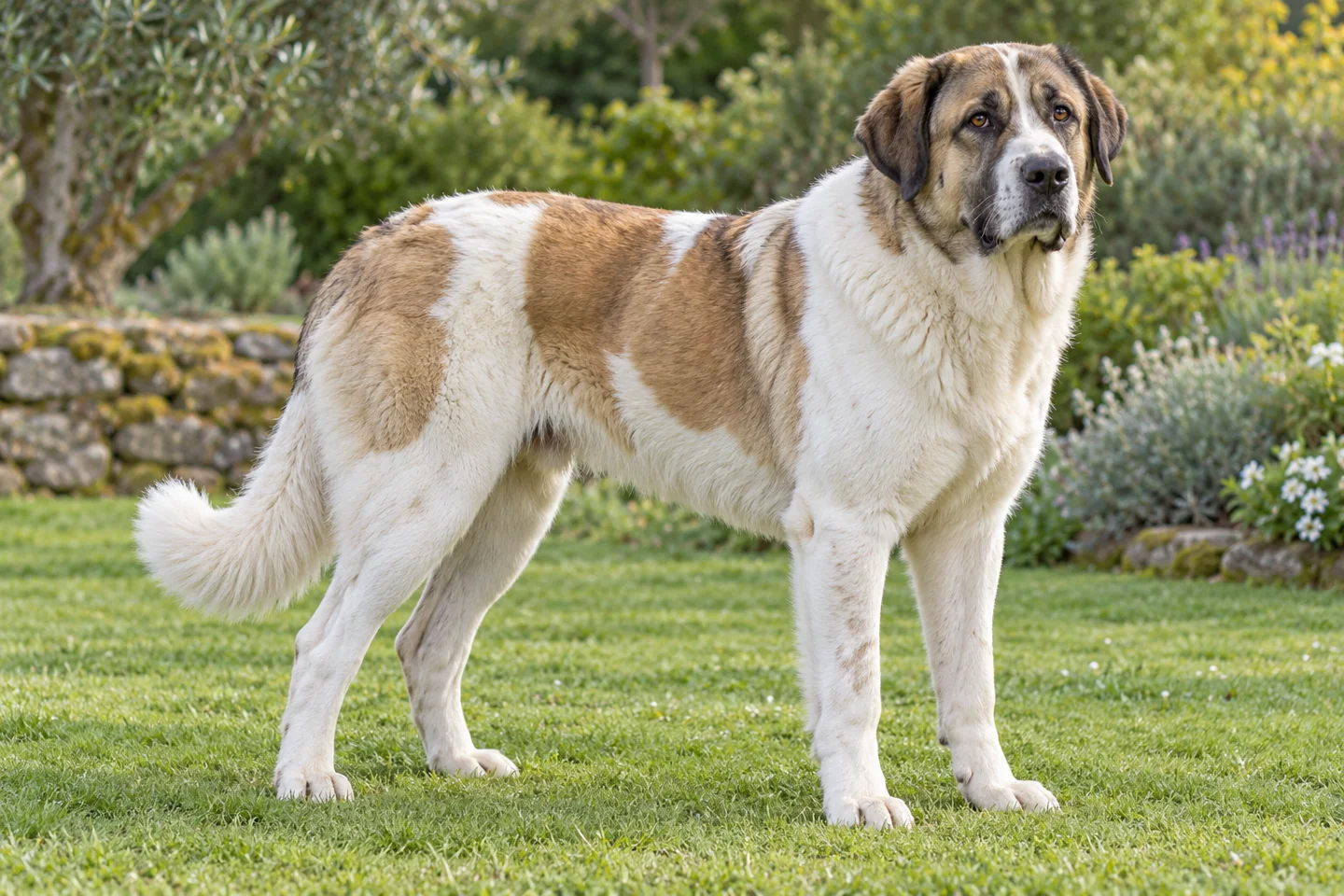
- Dense medium white coat with fawn patches illustrated
- Care priorities
- Giant-size access, secure public boundaries, livestock supervision
- Adult size reference
- FCI: males 75–85 cm, 60–75 kg; females 68–78 cm, 50–60 kg
General information for owners. These articles have not been reviewed by a veterinarian. Medical decisions need your dog's history and an examination.
A giant guardian needs a concrete care plan
A Cão de Gado Transmontano requires a household ready for a very tall, powerful livestock guardian. The decision should begin with access and handling, rather than an attractive image of a calm dog beside a flock. Can the adult turn comfortably through the home? Who can guide it away from an open gate? How will it reach a clinic if injured? Those questions belong before the puppy arrives, because physical scale can turn an ordinary improvised routine into a serious practical problem.
Meet experienced owners and ask about daily life beyond guarding work. Discuss company, visitors, walks, grooming, and the arrangements used when someone else provides care. A quiet individual may still need a carefully managed environment. A breeder or rescue should describe what is known and what remains uncertain, including the demands likely to emerge with maturity. Choose according to the animal's needs and the household's durable resources. Affection for a rare breed is useful only when it leads to a plan that remains workable during illness, travel, and older age.
Trás-os-Montes and the flock-guarding identity
The FCI identifies Trás-os-Montes in Portugal as the breed's origin and describes its work with sheep and goat flocks. Its history is tied to the region's pastoral landscape and livestock movement. That is a specific identity, rather than a general label for any giant Portuguese dog. The breed is distinct from the Cão de Castro Laboreiro and the Estrela Mountain Dog. Ask which pedigree and registration records support a purebred description, particularly where a seller uses several regional guardian names loosely.
A livestock-guarding background supplies context for watchfulness and independent decisions, but it cannot establish what an individual will do in a modern home. A dog raised with a particular flock has learned about that environment, not automatically every species or household arrangement. For a rescue whose ancestry is estimated, retain the uncertainty and assess present behavior directly. Recent experience, handling, and medical condition are more relevant to a placement than a story about ancient mastiffs that cannot be connected reliably to the animal being considered.
Adult height and the nearly square outline
FCI adult males are listed at 75–85 cm at the withers and 60–75 kg; females at 68–78 cm and 50–60 kg. These are substantial sex-specific reference ranges, not targets for feeding or an exact prediction for a puppy. Measure the individual for equipment and travel. A head or chest made more massive by excess weight is not an improvement. Look for comfortable movement and the ability to stand, turn, and settle without obvious difficulty, rather than an outline designed only to appear imposing.
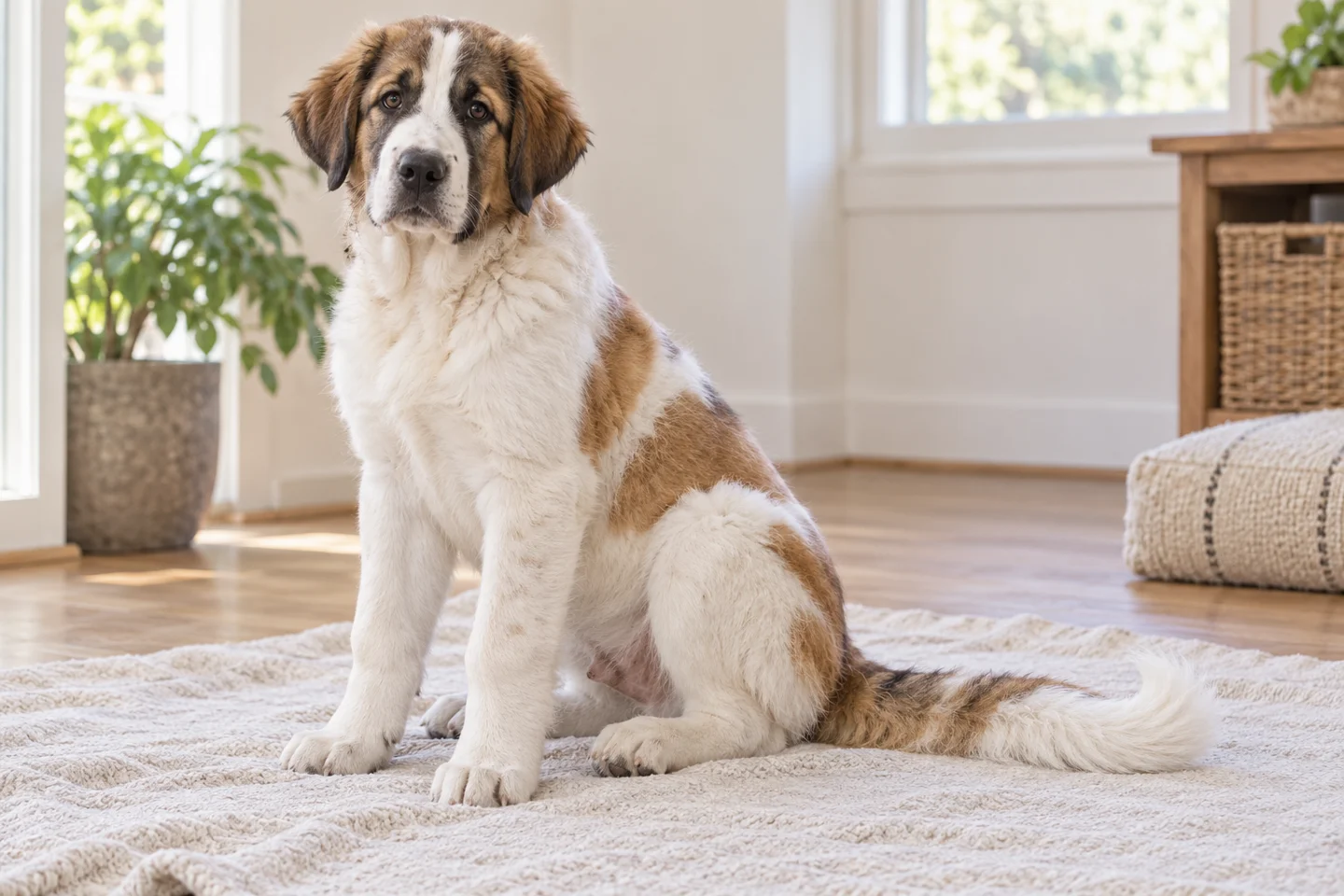
The breed has long strong limbs and a nearly square body, with hanging ears, a dense medium coat, and a full tail. The illustrations choose a predominantly white dog with fawn patches. Coat and tail carriage vary within the standard, so one generated example does not define every adult. Check the actual skin and condition beneath the hair. Plan nonslip footing and wide enough domestic routes, including future access if mobility changes. A giant dog should not have to scramble or squeeze through an awkward layout for every necessary task.
Access design is part of ownership
Separate the public entrance from the dog's occupied area. A courier, meter reader, or visiting child should not have to negotiate with a guardian to reach the person they came to see. Use a reliable internal area while doors and gates are open, and teach the routine when the setting is quiet. A comfortable station can become a useful place to wait. The household should agree who secures the dog and who checks closure, including during busy occasions when responsibility is easy to assume someone else has taken.
Maintenance work needs direct instructions too. A worker carrying materials may reopen a gate without seeing the animal behind a corner. Keep areas separate instead of relying on a warning sign to manage the encounter. Observe repeated barking or rushing at boundaries and reduce exposure where it becomes sustained. Containment protects against escape while learning and environment management address what happens behind it. If the dog cannot settle away from a trigger, obtain qualified advice. No visitor should be used to discover whether a tense animal will accept approach at close range.
Working with livestock responsibly
A prospective working owner needs advice specific to the livestock, landscape, and individual dog's background. Ask how the puppy was raised and which adults are available to model appropriate behavior. A guardian's ancestry alone cannot establish safe work with every animal. Introductions and supervision should protect the flock as well as the dog. Do not place a youngster unattended in a difficult setting and interpret every problem as part of learning. Experienced support should explain what to monitor and when the arrangement needs changing.
Companion homes should be equally honest about their setting. A garden can provide room, but leaving the dog to patrol without adequate company or guidance may generate repeated confrontations with neighbors or animals outside. Teach indoor rest and ordinary household access if those routines are unfamiliar. Appropriate tasks and contact can respect the breed's background without pretending a suburban boundary is a flock. The animal needs a life that makes sense now, with owner responsibility for safety and welfare rather than an expectation that historical work will organize modern behavior automatically.
Children and the practical meaning of giant size
A giant dog can knock a child over while moving calmly, so consider physical routes as well as intentions. Keep beds outside narrow passages and separate the dog before running games or wheeled toys fill the area. Children should not climb onto the animal or attempt to push it aside. A capable adult handles leads, entrances, and necessary movement. Supervised simple training may let a child participate safely, but responsibility for judging discomfort and preventing contact belongs to the adult.
Protect meals, chews, and sleep. A child who needs something beside the dog should ask for adult help, with retrieval organized only after the animal is moved or a safe exchange arranged. Demonstrate gentle interaction and accept withdrawal as a refusal. New visitors and tiredness can change the setting even when family life is usually comfortable. Pain or aging may also affect tolerance. Use secure comfortable separation when close attention is unavailable, checking the dog's own needs rather than treating exclusion from a busy gathering as permission to forget it for hours.
Other dogs and enough room to disengage
Two guardians that have worked near one another do not automatically share every domestic resource comfortably. Introduce a new dog with separate handlers and generous space. Watch for pauses, looking away, and the ability to resume ordinary investigation. Repeated blocking or following deserves interruption even if no fight has occurred. At home, provide separate feeding and multiple resting choices. The practical question is whether both can relax, not merely whether the stronger or more persistent animal has stopped the other from protesting.
Account for size mismatch in play. A smaller companion can be hurt by a collision or pinned by weight without aggressive intent. End persistence when the recipient wants to leave. Cats need protected routes and rooms, while small pets require secure separation where necessary. Ask carers for detailed observations of previous encounters, including distance and barriers. A calm interaction with one resident animal cannot prove safety with another running outdoors. Increase access only according to the actual pair's comfort and the household's ability to maintain suitable management when nobody can watch continuously.
Aggression and responding before another incident
Avoid using protective as a blanket explanation for a threatening response. Record what happened: the person approaching, the resource present, any handling, the distance, and opportunities to retreat. A rush at an arrival differs from a snap during painful care. Protect people and animals from repetition while veterinary or behavioral help is arranged. A giant body makes the consequences significant enough that owners need dependable management immediately, rather than waiting until a professional has witnessed a second event firsthand.
Reward-based professional support can address learning and the setting together. Harsh confrontation may add fear while leaving the task unresolved. Respond to warnings by creating space instead of suppressing them. New sensitivity to touch deserves clinical attention, and necessary procedures may need veterinary support. A carefully conditioned basket muzzle can add protection for specific situations when fit, panting, and supervision are addressed. It cannot make prolonged unwanted contact comfortable or remove the need for distance. The goal is a plan ordinary carers can follow without relying on intimidation or one person's physical strength.
Training the tasks a giant cannot be pushed through
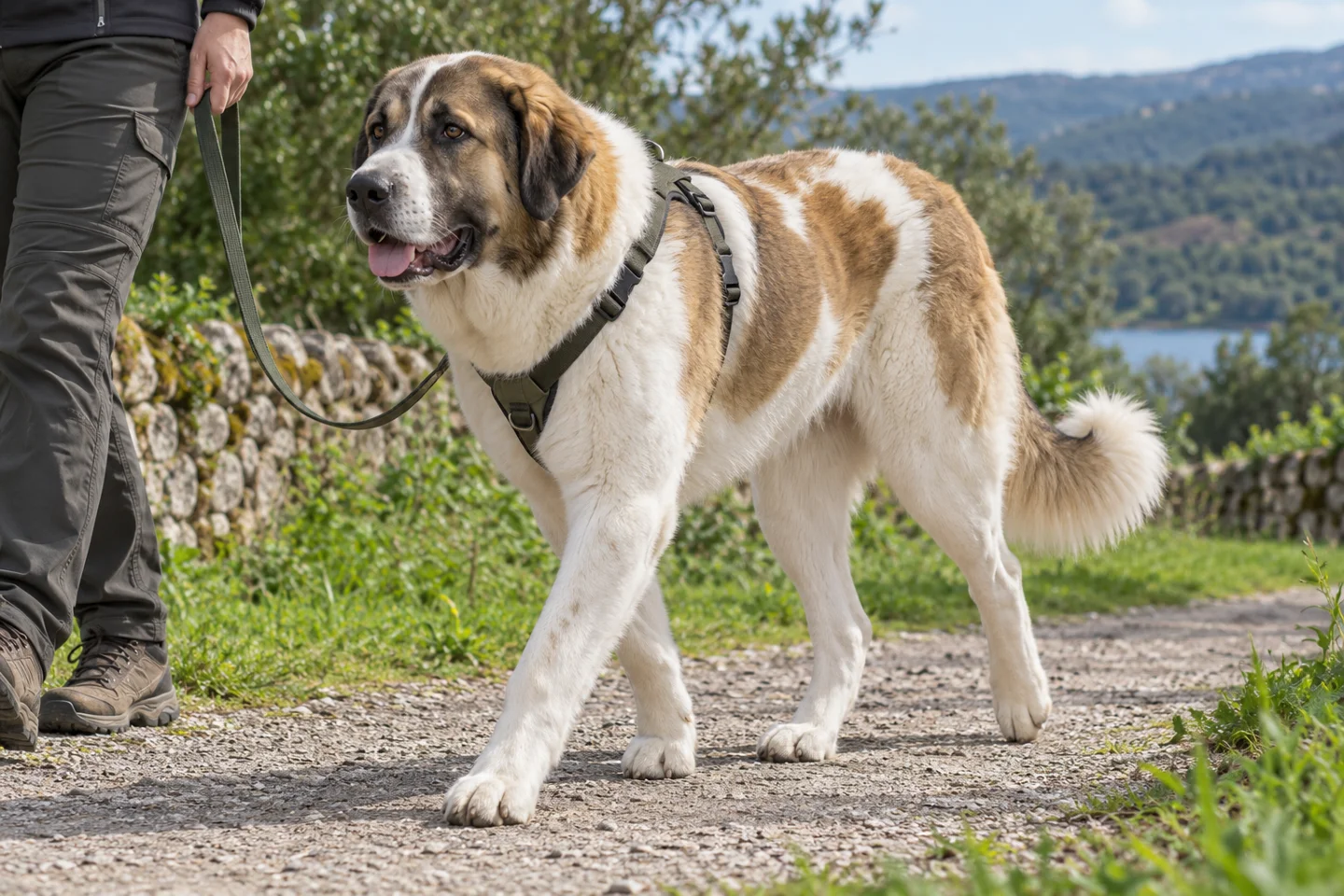
Teach willing movement to a target and a station, then practice waiting while equipment and doors are managed. These small lessons can prevent much larger physical struggles later. Reward success in an easy environment and add one difficulty at a time. A request learned beside the kitchen table needs practice elsewhere before it can guide the dog through an exciting arrival. If the animal does not respond, review understanding, distraction, and comfort before assuming a more forceful instruction is the answer.
Care training should include standing on a nonslip surface, brief inspection of feet, and calm contact with grooming tools. A puppy can learn these routines before adult weight complicates restraint. Stop and investigate new pain or fear. Explain limits to clinical staff before an appointment so essential care can be planned safely. Consistent cues among household members matter, especially for access. A useful instructor should improve the person's timing and judgment while helping the dog cooperate. Success is practical participation in daily tasks, rather than unrelated impressive obedience while necessary handling remains improvised.
Exercise and recovery across difficult ground
Regular movement should fit the dog's condition, not a story about what mountain guardians can endure. Build fitness gradually, including after inactivity, and consider the workload imposed by slopes, loose surfaces, and weather. Growing puppies need rest and age-appropriate exploration. Discuss repeated high-impact or demanding tasks with the veterinarian. A giant dog may remain interested in an outing beyond what its current conditioning comfortably supports. The owner needs to set limits before the animal has to stop through exhaustion or obvious distress.
Check feet afterward and observe how it rises later. New lameness, shortened stride, or altered recovery deserves assessment when persistent or recurring. Carry water and adapt outings in heat; severe weakness, collapse, or breathing difficulty needs urgent clinical advice. Quiet periods can retain appropriate learning and investigation without frantic efforts to tire the animal indoors. A sustainable plan remains possible through bad weather, work, illness, and older age. The ability to provide an occasional impressive hike is less important than dependable care that preserves comfortable function throughout ordinary weeks.
Grooming that reaches the skin
A dense coat requires more than a quick pass over the visible surface. Divide work into sections and check beneath equipment, behind ears, and where limbs move against the body. Loose undercoat, retained moisture, and tight tangles can remain hidden. Introduce tools through short rewarded sessions before seasonal change creates a prolonged job. A knowledgeable groomer can demonstrate technique and help set a manageable maintenance schedule. The aim is skin access and comfort, rather than a show outline that looks tidy while care underneath is incomplete.
Dry wet areas and inspect feet after mud or vegetation. Persistent odor, itch, discharge, or a sore patch deserves veterinary assessment. Do not assume that outdoor life makes skin discomfort unavoidable. Nails, teeth, and ears need additional routines taught in small stages. Avoid deep ear cleaning or leftover medication without advice. When an area becomes newly painful, seek help before attempting to finish a whole grooming session through stronger restraint. Tell professionals about handling concerns in advance so necessary treatment can be organized safely and the dog is not surprised by an overwhelming procedure.
Health evidence for an uncommon giant breed
Ask the breeder to explain its actual health program and provide the reports. Which orthopedic, eye, or other evaluations were used, and why? Confirm parent identities, dates, and the organizations issuing results. A standard describing functional structure does not establish a population free of illness. Nor should the absence of widely published prevalence data become a marketing claim that a rare guardian is automatically healthier. A veterinarian can help interpret unfamiliar documents, including foreign grading systems or certificates that require an accurate translation.
Family history is useful when its limits remain clear. Ask about serious illness, mobility, and causes of death without converting a few anecdotes into a numerical risk estimate. Avoid inventing a universal checklist where available evidence does not support one. A DNA panel addresses selected variants; current symptoms may require different investigations. Arrange preventive care suitable to location and activity after adoption. New weakness, lameness, appetite changes, or handling sensitivity needs assessment regardless of working ancestry. Preserve both clinical and screening records so a new clinician has the relevant history rather than only reassuring verbal summaries.
Nutrition and clinical changes that cannot wait
A giant puppy needs complete nutrition suited to growth, not supplements intended to accelerate size. Discuss the diet and body condition with a veterinary professional and measure meals, including rewards used in training. Excess weight is not evidence of quality. Changes in activity may require changes in intake. Ask for qualified help before attempting a restrictive or home-prepared plan. Persistent digestive signs, altered thirst, or unexplained weight shifts should be investigated rather than answered through repeated food changes without a clear history.
Keep emergency contacts and a large-dog transport arrangement accessible to another caregiver. Collapse, severe respiratory difficulty, major trauma, or marked distress requires prompt veterinary help. Older dogs may need ramps, improved floor traction, accessible resting places, and gentler outings. Gradual stiffness still deserves clinical attention. Note ordinary function before a task fails entirely: rising, turning, loading, and recovering after a walk. Those observations help a clinician understand change. The household should be prepared to adapt instead of expecting the animal to retain its former independence simply because it is a robust-looking guardian.
Mixes and a budget beyond food
A Transmontano mix may vary in adult scale, coat, guarding responses, and social preferences. Crossing with another breed cannot guarantee an easier temperament or eliminate inherited uncertainty. Ask what is documented about both parents and assess an adult's current needs directly. A white patched giant without records might have several backgrounds, so avoid a precise label unsupported by evidence. A candid description helps prospective owners plan more effectively than promises based on an appealing regional name or supposed hybrid vigor.
Include secure boundaries, suitable equipment, vehicle access, veterinary care, instruction, and competent backup handling in the budget. Check practical housing and insurance conditions where relevant before committing. A large rural property can still be unsuitable when the public entrance is insecure or nobody can provide consistent company and observation. The family's abilities may change over time too. Choose according to a durable plan for both active adulthood and periods of restriction, including who can help when the dog needs treatment or the usual handler cannot safely manage the necessary tasks alone.
A roomy dogsDating introduction
Describe the individual dog's current social experience on dogsDating rather than assuming another guardian will be compatible. Choose a quiet public walking place with separate competent handlers and ample room to alter distance. Avoid starting at an occupied home gate or placing unfamiliar dogs directly into a shared vehicle. Observe whether both can look away and return to ordinary exploration. A comfortable first walk can remain spacious and brief, without requiring a physical greeting or play that either animal has not chosen.
Use an approximate area for planning and keep exact home coordinates private. Agree how the outing will end if one dog becomes tense, fixed, or persistent. Leave valued objects out of the encounter and avoid crowding animals for a photograph. Compare the actual responses afterward and plan further contact from those observations. Some pairs prefer parallel walking to close play. The matching feature supports communication, while compatibility depends on behavior in a particular context. Sharing resources, living space, or unsupervised time needs additional assessment beyond one pleasant session with both owners present.
Sources and editorial notes
Sources checked October 21, 2026. Breed measurements describe reference ranges, not a diagnosis or an individual dog's ideal weight. Images are AI-generated breed illustrations and do not document a particular dog or health condition.
- AVSAB: Humane Dog Training Position Statement
- VCA Animal Hospitals: Food aggression in puppies
- VCA Animal Hospitals: Aggression toward unfamiliar dogs, diagnosis
- VCA Animal Hospitals: Heat stroke in dogs
- VCA Animal Hospitals: Common emergencies in dogs
- VCA Animal Hospitals: Grooming and coat care for your dog
- VCA Animal Hospitals: Ear infections in dogs
- VCA Animal Hospitals: Feeding guidelines for dogs
- Orthopedic Foundation for Animals: CHIC program and interpretation of numbers
- AVSAB: Humane Dog Training Position Statement
- Fédération Cynologique Internationale: Cão de Gado Transmontano official breed standard
Keep getting to know dogs.
Read another guide or return to your dogsDating community.
Explore breed guidesBack to dogsDating