Cardigan Welsh Corgi
A distinct Welsh herding breed whose care combines useful activity, respectful handling of a long low body, coat maintenance, and precise interpretation of inherited-risk tests.
How these guides are researched and reviewed
- Origin
- Wales, Great Britain
- Coat
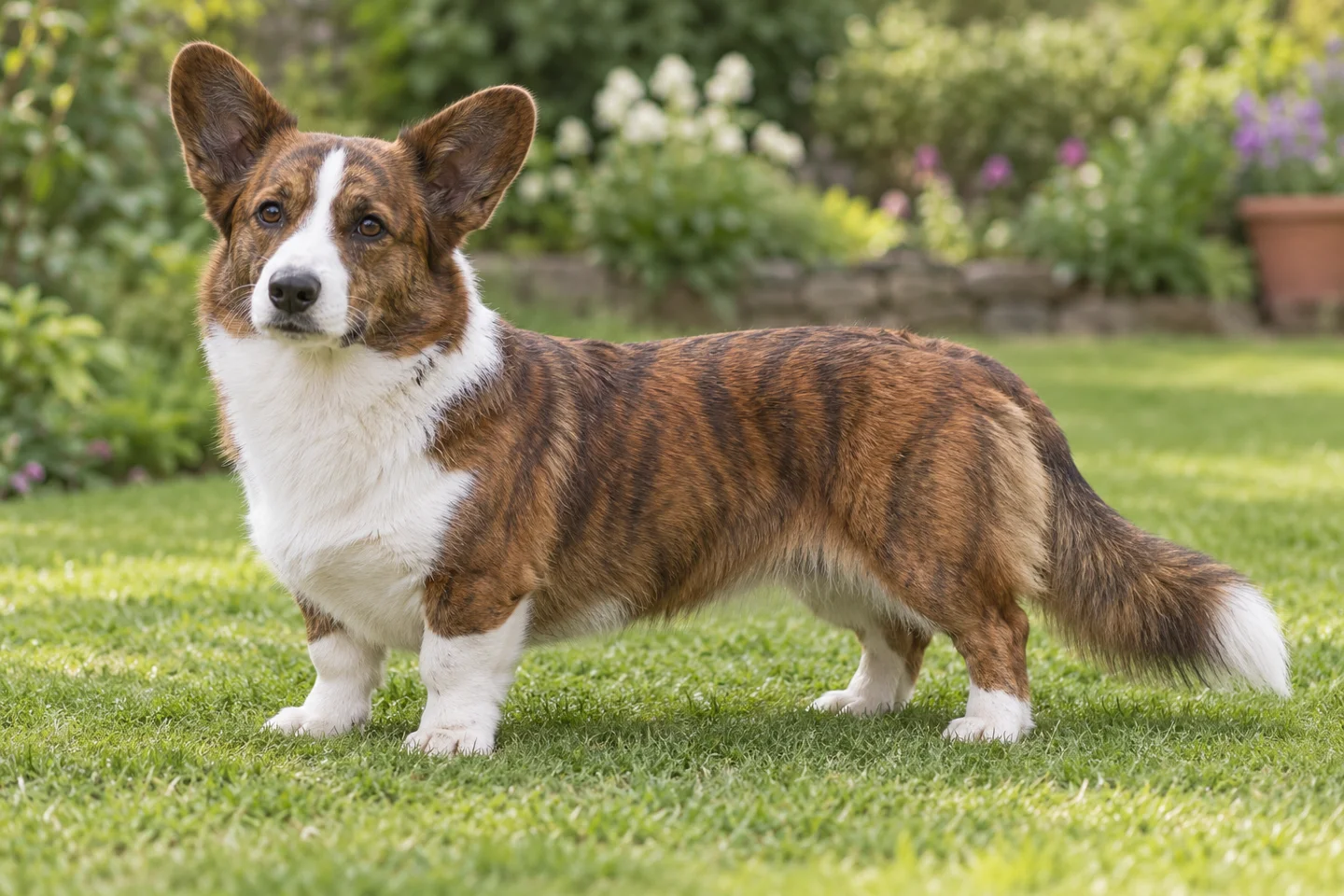
- Weather-resistant red-brindle and white double coat illustrated
- Care priorities
- Long-low access, movement management, hips and genetic results
- Adult size reference
- FCI ideal height 30 cm; weight proportionate to size
General information for owners. These articles have not been reviewed by a veterinarian. Medical decisions need your dog's history and an examination.
A Cardigan is a working dog close to the ground
A Cardigan Welsh Corgi needs regular movement, teaching, and a home that respects its low-set body. Its short legs can make people expect an undemanding decorative companion, while its herding background and attention to activity suggest more practical questions. How will it settle when children run through the room? Where can it investigate safely? What arrangements protect comfortable access to beds and vehicles? Begin with those daily tasks rather than choosing entirely from a photograph of large ears and a long tail.
Meet adults and ask owners what ordinary weeks involve. Observe rest as well as excitement, including whether the dog can disengage from an interesting movement or noise. A puppy is still developing despite useful family information, while an adult adoption may offer detailed observations of current habits. Neither guarantees a perfect fit. Consider time for walks, grooming, training, and substitute care, including periods when the owner cannot follow the preferred routine. A sustainable plan matters more than a promise that a small dog will fit effortlessly into any schedule.
Welsh identity and the Pembroke distinction
The Cardigan is a Welsh herding breed with a distinct standard from the Pembroke Welsh Corgi. It should not be described simply as a Pembroke with a tail. The breeds differ in more than that one feature, including overall outline and details of the head and ears. The Cardigan's full tail is a useful visual clue, but ancestry cannot be proved from a photograph alone. Ask which pedigree and registration support a purebred description when that identity is part of a sale.
The name connects it with Cardiganshire in Wales. Beyond that practical historical context, be careful about precise ancient migration stories offered without clear evidence. For a companion placement, recent relatives, upbringing, and direct behavior matter more than a dramatic account of remote origins. An undocumented rescue may be a corgi-type mix, and keeping uncertainty explicit helps avoid unsupported predictions. Whatever the ancestry, evaluate the actual body's needs, responses to handling, comfort around other animals, and ability to manage the household's normal environment before deciding.
Height, proportion, and a full natural tail
The FCI gives an ideal adult height of 30 cm at the withers and calls for weight in proportion with overall balance. That reference describes expected scale without supplying an exact target for every individual. A long low body still needs enough room to turn and stretch comfortably. Assess condition through touch and veterinary guidance, rather than treating a heavier outline as more substantial or desirable. Watch ordinary movement and rising after rest, including whether stairs or slippery surfaces prompt hesitation.
Cardigans have large upright ears, a weather-resistant double coat, and a long natural tail. The illustrations choose a red-brindle example with white areas. Other recognized colors occur, and the selected image is not a record of a particular dog. Fit equipment to the individual chest and check beneath the coat for rubbing. Vehicle restraint and carriers should allow comfortable positioning. A household should also consider how to support access if pain or aging changes mobility, rather than relying indefinitely on the dog's current willingness to jump to a favorite place.
Movement interest around children and wheels
Herding ancestry can help explain interest in moving people or objects, but it does not make chasing bicycles or nipping clothing acceptable. Prevent repetition near traffic and teach an alternative response at a manageable distance. Reward turning toward the owner before the dog becomes fixed. A secure lead arrangement keeps practice from depending on one unproven cue. Do not stand at a busy roadside and wait for the animal to stop reacting when a quieter route would make learning more practical.
In the home, organize fast play separately and reward the dog for moving to a station away from the activity. If it circles children or grabs at trouser legs, interrupt calmly and change the setting before another chase begins. A qualified reward-based professional can help identify the sequence and build alternatives. The task is specific: noticing movement, becoming engaged, and remaining able to respond. Calling the dog stubborn supplies less useful information than observing where attention changes and which level of difficulty it can currently manage comfortably.
Children and a low dog's space
A Cardigan is close to the height of a small child's hands and toys. Prevent reaching into its face, climbing over it, or repeatedly following it beneath furniture. Teach children to invite interaction from a calm position and accept the dog's decision to leave. An adult should supervise closely enough to change the encounter before tension grows. A dog that turns away or withdraws has supplied useful information even without a growl, and should not need to escalate to obtain rest.
Keep beds, meals, and chews protected from interference. An adult handles retrieval when an object falls beside a valued item. Children's running games may need physical separation from the dog, especially while training is developing. Visiting children bring unfamiliar movement and contact even when the family has an established comfortable routine. Review arrangements as the puppy matures, children become more mobile, or medical discomfort changes tolerance. Supervision is an active task, and secure comfortable separation is appropriate when an adult cannot give the interaction that level of attention.
Other dogs, play, and compatible households
Assess companionship through the actual animals rather than assuming all corgis enjoy one another. A low dog may find forceful body contact uncomfortable, while its own persistence can overwhelm a more reserved companion. Watch for pauses and voluntary return to contact. A walking introduction with room to change distance is easier to observe than crowding animals into a doorway. Do not make the first meeting a contest for toys or attention beside a person carrying food.
At home, provide separate meals and resting spaces with clear routes between them. Notice repeated following or blocking before a dispute becomes obvious. Cats need protected areas and gradual introductions, with chasing prevented while calm disengagement is rewarded. Small pets require secure protection. Ask prior carers which encounters were observed and under what management. Peace beside a resting resident cat does not promise the same response to an unfamiliar one running outdoors. Expand access according to current observations and remain willing to preserve separation where the household cannot otherwise establish reliable safety.

Aggression and discomfort during lifting
A snap when the dog is lifted may involve pain, fear, or a learned expectation of uncomfortable handling. Stop unnecessary lifting and seek veterinary advice when discomfort is possible. Use support suited to the body when carrying is necessary, and ask the clinical team to demonstrate if unsure. Avoid assuming that a small low animal can be picked up casually at any moment. Predictable cues and cooperative access can reduce the number of times a person feels compelled to grab the dog without warning.
Other incidents need equally specific descriptions. Record approach to a resource, an unfamiliar animal, sleep interruption, or another relevant event, and prevent repetition while help is arranged. Reward-based behavioral support can teach exchanges and comfortable movement without confrontation. Punishing warnings may conceal distress instead of resolving it. A safety plan should protect children and other vulnerable participants immediately. Equipment can add protection in particular circumstances when introduced appropriately, but cannot justify exposing an animal to contact it cannot manage or replace treatment when a physical problem contributes to its response.
Training cooperation rather than constant control
Teach useful responses through clear rewards: a hand target, a pause at an opening, returning toward the owner, and resting on a mat. Those tasks can make everyday transitions predictable. A cue learned in a quiet room needs gradual practice elsewhere, with safety measures retained near hazards. If the dog struggles, consider what changed in the environment or understanding before repeating the request louder. Useful instruction helps the owner create a task the animal can recognize and complete successfully.
Training should include ending play and accepting ordinary care. Reward a calm finish, brief paw inspection, and standing for a harness check. Use household cues consistently so occasional carers can follow the same plan. A qualified instructor can help the person improve timing and manage movement triggers without harsh correction. Avoid building every interaction around performance. The dog also needs periods when nothing is required and it can rest comfortably. A practical routine supports both engagement and quiet recovery, rather than treating continuous excitement as the only way to keep a working breed content.
Exercise for a long low body
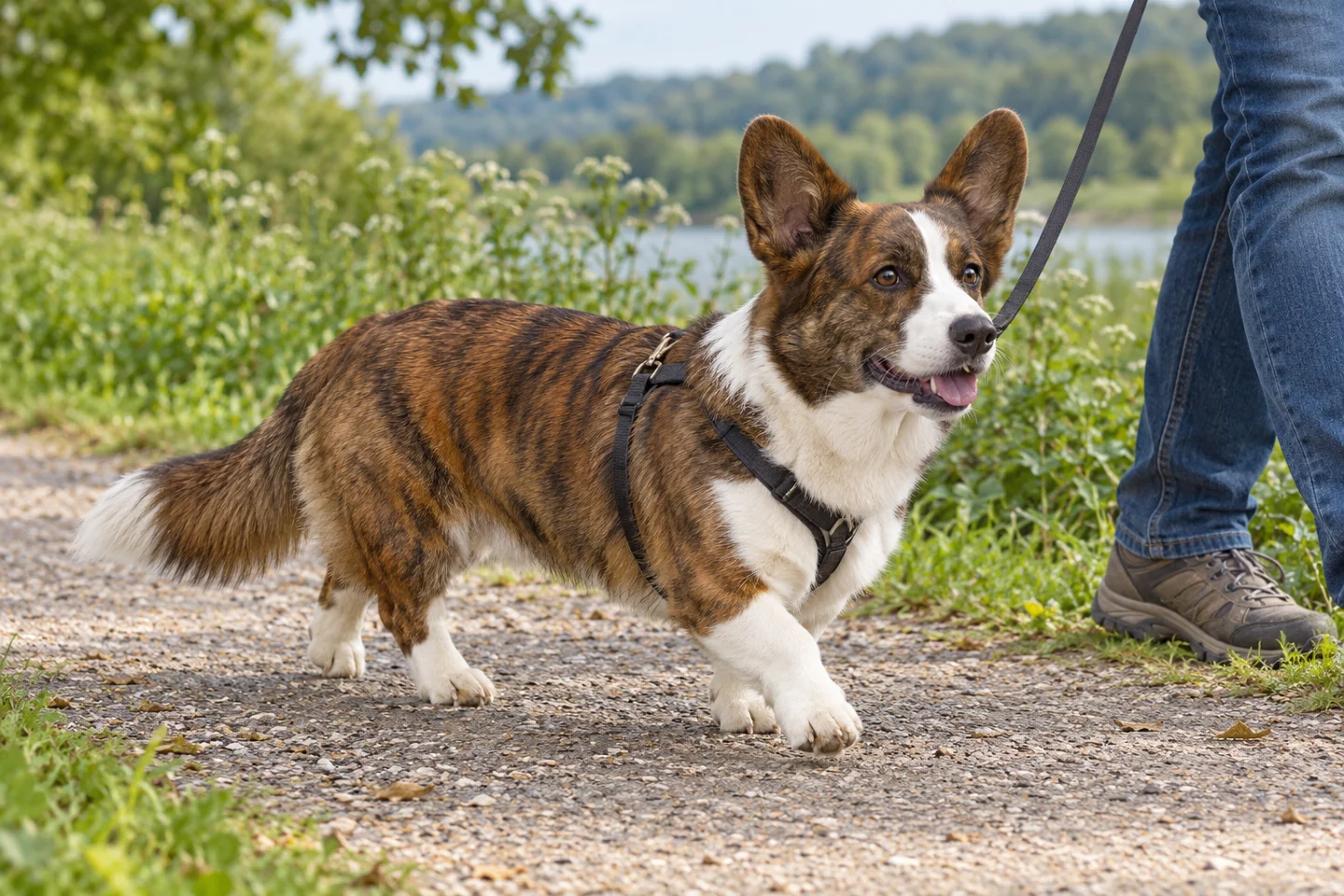
Provide regular walks, sniffing, and suitable learning matched to health and conditioning. Short legs do not mean a dog should be carried through every outing or confined to indoor activity. They do make it sensible to consider footing, awkward jumps, and access routes. Discuss strenuous repetitive tasks with the veterinarian, particularly during growth or after injury. Build workload gradually and observe recovery. A dog's eagerness cannot replace an owner's judgment about whether its current body is ready for a demanding activity.
Check movement after rest as well as during the walk. Persistent stiffness, reluctance to rise, or changed coordination needs assessment. Adapt for heat and provide water; collapse or severe breathing difficulty needs urgent help. Quiet days can include medically appropriate searches and simple tasks without frantic efforts to compensate indoors for a missed excursion. An older or recovering animal may enjoy shorter outings and more time to investigate. The aim is useful function and comfort, rather than measuring success against another dog's distance or a younger version of the same individual's routine.
Back pain and intervertebral disc disease
Cornell includes Cardigan Welsh Corgis among breeds with the short-legged body type relevant to chondrodystrophy and intervertebral disc disease. Disc changes can affect the spinal cord or nerves, so new pain or altered movement deserves attention. Signs such as scuffing feet, unusual posture, weakness, or difficulty walking should prompt veterinary contact. Do not use a breed association to diagnose the problem at home, but do not dismiss it as an inevitable consequence of being long and low either.
If movement changes suddenly or the dog cannot walk normally, seek urgent advice and ask how to transport it safely. Avoid manipulating the back or repeatedly encouraging stairs to see whether the difficulty persists. The clinician can determine the investigation and treatment plan. At home, review traction and access so the animal does not need repeated awkward descents from furniture. Such management supports comfort but cannot promise prevention of every disc problem. A genetic or structural description is useful context, while the living dog still needs assessment for its current signs.
Grooming the double coat and full tail
Brush with attention to loose undercoat and areas where hair rubs or catches, including behind ears, under equipment, and around the tail. A neat outer surface can hide tangles nearer the skin. Introduce tools through short comfortable sessions so heavier seasonal care is familiar. After mud or rain, remove debris and dry relevant regions. Ask a groomer to demonstrate maintenance if you cannot reach the undercoat reliably. The task is skin access and comfort, rather than producing a particular show outline at the expense of manageable routine care.
Persistent redness, itch, odor, or discharge deserves veterinary advice. Avoid repeatedly treating an irritated area cosmetically without identifying its cause. Teach nails and teeth in separate small steps, and inspect ears without inserting objects deeply into the canal. Old medication may not suit a new episode. Pain can make a previously easy task difficult, so note changes and tell professionals before an appointment. Necessary care may require clinical support while home cooperation develops. Stronger restraint should not be the automatic response when the dog newly avoids contact with a particular body area.
Health screening and named inherited conditions
The AKC lists hip evaluation and DNA testing for the common degenerative myelopathy variant and PRA-rcd3 among current national breed-club recommendations for Cardigans. Request identifiable reports and discuss the particular assessments used by the breeder. A generic phrase such as clear panel leaves questions about variants, laboratories, and which parent was tested. Clinical evaluations and DNA results answer different questions. A lively puppy or active parent cannot substitute for the named evidence merely because its movement appears comfortable during a brief visit.
Ask about serious family illness and retain uncertainty where histories are incomplete. Your veterinarian can explain how the results relate to the individual and any appropriate follow-up. New visual difficulty or lameness needs assessment even when breeding documents were reassuring. A named test is useful because its scope is defined, not because it rules out every future cause of a similar symptom. Keep the original paperwork with clinical records so a new clinician has access to the actual finding instead of an owner's or seller's shortened recollection.
Degenerative myelopathy results are not a diagnosis
Degenerative myelopathy testing identifies a genetic risk associated with a progressive neurological disease. UC Davis explains that a dog with the relevant risk genotype may develop the condition; the result does not establish that it currently has clinical disease. A carrier result also needs accurate interpretation. Ask a veterinarian to explain the report and its relevance instead of treating an abbreviation as a forecast of inevitable paralysis. Breeding decisions and the care of a dog with present weakness are related but distinct questions.
An older dog scuffing its feet or moving differently needs clinical investigation. Disc disease, pain, and other causes can require different responses, so an existing DM risk result should not become a reason to skip assessment. Record changes that arise naturally and avoid provoking strenuous activity to make them obvious. The aim is appropriate diagnosis and support, with the current animal's comfort guiding decisions. No screening label should delay care for a new problem or encourage an owner to assume that a potentially treatable cause has already been excluded.
Feeding, mixes, and realistic household costs
Measure complete food appropriate to life stage and actual activity, counting training treats. Assess body condition beneath the coat with veterinary guidance. A long body should not be made heavier to match a preferred appearance. Persistent appetite, thirst, weight, or digestive changes deserve attention rather than repeated unplanned food switches. Discuss supplements or a home-prepared plan before starting. As activity changes with injury or age, review intake and suitable outlets while keeping care focused on present comfort instead of past stamina.
A Cardigan mix may vary in legs, body length, coat, and movement interest. A cross name cannot guarantee normal mobility, easier temperament, or freedom from human allergy. Ask about both parents when known and assess an adult's present needs directly. Budget for veterinary care, instruction, equipment, grooming support, and backup company. Check practical housing conditions where relevant. A compact body can fit many homes while daily behavior and medical needs still determine suitability. Honest information and a sustainable routine are more useful than a promise that every corgi-type dog is an easy companion.
A comfortable dogsDating walk at the dog's pace
Use dogsDating to describe the Cardigan's preferred pace and contact, including any handling or medical limit relevant to an outing. Choose an uncrowded public route with separate handlers and enough room to move away. Avoid starting with vigorous chasing or a companion that repeatedly crowds a low dog. Begin walking at a comfortable distance and observe whether both animals can disengage. A successful first meeting may remain a calm shared route without a close greeting, thrown toys, or physical play afterward.
Keep exact home coordinates private and use an approximate area for planning. Agree on the meeting point and an exit before arrival. Leave prized objects out of the introduction and stop persistent contact when either animal wants space. Owners should compare actual observations rather than treat a profile match as certification. Future contact can preserve the arrangement that worked, including parallel walking. Sharing a home, vehicle, resources, or unsupervised time requires separate thought based on the animals' responses and the management both owners can maintain consistently.
Sources and editorial notes
Sources checked October 21, 2026. Breed measurements describe reference ranges, not a diagnosis or an individual dog's ideal weight. Images are AI-generated breed illustrations and do not document a particular dog or health condition.
- AVSAB: Humane Dog Training Position Statement
- VCA Animal Hospitals: Food aggression in puppies
- VCA Animal Hospitals: Aggression toward unfamiliar dogs, diagnosis
- VCA Animal Hospitals: Heat stroke in dogs
- VCA Animal Hospitals: Common emergencies in dogs
- VCA Animal Hospitals: Grooming and coat care for your dog
- VCA Animal Hospitals: Ear infections in dogs
- VCA Animal Hospitals: Feeding guidelines for dogs
- VCA Animal Hospitals: Hypoallergenic dog breeds
- Orthopedic Foundation for Animals: CHIC program and interpretation of numbers
- Cornell University College of Veterinary Medicine: Chondrodystrophy and intervertebral disc disease
- Cornell University College of Veterinary Medicine: Diseased spinal disks and recognizing signs
- UC Davis Veterinary Genetics Laboratory: Degenerative myelopathy test and interpretation
- AVSAB: Humane Dog Training Position Statement
- Fédération Cynologique Internationale: Cardigan Welsh Corgi official breed standard
- American Kennel Club: National breed-club herding group health testing recommendations
Keep getting to know dogs.
Read another guide or return to your dogsDating community.
Explore breed guidesBack to dogsDating