Carolina Dog
A medium athletic dog whose care needs careful attention to individual experience, secure access, comfortable social distance, and the limits of ancestry and health claims.
How these guides are researched and reviewed
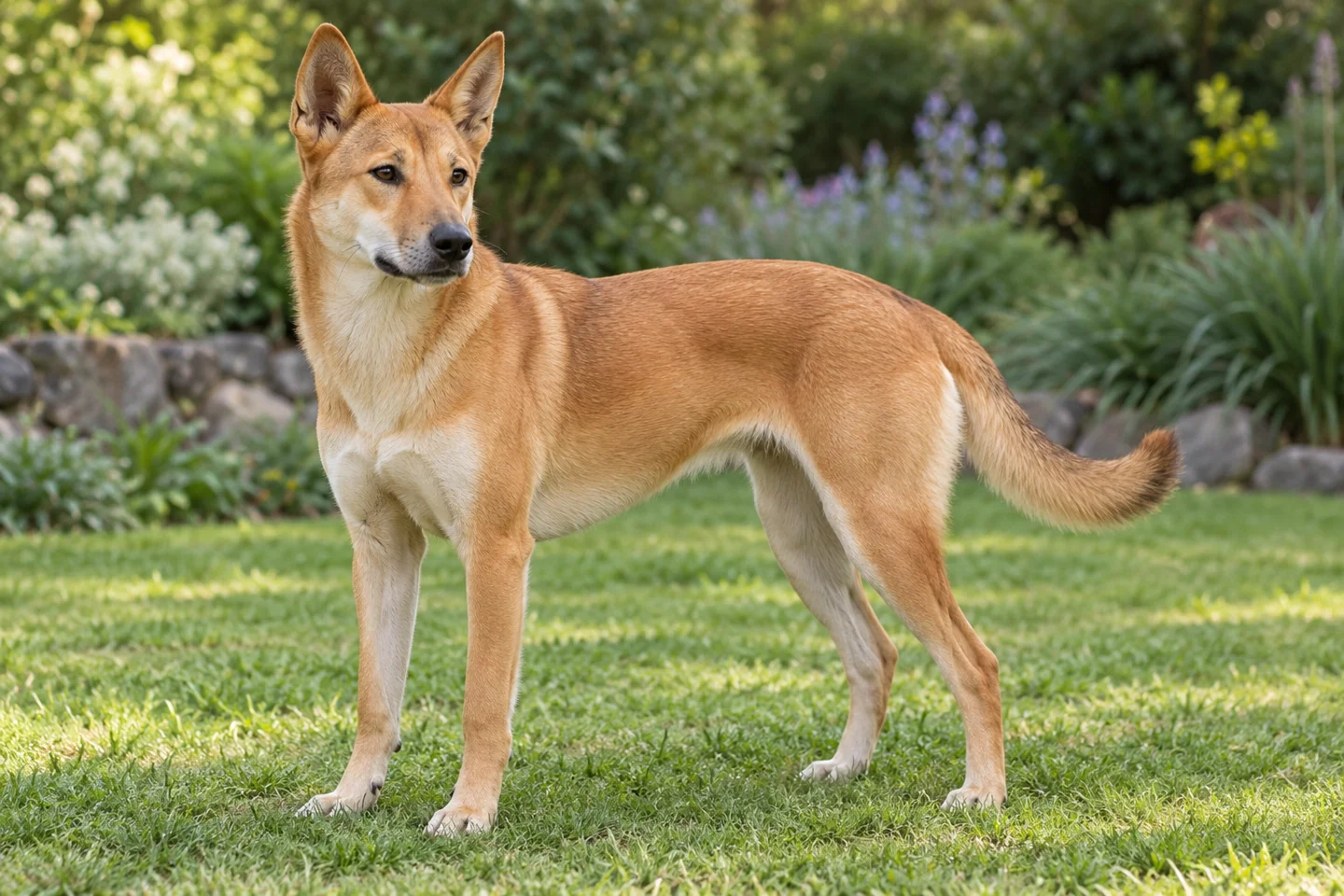
- Origin
- United States; modern southeastern free-ranging-dog documentation
- Coat
- Close dense ginger coat illustrated
- Care priorities
- Honest ancestry, safe exits, low-pressure social learning
- Adult size reference
- UKC generally 18–24 in and approximately 35–50 lb; sexes overlap
General information for owners. These articles have not been reviewed by a veterinarian. Medical decisions need your dog's history and an examination.
A Carolina Dog needs an individual assessment
A Carolina Dog should be chosen according to the animal's actual comfort and the home available, rather than the appeal of a wild-looking outline. Some individuals need patient support around unfamiliar people and situations. The practical questions concern secure access, walking, handling, rest, and company. Can the household provide those reliably on a normal weekday? A quiet dog beside a familiar carer may respond differently in a busy entrance or during necessary clinical care, so seek information from more than one calm photograph or meeting.
An adult with detailed foster observations may offer useful guidance, while a puppy leaves more to be learned. Either needs an adjustment period and a plan for substitute care. Ask who can help if your schedule or health changes, and arrange familiarity before that help becomes urgent. A source should discuss limits candidly instead of promising that affection will remove every difficulty. Choosing responsibly means matching the animal with a sustainable environment, including circumstances in which it may continue to need distance, a barrier, or professional support.
Modern documentation and deeper ancestry
UKC's account identifies I. Lehr Brisbin's work with free-ranging dogs in the southeastern United States during the 1970s as a modern reference point for the Carolina Dog. It presents a proposed connection to much earlier dogs entering North America as a hypothesis needing further ancestry work. Keep that distinction intact. Documented observations and an interesting evolutionary proposal are different kinds of evidence. A dog's present appearance cannot establish an uninterrupted ancient lineage, and an owner does not need that claim to provide appropriate care.
The Carolina Dog is distinct from the Canaan Dog, despite similar names and some shared upright-eared features. It is also not a label that can automatically be applied to every ginger rescue. Ask how identification was reached and which records exist. A resemblance may support a description while leaving ancestry uncertain. Current health, behavior, and experience remain more useful for household planning than a dramatic origin story. Avoid turning uncertainty into a medical or temperament promise, such as assuming a dog will be unusually robust, independent, or safe with every familiar person because it looks natural.
A lean body and the fishhook tail
The standard describes a medium lean athletic body and a distinctive fishhook-shaped curve near the tail's end. Upright mobile ears and a wedge-shaped head contribute to the familiar appearance. Ginger is the selected illustration color here, but other permitted patterns exist. The UKC reference generally spans 18–24 inches at the withers and approximately 35–50 pounds, with overlap between sexes. These are expected-scale figures rather than a precise forecast for a puppy or a reason to force a particular body weight.
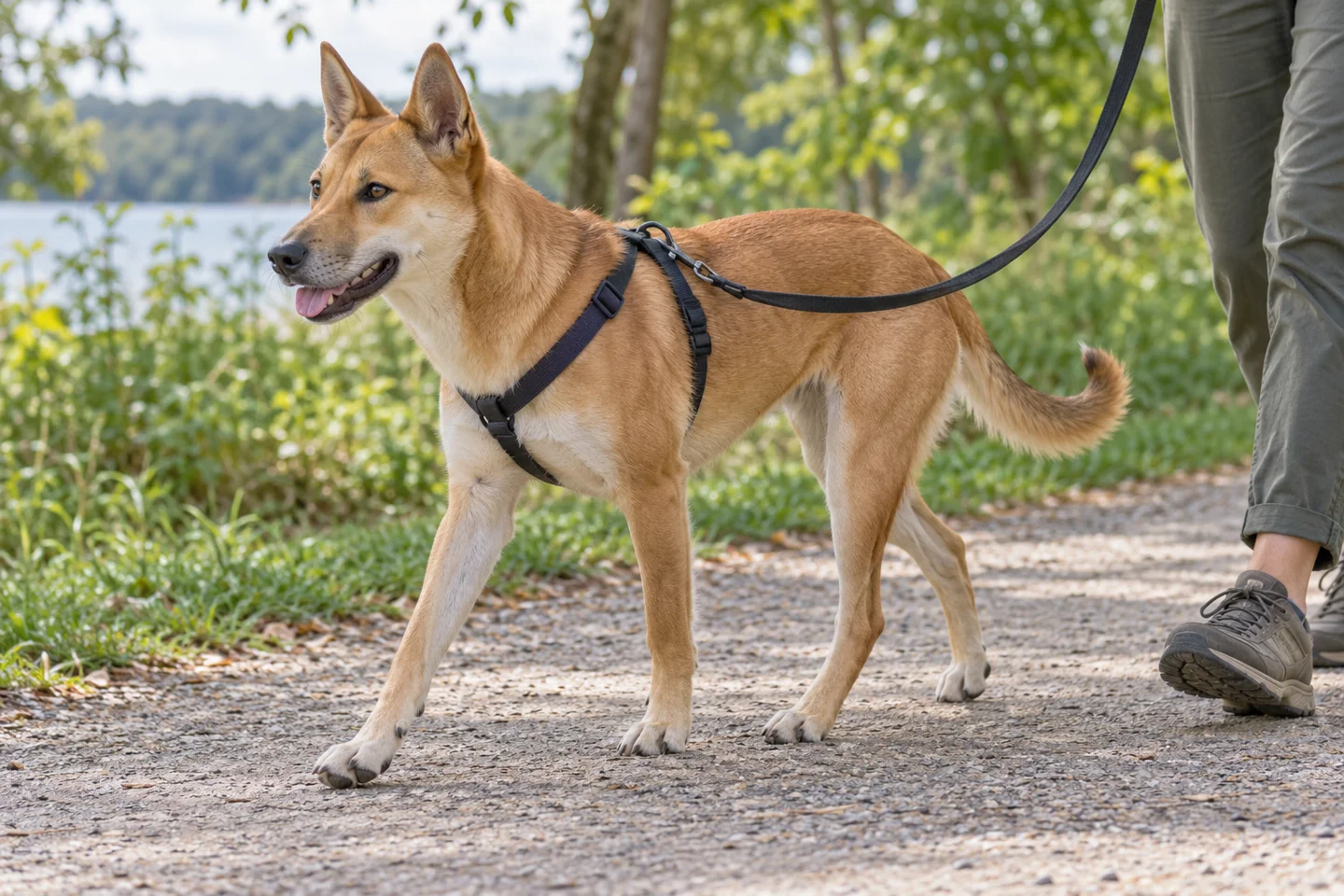
Assess condition with veterinary guidance instead of comparing the dog to an overweight pet or an idealized image of a free-ranging animal. A visible waist should be interpreted alongside muscle and overall health. Fit a harness to the actual chest and check it during backward movement so a surprise does not become an escape. Provide comfortable travel restraint and enough room to change resting position. Domestic access should remain workable when the dog is injured or older, not depend solely on current willingness to jump into a vehicle or onto a favored bed.
Secure exits during the first weeks
A new home does not immediately supply the familiar cues an animal used elsewhere. Keep exterior access organized while learning its responses. Check gates, gaps, latches, and the path between car and house before arrival. A secondary barrier can make entrances easier to manage when visitors carry bags or deliveries. Teach a pause away from the door in quiet conditions, rewarding the behavior before expecting it during a surprise. Identification and current contact details help recovery if something goes wrong but cannot make an unsecured exit acceptable.
Near traffic and wildlife, retain a suitable lead arrangement instead of testing recall to find its limit. Practice returns where distraction and surroundings are manageable. A long line can offer exploration when the handler prevents tangling and abrupt stops at speed. Choose routes with room to move away from unexpected people or animals. The goal is useful investigation within boundaries the person can maintain. A dog's affection for its household, quietness on the first day, or apparently confident posture cannot guarantee that it will remain nearby when an unfamiliar stimulus captures its attention.
Visitors and reserved behavior
Let a visitor enter while the dog has comfortable distance or secure separation. The guest should not repeatedly extend a hand, lean over, or follow an animal that moves away. Observation without touching can be an appropriate first experience. Some dogs approach after a quiet period, while others prefer to remain apart. Choose according to the individual and the available setting, rather than asking the dog to fulfill a social performance because people have come specifically to meet it.
Provide a retreat that remains accessible throughout the visit. Children and other guests need to understand that the resting area is not an invitation to approach. If the animal becomes fixed, tense, or unable to settle, increase space and seek qualified advice where appropriate. Do not label every sign of reserve aggression, but do not ignore a clear warning either. A helpful owner describes what happened in context and changes the arrangement. Successful hospitality can include a calm dog in a separate comfortable room while the people enjoy their visit.
Children and a clear invitation to interact
Children should learn that the dog may decline contact. Demonstrate a calm invitation and gentle brief touching, with an adult close enough to guide the encounter. Avoid hugging, chasing beneath furniture, or lifting without support. If the animal turns away or leaves, stop the approach. A child may intend affection while creating pressure the dog finds uncomfortable. The adult's role is to notice that difference before the animal needs to escalate its response to obtain space.
Keep rest, meals, and valued objects free from interference. A child who drops something nearby should call an adult, who can organize safe retrieval. Fast play may need separation, especially while a newly adopted dog is learning household routines. Visitors' children introduce different movements and sounds, so a calm history with family does not settle every future interaction. Reassess as the dog ages, develops discomfort, or encounters a busier gathering. When attention is divided, secure comfortable separation protects both participants more reliably than expecting the child to recognize every canine warning alone.
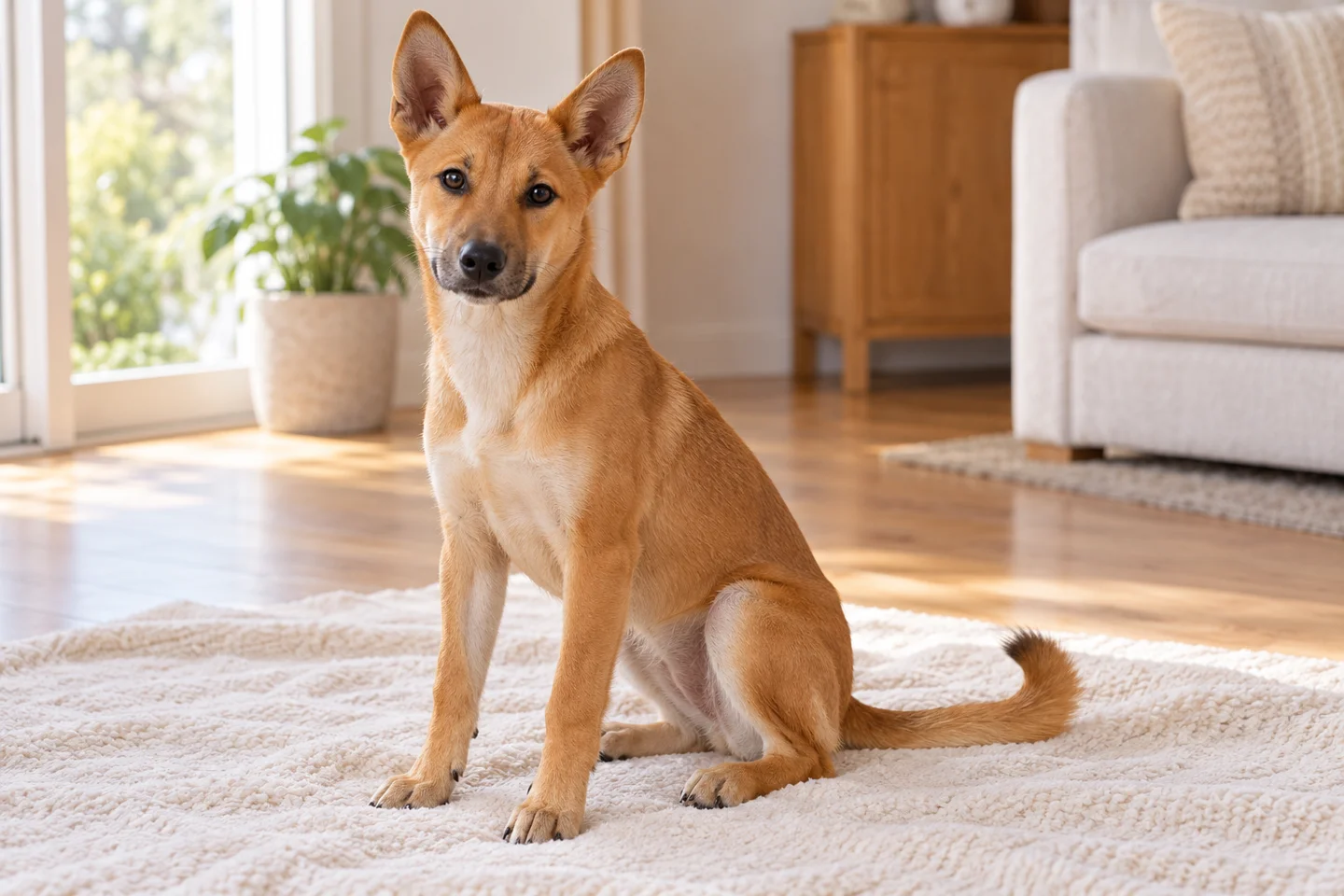
Dogs, cats, and control over distance
Choose canine introductions that allow each animal to pause and turn away. Separate handlers and an open route are useful before any closer contact. Do not begin at a confined doorway or beside prized objects. Watch whether a dog voluntarily returns after a break instead of interpreting continuous pursuit as mutual play. A quiet walking companion may fit better than a boisterous animal, regardless of shared breed or size. The question is whether both can remain comfortable in the arrangement, not whether owners enjoy seeing them together.
At home, provide separate feeding and resting options and watch repeated blocking or monitoring. Cats need protected routes and gradual assessment across suitable barriers. Reward disengagement before chasing develops, and keep small pets physically secure. A dog that tolerates one familiar animal may respond differently when another runs outdoors. Ask carers which contacts they observed and how those encounters were managed. Expand access according to the actual relationship in the new home, including a decision to retain separation where reliable safety cannot otherwise be maintained.
Aggression and the context of an incident
A response to a stranger, a resource dispute, and a snap during care should not be collapsed into one vague temperament judgment. Record what happened immediately before the reaction, including distance and possible escape routes. Protect people and animals from repetition while arranging veterinary or behavioral help as needed. Do not deliberately recreate the incident for proof. A dog that has not previously bitten still deserves a safety plan when its current behavior shows that an encounter is difficult.
Choose reward-based professional support that addresses learning and the environment together. Punishing a growl can suppress visible information while leaving discomfort present. New handling sensitivity warrants clinical assessment, particularly around a specific area. Management may include barriers, exchanges, a changed approach, or a positively conditioned basket muzzle for particular tasks. Fit, panting, and supervision remain necessary. Equipment does not make overwhelming contact comfortable or replace treatment when pain contributes. The useful goal is predictable safe participation, with clear opportunities for the animal to recover and the person to act before escalation.
Training trust through understandable tasks
Teach movement toward a target, returning to a resting station, and waiting at an opening. Reward an observable response instead of relying on broad demands that the dog be good. Begin where distraction is low enough for success, then change difficulty gradually. A cue learned indoors needs practice in other locations. When the animal struggles, review what it understands and what changed in the setting. More pressure cannot necessarily compensate for missing learning or make a frightening environment easier to process.
Care skills can follow the same approach. Brief paw contact, standing on a nonslip surface, and accepting equipment checks are useful lessons. Pause and investigate new discomfort rather than treating avoidance as a challenge. Consistency across carers helps the animal predict what a request means. A qualified instructor should improve the owner's timing and decisions, including how to reduce a task when progress stalls. Training can be clear and practical without turning every interaction into a performance. Quiet company and rest also belong in an ordinary companion's day.
Time apart and the working day
Build comfortable separation gradually, beginning with short manageable intervals in an appropriate resting area. Observe what happens after departure, using a recording if useful. A quiet greeting on return cannot reveal whether the dog paced or called for much of the absence. Persistent distress or escape attempts warrants professional advice and a changed schedule. Human support may be needed while learning develops. A dog described as independent can still struggle with losing familiar company, so a label cannot decide the appropriate first duration alone.
Do not acquire another animal as a promised cure. Companionship from a compatible pet can be pleasant while separation distress still needs individual assessment, and the additional animal brings its own care needs. Consider the practical access arrangements for a sitter, including reserve around arrivals. That person should know the dog and understand doors, equipment, food, and any medical limits. A sustainable ownership plan works through ordinary employment and travel demands without leaving the animal to cope abruptly with a schedule it has not learned to manage.
Exercise that supports ordinary comfort
Provide regular movement, sniffing, and suitable tasks according to age, fitness, and medical condition. A natural-looking body does not establish readiness for strenuous hiking or running. Build workload gradually after inactivity, and discuss repetitive high-impact exercise during growth with the veterinarian. Puppies need rest between appropriate exploration. Account for terrain and temperature as well as distance. A modest route over uneven ground can demand more than a longer level walk, so remain willing to change plans when conditions or the animal's response differ.
Watch recovery later in the day, including rising and getting into the vehicle. Persistent stiffness, changed stride, or unusual fatigue deserves assessment. Carry water and adapt warm-weather outings; severe weakness, collapse, or respiratory distress requires urgent help. Quiet days may include medically suitable searches or simple learning rather than frantic indoor exercise to compensate for a missed trip. The routine needs to remain workable during bad weather, illness, and busy periods. Long-term welfare depends more on reliable ordinary care than occasional impressive activities followed by discomfort or neglect of recovery.
Grooming a close coat and checking the skin
A close coat can look self-maintaining while still needing inspection. Brush gently and examine equipment contact areas, feet, and places the dog repeatedly licks. Seasonal coat changes may require more frequent removal of loose hair. Introduce tools in brief comfortable sessions rather than waiting for a large task. After rain or mud, remove debris and dry relevant areas. A clean outer appearance cannot establish that every patch of skin beneath a harness or behind an ear is comfortable.
Persistent itch, odor, redness, discharge, or a sore area warrants clinical advice. Avoid repeatedly changing products without identifying why irritation returns. Teach nails and tooth care in small steps and inspect ears without inserting objects deep into the canal. Medication from a previous episode may not suit the current problem. New resistance to contact can indicate pain, so note it and tell professionals before an appointment. Necessary treatment may need veterinary support while the household continues building comfortable participation in easier care tasks at home.
Health evidence and the natural-dog assumption
Free-ranging ancestry does not establish freedom from inherited or acquired illness. Ask a breeder which health assessments it uses and request reports for identifiable parents. Clarify what each examination or test addresses and why it was selected. A natural outline and energetic behavior answer different questions from clinical assessment. Where published population data or a universal checklist is limited, acknowledge that limit instead of inventing prevalence figures or presenting a short online disease list as definitive evidence about the breed.
Discuss serious family illness with the source and available records with your veterinarian. A commercial DNA panel concerns selected variants, while a dog showing symptoms may need a different investigation. After adoption, establish prevention suited to location and outdoor exposure. New appetite changes, lameness, weakness, or sensitivity to touch needs assessment regardless of a reassuring ancestry narrative. Preserve screening and clinical documents so information remains available during travel or a change of clinic. The records should explain actual findings and uncertainty, rather than serve as a promise that future illness has been excluded.
Food, aging, and household resources
Choose complete nutrition appropriate to the dog's stage of life and monitor body condition with veterinary guidance. Measure meals and include rewards used during training. A lean outline should be interpreted alongside muscle and health, rather than encouraging underfeeding to imitate a wild-looking photograph. Do not add supplements simply because the animal is active or has a purported ancient background. Ask qualified advice before a restrictive or home-prepared diet. Persistent changes in weight, thirst, appetite, or digestion deserve clinical attention instead of repeated unplanned food replacements.
Older dogs may need improved traction, accessible beds, easier vehicle loading, and a different pace of outings. Gradual stiffness still merits discussion, particularly if it changes tolerance of handling or other animals. Keep emergency contacts and transport arrangements accessible to another caregiver. Budget for veterinary treatment, instruction, secure equipment, and substitute company as well as food. A medium body may fit many homes while practical and behavioral needs still determine suitability. Plan for periods of restriction and changes in the owner's own health, so care remains possible when the favorite active routine is interrupted.
Mixes and identity-based promises
A ginger upright-eared mix cannot be assigned a precise Carolina Dog ancestry from appearance alone. Keep estimates explicit and ask what other evidence exists. A cross may vary in coat, activity, reserve, and interest in other animals. Neither a marketed name nor a claim of natural hybrid vigor guarantees easier care or freedom from inherited risk. Parent information matters where available, while an adult's current needs deserve direct evaluation. No breed or cross can be promised as reliably free from human allergy either.
Choose the home match through concrete questions. Can the dog walk comfortably in the available neighborhood, rest around its residents, and receive necessary handling? Does the household have support for known difficulties and room to maintain distance where needed? Check practical housing or insurance conditions that apply before committing. An experienced owner may still be wrong for a particular animal whose needs conflict with the current environment. Honest placement information helps more than a dramatic origin label or a promise that sufficient affection and training will remove every limitation.
A low-pressure dogsDating meeting
Describe the dog's current social preferences on dogsDating, including whether it wants a spacious walk before closer contact. Choose an uncrowded public route where separate handlers can move aside. Avoid beginning inside either home boundary or at a narrow enclosure entrance. Watch whether each animal can turn away and resume exploration. A successful first meeting may remain a calm shared walk with no physical greeting. Owners should not shorten the distance merely because they hoped for play or a joint photograph.
Share an approximate area while keeping exact home coordinates private. Agree where to meet and how to finish if either dog becomes fixed, tense, or persistent. Leave valued objects out of the introduction and avoid competition over food. Compare the actual responses afterward rather than treating the profile match as certification. Future contact should preserve the arrangement that suits both animals. Sharing a vehicle, living space, resources, or unattended time asks additional questions, so those possibilities need separate assessment based on demonstrated comfort and reliable management from both households.
Sources and editorial notes
Sources checked October 21, 2026. Breed measurements describe reference ranges, not a diagnosis or an individual dog's ideal weight. Images are AI-generated breed illustrations and do not document a particular dog or health condition.
- AVSAB: Humane Dog Training Position Statement
- VCA Animal Hospitals: Food aggression in puppies
- VCA Animal Hospitals: Aggression toward unfamiliar dogs, diagnosis
- VCA Animal Hospitals: Heat stroke in dogs
- VCA Animal Hospitals: Common emergencies in dogs
- VCA Animal Hospitals: Grooming and coat care for your dog
- VCA Animal Hospitals: Ear infections in dogs
- VCA Animal Hospitals: Feeding guidelines for dogs
- VCA Animal Hospitals: Hypoallergenic dog breeds
- Orthopedic Foundation for Animals: CHIC program and interpretation of numbers
- AVSAB: Humane Dog Training Position Statement
- United Kennel Club: Carolina Dog breed standard, history and adult size
Keep getting to know dogs.
Read another guide or return to your dogsDating community.
Explore breed guidesBack to dogsDating