Carpathian Shepherd Dog
A Romanian flock guardian whose care depends on secure access, patient cooperative training, realistic visitor routines, and a manageable large-dog plan.
How these guides are researched and reviewed
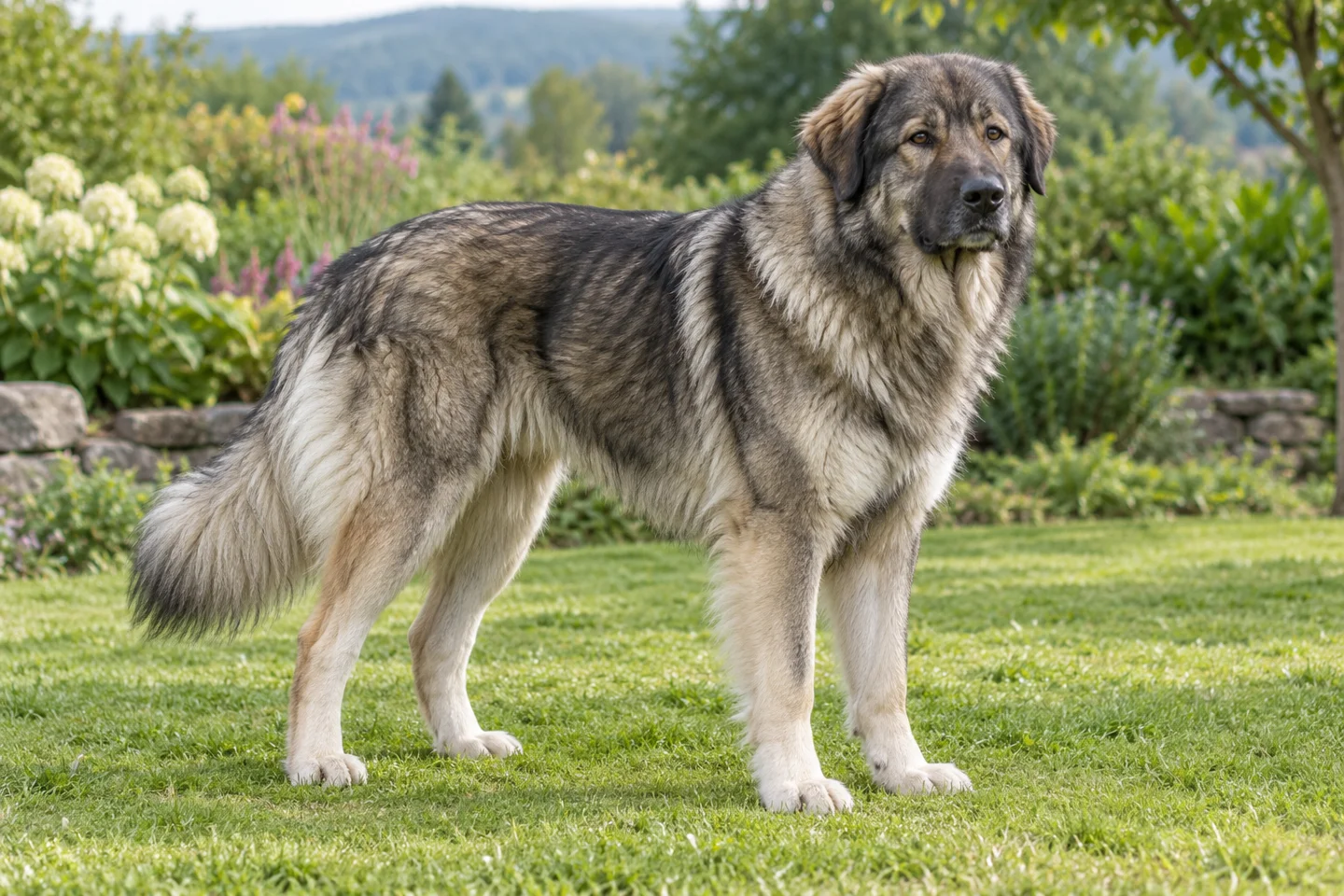
- Origin
- Romania; Carpathian region
- Appearance illustrated
- Wolf-grey dense coat, natural drop ears and full bushy tail
- Adult size reference
- FCI ideal height: males 65–73 cm; females 59–67 cm, with ±2 cm tolerance
General information for owners. These articles have not been reviewed by a veterinarian. Medical decisions need your dog's history and an examination.
Choosing a guardian you can manage
A Carpathian Shepherd Dog needs a home that has thought through daily access, unfamiliar visitors, and the practical consequences of a large animal making its own decisions. A country address alone does not supply that preparation. Walk around the property at the busiest time of day and consider the people who arrive unexpectedly, animals along the boundary, and gates used by children or tradespeople. The household needs arrangements that remain reliable when someone is carrying shopping or answering the telephone.
Meet mature dogs and watch ordinary transitions rather than asking only whether they are affectionate. How does the owner bring a visitor inside, move the dog away from a gate, or arrange veterinary care? Ask about experiences that did not go smoothly. A source willing to discuss those details gives a prospective owner more useful information than a dramatic account of ancestral bravery. Choose the individual whose needs fit your actual resources, including another capable adult who can maintain the routine during illness or travel.
Romanian history and a distinct breed
The Carpathian is a Romanian livestock guardian associated with the Carpathian mountains and surrounding region. The FCI records a first written standard in 1934 and later revisions. Its established work involves protection of flocks rather than the close-direction tasks commonly pictured when people hear sheepdog. That distinction should influence expectations about training and sociability. A dog selected to notice changes around stock still needs deliberate teaching about the different arrivals and boundaries of a contemporary home.
Do not confuse this breed with the Romanian Bucovina Shepherd Dog or assume that every wolf-grey farm dog has a documented Carpathian pedigree. Registration records can establish ancestry within a registry; appearance alone cannot. An adopted adult with uncertain parentage should be described honestly. Recent experience, medical findings, and the circumstances in which behavior has been observed remain important whether the identification is certain or estimated. Historical background explains some questions worth asking without supplying a complete assessment of the animal standing beside you.
Size beneath a working coat
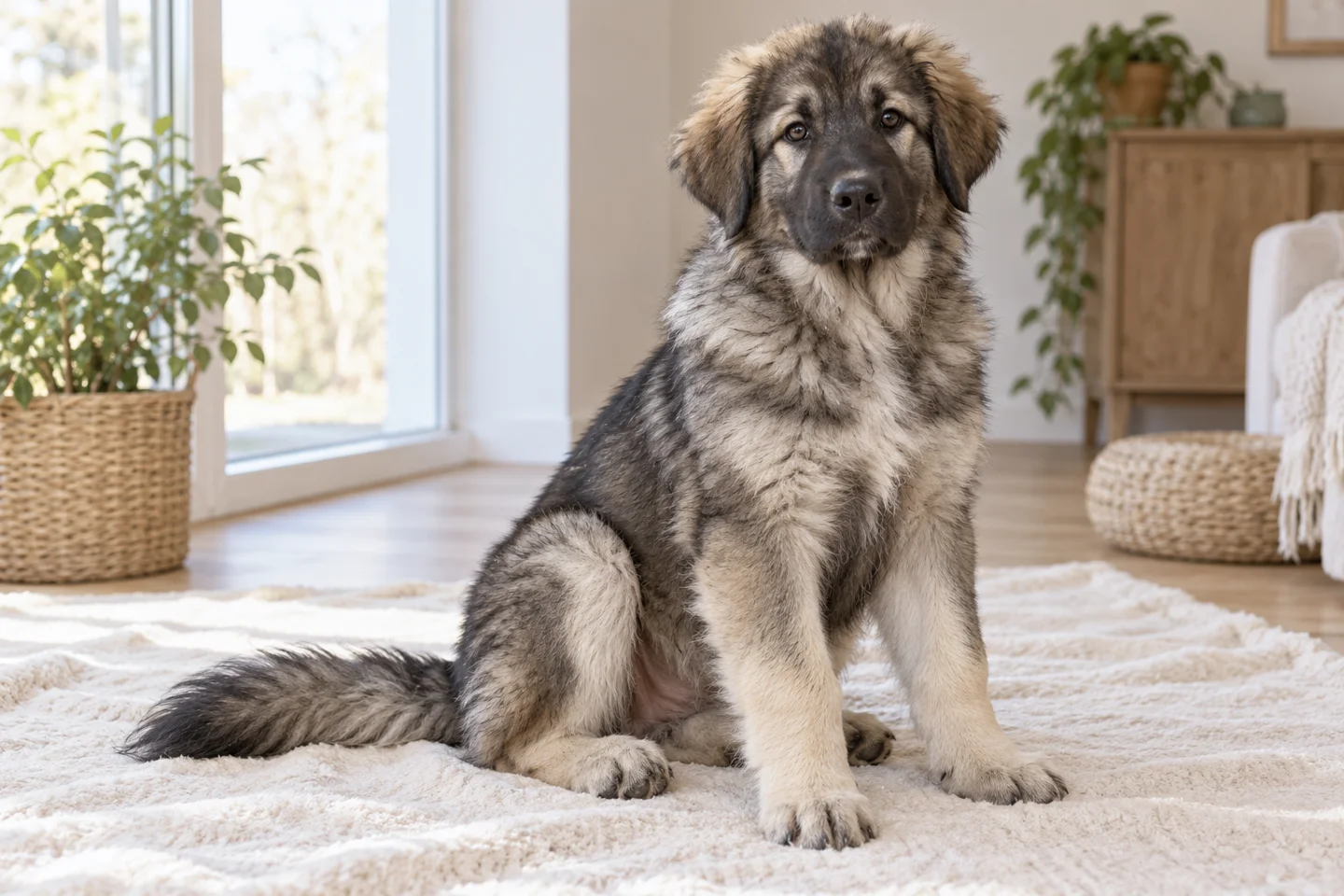
The FCI's ideal withers heights are 65–73 centimeters for males and 59–67 for females, with a stated two-centimeter tolerance. These are breed-standard references, not instructions to make a growing dog heavier. The rectangular body and wolf-grey coat should still allow a functional outline. The illustrations show natural hanging ears and a full bushy tail. They provide examples of appearance, not records of actual dogs or proof that an individual moves comfortably or has passed health assessments.
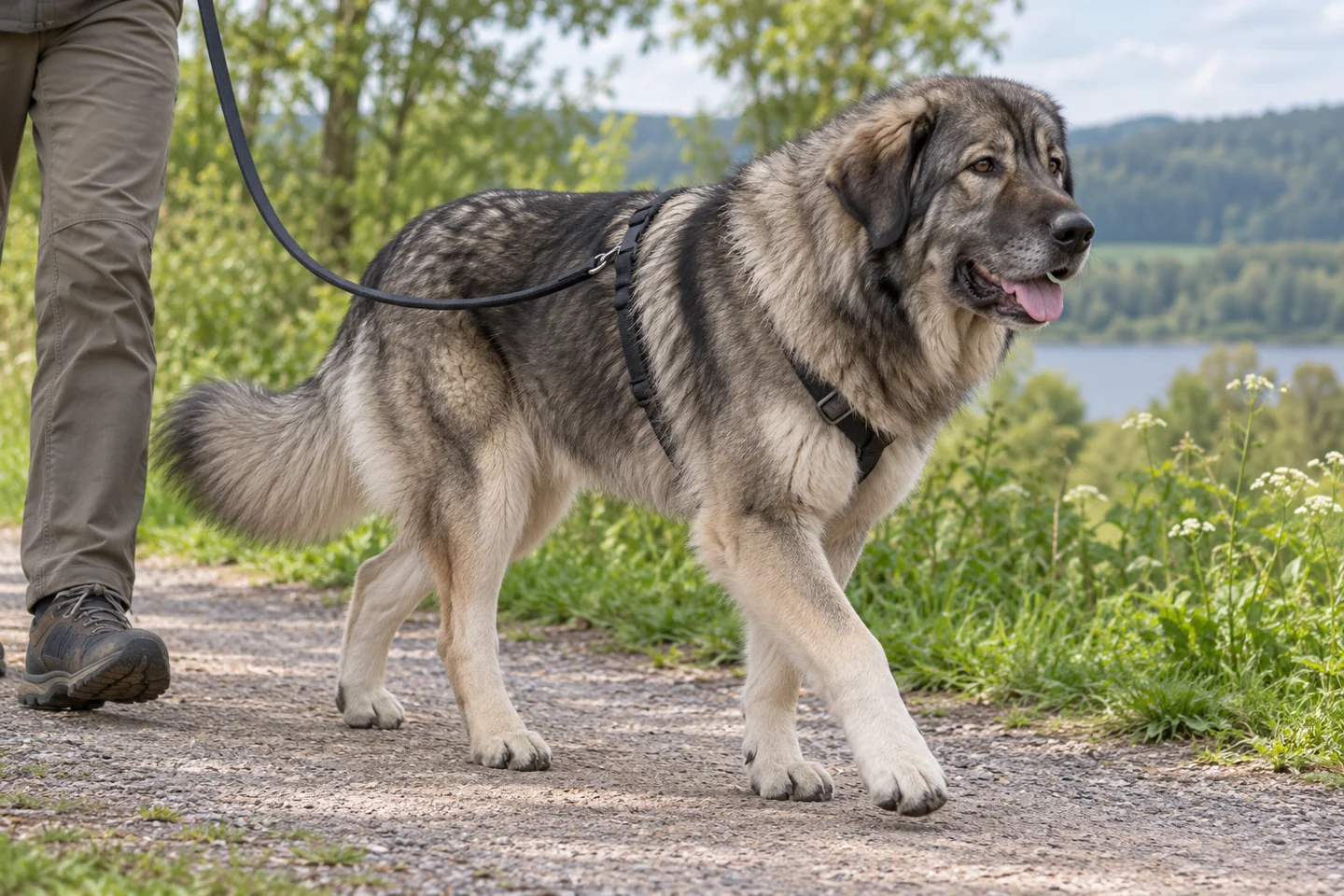
Measure the real dog before buying equipment. A vehicle compartment must allow it to enter, turn, and lie down without getting caught on fittings. A harness should avoid rubbing beneath the coat, and gates need clearance for a person handling a large animal safely. Observe rising after rest as well as enthusiastic movement outdoors. A youngster's willingness to run can conceal fatigue, while a mature dog may adapt its movements around discomfort. Ask the veterinary team about persistent changes rather than using size alone to explain them.
A boundary should reduce work for the dog
A fence facing a busy footpath can give a guardian repeated opportunities to rehearse rushing and calling. Consider a visual screen, a different resting area, or supervised garden access before the pattern becomes established. Inspect the entire enclosure after storms and building work. Check both the latch and the person responsible for using it. A warning sign does not replace a physical arrangement that keeps a passerby, delivery worker, or loose animal outside the dog's immediate reach.
Practice moving away from the boundary while the setting is quiet. Reward coming toward the handler and entering a comfortable separate area. Later practice can include manageable distractions, with the barrier still doing its job. Avoid arranging a confrontation to demonstrate that the dog protects the property. The useful outcome is predictable handling when something changes. If the dog cannot leave a gate or recover after activity outside, seek qualified assistance and change access rather than relying on repeated shouting from the house.
Visitors and essential services
Create a visitor routine before inviting a crowd. One adult can settle the dog behind a secure barrier while another admits the visitor, then everyone can decide whether further contact is appropriate. A person should not have to stand motionless in a doorway while an owner tries to catch the dog. Explain the plan beforehand. Ask visitors to follow it even if they believe all dogs like them or would prefer an immediate close greeting.
The same preparation matters for cleaners, relatives, contractors, and people providing emergency help. Teach another household adult where equipment is kept and how separation works. During necessary repairs, a double barrier or temporary alternative accommodation may be more realistic than constant verbal supervision. If the dog has threatened or bitten someone, disclose that information to professionals arranging care. A friendly response to one familiar visitor cannot establish safety with a different person entering under unfamiliar circumstances or touching an area that has become painful.
Children need routes and uninterrupted rest
A large guardian resting beside the only route to a child's bedroom creates a problem before anyone behaves badly. Give the dog a suitable bed away from essential walkways and provide children with places to play that do not require passing closely. Adults should supervise contact and intervene when the dog withdraws, stiffens, or repeatedly turns its head away. Prevent climbing, neck hugging, pulling the coat, and disturbing sleep. Familiarity within the family does not remove the need for those arrangements.
During birthdays or visits, separate early enough that the dog does not have to cope with running children while an adult is distracted. A child can participate in a simple reward-based lesson with guidance, but should not control the lead or retrieve a guarded possession. Teach children to call an adult when an object falls beside the dog. Review the layout as children become mobile and as the dog ages. Pain, fatigue, or a changed household can alter tolerance that previously seemed dependable.
Livestock and household animals
Livestock-guardian ancestry does not make a newly acquired dog ready to be released among sheep, poultry, or horses. Ask exactly what supervised experience occurred, with which animals, and at what age. A household considering real stock work needs experienced instruction and appropriate facilities. Introductions should protect both the dog and the animals while learning proceeds. Do not use a vulnerable animal as a test of inherited instinct, or treat chasing as harmless practice because the breed historically worked near flocks.
At home, consider space and resources when adding another dog. A quiet parallel outing offers different information from sharing a narrow kitchen around food. Provide separate resting and feeding areas and observe whether either dog blocks movement or prevents the other from relaxing. Cats need escape routes that remain usable when doors change position. Tolerance of one familiar cat cannot promise the same response outdoors. Where compatibility remains uncertain, maintain reliable separation and obtain advice rather than allowing repeated incidents to determine the outcome.
Aggression requires an immediate practical response
Describe a concerning incident in concrete terms. A rush toward an unfamiliar person, a growl during brushing, and a snap over a dropped chew may have different causes and need different plans. First prevent further contact and allow safe distance. Then record what happened, including the setting, the people or animals involved, and recovery afterward. Breed identity should not be used to excuse an incident as acceptable protection or to decide that assessment is unnecessary.
A veterinary examination is particularly important when behavior changes suddenly or follows touch, movement, or rest. Pain can be present even when appetite and enthusiasm continue. Qualified behavior support can help organize management and teaching while the cause is investigated. Avoid provoking the response again for a demonstration or punishing a warning until it disappears. A gradually conditioned basket muzzle may contribute to a professional plan, but it cannot make an unsafe visitor arrangement satisfactory or remove the dog's need for space and comfortable handling.
Training cooperation before physical strength is needed
Teach entering a designated room, approaching equipment, following a target, and standing on a stable surface while the dog is still easy to guide through a lesson. Reward small voluntary responses and keep the meaning of cues consistent across people. A mature guardian is a poor candidate for routine pushing or dragging through doorways. The training aim is a sequence both dog and handler understand, practiced before an urgent arrival or medical appointment creates pressure.
Use rewards the dog values in that setting and choose a difficulty at which attention remains available. If a familiar behavior fails outside, reduce distraction and distance rather than assuming deliberate disobedience. Work with an instructor who can explain the purpose of each exercise and adjust it for the individual. A guardian does not need intimidation to learn household cooperation. Physical confrontations can add risk while leaving the original task unclear. Short successful lessons also make it easier for a second caregiver to maintain the same routine.
Exercise that supports a large body
Plan regular movement around current age, fitness, terrain, and weather. A property patrol is not automatically equivalent to a comfortable walk or an opportunity to investigate new surroundings. Growing dogs need varied manageable activity and sufficient rest; discuss repetitive jumping or forced-distance exercise with the veterinarian. An adult returning after a quiet period needs conditioning before a long hill outing. Enthusiasm to continue should be weighed alongside gait, breathing, footing, and the recovery seen later in the day.
Choose routes with enough room to move away from unexpected contact. In warm conditions, change timing and duration, provide drinking water, and allow suitable shade and rest. Marked weakness, collapse, or serious breathing difficulty needs urgent veterinary advice. After rough ground, check paws and the skin beneath equipment. Quiet recovery days can include modest exploration and learning without trying to exhaust the dog inside the house. A sustainable routine should remain possible when the main walker is busy, injured, or temporarily unable to travel.
Grooming through the undercoat
A grey outer coat can look tidy while tangles or damp areas remain underneath. Work through small sections and check friction points behind ears, beneath a collar, and where the limbs meet the body. Ask a groomer familiar with dense coats to demonstrate tools and comfortable handling positions. Stop before a session becomes a prolonged struggle. Tight painful matting may require professional treatment rather than forceful brushing or scissors used close to skin that cannot be seen.
Inspect ears without assuming every dropped ear needs the same cleaning schedule. Odor, discharge, head shaking, or sensitivity deserves veterinary guidance. Keep teeth and nails on a separate gradual care plan so they are not attempted only after an exhausting coat session. A new objection to familiar touch should prompt investigation. Share handling concerns with the clinic or groomer in advance. Cooperative training can make future appointments easier, while necessary treatment should proceed through a safe professional arrangement when home examination is not currently possible.
Health information with honest limits
For this comparatively uncommon breed, a conformation standard cannot establish reliable disease prevalence or a universal international screening program. Ask the breeder which evaluations it uses and why, and request actual reports that identify the parents. Discuss important family diagnoses and whether older offspring are followed over time. A traditional working reputation is not medical evidence. Your veterinarian can help interpret unfamiliar orthopedic or specialist records and identify what remains unknown without treating every missing answer as a confirmed disorder.
An examination, imaging, and a DNA test provide different kinds of information. Selected genetic variants do not assess every possible inherited or acquired illness. Arrange a current examination after adoption and retain copies of results across clinics. New limping, altered drinking, persistent skin trouble, or unusual sensitivity needs assessment even when earlier reports were reassuring. A rescue without parental paperwork can still receive useful preventive and diagnostic care. Record the gaps accurately and plan from the dog's current findings rather than inventing a normal result to complete a form.
Feeding, growth, and later-life access
A large puppy needs a complete diet appropriate to growth and an allowance adjusted with veterinary guidance. Avoid adding calcium or feeding for maximum bulk because the youngster has large feet. Account for rewards given by every household member and assess body condition beneath the coat. Persistent digestive signs or an unexplained weight change needs investigation. Feed where children and other animals will not intrude, and practice comfortable exchanges outside mealtimes rather than using the bowl to test tolerance.
Plan for the older dog while access can still be changed easily. A nonslip route to a sleeping area, manageable vehicle loading, and a place to rest without climbing may become important. Investigate new difficulty rising instead of dismissing it as an inevitable feature of a large breed. Keep a transport plan for an adult that cannot walk to the car. The household should know whom to contact, what assistance is available, and where relevant records and prescribed medications are stored.
Mixes, costs, and a realistic placement
A Carpathian mix can differ in size, coat, activity, and response to unfamiliar people. Crossing a guardian with a more sociable breed does not produce a predictable halfway temperament or remove the need for parent health information. With uncertain ancestry, describe observed behavior instead of making promises from coloring. Ask how the dog has lived around visitors and other animals and what support remains available if the placement proves difficult. A clear return arrangement matters more than a confident advertising label.
Budget beyond food and fencing. Training help, capable holiday care, grooming assistance, veterinary treatment, and transport modifications can all become necessary. Confirm that an intended carer can demonstrate the actual gate and visitor routine. A large garden and strong affection are useful resources without being complete answers. Suitability depends on whether the household can preserve safe access, company, rest, and medical care over years of ordinary changes in work, health, and family responsibilities. It is better to identify an impractical arrangement before acquiring the dog.
dogsDating meetings that respect the individual
Describe the Carpathian's previous dog encounters and preferred distance on dogsDating, including any incidents or professional management plan. Keep exact home coordinates private and agree on a quiet public route rather than starting at the dog's gate. Each animal needs its own capable handler and room to leave. A first meeting can remain a short walk at a comfortable distance. Close play is unnecessary if both dogs are more relaxed moving separately through the same surroundings.
Avoid shared chews, prized toys, or crowded entrances during an initial outing. Watch whether both animals can disengage, pause, and return attention to their handlers. If one repeatedly blocks, pursues, stiffens, or tries to escape contact, change the arrangement or finish. A pleasant walk supplies information about that particular setting. It does not establish readiness to share a house, vehicle, or resources, and it does not certify breeding suitability. Continued contact should depend on honest descriptions and both owners' ability to maintain the agreed limits.
Sources and editorial notes
Sources checked October 21, 2026. Breed measurements describe reference ranges, not a diagnosis or an individual dog's ideal weight. Images are AI-generated breed illustrations and do not document a particular dog or health condition.
- AVSAB: Humane Dog Training Position Statement
- VCA Animal Hospitals: Food aggression in puppies
- VCA Animal Hospitals: Aggression toward unfamiliar dogs, diagnosis
- VCA Animal Hospitals: Heat stroke in dogs
- VCA Animal Hospitals: Common emergencies in dogs
- VCA Animal Hospitals: Grooming and coat care for your dog
- VCA Animal Hospitals: Ear infections in dogs
- VCA Animal Hospitals: Feeding guidelines for dogs
- Orthopedic Foundation for Animals: CHIC program and interpretation of numbers
- Fédération Cynologique Internationale: Carpathian Shepherd Dog breed standard
Keep getting to know dogs.
Read another guide or return to your dogsDating community.
Explore breed guidesBack to dogsDating