Cirneco dell’Etna
A fine-coated Sicilian hunting breed needing secure pursuit outlets, thoughtful weather protection, gradual social confidence, and honest interpretation of limited health data.
How these guides are researched and reviewed
- Origin
- Italy; Sicily
- FCI height
- Males 46–50 cm; females 44–48 cm, with tolerance
- Appearance
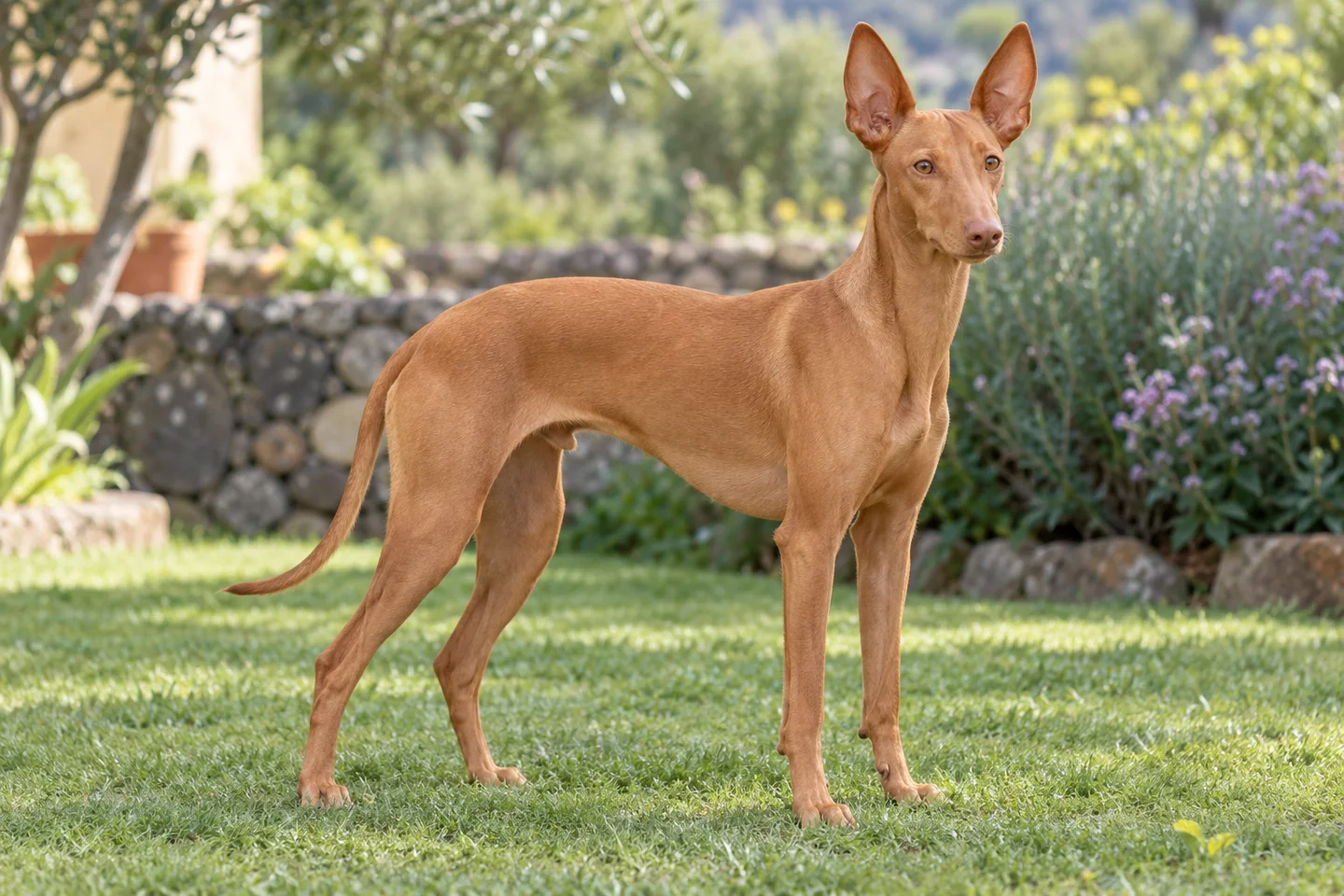
- Fine short tan coat, erect ears, athletic square outline
- Ownership focus
- Pursuit safety, boundaries, comfortable handling, and suitable activity
General information for owners. These articles have not been reviewed by a veterinarian. Medical decisions need your dog's history and an examination.
The rabbit beside the path is the planning question
A Cirneco dell’Etna can notice an animal and prepare to move before a person has understood what changed. Plan ownership around that possibility. Decide where physical safeguards remain necessary, which spaces genuinely permit safe free movement, and how every household member will manage doors. The breed's manageable size and fine outline do not reduce the consequences of pursuit beside traffic or livestock. A training goal should never require an animal to escape first so that the owner can discover how reliable recall really is.
Ask a breeder or rescue about the particular dog's responses to wildlife, cats, other dogs, and confinement. Request concrete examples rather than a general promise that the breed is affectionate. Meet adults and watch ordinary transitions from activity to rest. A dog that is comfortable sleeping beside a person may still need careful preparation for time alone or unfamiliar handling. Choose a placement with practical support, especially when there are few local owners who can help interpret the needs of this less familiar breed.
Sicily, the name, and documented identity
The FCI standard identifies Italy as the origin, with Sicily central to the breed's history and rabbit hunting part of its established function. The name refers to Etna, but it should not be used to invent an exact ancient pedigree for a modern puppy. Archaeological images and historical narratives require more caution than many advertisements give them. What matters immediately to a prospective owner is that the source can identify the parents, explain the dogs' lives, and provide the records actually available.
The Cirneco is separate from the Pharaoh Hound, Ibizan Hound, and other upright-eared Mediterranean hunting dogs. A tan coat and large ears alone do not establish pedigree. Ask which registry issued documentation and whether a rescue identification remains an estimate. Keep uncertainty in the written description instead of treating a visual resemblance as proven ancestry. Regardless of the final label, assess the actual dog's physical condition, pursuit behavior, social preferences, and care needs so its home can be planned without waiting for complete historical certainty.
Fine coat and a functional square outline
The breed has a slender athletic frame, large naturally erect ears, a relatively long head, and a fine short coat. Tan coloration is typical, with permitted variations described by the standard. The eyes and nose harmonize with the coat rather than requiring black pigment. The natural tail is long and slender. These details help distinguish a plausible illustration from a generic tan dog, while a real animal still needs assessment through movement, condition, and comfort rather than resemblance to an ideal pose.
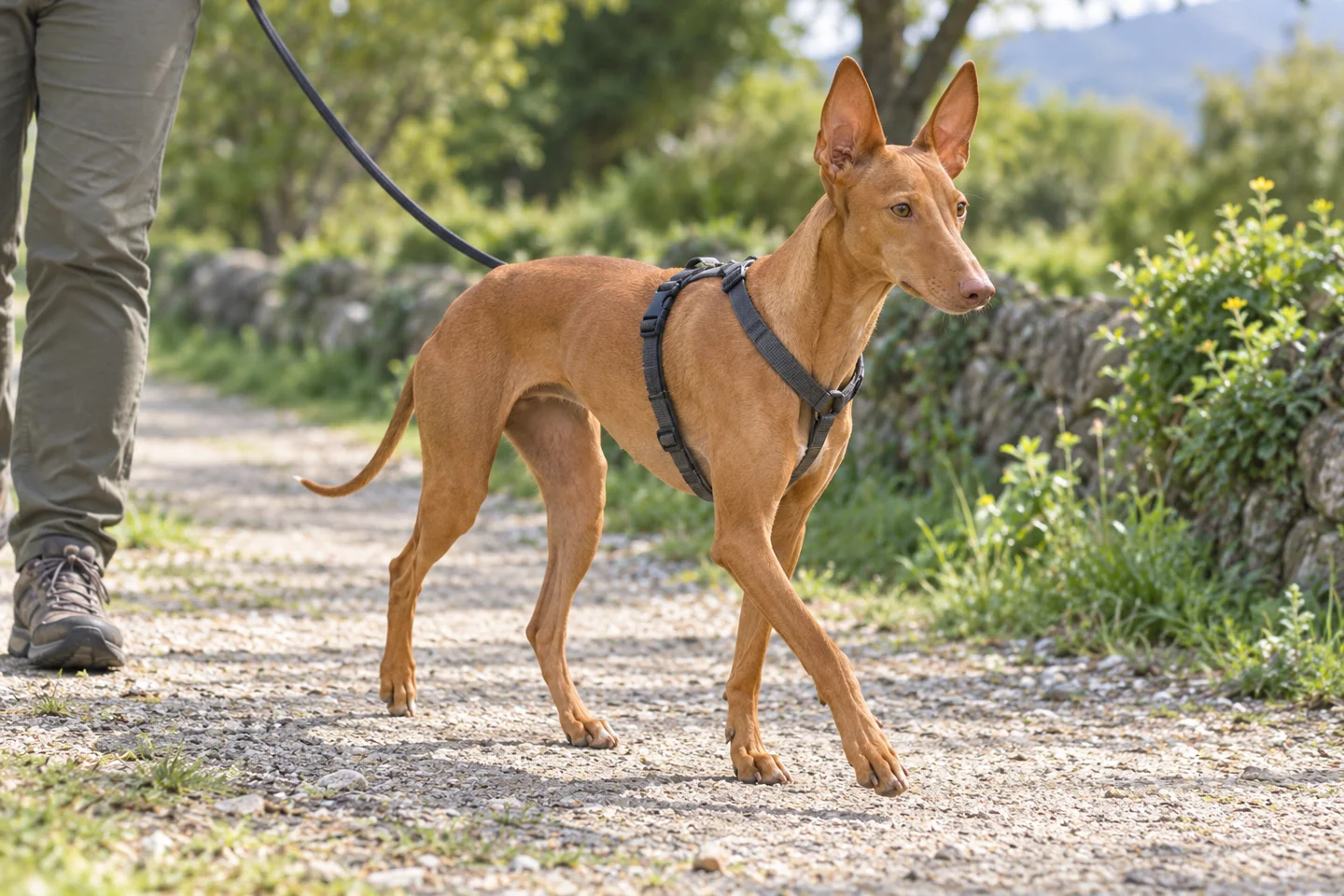
Learn hands-on condition checks with a veterinarian. A naturally lean outline should not become an explanation for unexplained weight loss, nor should an owner try to turn the dog into a heavier-bodied breed through excess feeding. Watch how it rises, turns, and recovers after activity. Equipment should fit the real chest and neck safely, including when the dog backs away suddenly. A knowledgeable fitter can help choose a secure arrangement that avoids rubbing a fine coat or limiting comfortable movement.
The standard lists male withers height at 46–50 cm and female height at 44–48 cm, with a 2 cm tolerance in either direction. Listed weights are 10–13 kg and 8–11 kg respectively. This is a light athletic dog, while individuals still vary. Assess its own condition and measure equipment rather than feeding toward an abstract breed number.
A secure field needs an inspection first
Before relying on an exercise enclosure, examine gates, ground-level gaps, damaged fencing, and objects close enough to provide a way over. Look at the surface too. Holes, loose wire, slippery corners, and narrow turning space can make a fenced area unsuitable for fast movement. Keep the first visit controlled while you learn the site. A rented field described as secure still deserves a personal check because maintenance and the needs of different dogs can vary.
Begin with ordinary movement before vigorous running and allow recovery afterward. Age, conditioning, medical history, and weather should guide the session. Do not arrange repeated fast turns simply because the dog seems keen to chase an object. If movement changes or the dog appears sore later, reduce demands and obtain advice. Identification and a tracker can help after an escape, while a maintained boundary and careful access routine are responsible for preventing it. The equipment does not make a dangerous release safe in advance.
Walking where pursuit remains possible
Teach returning toward the handler and turning away from an easy distraction where the dog can succeed. Use rewards worth approaching and avoid making every recall predict the end of all interesting activity. Retain a lead wherever a chase could reach wildlife, a road, or another animal. A good response at home is useful learning, but it cannot certify every future situation. The owner should choose safeguards according to the consequence of failure as well as the progress made in training.
Long lines need suitable space and skilled management. Prevent loops around legs and avoid allowing a fast run to end in an abrupt stop at full length. A shorter controlled route may be safer than extra freedom beside hazards. Give the dog opportunities to investigate appropriate ground without pulling toward every smell. Reward check-ins and move away early when attention becomes fixed. Rehearsing a difficult encounter repeatedly at the same distance can create frustration while adding little useful understanding for either participant.
Weather and comfortable exercise
A fine coat makes weather planning worth discussing for the individual. In cold or wet conditions, consider protection that fits without rubbing and lets the dog move naturally. Check for shivering, reluctance, or other signs that the outing is no longer comfortable. Do not assume a Sicilian history makes every temperature harmless or that an energetic dog must continue until a planned distance is complete. Indoor comfort, dry bedding, and suitable recovery matter alongside outdoor activity.
During warmth, choose cooler periods, provide water and shade, and monitor recovery. Severe distress, collapse, or abnormal breathing calls for urgent veterinary contact. Build fitness steadily through regular appropriate activity rather than demanding an exceptional weekend effort after inactivity. Quiet searching and short lessons can help when outdoor conditions limit longer walks. Puppies need developmentally suitable exploration and rest, while older dogs may benefit from shorter routes with more opportunity to stop. The right routine follows present condition rather than a single breed-wide exercise quota.

Rest at home is part of the daily arrangement
Arrange a comfortable place where the Cirneco can rest without repeatedly being touched or moved. A dog choosing to curl up near someone is not automatically inviting handling by every person who passes. Reward calm behavior and avoid making constant entertainment the only route to quiet. Notice whether the dog can settle when people move between rooms or when a brief separation occurs. Those observations are more informative than assuming a hound's ability to sleep means all companionship needs are being met.
Introduce time alone in small manageable steps and observe the actual response. A recording may show pacing or calling that owners miss on returning. If distress develops, arrange support and professional advice instead of repeatedly extending the difficult absence. A second dog adds another set of needs and may not address concern about people leaving. For an adult new to the home, begin with predictable care and limited demands while learning its pattern of rest, recovery, and response to unfamiliar household sounds.
Children and respecting a light-bodied dog
Children need to understand that the Cirneco is neither a toy to carry nor a running partner available on demand. Adults should control lifting, prevent squeezing and neck-hugging, and provide a retreat children do not enter. A fine-coated dog can be vulnerable to scratches and rough contact even when its outdoor movement looks vigorous. Arrange furniture and routes so it can leave rather than being followed behind a chair. Close supervision requires watching the actual interaction and intervening before pressure escalates.
Keep meals, chews, and sleep out of children's play. A child should call an adult if the dog takes an object, rather than reach near the mouth. Calm shared activities can include preparing a scent search while an adult manages the dog elsewhere. Separate before fast garden games if pursuit or collision is a concern. A dog's comfortable history with one child does not establish its response to a group of unfamiliar visitors or painful touch, so review the plan whenever the setting or the dog's health changes.
Cats, rabbits, and other vulnerable animals
Rabbit-hunting background makes small-animal access a serious placement discussion. Secure separation should be established before a dog enters a home containing rabbits, rodents, or poultry. Do not test the dog's intentions by opening an enclosure or allowing close contact under a casual promise that it seems gentle. A muzzle alone does not protect an animal from fear, pursuit, or physical impact. Consider whether doors and barriers can remain dependable during ordinary household activity, not only while everyone is concentrating on the introduction.
Cats require protected routes, high resting areas, and controlled access while behavior is assessed. Ask what the individual has actually done when a cat moves quickly. A history of quiet proximity is only one piece of information. If fixation, stalking, or chasing appears, stop access and obtain advice. Affection toward humans cannot answer a separate question about predatory behavior. Some homes may be unsuitable if reliable separation is unrealistic, and that limitation is better recognized before placement than after an avoidable injury.
Dog company with compatible speed and contact
A Cirneco may enjoy a walking companion without enjoying close wrestling. Begin with enough room for two dogs to move and turn away, and observe whether both choose contact. Interrupt persistent following when one tries to pause. A substantial size difference can make a fast collision dangerous even when no aggression is intended. Pick partners according to observed behavior rather than assuming that every dog at a park will modify its style to suit a slender newcomer.
At home, separate food and valued chews while routines develop. Protect sleep and give an established dog space away from a new arrival. Ask a foster carer for descriptions of encounters, including circumstances requiring more distance. A broad statement that the dog loves company leaves questions about resources, speed, and recovery unanswered. Introductions should not require the quieter dog to tolerate repeated pressure because the more active animal is enjoying itself. Comfortable coexistence is a useful result even when play remains limited.
Aggression and a refusal that needs attention
A Cirneco can growl or snap when cornered, handled painfully, frightened, or approached around a valued object. End the pressure and arrange distance rather than repeating the approach to establish control. A new objection to harnessing or touch deserves veterinary assessment. Keep children away from an unresolved resource or care conflict. If threatening behavior recurs, seek a qualified behavior professional and use barriers or other appropriate management while the cause and a workable plan are considered.
AVSAB supports reward-based methods. Physical confrontation can increase fear and may suppress warnings without resolving the reason for them. Describe incidents accurately, including any bite or injury, to everyone who needs the information for safe care. Labels such as stubborn or independent do not explain what happened. A professional benefits from knowing the location, approach, object, body response, and recovery. Avoid staging another encounter to see whether the dog will react again; prevention and gradual teaching can proceed without deliberately recreating the risk.
Training confidence and useful cooperation
Start with behaviors that make care practical: approaching a harness, entering a vehicle, moving to a mat, and standing briefly on a stable surface. Reward voluntary steps and build duration gradually. A dog that remains willing can learn more clearly than one held in position while worried. Choose rewards according to the individual and setting. If the dog cannot respond beside an exciting trail, simplify the task and increase distance rather than repeating a cue until it becomes background noise.
Teach body handling in small pieces, including feet, mouth, and gentle ear inspection. Coordinate with veterinary professionals when a painful problem requires treatment before training is complete. Household adults should use consistent cues and access routines so the dog can predict what is expected. An instructor who understands humane learning can help adapt lessons without claiming that every hound requires harsher equipment. The breed's motivation is a reason to plan effective rewards and safeguards carefully, not a reason to abandon patient teaching.
Grooming a fine coat and inspecting feet
Use gentle tools appropriate to the short coat and check skin under equipment. After outdoor activity, inspect paws, nails, and areas repeatedly licked. Fine hair makes some debris visible but does not prevent punctures, irritation, or other injury. Remove superficial material carefully and obtain veterinary advice for pain or a wound that needs more than simple cleaning. A dog resisting foot handling may be protecting an uncomfortable area. Avoid treating every refusal as a training issue before examining that possibility.
Nails, teeth, and ears need care even when the body coat is easy to maintain. Build brief cooperative lessons and ask professionals to demonstrate suitable methods. Ear pain, discharge, or persistent scratching needs assessment rather than probing or leftover medication. Introduce toothbrushing with dog-appropriate products and discuss oral findings at routine visits. Tell a groomer or clinician about sensitive areas beforehand. A practical appointment plan is safer than expecting an unfamiliar person to discover handling concerns after the dog is already frightened or sore.
Health evidence without a false guarantee
The AKC's current hound-group page lists no recommended health tests for the Cirneco from the national breed club. This should not be translated into a claim that inherited disease is absent or that screening is unnecessary for every family. Ask the club and veterinarian about current priorities, documented family illness, and any evaluations the source has chosen. The FCI appearance standard is not a prevalence study. Avoid invented percentages or a universal test checklist that the available evidence does not support.
For an adult with incomplete records, begin with a current examination and a clear account of known history. Discuss significant changes in mobility, vision, appetite, or exercise tolerance as they arise. A cheerful active dog can still need treatment, and a general DNA panel cannot certify freedom from all illness. Keep reports so another clinic can understand what was evaluated. Reliable ownership is possible with uncertainty, provided the gap remains explicit and the care plan follows the individual rather than a promise of natural hardiness.
Feeding, mixes, costs, and dogsDating
Feed a complete diet for life stage and health, monitoring body condition rather than trying to remove the breed's naturally lean outline. Include training rewards in portions and investigate persistent appetite or digestive changes. Cirneco mixes can vary in pursuit, coat, size, and social behavior; a crossbreed name does not standardize outcomes or remove medical risks. Budget for preventive care, safe equipment, secure exercise, competent holiday cover, and unexpected treatment. A carer must understand the same access precautions as the owner.
On dogsDating, describe actual contact preferences, lead requirements, and concerns around smaller animals. Keep exact home coordinates private. Choose a quiet public route with room to separate and begin with a short parallel walk. Leave chase toys out and do not require off-lead running to prove compatibility. Watch whether both dogs can pause and disengage, ending when pressure or fatigue rises. A calm walking friendship can be enough, with later plans based on continuing comfortable responses rather than an expectation of immediate play.
Sources and editorial notes
Sources checked October 21, 2026. Breed measurements describe reference ranges, not a diagnosis or an individual dog's ideal weight. Images are AI-generated breed illustrations and do not document a particular dog or health condition.
- AVSAB: Humane Dog Training Position Statement
- VCA: Food Aggression in Puppies
- VCA: Grooming and Coat Care for Your Dog
- VCA: Ear Infections in Dogs
- VCA: Feeding Guidelines for Dogs
- Orthopedic Foundation for Animals: Canine Health Assessments
- VCA: Heat Stroke in Dogs
- American Kennel Club: Hound Group Health Testing Requirements
- FCI: Cirneco dell’Etna Breed Standard
Keep getting to know dogs.
Read another guide or return to your dogsDating community.
Explore breed guidesBack to dogsDating