Cocker Spaniel
The American Cocker Spaniel is a compact sporting companion whose silky coat, long ears, eye comfort, and cooperative care need a realistic daily plan.
How these guides are researched and reviewed

- Catalog identity
- American Cocker Spaniel; separate from English Cocker
- FCI ideal adult height
- Males 15 in; females 14 in, with stated variation
- Origin
- United States
- Care focus
- Coat maintenance, ears, eyes, weight, and kind handling
General information for owners. These articles have not been reviewed by a veterinarian. Medical decisions need your dog's history and an examination.
Which Cocker does this guide mean?
This catalog's Cocker Spaniel entry means the American Cocker Spaniel. The English Cocker Spaniel has a separate guide. Naming differs between countries, so make the distinction explicit when speaking to a breeder, rescue, groomer, or insurer. A general advertisement for a Cocker may leave it unclear which breed or mix is being offered. The American Cocker has its own standard and a compact sporting outline, with a different head and presentation from the English breed.
Choose it with a realistic plan for coat maintenance, ear and eye observation, company, and ordinary activity. An appealing buff puppy with long ears does not answer how the adult will accept brushing, spend a workday, or share space with children. Meet mature dogs and ask about unremarkable routines as well as enjoyable moments. A responsible source should explain health records and difficult care tasks plainly, including the support available after placement. An adult foster history can help someone needing more information about established behavior.
American development and a sporting purpose
The FCI standard identifies the United States as the origin and describes both flushing and companionship as functions. The breed's development is distinct from treating every Cocker as one interchangeable type. Avoid turning a broad spaniel history into a precise pedigree for an unrecorded dog. Ask which organization issued registration and whether the parents can be identified. In rescue, a visual estimate may remain uncertain while the dog's actual care needs are assessed directly.
Sporting identity matters even when a dog's usual life is companionship. Searching, carrying, and investigating can provide useful occupation, while comfortable movement and training still need a place in the week. A carefully groomed appearance does not mean the animal is designed only for indoor display. Equally, a hunting background does not automatically provide safe behavior around poultry, reliable recall, or a finished retrieve. Those are separate tasks requiring appropriate teaching and management for the individual in its current environment.
Rounded head, silky hair, and moderate proportions
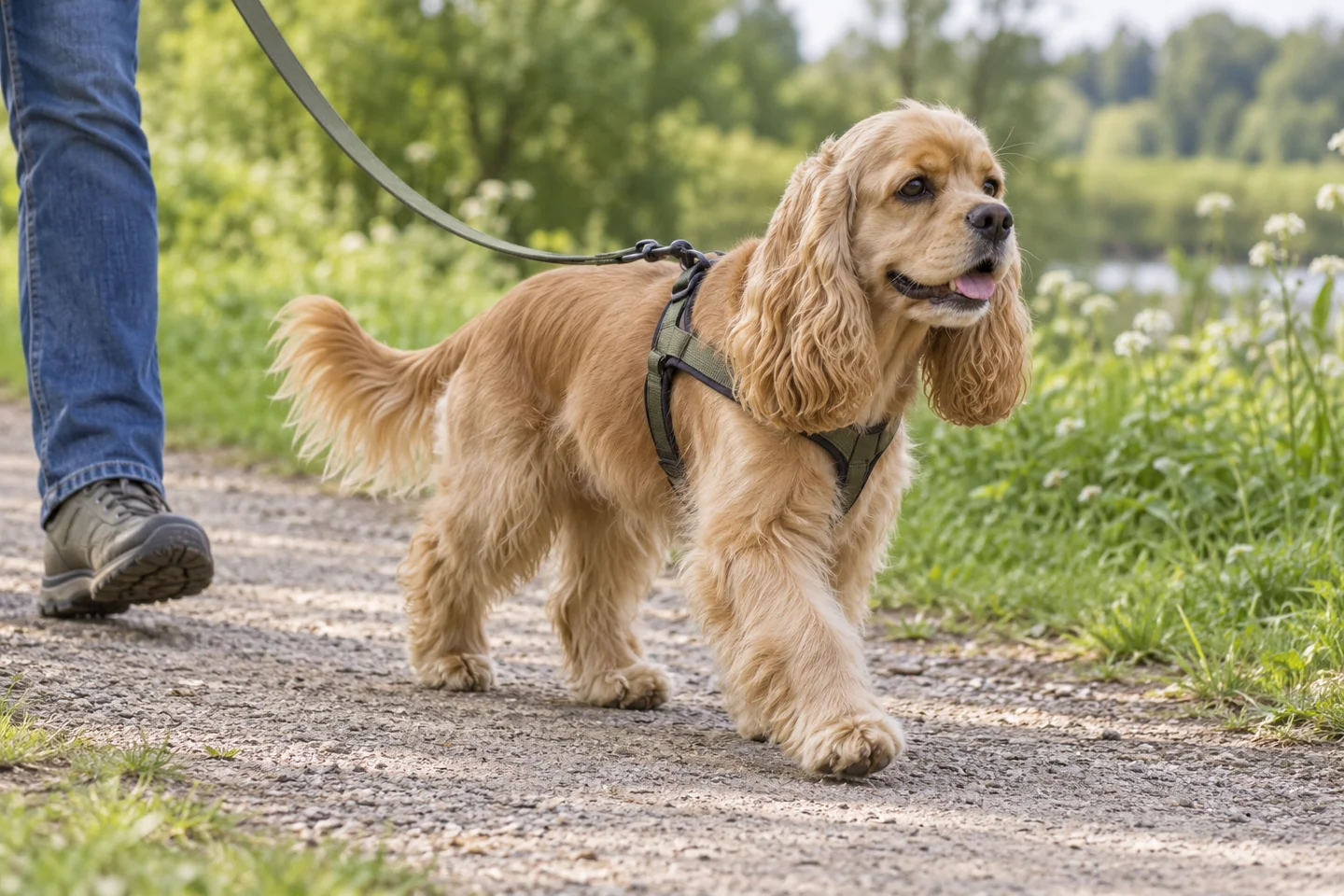
The American Cocker is compact, with a rounded skull, distinct stop, relatively short broad muzzle, and long naturally hanging ears. The coat is silky with feathering. Solid black, other solid colors, and parti-color groupings are described in the standard; these images choose buff. They also show an intact natural tail. Cosmetic shortening is not needed for a companion to walk, learn, or live comfortably. A practical moderate coat can show the dog's body without the demands of an elaborate exhibition presentation.
Look beyond color and hair volume. Eyes should be comfortable, movement easy, and body condition appropriate beneath the coat. Ask a veterinarian to demonstrate hands-on checks so the outline does not hide weight gain or loss. A particularly short-looking face or unusually small body should not become the main selection goal. Watch an actual dog rise, turn, and explore. One lively game does not explain hesitation during harnessing or a persistent objection when someone touches the head.
The FCI standard gives ideal adult heights of 15 inches for males and 14 inches for females, with a half-inch variation above or below the ideal. That is a conformation description rather than a guarantee about a puppy. Measure the actual chest and body when choosing equipment, and manage weight according to condition rather than trying to change its frame.
A grooming plan before the first mat
Decide who will brush, comb, bathe, dry, and trim the coat before bringing the dog home. Feathering and hair behind the ears can tangle, and the surface may look tidy while deeper areas pull against skin. Ask a groomer to demonstrate suitable tools and how to check close to the body. A practical companion trim may reduce work, but it does not eliminate inspection or regular maintenance. Choose a schedule according to the actual coat and your ability to keep it comfortable between appointments.
Introduce the grooming surface, brush, and clipper sound gradually with rewards. Split work into manageable sessions rather than waiting until a tangled coat requires prolonged restraint. Tight mats near skin need professional help; scissors used blindly can injure. Tell a groomer about previous fear or painful areas before arrival. If the dog suddenly objects to a familiar procedure, investigate discomfort and adjust the plan. Preserving a long decorative outline is a poor reason to make necessary care consistently frightening or painful.
Long ears and a diagnosis when they hurt
Check ears gently as part of the routine, especially when the dog scratches, shakes its head, or develops a smell. Naturally hanging ears need observation without aggressive probing. Redness, discharge, pain, or repeated irritation calls for veterinary advice. The latest episode may have a different cause from the last one, so do not reuse a prescription without direction. Pushing a cotton swab into the canal or pouring in a product chosen from an online recommendation can complicate the problem.
Prepare the dog for brief touches around the ear when it is comfortable, not only during treatment. Reward small cooperative steps and let the veterinary team know if examination is difficult. Necessary care should not wait until the owner can manage every detail alone. After wet activity, dry the outside gently and ask whether this individual needs a particular cleaning plan. A dog resisting head contact may be protecting a painful area; correcting the refusal without considering that possibility can make both care and behavior worse.
Eye comfort and changes worth reporting
Ask about eye examinations and family history before placement. An ophthalmologist evaluation is among the current AKC recommendations for this breed. For the individual dog, squinting, redness, cloudiness, a sudden change in appearance, or apparent pain needs prompt veterinary attention. Do not assume a familiar soft expression explains an inflamed eye. Leftover medication is not a safe substitute for diagnosis, and a photograph cannot establish whether a problem can wait for a routine visit.
Keep specialist reports and treatment summaries available if the dog changes clinics or carers. A parent screening result cannot explain away a current symptom in an offspring. Introduce a cooperative chin rest or brief face inspection in comfortable circumstances, while avoiding repeated forced attempts to examine a sore eye at home. The clinic can plan safe handling if informed beforehand. Notice changes in navigation, confidence on stairs, or reactions to approaches from one side, and report observations without deliberately provoking a startling encounter to test vision.

Food, weight, and carrying unsuitable objects
Use a complete diet suited to age and health, measuring portions and including training rewards. Long hair can conceal weight changes, so assess condition by touch and track meaningful trends. Ask about persistent appetite, thirst, or digestive changes before repeatedly switching foods. A spaniel's interest in food does not establish that more is needed, and a dog's willingness to eat does not rule out oral or other illness. Feeding separately also makes it easier to monitor intake and protect quiet meals.
Secure laundry, medicines, food wrappers, and children's toys while teaching a safe exchange. A dog that enjoys carrying can find dangerous substitutes when suitable toys are unavailable. Practice returning an ordinary object for a worthwhile reward instead of chasing and forcibly opening the mouth each time. If something dangerous is swallowed, contact a veterinarian promptly. Training is useful prevention, while a suspected toxin or obstruction needs clinical advice rather than waiting to see whether the dog returns the item voluntarily.
Children and a spaniel's available choices
A child may be drawn to long ears and soft hair, which makes adult rules important. Prevent pulling, neck-hugging, climbing, and face-to-face posing. Give the Cocker a retreat away from the busiest routes and let it leave an interaction without being followed. Supervision means watching hands, posture, and the dog's attempts to withdraw, with an adult ready to interrupt. A child should not be expected to judge subtle signs of fatigue, pain, or concern about a nearby object.
Keep meals, chews, and sleeping places separate from play. If the dog has a child's possession, adults manage the exchange. Calm shared searches or simple rewarded cues can offer contact without wrestling or pursuit. Separate before energetic visiting games if close attention is impractical. A friendly history with one child does not establish tolerance of unfamiliar children or several people reaching at once. Revisit the arrangement when the dog becomes unwell, develops pain, or shows a new reluctance to be handled.
Aggression needs assessment rather than a nickname
Do not dismiss growling, snapping, guarding, or sudden irritability as a standard Cocker personality trait. Describe what happened and reduce pressure immediately. A dog that objects to ear touch, brushing, or lifting may need medical assessment, while recurring threats call for qualified behavioral support. Keep children and visitors out of unresolved situations and use barriers or separate resources. Repeating the encounter to prove authority can increase risk without clarifying the cause or teaching a useful alternative.
AVSAB recommends reward-based methods. Punishing a warning can leave fear or pain unresolved while making the signal less visible. Avoid diagnosing a dramatic breed-specific aggression syndrome from a social-media description; a veterinarian needs the actual history and findings. Record context, behavior, recovery, and any injury accurately. That information helps professionals and future carers more than labels such as stubborn, dominant, or normally sweet. A practical plan should protect people while addressing the specific medical, emotional, and environmental factors involved.
Training a sporting companion in small steps
Teach approaching a harness, moving onto a mat, returning from a manageable distraction, and releasing a suitable object. Rewards can include food, a brief game, or access to a safe sniff according to the individual. Keep lessons clear and short, particularly for a puppy. A dog unable to respond beside birds or another dog may need greater distance and an easier version of the task. Repeating the cue louder does not supply missing learning or remove an overwhelming distraction.
Body-care skills deserve the same attention as walking. Reward a brief stand, a paw touch, and comfortable entry into a carrier or vehicle. Build duration gradually and coordinate with professionals when treatment is needed before training is complete. Agree on household cues and access rules. One person inviting excited jumping while another physically corrects it creates an avoidable conflict. Reward-based coaching can help owners improve timing and setup without treating the dog's sporting motivation as a reason for harsh equipment or forced positions.
Exercise with searching and recovery
Provide regular movement rather than relying on occasional energetic weekends. Comfortable walks with investigation, easy searches, and suitable retrieving can offer varied occupation. Adjust effort to age, conditioning, health, surface, and weather. Puppies need appropriate exploration and rest, while an older dog may enjoy shorter routes with more pauses. Watch movement after sleep as well as during a game. Persistent limping, stiffness, or a decline in tolerance needs assessment even when the dog remains enthusiastic about an exciting activity.
In warm weather, choose cooler periods, water, shade, and an easy way home. Severe distress, collapse, or abnormal breathing requires urgent advice. Quiet days can include gentle training and a manageable search without frantic indoor chasing intended to compensate for every missed outing. A garden supports activity but does not tell you whether meaningful movement occurs. Teach an understandable end to games and allow undisturbed sleep. A sustainable routine should work through weather changes, owner commitments, and temporary limits as well as on the most enjoyable outdoor day.
Dogs, cats, and the meaning of friendly
Ask what the individual actually enjoys around other dogs. Walking together, wrestling, sharing a room, and approaching food are different experiences. Start introductions with room to move and pause, and stop persistent crowding when one dog tries to disengage. A small sporting dog can be injured by a larger companion's collision even without aggression. At home, provide separate meals, chews, and rest areas while routines become clear. A calm walking friendship may be more suitable than repeated physical play.
Cats need protected routes and gradual controlled access, with prevention of chasing. A dog accustomed to one household cat has not established safety with every unfamiliar animal. Birds, rodents, and similar pets need secure protection rather than an informal test based on the dog's affectionate approach to people. Ask carers for concrete observations and management details. A description such as good with animals is too broad to resolve differences in species, movement, size, resources, and the dog's level of excitement in a new environment.
Health screening and identifiable reports
The AKC's current sporting-group page lists hip and ophthalmologist evaluations for Cocker Spaniels. Obtain the actual parent reports, check identifying details, and ask what any abnormal findings mean. Discuss significant diagnoses in relatives and whether owners' later reports are collected. A routine puppy examination and a broad genetic panel do not demonstrate that these particular parental evaluations occurred. Specific documentation gives your veterinarian something useful to review instead of a general assurance that the line has always been healthy.
Screening also cannot guarantee that every offspring remains free of disease. A current limp, painful eye, recurring ear problem, or unexplained loss of condition needs attention regardless of previous records. For a rescue with missing history, document the uncertainty and build preventive care from present findings. Keep a medication list and report changes accurately when treatment is underway. A cheerful greeting or attractive coat is not evidence that a symptom is harmless, and it should not delay an examination when ordinary activity or comfort has changed.
Mixes, long-term costs, and dogsDating
A Cockapoo or another Cocker mix is a crossbreed with variable coat, size, activity, and medical needs. A combined name cannot promise allergy compatibility, easy grooming, or freedom from parental conditions. Ask what both parents were evaluated for and assess the actual dog. Budget for coat maintenance, dental and preventive care, training, reliable company, and unexpected treatment. Choose holiday care able to follow grooming and ear instructions, with clear contacts if a medical problem appears while the usual owner is away.
Use dogsDating to describe the Cocker's real walking pace, play preferences, lead needs, and any handling or resource concerns. Keep exact home coordinates private. Meet on a quiet public route with two attentive handlers and begin with a short parallel walk. Leave valued toys out initially and allow either dog to disengage. A pleasant walk can be the entire introduction. Future meetings should follow both individuals' comfort, while close resource access, shared housing, and vigorous play remain separate questions requiring their own careful assessment.
Travel with a coat-care plan
Before a longer trip, try the transport setup on a short journey and check that straps do not tangle ear hair or rub feathering. Secure the dog appropriately and connect the lead before opening the vehicle at a stop. Pack the tools needed for a wet or muddy day rather than assuming grooming can wait until returning home. Confirm that accommodation has a suitable place to dry the dog and that a carer understands any prescribed treatment. A holiday should preserve comfortable skin, ears, sleep, and safe access as well as offer new walking routes.
Sources and editorial notes
Sources checked October 21, 2026. Breed measurements describe reference ranges, not a diagnosis or an individual dog's ideal weight. Images are AI-generated breed illustrations and do not document a particular dog or health condition.
- AVSAB: Humane Dog Training Position Statement
- VCA: Food Aggression in Puppies
- VCA: Grooming and Coat Care for Your Dog
- VCA: Ear Infections in Dogs
- VCA: Feeding Guidelines for Dogs
- Orthopedic Foundation for Animals: Canine Health Assessments
- VCA: Common Emergencies in Dogs
- VCA: Heat Stroke in Dogs
- VCA: Hypoallergenic Dog Breeds, Is There Such a Thing?
- American Kennel Club: Sporting Group Health Testing Requirements
- FCI: Cocker Spaniel Breed Standard
Keep getting to know dogs.
Read another guide or return to your dogsDating community.
Explore breed guidesBack to dogsDating