Czechoslovakian Vlcak
An established Czechoslovakian dog breed with a wolf-like outline, requiring experienced preparation, secure access, gradual environmental learning, and documented health screening.
How these guides are researched and reviewed
- Identity
- Established dog breed; also named Vlciak or Wolfdog by registries
- FCI minimum height
- Males 65 cm; females 60 cm
- Origin
- Former Czechoslovakia
- Ownership focus
- Containment, confidence, cooperative handling, and a sustainable routine
General information for owners. These articles have not been reviewed by a veterinarian. Medical decisions need your dog's history and an examination.
The wolf-like outline should not make the decision
A Czechoslovakian Vlcak needs a home chosen for practical fit rather than the appeal of living beside a wolf-like silhouette. Before selecting one, arrange secure boundaries, capable backup care, suitable activity, and patient work on ordinary handling. Ask how the adult will rest during a working afternoon and travel to a clinic if unwell. A photograph cannot establish confidence, tolerance of unfamiliar people, or comfort when separated from an owner. Those questions deserve direct discussion before a puppy is reserved.
Meet mature dogs and speak to owners about difficult periods as well as enjoyable ones. Ask what happened during adolescence, how visitors are managed, and what situations remain unsuitable. An experienced source should describe limitations without turning them into an exotic selling point. An adult with a detailed assessment may offer useful information, while a puppy leaves more uncertainty. Ensure professional support is accessible locally. A household should not depend on online admiration to solve a problem that requires hands-on veterinary or behavior assistance.
An established breed with historical wolf ancestry
The breed developed in former Czechoslovakia through a controlled program involving German Shepherd Dogs and Carpathian wolves. The FCI recognizes it as an established dog breed with a standard. That documented history must be distinguished from a casual modern wolf cross or an animal sold with an unsupported percentage claim. A resemblance does not establish identity. Ask for verifiable registration and parent records rather than a story based on appearance or an implication that being closer to a wild animal makes a better companion.
Names vary across languages and organizations. This catalog retains Czechoslovakian Vlcak, while the American parent club and AKC use Vlciak; Czechoslovakian Wolfdog is another familiar rendering. Confirm which registered breed a document describes. Do not infer a dog's legal or housing status solely from a marketing label or this article. Check applicable requirements before placement, travel, or changing accommodation. Practical ownership needs predictable access to veterinary care, carers, transport, and housing, rather than discovering restrictions after the dog is already part of the household.
A functional outline with actual adult dimensions
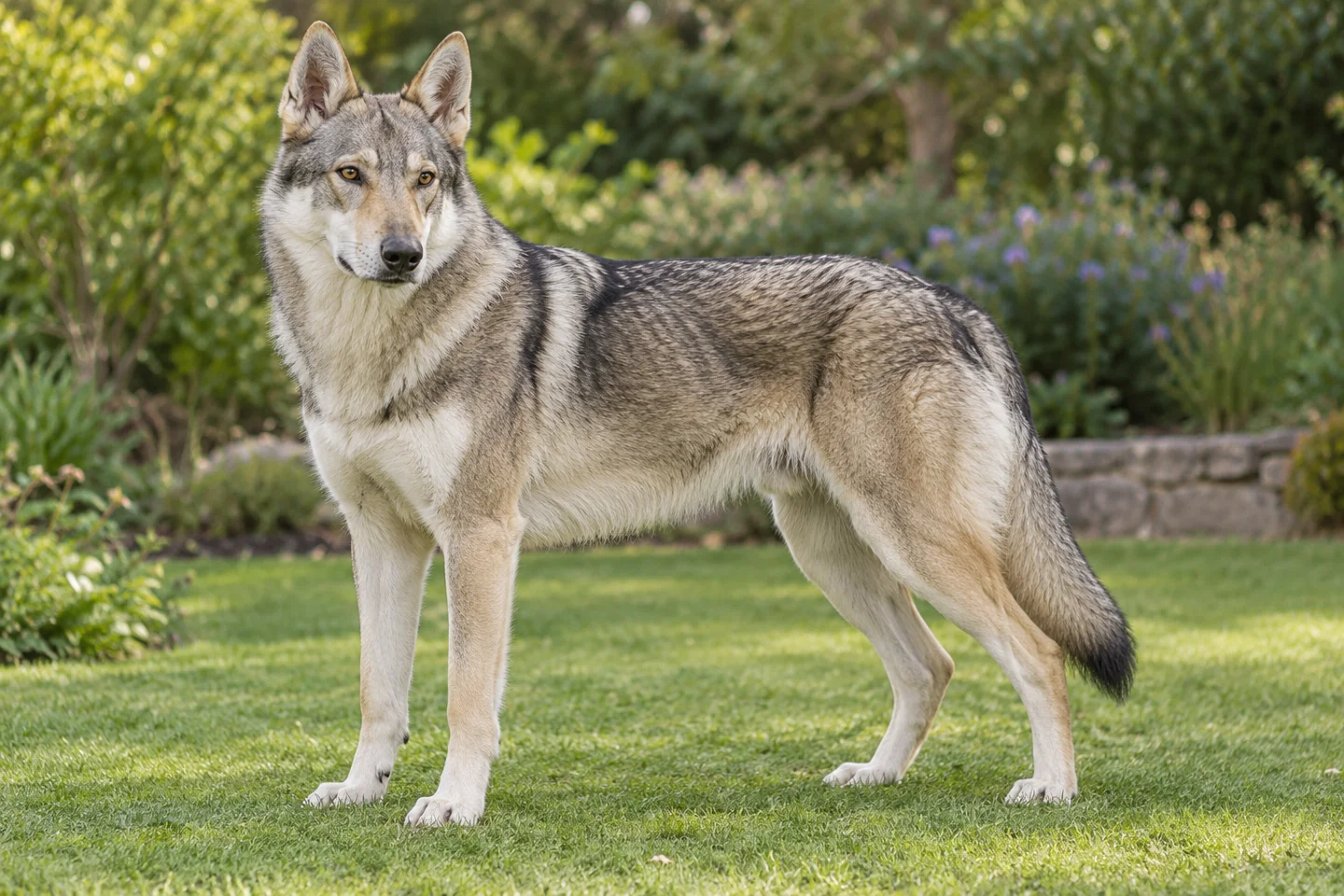
The FCI standard describes a strongly built rectangular dog with a straight muzzle, small erect triangular ears, amber eyes, and a pale facial mask. Yellow-gray to silver-gray coat tones and dense double hair contribute to the appearance. These illustrations choose yellow-gray, natural ears, and an intact tail. They should not depict a wild wolf or a fantasy animal with exaggerated features. Watch a real dog turn, rise, and move normally rather than judging suitability from the intensity of a facial expression.
FCI minimum withers heights are 65 cm for males and 60 cm for females. Those minima are not an upper-size promise or a prediction of a puppy's exact adult frame. Measure usable space in the vehicle and home, and plan how a substantial injured dog would be transported. Use hands-on body-condition assessment with veterinary help. A lean working outline should not excuse unexplained weight loss, while adding bulk is not a sound way to make the animal look more impressive.
Containment that does not depend on an untested cue
Inspect every boundary before allowing free access. Check gates, latches, gaps behind vegetation, and objects that could provide a route over a fence. Supervise early use and reassess after repairs or weather damage. An exercise field advertised as secure still needs inspection for the particular dog and for hazards in the running surface. Identification and tracking can help after escape, but they cannot prevent an injury that occurs before the owner notices the animal has left.
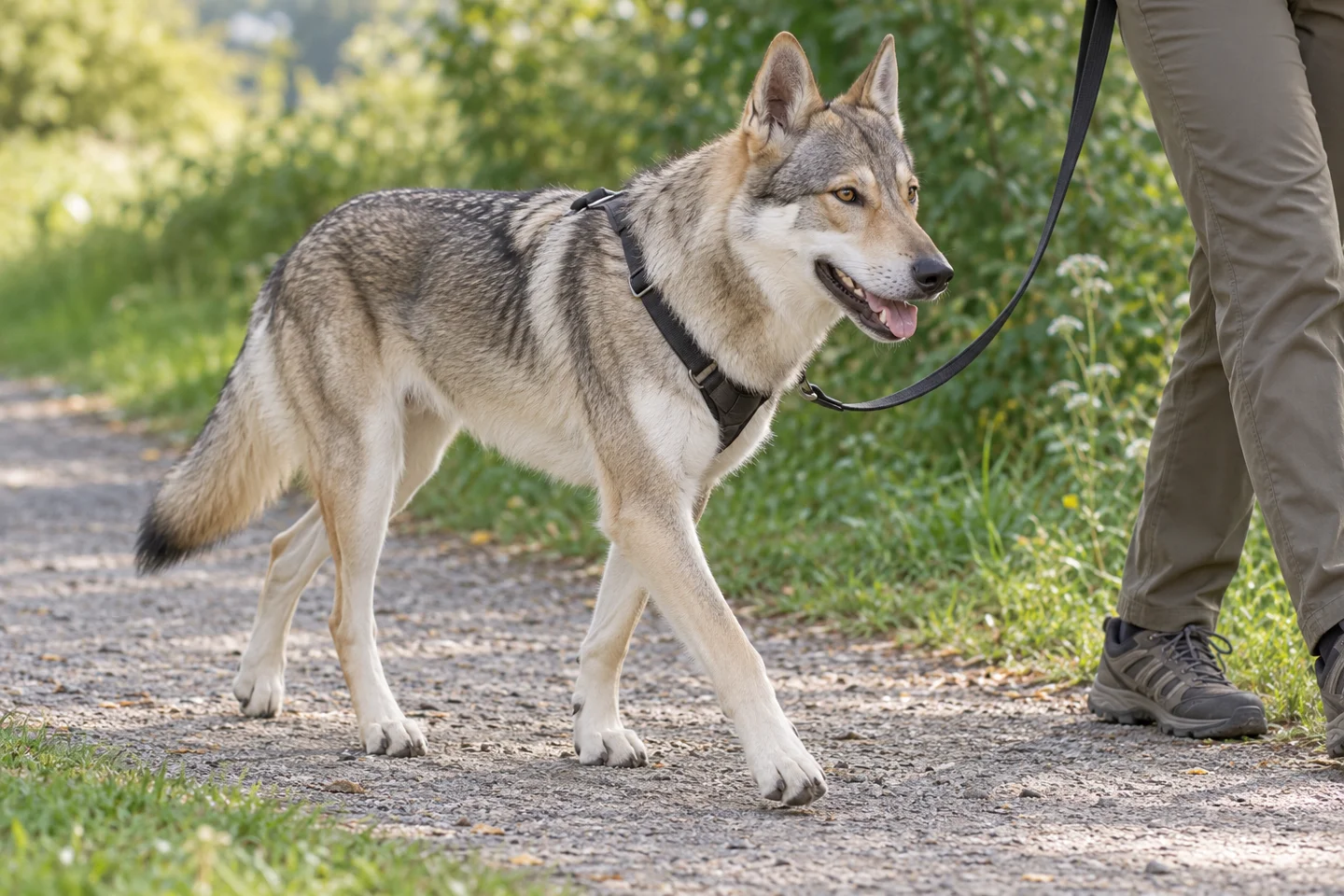
Teach a calm sequence at doors and vehicle exits, attaching suitable equipment before an opening becomes available. All household members need the same routine. Avoid relying on a verbal instruction that has only worked in the kitchen when wildlife or unfamiliar movement appears outside. Keep a physical safeguard wherever failure could reach traffic, livestock, or a vulnerable animal. The decision should consider the consequence of a mistake as well as training progress, rather than treating an experimental release as the only way to measure reliability.
Environmental confidence before crowded expectations
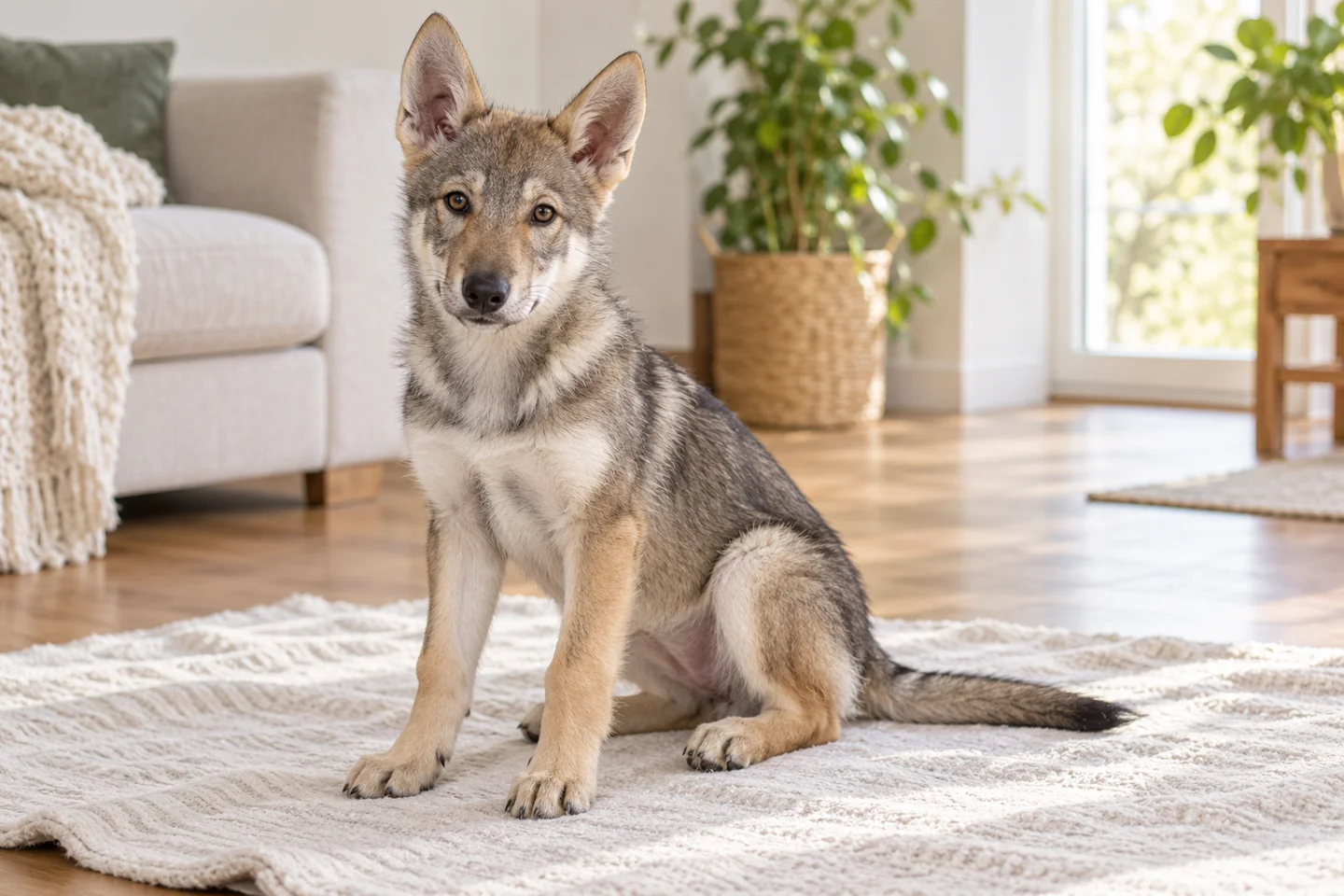
Give a puppy manageable experiences of sounds, people, surfaces, transport, and gentle care, with veterinary guidance on early outings and local infection precautions. Let it observe at a useful distance and retreat when needed. Compulsory touching by strangers is not a measure of successful socialization. If the youngster hides, stops taking familiar rewards, or cannot settle afterward, simplify the next version. A short quiet observation can teach more useful confidence than an extended event the animal spends trying to escape.
Continue this work as the dog develops. Adolescence, a move, or unfamiliar equipment can change what it finds manageable. Observe recovery and sleep as well as the immediate response. A dog that becomes unusually quiet may be overwhelmed rather than comfortable. Seek help early if fear limits ordinary care or access. The objective is a dog able to live in its real environment with practical choices, not one required to endure every crowded setting because the owner wants a dramatic image of confidence.
Company and an honest alone-time plan
Ask for specific information about separation. Does the dog lie down during a short absence, pace at an exit, call repeatedly, or attempt to escape? Observation or a recording can reveal behavior that is invisible when the owner returns. Build time apart from a level the animal can manage and arrange dependable care for longer demands. Repeatedly leaving it distressed is unlikely to teach the quiet routine the household needs. Professional support can help identify the circumstances and set a workable progression.
A second dog is not an automatic solution to concern about people leaving. It adds another set of medical, training, and compatibility needs. Choose that commitment for its own suitability. A realistic weekly plan includes cover during illness, travel, and unexpected work changes. For an adult new to the home, start with predictable care and modest demands while gathering information. Early quietness should not be treated as proof that a long full-workday absence or an unfamiliar boarding facility will be comfortable.
Children and boundaries around a strong body
A large athletic dog can cause injury through an excited collision without intending harm. Keep fast games out of narrow indoor routes and separate before running children if the response is uncertain. Prevent climbing, neck-hugging, grabbing ears, and face-to-face posing. Provide a private rest area away from the route to essential rooms. A child should not have to step over a sleeping animal, and the dog should be allowed to leave contact without being followed or cornered.
Adults remain responsible for supervision, lead handling, valued objects, and necessary care. Calm shared activities can include preparing a search while another adult manages the dog. Meals and chews need protection from play. Prior comfortable contact with one child does not establish safety with every visiting group, especially during fatigue, pain, or excitement. Ask a source about actual experience rather than accepting a broad family-friendly promise. Review arrangements whenever the dog's condition or household changes, and obtain help for new warnings instead of punishing discomfort.
Aggression and the limits of character labels
A Vlcak can guard an object, react to frightening contact, or object when handling hurts. If the dog freezes, growls, or threatens, stop the pressure and arrange distance. Do not repeat the approach to establish authority. Children and visitors should stay outside unresolved conflicts while a veterinarian or qualified behavior professional assesses the problem. Immediate management may include barriers, separate resources, and controlled access. It needs to function before gradual training has had time to change the underlying response.
AVSAB supports reward-based methods. Physical confrontation can add fear and makes an encounter with a strong animal more dangerous. Record the actual sequence, location, approach, recovery, and any injury. Words such as primitive, dominant, or wolf-like do not tell a carer what happened or how to avoid a repeat. A warning is useful information rather than an opportunity for a control demonstration. A professional plan should improve safety and comfort without requiring another person or animal to recreate the same risky encounter.
Training useful participation
Prioritize voluntary movement toward equipment, a mat, a vehicle, and the handler. Break tasks into small steps with rewards the individual values. A dog unable to respond beside an exciting animal or unfamiliar crowd may need more distance and an easier version. Repetition at higher volume does not resolve an overwhelming setting. Choose an instructor able to explain humane methods and practical safeguards without claiming that ancestry makes pain or intimidation necessary. The owner's timing and setup are part of what needs teaching.
Care cooperation deserves deliberate practice. Reward a brief stand, chin rest, or paw touch on a stable nonslip surface and build duration gradually. Coordinate with clinicians when medical treatment cannot wait for training to be complete. All household adults should use consistent cues and access routines. Conflicting expectations can create avoidable difficulty even in an attentive dog. Useful skills need gentle rebuilding across locations, so a response learned in one quiet room can eventually help during an ordinary clinic visit or a necessary change of carer.
Exercise with conditioning and recovery
Provide regular suitable movement and occupation through the week rather than relying on exceptional weekend effort. Comfortable walking, scent work, and appropriate training can create variety. Age, medical history, surface, and previous conditioning should guide demands. A tall athletic puppy is not ready for an adult workload simply because it appears eager. Watch movement after rest and the next day. Persistent stiffness, lameness, weakness, or a marked reduction in tolerance needs veterinary investigation rather than a tougher session intended to build resilience.
In heat, choose cooler periods, water, shade, and an easy return. Severe distress, collapse, or abnormal breathing requires urgent advice. On unsuitable days, manageable quiet tasks can preserve engagement without frantic repetitive indoor chasing. Teach a clear finish to activity and allow genuine sleep. Working heritage does not remove the need for recovery. A sustainable plan also accounts for temporary owner illness and changing commitments, with suitable support when the usual routine cannot be delivered safely or comfortably.
Other dogs, cats, and vulnerable animals
Evaluate dog companionship through actual contact style and context. Begin with room for movement and pauses rather than a close doorway greeting. Watch whether both animals can turn away without being pursued. Separate food, chews, and resting areas while a household learns its new routine. A dog may enjoy walking beside a familiar companion without wanting close wrestling or sharing every resource. Choose partners according to observed behavior rather than an expectation that all athletic dogs should run together.
Cats need protected routes and controlled access, with prevention of chasing. A record of peaceful contact with one cat is limited evidence about responses to another that runs. Small pets and poultry require dependable physical protection. Do not test intentions by allowing a vulnerable animal within reach under a casual promise that the dog seems gentle. Affection toward humans does not answer a separate pursuit question. If reliable separation is unrealistic in the home, that limitation should be recognized before placement rather than after an avoidable injury.
Grooming the dense seasonal coat
Use suitable brushing to remove loose hair and inspect skin, with more work when seasonal shedding is substantial. A weather-resistant coat still needs observation. Check friction points beneath equipment, feet, and any area repeatedly licked. After outdoor activity, remove superficial debris gently and investigate sores, redness, odor, or persistent irritation. Avoid treating a clean outer appearance as proof that the skin is healthy or adding products repeatedly without understanding the cause of a problem.
Introduce nail, mouth, and ear care in short rewarded steps. Ear discharge, pain, head shaking, or scratching warrants veterinary advice, not deep probing or leftover medication. Toothbrushing and professional dental assessment remain relevant even when a dog can chew enthusiastically. A sudden objection to a familiar touch may reflect discomfort. Tell groomers and clinicians about sensitive areas and previous handling concerns before arrival. Necessary treatment and future cooperative lessons can be coordinated, without expecting the owner to complete every painful examination unaided.
Health screening and actual club recommendations
The American parent club's health statement recommends hip and elbow radiographs, degenerative-myelopathy and shepherd-type pituitary-dwarfism DNA testing, cardiac and dentition evaluations, and participation in the CHIC DNA repository for breeding stock. It also discusses optional clinical eye examination. Request identifiable reports and ask a veterinarian or laboratory to interpret findings. A large panel claim does not demonstrate every clinical assessment, and an energetic puppy does not establish the genetic status or orthopedic results of its parents.
The statement's cardiac recommendation aims partly to gather information about suspected inherited disease, which should not be presented as proof that every animal has a defined heart disorder. A degenerative-myelopathy risk result is not a diagnosis of every later gait problem. Likewise, dwarfism testing addresses a particular inherited concern rather than explaining all poor growth. Current symptoms require individual evaluation. Keep records accessible and discuss significant family diagnoses, unexplained deaths, and the source's follow-up with owners instead of treating completed screening as a promise of lifelong health.
Food, mixes, ownership costs, and dogsDating
Feed a complete diet for life stage and expected adult size, measuring portions and maintaining appropriate condition rather than accelerating growth or adding impressive bulk. A modern Vlcak cross is a mix, distinct from the established breed's historical foundation; do not accept unsupported ancestry or health guarantees. Budget for preventive medicine, training support, secure access, suitable transport, competent holiday care, and unexpected treatment. A temporary carer needs written routines, medical contacts, and an honest explanation of situations requiring distance or separation.
On dogsDating, describe the actual dog's pace, contact preferences, lead needs, and relevant animal or handling concerns. Keep exact home coordinates private. Select a quiet public route with room for two capable handlers to separate and begin with a brief parallel walk. Leave valued objects out and do not require an off-lead chase to prove compatibility. End when either dog cannot pause or disengage. A calm walking friendship may be enough, while later indoor access or resource sharing needs its own assessment and both owners' continuing attention.
Preparing for veterinary visits before urgency
Ask the clinic how to arrange arrival if the dog needs distance from unfamiliar people or animals. Waiting outside until a room is ready may be easier than holding it in a busy reception area, provided the clinic agrees. Rehearse transport, standing on a scale, and short comfortable handling during calm practice. Explain the dog's known concerns honestly when booking. Staff need the actual behavior and medical history rather than an assurance that a wolf-like breed simply dislikes examination.
If positively introduced safety equipment is appropriate, get professional advice on fit and use. It should permit necessary breathing and comfort and should not become a way to force prolonged frightening contact. The clinic may recommend a medical handling plan for a procedure; follow the clinician's directions rather than improvising sedation or using another animal's prescription. A prepared visit gives the team better information and helps avoid an urgent struggle that makes future care more difficult.
A travel arrangement that works beyond a photograph
Confirm usable space for the adult to turn and lie down, secure it appropriately during travel, and rehearse short trips before a long journey. At unfamiliar stops, attach the lead before opening an exit. Accommodation needs more than a statement that dogs are welcome: inspect boundaries, door access, and the possibility of a quiet resting place. Brief the carer on the same precautions and leave veterinary contacts. A successful trip preserves safety and recovery while allowing the owner to adjust plans around the dog's actual responses.
Sources and editorial notes
Sources checked October 21, 2026. Breed measurements describe reference ranges, not a diagnosis or an individual dog's ideal weight. Images are AI-generated breed illustrations and do not document a particular dog or health condition.
- AVSAB: Humane Dog Training Position Statement
- VCA: Food Aggression in Puppies
- VCA: Grooming and Coat Care for Your Dog
- VCA: Ear Infections in Dogs
- VCA: Feeding Guidelines for Dogs
- Orthopedic Foundation for Animals: Canine Health Assessments
- VCA: Heat Stroke in Dogs
- Czechoslovakian Vlciak Club of America: Health Statement, updated December 2024
- Czechoslovakian Vlciak Club of America: History
- FCI: Czechoslovakian Vlcak Breed Standard
Keep getting to know dogs.
Read another guide or return to your dogsDating community.
Explore breed guidesBack to dogsDating