Dalmatian
An athletic spotted breed needing steady activity, documented hearing status, individual urinary-health planning, and practical household training.
How these guides are researched and reviewed
- Origin in the FCI standard
- Croatia
- FCI height
- Males 56–62 cm; females 54–60 cm, with stated allowance
- Colors illustrated
- White with distinct black spots
- Health focus
- Hearing, urinary metabolism, and individual care
General information for owners. These articles have not been reviewed by a veterinarian. Medical decisions need your dog's history and an examination.
Hearing records belong before assumptions
Before choosing a Dalmatian, ask for the actual hearing report and what it shows for each ear. A puppy responding to a sound in a room has not demonstrated normal hearing on both sides. The Dalmatian Club of America provides information about BAER testing, which records auditory responses objectively. This is a practical placement question, not a reason to judge a dog's value by a casual home test. Known hearing status helps owners plan teaching, safe access, and communication with everyone who will care for the animal.
Consider the rest of the week as carefully as the spotted appearance. An athletic adult needs regular activity, training, rest, company, and a medical plan appropriate to its urinary history. Meet mature dogs and ask how they settle after exercise, travel, handle visitors, and spend time alone. A source should explain health information and limitations plainly. An adult foster assessment may provide useful detail, while a puppy leaves more uncertainty about final size, behavior, and the routines the household will need to build.
Croatian identity and a coach-dog background
The FCI standard gives Croatia as the country of origin and places the breed among scent hounds and related breeds. The familiar coach-dog history is part of its wider identity, but it should not become a promise of automatic road sense or endurance. A modern dog still needs deliberate teaching around traffic, horses, vehicles, and other animals. Its historical role can frame useful questions without making a present-day puppy already trained for the owner's preferred sporting or household activity.
The Dalmatian is distinct from other spotted or ticked dogs. A white coat with marks cannot confirm pedigree in a rescue, and a registration document should identify its issuing organization clearly. Preserve uncertainty where parentage is unknown. Actual hearing, medical findings, movement, and social experience matter even when ancestry cannot be settled. Avoid selecting the most unusual pattern or eye color at the expense of documented care. A visually striking animal still needs the same candid assessment as one with less dramatic markings.
Spots, proportions, and adult dimensions
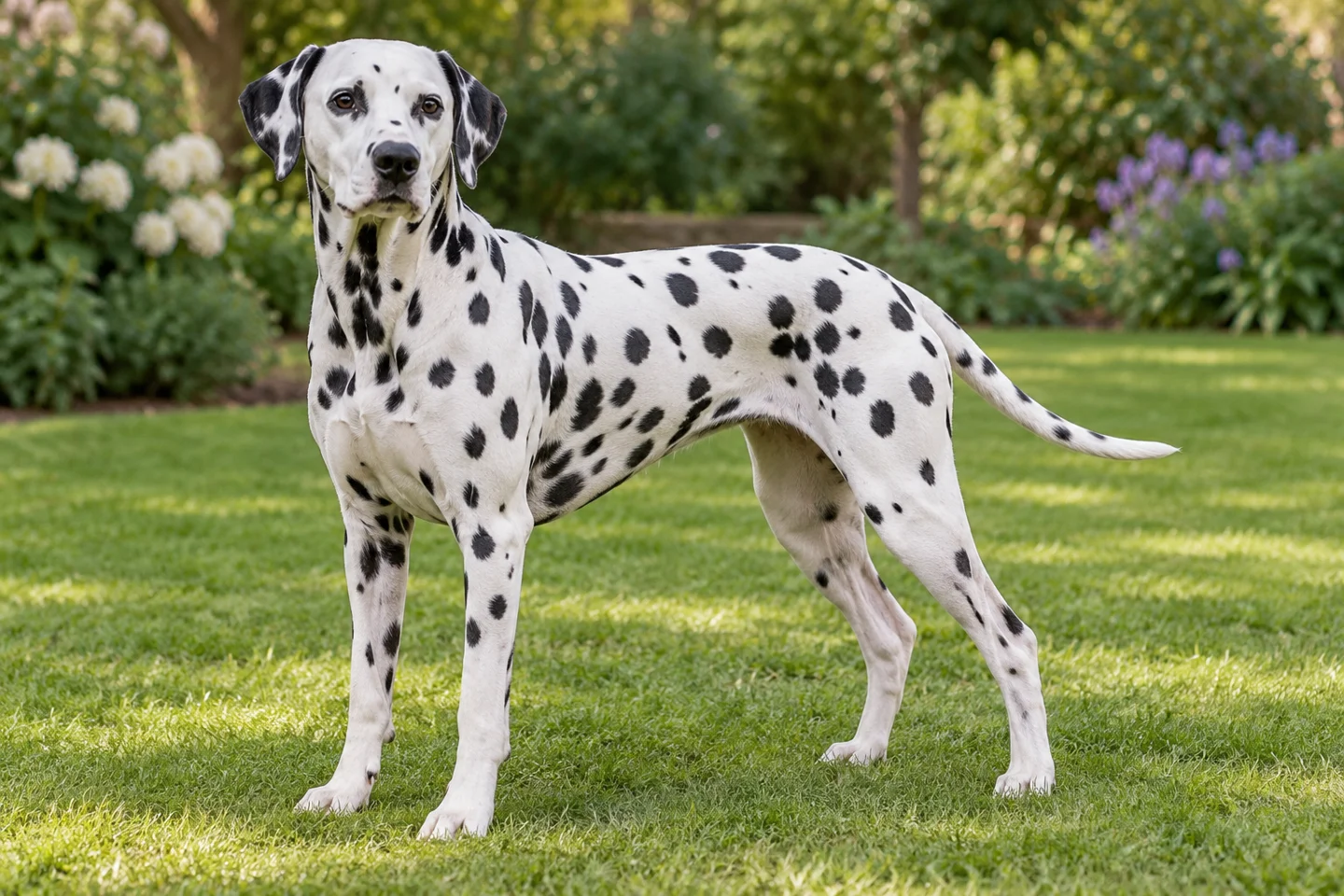
A short white coat with distinct black or liver spots forms the recognizable appearance. These illustrations select black spots, dark eyes, natural dropped ears, and a complete spotted tail. Puppies develop their visible pattern with age, so an illustration should not imply that every newborn already looks like a miniature adult. Separate rounded spotting from a generic merle pattern or large irregular patches when evaluating a visual reference. Real placement decisions still depend on the dog rather than how neatly it matches a picture.
The FCI lists male height at 56–62 cm and female height at 54–60 cm at the withers, with allowance described for balanced animals. These are standard dimensions rather than a guarantee of a particular puppy's finish. Measure vehicle and resting space for the actual adult, and assess condition by touch with veterinary help. An athletic frame should remain functional. Adding excess weight to make a dog look stronger or dismissing unexplained loss as natural leanness can both conceal a problem.
BAER findings and communication at home
Ask the testing provider or veterinarian to explain the report, including unilateral or bilateral hearing loss where present. A dog may respond using one hearing ear, which is why a simple reaction to noise cannot replace the documented assessment. Owners need a plan suited to the individual rather than an assumption that every Dalmatian hears identically. Keep the result with other records and tell trainers, carers, and clinicians. New changes in response still deserve assessment even when a puppy report was reassuring.
Use predictable visual signals and other appropriate communication methods with professional guidance where hearing is limited. Avoid startling a sleeping dog through sudden touch, and teach household members how to approach considerately. Secure access matters because a dog cannot be expected to respond to an audible cue it cannot hear. Hearing status does not establish temperament or justify harsh methods. Clear teaching, appropriate safeguards, and an honest account of the dog's needs can support a comfortable life without treating a medical finding as a complete personality description.
Urinary metabolism and individual stone risk
Many Dalmatians have an inherited difference in uric-acid handling that can increase urinary urate-stone risk. Low-uric-acid lines also exist, so do not assume every spotted dog has the same genetic or clinical status. UC Davis describes testing for hyperuricosuria, and breed-club guidance explains the relevance of urate stones. Ask what is documented for the individual and family, including previous stones, urine tests, treatment, and any genetic result. A label such as LUA should be supported by records rather than accepted as a universal medical clearance.
Diet and monitoring need veterinary advice appropriate to the dog. Do not copy a home recipe or a blanket instruction to restrict all protein, and do not assume that a low-uric-acid result removes every possible urinary problem. Ask what routine is recommended and what signs should trigger a call. Keep water available and arrange regular opportunities to urinate. A work schedule that repeatedly prevents toilet access needs practical correction. Medical management should remain usable during travel and boarding, with clear instructions for anyone taking over care.
Straining to urinate is an urgent observation
Repeated attempts to pass urine, discomfort, blood, or a change in the urine stream deserves veterinary contact. An inability to urinate can be an emergency. Do not wait for every possible sign or assume the dog is merely marking repeatedly because that behavior seems familiar. Explain the breed, urinary history, medication, and what has actually passed. The clinic can advise how urgently the animal needs to be seen. Avoid experimenting with leftover treatment or human medicine while a possible obstruction worsens.
Keep a record of diagnosed stone type and previous investigations rather than calling every episode the Dalmatian problem. Different urinary conditions can produce similar outward signs. Take current reports when changing clinics, and make sure a carer knows the usual toilet pattern and emergency contacts. If a veterinarian prescribes a diet or medication, ask how treats and training rewards fit. A care plan is more useful when it explains the practical daily routine and follow-up instead of leaving the owner to interpret a diagnosis from a brief online summary.

Exercise through the week rather than one long run
Provide regular movement and occupation appropriate to age, condition, medical findings, and previous conditioning. Walks with investigation, searches, and well-taught games can create variety without repetitive high-impact work. A puppy needs developmental limits and sleep, while an adult returning from inactivity needs gradual preparation. Watch recovery later and after rest. Persistent limping, stiffness, weakness, or a decline in tolerance calls for examination even when the dog remains motivated to continue an exciting activity.
Choose cooler periods, shade, water, and an easy return in warm weather. Collapse or marked respiratory distress needs urgent advice. Historical endurance is not a medical assessment of the animal in front of you. Quiet days can include gentler lessons and suitable searching instead of frantic indoor chasing to compensate for a missed outing. Teach a clear end to play and protect rest. A sustainable routine should fit ordinary commitments and temporary owner limitations, with reliable support when the usual person cannot provide care.
Traffic, horses, and recall safeguards
Teach a return toward the handler and a comfortable turn away from manageable distractions, using worthwhile rewards and gradual difficulty. Keep physical control where a mistake could reach a road, livestock, or wildlife. A coach-dog history does not supply automatic vehicle judgment or safety around horses. Introductions to equine settings need competent supervision and a plan that protects all animals and people. Do not arrange a close encounter simply to see whether an inherited association appears naturally.
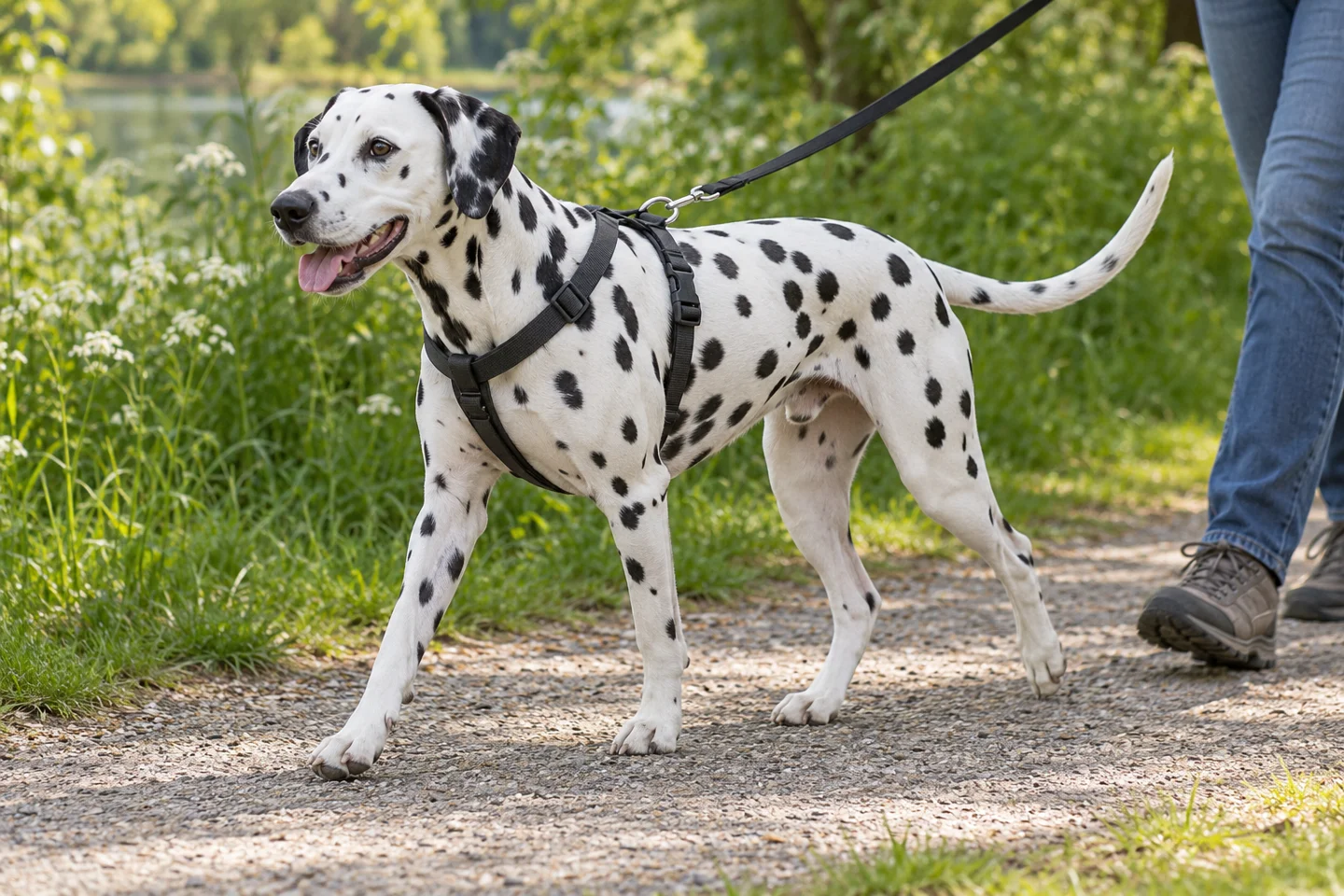
Check equipment fit and teach a predictable door and vehicle-exit routine. Attach the lead before opening into an unfamiliar area. Long lines require space and careful management to avoid entanglement or a fast run ending abruptly at full length. Choose routes where the handler can increase distance before excitement or concern becomes overwhelming. Repeatedly practicing an uncontrolled surge at the same narrow location may add frustration while teaching little. Easier conditions give both dog and person a clearer task and a safer way to progress.
Children around spots and speed
A familiar appearance can draw children toward a Dalmatian before they have learned the individual's preferences. Adults should prevent neck-hugging, climbing, ear pulling, and face-to-face posing. Give the dog a private resting area outside the busiest routes and let it leave contact without being followed. Supervision means watching the actual interaction and intervening before pressure builds. A child's ability to recognize subtle discomfort should not be the main safeguard, especially around a large athletic body.
Keep food, chews, and sleep protected from play. Adults handle valued objects and leads; children can help prepare a calm search while the dog waits elsewhere. Separate before fast visiting games if pursuit or collision is uncertain. Where hearing is limited, teach considerate approaches and avoid startling touch. Prior friendly contact with one child does not establish universal tolerance. Reassess arrangements after illness, pain, sensory changes, or a new group of visitors rather than assuming that the dog's previous patience must remain unchanged.
Aggression and a practical warning response
A Dalmatian can guard an object, resist painful handling, or react defensively when frightened. If stiffness, growling, or threats appear, reduce pressure and create space. Do not repeat the encounter to establish authority or use the dog's usual enthusiasm as a reason to dismiss it. A sudden change calls for veterinary investigation, while recurring concerns need qualified behavioral support and immediate management. Keep children and visitors out of unresolved conflicts while the cause and a workable plan are assessed.
AVSAB supports reward-based teaching. Punishment can add fear and may hide a warning without resolving what produced it. Record context, approach, response, recovery, and any injury accurately. Hearing, pain, resources, and environmental pressure may all matter, so a broad label such as stubborn is insufficient. A professional plan can combine medical treatment, barriers, routine changes, and gradual learning. Its purpose is fewer unsafe encounters and greater comfort, not requiring another animal or person to test whether the warning was serious.
Company and animal compatibility
Build alone time gradually and observe what happens after departure, using a recording if useful. Pacing, repeated calling, or escape attempts deserve help and dependable cover rather than repeated prolonged trials. Another dog is a separate commitment and not an automatic solution. Evaluate canine contact through actual pace, play style, and ability to pause. Begin with room to move, separate resources in a new home, and interrupt persistent crowding when one dog tries to disengage or rest.
Cats need protected routes and controlled introductions with prevention of chasing. A history of peaceful contact with one cat is limited evidence about another that runs. Small pets and poultry require secure protection rather than informal tests based on affection toward humans. Ask carers for concrete examples and management details. A broad friendly-with-animals description leaves differences of species, size, movement, resources, and excitement unanswered. The home should be able to maintain safe separation when needed through ordinary daily distractions, not only during a carefully staged first meeting.
Grooming a short coat and maintaining comfort
A short coat still needs brushing and skin observation. Check under equipment, around feet, and wherever the dog repeatedly licks. After countryside activity, remove superficial debris gently and obtain advice for pain, wounds, or persistent irritation. Spot patterns should not distract from redness or a changing skin area. Use appropriate products and avoid concealing odor with fragrance. Fit equipment to the actual body and inspect contact points after growth or changes in condition so friction does not remain hidden beneath a familiar routine.
Introduce dental care, nails, and ear checks through brief rewarded sessions. Ear discharge, pain, head shaking, or scratching needs assessment rather than deep probing or leftover medication. A sudden objection to a familiar touch may reflect discomfort. Tell professionals about hearing status, sensitive areas, and handling concerns before an appointment. Necessary clinical care and future training can be coordinated; treatment should not wait until an owner can perform every examination unaided. Keep the dog physically comfortable while making participation increasingly predictable.
Health screening, mixes, costs, and dogsDating
The AKC currently lists hip evaluation and BAER hearing testing among national-club recommendations for Dalmatians. Request the actual reports and discuss urinary status separately, together with other significant family diagnoses. A general panel or a bright appearance cannot substitute for those records. Dalmatian mixes vary in spotting, size, behavior, hearing, and medical needs; a combined name does not guarantee easier care. Budget for preventive medicine, suitable training, reliable toilet access, competent holiday cover, and unexpected treatment, with current written instructions for carers.
On dogsDating, describe pace, play preferences, hearing-related communication needs, and relevant medical restrictions while keeping exact home coordinates private. Choose a quiet public route with two attentive handlers and room to separate. Begin with a brief parallel walk and leave valued toys out. Respect pauses and end when fatigue or one-sided contact makes the meeting unsuitable. A calm walking friendship can be enough, while shared housing and resources remain separate questions. Future contact should follow both dogs' continuing comfort and the owners' ability to maintain the agreed safeguards.
A toilet routine that survives a busy day
Set up predictable opportunities to go outside, including after waking and before a longer rest period. Keep the route easy to access and teach household adults how to recognize the dog's request. If work prevents timely breaks, arrange a reliable person rather than expecting the animal to hold urine through an unsuitable schedule. A toilet diary can help describe changes to the veterinarian without assuming every accident reflects incomplete training.
When urinary disease has been diagnosed, ask the clinic how the ordinary routine should change and when follow-up is needed. A prescribed food plan should include an answer about rewards used for teaching, so carers do not unknowingly add unsuitable extras. Do not reduce water to avoid accidents. Changes in urination deserve medical consideration, particularly when discomfort, blood, repeated attempts, or altered volume appears.
Temporary care with the right records
A boarding or holiday carer needs the hearing report, communication signals, urinary history, prescribed treatment, and emergency contacts. Demonstrate equipment and normal routines before leaving, and choose accommodation with secure access and suitable quiet rest. A brief trial can show whether the dog settles away from familiar people. Make the instructions concrete enough that someone can notice a meaningful change and call for help without trying to interpret an unexplained label such as LUA or one-sided hearing during an already stressful event.
Sources and editorial notes
Sources checked October 21, 2026. Breed measurements describe reference ranges, not a diagnosis or an individual dog's ideal weight. Images are AI-generated breed illustrations and do not document a particular dog or health condition.
- AVSAB: Humane Dog Training Position Statement
- VCA: Food Aggression in Puppies
- VCA: Grooming and Coat Care for Your Dog
- VCA: Ear Infections in Dogs
- Orthopedic Foundation for Animals: Canine Health Assessments
- VCA: Common Emergencies in Dogs
- VCA: Heat Stroke in Dogs
- American Kennel Club: Non-Sporting Group Health Testing Requirements
- Dalmatian Club of America: Hearing
- British Dalmatian Club: Dalmatian Health and Welfare, Uric Acid
- UC Davis Veterinary Genetics Laboratory: Hyperuricosuria
- FCI: Dalmatian Breed Standard
Keep getting to know dogs.
Read another guide or return to your dogsDating community.
Explore breed guidesBack to dogsDating