Danish-Swedish Farmdog
A small smooth-coated Scandinavian farm breed with a practical pinscher identity, needing purposeful activity, secure investigation, kind handling, and evidence-based health questions.
How these guides are researched and reviewed
- Origin
- Denmark and Sweden
- FCI height
- Males 34–37 cm; females 32–35 cm, with 2 cm tolerance
- Coat
- Short and smooth; predominantly white with patches
- Care focus
- Secure exploration, cooperative training, and measured activity
General information for owners. These articles have not been reviewed by a veterinarian. Medical decisions need your dog's history and an examination.
Farmdog is a role with modern household questions
A Danish-Swedish Farmdog needs a plan for investigation, movement, learning, and company even when it fits easily into a modest home. Start with the ordinary week, not an image of a picturesque farm. Decide who opens doors, secures the garden, provides walks, and notices when the dog cannot settle. A small sturdy animal can still follow an interesting scent through a gap or become distressed during a long absence. Space alone does not answer how well the routine will work.
Meet adults and ask what the owner has actually taught or managed. Does the dog rest while people work, cope with visitors, and accept equipment or nail care? What happens around cats, poultry, or running children? A puppy offers incomplete answers, while a careful adult foster assessment can give more direct observations. Choose a source that explains health records and limitations without using versatile or farm-bred as a promise that no training will be needed. Ongoing placement support is valuable when the household encounters a new developmental stage.
Compact proportions, patches, and a natural tail choice
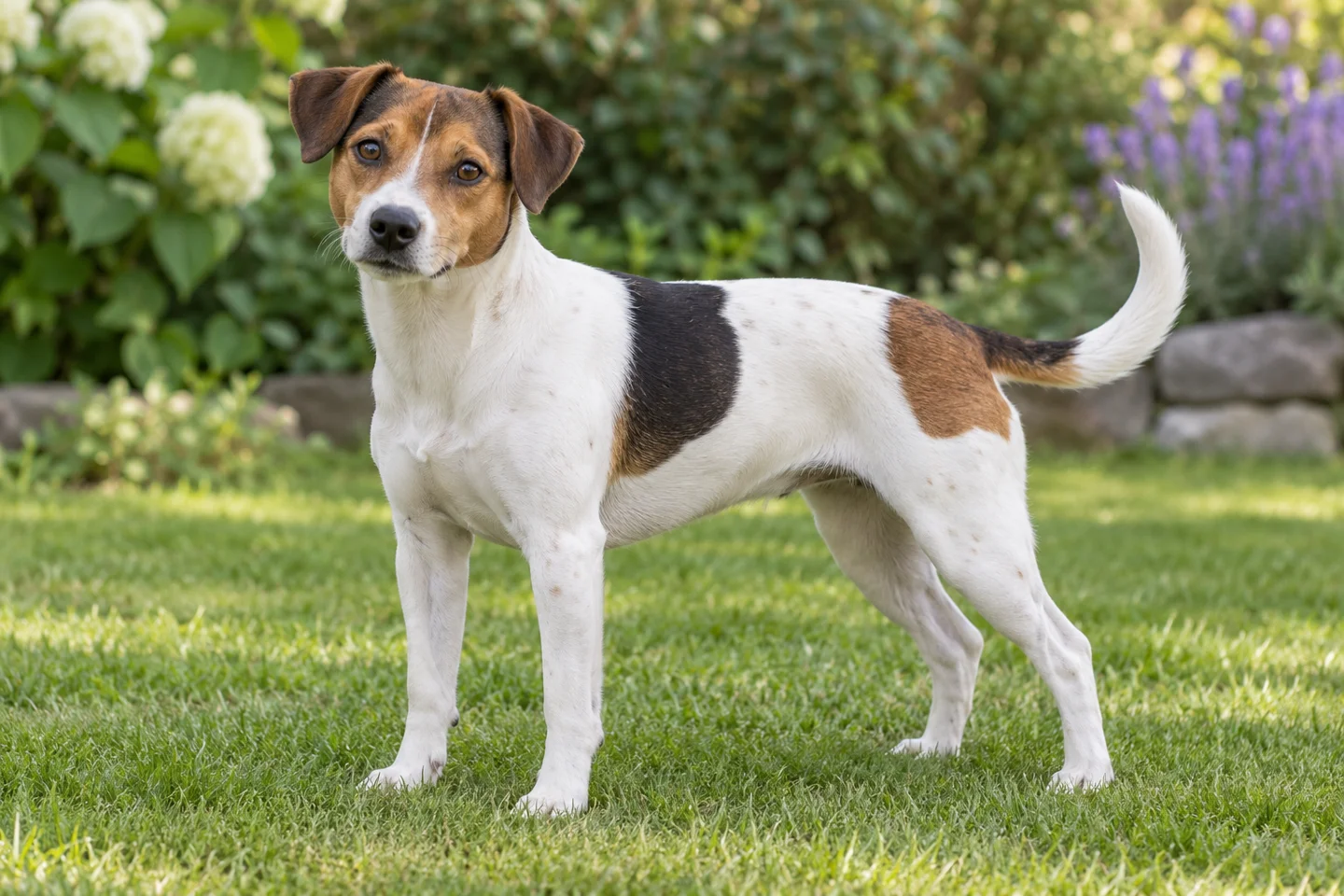
The breed has a small, compact, slightly rectangular frame, short smooth coat, and naturally folded triangular ears. White predominates, with patches in the colors described by the standard. These illustrations choose tricolor markings and a full intact tail. Naturally short tails also occur, so a real dog's short tail should not be assigned a cause from a photograph alone. A visual reference should keep the functional proportions rather than make the animal unusually tiny, overly elegant, or exaggeratedly low to the ground.
FCI height ranges are 34–37 cm for males and 32–35 cm for females, with a 2 cm tolerance. Those figures describe conformation rather than guarantee a puppy's exact adult size. Measure equipment on the actual chest and neck, checking whether it remains secure if the dog backs away. Ask a veterinarian to demonstrate condition assessment by touch. A small working frame should stay comfortable and functional, without feeding toward an abstract number or treating every deviation from a show range as a medical problem.
A garden checked at dog height
Inspect beneath gates, beside drains, behind sheds, and through vegetation before allowing unsupervised access. Small openings can matter even when the fence looks substantial from the house. Recheck after weather damage or repairs and supervise early use of an unfamiliar enclosure. Store chemicals, tools, traps, and unsuitable food securely. Identification and tracking can help after an escape, while a maintained boundary and an understood household routine are responsible for preventing the initial danger.
Provide appropriate investigation and, if useful, a permitted place to dig. Protect areas where digging would be unsafe rather than depending on a spoken rule when nobody is present. Repeated frantic escape attempts need investigation of the underlying context, including isolation, fear, and boundary excitement. A garden should not become a long patrol shift reacting to every passerby. Manage access and views while teaching calmer responses, and seek qualified support if the dog cannot disengage or recover after events at the fence.
Poultry, rodents, and the meaning of farm experience
Ask what the individual has actually done around animals. A dog raised on a property with chickens may have been safely separated rather than trusted loose among them. Keep poultry and small pets protected until a competent assessment and teaching plan supports any change. A history of catching rodents does not answer how the dog will respond to a pet hamster or rabbit. Avoid informal tests that put a vulnerable animal within reach merely because the dog approaches people affectionately.
For livestock, use knowledgeable supervision and clear boundaries rather than expecting a farm name to supply automatic skill. Uncontrolled chasing can frighten animals and put the dog or handler at risk. A companion home without stock can offer searches, cooperative retrieval, and suitable training instead. The need is meaningful occupation at the individual's level, not a demonstration of every historical task. Some homes may remain unsuitable if reliable separation cannot be maintained through ordinary distractions, visitors, and changes of handler.
Walking with recall safeguards
Teach returning toward a person and changing direction where the dog can succeed, using rewards worth approaching. Keep physical control when failure could reach a road, wildlife, or livestock. A kitchen response does not certify reliability beside a running animal. Consider the consequence of a mistake as well as progress. There is no need for a dangerous release to discover the limit of training, and safe exploration can remain enjoyable with a lead and a route chosen for manageable distractions.
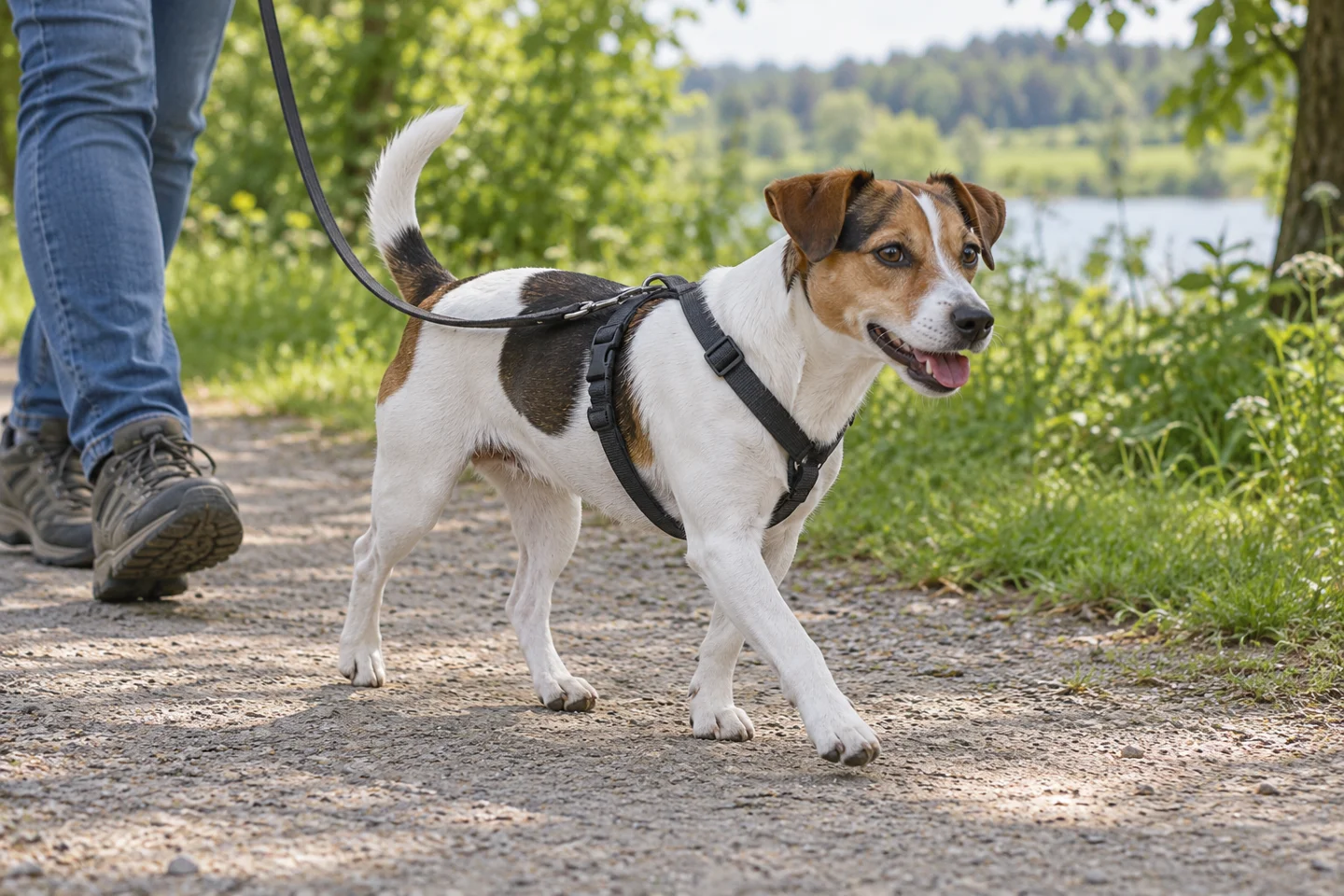
A long line requires room and careful handling to prevent loops around legs or a fast stop at full extension. Check equipment and avoid letting extra length reach hazards the owner cannot control. Reward voluntary check-ins and allow suitable sniffing instead of turning the entire walk into a pulling contest. If the dog becomes unable to respond near a stimulus, increase distance and simplify. Repeating a cue louder at the same overwhelming point rarely supplies the missing learning or creates a comfortable outing.

Exercise matched to a small capable body
Provide steady activity through the week, combining comfortable walks, investigation, short lessons, and suitable games. A compact frame can be capable without being ready for an exceptional weekend workload after inactivity. Consider age, condition, medical findings, surface, and weather. Puppies need developmental limits and sleep, while older dogs may enjoy shorter routes with more pauses. Watch recovery after rest. Persistent limping, stiffness, or a decline in tolerance deserves veterinary assessment even if the dog remains keen during an exciting game.
Choose cooler periods, shade, water, and an easy return during heat. Collapse or marked respiratory distress needs urgent advice. Quiet days can use gentle searches and brief cooperative care rather than frantic indoor chasing intended to compensate for a missed long outing. Teach a predictable finish to activity and protect undisturbed sleep. A routine should fit ordinary work commitments and temporary owner limitations, with dependable cover when needed. Working heritage does not remove the need for recovery or make pain a useful training tool.
Children and a dog that can leave contact
A small dog may be picked up or squeezed before a child understands its limits. Adults should manage lifting and prevent neck-hugging, climbing, ear pulling, and face-to-face posing. Arrange a private resting area outside the busiest routes and let the dog withdraw without being followed. Supervision means watching the actual interaction and intervening early. A child should not need to step over the sleeping animal or decide whether a stiff posture means it is safe to reach for something nearby.
Keep food, chews, and found objects under adult management. Children can help prepare a calm search while the dog waits with another person, rather than compete physically over a toy. Separate before loud running games if pursuit or collision is uncertain. Comfortable contact with one familiar child is limited evidence about a group of unfamiliar visitors. Reassess arrangements when the household changes or the dog becomes painful, tired, or less tolerant of touch. A new warning deserves investigation of the situation rather than punishment for failing to remain patient.
Aggression and practical response to a warning
A Farmdog can guard an object, object when touch hurts, or react defensively when frightened. Reduce pressure and arrange distance if freezing, growling, or threats appear. Do not repeat the approach to prove control. Keep children and visitors out of unresolved conflicts while a veterinarian or qualified behavior professional assesses the cause. Separate resources and use suitable barriers immediately. Management needs to function while gradual learning or treatment addresses the underlying response, rather than waiting for training to become perfect before protecting people.
AVSAB recommends reward-based methods. Physical confrontation can increase fear and may hide a warning without resolving the concern. Record context, approach, response, recovery, and any injury accurately. Calling the dog feisty or stubborn does not tell a carer what happened or what to avoid. A useful plan can combine medical care, environmental changes, and teaching. It should reduce unsafe encounters without asking another person or animal to recreate the same pressure as a test of character or proof that the owner is in charge.
Training useful participation in daily care
Prioritize approaching a harness, moving onto a mat, entering a carrier or vehicle, and releasing a suitable object through an exchange. Teach voluntary steps with rewards the individual values rather than physically placing the dog into every position. A small animal has fewer options when restrained, which makes predictable participation especially useful. If a response disappears beside an exciting animal, increase distance and reduce difficulty. More volume and repetition do not resolve confusion or an environment that exceeds the dog's current skills.
Care practice should include a brief stand, paw touch, and gentle mouth or ear observation on stable surfaces. Build duration gradually and coordinate with clinicians when treatment is necessary before lessons are complete. Household adults should agree on cues and access rules. Conflicting responses to the same behavior create avoidable difficulty. A humane instructor can help owners improve timing and setup while maintaining safeguards around traffic and other animals. Tricks and sports may be enjoyable additions, while practical cooperation remains useful throughout the dog's life.
Company, separation, and compatible dog contact
Build time apart from a manageable starting point and observe behavior after departure. A recording may reveal pacing, repeated calling, or an inability to settle that owners miss on returning. Arrange dependable care for longer demands and seek help if distress appears. Another dog is not an automatic solution and adds its own responsibilities. A realistic weekly routine includes support during illness, travel, and unexpected work changes, with a carer who can follow the same access and equipment precautions.
For dog introductions, choose space to move and pause instead of a close doorway greeting. Watch whether both animals can disengage, and interrupt persistent crowding. Size and speed differences can make collisions dangerous even without aggression. At home, separate food, chews, and resting areas while routines develop. Cats need protected routes and controlled access with prevention of chasing. Ask for concrete observations rather than a broad statement that the dog likes animals. Actual context determines what company is comfortable and what separation remains necessary.
Grooming a short coat and noticing discomfort
A Farmdog returning from a stable yard or a muddy verge can bring more than visible dirt indoors. Run a gentle hand over the body and look between toes before settling it on clean bedding. Examine the places touched by harness straps after an energetic outing, particularly when the fit has recently changed. Its smooth hair makes some wounds easy to see, but a dog worrying one foot or rubbing against furniture may be drawing attention to something less obvious. Obtain advice for pain or a persistent skin change rather than masking a smell with another product.
Introduce toothbrushing, nail care, and ear checks through brief rewarded sessions. Ear discharge, head shaking, scratching, or pain calls for veterinary assessment rather than probing or leftover medication. A sudden objection to a familiar touch may reflect discomfort. Tell professionals about sensitive areas and prior difficult handling before appointments. Necessary treatment and future cooperative lessons can proceed together, without expecting an owner to perform every examination unaided. A practical plan keeps care comfortable and repeatable instead of making routine maintenance a prolonged struggle.
Health information without a borrowed test list
Ask the relevant breed organization and veterinarian about current screening for the family's history and population. The FCI standard describes identity and appearance, not a complete medical program. Do not copy a terrier's test list merely because the dog looks similar, or turn a reputation for robust farm life into a guarantee against inherited illness. Request evidence for named assessments and discuss significant diagnoses, mobility or vision problems, unexplained early deaths, and follow-up information collected from owners after placement.
A broad genetic panel and a routine examination provide different kinds of information, and neither excludes every future disease. For a rescue with missing family records, acknowledge the gap and establish preventive care from current findings. A current limp, weakness, eye discomfort, appetite change, or loss of condition needs assessment on its own merits. Avoid invented prevalence or lifespan estimates for a population without reliable supporting data. Honest uncertainty helps owners plan better than an assurance that every small working dog is naturally healthy.
Food, mixes, costs, and dogsDating
Use a complete diet appropriate to age, health, and actual workload, measuring portions and counting rewards. Monitor condition rather than feeding toward a breed number without individual assessment. Farmdog mixes vary in size, coat, pursuit, and medical needs; a combined name cannot promise easier care or allergy compatibility. Budget for preventive and dental treatment, training, secure transport, dependable holiday arrangements, and unexpected costs. Keep current instructions and veterinary contacts accessible so care does not depend on one person's memory.
For a dogsDating outing, explain whether this Farmdog is happiest sniffing alongside a companion, searching with its person, or playing briefly before resting. Keep exact home coordinates private. Pick a meeting area away from poultry pens, horse access, and an active ball game, where scent and movement will be manageable. Walk separate arcs at first and compare how easily the dogs return attention to their people. There is no requirement to unclasp leads or produce play. If either dog begins guarding the space, crowding, or persistently following a withdrawal, leave more room and finish when necessary. Repeat contact only when the first encounter has been comfortable for both.
Trial the holiday routine before leaving
A short stay with a trusted carer can reveal whether the dog settles away from its usual people. Demonstrate the gate sequence and equipment, explain any concerns around animals, and confirm that quiet rest is available outside group play. Bring familiar food and current medical instructions. A carer should know whom to call and which changes need prompt advice, rather than having to infer those details from the word farmdog during an unexpected problem.
Sources and editorial notes
Sources checked October 21, 2026. Breed measurements describe reference ranges, not a diagnosis or an individual dog's ideal weight. Images are AI-generated breed illustrations and do not document a particular dog or health condition.
- AVSAB: Humane Dog Training Position Statement
- VCA: Food Aggression in Puppies
- VCA: Grooming and Coat Care for Your Dog
- VCA: Ear Infections in Dogs
- VCA: Feeding Guidelines for Dogs
- Orthopedic Foundation for Animals: Canine Health Assessments
- VCA: Heat Stroke in Dogs
- VCA: Hypoallergenic Dog Breeds, Is There Such a Thing?
- FCI: Danish-Swedish Farmdog Breed Standard
Keep getting to know dogs.
Read another guide or return to your dogsDating community.
Explore breed guidesBack to dogsDating