Doberman Pinscher
A strong German working breed needing predictable access, cooperative handling, structured activity, and a lifelong cardiac-screening discussion beyond DNA claims.
How these guides are researched and reviewed

- Origin
- Germany
- FCI height
- Males 68–72 cm; females 63–68 cm
- Images
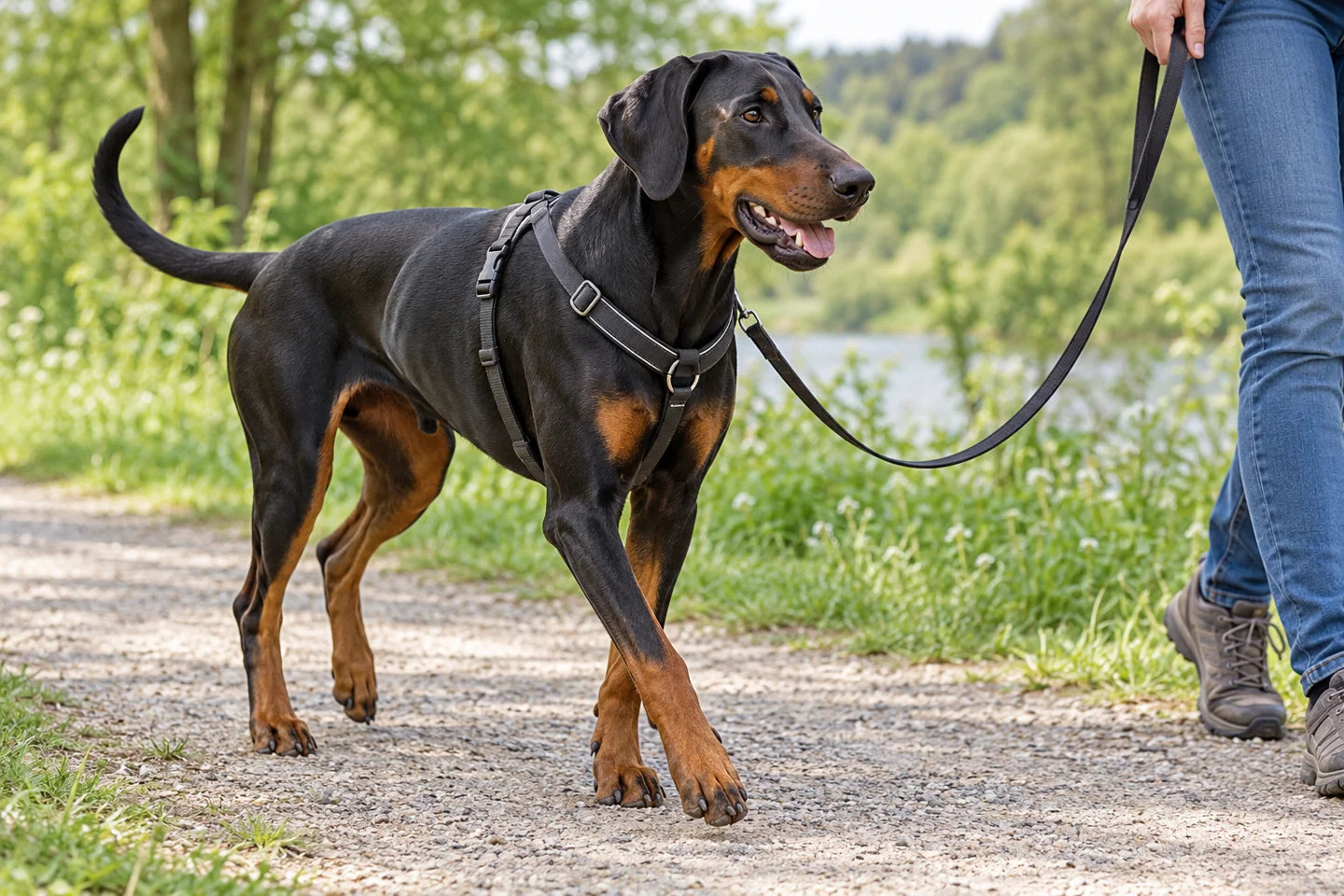
- Natural ears and complete natural tails
- Health priorities
- Cardiac surveillance, von Willebrand status, and documented family findings
General information for owners. These articles have not been reviewed by a veterinarian. Medical decisions need your dog's history and an examination.
Heart records before a dramatic photograph
Ask about cardiac screening before choosing a Doberman Pinscher. A glossy coat and muscular outline cannot show whether the heart is functioning normally, and a DNA panel is not a complete cardiac examination. Find out what testing the parents received, when it occurred, and how follow-up is handled. Discuss the actual reports with a veterinarian. Dilated cardiomyopathy is a serious breed concern, and responsible placement should make that conversation possible without promising that a particular line has eliminated all risk.
The home also needs a practical plan for strength, activity, company, and access. Picture the adult waiting while a delivery arrives, resting through a work call, or entering a vehicle after an injury. Meet mature dogs and ask what their owners find demanding. Someone offering a puppy should discuss limits and ongoing support as plainly as appealing qualities. An assessed adult may provide more direct information about established behavior, while a puppy requires time and flexibility as its body and responses develop.
A German breed named for its developer
The FCI standard identifies Germany as the origin and associates development with Friedrich Louis Dobermann. The established working history helps explain why modern owners should think about alertness, responsiveness, and clear household boundaries. It does not make a puppy a trained protector or supply reliable judgment about visitors. Avoid building an ownership decision around a frightening image or an unsupported claim of superior courage. Recent health and behavior information about the family is more useful than a promise that ancestry will perform the owner's security decisions automatically.
The Doberman is separate from the German Pinscher and other black-and-tan dogs. Similar markings do not establish pedigree or a standardized mix. Ask which registry issued documentation and what identifies the parents. In rescue, preserve uncertainty if the label is visual. The actual dog's care and safe routine can still be assessed directly. A name should guide questions rather than conceal unknown history, particularly when an owner needs evidence about handling, social contact, and medical needs before making a long-term commitment.
Natural ears, a complete tail, and adult dimensions
These illustrations show a black-and-rust Doberman with naturally folded ears and a long intact tail. Cosmetic cropping or docking is not necessary for ordinary companionship, walking, learning, or veterinary care. Photographs from different countries may show another presentation, so describe the individual rather than assuming every adult must match that silhouette. The FCI standard itself describes natural ears and tail. Look for balanced movement and usable proportions instead of selecting the most extreme head, chest, or apparent bulk.
FCI height ranges are 68–72 cm for males and 63–68 cm for females at the withers. Those are conformation ranges, not an exact prediction for a puppy or a reason to feed an animal toward a number. Measure transport and resting space for the actual adult. Use hands-on condition checks with veterinary help, and recheck equipment during growth or changes in weight. A strong athletic frame still needs comfortable access and a realistic emergency plan if the dog cannot climb or jump.
What cardiac screening can and cannot tell you
Cornell describes dilated cardiomyopathy as disease of the heart muscle that reduces effective pumping. Dobermans can develop significant disease before an owner notices obvious limitations. Ask a cardiologist or your veterinarian about appropriate surveillance, including echocardiography and ambulatory ECG monitoring where indicated. An ultrasound evaluates structure and function, while a Holter monitor records electrical rhythm over time. A normal brief listen, a single past result, and a reassuring genetic report do not all answer the same question.
Keep dated reports and ask when reassessment is advised for this dog. New weakness, fainting, breathing changes, or a drop in exercise tolerance needs prompt clinical advice even when screening was previously reassuring. Do not deliberately exercise the animal harder to obtain a clearer symptom. Activity restrictions and treatment must be individualized. A careful breeder's family records and follow-up can reduce uncertainty without guaranteeing that disease will never develop. An owner should be prepared for ongoing conversations rather than a one-time certificate considered complete for life.
Health screening beyond the heart
The current AKC working-group recommendations for Dobermans include hip, cardiac, ophthalmologist, and thyroid evaluations and a DNA test for von Willebrand disease type I. Request identifiable reports rather than accepting tested as a sufficient description. Ask about significant diagnoses in close relatives and what the source does when owners report a later problem. Specific documentation gives your veterinarian evidence to review. A large genetic panel cannot demonstrate that clinical eye assessment or orthopedic evaluation actually occurred.
Von Willebrand results need professional interpretation and belong in the medical record before surgery or other invasive care. Do not use an online category to improvise a treatment plan or assume a previous uneventful procedure resolves every future question. Current symptoms still need examination, including persistent pain, altered movement, poor appetite, or unexplained loss of condition. For a rescue lacking family records, document the gap and plan from present findings. A confident gait and bright expression are useful observations but cannot substitute for missing medical evidence.
A front door with a rehearsed procedure
Choose where the dog waits before the door opens and practice while the house is quiet. A gate and comfortable mat can give the owner time to handle deliveries without gripping a collar against an excited adult. Guests should know whether contact is invited and should avoid reaching over the head or entering the dog's retreat. A greeting can remain optional. Some visits may be easier with the dog resting separately, particularly while an owner learns the individual's response after adoption.
Do not encourage suspicion to make the animal appear more effective at guarding. Repeated blocking, threatening approaches, or poor recovery after a visitor leaves needs assessment and management. Explain actions and context rather than calling the dog protective. The routine must work for necessary visitors and a temporary carer, not only the familiar owner. A busy gathering is a poor first test of an untrained access plan. Predictable decisions from people give the dog a clearer task and reduce the need for last-minute physical intervention.

Children, speed, and a private rest area
A Doberman's head can be at a child's face height, and an excited turn can knock someone down without intentional harm. Prevent climbing, neck-hugging, ear pulling, and close posing. Arrange a private bed outside narrow routes so children do not need to step over the dog. Adults should watch actual contact closely enough to interrupt crowding and allow withdrawal. A child cannot be expected to recognize every sign of fatigue, worry, or discomfort and decide whether another touch will remain welcome.
Fast games need a separate plan. Use barriers before running or shouting if pursuit and collision are uncertain, and never ask a young child to stop a powerful dog by the lead. Keep meals, chews, and found objects under adult management. Calm search preparation or simple supervised tasks can give children a role without physical struggle. Review the arrangement when visitors arrive or the dog's health changes. A history of patience with one familiar child does not establish tolerance under every setting or painful handling episode.
Aggression and the information behind an incident
A Doberman can guard resources, react defensively to an approach, or object when care hurts. Stop pressure and create safe distance when freezing, growling, or threats appear. Do not repeat the encounter to prove authority. Keep children and visitors away from unresolved conflicts, using separate resources and suitable barriers. A sudden change needs veterinary investigation, while recurring concerns require qualified behavior support. Immediate management must remain usable while treatment or gradual learning addresses the cause over time.
AVSAB recommends reward-based methods. Physical confrontation can increase fear and is hazardous with a strong adult. Record the setting, approach, response, recovery, and any injury accurately. An owner saying the dog was only protecting does not explain what a clinician or carer needs to know. A useful plan may include medical treatment, environmental changes, and teaching. It should reduce unsafe repetitions without requiring another person or animal to recreate the same pressure as a test of obedience, courage, or the handler's physical control.
Training that a backup handler can use
Prioritize approaching equipment, walking with a slack lead, moving to a mat, returning from manageable distractions, and releasing an ordinary object through an exchange. Keep tasks understandable and rewards worthwhile. If the dog cannot respond beside an unfamiliar animal, increase distance and reduce difficulty. More volume does not resolve confusion or overwhelming arousal. Choose an instructor who explains humane methods and practical setup rather than implying that working heritage requires intimidation or pain to make learning effective.
Teach care participation deliberately. A brief stand, a chin rest, voluntary vehicle entry, and a comfortable paw touch can support future appointments. Build duration on nonslip surfaces and coordinate with clinicians when treatment cannot wait until training is complete. Household adults should share cues and access rules. A backup handler needs practice before an urgent absence, not merely written promises that the dog listens well to its usual owner. The practical objective is a repeatable routine that remains clear when another capable person takes over.
Exercise with an individual heart and body
A healthy Doberman may enjoy substantial activity, but suitability depends on age, condition, medical findings, weather, surface, and previous conditioning. Follow clinical advice when a cardiac concern exists. Build demands gradually instead of expecting a long exceptional weekend after inactivity. Watch later recovery and movement after sleep. Weakness, fainting, abnormal breathing, or a marked reduction in tolerance calls for advice; do not push through to complete a route or use eagerness to continue as proof that the heart is healthy.
During warmth, choose cooler periods, water, shade, and an easy return. Quiet alternatives can include gentle searching and cooperative lessons without frantic repetitive turning indoors. Teach an understandable end to games and protect rest. Puppies need developmental limits, and older dogs may need shorter outings or changes to access. A sustainable schedule also includes help during owner illness and unexpected work demands. Activity should enrich the dog's week while remaining medically appropriate, rather than become a daily performance that neither participant can safely maintain.
Dogs, cats, and what company actually involves
Ask about the individual's real encounters, including rest, resources, transport, and physical play. Walking beside a dog does not prove comfort sharing a chew or narrow room. Arrange initial contact with room to move away and watch whether both can pause. Interrupt persistent body pressure, especially with smaller or older companions. Separate meals and valued objects in a new household. Some dogs prefer a limited circle of walking partners, which can be an acceptable arrangement without forcing crowded play-group participation.
Cats need protected routes and controlled access with prevention of chasing. A history with one familiar cat offers limited evidence about a different animal that runs. Small pets and poultry require dependable protection rather than informal tests based on affection toward humans. Ask carers for concrete examples and management details. A powerful dog's home must be able to maintain separation through ordinary distractions and changes of handler. If that is unrealistic, recognize the placement limitation before an encounter causes an avoidable injury.
Grooming contact points and routine body care
The short close coat permits straightforward brushing, while the owner still needs to inspect skin and equipment fit. After an energetic outing, look at the chest and areas touched by straps for friction or irritation. Check paws before settling indoors if the route contained rough ground. Persistent odor, sores, repeated licking, or a painful area deserves assessment rather than another guessed product. A sleek presentation cannot establish comfortable skin or explain a new reluctance when the harness is fitted.
Use brief rewarded practice for teeth, nails, and ear observation. Ear pain, discharge, scratching, or head shaking needs veterinary advice; do not probe deeply or reuse an old prescription without direction. Eating enthusiastically does not rule out oral disease. Tell professionals about sensitive areas and handling concerns before arrival. Necessary treatment and future learning may both be needed, without asking the dog to endure prolonged frightening restraint merely to finish a routine. Care should remain predictable enough to repeat safely throughout life.
Feeding, mixes, costs, and a dogsDating plan
Use a complete diet suited to life stage, expected adult size, condition, and any medical treatment. Measure food and account for rewards rather than encouraging bulk. Doberman mixes vary in frame, coat, social behavior, and health risks; a combined name does not promise reduced cardiac concern or easier handling. Budget for surveillance, preventive care, training support, suitable transport, reliable holiday cover, and unexpected treatment. Check that carers understand the dog's actual routine and medical instructions rather than relying on a reputation for loyalty.
For dogsDating, explain whether the Doberman prefers a purposeful walk, brief reciprocal play, or more space around unfamiliar dogs. Keep exact home coordinates private. Avoid making the first encounter a demonstration of obedience in a crowd or a guarded-home visit. Choose a public setting with several routes away and begin with separate movement while owners watch recovery and attention. Add contact only when both animals remain willing. If one repeatedly blocks or follows a withdrawal, widen the gap or finish. Medical limits and current comfort decide what comes next.
Choosing a sport with an instructor and medical context
Obedience, searching, tracking, and other organized activities can provide clear tasks when the individual enjoys them. Before choosing intensity or equipment, tell the instructor about current medical advice and your own experience. A class should offer enough space to work without repeated close encounters the dog cannot manage. Watch the recovery between exercises and whether the animal remains able to learn. A busy session that repeatedly overwhelms it may look energetic while doing little to build the skills you need.
If an activity involves specialist working exercises, seek competent humane instruction rather than improvising with friends. Do not provoke suspicious or threatening behavior to demonstrate potential. Household access, handling, and a reliable finish to excitement remain important regardless of sporting ambition. The instructor and veterinarian answer different questions, and neither should be asked to replace the other's assessment. A dog may need a quieter version of an activity or a different outlet altogether.
A short boarding trial before a long absence
Ask a prospective carer how arrivals, exercise, rest, medication, and emergencies are handled. A facility accepting large dogs may still rely on crowded group contact unsuitable for this individual. Demonstrate equipment and the door routine, leave the current medical summary, and arrange a brief trial where appropriate. Review how the Doberman eats, sleeps, and recovers afterward. That information is more useful than assuming a loyal dog will either cope everywhere or be unable to settle with anyone else.
Sources and editorial notes
Sources checked October 21, 2026. Breed measurements describe reference ranges, not a diagnosis or an individual dog's ideal weight. Images are AI-generated breed illustrations and do not document a particular dog or health condition.
- AVSAB: Humane Dog Training Position Statement
- VCA: Food Aggression in Puppies
- VCA: Grooming and Coat Care for Your Dog
- VCA: Ear Infections in Dogs
- VCA: Feeding Guidelines for Dogs
- Orthopedic Foundation for Animals: Canine Health Assessments
- VCA: Heat Stroke in Dogs
- American Kennel Club: Working Group Health Testing Requirements
- Cornell University: Dilated Cardiomyopathy
- Doberman Pinscher Club of America: Buying a Doberman Pinscher
- FCI: Doberman Pinscher Breed Standard
Keep getting to know dogs.
Read another guide or return to your dogsDating community.
Explore breed guidesBack to dogsDating