Dogo Argentino
A powerful Argentine hunting breed whose care begins with lawful placement, capable handling, hearing records, and realistic boundaries around other animals.
How these guides are researched and reviewed
- Origin
- Argentina; Córdoba
- FCI height
- Males 60–68 cm; females 60–65 cm
- FCI approximate weight
- Males 40–45 kg; females 40–43 kg
- Illustrated anatomy
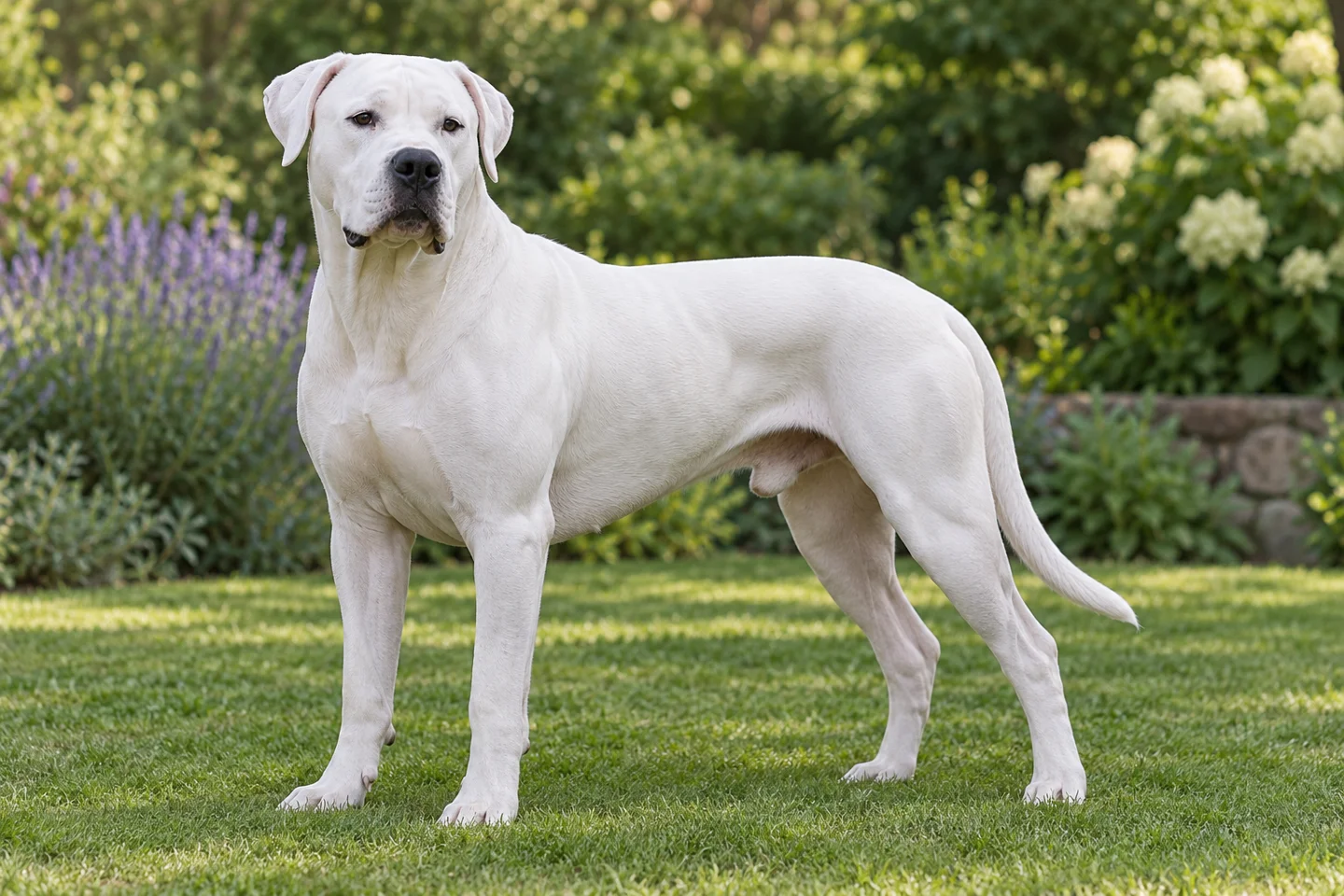
- White coat, natural drop ears, long undocked tail
General information for owners. These articles have not been reviewed by a veterinarian. Medical decisions need your dog's history and an examination.
Start with lawful ownership and capable care
A Dogo Argentino needs a home that can manage a powerful adult, protect other animals, and maintain sensible boundaries even on an ordinary tired weekday. Before discussing a puppy's markings or pedigree, establish whether you can lawfully keep, insure, house, and transport the dog where you live. These are practical placement questions. A household that cannot secure suitable accommodation or reliable care during an absence has not solved the commitment by finding an affectionate individual or an attractive litter.
GOV.UK lists Dogo Argentino among prohibited dog types in its public guidance. That example concerns a particular legal system and should not be turned into a claim about every country. Consult current official information for the places involved in ownership and travel. A different advertising name or a crossbreed label does not settle a legal classification. Resolve uncertainty before moving a dog, and obtain appropriate professional advice rather than relying on a seller's assurance that nobody will ask questions.
A proposed backup carer should complete a realistic rehearsal before a placement is agreed. Watch that person fit the harness, secure the outer door, walk the usual route, and return without help from the main handler. Willingness to assist is useful, but it does not establish the ability to manage a strong unfamiliar dog. Correct an awkward gate or an unclear instruction during that trial rather than leaving the discovery until an owner is ill or away.
Argentine development and a hunting background
The FCI standard identifies Argentina as the country of origin and describes development in Córdoba under Dr. Antonio Nores Martinez. Its account explains a deliberate breeding program for a large-game hunting dog. This history helps a prospective owner understand why strength, persistence, and interest in other animals belong in the discussion. It does not establish that a modern puppy will arrive trained, make safe judgments around livestock, or recognize which unfamiliar person should be welcomed at a household entrance.
Ask what the recent family actually does and how those dogs live between activities. A working claim needs more detail than a dramatic story about distant ancestors. Has the puppy experienced indoor rest, routine handling, and short separations? Has an adult been observed in a home with circumstances like yours? Keep an uncertain rescue identification explicit. Several muscular white dogs and crosses share visible features, while the animal's demonstrated behavior, medical findings, and actual management needs remain relevant whatever its ancestry proves to be.
A substantial white dog with natural ears and tail
The FCI height range is 60–68 cm for males and 60–65 cm for females, with approximate weights of 40–45 kg and 40–43 kg respectively. These are standard descriptions, not a feeding target for every individual. A dog should carry enough muscle for comfortable movement without being pushed toward maximum weight. Measure the real adult when choosing a vehicle restraint, doorway barrier, bed, or harness, and consider how it would be moved safely if injured.
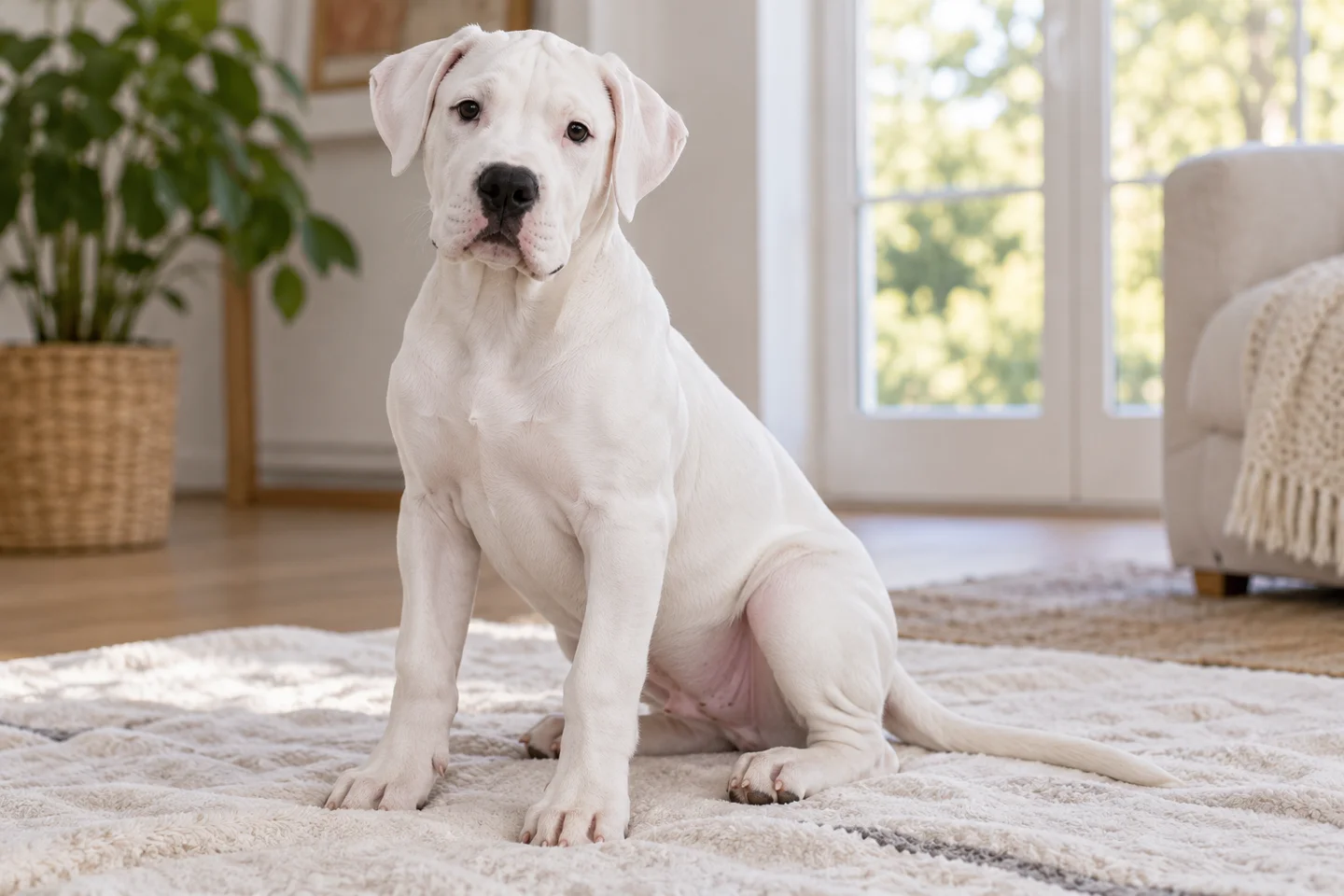
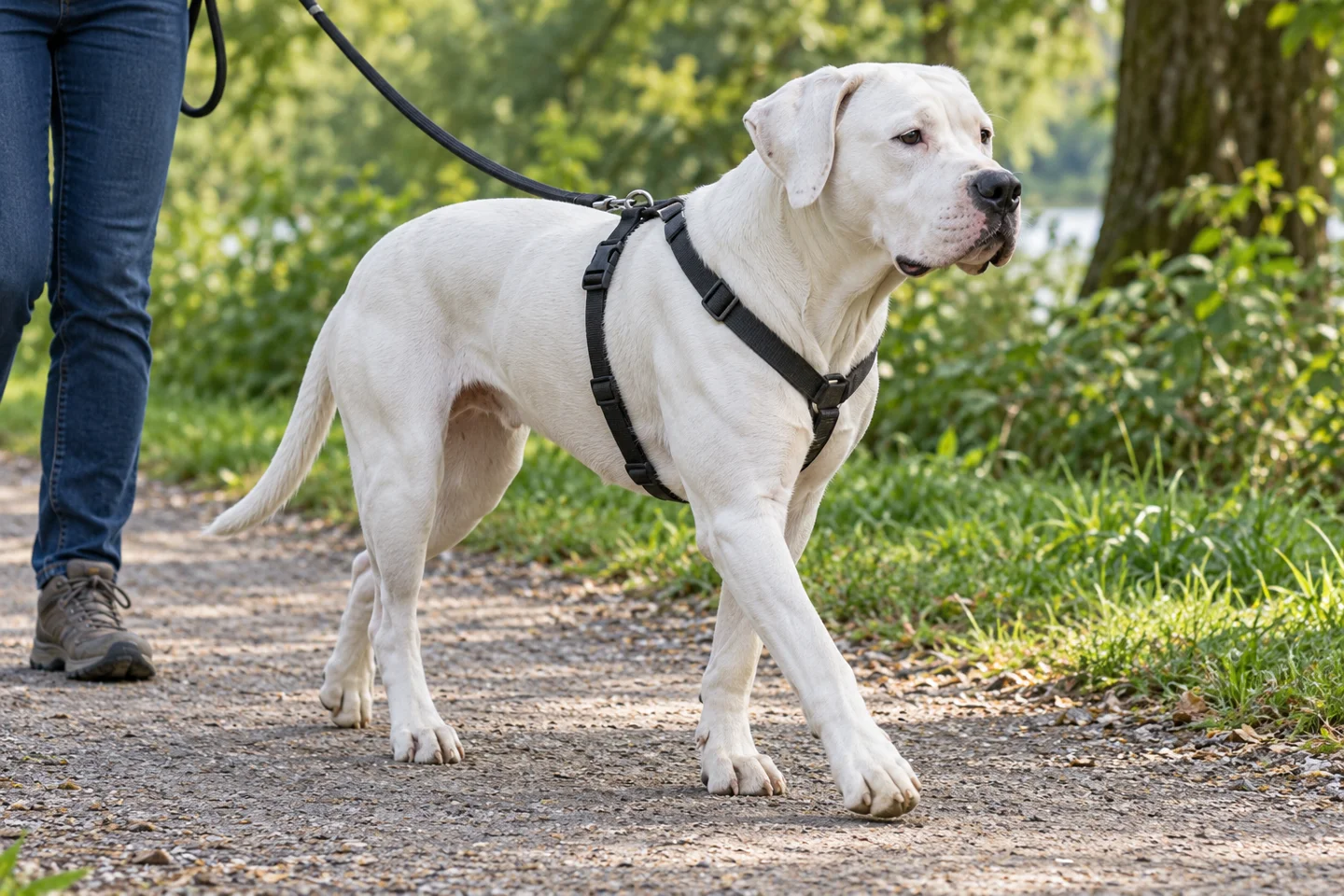
The short white coat, strong head, and muscular outline are recognizable features. The illustrations show intact natural drop ears and a long undocked tail; they are generated examples rather than pedigree evidence or medical photographs. Inspect a prospective dog's movement from several angles instead of judging condition from a head portrait. A thick neck and broad chest can make equipment fit less straightforward than buying a generic large size. Allow space for full shoulder movement and recheck straps as a growing puppy changes shape.
Visitor routines before an exciting arrival
Plan the front door while everyone is calm. One adult should be able to move the Dogo to a comfortable protected area before another admits a delivery worker or guest. The arrangement must still work when bags, children, or another dog complicate the entrance. A gate is useful only when its fittings and the surrounding space suit the individual. Rehearse the sequence without visitors first, rewarding the dog for moving away from the threshold rather than waiting to address a rushed greeting.
Give guests a clear instruction about ignoring the dog initially and allowing space. Do not ask someone to reach toward a restrained animal to demonstrate that it accepts strangers. Familiarity with household members cannot predict every response to a person carrying tools, entering after dark, or moving unexpectedly. If introductions remain difficult, use separation and qualified help. A home visit can proceed successfully without direct contact. Every adult responsible for access needs to understand the same limits instead of improvising according to personal confidence.
Children and decisions adults must retain
Children cannot provide the physical control or moment-to-moment judgment needed around a powerful adult dog. Arrange their routes through rooms so they do not squeeze beside a resting Dogo, reach over its bowl, or become trapped near a doorway. Adults should manage food, chews, stolen objects, and necessary handling. Teach a child to summon help rather than pulling something from the mouth. A dog's willingness to play is not permission for climbing, hugging its neck, or holding its face still.
Use barriers during boisterous visits and give the dog a retreat that children cannot enter. Supervision means noticing the interaction while it happens and changing it promptly, not occasionally looking into another room. A freeze, a withdrawn head, or repeated efforts to leave should end the pressure. Reassess arrangements when a child becomes mobile or the dog develops discomfort. A family's previous pleasant experience does not remove the need to protect both child and animal during a new stage of life.
Other animals require an honest assessment
The breed's hunting background makes the safety of cats, small pets, poultry, and livestock an essential question before placement. Ask what encounters have actually occurred and whether the dog remained controllable when another animal ran. A quiet moment beside a familiar cat provides limited information about an unfamiliar animal outdoors. Do not hold a vulnerable pet close as a test. Reliable separation may be necessary while a qualified professional helps assess whether the household can accommodate the individual safely.
With other dogs, start from recorded behavior rather than a general promise of sociability. Notice whether play includes pauses, role changes, and voluntary departures. A large athletic dog can cause injury through impact even without a fight. Keep feeding areas and valued items separate, and avoid crowded entrances where neither animal can move away. If aggression has occurred, a casual meeting arranged by an optimistic friend is not treatment. Discuss an appropriate plan with the veterinarian and a qualified behavior professional before inviting further contact.
Aggression is a situation to investigate
Record the circumstances of a threat or bite in plain terms: who approached, what the dog was doing, the distance, any contact, and how the event ended. Calling the dog protective or stubborn supplies less useful information. Stop the immediate conflict and prevent another person from unknowingly repeating it. If a Dogo stiffens over a chew, children and visitors should be kept away while a professional advises on safe management. Repeatedly taking the chew to prove control can increase concern about approaching hands.
Unexpected irritability, resistance to touch, or altered movement warrants veterinary assessment. Pain can change tolerance before a dog stops eating or walking. Reward-based behavior work should address the identified circumstances alongside physical safeguards. Punishing a growl may remove a warning without resolving its cause. A basket muzzle can be one part of an individually suitable plan when introduced gradually and fitted properly, but it cannot make forced contact comfortable. Inform carers and clinicians about previous incidents before asking them to handle the animal.
Training for practical movement and release
Teach the Dogo how to move with you before strength becomes the main feature of a disagreement. A hand target, a turn toward the handler, waiting behind a marked boundary, and willingly entering a travel space can make daily care easier. Begin where the task is understandable and reward the choice promptly. Practice with another trusted adult so the dog learns that the routine belongs to the household, rather than responding only to one person's posture or particular equipment.
Build an exchange using safe objects of modest value before you need it around something dangerous. Keep lessons short and finish while the dog can still think. A delayed response may mean the setting is too difficult or the reward does not compete with the distraction. Change those conditions instead of increasing physical pressure. Group classes need enough room and an instructor willing to adapt contact. Success is a useful response under manageable conditions, not standing close to every dog in the class photograph.
Exercise with room for restraint and recovery
Choose daily activity around age, condition, and the places where control can be maintained. Purposeful walks, suitable learning, and carefully managed games can provide variety without every outing becoming a maximum-effort session. A growing dog needs appropriate exploration and sleep. Discuss repetitive high-impact exercise or a demanding sport with the veterinarian rather than assuming that visible muscle demonstrates mature joints. An adult returning from illness or a quiet period also needs conditioning before a long hike or unfamiliar workload.
White coat and short hair do not protect against hot ground or overheating. Plan shade, water, and an earlier finish when conditions change, and never leave the dog waiting in a parked vehicle. Watch recovery after the outing as well as enthusiasm during it. New lameness, unusual fatigue, or altered breathing needs advice. Collapse and severe respiratory difficulty require urgent attention. A sustainable routine must work during poor weather and an injured owner's recovery, with suitable assistance available rather than reliance on one person's strength.
Grooming that makes changes easier to notice
Use the short coat as an opportunity for regular observation. Run a gentle hand over the body during a quiet moment and notice new irritation, small wounds, or sensitivity beneath straps. Brush as appropriate for loose hair and wash using products suited to the individual. Avoid repeated cosmetic treatment of a persistent red or uncomfortable area without identifying its cause. A pale coat may make some changes conspicuous, but redness, odor, and licking still need to be interpreted clinically rather than judged from appearance alone.
Natural ears need observation for discharge, repeated shaking, odor, or pain. Ask the clinic whether cleaning is needed and how to do it without probing the canal. Introduce foot handling and toothbrushing separately from bathing so all care does not arrive in one prolonged restraint session. Give professionals advance notice of discomfort or handling concerns. If a necessary procedure cannot be completed safely at home, arrange clinical help rather than repeatedly forcing the dog until a frightened response becomes part of the routine.
Health screening and the actual reports
The AKC's current national-club recommendations for Dogo Argentinos list hip evaluation, cardiac examination, and BAER hearing testing. Ask for identified reports and the age and method involved in each assessment. A registration document or a statement that the parents were seen by a vet does not supply those results. Discuss significant illness in relatives and what follow-up the source collects from owners. Different assessments address different questions, so a long commercial DNA panel cannot substitute for every listed clinical evaluation.
Read the finding rather than treating completion as a guarantee of normality. A CHIC number records the required testing and disclosure under its program; it is not a promise that a dog will remain healthy. Your own veterinarian still needs to investigate current symptoms and plan prevention appropriate to location and activity. Keep reports available when moving clinics or arranging care. Missing rescue records should be documented honestly, then supplemented by current examination and useful observations rather than invented reassurance about a family that cannot be traced.
Hearing status should guide communication
BAER testing records auditory responses for each ear, which is more informative than watching whether a puppy reacts to a noise. A dog hearing on one side can still respond to events in a room, so household observations cannot establish equal hearing. Ask for the report relating to the particular puppy or adult. Have the veterinary team explain what is known and what further assessment may be appropriate. Coat color alone cannot provide the answer, and a familiar breeder's confident impression is not the test result.
If hearing is reduced, adapt teaching and access deliberately. Use clear visual cues and ways of gaining attention that do not startle a sleeping dog. Everyone handling the animal needs the same instructions. Secure outdoor access and appropriate restraint remain important near traffic because a verbal warning may not be available in time. A qualified trainer can help establish practical communication. Assess progress through the dog's actual ability to understand and respond, without treating deafness as either a reason to give up teaching or a condition solved by affection alone.
Feeding, mixes, costs, and later-life care
Feed a complete diet appropriate to life stage and monitor condition with veterinary guidance. The standard's weight range should not encourage overfeeding a puppy. Account for food used in training and adjust when activity changes. Separate meals from children and other animals. Persistent appetite loss, unexplained weight change, or altered drinking needs investigation instead of continual unplanned food switches. Ask for qualified nutritional advice before supplements or a home-prepared diet, particularly when growth or an existing condition makes requirements less forgiving.
A Dogo mix can differ considerably in size, behavior, coat, and medical needs, and mixed ancestry does not settle a legal restriction or guarantee easier handling. Budget for capable care, appropriate equipment, training assistance, prevention, and unexpected treatment. As the dog ages, review vehicle loading, nonslip footing, and comfortable rest before access becomes difficult. A placement source should discuss support and return arrangements candidly. Choose the individual whose needs the household can maintain through changes in work, health, and accommodation, rather than buying a promise attached to a breed or crossbreed name.
dogsDating with explicit limits and an exit
A dogsDating profile should describe observed compatibility, handling requirements, resource concerns, and any professional management plan. Keep exact home coordinates private. Where social contact is appropriate and lawful, select a quiet public route with enough space to avoid close approaches. Agree beforehand how the meeting will end and which person will handle each dog. An owner who needs distance should be able to request it without having to justify the dog's entire history while the animals wait close together.
Begin with movement that allows both dogs to investigate the environment while remaining apart. A successful encounter may involve no direct play. Do not introduce food, chews, or a crowded vehicle as additional tests. Stop when either animal cannot settle or repeatedly tries to leave, and review any concerning incident with the appropriate professional. One comfortable outing supplies information about that setting. It does not establish safety with shared accommodation, vulnerable animals, unfamiliar visitors, or breeding, all of which require their own decisions and safeguards.
Sources and editorial notes
Sources checked October 21, 2026. Breed measurements describe reference ranges, not a diagnosis or an individual dog's ideal weight. Images are AI-generated breed illustrations and do not document a particular dog or health condition.
- AVSAB: Humane Dog Training Position Statement
- VCA Animal Hospitals: Food aggression in puppies
- VCA Animal Hospitals: Aggression toward unfamiliar dogs, diagnosis
- VCA Animal Hospitals: Grooming and coat care for your dog
- VCA Animal Hospitals: Ear infections in dogs
- VCA Animal Hospitals: Feeding guidelines for dogs
- VCA Animal Hospitals: Common emergencies in dogs
- VCA Animal Hospitals: Heat stroke in dogs
- Orthopedic Foundation for Animals: CHIC health screening programs
- American Kennel Club: Working group health testing requirements
- Fédération Cynologique Internationale: Dogo Argentino standard 292
- GOV.UK: Controlling your dog in public, banned dogs
- Louisiana State University: What is the BAER test?
Keep getting to know dogs.
Read another guide or return to your dogsDating community.
Explore breed guidesBack to dogsDating