Drentsche Patrijshond
A Dutch brown-and-white pointing dog that benefits from cooperative field-style activities, thoughtful household routines, and open discussion of family health records.
How these guides are researched and reviewed
- Origin
- Netherlands
- Adult height
- Males 58–63 cm; females 55–60 cm
- Approximate adult weight
- Males 30–35 kg; females 25–31 kg
General information for owners. These articles have not been reviewed by a veterinarian. Medical decisions need your dog's history and an examination.
A family pointing dog needs a working day
The Drentsche Patrijshond, often called the Drent, is a Dutch pointing dog whose ordinary life should contain opportunities to search, move, and cooperate with someone. A family that likes country walks may find those habits appealing. The same habits can be difficult beside an unfenced road or in a garden visited by birds. Consider where the dog will exercise safely and who will teach the skills needed to get there. A pleasant description of the breed cannot replace that practical plan.
Spend time with adult Drents before choosing a puppy. Watch what happens when the household settles after a walk, when a visitor enters, and when another animal moves nearby. Ask owners which parts of their routine required deliberate teaching. Meet dogs from the family you are considering where possible, and describe your own schedule honestly. A breeder needs to know about long absences, young children, resident cats, and limited access to quiet exercise. Those facts matter more than whether you have previously owned a dog with an impressive pedigree.
Dutch identity and field history
The FCI places this breed among continental pointing dogs and gives the Netherlands as its country of origin. Its history describes dogs arriving through France from Spain and developing in Drenthe. The useful household consequence is a combination of field interests and close cooperation with people. Finding birds, following movement, and returning to a handler are different tasks. Owners who want a companion still need to account for the searching part rather than assuming affection will keep the dog beside them outdoors.
A Drent is a separate breed, not a color variety of the English Springer Spaniel or a generic setter cross. Ask a rescue or seller what evidence supports the identification and retain uncertainty when ancestry is unknown. Registration establishes recorded parentage under a registry's rules; it does not establish temperament or medical soundness. Field titles also answer only part of the question. Ask how adults live away from organized work and whether their everyday behavior suits the home you can actually provide.
Size, markings, and the illustrated dog
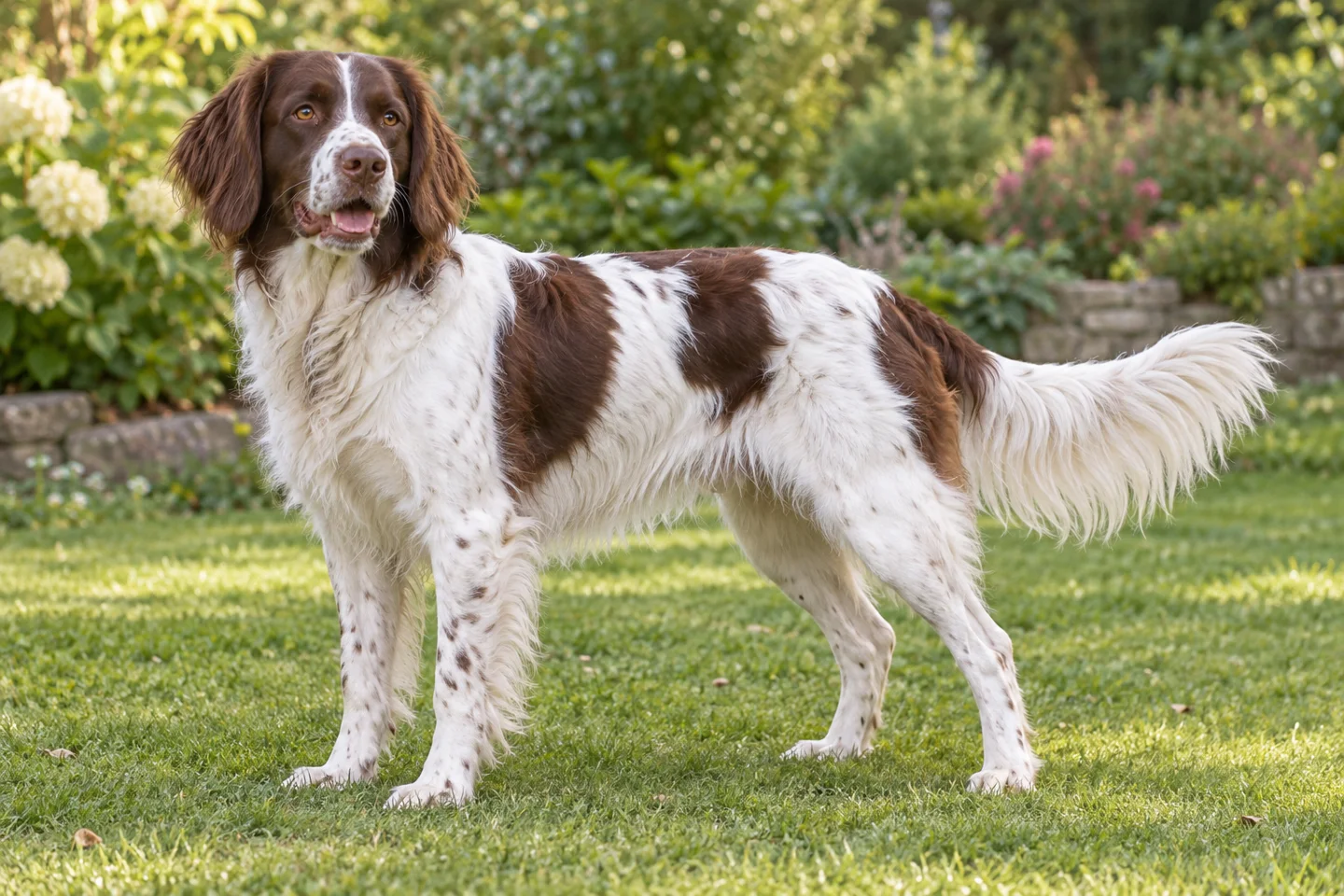
The FCI standard gives male height as 58–63 centimeters and female height as 55–60 centimeters, with some latitude for a well-proportioned individual. It gives approximately 30–35 kilograms for males and 25–31 kilograms for females. These are adult reference figures, not targets for feeding a young dog. Measure vehicle space, sleeping areas, and handling arrangements around the actual animal. A healthy individual can still fall outside an ideal written description, and an unexplained change in weight calls for a different discussion.
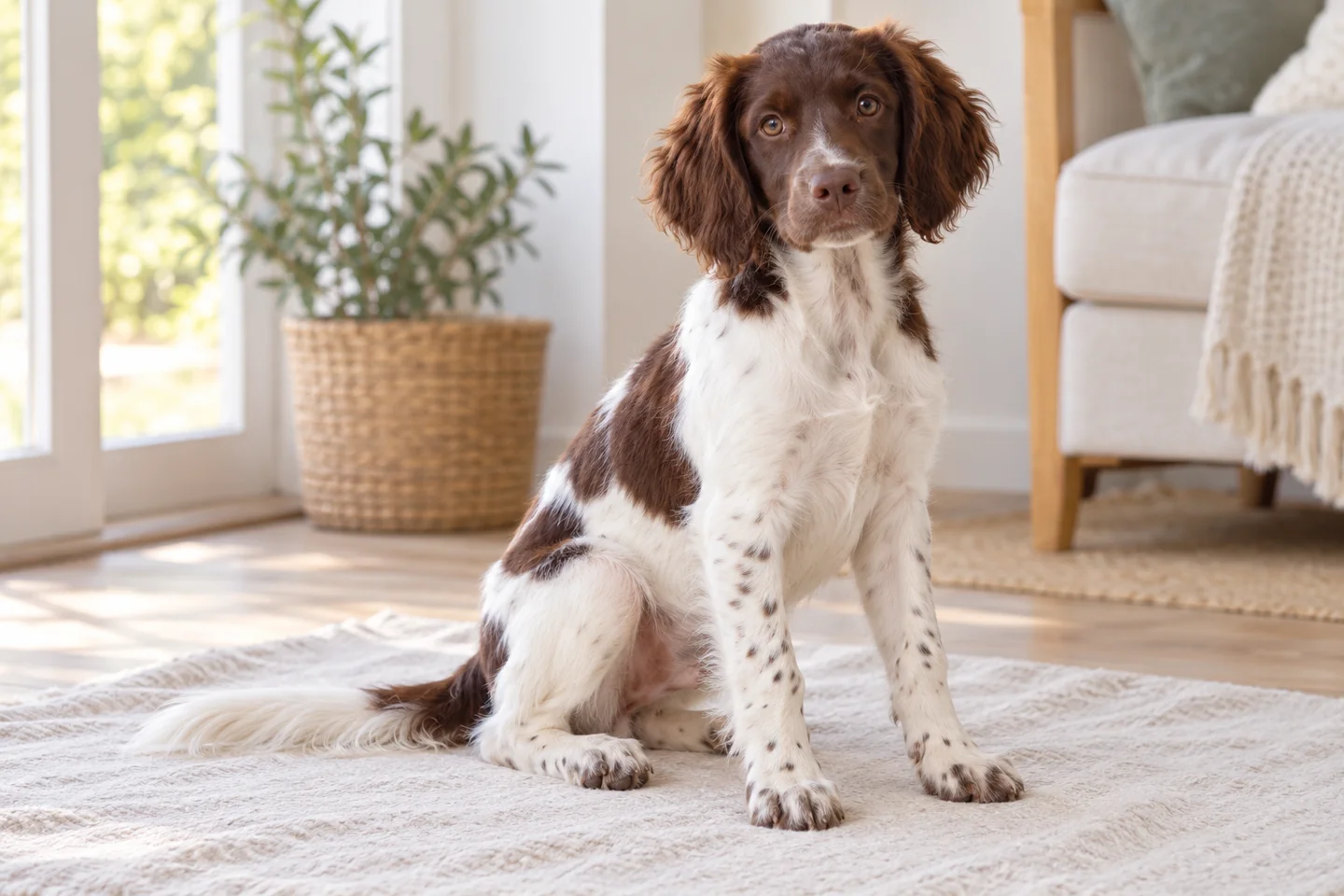
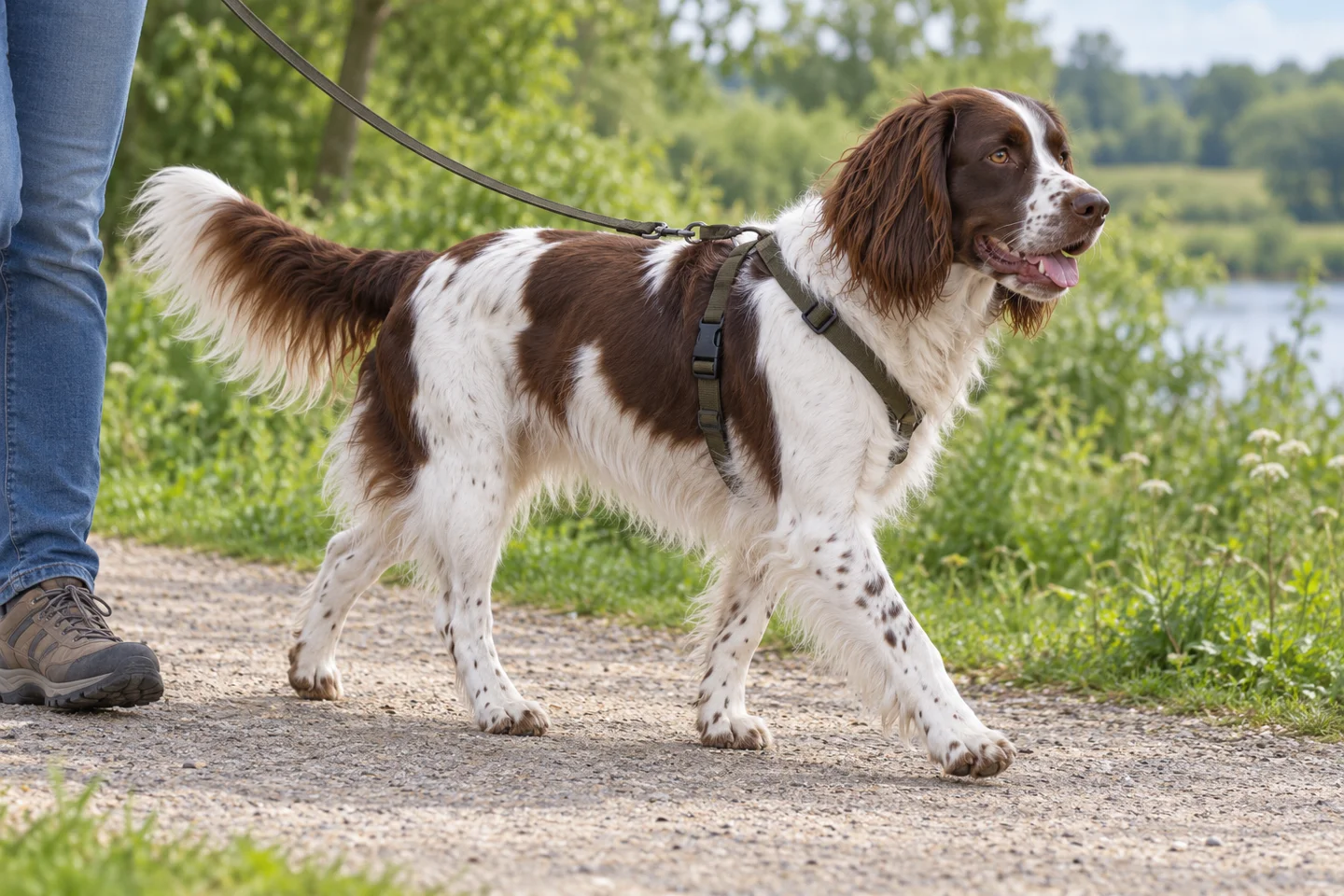
The recognized appearance is white with brown patches, sometimes with spotting or ticking. The standard distinguishes this pattern from an all-over roan coat. Hanging ears, feathering, and a natural tail contribute to the outline, but coat alone is unreliable evidence of ancestry. The illustrations accompanying this guide depict the breed's brown-and-white appearance. They are labeled generated illustrations and cannot demonstrate a real dog's age, health, working ability, or quality. Compare documentary evidence and real adults when making a purchase or adoption decision.
Temperament inside an ordinary house
A cooperative field dog still benefits from household boundaries that are clear enough to follow. Decide where muddy paws are dried, how access to the kitchen works, and what the dog should do while people eat. Reward a comfortable resting place before the Drent becomes practiced at collecting food from a low table. When several people share care, agree on the same cues and access rules. Conflicting instructions create avoidable difficulty even in a dog that enjoys working with its family.
Watch the distinction between staying near you and depending on continuous interaction. Give the dog worthwhile company, then gradually teach comfortable short periods behind a gate or in another room. Pair those moments with suitable rest and increase difficulty cautiously. Ask for help if separation produces sustained distress instead of trying to exhaust the dog first. A diary of when trouble starts, how long it lasts, and what happened earlier is more useful than a broad label such as stubborn or needy.
Children need protected play and adult supervision
Children can unintentionally create hard situations by running with food, leaning over a sleeping dog, or treating a retreating animal as part of a chasing game. Arrange separate places for snacks and quiet rest. An adult should be able to intervene promptly, rather than simply being somewhere in the house. Give younger children activities that do not require controlling the dog, such as placing a reward on a mat while another adult manages the Drent. Avoid making a child responsible for preventing an escape.
A dog's previous experience with children is specific to those children and circumstances. Ask about ages, noise, visitors, and any incidents involving possessions or handling. During family gatherings, shorten contact and provide a room where the dog can rest without being followed. If the Drent repeatedly leaves, becomes still, guards an object, or shows discomfort, increase separation. Affection at another time does not cancel that information. The useful response is to change the arrangement before either the child or dog needs to escalate.
Aggression, resource guarding, and early intervention
Breed descriptions cannot establish an individual Drent's safety. Write down the circumstances of growling, lunging, snapping, or biting and prevent those circumstances while seeking qualified help. Pain, fear, and competition may require different responses. A veterinarian should assess a sudden behavior change. If the problem concerns another dog, record distance, movement, and whether food or a narrow passage was involved. Details allow a professional to build a plan; reassurance that the animal is usually friendly does not resolve the risk.
Teach trades using items the dog can release safely and reward voluntary movement away from resources. Do not repeatedly take the food bowl to prove ownership or punish warnings. Protect access to meals and chews from children and other pets. When an incident has occurred, disclose it accurately to anyone taking over care. Management may involve gates, different walking routes, or professionally guided muzzle training. Choose measures that prevent another event while preserving the dog's ability to rest and learn without repeated confrontation.
Training that connects searching with returning
Begin recall in a quiet enclosed place and reward a quick turn toward you. Progress toward mild distractions before expecting a response around birds or fresh scent. A long line attached to suitable equipment can prevent rehearsal of disappearing into cover, provided the handler understands how to avoid tangles and sudden stops. Practice collecting the dog, rewarding it, and releasing it to explore again. If every return ends the outing, owners may accidentally make coming back less worthwhile than continuing to search.
Include a hand target, loose-lead walking, a pause at gates, and a comfortable settle. Teach each separately, then use them in short sequences that resemble daily life. A Drent waiting while muddy boots are removed needs a different skill from a dog sitting for a treat in the kitchen. AVSAB recommends reward-based methods and rejects aversive training. If your progress stalls, reduce the distraction, improve the reward, and examine the setup. Repeated corrections around wildlife can add distress without supplying a reliable alternative action.
Socialization includes quiet observation
Give a young Drent manageable experiences of different surfaces, vehicles, people, and ordinary sounds. Choose distances where the puppy can observe, eat, and recover. A crowded gathering with several people reaching down may teach avoidance instead of confidence. Allow the dog to move away and pair brief exposures with familiar routines. Keep veterinary advice about local infectious risk in the plan, and ask how to provide safe experiences before the puppy is ready for every public setting.
A useful adult dog can pass unfamiliar animals without meeting them. Practice turning onto a wider path or standing behind a barrier while another dog passes. Reinforce checking in before the Drent reaches the end of the lead. If the dog becomes fixed on another animal, increase distance rather than waiting for a spectacular reaction. Social experience is information about what feels safe and predictable. It does not require every person to touch the dog or every encounter to become play.
Exercise with an outlet for scent and thought
Plan regular outdoor movement alongside searching games, retrieval practice, and recovery at home. Match intensity to age, fitness, weather, and veterinary advice. A puppy following an adult dog for a long outing may keep moving after it would otherwise stop. Choose short opportunities to explore and rest instead of treating a breed's working background as an exercise quota. An older Drent may still enjoy searching while needing a shorter route and easier access to water and the vehicle.
Use enclosed ground or a suitable lead arrangement when recall is uncertain. Check local access restrictions and livestock rules before allowing more freedom. Hide a familiar toy in easy cover or lay a simple food search where wildlife disturbance is unlikely. Finish while the dog can still respond and recover comfortably. In warm conditions, move activity to cooler times and watch for distress. A dog that has been driven to exhaustion has not necessarily learned how to settle during an otherwise ordinary afternoon.
Grooming feathering and checking ears
Work through the coat after muddy or brush-filled outings, paying attention to feathering behind the ears, legs, and tail. Separate hair gently so you can see tangles and the skin beneath them. Short, rewarded sessions help the Drent remain comfortable while you inspect it. Ask a groomer to demonstrate tools and technique if you cannot reach the base of the coat without pulling. A mat tight against the skin needs careful professional assessment rather than hurried scissors on a moving dog.
Check the hanging ears regularly and record changes in smell, discharge, redness, or comfort. Scratching and head shaking deserve attention, particularly when repeated after field activity. A veterinarian can distinguish infection, foreign material, and other causes before choosing treatment. Do not improvise medication from another animal's prescription. Handle paws and nails as their own skill, introducing pressure and tools gradually. The dog that accepts a brush does not automatically understand nail trimming, ear examination, or removal of material caught between toes.
Health history, screening, and epilepsy research
The American Drentsche Patrijshond Association discusses hip and eye concerns and epilepsy within the breed. Ask which examinations the parents received, request the actual findings, and review significant conditions in close relatives. A vague statement that the line is healthy provides little information. Screening programs document particular assessments at particular times. They cannot exclude every future illness, and missing reports should remain missing information rather than becoming an assumed pass. Arrange an independent veterinary examination of a new dog and take available records along.
Breed-club epilepsy research does not mean that a predictive DNA test can currently clear every dog of seizure risk. Ask about affected relatives and how breeders share later diagnoses, including those in dogs already placed as companions. If an episode occurs, contact the veterinarian and, when safe, record its duration and observable features. Do not restrain the mouth or place fingers between the teeth. Agree on emergency instructions with the clinic. Seizures require clinical investigation; an online description cannot determine their cause or provide an individual treatment plan.
Food, weight, and changes worth recording
Feed a complete diet intended for the dog's life stage and use measured portions as a starting point. Review body condition rather than choosing the largest recommended quantity because the dog is active. Rewards used for recall and searching contribute to the total intake. Adjust with the veterinary team when work, weather, or recovery changes the daily routine. Keep fresh water available and carry an appropriate supply on outings where a clean source is uncertain. A hunting background does not make unsuitable water harmless.
Write down persistent changes in appetite, stool, thirst, or weight and bring that information to a consultation. Seek urgent advice for collapse, severe distress, repeated unsuccessful retching, or other sudden serious symptoms. Avoid using repeated diet changes to postpone diagnosis. If you want to prepare food at home, obtain a balanced formulation from a suitably qualified veterinary nutrition professional. An appealing ingredient list cannot establish nutritional completeness, and supplements can complicate an otherwise adequate feeding plan when added without a clear purpose.
Other animals and Drent mixes
Treat birds, rabbits, and small pets as a separate management question from sociability with dogs. Protect enclosures and doors, and do not use a chase as a test of intentions. A Drent raised with a cat may still pursue a moving unfamiliar animal outside. Resident cats need routes and resting places the dog cannot reach. Introductions should preserve their ability to leave. Ask for observed history rather than assuming that family affection or a soft expression predicts behavior around another species.
A Drent cross may inherit hunting interests, substantial adult size, feathering, or other traits from either parent. There is no universal grooming or temperament outcome implied by a cross name. Discuss the relevant medical histories on both sides where they are known. For a rescue with uncertain parentage, assess current behavior and needs without turning appearance into a genetic report. Evaluate whether you can safely manage the dog you meet, including its response to separation, food, restraint, wildlife, and ordinary household activity.
Costs, access, and the household decision
Before reserving a puppy, budget for veterinary care, insurance or emergency savings, transport, training, and suitable care when you travel. A less common breed may involve travel to meet adults and obtain a puppy, but distance should not pressure you into skipping questions. Ask how the breeder supports owners when behavior or health problems appear. Read the agreement and understand return arrangements. A useful conversation includes uncomfortable possibilities, such as a dog that cannot live safely with an existing pet.
Consider who will maintain the routine during illness, long workdays, and winter darkness. A secure exercise plan and access to patient handling matter more than an attractive countryside photograph. Adopting an adult can provide observations of established habits, although behavior still changes with context. Allow time for adjustment and keep expectations modest while you learn the dog's signals. If your household cannot offer regular activity and cooperative teaching, resolve those limitations before choosing a field-oriented companion whose daily needs will continue after the novelty fades.
Arrange a trial with the person who will provide holiday care before booking a long trip. Explain recall limits and access to cats or birds in writing. A sitter who normally relies on an open garden needs to understand why this particular dog requires a different arrangement.
dogsDating for a thoughtful first outing
A Drent profile on dogsDating can explain whether the dog searches widely, prefers parallel walking, or becomes excited when another animal runs. Keep exact home coordinates private and choose a public meeting area with room to turn away. Ask whether the proposed companion guards toys or enjoys repeated chasing. For an introductory walk, leave retrieves and food scattered on the ground out of the arrangement so handlers can observe social comfort without adding competition. Confirm that both owners can manage their dogs independently.
Start with the animals moving in the same direction at a comfortable separation. Use the route to learn whether they can sniff, disengage, and return attention to their handlers. Pause or leave if one dog repeatedly pressures the other or cannot recover after excitement. A successful meeting may consist entirely of shared walking. Record what worked so a second outing can begin sensibly. Decisions about off-lead play or home visits should follow further observation and a safe setting, rather than being automatic rewards for one uneventful encounter.
Sources and editorial notes
Sources checked October 21, 2026. Breed measurements describe reference ranges, not a diagnosis or an individual dog's ideal weight. Images are AI-generated breed illustrations and do not document a particular dog or health condition.
- AVSAB: Humane Dog Training Position Statement
- VCA Animal Hospitals: Food aggression in puppies
- VCA Animal Hospitals: Aggression toward unfamiliar dogs, diagnosis
- VCA Animal Hospitals: Grooming and coat care for your dog
- VCA Animal Hospitals: Ear infections in dogs
- VCA Animal Hospitals: Feeding guidelines for dogs
- VCA Animal Hospitals: Common emergencies in dogs
- VCA Animal Hospitals: Heat stroke in dogs
- Orthopedic Foundation for Animals: CHIC health screening programs
- Fédération Cynologique Internationale: Drentsche Patrijshond standard 224
- American Drentsche Patrijshond Association: Health
- Drentsche Patrijshonden Club Nederland: Onderzoek epilepsie
Keep getting to know dogs.
Read another guide or return to your dogsDating community.
Explore breed guidesBack to dogsDating