Dutch Shepherd
A Dutch shepherd with three coat varieties and an active, cooperative working background that calls for clear teaching, appropriate outlets, and individual health records.
How these guides are researched and reviewed
- Origin
- Netherlands
- Adult height
- Males 57–62 cm; females 55–60 cm
- Coat varieties
- Short-haired, long-haired, rough-haired
- Illustrated variety
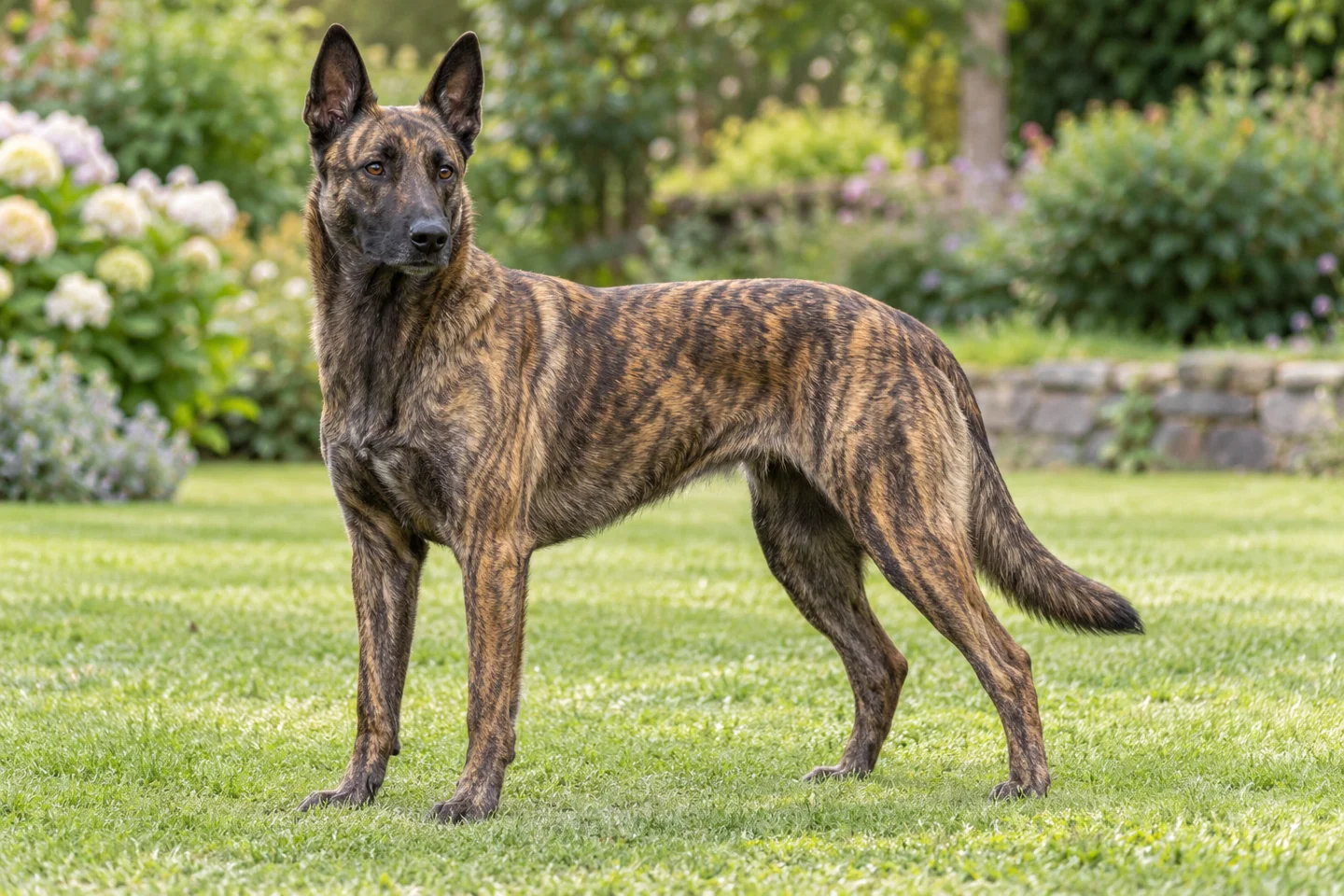
- Short-haired golden brindle
General information for owners. These articles have not been reviewed by a veterinarian. Medical decisions need your dog's history and an examination.
An active shepherd needs a job it can actually do
A Dutch Shepherd needs a household prepared to teach useful behavior as carefully as it provides activity. It may be an appealing choice for someone who enjoys training, yet that interest has to survive ordinary workdays, illness, and bad weather. Decide what the dog will do while you answer the door, prepare food, or sit through an online meeting. Exercise alone does not supply those skills. A workable home includes supervised practice, protected rest, and an owner willing to adjust difficulty before frustration takes over.
Meet adults from the family or breeding program under consideration. Ask how they respond to unfamiliar people, neighboring dogs, quiet afternoons, and necessary handling. A video of fast sport work shows a selected task in a particular setting. It cannot show whether that same dog settles comfortably in your home. Explain your experience and limits honestly. A breeder or rescue should help you evaluate the match, including reasons a different individual or breed might fit better, rather than relying on general admiration for intelligence or athleticism.
Dutch farm history and modern differences
The FCI identifies the Netherlands as the breed's origin and describes its historical use as a countryside shepherd. Farm duties required cooperation with people and attention to movement. Today, individual dogs may come from families selected for different activities, so ask what the source actually breeds and lives with. A companion home should not assume that every registered Dutch Shepherd has identical intensity. Family history and observation provide more useful information than broad labels such as working line when the label has not been explained.
Dutch Shepherds are distinct from Belgian Shepherds, including the Malinois, although casual descriptions sometimes confuse them. Brindle coloring alone cannot confirm ancestry, and an unidentified brindle rescue deserves a cautious description. If parentage is documented, verify the registry and the parents' identities. The breed has short-haired, long-haired, and rough-haired varieties. Those varieties affect coat care and some breed-club screening discussions. Specify which one you mean when reading advice or speaking with a breeder, rather than treating every example pictured online as interchangeable.
Standard size and the short-haired brindle illustration
The FCI height range is 57–62 centimeters for males and 55–60 centimeters for females. Its standard does not provide a single adult weight range to use as a universal target. Judge condition and healthy growth with the veterinarian, taking the individual structure into account. A dog reaching the listed height is not automatically mature enough for demanding physical work. Check practical measurements too, including vehicle space, harness adjustment, resting area, and whether the person providing relief care can manage the adult comfortably.
The guide's illustrations show the short-haired variety with golden brindle coloring, erect natural ears, and a long tail. The recognized coat varieties have different textures, and photographs of one should not be used as instructions for another. Generated illustrations help identify the subject visually, but they do not document a real animal's construction, pedigree, or condition. Compare real adults and inspect the coat yourself before planning its care. A striking outline should not distract from comfortable movement, clear breathing, and the ability to recover from activity.
Household arousal and learning to stop
Some owners unintentionally make every interaction a request for speed. A ball appears whenever the dog approaches, doors open after frantic pacing, and play resumes the moment the person sits down. Decide instead which behaviors will earn access to those activities. Reward waiting at a manageable distance while equipment is prepared, and teach a release from a resting mat. Begin after ordinary needs have been met, in a quiet room, for brief periods the dog can succeed at. Build duration without expecting stillness through an entire busy evening immediately.
Observe whether the dog is enjoying an activity or struggling to disengage from it. Repeated collisions, frantic grabbing, or inability to rest afterward mean the session needs a different structure. Use breaks and calmer alternatives rather than increasing intensity until the animal is exhausted. If behavior repeatedly disrupts daily life, involve a qualified trainer and veterinarian as appropriate. Describing the problem precisely, such as grabbing sleeves when visitors run, gives them something to assess. Calling it excessive energy can obscure the specific skill and management needed.
Children and movement in a family home
Running children, scooters, and shouted games can create difficult situations for an attentive, quick-moving shepherd. Adults should organize space so the dog can rest separately during energetic play. Teach children to ask an adult before starting a dog game and to leave resting places and food alone. Do not allow chasing, nipping clothes, or body blocking to become accepted entertainment. Interrupt early with distance and a trained alternative. A behavior can be uncomfortable or dangerous even when the dog has never bitten someone before.
Supervision needs an adult who can watch and intervene, not simply a person somewhere on the property. Ask about the dog's actual history with children of comparable ages. Introduce visitors without expecting them to train or restrain the dog. A young child should not hold the lead where a sudden reaction could pull them down. Give family members clear arrangements for gates, chew items, and bedrooms. A dog that is affectionate with one child still needs protection from rough handling and separate assessment around unfamiliar children.
Aggression, guarding, and a workable safety plan
Treat stiffening, growling, lunging, snapping, and bites as information that requires a change in management. Record the trigger, proximity, available escape, and what happened just before the response. A sudden change warrants veterinary assessment, particularly when touch or movement seems painful. Keep visitors and other animals out of the difficult situation while professional help is arranged. Confidence about the breed's trainability cannot justify repeating an unsafe encounter. The immediate responsibility is to prevent another incident while identifying what the dog needs to learn or avoid.
Avoid provoking possession behavior by repeatedly taking bowls or valued objects. Teach voluntary trades and comfortable movement away from resources using rewards. A professional may recommend conditioned muzzle use for particular situations; introduce it gradually and preserve appropriate distance and handling. Disclose restrictions accurately to sitters, trainers, and veterinary staff. Do not describe a known snapping episode as harmless play to make placement or care easier. Honest accounts allow people to choose suitable precautions and protect the dog from situations it cannot presently manage safely.
Training through clear tasks and manageable distractions
Build foundation skills before asking for elaborate sport work. A hand target, recall, release of a toy, comfortable lead walking, and a reliable pause at doors all have daily uses. Teach one criterion at a time. If the dog can release a toy in the kitchen but cannot do so during a fast game outdoors, reduce that game's intensity and rebuild the skill there. Repeating a command more forcefully does not explain a change in context. Reward the exact response you want and provide predictable opportunities to succeed.
AVSAB recommends reward-based methods and opposes aversive techniques. Choose an instructor who can describe how training will proceed without intimidation, painful equipment, or flooding the dog with a feared situation. Agree on rest, access to water, and what signs will end a session. Record progress against everyday goals, including quieter exits and easier veterinary handling, rather than only impressive tricks. If your Dutch Shepherd is being prepared for a sport, obtain coaching that accounts for physical development and household behavior as well as competition technique.
Socialization and visitor arrangements
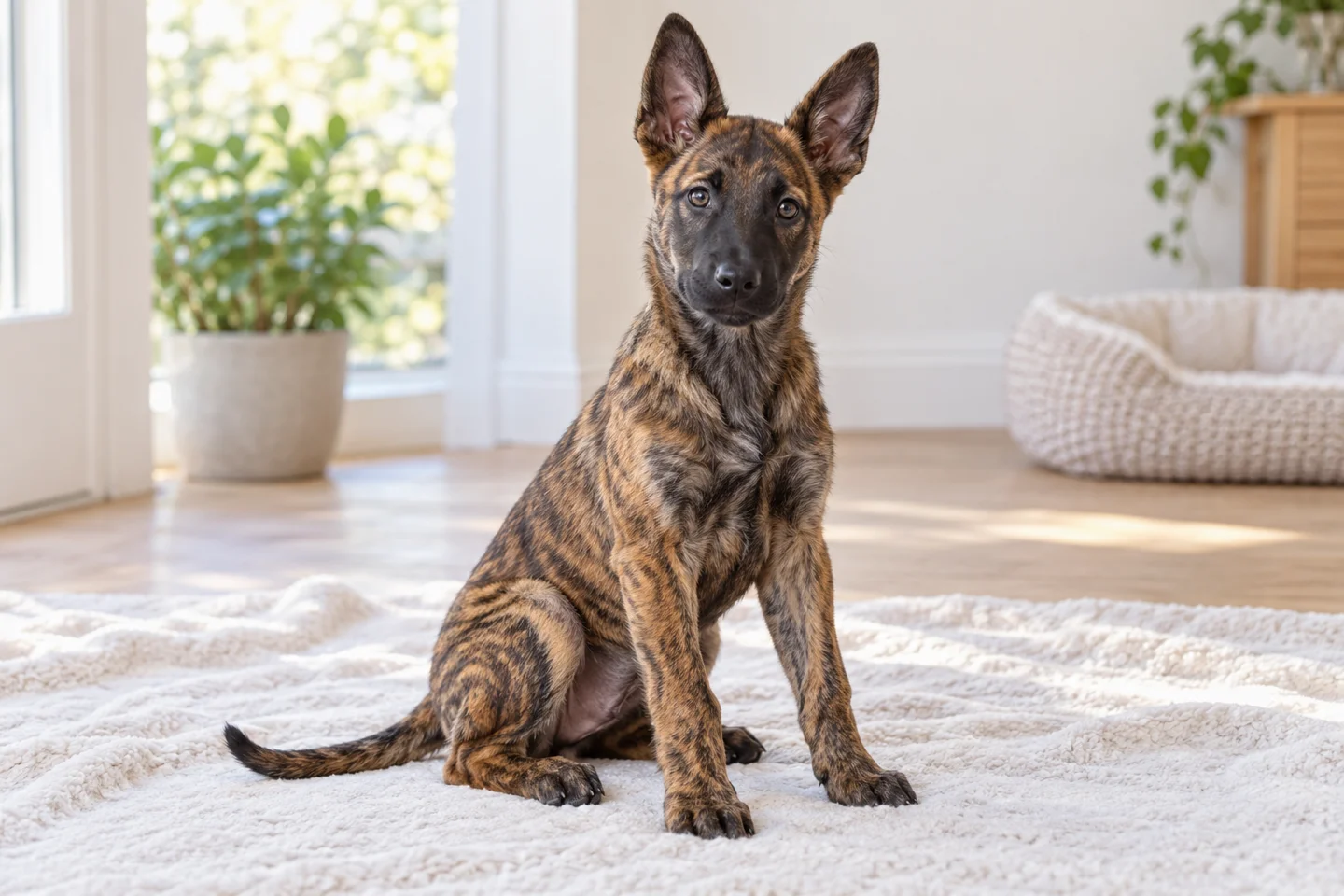
A young dog benefits from safe, brief experience with varied people, sounds, surfaces, and environments. Allow observation without requiring physical greetings. A puppy watching a delivery from behind a barrier may learn more comfortably than one surrounded by hands at the front door. Introduce equipment and travel in small stages. Ask the veterinary team how to balance local disease risk with appropriate learning opportunities. The plan should preserve recovery and choice rather than treating visible stress as a necessary price of becoming confident.
For adult visitors, arrange an entry routine before the bell rings. The dog might wait behind a gate with a familiar activity while people remove coats and settle. Progress only if the dog remains comfortable and the visitors understand the plan. Some dogs will need continued separation for certain gatherings. Accept that practical arrangement while seeking individual guidance. Socialization does not mean permanent unrestricted access to everybody. A dog that can observe calmly or rest elsewhere has useful options that a forced greeting can remove.
Exercise, sport, and physical recovery
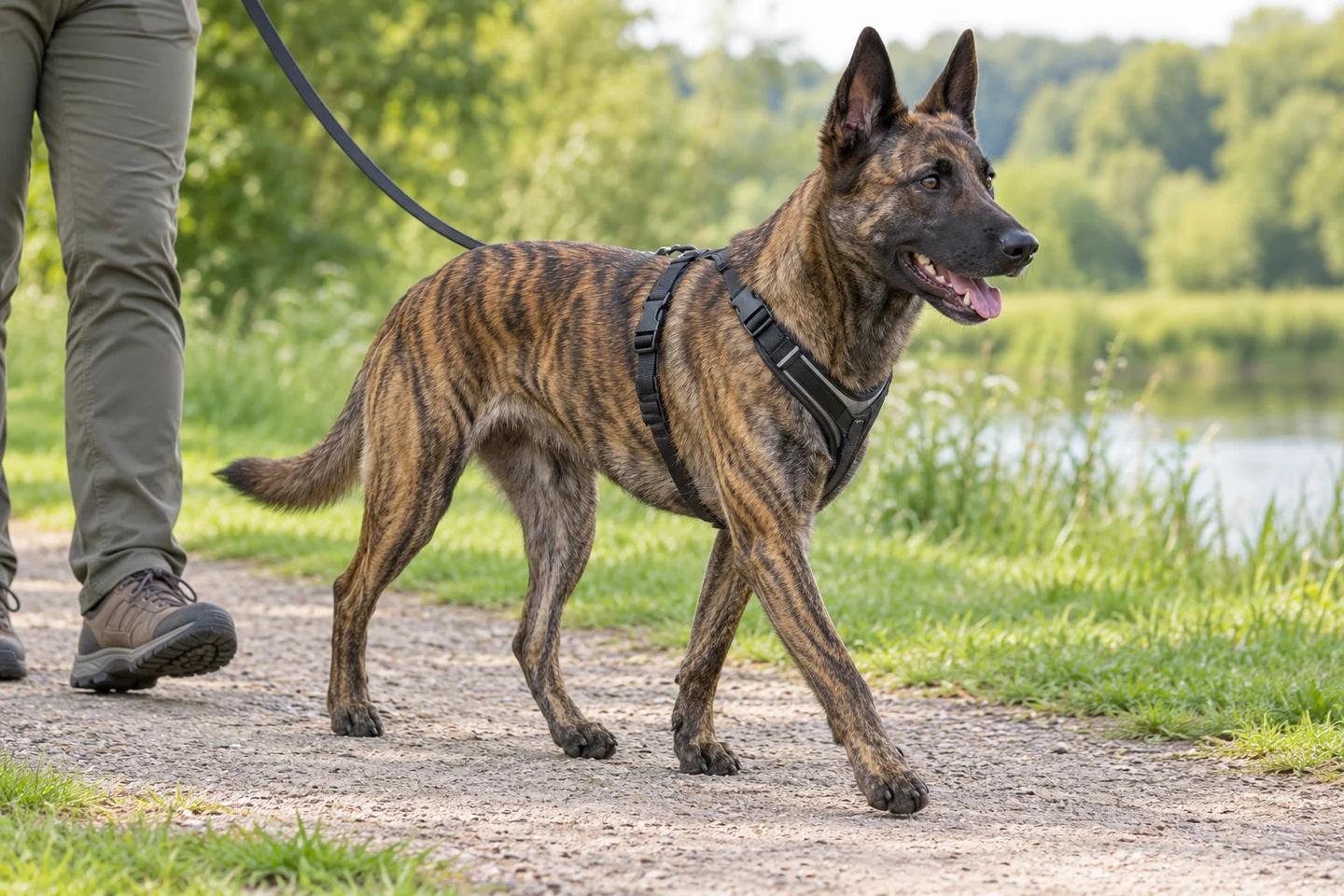
Offer varied movement and thought rather than treating endless high-speed repetitions as the only valid exercise. Walking in suitable places, controlled searches, cooperative games, and coached activities can form part of a routine. The appropriate workload depends on age, current fitness, health, and conditions. Discuss strenuous work with the veterinary team, especially for a growing dog or one returning after injury. A breed reputation for stamina does not establish that a particular animal is ready for a demanding run, jump session, or bicycle outing.
Prepare for weather and terrain. Carry water, assess footing, and shorten the plan if heat or fatigue changes the dog's movement and responsiveness. Practice a calm finish and comfortable return to the vehicle. Between active periods, supply uninterrupted rest instead of asking the dog to remain alert to every household sound. If recovery seems poor or enthusiasm changes, investigate rather than increasing pressure. Repeatedly forcing work through discomfort can conceal a medical problem and undermine the trust needed for future handling and training.
Grooming depends on the coat variety
For a short-haired Dutch Shepherd, brush gently to remove loose hair and inspect the skin, especially after dusty or muddy activity. Check the belly, feet, and areas beneath equipment instead of judging the whole coat from its clean-looking back. Long-haired and rough-haired dogs need care suited to their own texture. Ask a knowledgeable groomer to demonstrate that routine before purchasing tools or making major changes. A care method useful for one variety may be a poor choice for another, so describe the coat accurately.
Build cooperation around feet, nails, mouth, and ears separately. A dog that accepts brushing may still find nail equipment unfamiliar. Start with small rewarded steps, allowing the animal to remain comfortable. Repeated scratching, ear odor, discharge, or head shaking needs veterinary advice; do not treat erect ears as protection from every ear problem. Skin soreness beneath a harness calls for examining fit and the skin itself. If handling suddenly becomes difficult, consider pain or irritation instead of concluding that the dog is refusing familiar work for no reason.
Health screening needs the correct variety and records
The AKC's current FSS list for Dutch Shepherds names hip, elbow, and ophthalmologist evaluations. The American Dutch Shepherd Association gives additional guidance that distinguishes coat varieties, including some genetic, eye, spine, and thyroid considerations. Ask a breeder to identify the recommendations applicable to the particular dogs and show the findings. Avoid treating a list copied from another variety as a complete answer. Document identity, examination date, result, and the meaning of any follow-up recommendation so your veterinarian can interpret the information with family history.
A genetic result answers a defined question about a tested variant. It cannot certify that every hereditary or clinical disorder has been excluded. Ask how breeders balance relevant findings with family information and genetic diversity, and how later diagnoses are communicated to buyers. If acquiring an adult without screening records, say so and plan care from the evidence available. A current limp, altered coordination, weakness, or discomfort requires clinical assessment regardless of favorable parental paperwork. Do not rely on an online interpretation of a video to determine the cause or seriousness.
Food, equipment, and changes in workload
Choose a complete diet appropriate to life stage and review measured portions against body condition. Training rewards can make up a noticeable amount of a busy dog's intake, so account for them instead of adding them to an already generous allowance. Discuss adjustments when sport work increases or an injury reduces activity. Keep meals protected from competing animals and children. The feeding plan should be simple enough that another caregiver can follow it accurately, including any prescribed treatment and the circumstances that require a call to the clinic.
Inspect leads, clips, harnesses, and gates before they fail during an excited moment. Fit matters as much as strength: equipment that rubs, restricts movement, or can be backed out of needs adjustment or replacement. Keep an emergency transport plan and veterinary contacts accessible. Sudden collapse, severe breathing difficulty, or marked pain needs urgent advice. Do not give human medicines to keep a dog working. A change in drinking, appetite, or recovery also deserves attention even when there is no dramatic incident and the dog continues to accept a toy.
Other animals and Dutch Shepherd mixes
Ask for precise reports of interactions with resident dogs, cats, and smaller animals. Controlled meetings should allow both dogs to disengage and should avoid narrow spaces or valued resources initially. Watch for one animal repeatedly controlling movement or preventing access to a person or exit. A cat needs secure routes and places beyond the dog's reach. Do not allow an uncontrolled chase to decide whether coexistence is possible. Observation under a safe arrangement supplies better information and protects the animals while you make decisions.
Dutch Shepherd crosses can vary substantially in drive, size, coat, and health risks. A mix with a Malinois, German Shepherd, or another breed is not a predictable intermediate product. Examine known parental histories and relevant records, then assess the individual. If ancestry is only guessed, keep that uncertainty explicit. A cross name does not establish suitability for protection work, sports, children, or first-time ownership. Plan around behaviors you can observe and manage, including recovery from excitement and acceptance of the necessary daily care routine.
Time, expense, and choosing the right household
Budget for skilled instruction, routine veterinary care, emergency savings or insurance, durable equipment, suitable transport, and care when you travel. A sitter's willingness to take dogs is different from their ability to manage this animal's arousal and access restrictions. Arrange a short trial and share specific written information. Think about the cost of missed work for rehabilitation or behavior appointments, not only the purchase price. An apparently inexpensive puppy can create a large practical commitment when the household needs extensive changes to meet its needs.
A good match may be someone who enjoys patient teaching, provides appropriate outlets, and can preserve quiet recovery. Past experience matters through the skills it supplied, rather than through a count of dogs previously owned. Be candid about physical limitations and family agreement. If only one person wants the breed while everyone else fears handling it, address that before acquisition. Ask the source about ongoing support and return arrangements. Choosing a less demanding individual can be a sound decision even for an owner capable of advanced training.
dogsDating with controlled choices
Use a dogsDating profile to explain the individual Dutch Shepherd's preferred interaction, experience around unfamiliar dogs, and useful distance for initial walking. Keep exact home coordinates private. Discuss whether either dog reacts to running, guards a person or object, or has restrictions that affect the route. Choose a setting with broad paths and separate handlers. Avoid making the first appointment a fast toy session, even if both owners enjoy active games. Excitement can obscure whether the animals are actually comfortable with each other.
Begin with space and compatible walking speeds. Reward checking back with handlers and allow each dog to investigate the environment without being followed continually. End or change direction when either cannot disengage. An introductory walk need not include touching, wrestling, or shared travel afterward. Exchange useful observations about distance and recovery before arranging another meeting. Home access, enclosed play, and contact with additional animals require further planning. The aim is a relationship that both dogs can manage, supported by accurate descriptions rather than assumptions about two athletic breeds enjoying the same activity.
Sources and editorial notes
Sources checked October 21, 2026. Breed measurements describe reference ranges, not a diagnosis or an individual dog's ideal weight. Images are AI-generated breed illustrations and do not document a particular dog or health condition.
- AVSAB: Humane Dog Training Position Statement
- VCA Animal Hospitals: Food aggression in puppies
- VCA Animal Hospitals: Aggression toward unfamiliar dogs, diagnosis
- VCA Animal Hospitals: Grooming and coat care for your dog
- VCA Animal Hospitals: Ear infections in dogs
- VCA Animal Hospitals: Feeding guidelines for dogs
- VCA Animal Hospitals: Common emergencies in dogs
- VCA Animal Hospitals: Heat stroke in dogs
- Orthopedic Foundation for Animals: CHIC health screening programs
- Fédération Cynologique Internationale: Dutch Shepherd Dog standard 223
- American Dutch Shepherd Association: Health
- American Kennel Club: Miscellaneous Class and FSS health testing requirements
Keep getting to know dogs.
Read another guide or return to your dogsDating community.
Explore breed guidesBack to dogsDating