Dutch Smoushond
A small yellow rough-coated Dutch companion with a rebuilding history, specialist coat-care needs, and placement arrangements best checked directly with its breed organization.
How these guides are researched and reviewed
- Origin
- Netherlands
- Adult height
- Males about 37–42 cm; females about 35–40 cm
- Approximate standard weight
- 7–11 kg
- Dutch name
- Hollandse Smoushond
General information for owners. These articles have not been reviewed by a veterinarian. Medical decisions need your dog's history and an examination.
A small companion with a coat and history of its own
The Dutch Smoushond is a small, rough-coated Dutch dog whose practical needs deserve attention before its unusual name or appearance becomes the reason to buy one. Begin by speaking to the breed's own organization about the current placement program and meeting real adults. A photograph of a yellow, bearded dog does not establish identity. Nor does a seller's claim that a rare puppy is immediately available. Ask who bred the litter, how the adults live, and which records accompany the dog before making financial or travel commitments.
The daily commitment is familiar even when the breed is uncommon. Someone must provide company, teach manageable behavior, arrange comfortable coat care, and notice changes in health. Decide who will do those jobs during a normal working week. A relatively compact dog can fit into many physical spaces, but floor space alone does not make a suitable home. Look at noise, access to safe walks, children's routines, and how the dog would cope with the hours people spend elsewhere. Those details make the choice concrete.
Hollandse Smoushond identity and rebuilding
Hollandse Smoushond is the Dutch name for the breed. The FCI places it in its Pinscher and Schnauzer-related section, rather than making it a general term for any small terrier. Dutch registry material describes the loss of the earlier population and a later rebuilding effort. Owners should distinguish that organized breed program from an unrelated litter labeled Smoushond because its puppies have yellow wire coats. Ask the relevant club to explain the current arrangements, including identification, placements, and any continuing responsibilities expected of owners.
Historical claims become less useful when they are stretched into predictions about a puppy. A background involving practical companionship does not establish that a dog will ignore a pet rabbit, accept every stranger, or remain quiet during long absences. Take the history as context and ask for observations about the individual family. For an adult rehoming, learn which household conditions it has already experienced and which remain unknown. A clear account of uncertainty is more useful than a confident promise assembled from a short breed description.
Standard measurements and recognizable features
The FCI standard gives approximate height ranges of 37–42 centimeters for males and 35–40 centimeters for females, with weight around 7–11 kilograms. Those figures describe adult reference size, not a growth schedule or permission to feed toward the top number. Review condition and movement with a veterinarian. Check that a harness fits the dog's actual chest and does not catch the rough hair painfully. Plan car restraint and comfortable resting space for the adult, even if the puppy initially appears easy to carry everywhere.
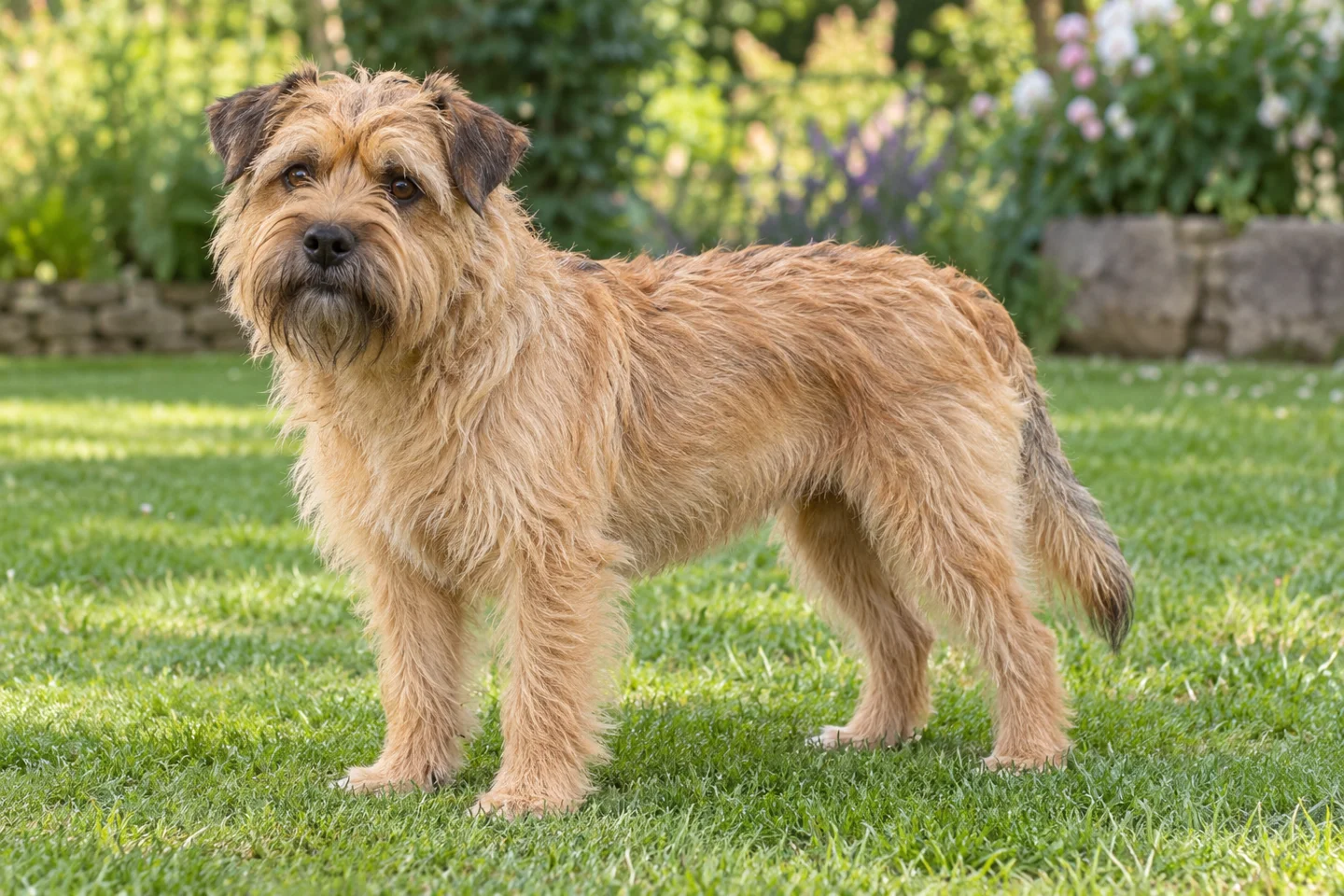
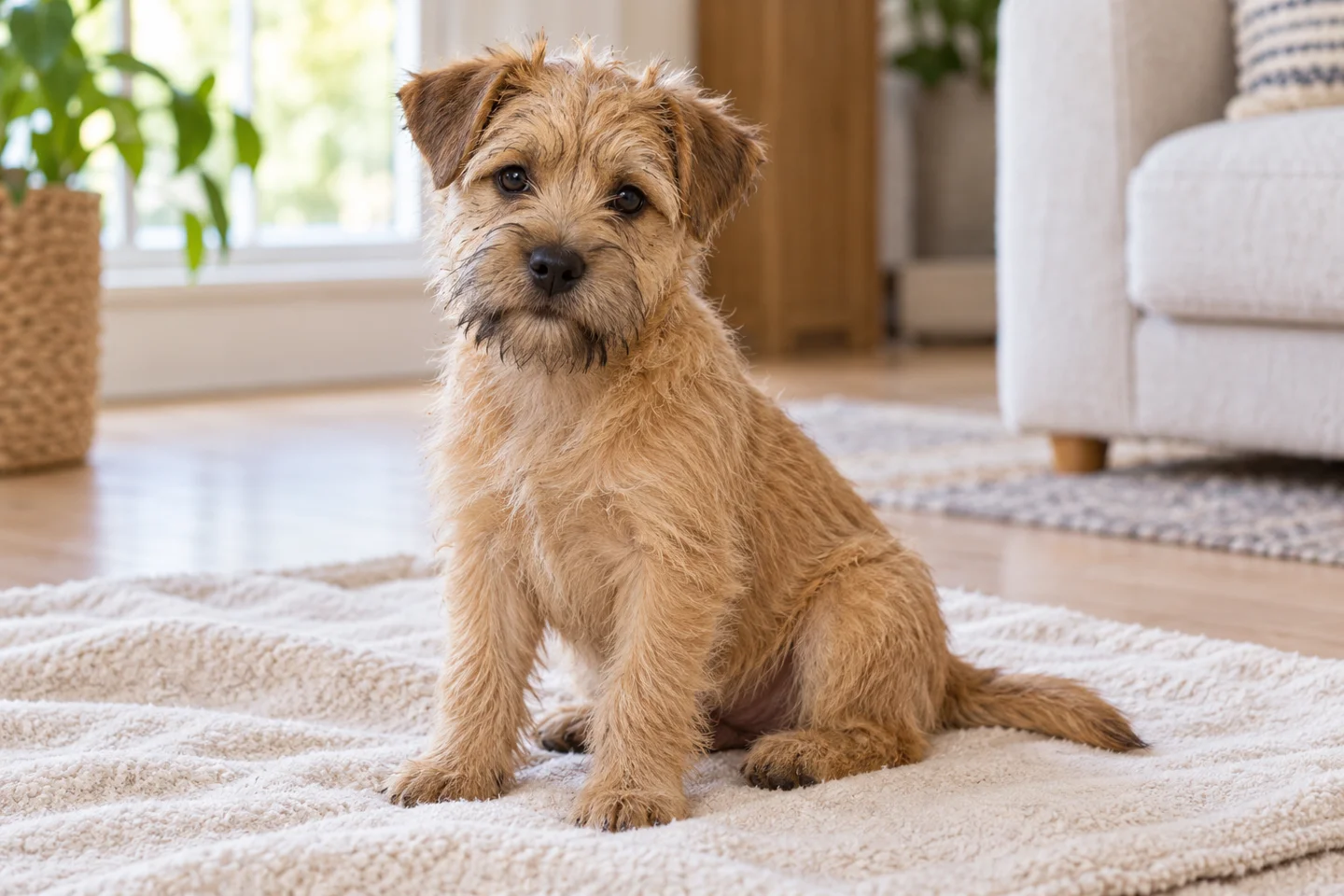
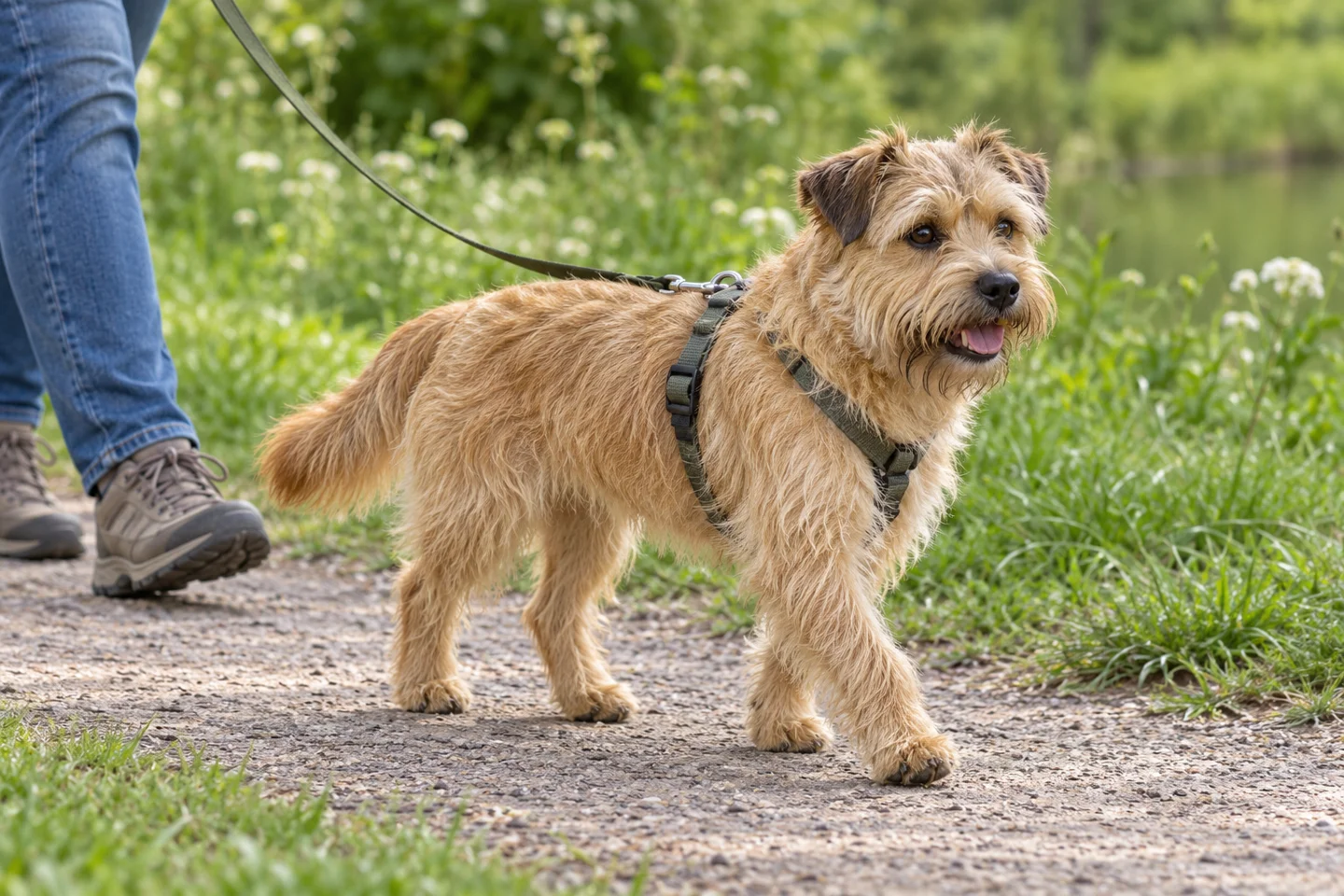
A shaggy yellow coat, beard, eyebrows, and hanging ears help form the recognizable appearance. The expression should remain visible rather than hidden by neglected hair. The three images attached to this guide depict those features as generated illustrations. They do not show a documented breeding animal, establish a real puppy's likely adult coat, or prove correct structure. If you need to identify a rescue with uncertain ancestry, use cautious language and assess the animal's actual coat and behavior. Similar looks can occur in many unrelated mixes.
Company, independence, and ordinary interruptions
Teach the dog what happens when attention is temporarily unavailable. Set up a comfortable resting place near normal household activity and reward quiet occupation while you complete a short task. Increase the duration gradually instead of expecting the dog to understand a full afternoon of remote work immediately. Keep the routine realistic: food, outdoor access, company, and activity still need to happen. A dog that repeatedly interrupts may need a clearer schedule, a learned alternative, or assessment of distress rather than a stronger reprimand.
Practice short separations before they become urgent. Begin with a barrier or brief move into another room, observing whether the dog remains comfortable. Build from success and arrange help for longer unavoidable absences. If the Smoushond paces, vocalizes persistently, or tries to escape, change the plan and seek professional guidance. Do not assume that another dog will solve the difficulty. A second animal brings its own needs and can leave the original distress unresolved while adding competition for space, attention, and care.
Children and the habit of asking before lifting
A small dog can be picked up before it has any opportunity to move away, especially by excited children. Set a household rule that an adult manages lifting and that a resting dog is left in peace. Provide a protected bed and keep children's active games elsewhere when necessary. Youngsters should call an adult if the dog has a toy they want, rather than prying it from the mouth. Teach a simple activity such as placing a reward on a mat under adult guidance, with the dog free to finish and leave.
Ask about the individual's previous contact with children and avoid turning a friendly reputation into unsupervised access. An adult needs to watch faces, body position, and escape routes during interaction. A dog that repeatedly turns away, becomes still, or tries to retreat needs more space. Separate before the situation escalates. Visiting children may not know your rules, so explain them and preserve barriers. The dog's comfort is not demonstrated by its willingness to tolerate repeated hugs, rough handling, or being followed into its sleeping area.
Aggression and guarding without size-based excuses
A growl, snap, or bite matters even when the dog is light enough to carry. Record what happened and prevent repetition while seeking qualified help. Handling pain, fear of an approach, and possession of food can require different plans. A veterinarian should assess a sudden behavior change or a response that appears related to touch. Tell caregivers accurately about incidents. Describing a bite as a small-dog habit can prevent them from preparing and expose the dog to repeated situations in which it feels a need to defend itself.
Teach exchanges with safe, low-value objects and rewards the dog is willing to accept. Protect meals and special chews from interference. Avoid repeatedly removing a bowl to test tolerance or punishing a warning. If an item is dangerous, prioritize immediate safety and arrange professional advice about preventing the same event. Management may include storing children's possessions out of reach, separating pets at meals, and using gates during busy gatherings. A workable plan changes access and teaches skills instead of depending on everyone reacting fast during conflict.
Training useful behavior in short opportunities
Reward the behaviors that make the day easier: four feet on the floor at greetings, waiting at an open door, following a hand target, and coming when called in a safe area. Use small steps and rewards the dog values. A short practice while the kettle boils can be useful if the task is clear and the distraction manageable. Introduce new difficulty one element at a time. A dog that can wait beside an empty doorway may still need teaching when a delivery and an excited visitor arrive together.
AVSAB recommends reward-based training and rejects aversive methods. Choose a class that permits space, breaks, and individual adjustment. Watch an instructor explain what the dog should do rather than relying on corrections after mistakes. Handle grooming and veterinary skills as training tasks too. A steady chin rest or voluntary step onto a mat can help care proceed without unnecessary restraint. Keep sessions easy enough for the dog to remain engaged, and stop to reconsider the method if you repeatedly need to force participation.
Socialization in a world much taller than the dog
Introduce people and environments from positions where the puppy can observe without being crowded. A person bending over and reaching toward the face can be more intense than the same person sitting quietly at a distance. Let the dog approach voluntarily when appropriate. Include ordinary sounds, different walking surfaces, and brief calm travel. Ask the veterinary team about locally safe opportunities during puppy development. Exposure should build manageable experience rather than become a checklist completed through repeated overwhelm.
Teach polite passing as well as meeting. The Smoushond can receive a reward for moving with you while another dog walks across the street. If an unfamiliar dog rushes in, protect space rather than expecting your dog to sort it out. Ask handlers to recall or restrain their animals and leave when necessary. Being regularly lifted into chaotic greetings is not the only way to keep a small dog safe. Plan routes, distances, and barriers that allow calm observation without continuous forced proximity.
Exercise that includes exploration and rest
Provide daily opportunities to walk, sniff, and participate in suitable activities. Adjust the amount to the actual dog's age, health, and recovery instead of using a breed label as a fixed exercise prescription. A young dog can explore briefly and rest; an older animal may appreciate a slower route with more opportunities to investigate. Check with the veterinarian when activity changes because of lameness, illness, or a new training goal. The useful measure is comfortable participation and recovery, not keeping pace with a more athletic companion.
Simple searches and cooperative games can add interest when weather shortens an outing. Hide a familiar item in an easy place, reward finding it, and increase difficulty only when the dog understands the task. Keep play on safe footing and end before frustration or fatigue takes over. In warm conditions, choose cooler times and carry water. Teach quiet recovery afterward so the day has a rhythm the household can maintain. An animal repeatedly pushed toward exhaustion may still need help learning how to rest around ordinary activity.
Grooming a harsh coat and a busy beard
The breed club provides guidance and teaching about plucking the coat, including the point that coat readiness varies between dogs. Ask a knowledgeable groomer or club instructor to demonstrate on your own dog before trying to impose a calendar learned from a different breed. The goal is comfortable, appropriate maintenance. Pulling resistant hair is not justified because another owner's dog was ready at a particular age. Inspect the skin and stop if the procedure causes pain or reveals irritation that needs assessment.
Separate routine tidying from specialist coat work. Check the beard after meals and drinking, gently remove trapped material, and leave the skin comfortable and dry. Look beneath the collar and around the feet for tangles or debris. Work in short sessions on a stable surface, rewarding cooperation rather than holding the dog through mounting distress. If you find a mat close to the skin, obtain help instead of using scissors hurriedly. Rough texture and a deliberately natural appearance do not excuse leaving painful tangles or contaminated hair in place.
Health evidence and the limits of reassuring claims
Ask the club for the currently operative breeding rules and the actual records applying to a planned litter. Online material can include general descriptions, older rules, and proposed revisions. Those are not interchangeable. Some public breed pages say that no mandatory screening tests have been established; that does not prove that inherited illness is impossible. Avoid treating rarity, a successful rebuilding program, or an optimistic club statement as a lifelong health guarantee. An individual family can supply useful information about diagnosed conditions and longevity even where population evidence is limited.
Bring available records to your own veterinarian and plan routine prevention for your location. Keep the breeder or rehoming organization informed about significant later diagnoses so family information can improve. Ask what findings prompted any test that appears in the records, rather than assuming every result is a universal breed requirement. A sudden inability to walk, collapse, marked pain, or serious breathing difficulty requires urgent clinical advice. New stiffness, increased thirst, or altered appetite also deserves attention, even if no breed-specific screening page mentions the eventual diagnosis.
Mouth, ears, and cooperative routine care
Accustom the dog to brief inspection of its mouth and discuss a practical dental-care routine with the veterinary team. Gradual introduction of appropriate brushing can make care easier, but painful gums or damaged teeth need examination. Chewing an object is not a reliable substitute for assessment of a sore mouth. Small size should not make household members overlook difficulties eating, dropping food, or resistance when the face is touched. Record what changed rather than trying to solve every problem by switching to softer treats.
Check ears and nails as separate tasks. Odor, discharge, redness, or repeated head shaking should be examined before treatment is chosen. Use a cleaning method the veterinarian recommends for that individual, and avoid introducing objects deeply into the ear. Teach paw contact before bringing out trimming tools. If a dog that usually accepts handling starts objecting, stop and investigate comfort instead of tightening restraint. Regular care works better when it preserves trust, allowing the owner to notice changes before every inspection becomes a struggle.
Feeding, other pets, and Dutch Smoushond mixes
Measure a suitable complete food and account for rewards given during the day. Review body condition with the veterinarian as the dog matures or its activity changes. A small extra portion from several family members can add up without anyone noticing. Establish who feeds each meal and keep a simple record during changes. Protect access from other animals. When appetite, digestion, or weight changes persistently, seek advice instead of offering a succession of rich foods that may obscure the original pattern.
Introduce resident dogs and cats carefully, preserving each animal's ability to leave or rest separately. Ask about observed experience with smaller pets rather than assuming that a companion role removes chasing interests. A Smoushond mix can differ in coat, size, temperament, and health from a registered example. A cross name cannot guarantee a non-shedding coat, freedom from allergies, or predictable compatibility. If parental history is known, review it; if it is guessed, keep the uncertainty visible and plan care around the animal's present condition and behavior.
Availability, costs, and choosing responsibly
Contact the official breed organization for current availability and placement conditions. Do not treat an online asking price or an old article's waiting period as current policy. If someone offers a quick export or an unusual arrangement, verify it directly before paying. Read the agreement and understand any continuing contact or breeding-program expectations. The organization should explain what happens if your circumstances change or the dog needs rehoming. A clear agreement protects planning more effectively than verbal enthusiasm at the moment you meet a puppy.
Set aside funds for coat maintenance, veterinary prevention, training, transport, insurance or emergency treatment, and suitable relief care. Arrange a sitter who will follow handling and door routines rather than relying on carrying the dog whenever something becomes difficult. Consider whether your home can sustain companionship and outdoor access through busy months, not only the first weeks after adoption. A small uncommon dog still creates a long-term responsibility. Choose it because the actual routine fits your household and the available information supports the placement.
dogsDating with room for a smaller dog
On dogsDating, describe the individual Smoushond's size, walking pace, and preferences around unfamiliar animals. Keep exact home coordinates private. Ask whether a proposed companion approaches with body contact, chases persistently, or can walk calmly with space. A substantial size difference deserves deliberate planning, even when both owners call their dogs friendly. Pick a quiet meeting point with room to move away and agree beforehand that either handler can end the outing without waiting for a problem to become dramatic.
Let the first meeting involve comfortable shared movement rather than immediate loose play. Watch whether the Smoushond continues exploring or spends the outing avoiding the other dog. Make space for disengagement and stop repeated pursuit. Leave prized toys and competitive treats out of the shared area. If the walk goes well, exchange observations and choose another similarly manageable outing. Access to a home or uncontrolled play should depend on further assessment, suitable surroundings, and the comfort of both animals rather than enthusiasm about a promising profile match.
Sources and editorial notes
Sources checked October 21, 2026. Breed measurements describe reference ranges, not a diagnosis or an individual dog's ideal weight. Images are AI-generated breed illustrations and do not document a particular dog or health condition.
- AVSAB: Humane Dog Training Position Statement
- VCA Animal Hospitals: Food aggression in puppies
- VCA Animal Hospitals: Aggression toward unfamiliar dogs, diagnosis
- VCA Animal Hospitals: Grooming and coat care for your dog
- VCA Animal Hospitals: Ear infections in dogs
- VCA Animal Hospitals: Feeding guidelines for dogs
- VCA Animal Hospitals: Common emergencies in dogs
- VCA Animal Hospitals: Heat stroke in dogs
- Orthopedic Foundation for Animals: CHIC health screening programs
- Fédération Cynologique Internationale: Dutch Smoushond standard 308
- Hollandse Smoushonden Club: Frequently asked questions
- Raad van Beheer: Hollandse Smoushond breed information
- VCA Animal Hospitals: Dental Disease in Dogs
Keep getting to know dogs.
Read another guide or return to your dogsDating community.
Explore breed guidesBack to dogsDating