East Siberian Laika
A Russian hunting Spitz whose independent investigation, secure exercise, dense coat, and household animal arrangements require deliberate daily planning.
How these guides are researched and reviewed
- Origin
- Russia
- Adult height
- Males 57–64 cm; females 53–60 cm
- FCI use
- All-purpose hunting dog
- Illustrated example
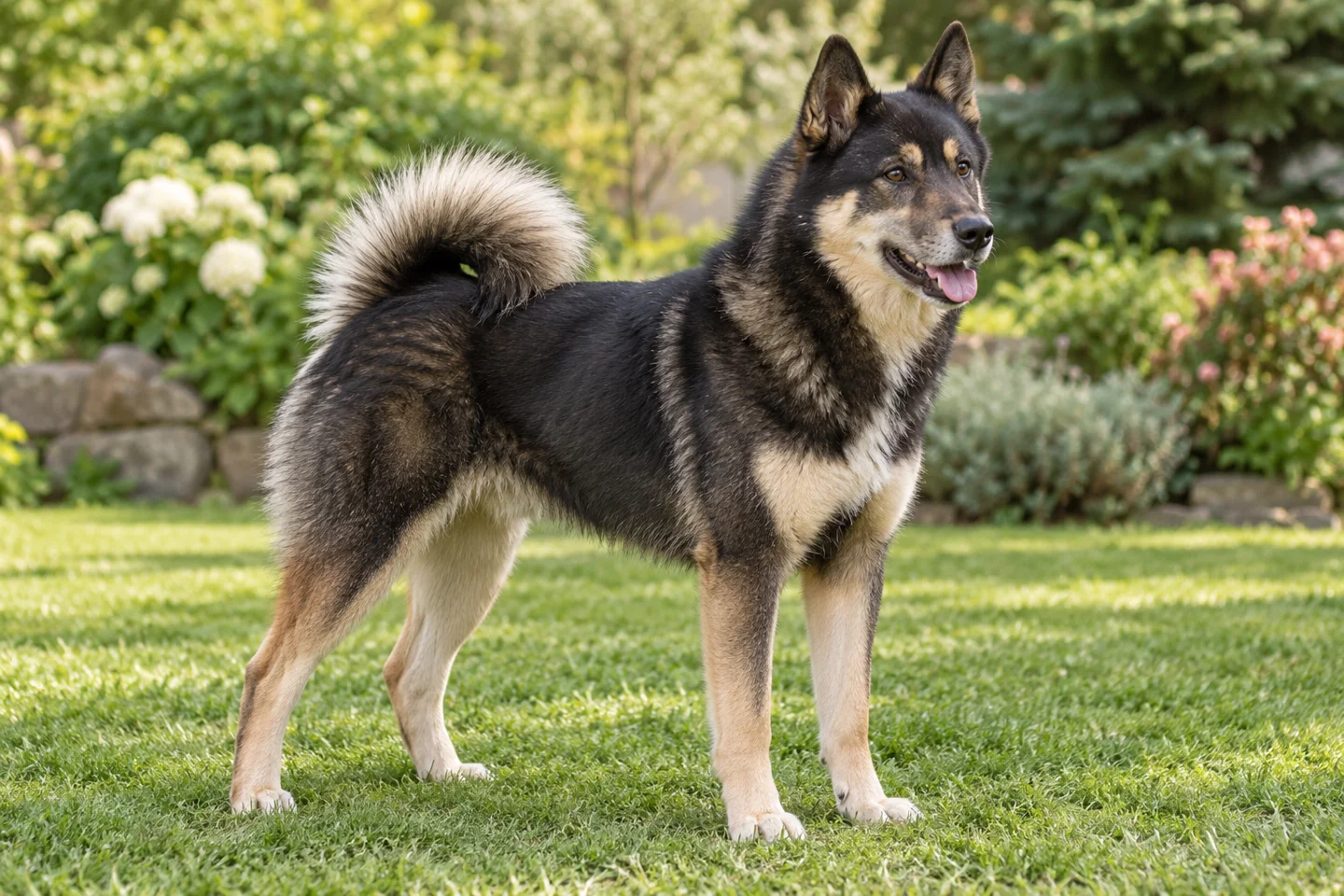
- Black and tan with a small white chest area
General information for owners. These articles have not been reviewed by a veterinarian. Medical decisions need your dog's history and an examination.
A hunting Spitz needs more than a northern appearance
The East Siberian Laika is a Russian hunting dog whose needs should drive the ownership decision. A thick coat, erect ears, and curled tail may attract attention, but the practical question is whether you can manage a dog with a strong interest in investigating animals and its surroundings. Begin with safe exercise opportunities, household animals, working hours, and the skills of every caregiver. An appealing photograph cannot tell you whether your garden, walking routes, and daily routine are suitable for the adult you may bring home.
Speak to people who live with the breed and observe adults away from a staged encounter. Ask how the dog behaves when wildlife is nearby, when a stranger arrives, and when nothing interesting is happening. Describe your own circumstances precisely. A source should be able to discuss difficulties as well as favorable traits and should explain what support is available afterward. If access to experienced help is limited where you live, account for that before choosing a less common working breed whose needs may differ from those of familiar neighborhood companions.
Russian identity and a separate breed history
The FCI identifies the East Siberian Laika as an all-purpose hunting dog from Russia, with development from regional Laika populations in Siberia. It belongs to the Nordic hunting section of the Spitz group. It is distinct from the West Siberian Laika and other recognized Laika breeds. Similar English names or a shared northern outline do not make their standards interchangeable. Check the full registered identity when discussing size, family history, and the animal's working background with a breeder or importing organization.
The history explains why an owner should take independent investigation and hunting interests seriously. It does not establish that the dog will obey without teaching, tolerate every handling procedure, or accept all other animals. Ask how adults from the relevant family live today. A dog coming from an established working arrangement may need patient instruction in indoor routines, visitors, traffic, and being alone. Previous competence in one setting can coexist with a lack of experience in another. Plan the transition rather than treating unfamiliar behavior as deliberate defiance.
Standard height, structure, and the pictured coloring
FCI height is 57–64 centimeters for males and 53–60 centimeters for females. The body is somewhat longer than tall, with a strong head and substantial working outline. The standard does not supply one fixed weight range that every owner should pursue. Ask the veterinarian to assess condition beneath the coat and adjust feeding accordingly. Check the actual dog's dimensions when choosing a vehicle restraint, sleeping area, and harness. A thick silhouette can disguise either excess body fat or a leaner frame that deserves examination.
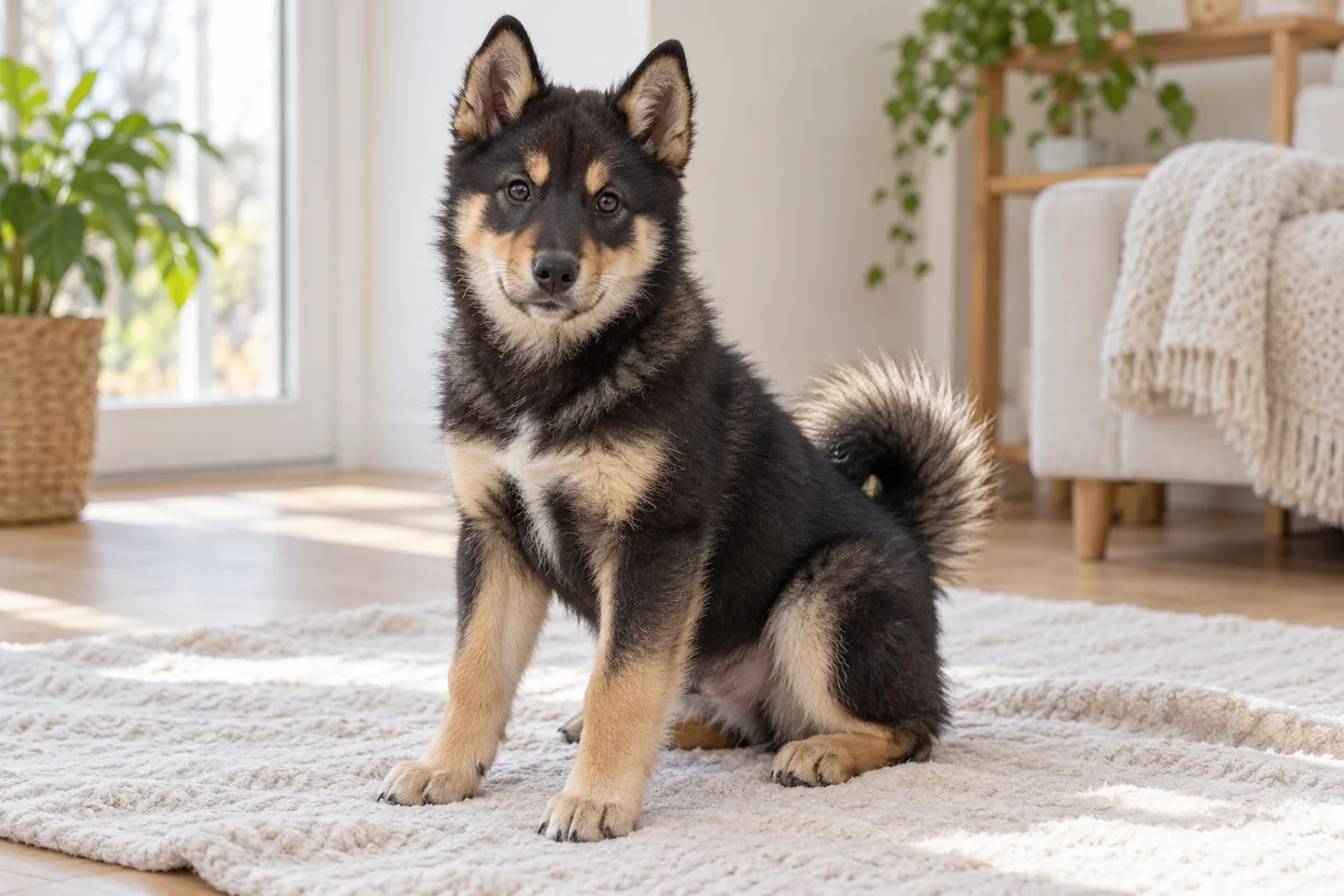
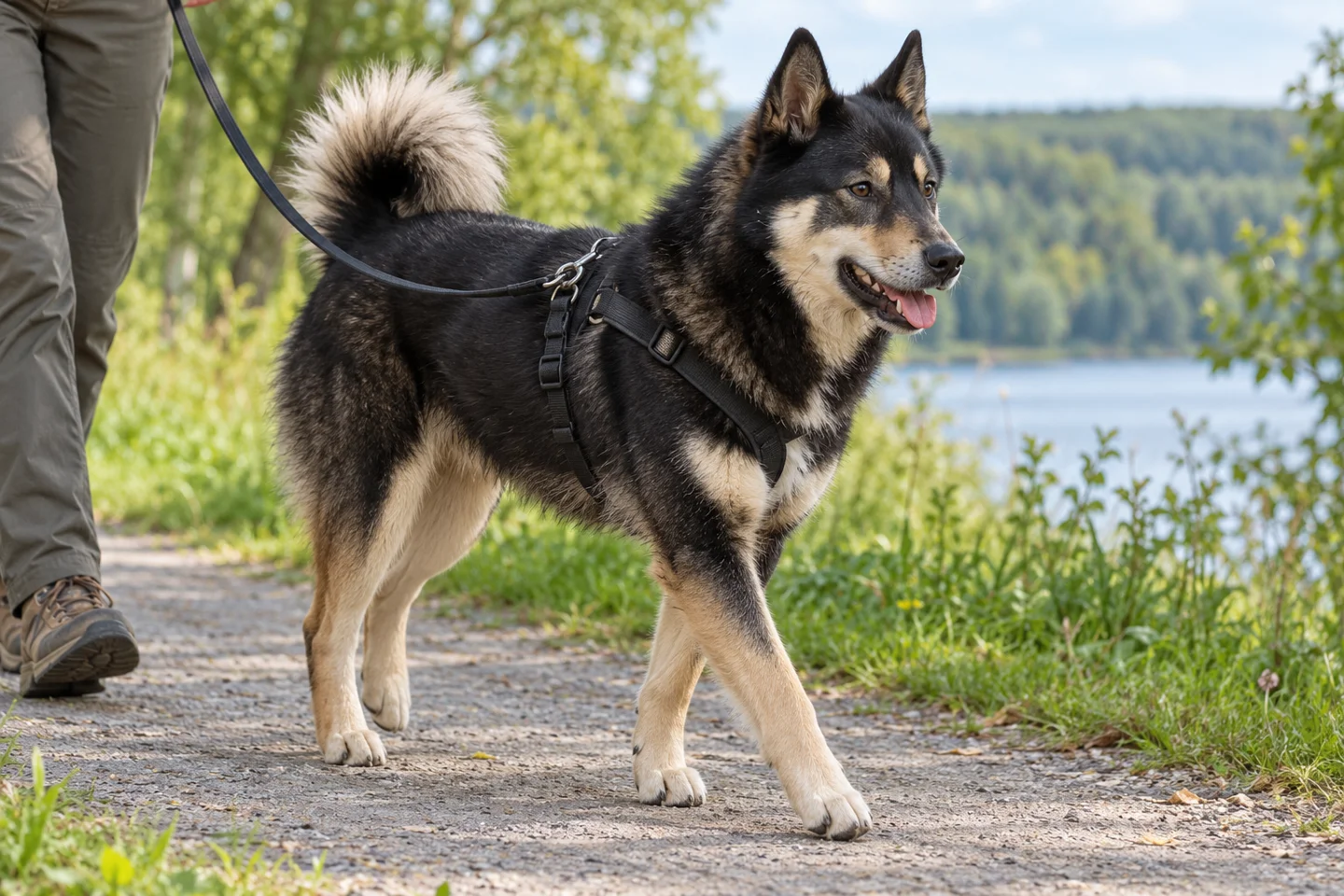
The outer coat is harsh and straight over a developed undercoat. Erect ears and a curled or sickle-shaped tail contribute to the outline. This guide's illustrations use a black-and-tan dog with a small white chest area and brown eyes. Other recognized color patterns exist, so these images do not represent every possible example. They are AI-generated illustrations, not records of an individual animal or evidence of correct anatomy. Use real observations, registration records, and informed assessment when identifying a dog or making breeding and purchase decisions.
Independence, household boundaries, and rest
Arrange a predictable home environment before arrival. Decide which doors lead directly outdoors, where food is stored, and how access to visitors will be managed. Teach waiting at a threshold in quiet conditions, then increase difficulty when the dog understands the task. Physical security should work while learning continues. Check latches and the spaces around gates rather than assuming that a newly settled animal will remain close because it has begun showing affection. Everyone who opens a door needs the same practical instructions.
Give the dog a comfortable place to recover without constant requests for interaction. Reward quiet occupation and avoid making every approach trigger an energetic game. A dog learning an indoor routine may initially need a quieter area and shorter periods around busy household activity. Watch what changes with fatigue, unfamiliar sounds, or movement outside a window. Those observations can guide management and training. If the Laika repeatedly struggles to settle or shows sustained distress, obtain individual help instead of concluding that all working dogs must live in continual high arousal.
Children and clear separation during active play
Children running through the house, dropping food, or reaching into a bed can create situations a dog has not learned to handle. Adults should provide barriers, supervise interaction, and protect the Laika's resting and eating spaces. Young children should not manage leads or attempt to interrupt dog play. Choose quiet activities that allow the animal to leave, with an adult coordinating the contact. A history of pleasant interaction with one family member does not justify unrestricted access to every child who visits.
Teach children to ask before approaching and to call an adult when the dog has taken an item. Stop rough hugging, climbing, and attempts to inspect the mouth. Watch for withdrawal, stillness, turning away, or repeated attempts to create distance. Separate while the situation remains manageable. A dog does not need to growl before an adult can decide that an interaction has lasted long enough. At parties or during energetic games, resting in a separate comfortable area may be the most workable arrangement for the dog and family.
Other animals require a specific hunting-risk plan
The breed's hunting background makes assumptions about smaller animals especially unhelpful. Ask for observed history with cats, poultry, rabbits, and other pets separately. Familiarity with one animal does not predict the response to a fleeing unfamiliar one. Protect cages, outdoor enclosures, and connecting doors. Do not release the Laika to see what it does. A controlled arrangement preserves safety while a qualified professional helps assess whether a particular household combination can be managed. Some homes will need permanent separation or a different placement decision.
For resident dogs, ask about previous conflicts, shared resources, and responses to crowding. Begin contact where handlers can maintain distance and move independently. Separate feeding and valuable items while the relationship is assessed. Watch whether one dog blocks an exit or repeatedly pursues an animal trying to stop. A quiet moment after introduction does not prove that the animals can share a confined room overnight. Build information through manageable encounters, and preserve separate resting options rather than making uninterrupted proximity the measure of success.
Aggression and responding before another incident
If the dog guards, lunges, snaps, or bites, describe the actual behavior and context to a professional. Keep people and animals away from known triggers while advice is arranged. A veterinarian should examine a sudden change, especially when handling, movement, or ordinary activity appears painful. Document what happened without turning the account into an argument about whether the breed is naturally friendly. An individual risk assessment depends on the events, access, household capabilities, and the animals involved, not a general sentence from a breed profile.
Protect possessions rather than repeatedly provoking a response. Teach voluntary exchanges with rewards and keep children's belongings out of reach where necessary. Do not punish growling or force a confrontation over food to prove authority. Professionally guided muzzle conditioning may be useful for specified situations, but it must accompany appropriate handling and distance. Share the plan with everyone who provides care. A sitter unaware of a warning history cannot make informed decisions, and inaccurate reassurance can expose the dog to the same difficult encounter again.
Training a response before access to wildlife
Teach recall in a secure area before testing it beside cover where animals may appear. Reward quick orientation and a return close enough to attach the lead calmly. Release back to safe exploration sometimes, so returning does not always end an enjoyable activity. Add distractions gradually and maintain secure equipment while the response remains unreliable. The dog may have learned a cue in the kitchen without being able to perform it around a moving animal. That difference calls for staged teaching, not an assumption that the cue has been deliberately ignored.
Practice a change of direction, hand target, waiting at doors, and comfortable lead walking. These skills provide ways to leave a developing problem before physical struggle becomes necessary. AVSAB supports reward-based methods and rejects aversive training. Choose an instructor who understands hunting behavior without using pain or frightening exposure as the default solution. Keep sessions clear and short enough for participation. When progress stalls, examine distractions, reward value, fatigue, and the previous steps. A written plan helps different caregivers teach the same response consistently.
Exercise, searching, and recovery in local conditions
Provide meaningful movement and appropriate scent or search activities while respecting local wildlife and access rules. The right routine depends on health, age, condition, weather, and the terrain available. Do not assign a universal distance because the breed comes from a demanding working background. Start with manageable activity and observe how the dog moves and rests afterward. Consult the veterinarian before strenuous new work or after injury. A secure walking arrangement remains necessary even on a quiet route where the owner rarely sees another person.
A dense coat does not remove the need for shelter, monitoring, and weather judgment. Warm conditions can require shorter outings and cooler hours, with clean water available. Check feet and equipment after rough ground and make an early return if the dog appears uncomfortable. Avoid demanding continuous work to compensate for several inactive days. Build a routine that can be maintained throughout the week. At home, preserve uninterrupted rest and use low-intensity engagement when appropriate, so exercise does not become a cycle of overstimulation followed by enforced exhaustion.
Grooming through the undercoat
Part the coat and check that grooming reaches the areas where loose undercoat and debris collect. Work gently around the collar line, behind the ears, and through the thicker body coat. Ask a knowledgeable groomer to demonstrate suitable tools on your dog. Brushing the visible tips can leave material underneath unnoticed, while excessive force can irritate the skin. If the coat is tightly matted or the skin sore, obtain professional help rather than trying to complete the task through restraint and painful pulling.
Inspect feet after outings and note damaged nails, trapped material, or persistent licking. Introduce paw handling gradually before trimming becomes urgent. Check ears for changes in odor, discharge, redness, or comfort; erect ears do not rule out disease. Ask the veterinarian to recommend any cleaning or treatment after assessment. Dry the dog comfortably following bathing and avoid leaving dense areas persistently damp. A change in coat quality or skin comfort deserves clinical consideration instead of being attributed automatically to seasonal shedding or the breed's working environment.
Health evidence for a less common breed
Request documented medical information about the parents and close relatives, including the reasons for particular tests and the meaning of the results. Avoid accepting a claim that a working or northern dog has no inherited health risks. Also avoid importing a standard screening list from a different Laika or another Spitz without evidence that it applies. Ask the registry or breed organization which current recommendations it uses. The responsible answer may include limits in available population information, which should remain visible rather than being replaced by invented prevalence figures.
A dog's examination, family history, and any relevant screening records need interpretation together. Completed testing cannot guarantee future freedom from illness. For a rescue with incomplete history, build a veterinary plan from current findings and the activities expected. Record changes in thirst, appetite, movement, elimination, or tolerance of exercise. Sudden collapse, severe breathing difficulty, marked pain, or inability to walk needs urgent advice. Do not use human medicines or delay assessment because a breed description calls the animal hardy. Individual symptoms matter more than that adjective.
Feeding, daily records, and aging
Use a complete life-stage diet and an initial measured allowance, then review condition under the thick coat. Account for training rewards and adjust with professional advice as activity changes. A dog moving less after injury should not automatically receive its former working ration. Feed where another animal cannot interfere, and keep water readily available. If you prepare food yourself, seek a balanced formulation from an appropriately qualified veterinary nutrition professional. Attractive ingredients alone cannot establish whether the diet meets nutritional requirements over time.
As the Laika ages, compare its current comfort with its own earlier behavior. A shorter walk, easier vehicle access, or quieter sleeping area may allow continued participation without forcing an old routine. Report persistent changes rather than assuming every decline is inevitable. Keep medication instructions and emergency contacts clear for relief caregivers. If the dog can no longer be moved easily, discuss safe transport arrangements before an urgent event. Practical planning protects access to care without requiring the owner to predict which particular medical condition may eventually arise.
East Siberian Laika mixes and ownership costs
A Laika cross may differ in coat density, size, hunting interest, sociability, and response to training. Neither a cross name nor a northern-looking face can guarantee reduced medical risk or easier ownership. Review the parents' histories where those are known. For uncertain ancestry, plan around observed behavior and veterinary findings. Do not use a guessed breed label to dismiss a serious problem or to promise compatibility with cats. The dog's actual abilities and the household's management options determine whether the arrangement is workable.
Budget for secure facilities, capable training support, preventive medicine, grooming equipment, transport, and emergency care or insurance. Consider travel or import costs only after verifying the source and current legal requirements with the relevant authorities. Arrange a sitter who understands escape prevention and access restrictions around other animals. A trial stay can reveal problems before a long absence. Include your own time in the calculation: a physically active dog may still require substantial teaching and supervision after the walk. An unsuitable routine does not improve simply because the purchase price was manageable.
dogsDating without a hunting or play experiment
A dogsDating profile should describe the Laika's real experience with unfamiliar dogs and its response when another animal runs. Keep exact home coordinates private. Discuss the intended walking setting, secure equipment, and whether either dog guards objects or reacts at close distance. Choose a location that permits a wide approach and an easy departure. An initial appointment should not involve loose chasing or small animals used as distractions. Both handlers need enough control to protect the other dog if the meeting proves unsuitable.
Begin with parallel movement and a comfortable gap. Look for relaxed investigation and the ability to turn away rather than insisting on direct greeting. If either animal stays fixed on the other, cannot recover, or repeatedly crowds its companion, increase separation and end when needed. Leave shared toys and food competition for another assessment. A calm outing is useful information, not permission for unrestricted contact in every setting. Further meetings can build familiarity while owners continue making separate decisions about play, transport, home visits, and any resident animals.
Sources and editorial notes
Sources checked October 21, 2026. Breed measurements describe reference ranges, not a diagnosis or an individual dog's ideal weight. Images are AI-generated breed illustrations and do not document a particular dog or health condition.
- AVSAB: Humane Dog Training Position Statement
- VCA Animal Hospitals: Food aggression in puppies
- VCA Animal Hospitals: Aggression toward unfamiliar dogs, diagnosis
- VCA Animal Hospitals: Grooming and coat care for your dog
- VCA Animal Hospitals: Ear infections in dogs
- VCA Animal Hospitals: Feeding guidelines for dogs
- VCA Animal Hospitals: Common emergencies in dogs
- VCA Animal Hospitals: Heat stroke in dogs
- Orthopedic Foundation for Animals: CHIC health screening programs
- Fédération Cynologique Internationale: East-Siberian Laika standard 305
Keep getting to know dogs.
Read another guide or return to your dogsDating community.
Explore breed guidesBack to dogsDating