English Foxhound
A British packhound whose scent interests, exercise, household transition, and comfortable time apart need planning around the individual dog.
How these guides are researched and reviewed
- Origin
- Great Britain
- Approximate adult height
- 58–64 cm
- Coat
- Short and dense
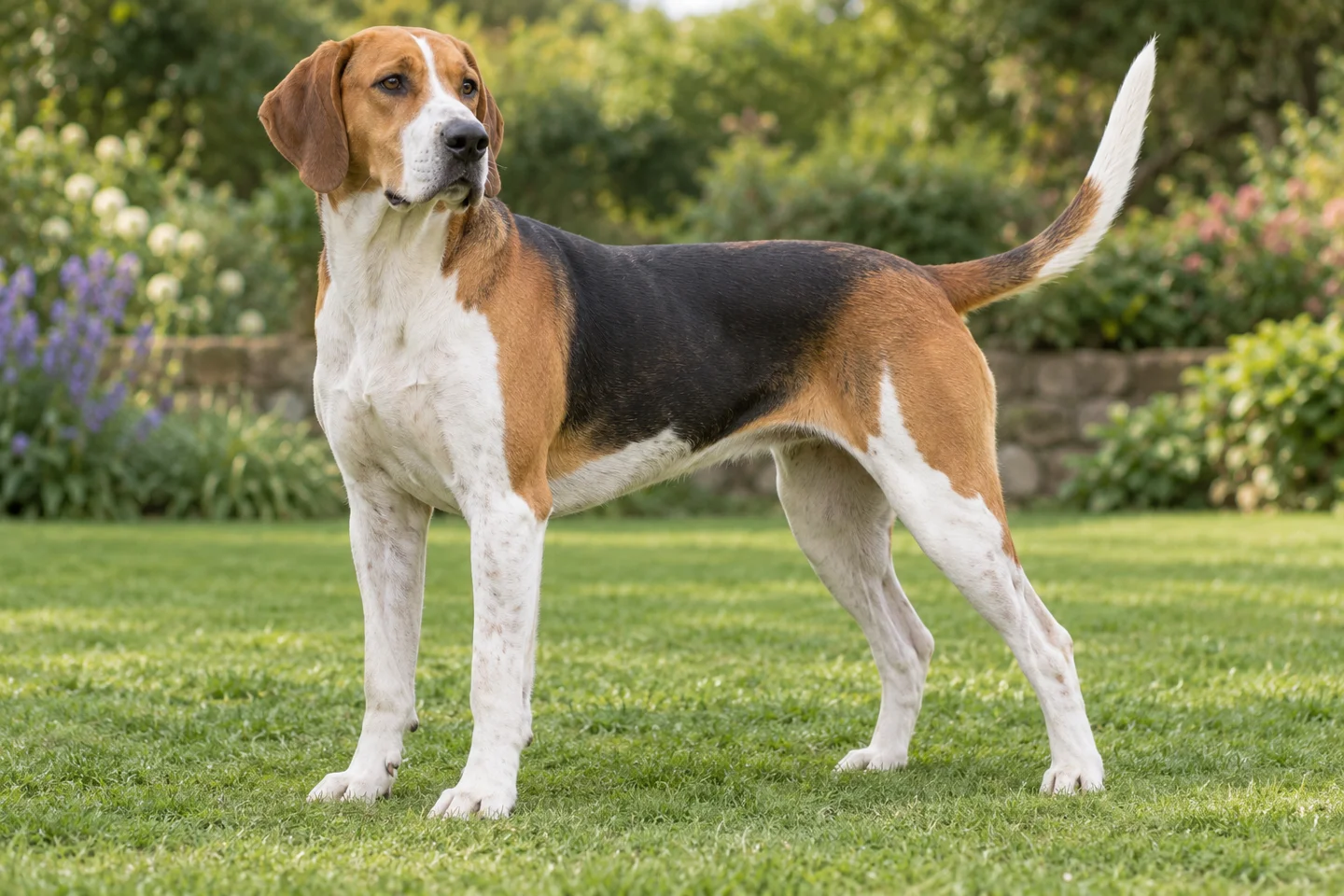
- Illustrated example
- Tricolor with natural hanging ears and a long tail
General information for owners. These articles have not been reviewed by a veterinarian. Medical decisions need your dog's history and an examination.
A packhound needs a realistic household plan
An English Foxhound brings a working hound's interests into whatever setting becomes its home. Anyone considering one should look beyond the short coat and friendly expression to ask where it will exercise securely, how it will learn indoor routines, and who will manage it when scent or another animal captures its attention. An established pack environment and a suburban household make different demands. A dog moving between them may need patient teaching of ordinary companion skills rather than a person expecting immediate understanding of doors, sofas, and periods alone.
Meet the individual and ask for concrete reports from its current caregivers. Has it lived indoors, traveled alone, eaten without other hounds nearby, or encountered cats? Which of those experiences went well and which remain unknown? A pleasant meeting outdoors answers only part of the placement question. Describe your property, neighbors, work schedule, and existing animals accurately. The responsible source should help evaluate whether the dog and household fit, including cases where a different arrangement would be more workable for everybody involved.
English identity, records, and the limits of history
The FCI identifies Great Britain as the breed's origin and describes its traditional use as a packhound for mounted hunting. It also describes long-maintained stud books and careful breeding records. That history establishes a distinct English Foxhound identity; it does not establish that a particular dog already understands domestic expectations. Read the pedigree as evidence of recorded ancestry, then ask separate questions about health, handling, social behavior, and experience. Useful information includes what the dog does during an ordinary day and how it responds when a routine changes.
The English Foxhound is distinct from the American Foxhound and from several French and Anglo-French hounds. Similar markings do not make every large tricolored dog the same breed. Verify identity through the relevant records where those exist. For an uncertain rescue, retain uncertainty rather than assigning ancestry from ears and coloring alone. You can still make a sound care plan from current condition and observed behavior. A guessed label should never replace assessment of the dog's actual exercise needs, response to other animals, or ability to live comfortably in the proposed home.
Adult size, short coat, and natural features
The current FCI standard gives approximate height at the withers as 58–64 centimeters. It does not provide one universal weight target for owners to achieve. Assess condition with a veterinarian and fit equipment to the actual body. The outline is powerful and balanced, with a short dense coat, hanging ears, and a long tail that is carried high without curling over the back. Practical planning should include adult vehicle space, secure handling, and a resting area where the dog can stretch out comfortably without blocking every household route.
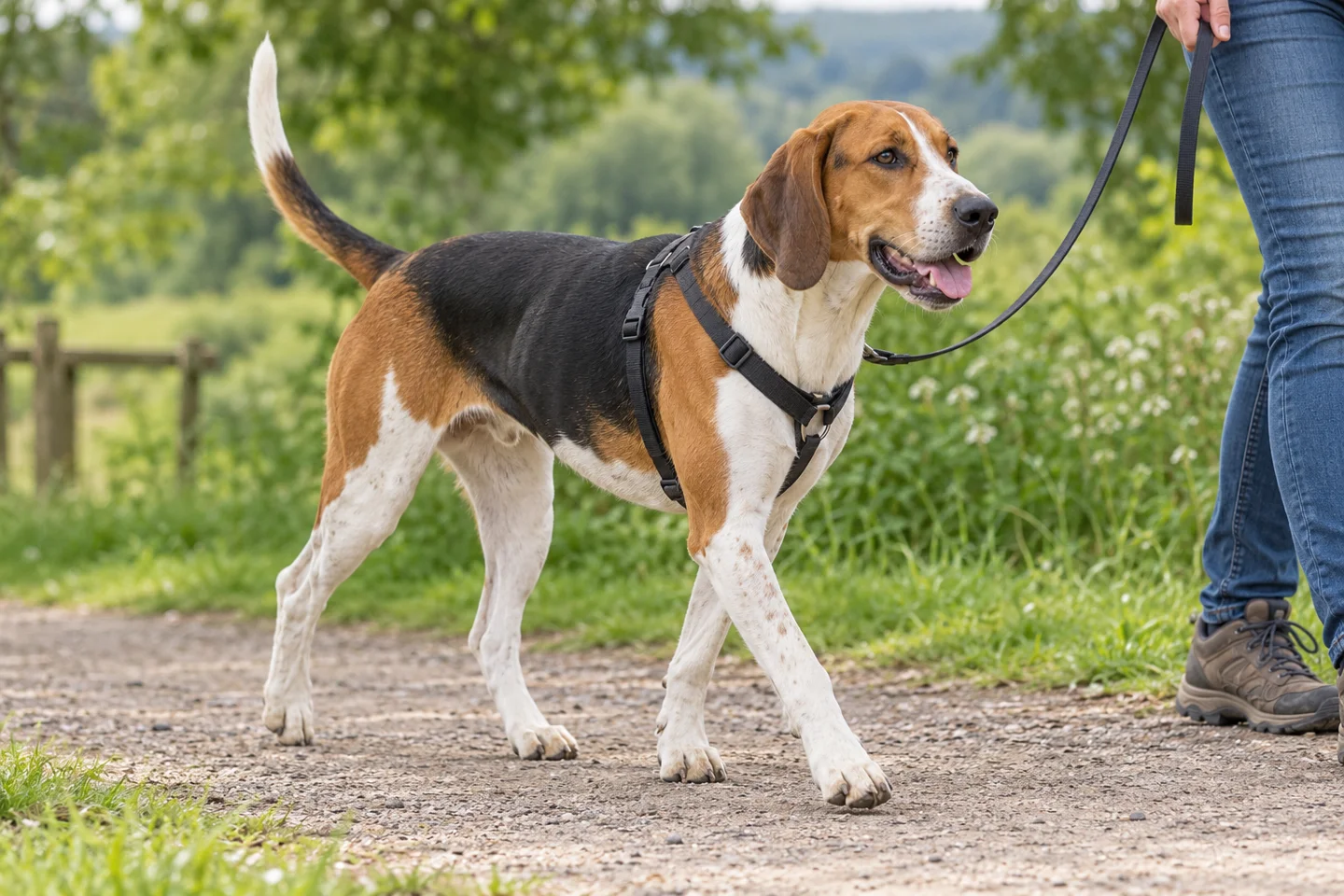
The accompanying images depict a tricolored English Foxhound with white areas, tan head markings, a black saddle, and its natural ears and tail. Other recognized hound colors and markings exist. These are generated illustrations, not documentary photographs of a breeding animal or evidence of sound movement. A coat pattern cannot verify ancestry or predict behavior. When meeting a dog, watch how it moves, recovers after activity, and responds to the environment. Those observations offer information that no polished image, generated or otherwise, can supply.
From group routines to a companion home
Ask how the dog has previously obtained food, rest, exercise, and company. A hound accustomed to established group routines may find a different schedule unfamiliar. Keep the initial home arrangement simple, with predictable outdoor access, a comfortable bed, and limited opportunities to rehearse unwanted behavior. Reward toileting in the appropriate place and supervise indoor exploration. An accident or a stolen sandwich may reveal missing experience rather than refusal to follow a rule. Teach the rule in the setting where the dog needs to use it.
Practice safe door routines before relying on them. A gate or second barrier can preserve security while the hound learns to wait. Explain that arrangement to visitors and delivery recipients. Check garden boundaries and latches rather than assuming a dog will stay because it now recognizes the family. A leash should be attached before an uncertain exit, not after the animal reaches the open street. Reward the correct response when the setting is quiet so the lesson is available before excitement and divided attention make it harder.
Company, voice, and comfortable separation
Learn when the individual vocalizes and what seems to trigger it. Separation from familiar hounds, frustration at an inaccessible scent, and visible activity outdoors can require different arrangements. Keep records rather than calling all noise a fixed breed trait. Discuss shared walls and neighbors before placement, and ask how the source has handled the dog's quiet periods. Preventing a problem may include changing window access, providing suitable company, or teaching an alternative routine. A device intended only to suppress sound cannot explain what the animal should do instead.
Teach separation in small increments and observe whether the dog can remain comfortable. Begin with very brief periods while someone is nearby, then build according to the response. Sustained pacing, escape attempts, or distress should change the plan and prompt appropriate help. A second dog is not an automatic treatment and may add another animal that also struggles. Arrange relief care while working on the issue if your absences exceed current tolerance. The useful goal is relaxed time apart, rather than an exhausted hound that temporarily stops protesting.
Children and the space around a large dog
A large hound can knock a child over without showing aggression, especially when leaving for an exciting walk. Adults should manage entrances and separate the dog from running games when needed. Provide an undisturbed resting area and keep meals and valued chews away from children. Teach youngsters to call an adult when the dog has an item rather than pursuing or grabbing it. Quiet supervised activities can help build a relationship, provided the dog can move away and the adult remains responsible for managing contact.
Ask about previous experience with children and the circumstances involved. Familiarity with teenagers in a yard does not answer questions about toddlers approaching a bed. Watch for withdrawal, stillness, tension, or attempts to escape and intervene early. During gatherings, choose a comfortable separate space if active supervision will be impossible. Children should not be expected to control the lead around wildlife or traffic. A general description of friendliness cannot determine whether the individual is safe in every situation, and adult planning should not depend on a child reading subtle warnings correctly.

Aggression, resources, and avoiding repeated conflict
If the hound growls over food, snaps during handling, or lunges toward an animal, document the event and prevent repetition. The details matter: what was nearby, whether escape was available, and whether touch or movement appeared painful. A veterinarian should assess a sudden behavioral change. Qualified help can then address the specific difficulty. Do not dismiss an incident because packhounds are expected to be sociable, and do not diagnose it from a breed stereotype. Individual history and the household's capacity for safe management guide the plan.
Use rewards to teach exchanges and movement away from resources. Keep meals separate from other pets while learning about compatibility. Reaching repeatedly into a bowl or punishing a growl can increase conflict without teaching a safer action. Where a muzzle is recommended, condition it gradually and keep appropriate handling and distance in place. Provide accurate instructions to anyone looking after the dog. Concealing a warning history to make a sitter more comfortable can place them and the animal in a situation that neither has been prepared to manage.
Training recall before the interesting scent arrives
Teach coming back in an enclosed setting with rewards valuable enough to compete with mild distractions. Practice returning close enough for the lead to be attached, then sometimes release the dog to continue investigating. Build difficulty slowly. A long line can preserve safety when used with suitable equipment and competent handling, but learn to manage it before entering tangled cover. An unreliable response beside wildlife is a reason for continued secure control. It is not a suitable moment to test whether shouting louder will finally make the cue work.
Add a change of direction, calm gate waiting, lead walking, and a settle after activity. Train these as separate tasks before combining them during busy departures. AVSAB recommends reward-based methods and rejects aversive techniques. Select an instructor who can explain how to reduce distraction and reinforce the desired behavior without pain or intimidation. Measure progress against everyday needs, including easier handovers and safer road crossings. A dog that can follow scent enthusiastically may still need repeated successful practice before it can shift attention promptly in a new environment.
Exercise, stamina, and a sustainable week
Provide regular movement and suitable scent-oriented tasks, adjusted to age, health, fitness, and conditions. The breed's history of sustained work does not create a universal mileage prescription. A growing puppy, a fit working adult, and an older rehomed hound need different plans. Discuss demanding new activity or a return after injury with the veterinarian. Use secure ground or leads while recall is uncertain. Respect local wildlife and livestock rules, and do not assume a quiet rural route is free from circumstances that could trigger pursuit.
Balance active periods with rest the dog can actually obtain. Search games and controlled exploration can add interest without continuous fast running. Take water and make weather-based changes early, especially in heat. Watch for altered movement, poor recovery, or difficulty participating and seek advice when a change persists. An animal still willing to follow scent can be uncomfortable. Choose a routine maintainable through the workweek rather than trying to compensate for long inactive periods with one exhausting outing that leaves the dog sore or unsettled afterward.
Grooming a short coat after real outdoor activity
A close coat makes some maintenance straightforward, but it does not remove the need to inspect the dog. Brush gently to remove loose hair and examine areas beneath equipment. After rough or wet ground, check the feet, belly, and lower legs for debris or irritation. Teach the hound to stand on a stable surface and accept brief handling, rewarding cooperation before the examination becomes lengthy. A sore spot should lead to assessment and an equipment check rather than stronger brushing or repeated rubbing over the same area.
Inspect the hanging ears for changes in odor, discharge, redness, or comfort. Repeated head shaking and scratching call for veterinary advice. Do not use leftover medication or insert objects deeply into the ear. Follow the clinic's individualized cleaning guidance if cleaning is needed. Introduce nail equipment gradually and ask for help if the dog becomes distressed or the task is difficult. A large cooperative hound can be easier to care for than a tightly restrained one; the skill must be taught before an uncomfortable procedure becomes urgent.
Health records without unsupported prevalence claims
Ask about the parents, close relatives, and the individual dog's medical history. Request any relevant screening reports and the reasons those assessments were chosen. An absence of a familiar published testing list does not prove freedom from inherited illness. Conversely, a disorder listed for a different large hound is not automatically a documented common English Foxhound problem. Consult the relevant breed organization and your veterinarian about current recommendations, interpreting specific results rather than accepting a generic promise that every animal in the family has been healthy.
Plan routine prevention around local conditions and expected activities, and record changes in appetite, thirst, gait, or stamina. Discuss emergency recognition, including gastric dilatation and volvulus, with the clinic rather than relying on a feeding trick to guarantee prevention. Repeated unsuccessful retching, abdominal enlargement, severe distress, or collapse requires urgent veterinary contact. Have transport arrangements for a dog that cannot walk. Favorable ancestry and completed screening cannot rule out an emergency, and online speculation should not delay care when serious signs appear.
Nutrition, mouth care, and an older hound
Use a complete diet matched to life stage, with measured portions reviewed against body condition and activity. Account for rewards used in searches and training. If work decreases or illness limits movement, adjust the plan with veterinary guidance. Feed without competition and make the instructions clear for other caregivers. Sudden appetite changes or persistent digestive problems deserve assessment rather than repeated additions of richer food. A balanced home-prepared diet needs appropriate professional formulation; recognizable ingredients alone do not establish nutritional adequacy.
Build comfortable mouth handling and discuss suitable tooth brushing and dental checks. Dropping food, chewing painfully, or resisting face contact can indicate a problem requiring examination. Hard chews should not be treated as a guaranteed solution for oral health. In later life, review vehicle access, flooring, resting comfort, and the pace of outings. An older hound may still enjoy sniffing and shared activity with a shorter route. Investigate meaningful changes rather than explaining every difficulty as age or demanding that the dog maintain its earlier working performance.
Other pets, English Foxhound mixes, and long-term costs
A history of living among hounds does not establish safety with cats, rabbits, poultry, or small dogs that run. Ask about each category separately and preserve secure boundaries. Cats need protected escape routes, and small pets need reliable enclosures. Never use a chase to assess intentions. An English Foxhound cross may differ in size, coat, voice, hunting interest, and health. No cross name guarantees predictable compatibility or removes the need to review known parental medical information and assess the individual in front of you.
Budget for secure facilities, training, transport, preventive veterinary care, insurance or emergency funds, and capable relief care. A sitter must understand doors, leads, and animal restrictions, not simply be comfortable with a friendly greeting. Arrange a trial before a long trip. Consider your own time and the possibility of a changed work schedule. If only one household member can manage the routine, identify realistic cover. The acquisition price is a small part of the decision when the dog needs years of consistent activity, supervision, and adaptable care.
Sources and editorial notes
Sources checked October 21, 2026. Breed measurements describe reference ranges, not a diagnosis or an individual dog's ideal weight. Images are AI-generated breed illustrations and do not document a particular dog or health condition.
- AVSAB: Humane Dog Training Position Statement
- VCA Animal Hospitals: Food aggression in puppies
- VCA Animal Hospitals: Aggression toward unfamiliar dogs, diagnosis
- VCA Animal Hospitals: Grooming and coat care for your dog
- VCA Animal Hospitals: Ear infections in dogs
- VCA Animal Hospitals: Feeding guidelines for dogs
- VCA Animal Hospitals: Common emergencies in dogs
- VCA Animal Hospitals: Heat stroke in dogs
- Orthopedic Foundation for Animals: CHIC health screening programs
- Washington State University Veterinary Teaching Hospital: Gastric dilation and volvulus and bloat in dogs
- Fédération Cynologique Internationale: English Foxhound standard 159, October 2026 edition
- VCA Animal Hospitals: Dental Disease in Dogs
Keep getting to know dogs.
Read another guide or return to your dogsDating community.
Explore breed guidesBack to dogsDating