English Shepherd
An English Shepherd is a farm-dog breed whose suitability depends on what life you can provide around its interest in work, movement, and people.
How these guides are researched and reviewed
- Origin
- United States; British farm-dog ancestry
- Identity
- Herding / Farm Dog
- Care priorities
- Livestock management, useful household work, MDR1 records
- Adult standard size
- UKC: males 19–23 in, 45–60 lb; females 18–22 in, 40–50 lb
General information for owners. These articles have not been reviewed by a veterinarian. Medical decisions need your dog's history and an examination.
An English Shepherd needs a household role
An English Shepherd is a farm-dog breed whose suitability depends on what life you can provide around its interest in work, movement, and people. Think beyond the appealing idea of an intelligent helper. Who will teach the dog what belongs to its job, and who will prevent it from inventing duties that inconvenience everyone else? A dog that follows each household movement needs an understandable routine, opportunities to use its abilities, and permission to stop paying attention to every event.
Write down the tasks your home actually requires. There may be livestock to help manage, but there may instead be children arriving from school, delivery vehicles, cats crossing a hallway, or a garden gate used frequently. Those situations need deliberate arrangements. A breed with a working reputation still requires individual assessment and teaching. Meet adults during ordinary transitions and ask what their owners found difficult. A dog described as useful on a farm may have little experience of apartment entrances, public transport, or long indoor absences, so discuss the change rather than assuming general intelligence will make it effortless.
American farm development and the British name
The United Kennel Club describes the English Shepherd as a versatile farm dog brought through British-derived ancestry into American life and recognizes the breed in its own registry. The word English can therefore mislead a reader who expects a modern British show breed. It is not another name for the English Sheepdog or a generic label for a Border Collie. Ask which registry and family records support the identity of a dog being offered under this name.
The UKC standard includes an ancient-origin story explicitly presented as legend. That distinction matters: a historical narrative is not a verified pedigree reaching back to Roman dogs. For a prospective owner, the recent family and present living experience are more useful. Ask how relatives have worked, how they handle unfamiliar people, and what happens when activity ends. With a rescue identification based on appearance, keep the estimate clear. A medium-sized tricolor shepherd can resemble several breeds without allowing a confident conclusion about ancestry or inherited medical risks.
Build and coat for practical work
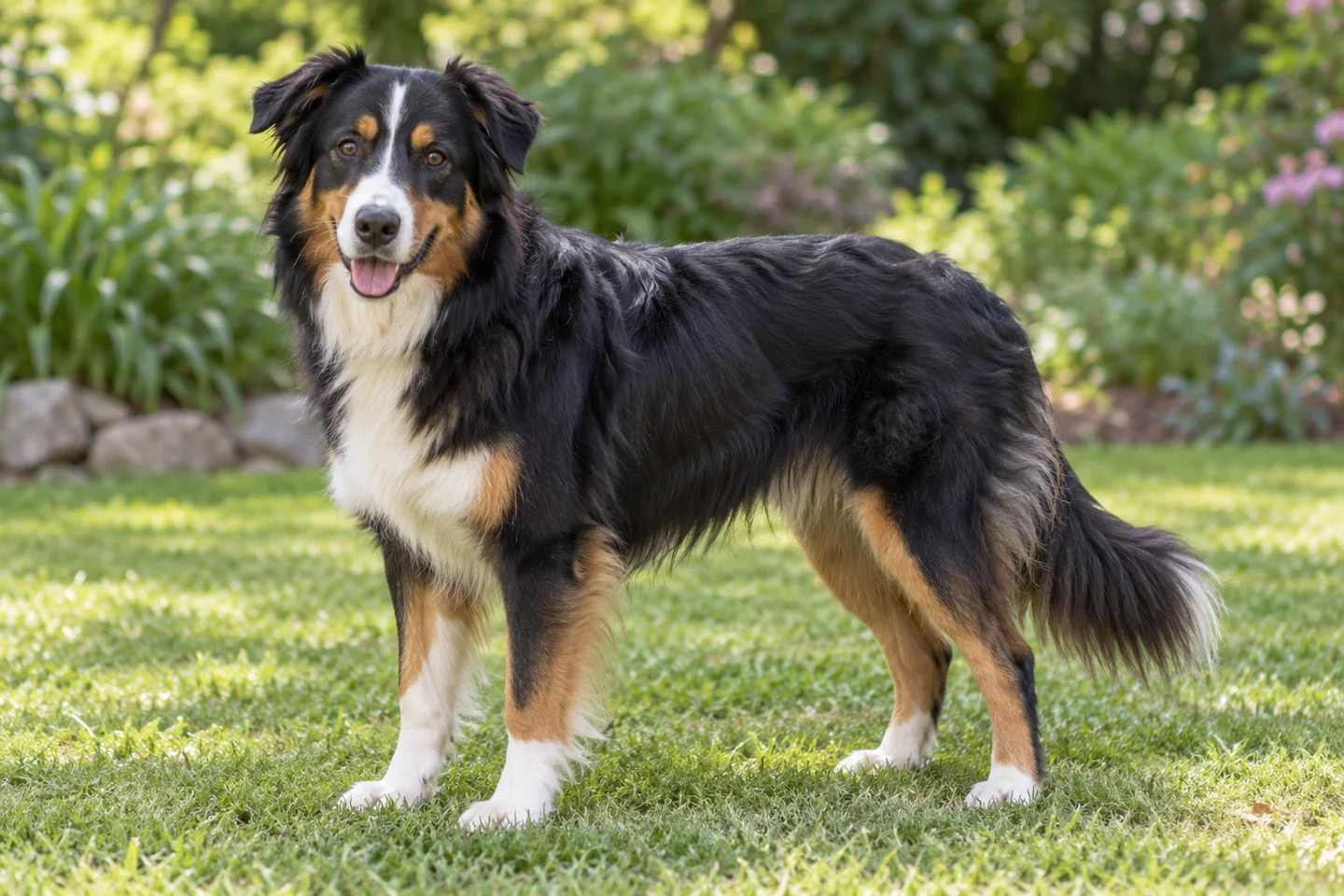
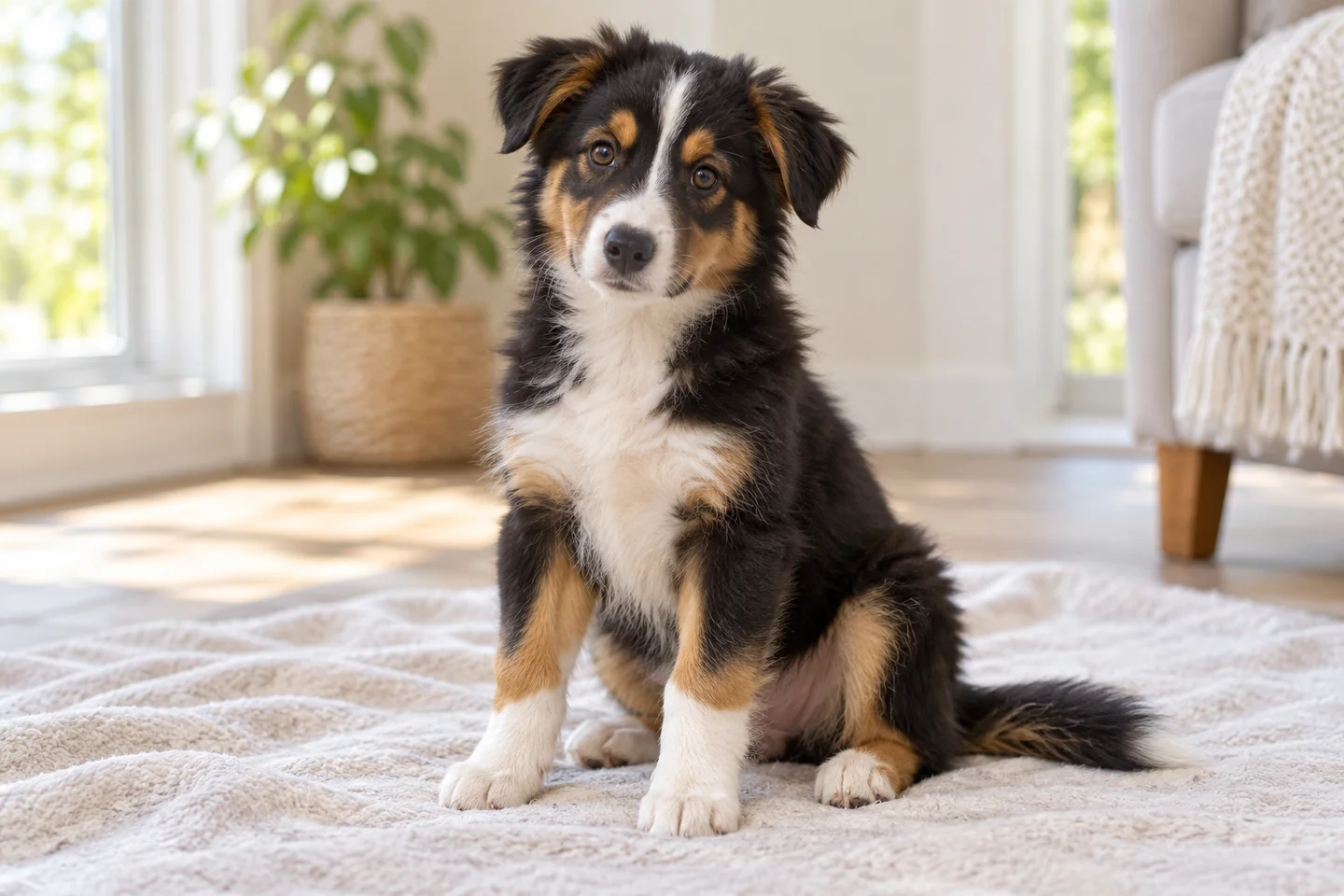
A balanced, sturdy medium-sized dog is central to the UKC description. Natural folded or tipped ears, a moderate weather-resistant coat, and a functional muzzle distinguish the practical outline from exaggerated bulk or coat volume. The illustrations select black tricolor with tan points and white markings, showing a long natural tail. They are generated examples rather than photographs proving a particular dog's identity or quality. Individual appearance varies, and one chosen color cannot represent every English Shepherd.
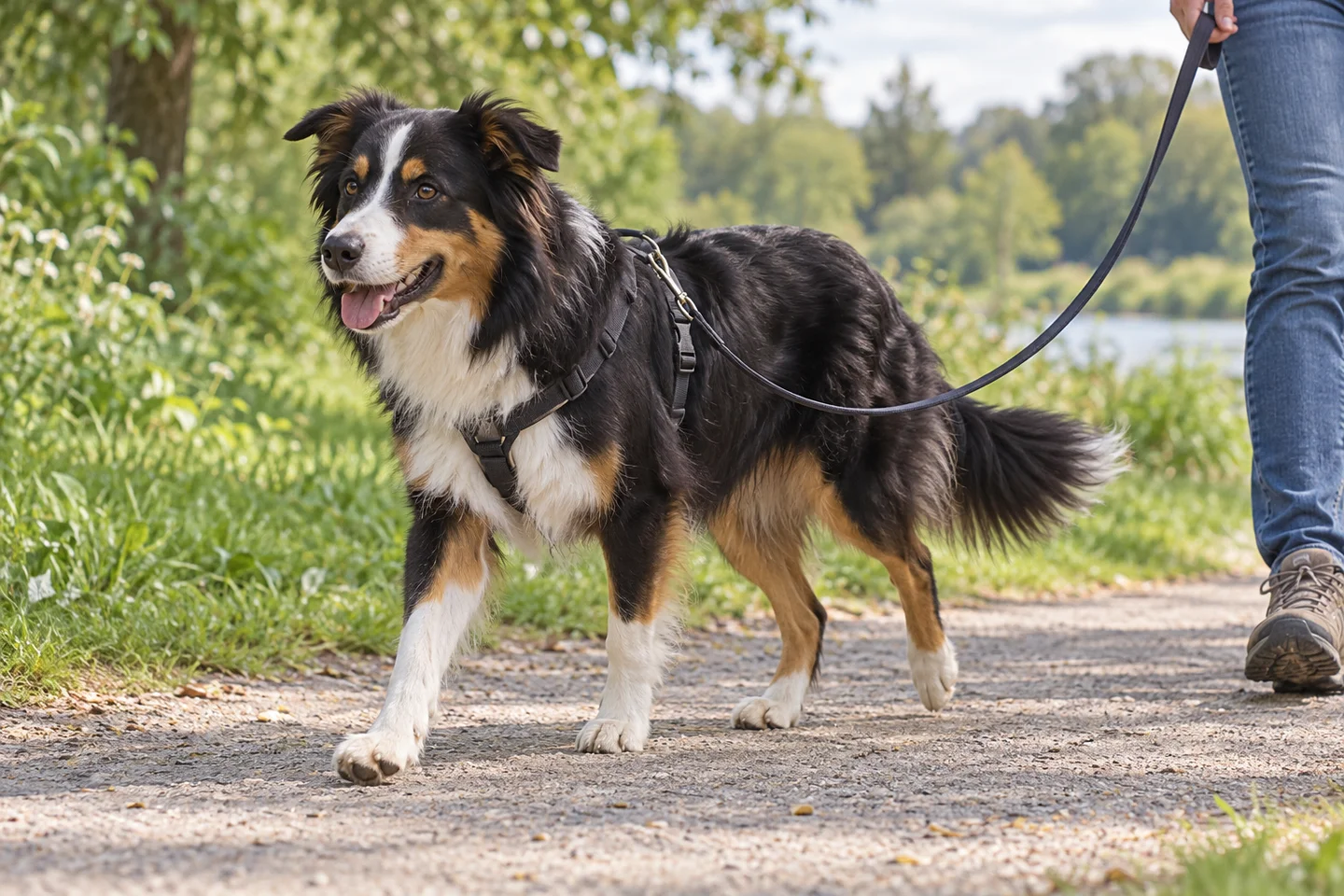
When meeting an adult, watch turning, rising, and movement across a normal surface. A coat can conceal the body condition beneath it. Ask a veterinarian to demonstrate how to assess ribs, waist, and muscle rather than deciding by a silhouette alone. Think about access too. A dog that can jump into a vehicle today may need a different method after an injury or with age. Equipment should be fitted to the actual dog, checked for security, and introduced before the first demanding outing adds distractions and unfamiliar handling.
UKC gives adult males 19–23 inches and 45–60 pounds, and females 18–22 inches and 40–50 pounds, with preferred heights within those ranges. These are registry reference figures rather than an ideal weight to force onto every dog. Use the actual build and veterinary body-condition assessment when choosing portions, equipment, or access. A sturdy farm-dog outline can require substantial help during an injury even when its shoulder height seems manageable.
Training a helper instead of creating a hall monitor
An English Shepherd may notice patterns rapidly. Make sure the pattern you reward is the one you want. If barking causes someone to open a gate, chasing a vacuum makes it disappear, or crowding another pet brings attention, those events can become useful from the dog's perspective. Change the arrangement and teach an alternative the dog can perform. A mat away from the busiest route can become a clear place to wait while someone carries shopping through the door.
Reward-based methods let you develop helpful actions without making the animal responsible for controlling the household. AVSAB recommends these methods and warns against aversive approaches. Teach a move away, a release from a task, and comfortable waiting as carefully as an energetic game. Use short lessons within ordinary routines and make the finish clear. If your timing or reward choice produces confusion, obtain coaching. Describing a dog as stubborn or dominant supplies less practical information than showing an instructor what occurs before and after the unwanted action.
Livestock work requires instruction and boundaries
Living near stock does not mean a young English Shepherd is ready to work it. Uncontrolled pursuit can injure animals, frighten them through fences, and put the dog at risk. Seek experienced humane instruction suited to the actual livestock and your facilities. Learn how to read the stock and recognize when the dog or handler should stop. A pedigree or family working history contributes background, but neither establishes a youngster's skill or the owner's ability to manage a difficult moment.
For households without farm work, offer suitable tasks that do not involve controlling living beings. Searching for a safe object, learning a sequence of household movements, or participating in an appropriate class can be useful. Match difficulty to current ability and avoid turning every free moment into a test. The dog also needs uneventful periods in which nothing is requested. If you cannot provide the work a particular line has been prepared for, discuss that openly before placement. Choosing an individual with a known compatible routine can be better than hoping enthusiasm alone will fill the gap.
Exercise and the moving things in everyday life
Plan physical activity with its context in mind. A path alongside a busy cycle route may provide distance while repeatedly exposing the dog to movement it cannot yet ignore. A quieter route can create better learning conditions. Reward attention back to you at a workable distance, and move away before concentration is lost. Keep appropriate control near roads and livestock. A dog that returns reliably during a quiet garden exercise has not demonstrated that same skill beside every moving distraction.
Build fitness according to the individual rather than treating farm ancestry as readiness for an entire day of demanding activity. Puppies need developmentally sensible exploration and rest. Adults returning after illness or inactivity need a gradual increase. Choose cooler conditions during heat and allow access to water and shade. Review stiffness or unusually slow recovery with the veterinarian. A sustainable routine provides varied movement, investigation, and learning without requiring the owner to manufacture an exhausting new adventure every day simply to keep the household functioning.
Children and responsibility for movement
Children must not become substitutes for livestock in a dog's self-appointed work. Interrupt circling, blocking, chasing, or grabbing clothing and arrange separation from running games while you teach safer responses. An adult should manage this directly. Asking a frightened child to stand perfectly still places responsibility on the wrong person and may not change the dog's learning. Set up a route through the house that keeps energetic entrances and games away from the resting area.
Calm contact also requires supervision. Explain that the dog can decline an invitation, that meals and chews are left alone, and that an adult retrieves objects beside the animal. Use barriers when attention is divided. Visitors need clear instructions even if family members have a comfortable routine. Watch for attempts to withdraw and end contact before a warning has to become stronger. A dog that enjoys a familiar child may respond differently to several unfamiliar children running together, and pain or fatigue can change tolerance within the same individual.
Visitors, aggression, and territory
A farm dog's watchfulness can become a practical challenge at a shared entrance. Decide how deliveries, repair workers, and guests will enter before an incident occurs. Put the dog in a comfortable secure area and let the person arrive without being blocked or investigated at close range. For planned introductions, give enough room for calm observation and allow the visitor to ignore the dog initially. A stranger should not be asked to prove friendliness by reaching into the animal's space.
If the English Shepherd stiffens, growls, snaps, or lunges, stop the encounter and document the setting. New irritability during touch or movement needs clinical assessment. Repeated threats, a bite, or escalating fear calls for qualified behavior support with the veterinarian and a clear interim safety plan. Do not suppress a warning through punishment and assume the concern has disappeared. Tell everyone providing care what has happened. Management should remain effective when a different adult opens a door or an unexpected visitor arrives, rather than depending on a single person's constant attention.
Sharing work space with dogs, cats, and small pets
Evaluate the actual relationships in the household. One dog may be comfortable working beside a familiar partner but dislike another dog approaching a bed or following it indoors. Set aside independent resting places and keep valuable resources separate during adjustment. Notice repeated quiet interference, such as blocking a doorway, rather than waiting for a fight. The new dog should not have to regulate the existing pets, and a resident animal should be able to move and rest without being continually monitored.
Introduce cats through a plan that prevents pursuit and provides routes the dog cannot follow. Ask whether any claimed cat experience involved free movement or only seeing an animal at a distance. Poultry, rabbits, and rodents need reliable physical security. Being useful around some farm animals does not establish safety around every smaller species. If the dog fixates or chases, stop access and obtain appropriate guidance. Be honest about whether your household can maintain the boundaries required during ordinary chores, travel, illness, and care by someone unfamiliar with the arrangement.
Grooming a moderate coat through working seasons
A practical coat still collects dirt, loose hair, and outdoor debris. Check behind the ears, under equipment, and around feet after vegetation. Brush in a way that reaches through the coat gently instead of skimming the surface. Ask a groomer which tools suit the current texture and seasonal condition. A dog that becomes restless may need shorter sessions, better footing, or investigation of discomfort. Tight tangles close to the skin deserve professional assistance rather than scissors used in a hurry.
Make routine care predictable. Teach a brief foot presentation, a comfortable towel touch, and a short chin rest before demanding a full inspection. Maintain nails and teeth with appropriate equipment. If an ear smells, produces discharge, or becomes painful, contact the clinic rather than treating the appearance as a diagnosis. Do not push tools into the canal or repeat old medication without advice. Give professionals accurate information about handling difficulty before an appointment so immediate care can be arranged alongside a longer-term cooperative training plan.
Health screening and MDR1 records
The English Shepherd Club's litter-listing requirements identify hip radiographs and MDR1 information for the parents. Ask for the actual reports and understand whether a result belongs to this dog, a parent, or a verified pedigree inference. Club listing rules are a specific program, not a guarantee against every condition. Review significant family diagnoses and any other testing chosen because of that family's history. A long commercial DNA list does not remove the need to interpret which findings are relevant.
UC Davis identifies MDR1-related multidrug sensitivity in the breed. The practical implication is to share verified genetic information with the veterinarian before medicines are selected. Do not stop, change, or improvise treatment from a breed article; the drug, dose, and individual result need professional interpretation. Keep the report accessible to emergency clinics and carers. A dog that has not reacted to a previous medicine has not thereby established that every future medicine is appropriate. Ask the clinic how the information should be recorded in the medical file.
Health assessment when the records are incomplete
A rescue can arrive with missing parent information or a partly documented medical history. Record those gaps as unknown and arrange a current examination. Ask the clinician to review movement, body condition, mouth, preventive needs, and any observed change in behavior. Screening data can guide planning, but present symptoms still deserve their own investigation. Persistent lameness or sensitivity during handling should not be dismissed because a dog remains willing to work or because someone previously described the family as healthy.
Keep clear notes when symptoms are intermittent. What was the dog doing, how long did the change last, and did it recur after rest? A natural-movement video may help if recording does not cause distress or delay care. Know where urgent treatment is available for collapse, breathing difficulty, trauma, or rapidly worsening illness. Plan transport for a dog that cannot walk normally. Routine vaccination, dental care, parasite control, and travel advice should match actual exposure, including time around stock, local wildlife, or visits to unfamiliar regions.
Feeding, mixes, and a lifetime working relationship
Use a complete diet appropriate to age and medical requirements, then adjust portions against real body condition and workload. Account for rewards used in lessons and tasks. A dog resting during recovery may need a review even when its appetite remains enthusiastic. Separate meals so food intake is visible and other animals cannot compete. Seek qualified help for home-prepared nutrition or persistent digestive changes. Adding supplements because a dog works outdoors is not a substitute for identifying a genuine dietary need.
An English Shepherd mix may have undocumented ancestry and a different combination of coat, size, chase interests, and social preferences. Evaluate that individual instead of treating the label as a promise. Budget for training, secure facilities, preventive treatment, unexpected diagnostics, transport, and competent relief care. As the dog ages, preserve useful participation without requiring past physical performance. A short comfortable task can maintain a familiar routine while access and surfaces are adapted. Ask for veterinary review when willingness or tolerance changes rather than assuming the dog has become difficult with age.
dogsDating with accurate descriptions and clear exits
Use dogsDating to describe observed preferences, including whether the English Shepherd likes parallel walks, needs space from unfamiliar people, or has difficulty around resources. Mention relevant incidents and an existing professional plan. Keep exact home coordinates private and arrange initial meetings in a roomy public location away from the property's entrance. Each dog should have its own capable handler. Begin at a distance that permits independent exploration, with no need to immediately share a toy or greet nose to nose.
Pay attention if one dog starts directing the other animal's movement or repeatedly prevents it from leaving. Create a pause and adjust distance instead of interpreting the interaction solely through a herding label. A walk that remains calm can be enough for the first day. Shared indoor space, vehicle travel, and valued objects need separate consideration later. A social meeting cannot establish medical or breeding suitability. Clear records and a practical option to leave let owners learn something useful without making either dog responsible for resolving an uncomfortable encounter.
Sources and editorial notes
Sources checked October 21, 2026. Breed measurements describe reference ranges, not a diagnosis or an individual dog's ideal weight. Images are AI-generated breed illustrations and do not document a particular dog or health condition.
- VCA Animal Hospitals: Grooming and coat care for your dog
- VCA Animal Hospitals: Ear infections in dogs
- VCA Animal Hospitals: Common emergencies in dogs
- English Shepherd Club: Litter listing health requirements
- VCA Animal Hospitals: Food aggression in puppies
- VCA Animal Hospitals: Heat stroke in dogs
- VCA Animal Hospitals: Aggression toward unfamiliar dogs, diagnosis
- UC Davis Veterinary Genetics Laboratory: English Shepherd tests
- AAHA: Feeding plans for healthy, appropriate weight cats and dogs
- Orthopedic Foundation for Animals: CHIC health screening programs
- United Kennel Club: English Shepherd breed standard
- AVSAB: Humane Dog Training Position Statement
Keep getting to know dogs.
Read another guide or return to your dogsDating community.
Explore breed guidesBack to dogsDating