Fila Brasileiro
A Fila Brasileiro requires a serious plan for visitors, secure access, handling, and the physical realities of a large watch dog.
How these guides are researched and reviewed

- Origin
- Brazil
- Identity
- Working / Mastiff
- Care priorities
- Secure visitor management, controlled handling, adult transport
- Adult standard size
- FCI: males 65–75 cm, minimum 50 kg; females 60–70 cm, minimum 40 kg
General information for owners. These articles have not been reviewed by a veterinarian. Medical decisions need your dog's history and an examination.
Decide whether your home can manage a Fila
A Fila Brasileiro requires a serious plan for visitors, secure access, handling, and the physical realities of a large watch dog. The FCI standard identifies a Brazilian mastiff-type breed and explicitly describes aloofness toward strangers, particularly on its own territory. That is a practical placement consideration, not a quality to encourage through threatening encounters. Before meeting a puppy, consider every person who must safely enter the property and every adult who may need to provide care.
Think through ordinary disruptions: a plumber, an unexpected delivery, a family visitor, or the owner becoming temporarily unable to walk the dog. A plan that works only while one experienced person is present may be too fragile. Ask to meet adults with a knowledgeable source and discuss difficult behavior candidly. A young animal's affectionate greeting cannot predict every mature response. Choose according to the individual, your facilities, qualified support, and responsibilities rather than the appeal of a powerful appearance or a promise of effortless protection.
Identity, origin, and the role of a standard
Fila Brasileiro is the recognized Brazilian breed name. The FCI places it among mastiff-type dogs and identifies watch work as its use. A standard describes an intended type; it is not an individual behavioral assessment or a medical survey. Statements about family affection must never be interpreted as permission to leave children without supervision. Likewise, stranger reserve does not remove the obligation to maintain control, provide humane care, and arrange safe professional handling.
Request the actual recorded identity and pedigree when ancestry is claimed. A rescue or cross may have uncertain parentage, and appearance alone cannot resolve every identification question. Ask how the dog has lived, which people it knows, and what has been observed away from the property. Keep uncertain information visible. Historical labels and broad descriptions are less useful for planning than a factual account of entrances, resource access, veterinary procedures, and situations in which the dog needs reliable separation from unfamiliar people or animals.
Check legal and practical access before placement
Breed restrictions can determine whether ownership, transfer, travel, or housing is possible. For example, GOV.UK lists Fila Brasileiro among prohibited dog types in its public guidance. That is a specific jurisdictional issue, not a global rule. Check the current official requirements wherever you live or intend to travel before arranging a placement. A seller's reassurance or a different label on an advertisement does not replace authoritative information about the actual situation.
Housing agreements, transport arrangements, and insurance also deserve review before commitment. Ask the relevant organization directly rather than assuming an accommodation or policy that accepts dogs will accept this individual. Establish a lawful and workable plan first. If you cannot clarify an essential requirement, resolve it before moving the animal, not after it reaches your home. The dog's long-term welfare depends on stable arrangements. An impressive facility today does not answer what happens if a lease changes, a future journey is necessary, or the usual adult is unavailable to manage care.
Size, loose skin, and natural anatomy
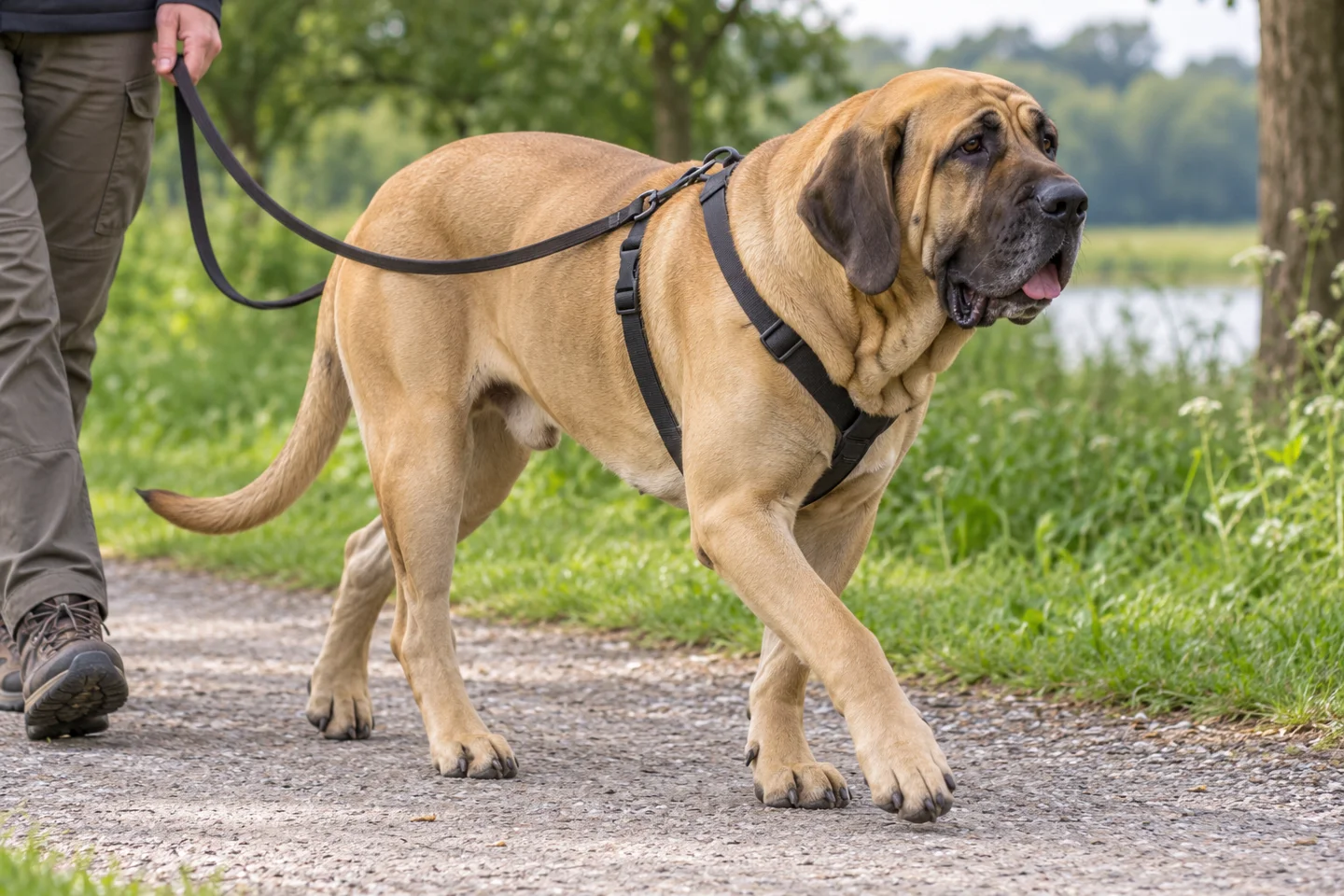
The Fila is large and powerful with a rectangular body, substantial head, broad muzzle, pendant ears, and loose skin, including a pronounced throat dewlap. The chosen illustrations show fawn examples with natural ears and a full tail. The standard allows other colors. These are AI-generated illustrations rather than documentation of a particular registered animal, ideal condition, or health finding. Do not select primarily for exaggerated skin, size, or head weight at the expense of comfortable function.
Watch natural walking, turning, and rising. A large body can conceal difficulty until a tight doorway or vehicle entrance makes it obvious. Ask about recurring stiffness and handling sensitivity, and have a veterinarian demonstrate appropriate body-condition assessment. Equipment must fit securely without rubbing folds or restricting movement. Check fastening before entering public space. A puppy's manageable weight is temporary, so plan access for an adult and for a time when it cannot assist with loading into the vehicle. Avoid depending on one person's ability to lift or physically overpower it.
The FCI adult ranges are 65–75 cm at the shoulder for males and 60–70 cm for females, with minimum weights of 50 kg and 40 kg respectively. A minimum is not a recommended goal for ever greater mass. Clinical body condition and functional movement should guide feeding and assessment. These dimensions make transport, secure facilities, and help during illness practical requirements to resolve before a puppy becomes a full-sized adult.
Visitor routines must work before the door opens
Provide a secure comfortable area where the dog can remain while someone enters. Practice that arrangement without a visitor first, using rewards and familiar routines. The person arriving should not be responsible for managing the animal or following complicated instructions while carrying tools. An owner needs control of gates, doors, and the dog's location before allowing access. Clear physical arrangements are more dependable than calling from another room after the entrance is already open.
For planned social contact, qualified guidance can help determine whether and how it is appropriate. A visitor may remain separate throughout and the visit can still proceed successfully. Do not pressure unfamiliar people to touch the Fila or stage confrontations to show its loyalty. Each person's comfort and safety matters alongside the dog's welfare. A management system should account for children, deliveries, and temporary carers and should not require the animal to decide which stranger may approach. Review the arrangement when facilities, household members, or behavior change.
Training cooperation without provoking defense
Teach practical movement and care skills in low-pressure circumstances. Going behind a gate, turning toward a hand target, standing in a chosen place, and entering a suitable vehicle are useful foundations. Reward clearly and develop one manageable step at a time. Practice while the dog remains able to respond rather than adding unfamiliar people as a test of obedience. A trained position cannot substitute for barriers and distance when risk remains unresolved.
AVSAB recommends reward-based approaches and warns about aversive methods. Physical confrontation with a large dog can endanger people and worsen fear or handling difficulties. Seek a qualified professional who can explain welfare, prevention, and the specific learning process. Do not choose instruction based on claims that a powerful breed needs intimidation or protection demonstrations. The owner must learn how to avoid and manage difficult circumstances as well as teach cues. A useful plan creates predictable safe choices and realistic safeguards for everyone responsible for the animal.

Aggression requires a documented safety plan
Threats and bites must be taken seriously without relying on breed reputation to excuse or diagnose them. Record the setting, approach, resource, handling, and opportunity to retreat. Prevent a repetition while obtaining veterinary and qualified behavioral assessment. A sudden change during touch may involve pain or illness even if the dog remains physically active. Inform the clinic before arrival so the appointment can be organized safely rather than surprising staff during examination.
Use dependable barriers and separate resources while the plan develops. Avoid routine confiscation of food or objects to prove authority; VCA's guarding guidance supports safer teaching and management. Punishing warnings can make the next incident harder to anticipate without removing the cause. If muzzle training is recommended, introduce a suitable basket muzzle gradually with rewards and retain the other safeguards. It cannot make forced contact or painful handling acceptable. Be explicit with carers about what occurred and what they must do. Vague claims that the dog is protective do not supply safe instructions.
Children and a mastiff-sized margin for error
A standard's description of family tolerance cannot guarantee the safety of a child. The Fila's size alone can create injury through a turn or collision, while uncomfortable contact can escalate for many reasons. An adult must actively manage interactions and provide separation whenever close supervision is not possible. Design resting places outside the route of games and keep children away from meals, chews, and objects beside the dog. A child should never be responsible for physically moving it.
Avoid hugging, climbing, riding, ear pulling, or faces close to the muzzle. Teach an invitation and respect a choice not to approach. Visiting children add unfamiliar behavior and may need the dog to remain comfortably separated for the whole visit. Watch attempts to withdraw or a sudden rigid posture and end pressure early. Review routines as children develop and the dog matures or becomes unwell. A familiar affectionate relationship contributes context but cannot remove the need for supervision, reliable boundaries, and adults capable of implementing the actual safety arrangement.
Other dogs, cats, and smaller animals
Ask exactly what social experience the Fila has had. Sharing a walk with a known dog differs from allowing an unfamiliar animal into its territory or near resources. Qualified assessment may be necessary before an introduction is attempted. Set up independent areas and do not force proximity in the hope the animals will resolve it. Large differences in size or strength increase the consequences of a mistake, even when an owner initially interprets the interaction as play.
Cats and smaller pets need dependable protected routes and housing. Do not infer safety from peaceful behavior with one familiar animal or an untested account of farm life. Chase and fixation should stop access while advice is sought. Think about the routine during feeding, cleaning, and care by another adult. If coexistence would require a level of separation the home cannot reliably maintain, acknowledge the limitation before placement. Bringing animals together is a responsibility to each of them, not an experiment in whether the more vulnerable one can establish its own boundaries.
Exercise with space, control, and a return plan
Provide appropriate movement and investigation according to age, condition, and current behavior. Choose routes where the handler can control distance from people and animals without depending on strangers to cooperate instantly. A crowded venue may be unsuitable even if it offers a long path. Build fitness gradually from recent activity. A large puppy needs sensible growth and rest, with individual veterinary advice before repetitive impact or demanding sport. Enthusiasm does not establish readiness for a particular workload.
Heat requires suitable timing, water, shade, and an early exit option. Severe distress, weakness, or collapse warrants urgent help. After outings, notice recovery and inspect feet and skin without provoking pain. A recurring limp or reluctance to rise deserves assessment. Plan how an adult unable to walk would reach veterinary care. Ask the clinic about safe assistance and transport rather than improvising a lift while the animal is distressed. The practical plan should work when the usual strongest handler is absent, with clear contacts and equipment already available.
Grooming, skin inspection, and humane handling
A short coat still needs routine care. Inspect folds and equipment-contact areas for moisture, rubbing, and irritation, and ask the veterinarian about an appropriate method for the individual skin. Avoid treating every redness as the same problem or applying products merely because they are sold for wrinkled breeds. Introduce a soft cloth and brief body checks while nothing is wrong. Cooperation learned in small stages can make a necessary examination less surprising.
Ear odor, discharge, soreness, or repeated head shaking needs clinical advice. Do not probe deeply or reuse medication from a previous episode without direction. Maintain nails and teeth through appropriate tools and a realistic handling plan. A new objection to touch can indicate discomfort and deserves investigation. Inform groomers and clinic staff about behavior concerns in advance and discuss whether a particular facility can provide care safely. Immediate treatment and long-term learning may need separate arrangements, and neither should rely on overpowering a frightened or painful large dog.
Health records without an invented universal checklist
For a Fila, ask the source which screening policy it follows and the evidence behind it. Request actual reports and significant family medical history instead of accepting a copied mastiff checklist as complete. A conformation standard describes identity and structure, not the population frequency of every disease. Ask why a test was selected, whether it applies to this family or clinical concern, and what the findings mean. Your veterinarian can help distinguish relevant assessment from an impressive-looking but poorly explained panel.
Routine physical examination, joint imaging, specialist assessment, and selected DNA variants answer different questions. Keep dates, identifiers, and findings together. Missing rescue information should remain unknown rather than being converted into a reassuring result. Establish a current clinical baseline and investigate persistent changes in mobility, appetite, drinking, skin, or behavior. A dog can still appear strong while unwell. Maintain preventive care appropriate to location and activities, and know the urgent-care route for collapse, severe respiratory difficulty, trauma, or rapidly worsening illness. Earlier screening cannot replace attention to present symptoms.
Feeding, growth, and a long-term care budget
Use a complete diet appropriate to life stage and medical needs, especially during large-dog growth. Ask the veterinary team to demonstrate body-condition assessment and measure an initial allowance. Count rewards used during teaching and adjust portions to real condition and workload rather than a desired imposing appearance. Feed apart from children and other animals so intake is visible and the dog is not expecting competition. Avoid unnecessary supplements that can unbalance an otherwise suitable diet.
Seek qualified advice for home-prepared nutrition and persistent digestive or appetite changes. Budget for substantial transport, professional instruction, safe facilities, preventive treatment, unexpected diagnostics, and competent relief care. Review insurance terms and access before relying on future coverage. A willing friend may not be equipped to manage this individual during your absence. Rehearse the routine and be honest about constraints. As the dog ages, adapt surfaces, bedding, and vehicle access while retaining comfortable activity. New irritability or reluctance should prompt medical review rather than being treated as an inevitable consequence of maturity.
Mixes and dogsDating require accurate limits
A Fila mix can have uncertain ancestry and a different combination of appearance and behavior. A crossbreed label does not guarantee reduced medical risk, easier visitor handling, or exemption from a restriction. Check the applicable official requirements and assess the actual dog. For a planned cross, discuss relevant records from both parents. A responsible placement source explains known incidents, uncertainties, support, and return arrangements rather than presenting mixed ancestry as a solution to every concern associated with a large guardian-type dog.
On dogsDating, provide a factual description of preferences, incidents, and any professional plan, keeping exact home coordinates private. The platform should not become a way to test unresolved aggression with an unfamiliar person or dog. Where an introduction is appropriate under the management and legal arrangements, use qualified guidance, capable separate handlers, a roomy public setting, and an option to finish. Avoid shared resources and forced contact. A calm outing does not establish comfort at home, in a vehicle, or for breeding. Safety and welfare require the limits to remain explicit rather than obscured by a friendly photograph.
Rest, absence, and an emergency handover
Provide a quiet area where the Fila can rest without monitoring every movement at the property boundary. Teach comfortable use while you remain nearby before relying on it during a demanding event. The space needs appropriate ventilation, water access, and a routine the animal understands. A management area should not become isolation used in place of ordinary care and company. Observe how the dog responds instead of assuming silence establishes comfort. Pacing, prolonged calling, or attempts to break out requires assessment before the arrangement is expected to work for longer periods.
Make the emergency handover concrete. Another capable adult should know the entrance sequence, how the dog is located, which equipment is used, and whom to call if something changes. Practice while you are available and correct uncertainties before an urgent absence. Do not depend on a stranger entering and improvising with a large dog that may be uncomfortable with unfamiliar handling. Keep medication directions and veterinary contact information accessible outside the dog's secured area. Review the plan when people, facilities, or behavior change. A workable system protects the animal's welfare and the people helping with it without asking the dog to tolerate an abrupt collapse of its familiar routine.
Sources and editorial notes
Sources checked October 21, 2026. Breed measurements describe reference ranges, not a diagnosis or an individual dog's ideal weight. Images are AI-generated breed illustrations and do not document a particular dog or health condition.
- VCA Animal Hospitals: Grooming and coat care for your dog
- VCA Animal Hospitals: Ear infections in dogs
- VCA Animal Hospitals: Common emergencies in dogs
- VCA Animal Hospitals: Food aggression in puppies
- VCA Animal Hospitals: Heat stroke in dogs
- VCA Animal Hospitals: Aggression toward unfamiliar dogs, diagnosis
- AAHA: Feeding plans for healthy, appropriate weight cats and dogs
- GOV.UK: Controlling your dog in public, banned dogs
- Orthopedic Foundation for Animals: CHIC health screening programs
- Federation Cynologique Internationale: Fila Brasileiro breed standard
- AVSAB: Humane Dog Training Position Statement
Keep getting to know dogs.
Read another guide or return to your dogsDating community.
Explore breed guidesBack to dogsDating