Finnish Lapphund
A Finnish Lapphund needs a home interested in both a Nordic herding dog's daily life and the care of a substantial double coat.
How these guides are researched and reviewed
- Origin
- Finland; Sami herding background
- Identity
- Spitz / Reindeer Herder
- Care priorities
- Undercoat, movement interests, eye screening
- Adult standard size
- FCI ideal height: males 49 cm; females 44 cm, each ±3 cm
General information for owners. These articles have not been reviewed by a veterinarian. Medical decisions need your dog's history and an examination.
The Finnish Lapphund behind the abundant coat
A Finnish Lapphund needs a home interested in both a Nordic herding dog's daily life and the care of a substantial double coat. A soft expression and manageable outline can draw attention before questions about movement, vocalization, rest, and company have been answered. Work through your ordinary week before selecting a puppy. Decide where outings fit, how the dog will learn household expectations, and who will provide hands-on care when you are away or temporarily unable to manage it.
Ask to spend time with adults rather than judging the breed from puppies alone. Observe how a dog responds when an activity finishes and when someone unfamiliar enters. Find out what its owner needed to teach deliberately, not just what the animal enjoys. A dog already assessed in a home may offer useful information for a particular placement, while a youngster has more development ahead. Choose according to the individual and your sustainable routine. A general description of friendliness does not answer every question about children, pets, or periods without a person.
Sámi herding history and separate breed names
The FCI describes the background of Finnish Lapphund-type dogs in the Sámi people's reindeer-herding and watch work in northern regions. The recognized Finnish breed developed through its own standards and naming changes. That cultural and working context deserves accurate attribution without an invented ancestry story for every living dog. Ask about the recent family, current activities, and actual experiences behind the animal being considered.
The Finnish Lapphund is separate from the Swedish Lapphund and Lapponian Herder. Similar regional language should not make those identities or their screening records interchangeable. Verify the registry name where a pedigree is supplied. If a rescue identification relies on appearance, keep that uncertainty visible and assess current needs. A thick coat, curled tail, and tan points alone cannot provide a complete family tree. An owner can still make appropriate decisions by combining clinical examination, observed behavior, and honest gaps rather than applying a confident label more precisely than the evidence supports.
Coat, ears, and the body beneath
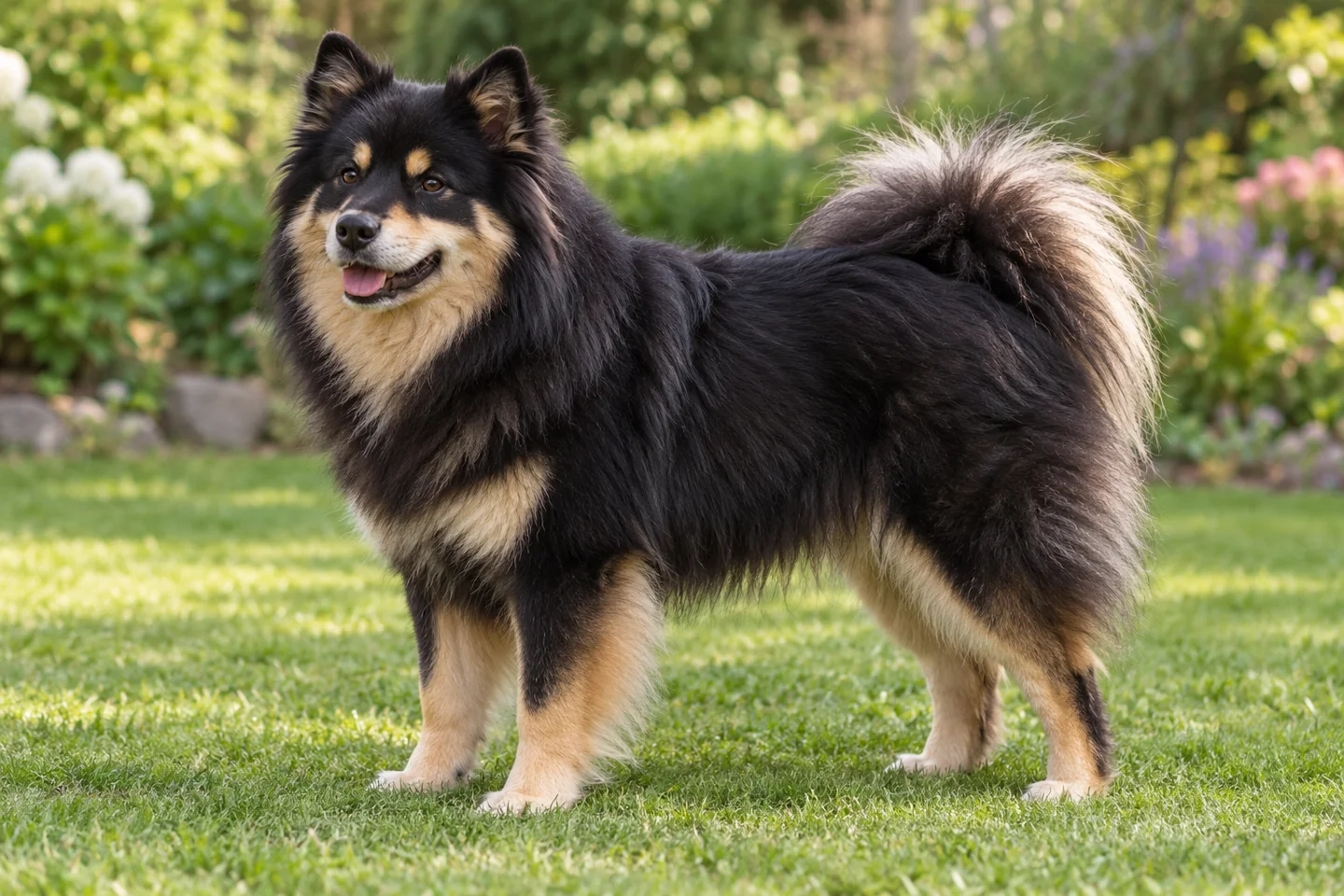
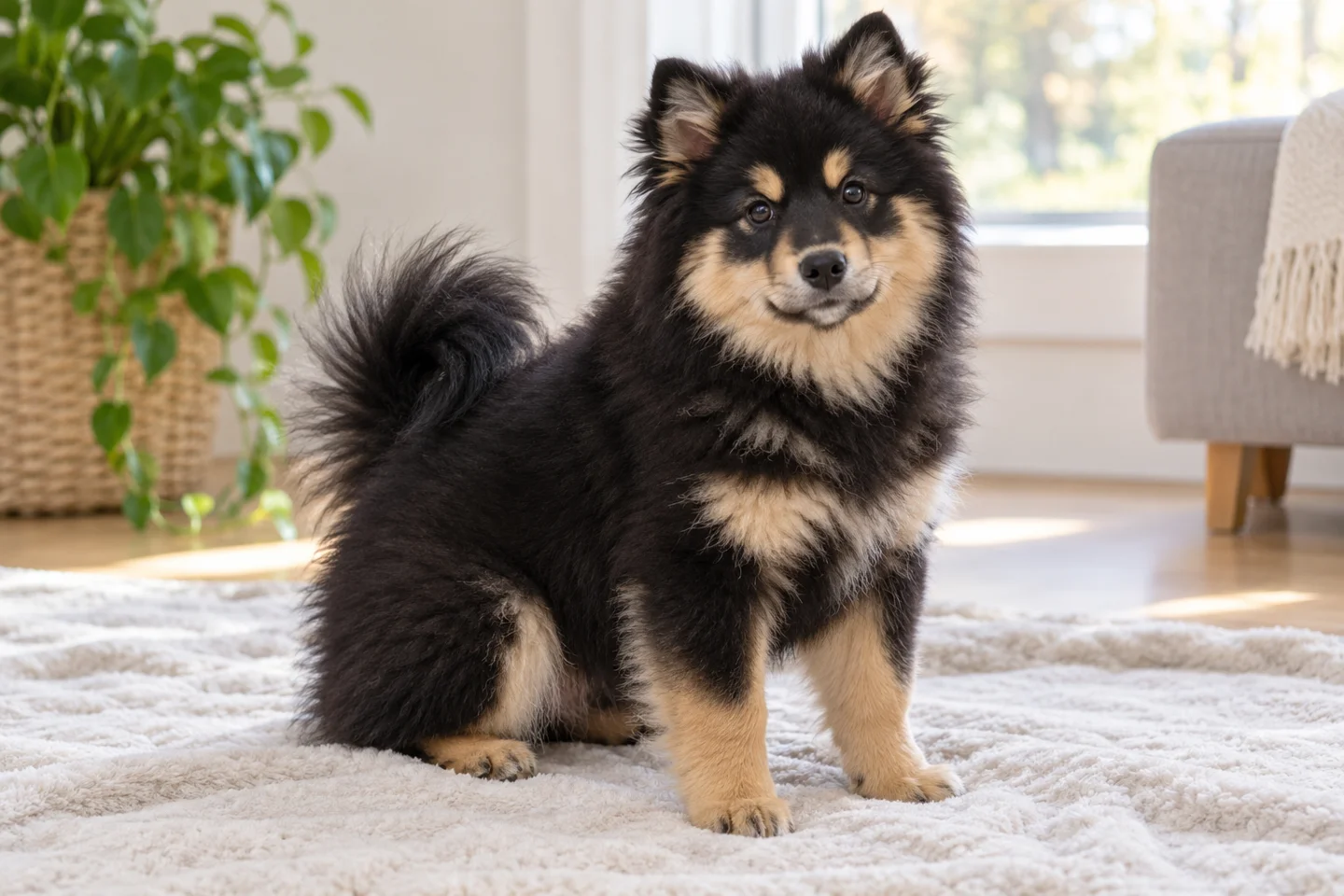
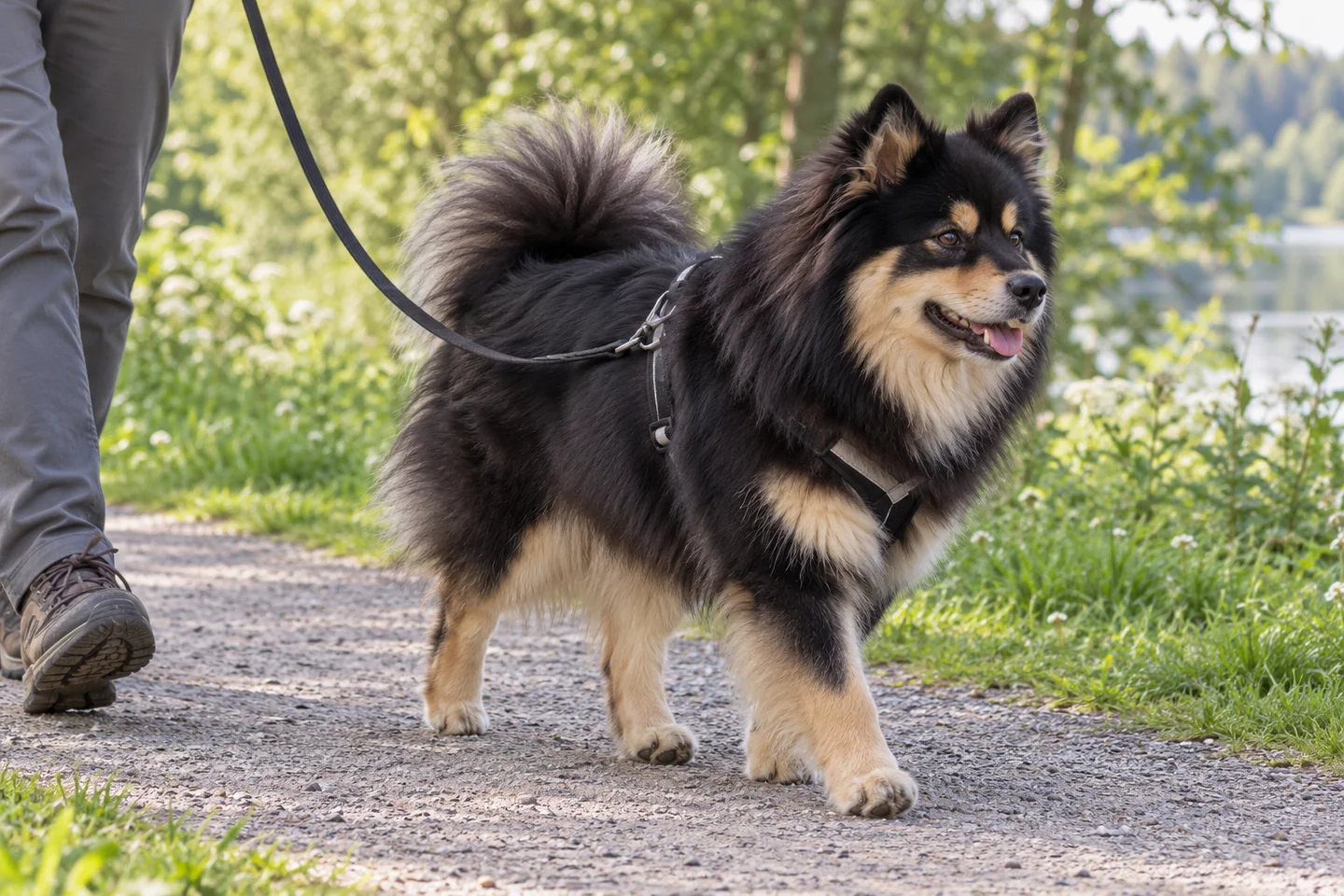
A sturdy slightly rectangular body, dense long coat, broad head, and mobile triangular ears form the breed's recognizable outline. The FCI accepts erect or semi-erect ears, including differing carriage between ears. The generated illustrations choose black with tan markings and erect ears. They are visual examples, not photographs showing a registered dog's identity or a guaranteed future appearance. Coat colors vary, so one selected example cannot represent the full standard.
Feel beneath the hair when assessing condition and ask the veterinary team to demonstrate what to check. A full coat can make an athletic dog look heavier or conceal weight gain. Observe comfortable walking, turning, and rising after rest. Ask about repeated stiffness or a new dislike of a familiar surface. Equipment needs a fit that remains secure without trapping or rubbing furnishings. Trial it quietly before an exciting walk, then check contact areas afterward. A puppy's growth and seasonal coat changes can require further adjustment even when the same harness initially worked well.
FCI ideal adult heights are 49 cm for males and 44 cm for females, each with a tolerance of 3 cm either way. The standard gives type priority over size. That reference should help plan around a real adult rather than encourage a particular scale number or especially small puppy. Check usable room in the vehicle and how a harness sits beneath the coat, allowing condition and proportions to guide care.
Exercise with a herding background in mind
Provide movement and opportunities to investigate, matched to the dog's current conditioning. A reindeer-herding history does not establish that an individual is ready for an ambitious hike. Ask about recent activity and increase the demand gradually. Puppies need sensible exploration and sleep, with professional advice before repetitive impact or demanding sport. Notice recovery after rest and the next morning; willingness during an outing can conceal discomfort that appears later.
Plan for the conditions you actually have. In heat, choose cooler hours, shade, drinking water, and a route that can be shortened. A Nordic coat does not make overheating irrelevant. Severe distress, weakness, or collapse needs urgent assistance. Wet or cold conditions also require observation and comfortable recovery. Inspect feet and coat after vegetation, seeking help for embedded material, wounds, or painful swelling. A sustainable routine should work on a busy weekday too, without depending on exhausting the dog so thoroughly that no household learning or rest routine is necessary.
Training movement without assigning the dog control
A dog noticing movement needs clear alternatives when children run, a bicycle passes, or another pet crosses a room. Teach a turn toward the handler or a move onto a mat at an easy distance before asking for it amid excitement. Prevent repeated circling, pursuit, or blocking while those skills develop. Describing an action as herding does not make it acceptable for a frightened child or an animal trying to leave. The owner remains responsible for the environment and the behavior being rehearsed.
AVSAB recommends reward-based methods. Make the task understandable and reward successful participation before raising difficulty. Short lessons within the day can teach waiting at gates, entering the vehicle, and standing while equipment is adjusted. Include a release and an end to work. If the dog struggles, review reward value, distractions, fatigue, and comfort instead of adding painful correction. An instructor should help the family improve its decisions and timing, leaving the animal with a clear way to succeed rather than a contest about whose will is stronger.
Barking, observation, and a household that can rest
Ask what this individual vocalizes about and when. A warning at an entrance, excitement before an outing, and distress after departure can look similar to a listener while needing different responses. Keep a brief record of trigger and duration if sound becomes difficult. A source should describe its own dogs candidly rather than using a broad breed label to dismiss the question. Consider neighbors and shared entrances before placement, particularly where repeated noise would leave little room for adjustment.
Reduce constant opportunities to rehearse a problem when practical. A comfortable bed away from a busy window may help a dog that continually watches passing activity. Teach what happens after a walk: equipment removed, water available, then quiet time without restarting a game at every approach. Persistent inability to rest needs assessment rather than an indefinitely longer exercise plan. Observe short absences before expecting a workday alone. Pacing, sustained calling, or exit-focused behavior should prompt help and practical care arrangements. Another dog is not a guaranteed treatment for distress.
Grooming the undercoat without pulling through it
An adult coat demonstration is valuable before commitment. Ask an experienced owner to show how to work in sections, inspect the skin, and manage places where friction develops. The brush should reach through the coat gently rather than leave a neat surface over tangles. Choose tools suited to the texture and current condition. A few comfortable sessions can be better than delaying until the whole task requires prolonged restraint. Let the dog shift position and reward cooperation while it is still willing.
Tight mats and irritated skin need professional help. Scissors pushed near concealed skin can cause injury, especially if the dog moves. Discuss an appropriate maintenance plan instead of preserving an appearance while the animal remains uncomfortable. If illness or owner mobility makes normal care impossible, arrange assistance early. A holiday carer should learn inspection rather than merely agree to brush occasionally. The aim is clean, comfortable, manageable coat care that remains feasible between appointments, with welfare and medical requirements guiding changes when necessary.
Grooming details: feet, ears, mouth, and equipment
Check toes and furnishings after rough or vegetated routes. Remove loose debris gently and seek advice for a painful or embedded object. Introduce a brief foot touch before attempting all nail care, and use a stable surface that does not make standing harder. If the dog objects consistently to one location, investigate the reason rather than repeating the touch to demonstrate a reaction. A thick coat can hide a rubbed area where equipment sits, so inspect beneath straps after use.
Dental care needs suitable products and gradual teaching. Report altered chewing or a new dislike of facial handling. Ear odor, discharge, soreness, or repeated head shaking deserves veterinary assessment, not an assumed cause based on breed. Avoid deep probing and old medication without direction. Tell groomers and clinic staff about concerns before arrival. Necessary treatment and long-term cooperative care may require different immediate arrangements; a painful problem should not be left untreated while the owner waits for perfect training performance.
Children and the right to finish an interaction
A child may want to keep stroking a fluffy dog after the animal has had enough. Teach an invitation, supervise the response, and allow the dog to walk away without being followed. Avoid hugging, pulling hair or ears, climbing, and faces pressed together. An adult must be close enough to interrupt pressure promptly. A resting place outside the play route and a suitable barrier can protect quiet time when supervision is divided or visitors make the setting harder to manage.
Children should not approach meals and chews or retrieve objects beside the dog. Ask an adult instead. Watch avoidance and unusual stillness before assuming an encounter remains comfortable. Visiting friends need the same explanation as family members, and energetic games may require separation throughout. Review routines when a child becomes more mobile, the dog matures, or a painful condition changes tolerance. A history of affection can be valuable while still leaving uncertainty about a new person or touch. The arrangement should protect both participants rather than expecting the dog to tolerate every well-meant approach.
Aggression, pressure, and a useful behavior history
If growling, snapping, or a bite occurs, record the circumstances without reducing the event to a breed stereotype. What was approached, which body area was touched, and could the dog retreat? Stop the immediate pressure and prevent another person from recreating it. New handling sensitivity needs veterinary assessment. A dog may remain enthusiastic about walking while a particular painful movement or area changes its response to care.
Keep food and other valued items protected from interference and teach safe exchanges, following VCA's guidance on avoiding resource competition. Repeated threats or escalating fear requires qualified behavior support and an explicit interim plan. Inform carers honestly about incidents. Punishing a warning can make concern less visible without removing its cause. Any equipment recommended by a professional needs a gradual learning process and should accompany appropriate distance and barriers. A muzzle or trained position cannot turn a forced greeting or painful procedure into a comfortable experience.
Dogs, cats, and other animals within the home
Evaluate observed relationships rather than assuming a herding background predicts universal compatibility. A dog accustomed to walking beside companions may still need help sharing beds, meals, or access to a familiar person. Provide independent resources during adjustment and check whether each animal can withdraw. Repeated blocking or pursuit should be interrupted when the recipient tries to rest. Quiet behavior is not always an invitation for the other dog to continue approaching.
Cats need inaccessible routes while introductions prevent chasing. Birds, rabbits, rodents, and other vulnerable pets require secure separation during cleaning and feeding as well as when their housing is closed. Ask a source exactly what it has seen and retain uncertainty where contact has not occurred. A familiar resting cat and an animal running outside present different circumstances. If fixation develops, stop access and obtain guidance. Decide what your layout and available carers can maintain reliably before bringing together animals whose safety depends on those boundaries every day.
Health testing and different club programs
The AKC's published Finnish Lapphund recommendations include patella, hip, elbow, and ophthalmologist evaluations and named DNA tests for Pompe disease or GSD II, PRA-prcd, and the common degenerative myelopathy variant. Ask for identifiable reports and interpretation rather than an assertion that a panel was clear. A variant result is specific information, not a diagnosis of every clinically similar condition. Specialist eye examination and selected DNA testing answer different questions.
Programs differ between organizations and can change. The Finnish Lapphund Club of Great Britain publishes its own approach, emphasizing hip and eye assessment and named PRA-prcd and GSDII DNA information. Ask which current scheme the source follows and why additional assessments were selected for the family. Do not treat an older web page or a club requirement as identical everywhere. Review dates, findings, and missing information with the veterinarian. Screening supports responsible decisions without providing a guarantee that no inherited or acquired illness will appear during the dog's life.
Health observation and nutrition beneath the coat
For an adopted adult without complete records, establish a current baseline rather than converting unknown findings into normal ones. Persistent changes in appetite, drinking, coat, movement, or behavior deserve assessment. A dog that still seeks company may be unwell. Keep concise notes of timing and circumstances and ask about routine prevention suited to activities and location. Know the urgent-care route for collapse, serious respiratory difficulty, trauma, or rapidly worsening illness, and plan transport if the animal cannot walk normally.
Use a complete diet appropriate to life stage and diagnosed needs. Measure a starting portion and count training rewards. Ask the veterinary team to demonstrate condition checks beneath the coat, and review portions as activity changes. Feed separately so intake remains visible and resources do not become competitive. Avoid supplements without a specific reason and seek qualified advice for home-prepared nutrition. A comfortable adult outline should guide care more than a wish for an especially large mane, bulky body, or scale reading that ignores the individual's proportions and clinical condition.
Mixes, family changes, and the lifetime budget
A Finnish Lapphund mix can have a different adult coat, size, voice, and combination of interests. Ask which ancestry is verified and assess the actual animal. A planned cross needs relevant information about both parents; mixed ancestry cannot guarantee low maintenance or freedom from inherited disease. A responsible source discusses uncertainty and support rather than letting an attractive crossbreed label replace records and observation. Read placement and return arrangements before committing.
Budget for coat assistance, preventive treatment, diagnostics, training, transport, and backup care. Let another trusted adult practice equipment and a manageable outing before a necessary absence. A close bond does not establish comfort with sudden isolation or an unfamiliar carer. As the dog ages, adapt routes, surfaces, and access while preserving opportunities for comfortable investigation and contact. New reluctance or irritability should prompt clinical review. The arrangement needs to keep working when the owner becomes busier or less mobile, not only during the energetic first months of ownership.
dogsDating without pressure to play
Write a dogsDating profile using specific observations about preferred distance, unknown animals, and relevant incidents or professional plans. Keep exact home coordinates private. Choose an initial public route with room for separate handlers to turn away or widen the gap. Let each dog explore rather than asking for immediate close contact, and leave valued food and toys out. A short calm walk can provide useful information even when neither animal offers play.
Notice if one dog continually directs the other's movement or follows while the recipient withdraws. Pause or end rather than expecting the quieter animal to escalate. Consider later home visits and shared transport separately because resources and boundaries change. Social compatibility cannot establish reproductive or medical suitability. Accurate descriptions and a clear way to leave help owners learn about their dogs without making an uncomfortable encounter continue for the sake of a photograph or a hoped-for friendship.
Sources and editorial notes
Sources checked October 21, 2026. Breed measurements describe reference ranges, not a diagnosis or an individual dog's ideal weight. Images are AI-generated breed illustrations and do not document a particular dog or health condition.
- VCA Animal Hospitals: Grooming and coat care for your dog
- VCA Animal Hospitals: Ear infections in dogs
- VCA Animal Hospitals: Common emergencies in dogs
- VCA Animal Hospitals: Food aggression in puppies
- VCA Animal Hospitals: Heat stroke in dogs
- American Kennel Club: herding group recommended health tests
- VCA Animal Hospitals: Aggression toward unfamiliar dogs, diagnosis
- Finnish Lapphund Club of Great Britain: Breed health and testing
- AAHA: Feeding plans for healthy, appropriate weight cats and dogs
- Orthopedic Foundation for Animals: CHIC health screening programs
- Federation Cynologique Internationale: Finnish Lapphund breed standard
- AVSAB: Humane Dog Training Position Statement
Keep getting to know dogs.
Read another guide or return to your dogsDating community.
Explore breed guidesBack to dogsDating