Finnish Spitz
A Finnish Spitz needs an owner who has thought seriously about a barking hunting dog in the intended home.
How these guides are researched and reviewed
- Origin
- Finland
- Identity
- Spitz / Hunting Dog
- Care priorities
- Barking management, red double coat, bird-safe access
- Adult standard size
- FCI height: males 44–50 cm; females 39–45 cm
General information for owners. These articles have not been reviewed by a veterinarian. Medical decisions need your dog's history and an examination.
Start with the voice before choosing the red coat
A Finnish Spitz needs an owner who has thought seriously about a barking hunting dog in the intended home. The fox-like head and red coat can make appearance the first attraction, but the FCI describes a hunting role in which barking marks game. That background belongs near the beginning of a placement conversation. Ask what this individual vocalizes about, how often it occurs, and whether your housing and neighbors leave room for a realistic management plan.
Meet an adult away from a brief greeting and observe its normal routine. What happens at a window, when a bird moves nearby, or after everyone leaves? Those circumstances may involve different behavior and require different responses. A puppy still needs development and teaching, while an adult can bring habits from a previous environment. Choose according to the actual animal and the care you can provide throughout the week. A short coat description or a promise that enough exercise will make the dog quiet cannot answer the practical questions.
Finnish hunting identity and a distinct breed
The Finnish Spitz is a recognized Finnish hunting breed, not a general term for any red spitz-type dog. The FCI's current standard describes work mainly with forest game birds, alongside other quarry, and a dog that uses voice while working. That provides context for interests without predicting every individual's response. Ask about recent family experience and what the dog has actually been taught instead of assuming a pedigree supplies all practical skills automatically.
Verify the registry identity when ancestry is claimed. A red dog with erect ears and a curled tail can resemble several breeds, and a rescue estimate may remain uncertain. Keep that uncertainty clear rather than constructing an exact pedigree from appearance. The animal's current condition and behavior can still guide good care. Broad origin stories add less to a placement decision than evidence about handling, household routines, social preferences, and medical history. A source should be able to distinguish those observations from expectations based mainly on the name.
Square outline, red double coat, and natural ears
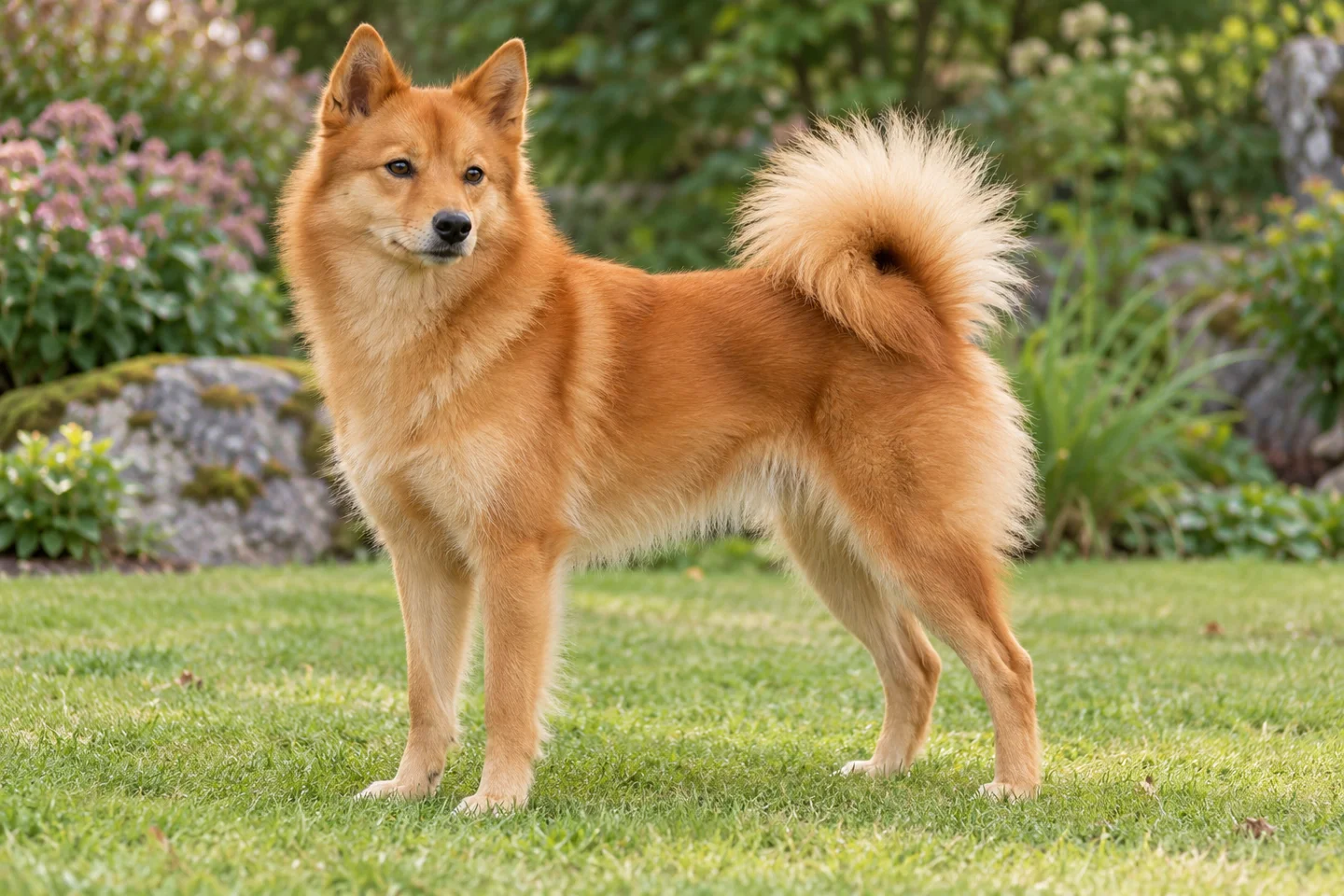
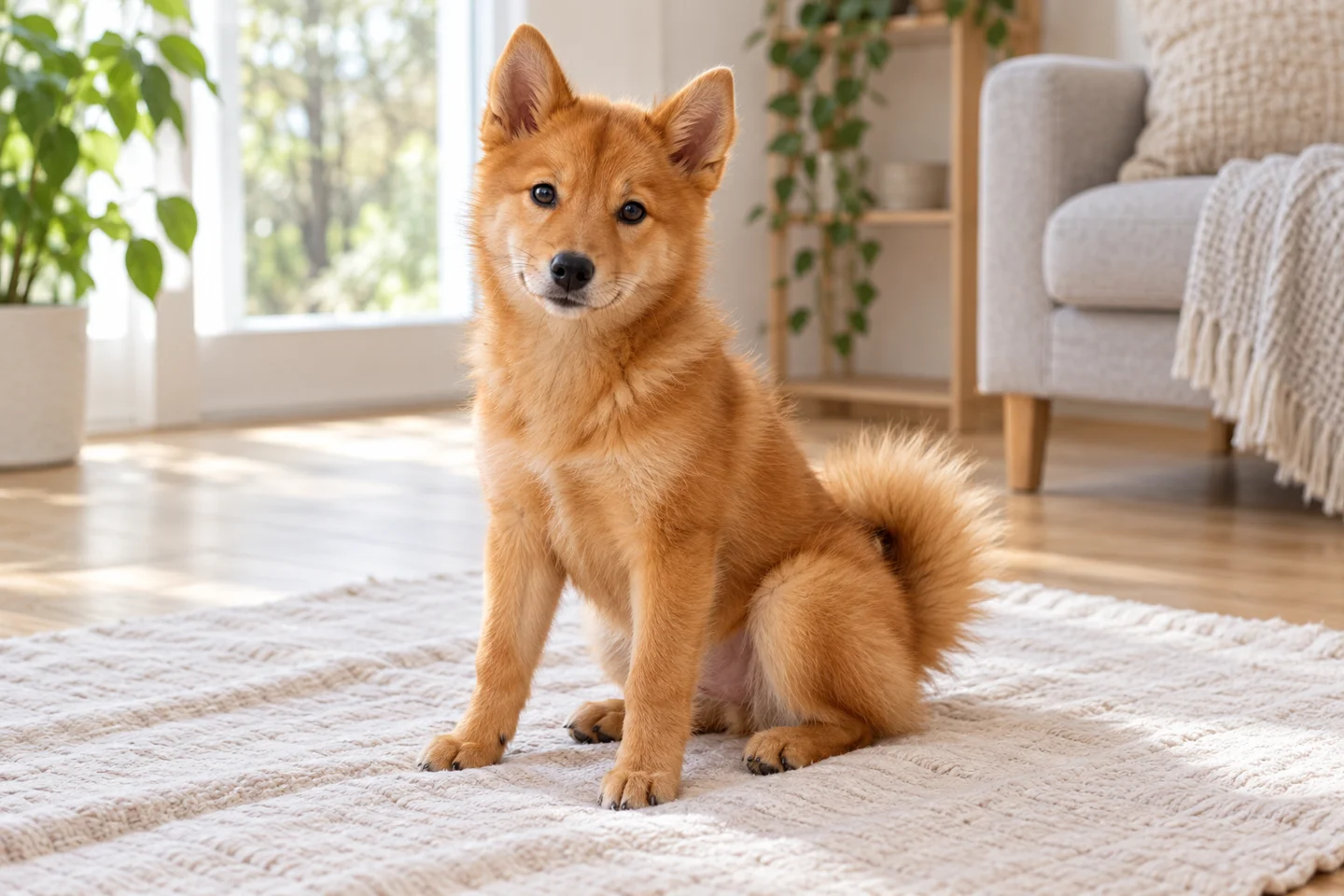
The FCI describes a lean, nearly square dog with a fox-like head, erect ears, and a bushy curved tail. Red or golden-red coat is combined with lighter areas beneath. The images present generated breed examples with natural anatomy rather than photographs documenting a registered animal. They are useful for broad recognition but cannot establish health, working ability, or the future appearance of every puppy. Avoid choosing for an exaggerated tiny muzzle or an unusually bulky coat at the expense of function.
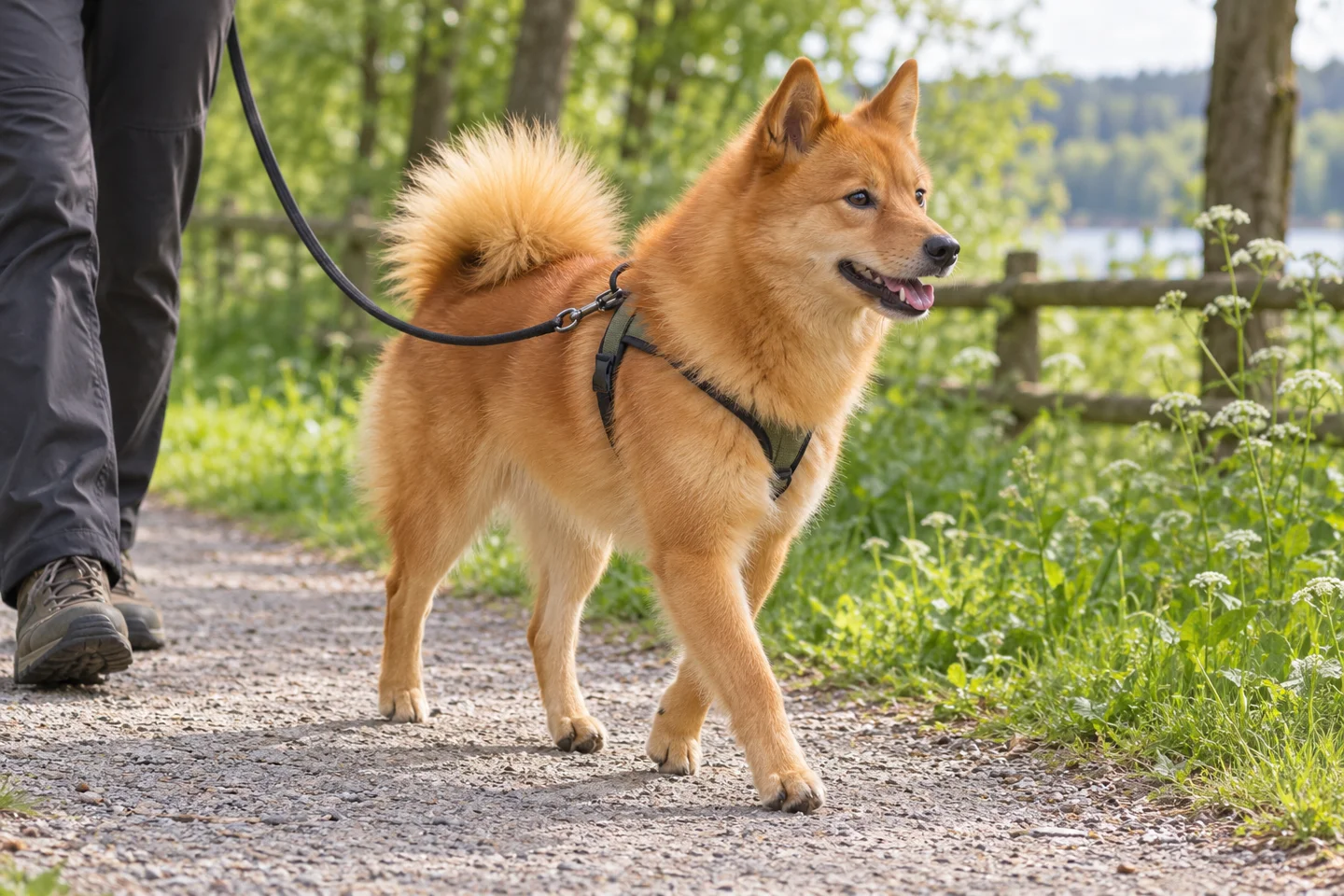
Look at the real dog moving comfortably and rising after rest. Ask about recurring lameness or a new reluctance to use an ordinary step. Feel beneath the coat for an appropriate condition assessment, with veterinary guidance about ribs and muscle. Equipment needs a secure fit even when the dog steps backward and should allow shoulder movement without trapped hair or rubbing. A quiet trial helps find problems before an outing. Recheck after growth, seasonal coat change, or weight change rather than assuming a previously useful adjustment remains suitable indefinitely.
The 2026 FCI standard gives shoulder heights of 44–50 cm for adult males and 39–45 cm for females, with ideals of 47 and 42 cm respectively. This describes the intended square hunting-dog outline rather than a universal prediction. Use individual measurements when arranging travel and equipment. A manageable physical size does not determine how much a dog will vocalize, investigate, or need help responding near wildlife.
Understand the circumstances of barking
Record a few ordinary events before deciding what to change. Does a sound follow something at the fence, anticipation of a walk, a person leaving, or an ongoing scent interest? Note duration and recovery. A simple account can help an instructor or veterinarian see a pattern. Avoid treating every vocalization as the same behavior or assuming the working background makes every residential problem unchangeable. The immediate environment may be giving the dog repeated reasons to rehearse one particular response.
Limit unnecessary window surveillance if it keeps the dog aroused, teach a comfortable resting place, and reward an alternative action that can occur at an achievable distance from the trigger. Shouting over the noise may add excitement without explaining what you want. If calling appears mainly during absence, observe departure rather than applying an ordinary quiet cue from another room. Seek support for distress. Discuss the issue honestly with a placement source and consider shared walls before commitment. A guarantee of silence would be less useful than accurate information about this dog.
Training that respects a hunting dog’s attention
Build a clear response to a name, movement toward a hand, and a turn with the handler in easy conditions. Reward the dog before demanding the skill beside the most compelling bird or scent. Permit appropriate investigation afterward so engagement does not always predict the end of the walk's interesting parts. When concentration disappears, change the situation rather than repeating a louder version of an instruction the animal cannot currently use.
AVSAB recommends reward-based methods and warns about aversive approaches. A Finnish Spitz's independence should not be used to justify painful corrections or frightening restraint. An owner may need help with timing, reward selection, or route planning. Short useful lessons can fit within daily transitions: waiting for equipment, entering the vehicle, and settling after an outing. Teach a finish too. A dog that receives another game whenever it approaches restlessly may be learning a pattern the household later finds difficult to maintain.
Birds, boundaries, and what recall has actually proved
A quiet-garden recall is one completed exercise, not a certificate of safety beside every quarry animal. Keep suitable physical control near roads, livestock, or vulnerable wildlife and follow access restrictions. A secure enclosure can allow learning without using a risky release to discover the limit. Check fences and shared gates yourself, including places beneath them. Familiar facilities can change after maintenance, so inspect rather than rely only on a previous successful visit.
If interested in field work, obtain qualified humane instruction for both dog and owner. Preparation includes handling, conditioning, welfare, and decisions about the environment. Do not casually experiment with gunfire or live game. Companion searches can use appropriate objects and controlled spaces. Small pets and captive birds need dependable separation, including during cleaning and feeding. A working interest does not determine an individual's every response, but it makes testing intentions through close unprotected contact an unnecessary risk to another animal.
Exercise with weather and recovery in the plan
Provide regular movement and investigation suited to age, condition, and current fitness. Ask about recent routines before proposing a long weekend trip. Build workload gradually and observe the dog after sleep as well as during the outing. Puppies need appropriate exploration and rest, with particular sports or repetitive impact discussed individually with the veterinary team. A willing hunting dog may continue participating without clearly showing that feet or muscles will become uncomfortable afterward.
Plan a shorter alternative when conditions change. In heat, choose cooler periods, water, shade, and a route with an easy return. Severe distress, weakness, or collapse needs urgent assistance. A northern breed identity does not remove that responsibility. Wet or cold conditions also require attention to comfort and a suitable recovery area. Inspect feet and coat after vegetation, obtaining help for embedded material, a wound, or painful swelling. New stiffness or persistent lameness should not be accepted as the normal result of an enjoyable outing.
Children and a household that can settle
An adult should handle excited entrances and departures so a child does not become responsible for managing the dog at a narrow doorway. Give the animal a bed away from running games and explain that resting there means it is left alone. Use barriers when close supervision is unavailable or visiting children create a less predictable setting. A fluffy appearance can invite repeated touching; teach an invitation and accept the dog remaining at a distance.
Prevent hugging, pulling hair or ears, and faces close to the muzzle. Leave meals and chews undisturbed, with an adult recovering objects nearby. Watch the whole body for attempts to withdraw or a sudden rigid posture. End contact early instead of waiting for a stronger warning. A familiar relationship may be affectionate while still needing supervision. Review the plan after changes in the child's mobility or the dog's comfort. Yesterday's easy greeting cannot establish tolerance of an unfamiliar visitor, fatigue, or a painful touch today.
Aggression and a useful response to warnings
If growling, snapping, or a bite occurs, stop the pressure and record the actual setting. Was the dog held, approached near food, touched in one area, or unable to leave? Those facts help assessment more than a breed label or a description such as feisty. A new reaction during handling needs veterinary review even when ordinary activity continues. Discomfort can affect a particular procedure before an owner sees a large decline in movement or appetite.
Arrange protected resources and teach exchanges instead of routinely confiscating food, consistent with VCA's guarding guidance. Repeated threats or escalating fear requires qualified behavioral help and clinical involvement where needed. Keep people safe with a clear interim arrangement and inform carers about incidents honestly. Punishing a warning may obscure concern without addressing its cause. Any positively introduced muzzle or other equipment advised by a professional belongs within a wider plan; it cannot make unwanted contact acceptable or replace appropriate distance and the dog's opportunity to retreat.
Grooming a natural red coat
A double coat needs maintenance that reaches through loose hair and checks skin without forceful pulling. Ask an experienced owner or groomer to demonstrate suitable tools and attention to friction areas. A tidy top layer may conceal tangles beneath. Introduce brief brushing and towel sessions when the dog is comfortable, allowing a change of position and pauses. Seek professional assistance for tight matting or irritation rather than putting scissors near skin you cannot see clearly.
Include feet, nails, teeth, and ears in routine care. Check for outdoor debris and equipment rubbing after an outing. Ear odor, discharge, repeated shaking, or pain needs advice, not deep probing or an old prescription. New resistance to a familiar procedure should prompt investigation of discomfort. Tell professionals about handling concerns when booking so care can be planned. Immediate medical needs and longer-term cooperative training may require different arrangements, and a painful condition should not wait indefinitely for a perfect home-care response.
Health questions when published lists differ
The AKC's Finnish Spitz breed overview discusses screening of hips, elbows, patellas, and eyes, while its group testing page lists no formal recommended tests for the breed. Those statements should not be collapsed into either a universal mandatory checklist or a claim that testing has no value. Ask the source which current club or national program it follows and obtain its rationale and actual reports. Programs and available evidence can differ across countries and families.
Review identifiers, dates, assessment methods, and significant family diagnoses with the veterinarian. A routine check, joint imaging, specialist eye examination, and selected DNA panel answer different questions. Missing rescue records remain unknown rather than normal. Do not infer prevalence from a test being available or turn a source's reassuring description into a guarantee. Establish current clinical care and investigate symptoms as they arise. A recognized breed can have useful health information while still requiring owners to ask precise questions about this particular dog and the evidence behind a proposed mating.
Health observations and a measured feeding plan
Record persistent changes in appetite, drinking, coat, mobility, or behavior and seek assessment. A dog can still greet family or want a walk while unwell. Avoid diagnosing through breed identity or repeatedly provoking a painful response to show it. A short recording of natural movement may help if it neither delays care nor causes distress. Keep urgent contacts and a safe transport arrangement ready for serious respiratory difficulty, collapse, trauma, or rapidly worsening illness.
Use a complete diet suited to life stage and medical requirements. Measure a baseline amount and account for training rewards, particularly when several people offer them. Assess condition beneath the coat with veterinary guidance and review portions as activity changes. Feed separately so intake is visible and competition is avoided. Supplements need a reason within the whole diet, and home-prepared nutrition deserves qualified advice. Persistent digestive signs should lead to a clinical plan rather than repeated unstructured product changes that make the pattern harder to interpret.
Mixes, absences, and lifetime support
A Finnish Spitz mix can differ in coat, voice, proportions, and behavioral interests. Ask what ancestry is verified and assess the individual. Planned crosses need relevant information about both parents; mixed ancestry cannot promise fewer inherited concerns or a quieter home. A responsible source discusses uncertainties, support, and return arrangements before payment. Budget for prevention, diagnostics, training, secure outdoor access, transport, and competent company or relief care when the owner cannot provide it.
Develop comfortable time apart gradually and observe the response. Sustained pacing, calling, or attempts to escape needs help before longer absence is expected. Rehearse care with another trusted adult while you remain available. A close relationship does not establish tolerance of a sudden new routine. As the dog ages, adapt routes, surfaces, and access while retaining comfortable investigation and learning. New irritability or reluctance warrants clinical review rather than being assigned automatically to independence or age. The ownership plan must keep working when the household's circumstances change.
dogsDating with sound, space, and honest information
Describe the actual dog's social preferences and relevant history on dogsDating, including vocal responses that another owner should expect. Keep exact home coordinates private. Choose a public route with room for separate handlers to move away, and begin with parallel exploration rather than forcing a greeting. Leave shared food and toys out. Unexpected birds, crowds, or noise may change the difficulty, so be willing to adapt rather than insist on the original plan.
Notice whether both dogs can disengage. Add space or finish if one repeatedly follows while the other withdraws, or if excitement becomes unmanageable. A short calm meeting can supply useful information without play. A later home visit or joint journey involves different resources and boundaries and deserves its own thought. Social compatibility is not a medical or reproductive assessment. Accurate descriptions and an easy way to end let owners learn about the animals without requiring a close photograph or a particular outcome from the first outing.
Agree beforehand how either handler will request more space. A simple signal and a route that permits turning away can prevent confusion when attention is divided between two excited dogs.
Sources and editorial notes
Sources checked October 21, 2026. Breed measurements describe reference ranges, not a diagnosis or an individual dog's ideal weight. Images are AI-generated breed illustrations and do not document a particular dog or health condition.
- VCA Animal Hospitals: Grooming and coat care for your dog
- VCA Animal Hospitals: Ear infections in dogs
- VCA Animal Hospitals: Common emergencies in dogs
- VCA Animal Hospitals: Food aggression in puppies
- VCA Animal Hospitals: Heat stroke in dogs
- VCA Animal Hospitals: Aggression toward unfamiliar dogs, diagnosis
- American Kennel Club: Non-Sporting group health testing recommendations
- AAHA: Feeding plans for healthy, appropriate weight cats and dogs
- Orthopedic Foundation for Animals: CHIC health screening programs
- American Kennel Club: Finnish Spitz breed care and screening discussion
- Federation Cynologique Internationale: Finnish Spitz breed standard
- AVSAB: Humane Dog Training Position Statement
Keep getting to know dogs.
Read another guide or return to your dogsDating community.
Explore breed guidesBack to dogsDating