German Longhaired Pointer
A substantial German pointing dog with feathering, field interests, and care needs that extend well beyond a handsome coat.
How these guides are researched and reviewed
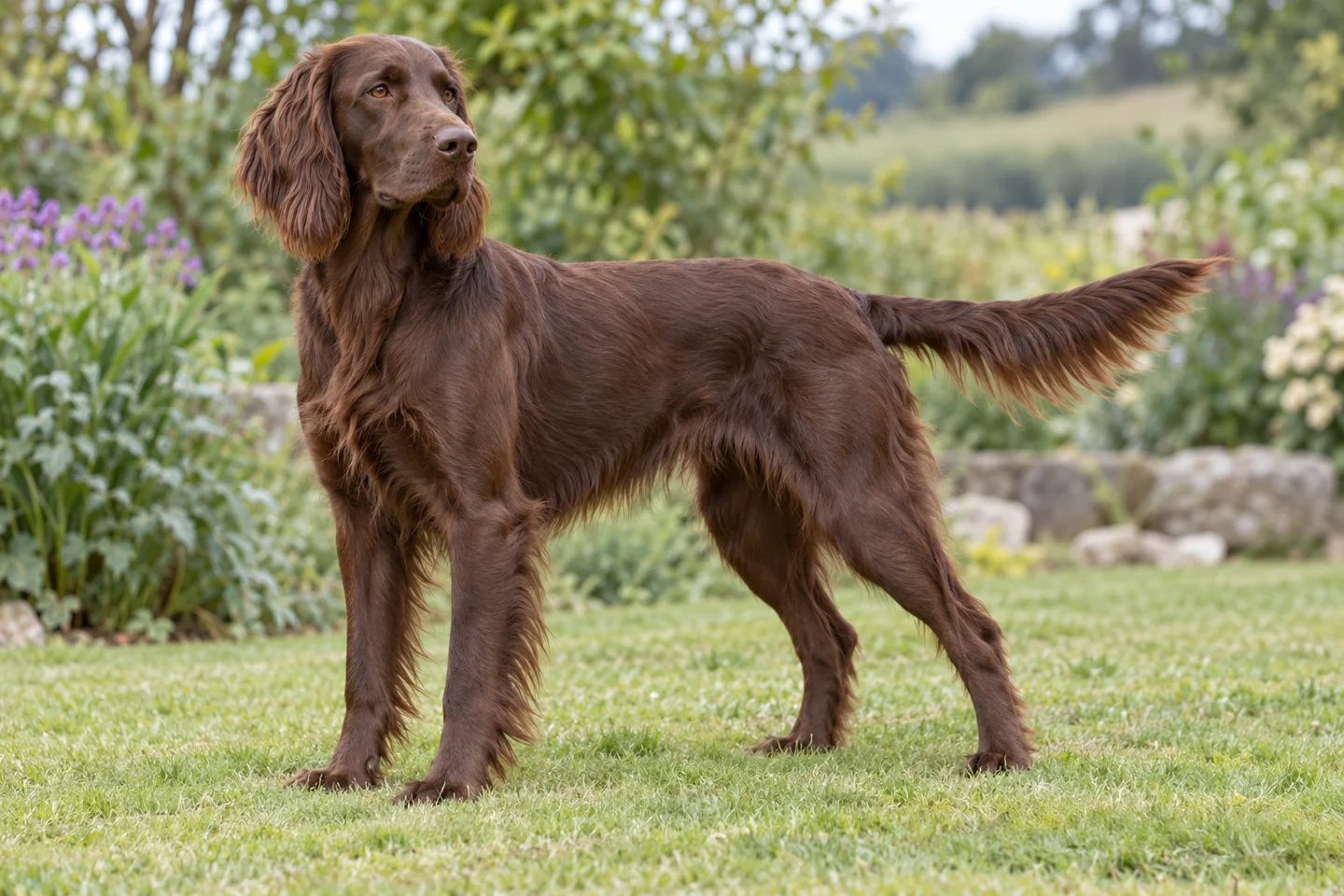
- Origin
- Germany; Deutsch Langhaar
- Adult standard size
- FCI males60–70 cm, females58–66 cm; average weight30 kg
- Coat
- Moderate long coat; illustrations show solid brown
- Care priorities
- Outdoor learning, feathering and feet, safe water access
General information for owners. These articles have not been reviewed by a veterinarian. Medical decisions need your dog's history and an examination.
Plan for the return from the field
A German Longhaired Pointer needs an owner who plans what happens after the interesting part of an outing. Where will the dog dry, how will muddy feathering be checked, and who will provide a calm place to sleep while the household carries on? A garden and a weekly excursion cannot answer every weekday need. Walk through the routine during rain, a busy working day, and an owner's temporary injury before deciding that an attractive gundog belongs in the home.
Ask the source to describe the dog's current week in concrete terms. Find out whether it rests indoors, lives with other animals, travels comfortably, and accepts ordinary care from more than one person. A dog trained for a particular task may still need lessons about house routines. An adult placement can supply observed habits, while a puppy leaves more development uncertain. Either deserves a household that can maintain suitable activity and support when the usual person is unavailable, rather than rely on one ambitious promise about future countryside adventures.
Deutsch Langhaar has a separate identity
The German Longhaired Pointer, or Deutsch Langhaar, is a German versatile pointing breed. The FCI records organized pure breeding from 1879 and a standard written in 1897. Its work includes field, forest, and water tasks. It is separate from a German Shorthaired Pointer wearing an unusually long coat, and from the Large Münsterländer. When comparing pedigrees, club programs, or medical records, use the precise recorded breed instead of combining all feathered brown pointing dogs into one category.
For a rescue without documents, acknowledge an estimated identity without inventing ancestry. Behavior and clinical care can still be assessed directly. A working title describes a performance within a defined context; it does not prove comfort with a toddler, a pet bird, or prolonged absence. Ask what conditions surrounded any demonstration and what remains unfamiliar. Recent family experience is more useful to a placement than a dramatic historical claim about what every dog of the breed naturally knows or will tolerate.
Adult size and an unexaggerated coat
The FCI gives male height at 60–70 cm and female height at 58–66 cm, with narrower ideal ranges inside those limits and an average weight of 30 kg. It describes brown and brown-and-white color patterns, a muscular outline, and useful feathering without excess. The illustrations select solid brown examples. Those figures and pictures provide context, not a guaranteed mature measurement or evidence that the individual pictured has been examined for soundness.
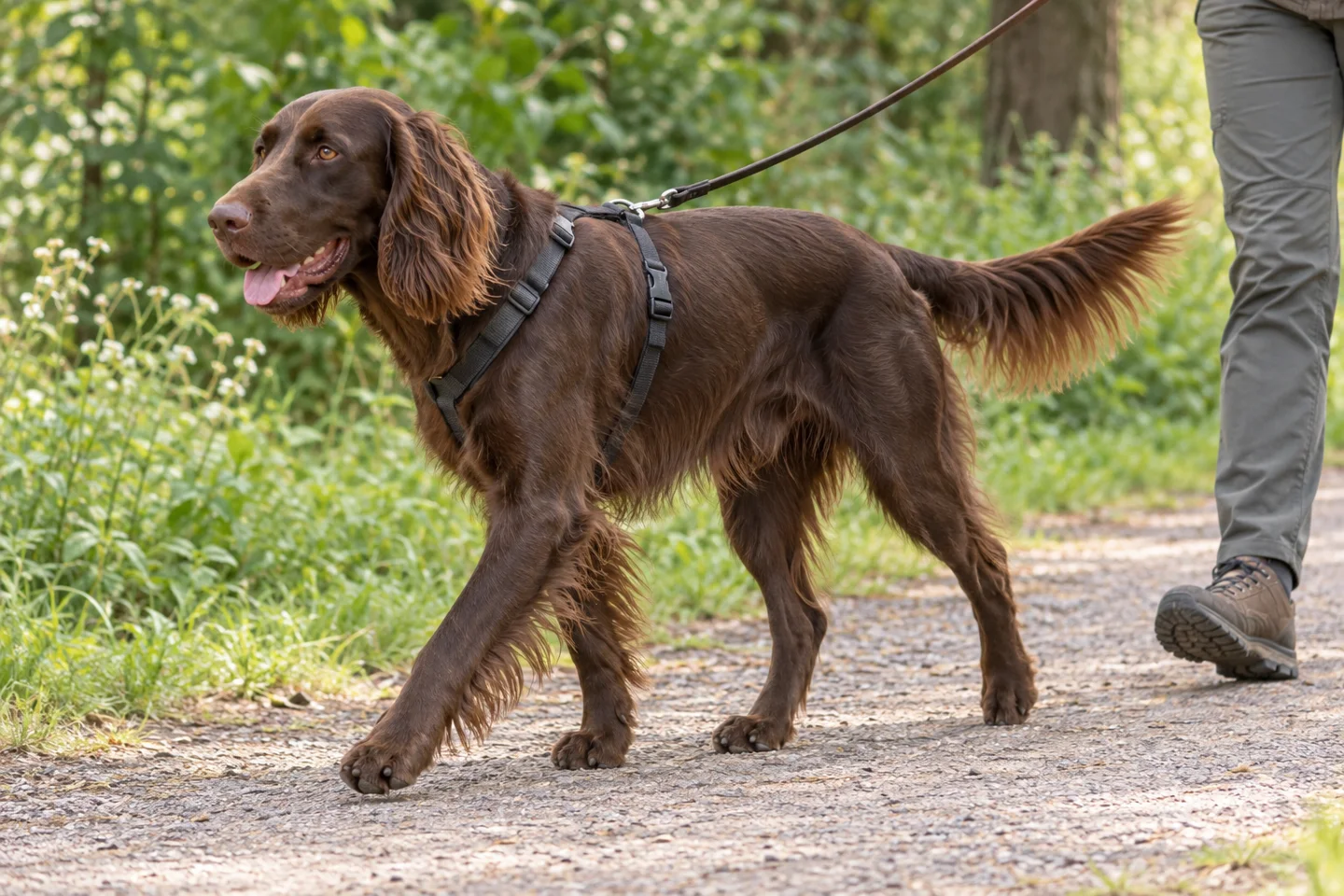
Try the practical spaces with an adult-sized dog in mind. A crate or restraint arrangement must permit comfortable positioning, and the vehicle entrance should remain usable later in life. Fit a harness to actual measurements, leaving hair free from the clips and straps. Check how it sits when the dog turns or reverses. A nominal large size on a packet cannot replace that assessment. Ask the veterinary team to show condition checks under the coat and investigate persistent movement changes instead of choosing a heavier outline for appearance.
Training a useful pause before another task
Begin with a short wait while a safe search object is placed in an enclosed area. Reward the pause and release the dog to investigate. This can make self-control part of an activity it values, rather than require the handler to oppose every outdoor interest. Keep early tasks achievable. If the animal cannot respond, the distance, excitement, or clarity may need changing before you add another instruction. Success at home should be practised gradually in other settings.
AVSAB recommends reward-based teaching. A field instructor should explain how the owner will teach both active tasks and an understandable finish, with welfare considered throughout. Avoid selecting a method merely because someone calls it traditional. Practice moving onto a mat, allowing equipment to be removed, and waiting while doors are opened. Those skills help a substitute carer too. A dog that retrieves beautifully during a demonstration may still need deliberate instruction before it can rest while people eat, greet visitors, or prepare to leave.
Bird work and household birds are different questions
A pointing background makes birds a placement issue worth discussing before adoption. Ask whether the dog has actually encountered poultry or caged pets, how access was managed, and what happened when an animal moved. A report of good field manners does not establish safety beside a household bird. Protect housing during feeding and cleaning, when a door may be open or attention divided. Do not use a vulnerable pet to test whether the dog's intentions are gentle.
Cats need a route out of reach and introductions that prevent chasing from becoming the routine. A dog may coexist with one familiar cat indoors while reacting differently to movement outdoors. Describe actual incidents accurately and seek qualified help when fixation develops. If reliable separation is necessary, every carer needs to understand the layout and door sequence. Decide whether the home can sustain that arrangement, including holidays and visitors, rather than assuming goodwill will make a difficult combination manageable after the animals arrive.
Exercise on land should follow preparation
Ask about recent distances and surfaces before planning a demanding walk. Increase workload in stages, particularly after a quiet period, and observe the dog after sleep as well as during activity. An eager youngster should not set its own unlimited exercise allowance. Discuss repetitive jumping, sporting work, and strenuous outings with the veterinarian responsible for its development. Include exploration at a comfortable pace and learning that does not depend on exhausting the body before it is allowed to settle.
On warm days, choose a suitable time and route, offer drinking water, and watch breathing and recovery. Stop for significant weakness or difficulty and seek advice promptly; collapse needs urgent care. Check paws after abrasive or tangled ground. A recurring limp or unwillingness to rise should not be dismissed because the animal still brings a toy. Arrange a backup walking plan that remains sensible when the owner's health or schedule changes, with written limits for helpers who may otherwise try to reproduce a long weekend outing immediately.

Water access needs its own safety plan
A history as a water-working breed is not proof that every puppy is a strong swimmer. Begin with safe access, manageable footing, and supervision. Consider current, depth, temperature, boat activity, and an exit before allowing entry. Use an appropriate flotation arrangement when the activity calls for it and obtain practical instruction where necessary. Do not throw a reluctant animal into water or let enthusiasm for an object draw it toward a hazard the handler has not assessed.
Plan what happens when the dog comes out. Remove trapped surface material gently, dry as needed, and inspect ears, skin, and feet. Prevent drinking from unsafe sources where local authorities advise against access. Illness after an outing needs a clinical discussion with the circumstances supplied. A wet coat and a tired appearance should not explain away serious weakness or breathing changes. Tell a holiday carer which water areas are excluded instead of assuming a broad instruction to let the dog enjoy swimming supplies enough detail.
Socialization for more than the quiet countryside
An animal comfortable in open fields may still find a crowded clinic entrance or a town pavement difficult. Practise useful pieces of those situations separately. A brief wait beside a quiet building can precede entering a busier place, and a parked-car lesson can happen before a necessary journey. Let the dog observe without requiring every stranger to touch it. For a puppy, ask the veterinary team about suitable outings while preventive care is being established.
Watch recovery rather than count encounters. A youngster that remains overwhelmed after returning home needs a different level of difficulty. An adult moving from another environment may also require gradual exposure to appliances, smooth floors, and closed doors. Keep early household expectations clear and visitors limited. Record worrying patterns and obtain qualified help instead of increasing pressure until the animal stops resisting. The aim is a workable daily life, including calm care and travel, rather than a dog compelled to accept every possible setting.
Children around a feathered gundog
An excited dog arriving from an outing can bring wet hair, equipment, and a moving body into a child's play space. Give the handler a separate place to remove the harness and let the animal drink. Teach children to wait for an adult to invite interaction afterward. Pulling ears, grabbing feathering, climbing on the body, or putting a face beside the muzzle should be prevented. A resting place must remain accessible without children following the dog into it.
Adults should manage objects near meals and chews. If a child drops something beside the dog, calling for help is safer than reaching across its head. Supervision means noticing the participants and intervening before discomfort escalates, not simply being somewhere in the house. Use barriers when that attention is unavailable. Revisit arrangements after pain, a change in the child's mobility, or a busy visit. Affection with familiar family members contributes information without guaranteeing that every future interaction will feel comfortable to this individual.
Aggression and handling changes
If a German Longhaired Pointer that normally presents a foot begins growling during inspection, stop and investigate. A thorn, tangled hair, sore joint, or frightening previous procedure can change the meaning of an approaching hand. Describe exactly what happened to the veterinary team. For any threatening incident, note the location, resource, people involved, and whether the dog could leave. Avoid a broad label about dominance or breed temperament that conceals the circumstances needed for assessment.
Protect people and animals while professional help is arranged. Use planned separation for valuable resources and teach exchanges in safe circumstances instead of repeatedly taking possessions to provoke a response. Punishment may suppress warnings without resolving discomfort. A behavior professional working with the veterinarian can develop an individual plan, potentially including positively introduced protective equipment where suitable. Give carers factual information about previous snaps or bites. A pleasant social reputation cannot make a painful grooming session or unwanted contact safe to continue.
Living alongside other dogs
Watch an introduction as a conversation between two animals with different preferences. One may enjoy running while the other wants occasional sniffing and space. Start where handlers can move independently, without a tight entrance or shared food creating pressure. Interrupt persistent following when the recipient tries to stop. Neither a wagging tail nor silence proves that both participants welcome the same contact. A short calm outing can supply more useful information than allowing excitement to continue until a conflict occurs.
In the home, arrange independent beds and feeding areas during adjustment. Pay attention to doorways, favored people, and resting places as well as obvious toys. A dog accustomed to working near companions may still need help with close indoor sharing. When tension increases, separate reliably and seek guidance rather than leaving the pair to resolve every disagreement. Make the plan usable by all carers, including somebody who may visit only occasionally. Compatibility depends on these individuals and circumstances, with opportunities for each to disengage.
Grooming feathering without making it a struggle
Separate the hair into practical areas and check down to the skin. Behind the ears, beneath equipment, and along the leg furnishings deserve attention after vegetation. Ask a knowledgeable groomer to demonstrate suitable tools on the actual coat rather than buying a collection and experimenting through a tight knot. Severe matting needs professional assistance. Skin can be pulled into a mat, so scissors used close to a hidden surface can cause injury when the animal shifts.
Build care into short manageable sessions before a long muddy day makes everything urgent. Reward a comfortable position, stop to adjust it, and introduce nails and toothbrushing as separate tasks. Ear shaking, discharge, unusual odor, or tenderness needs veterinary advice instead of deep probing or reused medicine. Tell professionals about previous handling difficulty when booking. A practical companion trim can be discussed alongside skin and maintenance needs, while the dog's comfort should determine whether a presentation style remains manageable for the household.
Health records for this breed and this family
Ask which health program a source follows for German Longhaired Pointers and request the evidence behind its choices. A universal international checklist should not be invented from another pointer's recommendations. Find out about significant diagnoses in close relatives, available orthopedic or eye assessments, and whether later owner reports are collected. The actual results, dates, method, and dog identifiers matter. A standard describes appearance and intended work; it is not a population disease survey or an assurance of lifelong soundness.
Your veterinarian can relate those records to a current examination. A DNA panel assesses selected variants and cannot explain every possible illness. If an adopted adult has missing ancestry information, preserve the gap rather than turn it into a normal result. Report persistent changes in appetite, drinking, movement, skin, or behavior. Plan prevention around local activities and travel, keep records accessible across clinics, and know the destination for urgent problems. An animal's continued enthusiasm outdoors is useful to observe but cannot establish that a new clinical sign is harmless.
Food and rest during an ordinary working week
Feed a complete diet appropriate to age, body condition, and medical needs, measuring a starting allowance. Include rewards used in searching and care practice, especially when several people offer food. Ask for help checking ribs and condition under the coat. A reduction in activity during recovery may require review of portions. Separate meals from children and other pets so the dog can eat without competition and the owner can see what was consumed.
Sleep also belongs in the plan. Provide a quiet area and teach a predictable end to games. If every restless approach restarts an activity, review the household sequence before deciding the dog needs ever longer exercise. Build absences gradually and seek help for sustained distress. Backup care needs to fit present coping ability, not an expectation that another dog or a large yard will solve isolation. A recording of what occurs after departure may give a professional information that the usual reunion cannot reveal.
Arrange a realistic trial with backup carers
Before leaving this dog for a full day, show the proposed carer the actual walking equipment and the places where control becomes difficult. A person who can manage a quiet garden visit may struggle when a pheasant rises beside a gate. Practise a handover while the owner is available, then review what happened. Include the route into the vehicle, the location of spare towels, and the procedure for contacting the veterinary practice. The details help a substitute make consistent decisions without improvising under pressure.
For a household considering adoption, ask to observe several ordinary transitions where the organization permits it. Watch the dog finish an outing, settle after visitors leave, and respond when an interesting walk must end. A single lively demonstration gives only part of the picture. Tell the organization about work hours, other animals, and the physical access to your home. An honest account makes it easier to identify support that could make a placement workable, or a mismatch that affection alone would leave unresolved.
Mixes, costs, and dogsDating
A German Longhaired Pointer cross can vary in feathering, size, activity, and response to birds or unfamiliar animals. A seller's combined name does not guarantee a particular compromise or fewer medical concerns. Request relevant parent records where known and assess an adult's present behavior directly. Budget for transport, training help, professional grooming if needed, preventive care, emergencies, and a carer who has practised the real routine. Later-life access changes should be planned before one person must lift a large painful dog into a vehicle.
For dogsDating, explain known social preferences, incidents, and any current professional limits. Keep exact home coordinates private. Agree on a spacious public route and begin with separate exploration, avoiding shared valuable objects. Finish if one dog cannot obtain a pause or move away. A companion that enjoys walking together need not become a wrestling partner. Sharing a calm meeting provides information about that encounter while leaving indoor resources, transport, and reproductive suitability as separate matters requiring their own evidence and decisions.
Sources and editorial notes
Sources checked October 21, 2026. Breed measurements describe reference ranges, not a diagnosis or an individual dog's ideal weight. Images are AI-generated breed illustrations and do not document a particular dog or health condition.
- VCA Animal Hospitals: Grooming and coat care for your dog
- VCA Animal Hospitals: Ear infections in dogs
- VCA Animal Hospitals: Common emergencies in dogs
- VCA Animal Hospitals: Food aggression in puppies
- VCA Animal Hospitals: Heat stroke in dogs
- VCA Animal Hospitals: Aggression toward unfamiliar dogs, diagnosis
- AAHA: Feeding plans for healthy, appropriate weight cats and dogs
- Orthopedic Foundation for Animals: CHIC health screening programs
- AVSAB: Humane Dog Training Position Statement
- FCI: German Longhaired Pointer official breed standard
Keep getting to know dogs.
Read another guide or return to your dogsDating community.
Explore breed guidesBack to dogsDating