Great Dane
A giant German companion whose care requires adult-size handling plans, steady growth, documented screening, and prompt recognition of bloat signs.
How these guides are researched and reviewed
- Origin
- Germany; Deutsche Dogge
- FCI male height
- At least 80 cm; should not exceed 90 cm
- FCI female height
- At least 72 cm; should not exceed 84 cm
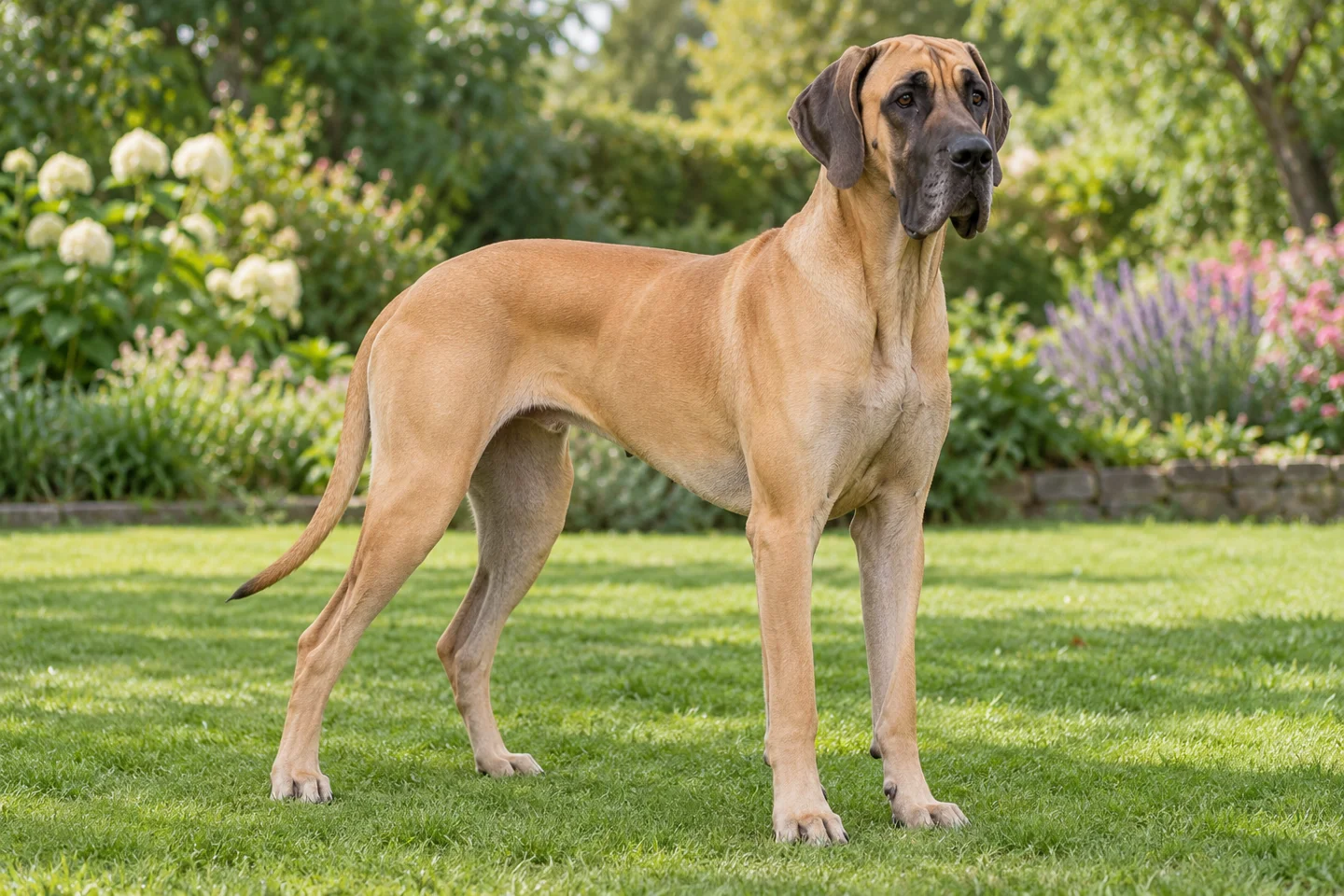
- Illustrated example
- Fawn with black mask, natural pendant ears and full tail
General information for owners. These articles have not been reviewed by a veterinarian. Medical decisions need your dog's history and an examination.
Plan for an adult before bringing home a puppy
A Great Dane changes the physical arrangements of a household. Think about the adult entering a vehicle, standing at a veterinary reception desk, and resting while people pass through the room. Those tasks need plans before a puppy grows into them. A large garden does not solve transport, training, or emergency assistance. Walk the route from your door to your normal car space and consider who could manage a full-sized dog there. If everyday access requires a difficult lift, discuss a better arrangement before placement.
The Great Dane is a German breed, also called Deutsche Dogge. It is a distinct giant companion, rather than a category for any unusually tall dog. Ask a source about the particular family, adult size, temperament, and support after purchase or adoption. Meet adults in person if possible. A relaxed photograph cannot show what happens when the door opens or another dog passes close by. The practical decision is whether your household can provide comfortable care across ordinary days and unexpected illness, including periods when the usual handler cannot help.
German history and a recognizable outline
The FCI account traces the modern Great Dane through older hunting and mastiff-type dogs. It records a Berlin committee grouping them under Deutsche Doggen in 1878 and a standard in 1880. That history places the modern breed in Germany despite its English name. Today's companion should be assessed through present behavior and care needs, not romantic expectations about ancestors. A historical hunting role does not make a pet ready to accompany an owner into demanding work or safely investigate unfamiliar animals.
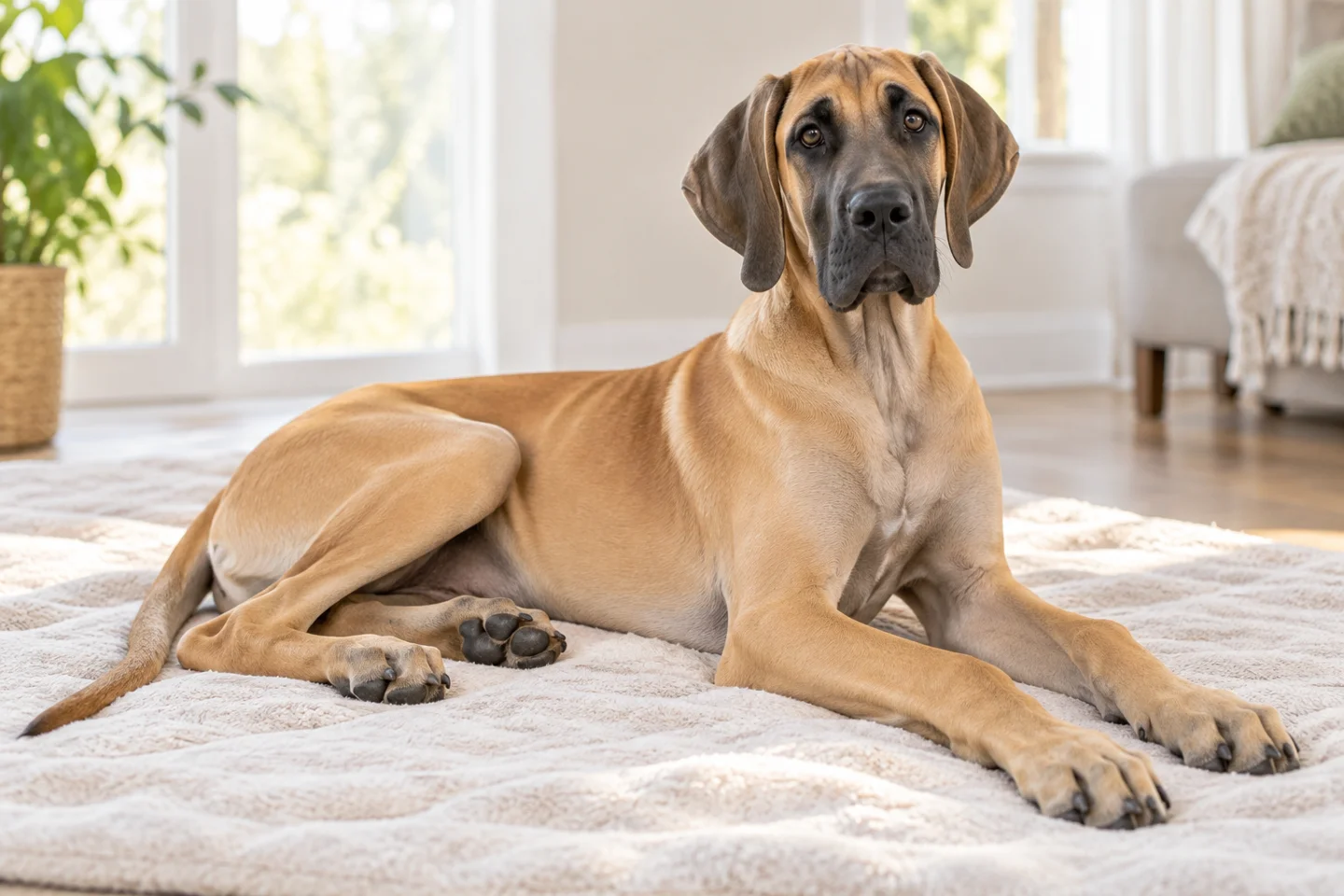
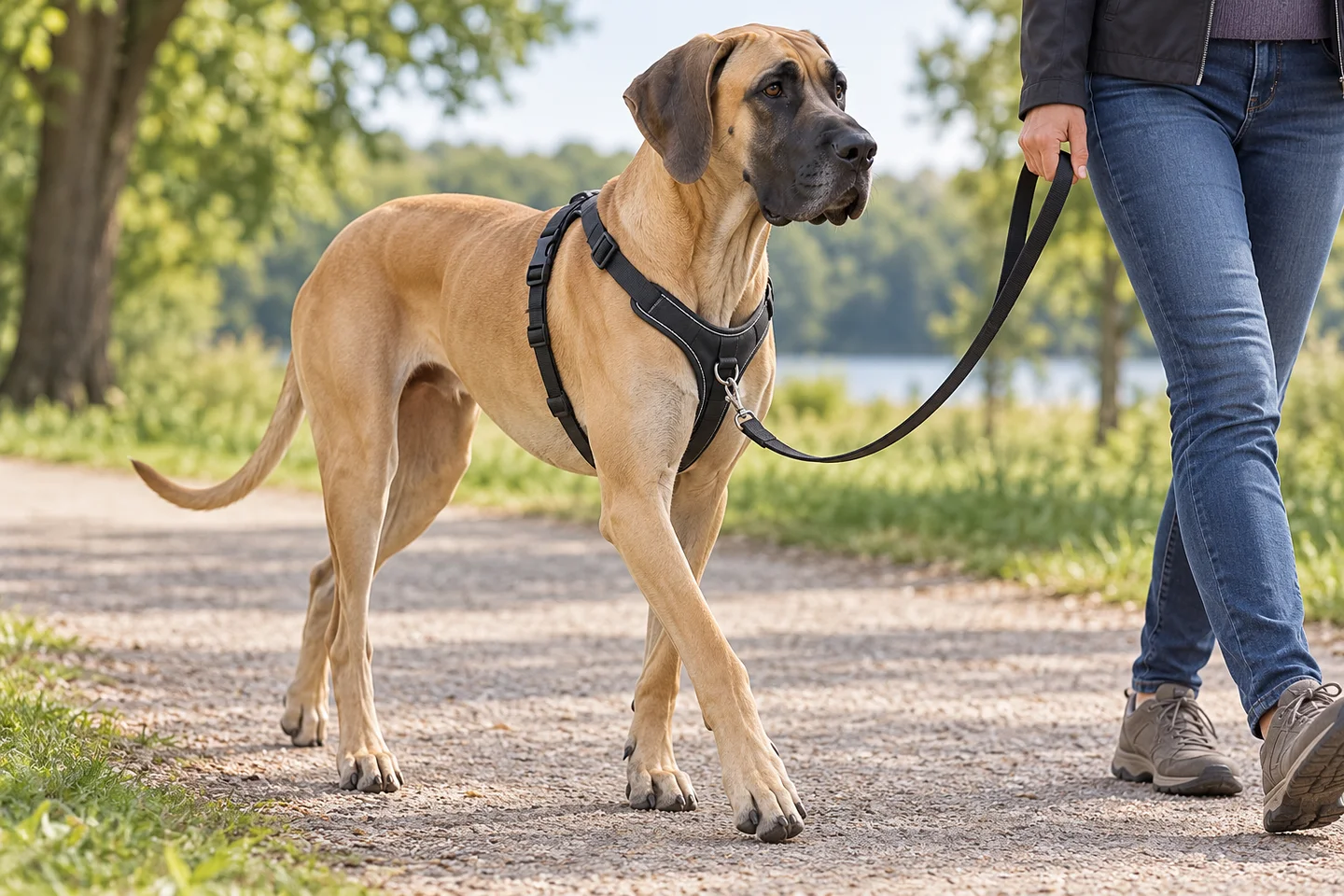
The adult outline is tall, muscular, and approximately square, with a long rectangular head and natural pendant ears. The current FCI height references are at least 80 centimeters for males, which should not exceed 90, and at least 72 for females, which should not exceed 84. The illustrations show fawn coloring and a black mask; other standard colors exist. No image here demonstrates pedigree or clinical condition. Avoid selecting purely for extreme height. Comfortable structure, suitable condition, and behavior you can manage are more useful priorities for a companion.
Living space, floors, and transport
Reserve a resting area that lets the dog stretch without being repeatedly disturbed. Check slippery surfaces and doorways where a large animal must turn sharply. A comfortable nonslip route can make ordinary movement easier, particularly during recovery. Ask your veterinary team about support appropriate to the dog if mobility is limited. Do not improvise a lift during a painful emergency when nobody knows where to hold or how the animal may react. Identify assistance and a receiving clinic while you have time to make arrangements.
Travel equipment must fit the actual animal and vehicle. Try the adult's normal entry, standing space, and ability to lie down before a long journey. Teach loading in calm stages and use suitable restraint. Ask any boarding provider or sitter directly whether their equipment and facilities accommodate a Great Dane. A service accepting dogs generally may still have size limits or unsuitable access. Keep the plan current as the dog ages. A vehicle or staircase that an active young adult manages easily may later require a different solution.
Temperament beyond the gentle-giant description
The familiar gentle-giant label does not tell you how an individual responds to touch, separation, a crowded entrance, or another dog. A large affectionate animal can still be anxious or hard to control when excited. Ask for concrete examples from the breeder, previous owner, or foster home. Discuss how the dog waits for food, accepts equipment, and rests during household movement. Preserve distinctions between a skill already observed and a quality someone expects it to develop after moving into your home.
Give a newly arrived dog time to learn the household before filling its schedule with visitors. Establish a clear place for resting and predictable access to meals and outdoor breaks. Notice calm choices before rewarding only the noisy demand for attention. If settling is difficult, review the environment and seek advice rather than trying to create exhaustion through constant stimulation. People should agree on the arrangement. A dog allowed to climb onto visitors by one person cannot easily understand why the same approach leads to restraint or shouting from someone else.
Training while the handler still has an advantage
Teach polite movement and comfortable equipment handling from the beginning. A pause at a threshold, turning toward a handler, and standing for a brief check become important long before a puppy reaches full height. Practice in a quiet place with enough room to prevent accidental collisions. Reward the behavior you want to repeat and adjust the task if the dog cannot succeed. AVSAB recommends reward-based methods and advises against aversive techniques. Physical confrontation with a growing giant is a poor substitute for a clear lesson.
Choose an instructor who can explain safe practice and demonstrate it with the handler who will do the daily work. Ask how to increase distractions, how to end a lesson, and what to do after a mistake. A class that creates repeated crowding may not provide the right environment for this individual. Make space for learning around smaller dogs and people who are unsteady on their feet. Do not count on sheer strength to stop a fully grown dog after excitement has escalated. Teach useful responses before the situation demands them.
Exercise during growth and adulthood
A Great Dane puppy needs an activity plan appropriate to growth rather than an adult running schedule in a smaller body. Ask your veterinarian about suitable movement, condition, and any signs that require reassessment. The Great Dane Club of America discusses painful bone conditions during rapid growth, so persistent limping or reluctance should not be dismissed as an inevitable stage. Record what you see and arrange examination. A puppy keen to keep playing can still need help controlling the length and intensity of an outing.
For an adult, develop fitness gradually and judge recovery as well as initial enthusiasm. Choose manageable walking surfaces and keep a quieter alternative available when weather or health changes the plan. Heat can make an ordinary route unsuitable. Arrange shade, water, and a shorter option, and stop when the dog struggles. Ask the clinic for guidance about unusual breathing, weakness, or collapse rather than trying to walk the animal home at any cost. An exercise routine should be easy to revise when the individual has new needs.
Children and vulnerable visitors
Adults must supervise a Great Dane's contact with children actively. The height of its head and the sweep of its body can put a child at risk of an accidental collision. Arrange greetings in a clear area and keep excitement low. Give the dog a resting place children cannot enter and keep meals and chews separate from children's activities. A child should not hold the collar to restrain the dog or try to remove an object from its mouth. When attention cannot remain on the interaction, separate comfortably.
Ask about specific experience when considering an older dog. Comfortable behavior beside a teenager does not establish safety with a crawling infant or a child who runs and shouts. Discuss visits from older relatives, wheelchair users, and anyone who could be knocked off balance. Teach a settled place and use barriers when needed. A household can enjoy an affectionate dog while keeping access organized. Avoid treating physical size as proof of aggression or a gentle reputation as proof that supervision is unnecessary. The actual animal, people, and circumstances determine the precautions required.
Aggression requires a plan that works at adult size
If a Great Dane stiffens, growls, snaps, or threatens another animal, prevent further exposure while assessment is arranged. Record what happened before the response, the space available, and any signs of pain. A new problem with standing up, having feet touched, or moving from a bed deserves veterinary attention. Avoid punishing a warning or asking someone to repeat the approach. The next interaction may happen before you can physically intervene, so management needs to work through gates, distance, and clear responsibilities.
Tell carers and veterinary staff about previous incidents before they accept a task. A statement that the dog only did it once leaves out information another person may need. Seek qualified behavior support in coordination with the veterinarian where appropriate. VCA explains that a dog lunging toward another dog may have motivations that cannot be identified from the lead alone. Do not release restraint to test whether the response is friendly. Where a muzzle is part of professional advice, teach comfortable wearing gradually and keep it within a broader safety plan.
Other dogs, cats, and introductions at home
Evaluate compatibility without assuming every Great Dane will tolerate every animal. The difference in size between dogs can make rough play risky even when both initially appear willing. Arrange quiet meetings with space for each handler to move away and preserve separate resting areas afterward. A smaller resident dog should not have to hide beneath furniture to obtain a break. Watch how the larger animal responds when contact ends. Continued pursuit of a dog trying to leave is a reason to intervene and revise the arrangement.
Ask about cats and small animals separately. Maintain barriers and protected escape routes while an informed assessment is made. Avoid holding a cat near the dog's face or making free access the first test. Inside the home, organize feeding, prized toys, and doorways so competition is not repeatedly created. An initial successful walk answers only a limited question about that walk. Living together introduces more situations over time. If safe separation is impractical or conflict is significant, seek help before proceeding with a placement that could put existing animals at risk.
Grooming, body checks, and comfortable handling
The short coat is comparatively straightforward to inspect, but routine care still takes time and cooperation. Brush gently, look beneath equipment, and check areas that contact bedding or the floor. Report a persistent sore, lump, irritation, or new sensitivity to the veterinary team. Teach standing or lying in a comfortable position for care rather than assuming a large dog can be held still by force. A nonslip surface and brief sessions may help the owner work without the animal repeatedly losing balance.
Ask for a practical plan for nails, teeth, and ear observation. Redness, discharge, odor, or repeated head shaking needs assessment; leftover ear treatment should not be reused automatically. Practice one small action at a time when there is no pain, such as a brief foot touch followed by a reward and release. If care suddenly becomes difficult, consider discomfort before treating it as disobedience. Keep instructions available to other carers, including any medical restrictions. A familiar routine is useful only if it can be continued comfortably when someone else must help.
Health screening and the records behind a promise
The AKC's current national-club recommendations for Great Danes list hip evaluation, cardiac examination, ophthalmologist evaluation, and thyroid evaluation. Ask for the actual results, dog identities, dates, and methods. Discuss important diagnoses in relatives and how later information reaches owners. A statement that the parents have been checked is too broad to show what was examined. Have the reports interpreted properly rather than counting certificates or assuming that completion means every result was normal.
OFA explains the purpose and limits of CHIC screening information. A clinical assessment and a genetic test answer different questions, and favorable ancestry cannot promise lifelong freedom from illness. Arrange current veterinary care after adoption, bringing available records. Report altered stamina, coughing, fainting, weakness, new neck discomfort, or a persistent limp instead of diagnosing a breed-related condition yourself. Your veterinarian can determine which findings warrant further investigation. For a rescue with missing family information, preserve the uncertainty and plan from present evidence rather than inventing reassuring parental results.
Bloat recognition and a gastropexy discussion
Cornell identifies large, deep-chested dogs as particularly at risk of gastric dilatation-volvulus, a life-threatening emergency in which a distended stomach twists. Repeated unproductive retching, abdominal enlargement, and sudden distress require immediate veterinary contact. Do not wait for every sign to appear or for the next routine opening. Describe the symptoms, ask where to go, and arrange prompt transport. Keep the emergency clinic's details accessible to anyone responsible for the dog. A previous uneventful meal cannot establish that the current episode is harmless.
Discuss preventive gastropexy with your veterinarian or a veterinary surgeon. The American College of Veterinary Surgeons describes its use for dogs at risk, including Great Danes. Ask about timing, individual medical considerations, recovery, and what the procedure can and cannot prevent. It does not remove the need to recognize an emergency or justify ignoring a distended stomach. Keep surgical records and instructions available after any procedure. Decisions about surgery should follow a clinical discussion for this animal, rather than a universal age or promise copied from an owner's online account.
Feeding, finances, and choosing a suitable source
Use a complete diet suitable for the life stage and discuss growth and portions with your veterinary team. Avoid adding supplements or increasing intake simply to produce a larger puppy. Track condition and meaningful weight changes, and include training rewards in the daily plan. Make instructions unambiguous for anyone feeding the dog. Persistent vomiting, difficulty eating, or altered thirst deserves assessment rather than repeated product changes. The size of the breed does not supply an individual prescription, and the standard is not a feeding target.
Calculate ongoing costs using current local information: food, preventive care, appropriate equipment, transport, training, and help during absences. Ask how a clinic or boarding provider accommodates a giant adult. Review insurance conditions or another way to meet emergency expenses. When choosing a source, request written support and return arrangements and discuss known concerns openly. A puppy's attractive color cannot compensate for missing records or an unsuitable routine. Consider an assessed adult if that better matches what the household can manage, and leave room for the cost of changing care as the dog ages.
Mixes and dogsDating walking arrangements
A Great Dane cross may be called a Dane mix or named after another documented parent. Such names do not establish a standardized variety or a guarantee of mature size and health. Ask what ancestry is known and what is inferred. Assess an adult's actual dimensions, handling, and behavior. For a puppy, allow for uncertainty rather than accepting a promise that it will have only convenient traits. If both parents are known, review relevant health evidence for each. Crossing breeds does not erase every inherited risk.
On dogsDating, explain your dog's walking pace, preferred distance, and any need to avoid rough play with smaller partners. Share an approximate area, keep exact coordinates and your home address private, and meet in a public place with wide exits. Each adult should manage their own dog. Begin with parallel movement and postpone shared toys or food. End or widen contact when either animal tries to withdraw, becomes rigid, or cannot settle. Use the experience to plan another manageable walk. A calm familiar partner can be a successful match without physical play.
Sources and editorial notes
Sources checked October 21, 2026. Breed measurements describe reference ranges, not a diagnosis or an individual dog's ideal weight. Images are AI-generated breed illustrations and do not document a particular dog or health condition.
- AVSAB: Humane Dog Training Position Statement
- VCA Animal Hospitals: Food aggression in puppies
- VCA Animal Hospitals: Common emergencies in dogs
- Orthopedic Foundation for Animals: CHIC health screening programs
- VCA Animal Hospitals: Aggression toward unfamiliar dogs, diagnosis
- VCA Animal Hospitals: Grooming and coat care for your dog
- VCA Animal Hospitals: Ear infections in dogs (otitis externa)
- AAHA: Feeding plans for healthy, appropriate weight cats and dogs
- VCA Animal Hospitals: Heat stroke in dogs
- AVSAB: Puppy Socialization Position Statement
- VCA Animal Hospitals: Dog behavior problems, aggression toward children
- Official breed standard: Great Dane
- American Kennel Club: Working Group Health Testing Requirements
- Great Dane Club of America: Health and Research
- Cornell University: Gastric dilatation volvulus (GDV) or bloat
- American College of Veterinary Surgeons: Prophylactic Gastropexy
Keep getting to know dogs.
Read another guide or return to your dogsDating community.
Explore breed guidesBack to dogsDating