Greek Harehound
The black-and-tan Hellenic Hound is an active Greek scent hound whose home needs secure routes, realistic voice expectations, and careful interpretation of limited health information.
How these guides are researched and reviewed

- Origin
- Greece; Hellinikos Ichnilatis
- Adult height
- Males 47–55 cm; females 45–53 cm, with ±2 cm tolerance
- Standard weight
- 17–20 kg
- Coat
- Short, dense black and tan
General information for owners. These articles have not been reviewed by a veterinarian. Medical decisions need your dog's history and an examination.
Identify the Greek hound before planning its home
The Greek Harehound is the black-and-tan scent hound also known as Hellinikos Ichnilatis or Hellenic Hound. It is distinct from the large Hellenic Shepherd Dog. Names matter here: a guarding shepherd and a hare-hunting hound bring different questions to a placement discussion. Ask a breeder or rescue which identity is documented and what the individual has actually experienced. A short description translated into English can lose useful distinctions, so clarify unfamiliar terms before making a commitment based on a name alone.
The companion decision needs an ordinary-week plan. Think about secure walks, time to explore, the dog's voice, and care during absences. A compact adult compared with a giant breed is still capable of pulling toward an interesting scent or leaving through a poorly managed gate. Inspect the property and discuss the routine with every regular carer. Meet an adult if possible and watch how it transitions from activity to rest. Those details are more informative than an attractive photograph or a general promise that hunting dogs always adapt easily to family life.
Greek working context without an invented origin story
The FCI identifies Greece as the breed's origin and describes use in lowland and mountain terrain, alone or with other hounds. Its account emphasizes scenting, activity, and a resonant voice. That is useful context for an owner considering outdoor routines. It is not evidence that a particular pet has hunted or that it is prepared for every rocky route. Avoid turning a sparse historical record into confident claims about exact ancient ancestors. The documented standard supplies a firmer starting point than an appealing story that cannot be verified.
Ask where the dog was raised and what its daily surroundings have been. A hound accustomed to rural work may need gradual preparation for traffic, close visitors, interior floors, and being left alone indoors. A puppy raised in a house still needs lessons outside it. Keep the first days simple, retaining familiar cues and feeding information while you introduce new routines. Explain your plans honestly to the source. If you want a quiet companion with little outdoor engagement, discover any mismatch before expecting the dog to solve it after moving home.
Adult size and a black-and-tan outline
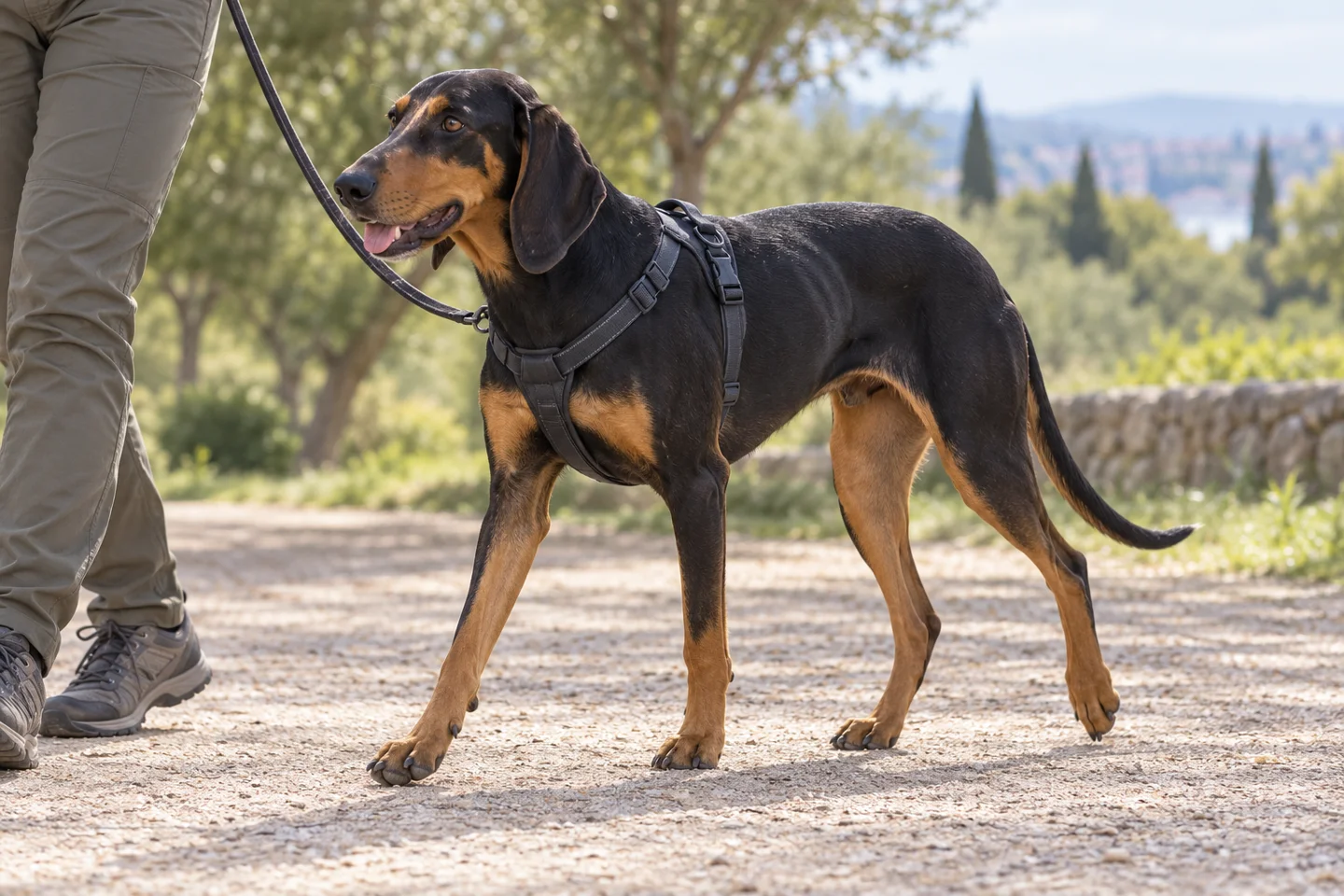
The FCI height references are 47 to 55 centimeters for males and 45 to 53 for females, with a two-centimeter tolerance either way. It gives a weight of 17 to 20 kilograms. The coat is short and dense, black and tan, with a small white chest patch tolerated. The build is rectangular, with natural hanging ears and a tapering tail. The illustrations follow that general appearance. They cannot establish ancestry or show whether a real dog's joints, skin, or body condition are healthy.
Use actual measurements when choosing equipment, and ask your veterinarian to assess appropriate condition. A standard weight range is not an instruction to increase portions until an animal reaches the upper number. Watch the dog walk, turn, and rise in a comfortable setting. Ask about any signs you notice rather than drawing conclusions from one movement. Check harness fit behind the elbows and allow room for the dog to lie down comfortably in its travel area. Planning with the adult body in mind also helps avoid replacing unsuitable equipment repeatedly during growth.
A searching nose and a domestic routine
Outdoors, observe what catches the hound's attention and how readily it can return to the handler. At home, ask a different set of questions: can it rest while people prepare food, remain comfortable behind a gate, and cope when a familiar person leaves? A dog's skill in one setting does not settle the others. Request concrete examples from anyone who knows it. This is especially helpful with a rescue whose history may be incomplete. Useful observations can support care without requiring a confident story about every earlier experience.
Set up a clear resting area and predictable outside breaks. Reward quiet behavior while it is happening rather than noticing the dog only after it becomes demanding. If it cannot settle, examine the day's activity, environment, and possible discomfort with appropriate help. Avoid filling every pause with stimulation. A short dated record can show when the difficulty begins and what changes it. Share that information with the veterinary or behavior professional so the assessment concerns the actual dog and routine, rather than a label such as stubborn or overactive.
Training around scent rather than shouting over it
Teach return and direction-change cues in an environment where success is easy. Reward a response promptly and let safe exploration remain part of the outing. Increase distractions gradually. A suitable long lead or enclosed area can support practice while preventing an uncontrolled departure. Ask an instructor to demonstrate handling so the line does not wrap around people or cross a busy path. When the hound is unable to respond, reduce the difficulty instead of relying on a louder voice or repeated commands.
AVSAB recommends reward-based methods for training. Practical goals for this household include waiting at a gate, walking back from an interesting patch, and standing calmly for equipment. Decide how you will recognize success before beginning a session. A few clear repetitions can be more useful than carrying on until the dog becomes frustrated. All regular handlers should practice the same cues and release arrangements. The person providing holiday care needs a plan they can use safely, not an instruction to control the dog through strength if the owner's usual response fails.
Exercise on routes that allow a safe return
Choose walking terrain according to the individual's fitness, age, and experience. The standard's description of work on rocky ground does not make a puppy or recently adopted adult ready for a strenuous mountain outing. Start with manageable distances and ask the clinic about growth, recovery, or medical restrictions. Watch movement afterward as well as enthusiasm at the start. A scent-focused animal may continue investigating despite fatigue or discomfort, so the owner must be prepared to shorten an outing before the dog asks clearly.
Plan shade, water, and an alternative when conditions are hot. Change the route or timing rather than treating the original distance as a commitment that must be completed. If breathing, coordination, or general condition becomes concerning, stop and contact a veterinarian. Include the journey and any waiting in the vehicle in your assessment of the day. A Greek origin is not protection from heat illness in an individual dog. A useful routine also needs a workable option when weather or access prevents your preferred long walk.

Voice is part of the placement conversation
Hear adults if you can and ask when this dog uses its voice. Excitement on scent, an alert at the fence, and distress during absence may sound similarly disruptive but need different questions. Describe shared walls, nearby gardens, and the hours you expect to leave home. A placement discussion is more honest when neighbors and daily logistics are included. Avoid relying on an assurance that one training device or an exhausting walk will remove every reason for vocal behavior.
If noise develops, record what precedes it and whether the dog can recover. Reduce repeated triggers where possible and teach a quieter alternative before arousal is high. Keep punishment out of the plan and seek help when distress or persistent agitation affects daily life. A sudden change may also warrant a veterinary check. Make sure helpers understand the same arrangements. An animal repeatedly released after barking by one person and restrained after barking by another receives an inconsistent lesson that can make the household's goal harder to achieve.
Socialization with manageable exposure
Ask your veterinary team about safe early experiences while a puppy receives vaccinations. Choose settings that let it notice people, vehicles, sounds, and surfaces without becoming overwhelmed. Being able to move away is useful information about the outing's difficulty. For an adult with limited experience, start quietly and assess what happens. A brief observation can be enough on one day. The number of greetings completed does not show whether the dog understood the experience or was simply unable to avoid it.
Teach comfortable handling alongside environmental familiarity. Touch a shoulder briefly, reward, and release, then build toward an equipment or foot check in small steps. Ask people to wait before approaching an uncertain dog. If fear, frantic movement, or inability to settle repeatedly interrupts outings, arrange qualified guidance. A suitable professional can help set the starting distance and judge recovery. Repeating a busy event at the same overwhelming intensity is not the only option. Make the next step small enough that both dog and handler can learn something useful from it.
Aggression and bite prevention need specific observations
Treat stiffening, growling, snapping, and threatening approaches as reasons to change the situation. Record who moved, what was nearby, how much room the dog had, and what happened before and after. A handling problem during an ear check may need different management from conflict over a chew. Do not explain the event away as ordinary hound determination. That phrase cannot identify fear, pain, frustration, or guarding. Protect those involved while the veterinary team and an appropriate behavior professional assess the evidence.
Avoid deliberately taking meals or valued objects to test the animal. Teach safe exchanges with rewards and leave feeding undisturbed. VCA explains that reactions toward unfamiliar dogs can have several motivations and that releasing a barrier to test friendliness can be dangerous. Use distance until the response is understood. Tell sitters about actual incidents and the current restrictions rather than saying the dog is fine except when it is not. Clear records allow a carer to decide whether they can carry out the task and help prevent a repeat.
Children and household animals
An adult should actively supervise contact with children and manage greetings. Provide a resting space children cannot enter, and keep meals or chewing separate from play. Explain that a dog turning or walking away has ended the interaction. Children should not hold the collar, remove an item, or try to physically stop an excited hound. If the supervising adult must attend to something else, use a comfortable barrier. A friendly description is not a substitute for organizing the circumstances that make contact easier for everyone.
Ask about other dogs, cats, and small animals separately. A dog used to working in company may still find a household resource or unfamiliar animal difficult. Begin canine introductions with sufficient room for both handlers to withdraw, and preserve separate food and rest. Keep small animals securely protected where safety has not been established. Do not use a chase as a test of compatibility. A successful first meeting provides limited evidence about that situation; sharing a home introduces more conditions over time and needs continued observation.
Grooming short hair and caring for ears
A short coat benefits from regular gentle brushing and inspection. Check beneath equipment and examine feet after rough ground. Remove light debris carefully, and seek help for embedded material, a painful nail, or persistent irritation. Ask a professional to demonstrate tools and a comfortable position for care. Working on a stable nonslip surface and taking brief pauses can help the dog cooperate. A tidy appearance does not rule out a skin problem, and a sudden change in tolerance should lead you to consider pain before increasing restraint.
The hanging ears need observation for redness, odor, discharge, head shaking, or sensitivity. Arrange veterinary assessment when those signs appear. A previous episode does not establish that the current cause is the same, and leftover drops may be inappropriate. Have the clinic demonstrate any cleaning it recommends. Avoid pushing cotton buds into the canal or pulling at painful tissue. Build brief ear-lifting practice during comfortable moments. A carer should know which checks are routine and which findings mean they should stop and contact the veterinary team.
Health information and reasonable limits for a less familiar breed
A Greek Harehound's travel and residence history can matter more to its initial medical plan than its Greek breed name. ESCCAP's travel advice considers the individual animal, previous travel, health, and prevention history. If the dog has lived or travelled abroad, give your veterinarian the places and dates, previous tests, and the exact preventive products used. Ask what follow-up is appropriate for those exposures. A dog born locally to Greek Harehound parents has a different geographic history from one recently brought from another country. Avoid treating ancestry as evidence of infection or treating a recent negative result as a complete account of every possible exposure.
Before collecting an imported or rehomed adult, request readable copies of the clinical records and clarify any unfamiliar drug names with the receiving clinic. Record who is responsible for continuing treatment during the handover so a dose or appointment is not lost between carers. Keep the dog's present condition visible in that discussion: changes in appetite, activity, skin, or weight need assessment on their own terms. If the records are incomplete, say which details are missing rather than inventing a reassuring history. A veterinarian can then decide which investigations are justified. This approach supports care of the actual dog without assigning a disease list to all members of a rare breed. It also makes later travel planning easier because the next clinician receives a dated account.
Feeding and the real cost of an ordinary month
Start with complete nutrition appropriate to life stage and discuss portions with the clinic. Measure food and account for rewards used outside. The standard weight range supplies background, while the individual dog's condition and health guide feeding decisions. Review unexplained changes rather than assuming activity explains every loss or gain. Give helpers written amounts and keep water available. If several animals eat at home, arrange separate access so you can tell what the hound actually consumes and avoid unnecessary pressure around bowls.
Obtain current local information about preventive care, training, transport equipment, and cover during absences. Ask whether the available sitter can handle this animal's outdoor interests and voice. Review emergency funding or insurance terms before a crisis. A source should explain support and return arrangements clearly, including what happens if a serious problem appears after placement. Avoid relying on rarity or an appealing origin as a reason to overlook missing records. A sustainable choice needs the services and time that the dog will require in your actual location.
Mixes and uncertain identification
A black-and-tan hound of uncertain ancestry may be described as a Greek Harehound mix. Ask what that description is based on. Appearance, a rescue location, or a travel history can provide context without proving exact parentage. Keep confirmed records separate from educated guesses. An adult's behavior, size, coat, and care needs can still be assessed directly. A confident label should not prevent you from asking the same practical questions about handling, settling, and compatibility that you would ask for any new dog.
When parents are documented, request relevant health information for both and discuss it with the source and veterinarian. Crossing breeds does not guarantee predictable mature traits or removal of inherited conditions. Be cautious about a seller promising a perfect mixture of easy qualities without evidence from the actual family. A young dog may develop differently from a photograph of either parent. For an adult rescue, clear observations from a foster home can be more useful to placement than a speculative percentage or an unnecessarily certain account of its ancestry.
dogsDating walks for a scent-focused companion
Describe the dog's actual walking behavior in dogsDating. Mention whether it needs room around other animals, becomes vocal when excited, or prefers a steady partner over play. Use an approximate area and agree on a public meeting point, keeping exact coordinates and your home address private. Choose a route with wide sections and several exits. Each handler should be able to manage their own dog and understand how the walk will end if either animal becomes uncomfortable.
Begin with parallel movement at a distance both animals can manage. Allow safe sniffing without pulling them into close contact and leave shared toys or feeding games out of the first meeting. Watch whether each dog can turn away, respond to its handler, and recover after noticing the other. Increase distance or finish when those conditions fail. Afterward, record what worked and what would need a change. A quiet familiar walking partner can meet the purpose of a match, even when the dogs never choose to greet closely or play together.
Sources and editorial notes
Sources checked October 21, 2026. Breed measurements describe reference ranges, not a diagnosis or an individual dog's ideal weight. Images are AI-generated breed illustrations and do not document a particular dog or health condition.
- AVSAB: Humane Dog Training Position Statement
- VCA Animal Hospitals: Food aggression in puppies
- VCA Animal Hospitals: Common emergencies in dogs
- Orthopedic Foundation for Animals: CHIC health screening programs
- VCA Animal Hospitals: Aggression toward unfamiliar dogs, diagnosis
- VCA Animal Hospitals: Grooming and coat care for your dog
- VCA Animal Hospitals: Ear infections in dogs (otitis externa)
- AAHA: Feeding plans for healthy, appropriate weight cats and dogs
- VCA Animal Hospitals: Heat stroke in dogs
- AVSAB: Puppy Socialization Position Statement
- VCA Animal Hospitals: Dog behavior problems, aggression toward children
- Official breed standard: Greek Harehound
- ESCCAP: Individual parasite advice for travelling pets
Keep getting to know dogs.
Read another guide or return to your dogsDating community.
Explore breed guidesBack to dogsDating