Greenland Dog
A powerful Greenland sled breed whose care needs secure handling, suitable climate and conditioning, thoughtful animal management, and informed double-coat care.
How these guides are researched and reviewed
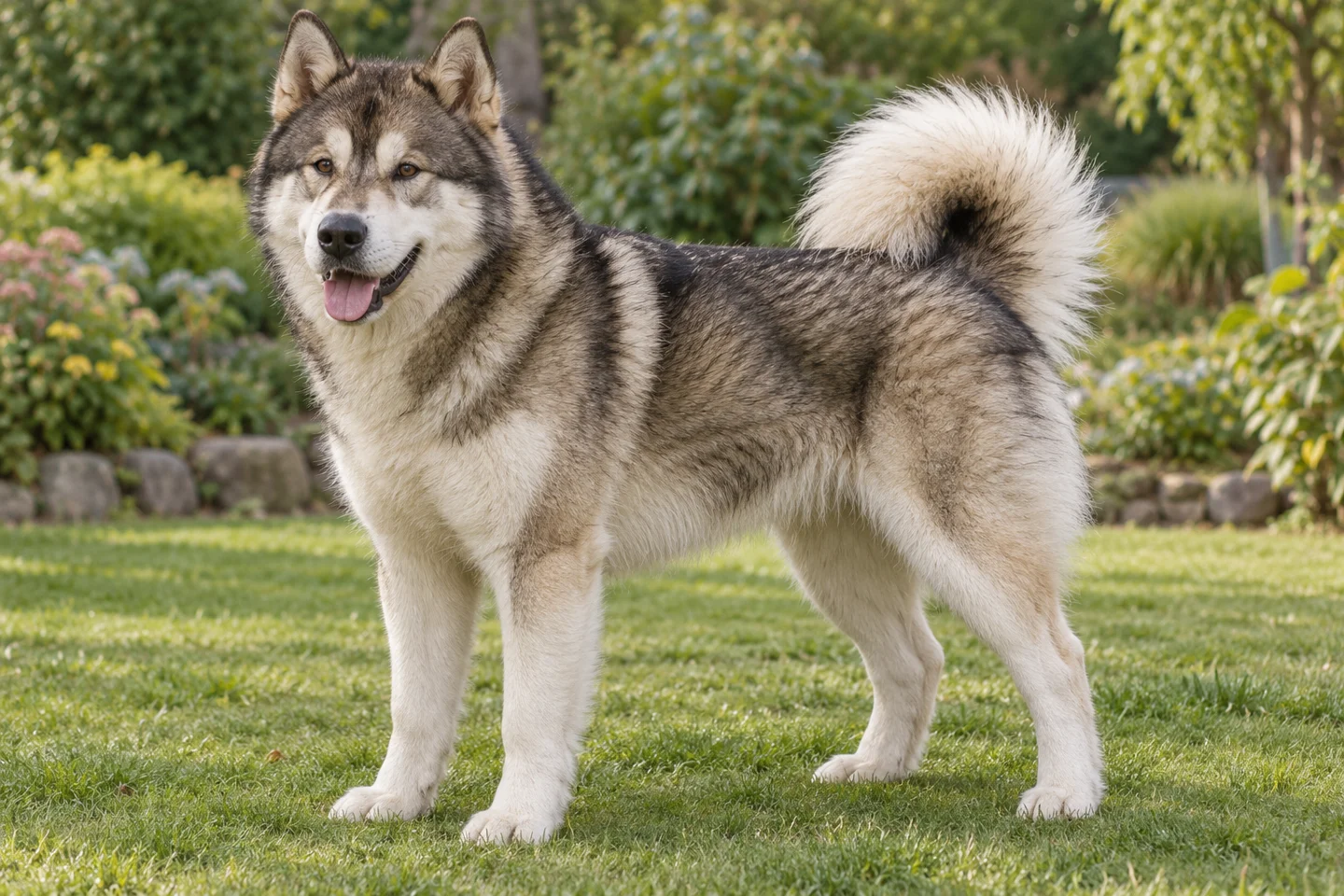
- Origin
- Greenland; FCI patronage Denmark
- Adult height reference
- Males 60 cm and upward; females 55 cm and upward
- Illustrated coat
- Gray-sable and white dense double coat
- Traditional use
- Sled work
General information for owners. These articles have not been reviewed by a veterinarian. Medical decisions need your dog's history and an examination.
A sled dog requires more than enthusiasm for winter
The Greenland Dog is a strong polar sled breed whose suitability needs a practical assessment of climate, daily work, and handling. An attractive thick coat does not tell you how the dog will live through an ordinary week in your home. Consider the months when outdoor conditions are unsuitable for your preferred activity, the security of the property, and who can help when you are unavailable. A household needs a workable routine beyond occasional snow or a holiday in the mountains.
Discuss the actual individual with a knowledgeable source. Ask about previous housing, other dogs, experience of indoor life, and responses to small animals. A dog selected and raised for a working environment may have much to learn about domestic routines. A puppy raised inside a home still needs appropriate outlets and management as it develops. Avoid treating the breed as an unusually rugged-looking version of an easy companion. The decision should follow evidence about the animal and the care you can provide, including the support needed if the placement becomes difficult.
Greenland identity and the FCI description
The FCI places the breed's origin in Greenland under Danish patronage and identifies its use as a sled dog. Its account links the breed with Inuit sled traditions and selection for strength and endurance. Those are specific working contexts, not an invitation to flatten distinct northern breeds into one category. Greenland Dogs are separate from Canadian Eskimo Dogs, Alaskan Malamutes, and Siberian Huskies. Confirm identity from records where possible and avoid assuming that similar markings establish ancestry or equivalent household needs.
Ask the source which work, if any, the family performs now. A dog's actual experience is more useful than a dramatic historical narrative. Find out how it is managed when not working, how people move between dogs, and what familiar cues are used. If you intend to pursue a sled or related activity, seek competent instruction and discuss health and conditioning with your veterinarian first. Traditional use does not certify that a pet can safely start a demanding task, and the owner needs to learn the practical skills required alongside the dog.
Size, coat, ears, and equipment fit
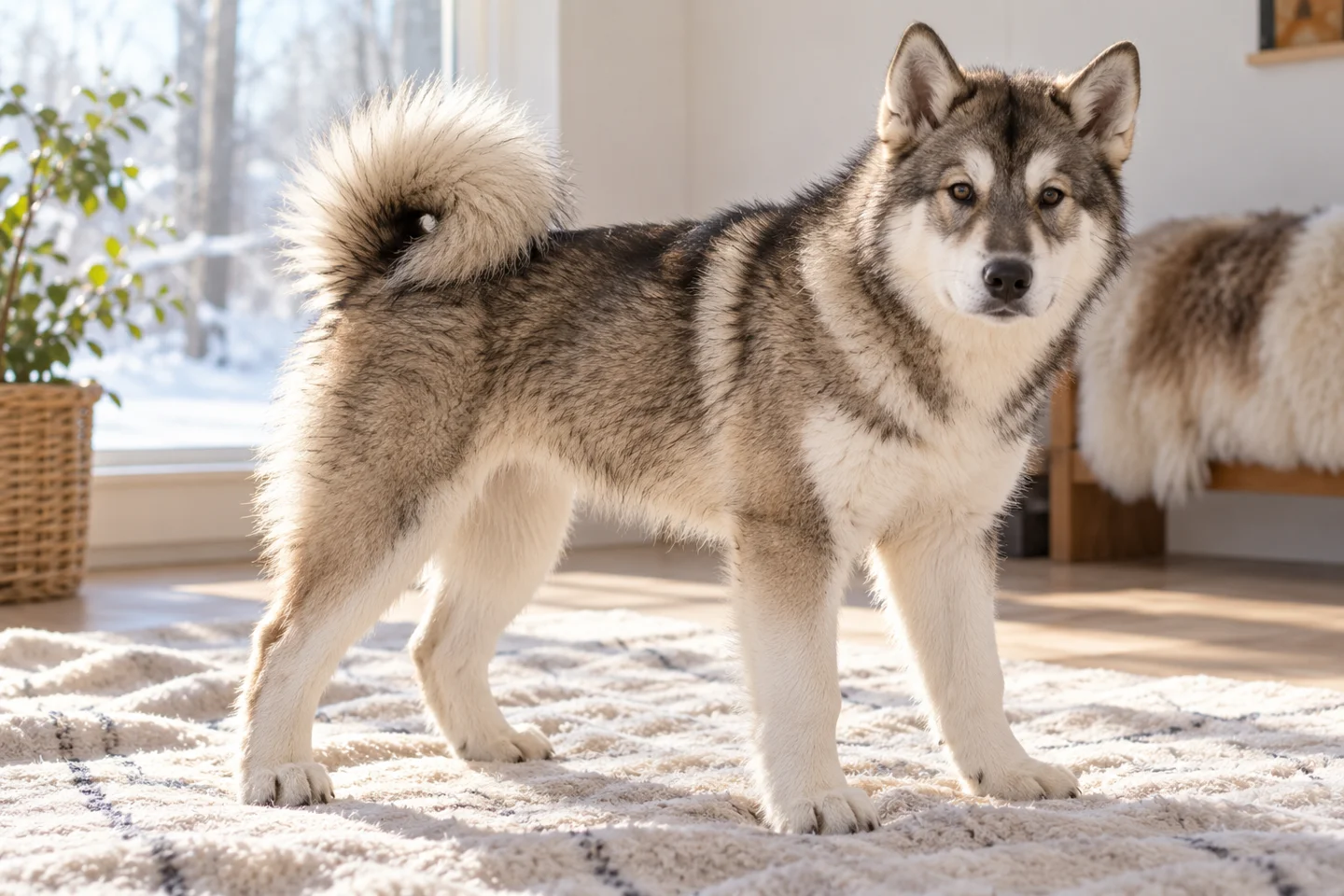
The FCI reference gives males a height of 60 centimeters and upward and females 55 centimeters and upward. It does not provide a fixed upper height or kilogram target to reproduce in every companion. The outline is strong and slightly rectangular, with natural erect ears, a dense double coat, and a bushy tail. The illustrations use gray-sable and white. They show one permitted appearance and are not documentary evidence of a particular dog's ancestry, correct movement, or working ability.
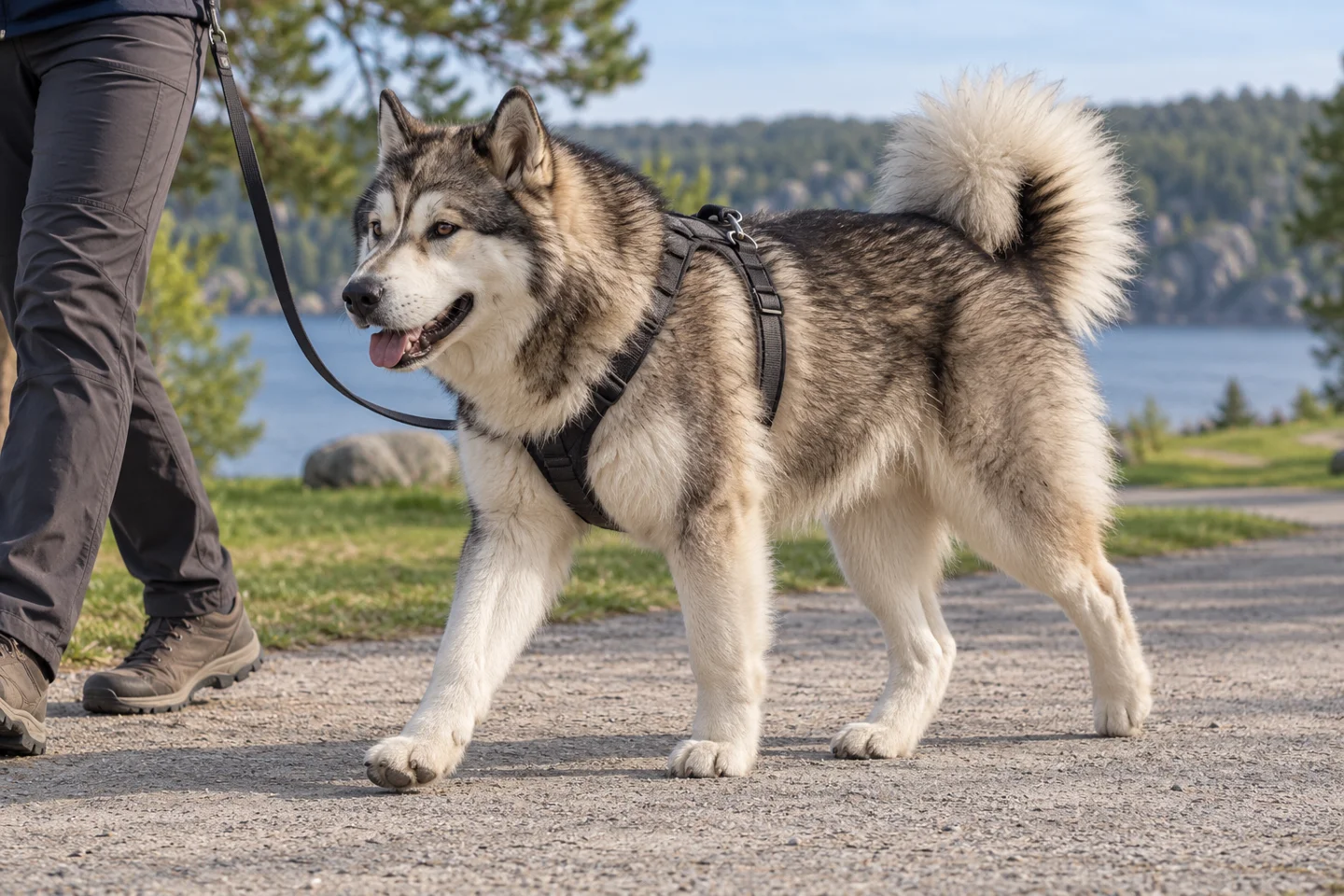
Measure the individual when choosing equipment, parting the coat to check contact with the skin. A thick ruff can disguise both a loose fit and pressure beneath a strap. Ask someone familiar with the planned activity to demonstrate suitable gear and handling. Ordinary walking equipment and specialized working equipment may have different purposes. Keep the dog comfortable at rest as well: allow room to stretch in the vehicle and sleeping area, with surfaces appropriate to its needs. A veterinary assessment of body condition is more useful than judging mass from the coat's volume.
Temperament and the difference between confidence and readiness
The standard describes an energetic, bold sled dog and does not present it as a guard dog. A confident-looking animal may still be inexperienced with the details of your home. Ask how it responds to being apart from familiar dogs, waiting behind an interior barrier, and accepting routine handling. Do not assume that strength of temperament means a dog will tolerate every unfamiliar event without preparation. Describe both the setting and the observed response when discussing an individual with a trainer or rescue.
During a move, make daily events understandable. Keep outside access, rest, meals, and the location of people predictable while you learn about the dog. Start with a manageable amount of company and stimulation. If quiet behavior is difficult, examine the arrangement rather than continually adding excitement. Reward calm moments before the animal needs to demand attention. A dated record of rest, activity, and difficult situations can help identify a pattern and gives a professional useful information. It also helps carers provide continuity instead of changing the routine without knowing what has been working.
Training and secure handling around an eager worker
Teach a pause, a direction change, and movement toward the handler before expecting them near strong distractions. Use rewards and practice at a level where the dog can succeed. AVSAB recommends reward-based methods and advises against aversive techniques. A strong animal needs clarity and good management; painful confrontation does not become necessary because its breed is physically powerful. Ask an instructor to demonstrate safe lead handling and how the regular carer can repeat the lesson without relying on exceptional strength.
Gate routines deserve particular practice. Arrange a second barrier if the entrance opens directly toward traffic, and teach what happens after a pause rather than keeping the animal in uncertainty. Every person supplying care should understand how equipment is fitted and when the dog is released. A task that works with one owner in a quiet yard is not proof it will work for a sitter beside unfamiliar dogs. Keep a practical backup arrangement while training develops. The handler should be able to end an outing and move away safely when the current setting exceeds the dog's skills.
Exercise, conditioning, and learning a working activity
Build activity around the individual dog's current condition. A breed selected for endurance still needs gradual preparation after a quiet period, growth, illness, or injury. Ask your veterinarian about suitable movement and discuss any sport plan before increasing workload. A knowledgeable instructor can help you choose an activity and equipment that fit your circumstances. Do not attach a novice to a load simply because the historical job involved pulling. The dog and person need preparation, and the handler must know how to stop before fatigue or poor conditions make the task unsafe.
Watch recovery after sessions, including movement later that day and willingness to rise the next morning. Keep a quieter alternative for days when the planned activity cannot proceed. Scent exploration, suitable walking, and short learning tasks can form part of ordinary life without pretending to duplicate a working team's demands. If the dog shows lameness, weakness, or altered breathing, obtain clinical advice. An eager departure does not erase a previous sign of discomfort. Use evidence from the individual rather than a fixed exercise number copied from a breed description.
Climate is part of the daily care decision
A dense polar coat does not protect a dog from overheating in every setting. Plan activity for suitable temperatures, provide water and shaded rest, and account for humidity, transport, and the time spent waiting. If local conditions frequently prevent safe exertion, discuss how the dog's needs can realistically be met before placement. A cooling product or haircut cannot turn unsuitable circumstances into a guarantee of safety. Ask the veterinary team for an individual plan and change the activity when conditions exceed it.
If the animal appears distressed by heat, stop, move to a cooler environment, and contact a veterinarian promptly for guidance. Do not insist on completing a route because the dog has worked harder in cold weather before. Cold also requires thought about the actual environment, wetness, feet, and the dog's present health. Origin alone cannot answer every weather question. Arrange reliable access to shelter and human care, and ensure a helper knows what signs require immediate contact. The owner's ability to revise the day is more useful than confidence in a breed's general hardiness.
Social experience in a new domestic setting
For puppies, discuss safe exposure during vaccination with the clinic. Choose small experiences that can be processed comfortably, with time to leave and rest. For an older dog entering a household from a working setting, start by learning which ordinary events are unfamiliar. An indoor door closing, a slippery surface, or passing traffic may need a separate lesson. Avoid making the first days a test of how many environments the animal can endure. A comfortable response at one step gives you a starting point for the next.
Prepare handling at home through brief cooperative sessions. Introduce a shoulder touch, equipment movement, and foot inspection gradually, using rewards and release. Ask strangers to wait rather than reach over an uncertain animal. If avoidance or agitation prevents necessary care, seek professional support. Repeated restraint until the dog stops struggling does not establish that the experience has become comfortable. Maintain an account of what was attempted and what helped. This gives future carers practical information and prevents each person from starting again with a more difficult version of the same task.
Aggression, resources, and other dogs
Record threatening behavior precisely. Conflict over food, a barrier response, and a snap during handling are different events and may need different management. Separate resources, prevent further exposure, and consult the veterinarian when discomfort or a sudden change may be involved. Do not stage another encounter to prove which dog is in charge. A working-team history does not make competition harmless. All animals need reliable access to rest, food, and human care without repeatedly entering a situation that produces warnings.
VCA explains that aggression toward unfamiliar dogs can reflect several motivations. Releasing a lunging animal to test friendliness is dangerous. Maintain a suitable distance and work with qualified help on a plan the household can actually maintain. Disclose previous bites, snaps, or serious threats to anyone accepting care. If muzzle conditioning is recommended, teach it gradually with appropriate fit and use, and retain the wider safety arrangements. A piece of equipment cannot make an unsuitable interaction safe by itself or justify rough handling that the animal cannot tolerate.
Children, cats, and a dog with hunting interests
Children need active adult supervision and a clear protected area where the dog can rest away from them. Organize quiet contact and prevent access to food or valued objects. A child should not hold equipment to restrain a strong dog, take an item from its mouth, or follow it after it withdraws. Separate comfortably when the adult's attention is unavailable. Ask a source about specific experience with children's ages and activities rather than accepting a general family label as evidence for every situation.
The FCI account includes hunting interests in the breed's traditional use, so small-animal safety needs deliberate investigation. Ask about actual observations, maintain secure separation, and obtain informed advice. A relaxed moment near a cat behind a barrier cannot establish safety when it runs freely. Never use a chase to find out. Other dogs also need assessment beyond familiarity with a group. Preserve space for a resident animal to disengage, especially if age, size, or mobility makes it vulnerable. Decline arrangements the household cannot keep safe reliably.
Grooming the double coat and checking working feet
Ask a knowledgeable groomer to demonstrate how to work through the coat without scraping or pulling. Inspect near the skin, particularly beneath straps and around moving limbs. A thick outer surface can hide a developing tangle or irritated area. Keep sessions short and use a stable position the dog understands. Tight mats or painful debris need professional help. Avoid using scissors against skin you cannot see or increasing force because the animal's coat appears rugged. Comfortable maintenance is the goal, rather than preserving a particular silhouette at any cost.
Include feet and nails in the routine, especially after rough or prolonged activity. Notice cracks, wounds, repeated licking, or a change in how a foot is placed. Ask the veterinary team about appropriate care instead of applying products chosen only for a different working dog. Teach examination when the feet are comfortable, pausing before the animal becomes distressed. A new resistance to touch may need a medical explanation. Record any restriction or treatment clearly so another handler does not accidentally ask the dog to continue an activity that should currently be limited.
Health evidence without promises of Arctic resilience
The Danish Kennel Club publishes a concrete hip requirement for Greenland Dog breeding. Parents normally need an official A or B hip result registered before mating; a dog graded C may be used with a partner graded A. This is a DKK registration rule, so ask which registry governs the litter you are considering. Obtain the registered results rather than accepting a video of a parent pulling strongly as a substitute. Sound movement in a short clip and formal hip assessment answer different questions. Ask how the breeding source follows the condition of adult offspring after they leave, including those kept as companions rather than working dogs.
For a dog intended for harness activity, discuss its present condition with the veterinarian before introducing load. Bring information about previous work, any period of inactivity, old injuries, and changes noticed after exercise. A handler's observation that the dog no longer pulls evenly deserves attention even when the coat hides much of its outline. Agree on an appropriate return to activity after illness instead of testing recovery with the old route. Keep emergency transport workable for a strong dog that may be unable to climb into a vehicle. A hip result from a parent cannot tell you whether today's soreness is harmless, and a northern working identity supplies no protection against an injury acquired during ordinary life.
Feeding and the cost of a sustainable routine
A pet's diet should follow its actual life stage and energy demands rather than a story about feeding a working team. Discuss complete nutrition and portions with the veterinary team. Measure meals, account for rewards, and review body condition beneath the coat. Changes in workload can require adjustment. Persistent weight, appetite, or digestive changes need assessment rather than constant experiments with products. Keep water access reliable and make instructions clear for helpers, particularly when several dogs must eat separately without competition.
Calculate the cost of suitable equipment, training, preventive care, climate arrangements, and competent cover when you are away. Ask providers whether their facilities and handling fit this individual. A service familiar with ordinary pets may not be able to manage the animal's strength, outdoor interests, or group history. Understand insurance conditions or another emergency funding plan. Review support and return arrangements with the source before placement. If a necessary part of the routine is unavailable in your location, resolve that problem before expecting the dog to adapt to a care gap.
Mixes and the limits of a northern appearance
A dog called a Greenland Dog mix may have documented parentage or may simply resemble a polar spitz. Ask what supports the description. A curled tail, thick coat, and familiar markings cannot identify exact ancestry. Distinguish records from guesses and evaluate an adult's actual dimensions, handling, coat maintenance, and animal responses. Those observations remain useful when pedigree is unknown. For a puppy, keep plans flexible because mature size, activity, and behavior cannot be guaranteed from one image or a confident sales description.
If both parents are established, discuss relevant family and health information for each. Crossing breeds does not guarantee removal of inherited conditions or supply the easiest traits of the parents. Avoid assuming a mix will automatically need less conditioning, be safer with cats, or tolerate heat more comfortably. Ask the source for observed evidence and support after placement. A rescue carer's account of ordinary daily behavior can answer practical questions more directly than an unsupported claim about the exact percentages of northern breeds in a dog's ancestry.
dogsDating outings with clear limits
Use dogsDating to find an arrangement the dog can manage, describing its strength, preferred pace, and any need for space around animals. Do not promise compatibility because it has worked alongside familiar dogs. Share an approximate area and use a public meeting point while keeping exact coordinates and your home address private. Each adult should manage their own animal. Choose a route with wide exits, suitable conditions, and no requirement to pass closely through a crowded enclosed space.
Start with parallel movement at a comfortable distance. Avoid shared toys, food competition, or immediate close greetings. Watch whether both dogs can disengage and respond to their handlers, and widen or end the outing if either cannot recover. Use the result to plan another small step only when the arrangement remains manageable. Record the practical details, including what weather and route worked. A familiar companion for controlled walks may be a good match even if the dogs never play together or share a home. The meeting should serve the animals' comfort as well as the owners' interest.
Sources and editorial notes
Sources checked October 21, 2026. Breed measurements describe reference ranges, not a diagnosis or an individual dog's ideal weight. Images are AI-generated breed illustrations and do not document a particular dog or health condition.
- AVSAB: Humane Dog Training Position Statement
- VCA Animal Hospitals: Food aggression in puppies
- VCA Animal Hospitals: Common emergencies in dogs
- Orthopedic Foundation for Animals: CHIC health screening programs
- VCA Animal Hospitals: Aggression toward unfamiliar dogs, diagnosis
- VCA Animal Hospitals: Grooming and coat care for your dog
- AAHA: Feeding plans for healthy, appropriate weight cats and dogs
- VCA Animal Hospitals: Heat stroke in dogs
- AVSAB: Puppy Socialization Position Statement
- VCA Animal Hospitals: Dog behavior problems, aggression toward children
- Official breed standard: Greenland Dog
- Danish Kennel Club: Greenland Dog profile and breeding requirements
Keep getting to know dogs.
Read another guide or return to your dogsDating community.
Explore breed guidesBack to dogsDating