Halden Hound
The Haldenstøver is a rectangular Norwegian scent hound whose care needs secure exploration, thoughtful transitions, short-coat maintenance, and clear evidence about health.
How these guides are researched and reviewed
- Origin
- Norway; Haldenstøver
- Male height
- 52–60 cm; ideal 56 cm
- Female height
- 50–58 cm; ideal 54 cm
- Coat
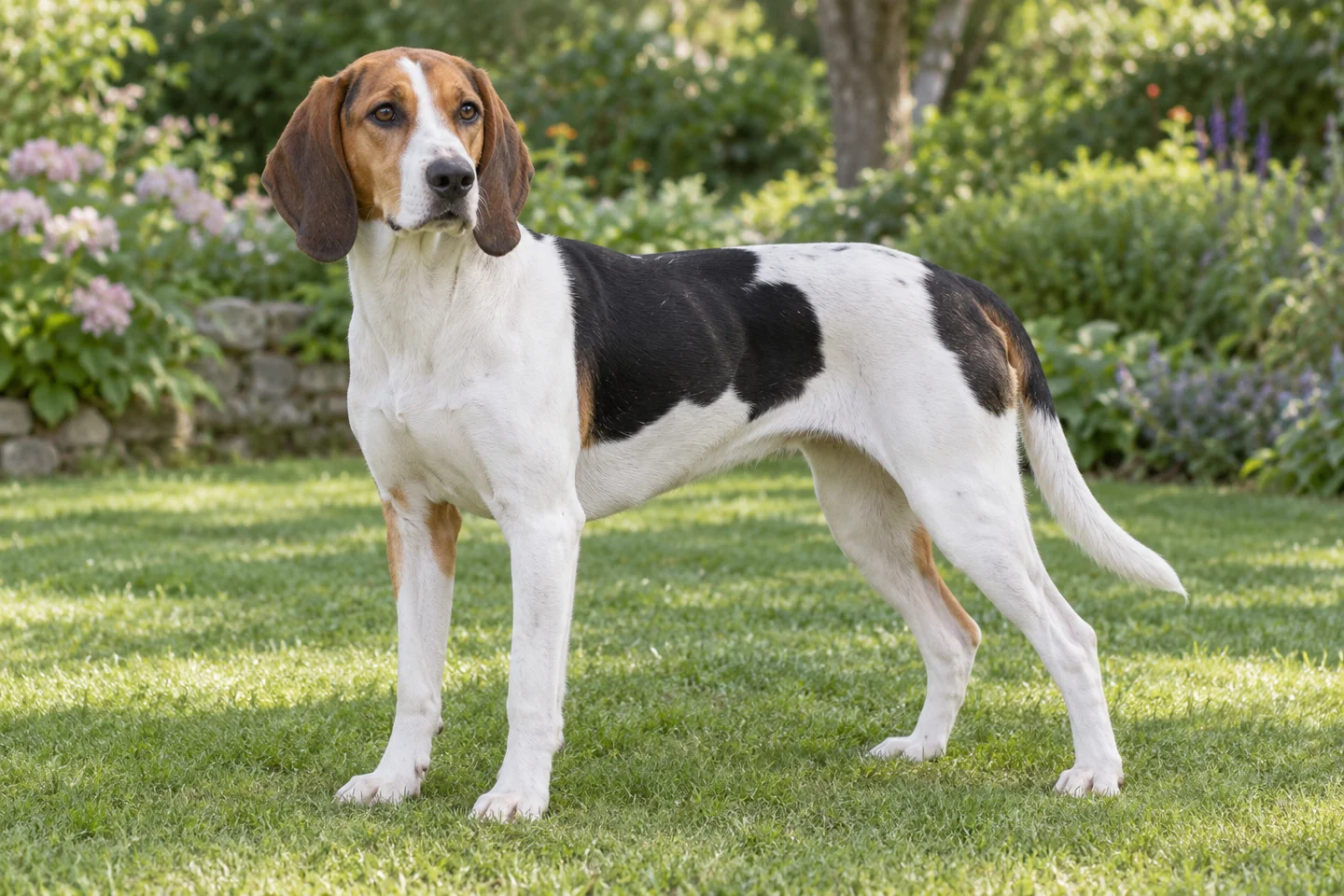
- White predominating, with black patches and tan shading
General information for owners. These articles have not been reviewed by a veterinarian. Medical decisions need your dog's history and an examination.
A Norwegian hound with its own name and records
The Halden Hound, or Haldenstøver, is a Norwegian scent hound. It is distinct from the Hygen Hound and other Norwegian hound breeds, even when photographs suggest a familiar family outline. Clarify the name on the records and ask how the source identifies the dog. A translated advertisement or tricolor appearance cannot settle every question of ancestry. Once identity is established as far as possible, discuss the individual animal's experience and the practical life you expect it to join.
Plan secure walks, resting space, and care during absences before concentrating on appearance. Can the usual handler turn away from a distraction without being pulled into a road? Are gates reliably closed by everyone in the household? Will a sitter be available who understands the animal's needs? These details matter for a medium hound as well as a giant. Meet adults and ask about the hours between outings. An animal's ability to enjoy outdoor activity does not automatically show that it has learned the domestic routines your home requires.
Working purpose without an embellished history
The FCI identifies Norway as the breed's origin and classifies the Halden as a scent hound with a working trial. Its English standard supplies structural detail but does not justify every historical story repeated online. Avoid treating an unverified ancestry narrative as a reason to choose a dog. The useful current questions concern its work, housing, social experience, and family observations. Ask what the source can document and keep a distinction between recorded history and an explanation inferred from the appearance of modern hounds.
A dog accustomed to a rural working routine may need lessons about traffic, indoor floors, household sounds, and time apart from other animals. A young home-raised dog also needs appropriate preparation beyond its familiar rooms. Keep the first days predictable and ask which cues and rewards are already understood. A change of setting can make a previously easy behavior harder. Observe carefully instead of assuming every difficulty is a fixed character trait. The source and an appropriate professional can help plan a manageable transition when the household's conditions are substantially new.
Adult height and the white-based coat
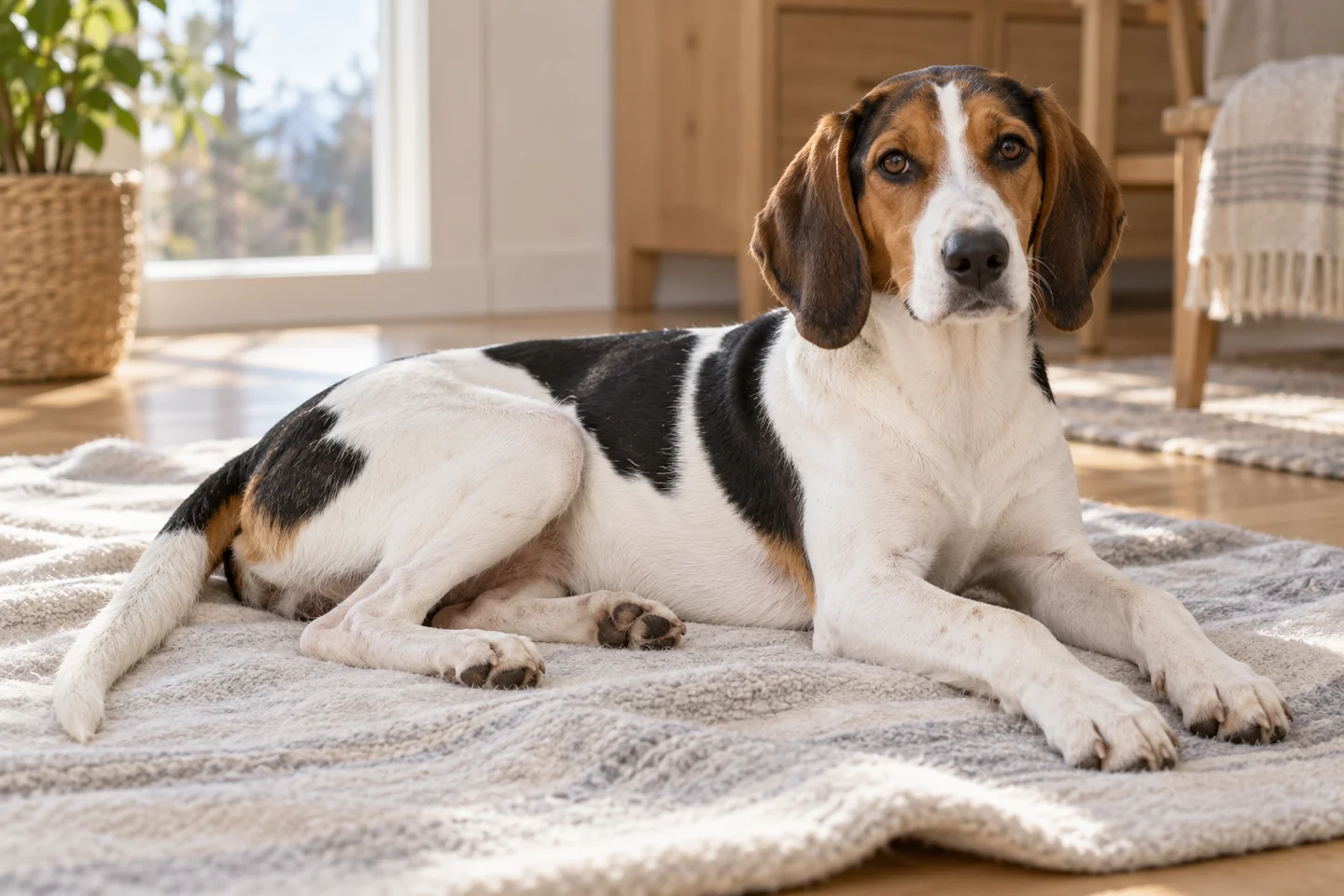
The FCI gives males a height of 52 to 60 centimeters, with 56 ideal, and females 50 to 58, with 54 ideal. The rectangular outline is strong without heaviness. The coat has white predominating, black patches, and tan shading, rather than a heavily ticked blue pattern. Natural hanging ears and a full tail complete the illustrated example. These AI-generated images provide general visual context and cannot establish a real dog's pedigree, soundness, clinical health, or exact mature dimensions.
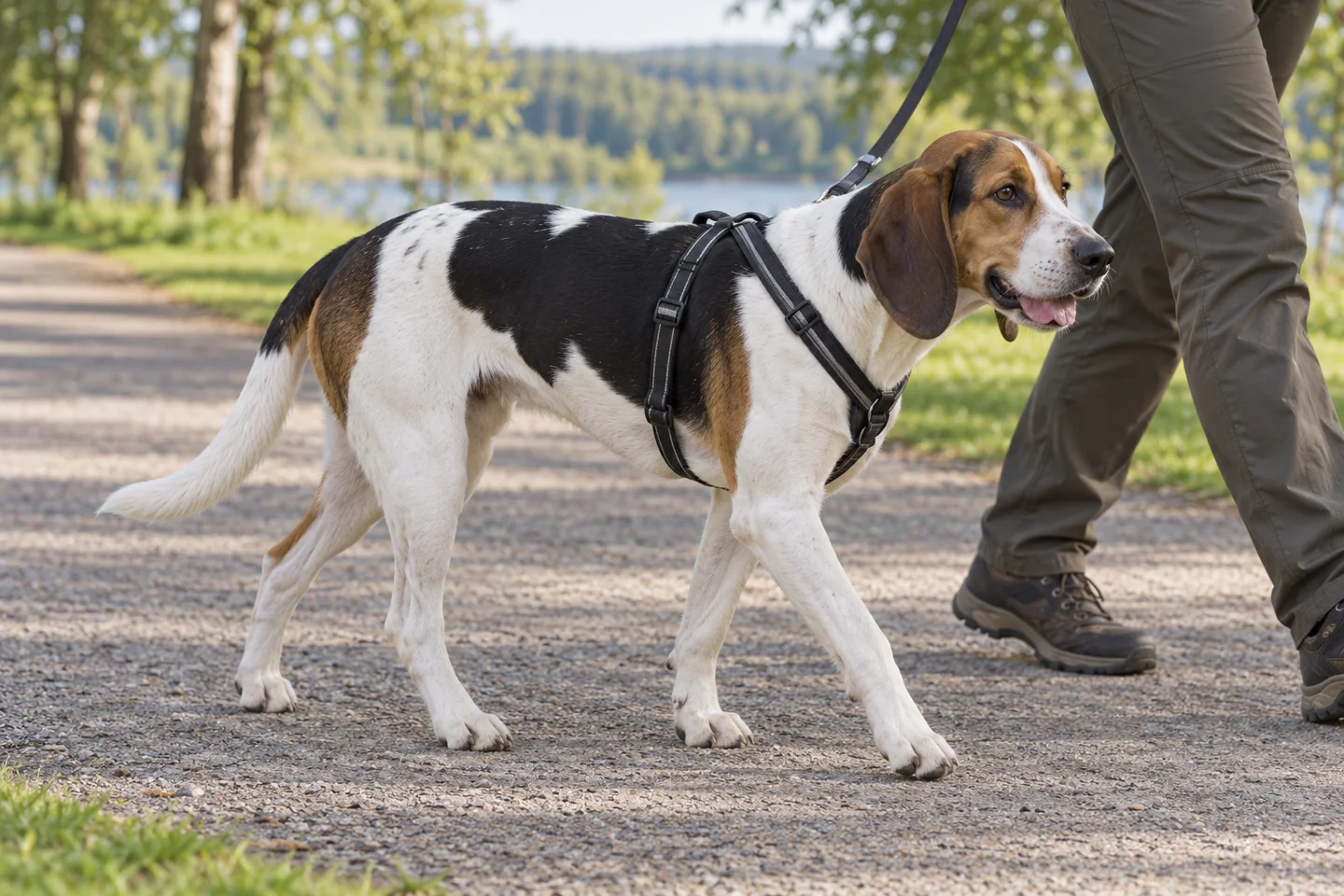
Measure an adult for transport equipment and its sleeping area, and fit a harness around the actual chest and limbs. Review fit during growth. A standard height range helps with expectations, while the individual's condition and medical needs guide care. Watch it rise, turn, and walk on a comfortable surface and ask about persistent hesitation or stiffness. Do not use a photograph to decide the cause of an unusual movement. Your veterinary team can assess findings that appearance and a brief meeting cannot explain reliably.
Temperament is best described through ordinary events
Ask how the dog waits while food is prepared, settles after an outing, and responds when a familiar companion leaves. The FCI structural description cannot answer these domestic questions for an individual. A helpful breeder or foster carer should describe settings and recovery rather than rely on one broad adjective. An affectionate animal can still be inexperienced with separation or become excited at a gate. Explain your working hours and household traffic so any mismatch can be addressed before placement.
Give the dog a quiet resting place and a simple schedule while it learns the home. Reward settled choices early instead of noticing it only after it demands attention. Teach brief comfortable separation while you can observe the response. If the animal repeatedly becomes distressed, seek informed advice rather than extending absence until it is forced to endure it. Keep notes of what happens and what changes the pattern. The same information helps a sitter continue useful care without having to invent a new routine each time the normal owner is away.
Training that remains clear beside an interesting scent
Teach movement toward the handler, a pause, and turning together in a low-distraction place. Reward the response and increase difficulty gradually. AVSAB recommends reward-based methods and advises against aversive techniques. A hound does not need physical confrontation to understand a clear task. Ask an instructor to demonstrate where to begin and how to make a lesson easier. Repeating a cue over and over while the dog continues to investigate can make it unclear which behavior the owner is actually trying to teach.
Use appropriate control while recall develops. A secure enclosed space or suitable long lead can allow exploration without letting the animal reach hazards. Learn safe line handling rather than wrapping it around a hand or allowing it to cross other walkers. Practice returning and then accessing another permitted activity so the handler has a useful role throughout the outing. A helper should understand the same process. Keep management in place around wildlife and roads; a successful lesson at home does not demonstrate reliability under every outdoor condition.
Exercise and the value of an adaptable route
A scent hound needs opportunities to investigate, but the form of activity should fit its age, fitness, and health. Choose routes with room to move away and inspect boundaries before using an enclosed area. Build a new workload gradually and ask the clinic about growth or recovery where relevant. Watch movement and rest after the outing, not only enthusiasm at the start. A dog keen to continue may still need an owner to recognize that the current distance or terrain is too demanding.
Have an alternative when weather, access, or a medical problem changes the day. A shorter exploratory walk and suitable learning tasks can be part of a revised routine. In heat, change timing and exertion, provide water and shade, and stop when the animal struggles. Contact a veterinarian about concerning breathing, weakness, or collapse. Do not assume northern origin supplies protection against a hot vehicle or an unsuitable walk. Transport, waiting, and the route home belong in the same plan as the period spent exercising.
Voice and home suitability
Ask to hear adults and discuss when this dog vocalizes. Sound during outdoor work, an alert at a passing animal, and distress while alone can create different management needs. A neighbor hears the noise without necessarily knowing its cause, so be realistic about walls, garden boundaries, and nearby homes. A small property is not automatically impossible, and a large one is not automatically suitable. The useful decision follows the animal's observed pattern and the household's ability to provide a workable routine.
If difficulty develops, identify the trigger and recovery rather than rely on a general statement that hounds are noisy. Reduce repeated sources of arousal where practical and teach a manageable alternative before excitement is high. Avoid punishment aimed only at the sound. Persistent distress or a sudden behavioral change needs professional input, including veterinary assessment where appropriate. Explain the same plan to helpers so the dog is not being encouraged to repeat a pattern by one person while being frightened for it by another.
Socialization and exposure that can be processed
For puppies, ask the veterinary team about safe early experiences while vaccination progresses. Introduce ordinary people, surfaces, vehicles, and noises in small amounts with a comfortable distance. A brief observation can be useful without close contact. An older dog with limited experience also needs an appropriate starting point. Watch whether it can investigate, leave, and recover. Avoid filling a first weekend with crowded events or treating the number of greetings as proof that the animal has learned to feel comfortable in every setting.
Teach handling separately through short cooperative sessions. A brief touch and reward can lead toward foot, ear, and equipment checks without restraint escalating. Ask strangers to wait before approaching an uncertain dog. If repeated avoidance, freezing, or frantic behavior prevents normal activity, obtain qualified guidance. A professional can help set a smaller task and judge progress. Continuing an overwhelming interaction until visible resistance stops does not establish understanding or comfort. Keep the dog able to pause and share useful observations with anyone who provides subsequent care.
Aggression and a useful record of what happened
A warning needs attention to context. Note who approached, what object or space was involved, whether the dog could leave, and any possible discomfort. A snap during a painful ear check is different from conflict over food. Prevent further exposure and seek veterinary advice about new handling sensitivity or behavioral change. Do not punish the warning or ask someone to repeat the approach to see whether it happens again. An absence of injury in one episode does not make another attempt an appropriate assessment method.
VCA explains that aggression toward unfamiliar dogs can have several motivations. Maintain distance and control instead of releasing the animal to test friendliness. Qualified behavior support can help create a plan matched to the household. Leave meals undisturbed and teach safe exchanges for objects using rewards. Tell carers about snaps, bites, and near misses in specific terms. If muzzle conditioning is recommended, ask about correct fit and gradual learning, and retain the wider safety measures. A muzzle cannot make repeated crowding or rough handling acceptable.
Children and animals in the household
An adult should supervise children's contact actively and manage greetings. Keep feeding, chewing, and sleep protected from children's access. Explain that moving away ends an interaction and that a child should ask an adult rather than pull a collar or retrieve an item from the dog's mouth. Comfortable separation is appropriate when supervision cannot remain focused. Ask a source about the ages and situations actually observed. A pleasant experience with one calm child cannot establish safety around every energetic visitor or younger family member.
Other animals need specific assessment. A dog familiar with canine company in one setting may still require separate food and rest in a home. Arrange initial meetings with enough room for both handlers to withdraw and observe whether the quieter dog can leave comfortably. Keep cats and small animals securely protected where safety is uncertain. Do not arrange a chase to discover the response. Discuss any practical limits before placement. The household should not accept a dog whose necessary barriers and supervision cannot be sustained across normal workdays, travel, and illness.
Grooming and regular checks beneath a dense coat
The Halden's straight dense coat needs gentle maintenance and inspection despite its comparatively short appearance. Check beneath equipment and around feet after rough ground. Remove light debris carefully and ask for help with painful findings, embedded material, or a damaged nail. A professional can show tools suited to the coat and a stable position for routine care. Do not assume a working hound will tolerate forceful handling without preparation. Teaching brief care steps when comfortable can make later assessment easier for both the animal and person.
Watch ears for odor, discharge, redness, repeated head shaking, or sensitivity. Arrange veterinary assessment when those signs appear rather than automatically applying old drops. Have any prescribed cleaning demonstrated and avoid probing deeply with cotton buds. Include mouth and nail care in a plan with the clinic. A new reluctance to be touched may indicate pain, even if the dog still accepts other contact. Keep carers informed about current restrictions and what they should report so useful observation continues when the normal owner is unavailable.
Health questions when published breed data are sparse
NKK's Norwegian harehound programme, effective from 1 July 2026, covers Halden Hound, Hygen Hound, and Dunker. Read its breed labels carefully. The programme's discussion of a 2022 Dunker health survey does not establish disease frequencies in Halden Hounds. Its recommendations include hip imaging and preserving genetic diversity. It recommends using dogs with hip grades A, B, or C, with a C dog paired with a partner free of hip dysplasia. These recommendations have a different status from the programme's mandatory breeding requirements. Ask the Halden breeding adviser to explain the current distinction and the proposed parents' actual results.
For this small population, a useful family conversation includes how often a sire has been used and what information comes back from older offspring. Request an explanation of the planned pairing that considers relatedness alongside clinical records. A long pedigree cannot fill an empty medical file. For a rehomed adult, start a separate timeline of injuries, medication, previous exercise, and present limitations so that a veterinarian can plan care without guessing from breeding paperwork. If the hound becomes lame after an outing, record what happened and stop demanding work pending advice. Keep the nearest available clinic's details with the person transporting the dog, especially when walking somewhere unfamiliar. Breeding decisions and treatment of an individual patient require different information.
Feeding, costs, and continuity of care
Choose complete nutrition appropriate to life stage and discuss portions with the veterinary team. Measure meals, account for rewards, and review individual condition rather than feed toward another hound's weight. Keep fresh water available and provide clear amounts for helpers. If several animals live together, separate feeding can help avoid pressure and show what the Halden actually consumes. Persistent digestive, appetite, or weight changes need assessment rather than a series of unsupported product changes. Adjust the plan when activity, age, or health changes the dog's needs.
Check current local costs and availability for preventive care, training, transport equipment, grooming assistance, and cover during absences. A sitter needs to understand this individual's scent interest and any restrictions, not simply agree to feed a medium dog. Read insurance conditions or arrange another way to fund urgent care. Ask the source to explain support and return provisions before placement. A sustainable decision leaves the household able to continue care through ordinary disruptions, rather than relying on one unconfirmed service or one person's constant availability.
Mixes and uncertain hound identification
A dog described as a Halden mix may have known parentage or may simply resemble a Norwegian hound. Clarify what is documented and what is inferred from appearance, rescue location, or a translated name. Tricolor markings do not prove exact ancestry. An adult with uncertain records can still be evaluated through its actual size, coat, handling, and behavior. Keep those observations useful and specific. For a puppy, allow flexibility because mature traits cannot be guaranteed from one photograph or a confident breed label.
Where parents are known, ask about relevant health evidence and family concerns for both. Crossing breeds does not guarantee removal of inherited conditions, predictable voice, or effortless training. Be cautious of claims that a puppy will inherit only convenient qualities. Meet the adults where possible and discuss support after placement. In a rescue, a foster carer's clear account of daily routines and animal responses may guide a household decision more directly than a speculative pedigree narrative. Preserve uncertainty so plans can accommodate what has not yet been observed.
dogsDating walks with practical space
Describe the hound's pace, preferred distance, and any limits on greetings in dogsDating. Mention observed needs around smaller animals or strong scent rather than promising that a breed label establishes compatibility. Share an approximate area and use a public meeting point while keeping exact coordinates and your home address private. Each adult should manage their own dog. Choose a wide route with convenient exits so neither handler must rely on close contact at a crowded gate before deciding how the animals respond.
Start with parallel movement and allow comfortable investigation of the route. Leave shared toys and feeding games for another decision. If either dog becomes stiff, repeatedly withdraws, or cannot recover from excitement, increase distance or end the walk. Record the conditions that worked afterward so a later plan begins from actual evidence. A calm familiar walking partner can be a worthwhile match even without physical play. The meeting should remain manageable for the dogs and the people responsible for them, with a comfortable way to leave at any point.
Sources and editorial notes
Sources checked October 21, 2026. Breed measurements describe reference ranges, not a diagnosis or an individual dog's ideal weight. Images are AI-generated breed illustrations and do not document a particular dog or health condition.
- AVSAB: Humane Dog Training Position Statement
- VCA Animal Hospitals: Food aggression in puppies
- VCA Animal Hospitals: Common emergencies in dogs
- Orthopedic Foundation for Animals: CHIC health screening programs
- VCA Animal Hospitals: Aggression toward unfamiliar dogs, diagnosis
- VCA Animal Hospitals: Grooming and coat care for your dog
- VCA Animal Hospitals: Ear infections in dogs (otitis externa)
- AAHA: Feeding plans for healthy, appropriate weight cats and dogs
- VCA Animal Hospitals: Heat stroke in dogs
- AVSAB: Puppy Socialization Position Statement
- VCA Animal Hospitals: Dog behavior problems, aggression toward children
- Official breed standard: Halden Hound
- Norwegian Kennel Club: Norwegian harehound breeding programme effective July 2026
Keep getting to know dogs.
Read another guide or return to your dogsDating community.
Explore breed guidesBack to dogsDating