Hanoverian Scenthound
A powerful German tracking specialist whose suitability needs careful discussion of working purpose, household expectations, handling, and documented family health.
How these guides are researched and reviewed
- Origin
- Germany; Hannoverscher Schweißhund
- Adult male size
- 50–55 cm; 30–40 kg
- Adult female size
- 48–53 cm; 25–35 kg
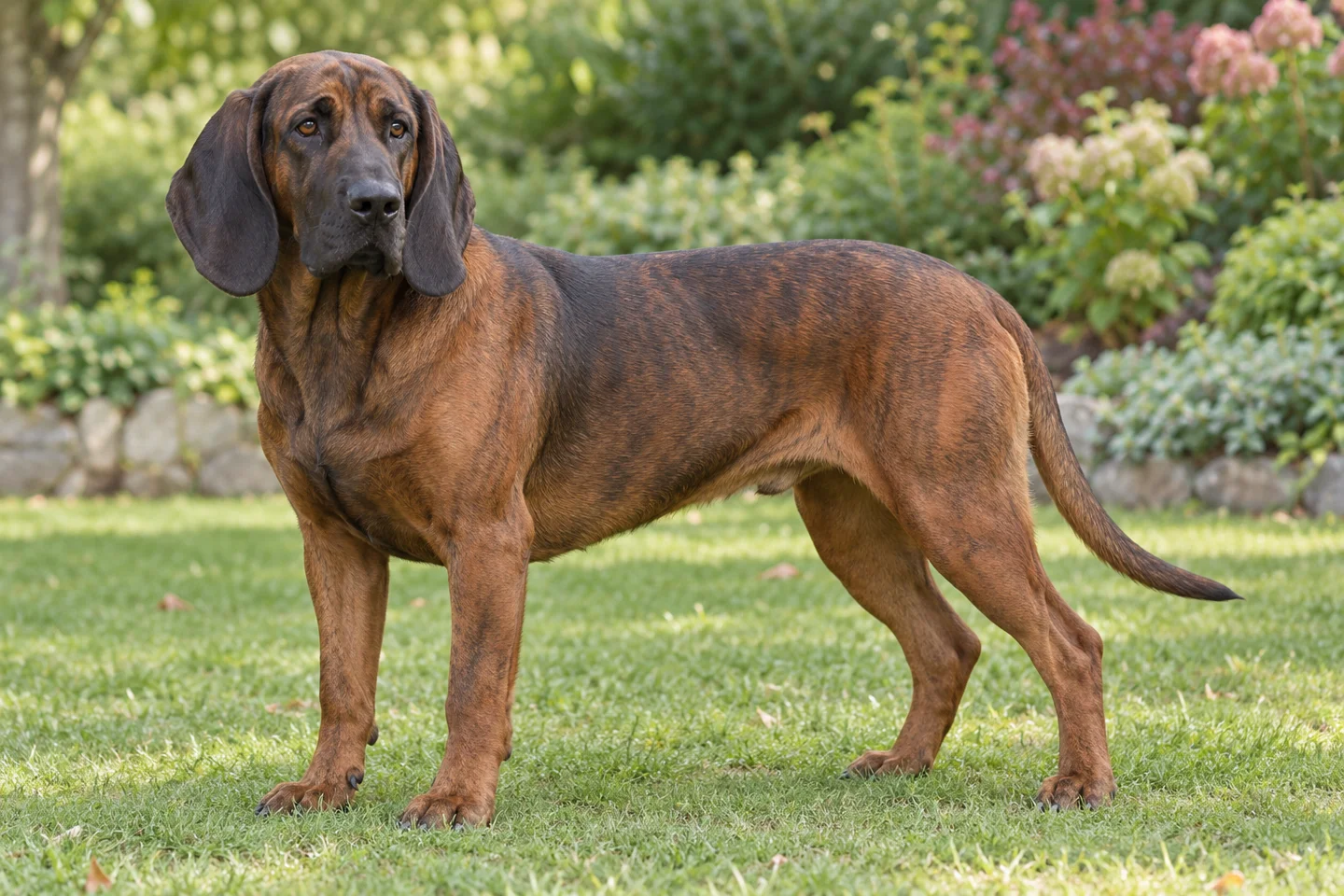
- Illustrated coat
- Deer-red with brindling and a dark mask
General information for owners. These articles have not been reviewed by a veterinarian. Medical decisions need your dog's history and an examination.
Start with the specialist role
The Hanoverian Scenthound is a German tracking specialist, not simply a compact-looking companion with an appealing expression. Discuss its intended placement with a breed organization or experienced source before deciding that ordinary pet outings will meet the needs of a particular family. Ask whether the source expects a working home and what it requires from an owner. Those questions should be resolved before travel, payment, or promises about a puppy. A photograph cannot show the demands associated with an animal's selection and upbringing.
A companion assessment still concerns the individual. Find out what the dog has actually done, how it lives between activities, and which environments are familiar. Do not assume that experience working with a handler establishes comfortable domestic solitude or urban manners. Explain your routine honestly, including other animals, available time, and support during absences. If the source identifies a mismatch, take that evidence seriously. The goal is a placement that can provide appropriate care over time, rather than a household choosing the breed for its rarity and trying to resolve every practical demand afterward.
German development and the tracking tradition
The FCI account describes development from older leash hounds and later selection associated with Hanover. It records Verein Hirschmann maintaining the breed since 1894 with a strong emphasis on working ability. The present standard concerns tracking wounded game. That specific role explains why a prospective owner should ask detailed questions about purpose and placement. It does not make the breed interchangeable with every other scent hound or establish that any pet should begin demanding work without preparation and knowledgeable supervision.
Ask which records and observations describe the family today. A working result, a conformation description, and an account of household behavior supply different information. None should stand in for all the others. If structured activity forms part of your plan, discuss the required instruction, equipment, conditioning, and lawful setting with appropriate experts. If it does not, be equally clear. An informed source can then explain whether a particular adult or young dog might fit and which care requirements need a realistic arrangement before placement can proceed.
Adult dimensions and the strong rectangular body
FCI height and weight references are 50 to 55 centimeters and 30 to 40 kilograms for males, and 48 to 53 centimeters and 25 to 35 kilograms for females. The outline is powerful and rectangular, with a short coarse coat in deer-red shades, sometimes brindled or masked. The illustrations use a brindled deer-red example with natural ears and a full tail. They are visual examples rather than proof of an actual dog's pedigree, working ability, or health.
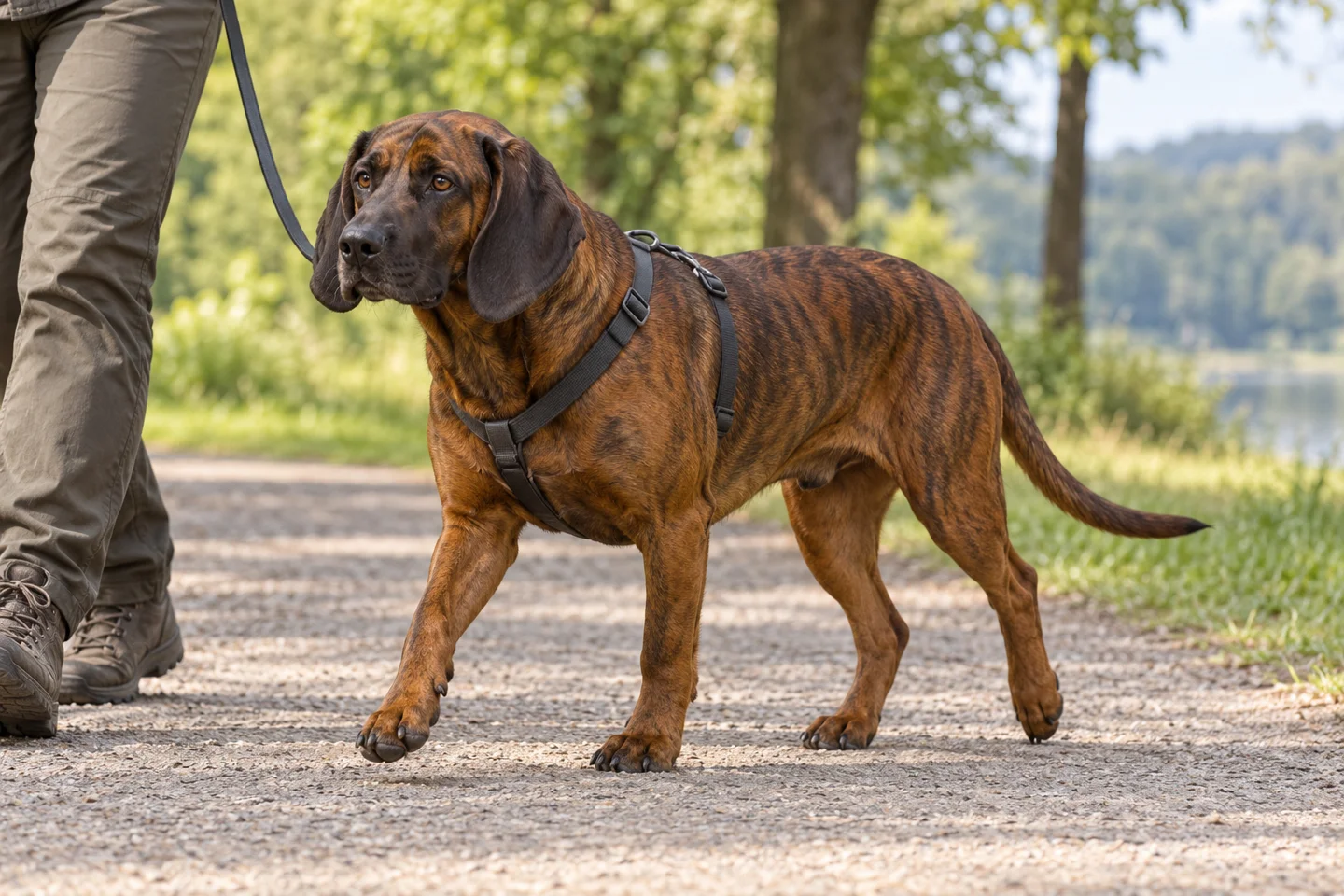
Do not judge handling requirements by shoulder height alone. A substantial body needs suitable equipment, travel space, and an adult able to manage it. Measure the animal and check harness contact around the chest and behind the elbows. Review fit through growth or condition changes. Watch movement in a comfortable setting and ask about persistent stiffness or reluctance. A strong appearance cannot exclude pain. Use veterinary assessment when needed rather than interpreting a photograph or brief demonstration as a complete view of the dog's physical condition.
An attentive worker and an ordinary home
Ask how the dog behaves during the quiet parts of a day. Can it rest while people move around, remain comfortable apart from its handler, and accept necessary equipment changes? A dog accustomed to concentrating on work may still need to learn those domestic routines. Keep observation distinct from what someone expects it will eventually do. Explain your working hours and visitor pattern so the source can discuss the circumstances that matter, including areas where the animal has little comparable experience.
Set up a clear resting area and predictable access to meals and outdoor breaks. Introduce new demands gradually rather than filling the first days with every planned activity. Reward settled behavior and provide a comfortable pause from household traffic. If the dog repeatedly cannot relax, review the arrangement with appropriate help and consider medical contributors where indicated. A dated account of triggers and recovery can make that discussion more useful. Give regular carers the same practical information so the animal does not face a different routine every time responsibility changes.
Training for cooperation outside the working task
Teach a pause at an exit, movement toward the handler, and a direction change in an easy setting. Use clear rewards and increase difficulty gradually. AVSAB recommends reward-based methods for ordinary skills and behavior work. A specialist breed does not require punishment to understand household requests. Ask an instructor to demonstrate both the successful task and the easier version to use when the dog cannot respond. Repeatedly issuing a cue while attention remains elsewhere can obscure the lesson rather than strengthen it.
Practice equipment handling calmly and ensure each carer understands fit, release, and what to do when an outing must end. A long lead, where appropriate, needs competent handling so it cannot wrap around limbs or create hazards for passers-by. Keep useful management while learning develops. A response in a familiar yard is not automatically established beside strong scent or unfamiliar animals. The owner should have a route, distance, and barrier plan instead of relying on physical strength to interrupt a fully committed animal after the situation has already become difficult.
Exercise, useful activity, and recovery
Develop activity from current age, health, and conditioning. Ask your veterinarian about growth, recovery, or a substantial increase in workload. A specialist working description cannot certify present fitness. Choose terrain and routes where the dog remains under appropriate control and where leaving a difficult encounter is possible. A secure location should be inspected rather than assumed from its appearance. Record how the animal moves later and the following morning, especially if enthusiasm at the start makes fatigue or discomfort easy to overlook.
When exploring possible activities, obtain instruction from someone who understands the actual task and breed. Avoid treating any scent game as a guarantee that every working need has been met. The source can help you assess whether the proposed routine is appropriate to the individual. Keep a quieter alternative for unsuitable weather or access. In heat, change timing and exertion, provide water and shade, and stop for concerning signs. Breathing difficulty, weakness, or collapse needs veterinary advice rather than persistence with the original distance or an assumption that a determined dog should continue.

Public routes, voice, and household boundaries
Ask about the dog's behavior when scent, other animals, and unfamiliar people appear on a route. A handler needs enough space to move away and a clear plan at gates. Also discuss voice in the actual home: when it occurs, how long it lasts, and whether absence or anticipation contributes. Describe nearby homes and the hours people will be elsewhere. A medium shoulder height does not answer these practical questions. Placement should not depend on a promise that one cue or device will remove every form of arousal.
If a recurring problem appears, identify the preceding event and recovery. Change repeated triggers where possible and teach an alternative at an easier level. Persistent distress or a sudden behavioral change deserves qualified input, including veterinary assessment when indicated. Punishing a visible response may leave the underlying problem unresolved. Make the arrangement understandable to helpers and visitors. A household system that works only through one owner's constant presence needs a practical alternative before a sitter, illness, or unexpected caller exposes the gap in ordinary care.
Socialization without testing a dog's limits
For puppies, discuss suitable early experience with the veterinary team while vaccinations progress. Introduce ordinary surfaces, people, traffic, and sounds in small amounts, at a distance the animal can manage. Give it room to leave and recover. Adults with unfamiliar histories also need an achievable starting point. A quiet observation may be enough for one outing. Avoid making a crowded event a test of whether the dog is sufficiently confident or assuming that age establishes experience of every domestic setting.
Prepare cooperative care separately. Brief touch followed by a reward and release can lead toward foot, ear, and equipment checks while the animal remains comfortable. Ask strangers to wait before approaching. Repeated avoidance, freezing, or frantic movement means the task needs reconsideration and perhaps professional support. Increasing restraint until resistance stops cannot establish that the dog feels safe. Keep a record of useful positions and distances so later care can build on an easy step rather than repeat a stressful encounter with a new person.
Aggression and the limits of broad descriptions
A threatening response should be described through the event. Record who approached, what was involved, how much room the animal had, and whether discomfort could matter. A snap during touch differs from guarding a resource or reacting at a fence. Prevent repetition while advice is sought. New sensitivity to movement or handling warrants veterinary consideration. Do not explain the event away as loyalty or working determination, and do not punish a warning before understanding what it tells you about the situation.
VCA explains that aggression toward unfamiliar dogs can have several motivations. Keep suitable distance and control instead of removing a barrier to test the response. Qualified behavior support can help create an arrangement the household can maintain reliably. Teach safe exchanges and leave feeding undisturbed. Carers need a candid account of bites, snaps, and near misses, not a reassuring summary that omits the difficult circumstances. If muzzle conditioning is recommended, obtain guidance on fit and gradual learning and keep the wider management plan. Equipment cannot make repeated provocation an acceptable assessment method.
Children and other animals
Protect sleeping, eating, and chewing from children's access and supervise contact actively. An adult should manage greetings and the lead. Explain that the dog moving away ends contact; children should ask for help rather than pull a collar or remove an object from the mouth. Use comfortable separation whenever supervision cannot remain focused. Ask about specific experience with children's ages and activities before placement. A calm meeting in one setting cannot establish safety around a younger child, fast movement, or a busy family occasion.
Assess other animals individually rather than assume every working hound has the same social history. A resident dog needs its own resting place, food, and access to carers. Arrange initial meetings with room to withdraw and watch whether the quieter animal can disengage. Keep cats and small animals securely protected when safety is uncertain. Do not arrange a chase as a test. A placement discussion should include the barriers and supervision the household can actually maintain. Decline conditions that depend on a level of separation or constant attention nobody can reliably provide.
Grooming, feet, and routine handling
The short coarse coat needs gentle maintenance and skin observation. Check beneath equipment, around feet, and after rough ground. Remove light debris carefully and seek help with painful findings, embedded material, a damaged nail, or a persistent sore. Ask a professional to demonstrate suitable tools and a stable position for care. A substantial adult is easier to assist when it understands short cooperative steps. Working experience does not establish comfort with every unfamiliar handling procedure, particularly if a physical problem has made touch painful.
Watch ears for discharge, odor, redness, repeated head shaking, or sensitivity and arrange veterinary assessment when those signs occur. An earlier episode does not prove the current cause is the same. Have any prescribed cleaning demonstrated and avoid probing deeply or applying leftover medication automatically. Include appropriate mouth and nail care in the plan with the clinic. If a familiar action suddenly becomes difficult, investigate discomfort before increasing restraint. Give helpers clear limits and report instructions so care does not become inconsistent when the normal handler is away.
Health information should be specific to the family
Verein Hirschmann separates health, working performance, and conformation in its breeding aims. Its health assessment includes radiographic investigation for hip dysplasia, elbow dysplasia, and lumbosacral transitional vertebrae. This gives a prospective owner three specific subjects to discuss with a club breeder. Ask to see the named parents' recorded results and have unfamiliar terminology explained. A successful tracking record does not serve as a substitute for these investigations. Equally, a finding on an image needs veterinary interpretation; a buyer should not decide a dog's comfort or future workload from an isolated abbreviation. The club's programme describes its breeding practice, rather than a universal prescription for every rescue dog.
A working adult's medical handover should describe the terrain and workload it has actually managed. Ask about recovery after long searches, any repeated stiffness, and previous restrictions from its veterinarian. Put those details beside the clinical reports so the new vet has both everyday observations and documented findings. Plan how to remove the dog from a difficult route if an injury occurs. The person carrying supplies should know the agreed contact and transport arrangement before leaving. Changes in willingness to climb, turn, or enter the vehicle deserve investigation rather than a judgment about determination. Appropriate treatment decisions depend on an examination of the individual, even when its relatives have strong working records and formal screening.
Nutrition, ownership costs, and a sustainable placement
Discuss complete nutrition and measured portions with the veterinary team according to the individual's life stage and activity. Include rewards and review condition rather than feeding toward the upper standard weight. A dog working less than its ancestors may have different energy demands. Keep water available and leave precise instructions for helpers. Sustained appetite, digestive, or weight changes need assessment instead of repeated product experiments. Separate feeding in a multi-animal home helps you see what the hound actually consumes and reduces avoidable pressure around resources.
Check current local costs for prevention, training, equipment, suitable transport, and care during absences. Ask providers directly whether their skills and facilities fit this individual. Understand insurance terms or another emergency funding arrangement. A source should explain follow-up and return provisions before placement. Specialist work may also require instruction and travel that belong in the budget. If your home cannot supply the routine the source identifies as necessary, address that before committing. A breed's rarity does not make an unsupported arrangement more suitable for the animal.
Mixes, aliases, and uncertain ancestry
Hanoverian Scenthound, Hanoverian Hound, and Hannoverscher Schweißhund can appear in English and German descriptions. Clarify which name and records concern the dog. A brindled or deer-red mixed animal may resemble the breed without documented parentage. Keep a visual guess separate from an established pedigree. An adult's dimensions, handling, coat, and daily behavior can still be assessed directly when ancestry is uncertain. Avoid allowing a confident label to replace the practical questions that any new placement requires.
If both parents are known, request relevant family and health evidence for each. A cross cannot guarantee removal of inherited disease, less intense outdoor interest, or predictable mature size. Be cautious about promises that combine only convenient traits. Meet adults where possible and discuss the support available after placement. A foster carer's concrete observations can help a companion decision more than an elaborate origin account with little evidence. Preserve uncertainty so the household can plan for characteristics and needs that have not yet been observed or reliably established.
dogsDating walks as a controlled introduction
Describe the individual's pace, handling needs, and comfortable distance in dogsDating. State any restrictions on greetings or contact with smaller animals. Use an approximate area and public meeting point while keeping exact coordinates and your home address private. Each adult should manage their own dog and understand how the outing will end if necessary. Choose a wide route with useful exits, avoiding a crowded entrance where close contact is unavoidable before either handler can assess the dogs' responses.
Begin with parallel movement at a distance both animals can manage. Allow suitable investigation of the route and leave shared toys or food games out of the first meeting. Increase space or finish when stiffness, repeated withdrawal, or excitement prevents comfortable disengagement. Record what worked afterward so any next step follows evidence. A calm familiar walking partner can be a useful match without physical play or home visits. The purpose is manageable company for the actual dogs, with the handler responsible for recognizing when the arrangement needs to change.
Sources and editorial notes
Sources checked October 21, 2026. Breed measurements describe reference ranges, not a diagnosis or an individual dog's ideal weight. Images are AI-generated breed illustrations and do not document a particular dog or health condition.
- AVSAB: Humane Dog Training Position Statement
- VCA Animal Hospitals: Food aggression in puppies
- VCA Animal Hospitals: Common emergencies in dogs
- Orthopedic Foundation for Animals: CHIC health screening programs
- VCA Animal Hospitals: Aggression toward unfamiliar dogs, diagnosis
- VCA Animal Hospitals: Grooming and coat care for your dog
- VCA Animal Hospitals: Ear infections in dogs (otitis externa)
- AAHA: Feeding plans for healthy, appropriate weight cats and dogs
- VCA Animal Hospitals: Heat stroke in dogs
- AVSAB: Puppy Socialization Position Statement
- VCA Animal Hospitals: Dog behavior problems, aggression toward children
- Official breed standard: Hanoverian Scenthound
- Verein Hirschmann: Hanoverian Scenthound breeding aims and health examinations
Keep getting to know dogs.
Read another guide or return to your dogsDating community.
Explore breed guidesBack to dogsDating