Harrier
A medium British hound whose companion life needs secure scent walks, considered animal introductions, clear household teaching, and documented hip and eye screening.
How these guides are researched and reviewed
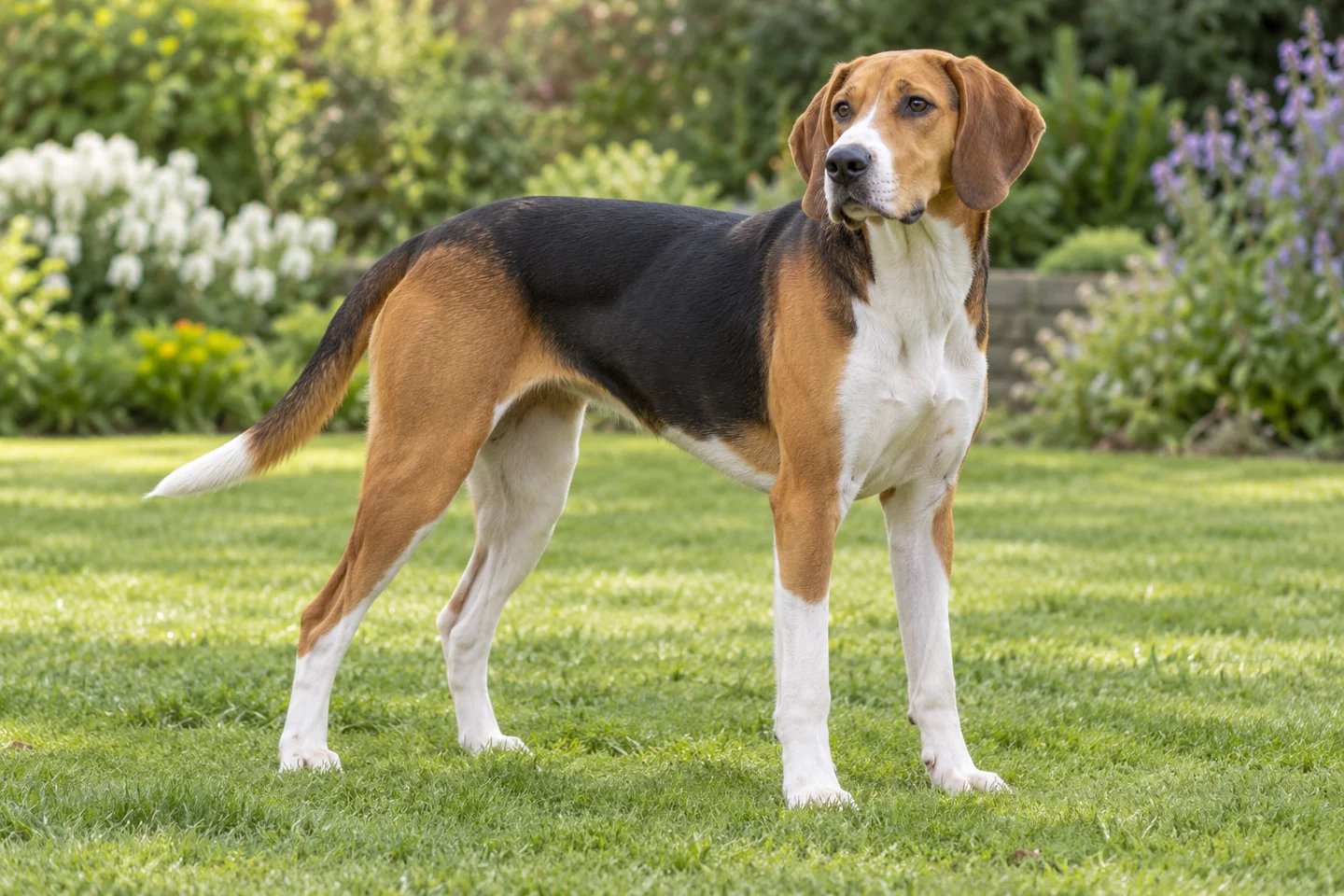
- Origin
- Great Britain
- FCI adult height
- 48–55 cm; 48–50 cm preferred
- Coat
- Smooth hound coat; illustrated tricolor
- Identity
- Distinct from Beagle and English Foxhound
General information for owners. These articles have not been reviewed by a veterinarian. Medical decisions need your dog's history and an examination.
The medium hound between familiar names
The Harrier is a distinct British scent hound, not simply a tall Beagle or a small Foxhound. Similar coloring can make the differences hard to see in a close photograph, particularly without scale. Ask the source to explain the animal's documented identity and actual experience. A recognized breed name supplies context, while a companion decision needs observations about daily behavior. Find out how the dog rests, responds to handling, and manages unfamiliar animals before assuming that a resemblance to another hound predicts the routine you will have.
Plan the ordinary week before choosing a puppy or adult. Secure exploration, teaching, veterinary care, and help during absences need places in the schedule. Check gates and the route from the home to the vehicle. The usual handler should be able to turn away from an interesting scent without relying on exceptional strength. Describe neighbors, working hours, and other animals honestly. Meeting adults and asking about uneventful days can provide more useful information than watching an excited greeting and deciding that enthusiasm answers every question of suitability.
Working context and the current standard
The FCI identifies the Harrier's origin as Great Britain and its use as a scent hound. The current English standard was published in October 2026. It describes a strong but comparatively light hound, distinguishing the outline from a Foxhound. That working context is a reason to discuss scent, voice, and outdoor management carefully. It is not proof that every animal has hunted or that a pet can begin demanding activity without preparation. Ask what the dog and its close family actually do today.
A move from a rural working setting into a house can introduce unfamiliar surfaces, appliances, traffic, and separation routines. A home-raised puppy also needs preparation beyond its first environment. Keep useful information from the source, including familiar cues and rewards, and give new routines a clear beginning. Avoid making the first days a test of every activity you hope to enjoy. Gradual observations help distinguish lack of experience from a persistent difficulty and allow a trainer or veterinarian to offer advice about the actual situation.
Height, coat, and fitting an adult body
The FCI height reference is 48 to 55 centimeters, with 48 to 50 preferred. The coat is smooth and hound colors are recognized; the illustrations use tricolor markings, natural drop ears, and a full tail. They are AI-generated examples rather than documents of real breeding animals. A visual resemblance cannot establish soundness, ancestry, or health. Standard dimensions can guide planning, while the individual's actual measurements should determine equipment and its condition should be evaluated appropriately.
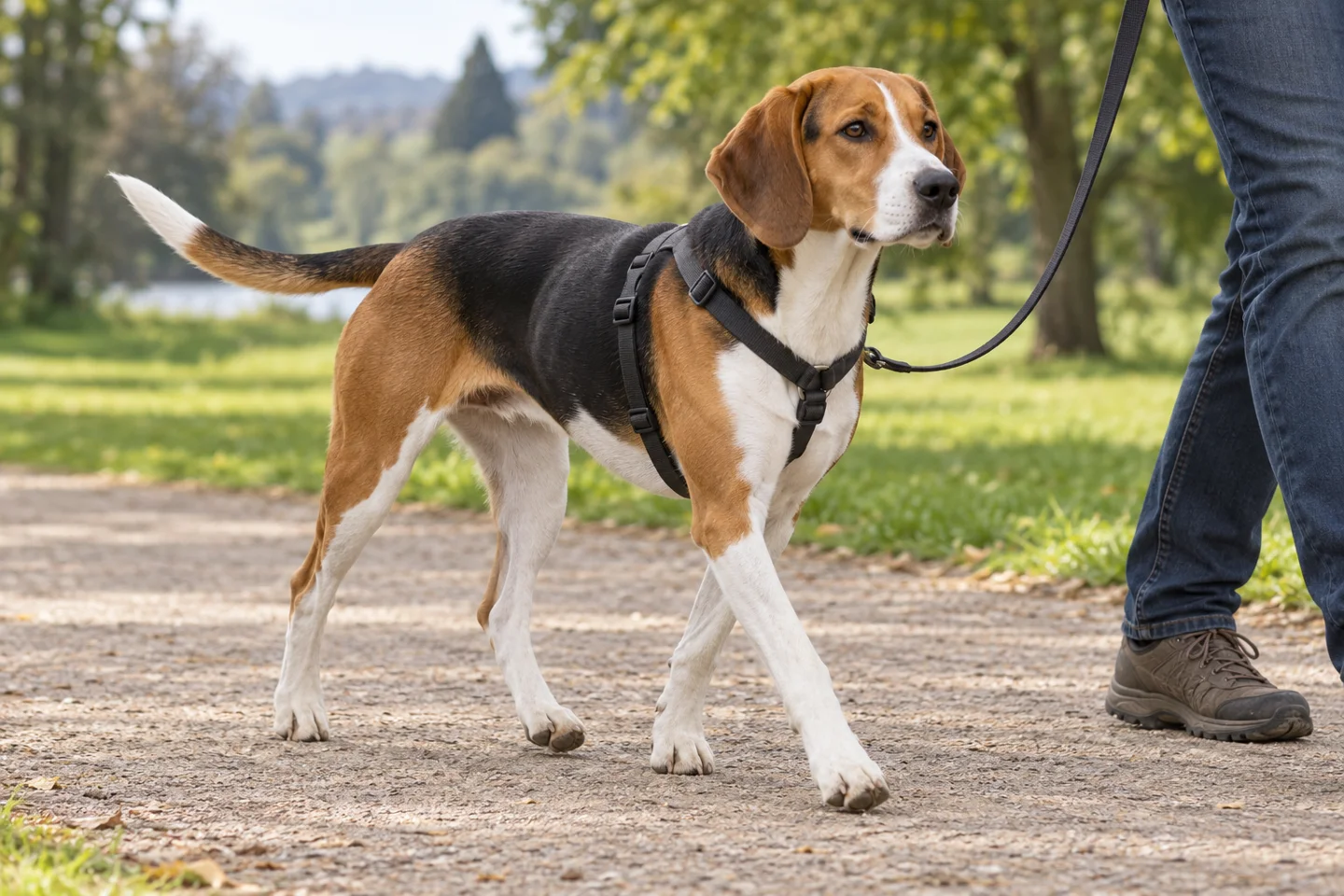
Check the fit of a harness around the chest and behind the elbows, especially as a puppy grows. Ensure the dog can turn and rest in the intended vehicle space and stretch comfortably on its bed. Watch it rise and move in a quiet setting, and ask about any lasting stiffness or reluctance. Do not diagnose from one unfamiliar movement or assume an energetic animal cannot be painful. A veterinary examination can answer questions that a photograph, a pedigree, or a brief greeting leaves uncertain.
Affection and the skills needed between outings
Ask what the individual does while people prepare food, work quietly, or leave the house. A friendly greeting does not establish comfortable solitude or an ability to settle after excitement. A useful source should describe the setting, duration, and recovery in observed examples. Explain the routine you need the dog to manage. That makes it possible to discuss a meaningful match rather than rely on adjectives that could describe very different behavior in different homes.
Provide a protected resting place and predictable access to outside breaks, meals, and company. Reward quiet choices before the animal has to seek attention through activity. Teach a clear end to play and brief comfortable separation while you can observe the response. If settling is repeatedly difficult, review the environment and seek help with possible medical or behavior contributors. Keep a dated account of the pattern. Another carer should understand the same arrangements so care remains usable when the normal owner cannot manage every detail personally.
Training that competes fairly with the surroundings
Start with a pause at an exit, turning with the handler, and returning in a quiet location. Reward clearly and increase distraction gradually. AVSAB recommends reward-based learning and advises against aversive techniques. A hound does not need painful handling to understand a practical request. Choose an instructor who can demonstrate an achievable lesson and explain when to make it easier. Repeating a cue while the dog continues to follow another interest gives the owner noise without necessarily giving the animal useful information.
Use safe control while recall develops. A secure space or suitable long lead can provide exploration without unrestricted access to hazards, provided the handler knows how to avoid tangles. Let a return sometimes lead to another permitted sniff so approaching the owner does not always end the outing. Rehearse the process with regular helpers and preserve reliable barriers around roads and wildlife. Success beside the home is a starting point, not evidence that the same skill will work under every new condition. The management plan should remain clear while learning catches up.
Exercise and secure scent exploration
Choose places where the dog can investigate while you retain appropriate control. Inspect enclosed spaces for gates, gaps, and access to livestock before relying on them. A broad field is not secure simply because it looks peaceful. Build workload from age, current fitness, and clinical needs. Discuss growth, recovery, or a new demanding activity with the veterinary team. Watch movement and rest later as well as enthusiasm at the beginning. A hound keen to continue may need its owner to recognize that conditions or distance should change.
Have a practical alternative when weather or access changes the usual plan. Shorter exploratory walking and suitable learning tasks can form part of a revised day. In heat, adjust timing and intensity, provide water and shade, and stop for concerning signs. Veterinary advice is needed about unusual breathing, weakness, or collapse rather than insisting the animal complete a route. Consider the journey and waiting time too. A comfortable walk followed by an unsuitable period in a vehicle does not make a well-managed outing as a whole.

Voice and the reality of the neighborhood
Hear adult Harriers if possible and ask about the individual dog's vocal behavior. Noise during outdoor excitement, an alert at another animal, and distress during absence need different observations. Describe nearby homes and the hours your household is empty. A medium body does not calculate how far a voice carries or whether a placement suits shared walls. Avoid relying on a promise that one cue, device, or very long walk will eliminate every reason the animal may vocalize.
If a problem appears, note what precedes it and whether the dog can recover. Change repeated triggers where practical and teach an alternative before arousal is high. Persistent distress or a sudden behavioral change warrants professional input, including veterinary assessment where indicated. Punishment aimed only at the sound can leave the cause unaddressed. Make the plan understandable to helpers and ask them to use the same arrangement. A dog receiving contradictory reactions from different people may find the intended routine harder to learn even when everyone thinks they are solving the same problem.
Socialization without a quota of greetings
Ask the clinic about safe early experience during vaccination. Introduce people, surfaces, vehicles, and sounds in small amounts at distances the puppy can manage. Allow investigation, withdrawal, and recovery. An adult with limited or uncertain experience also needs a suitable starting point. A quiet observation can be useful without close contact. Avoid treating a crowded event or a large number of greetings as proof that an outing was beneficial. The important evidence is how the animal responds and what becomes easier afterward.
Prepare cooperative handling at home through brief tasks with rewards and release. A shoulder touch can become a first step toward equipment, foot, or ear checks. Ask strangers to wait before approaching an uncertain dog. Repeated avoidance, freezing, or frantic excitement means the task needs adjustment and perhaps qualified guidance. Increasing restraint until resistance stops does not demonstrate comfort. Keep notes of useful positions and distances so a professional or future carer can begin at an achievable level rather than repeat a stressful interaction with a new person.
Aggression requires a factual account
Record warnings and threatening behavior through the sequence of events. Who approached, what object or place mattered, how much room was available, and what happened next? A snap during a painful touch needs different immediate management from guarding food. Prevent further exposure while advice is sought, and involve the veterinary team for new handling sensitivity or behavioral change. Do not dismiss the event as normal determination or punish a warning to remove the visible sign. Its circumstances contain information needed to prevent a repeat.
VCA explains that aggression toward unfamiliar dogs may have several motivations. Maintain control and distance rather than releasing a barrier to test friendliness. Qualified behavior support can help shape a practical plan for the household. Leave meals undisturbed and teach safe exchanges for appropriate objects. Carers need honest information about bites, snaps, and near misses and the current restrictions. If muzzle conditioning is recommended, ask about fit and gradual teaching and retain the wider safety arrangements. Equipment does not make repeated crowding or unsuitable play an acceptable assessment method.
Children, other dogs, and smaller animals
An adult must supervise children's contact actively and manage equipment during greetings. Give the dog a resting place children cannot enter and protect feeding and chewing. Teach that walking away ends contact. A child should ask for help instead of pulling a collar, removing an object, or attempting to hold an excited hound still. Use comfortable separation when attention is unavailable. Ask about specific experience with children's ages and activities. A calm meeting with one child does not establish safety with every younger visitor or busy household event.
Assess other animals through observed behavior rather than assume a hound's working background guarantees compatibility. Introduce a canine companion where both handlers can leave and preserve separate rest and food at home. Watch whether the quieter animal can withdraw without pursuit. Keep cats and small animals securely protected where safety has not been established. Do not release one as a test of chasing. Discuss practical limits before placement and avoid an arrangement that depends on barriers or supervision the household cannot maintain across ordinary workdays, travel, or illness.
Grooming and checks after an outing
A smooth coat still needs gentle maintenance and skin observation. Check where equipment rests, around feet, and after rough ground. Remove light debris carefully and seek professional help with embedded material, a wound, damaged nail, or persistent irritation. Have suitable tools and nail care demonstrated on the actual dog. Short manageable sessions and a stable surface can help cooperation. A working reputation cannot establish tolerance of every handling procedure, especially if discomfort has changed how the animal responds to an otherwise familiar touch.
Look for ear redness, odor, discharge, repeated head shaking, or sensitivity and arrange veterinary assessment when these signs occur. The cause may differ from a previous episode, so leftover drops should not be applied automatically. Ask the clinic to demonstrate any prescribed cleaning and avoid deep probing with cotton buds. Include appropriate mouth care in the routine. A carer should know which checks are ordinary and which findings mean stop and call. Keeping information consistent is particularly useful when the dog needs a change of handling or a temporary activity restriction.
Health screening with hip and eye records
Ask a Harrier breeder to show the hip and ophthalmologist evaluations named in the AKC's current national-club recommendations. Match the report to the dog's registered identity rather than accepting an unrelated certificate or the phrase vet checked. Have the findings explained if the scoring or terminology is unfamiliar. For an adult rescue, ask what assessments are actually available now. Missing parental information should remain explicit, while a current examination can still help establish appropriate care and identify concerns that need investigation.
Keep the hip and eye questions separate when reviewing records. A comfortable gait in the yard is a useful observation but does not reproduce a formal hip assessment. A photograph with bright-looking eyes cannot substitute for an ophthalmologist's findings. Ask about the date, whether follow-up was advised, and any relevant diagnosis in relatives. These are specific evidence questions rather than a promise that screening prevents every problem. Bring your own observations to routine visits, including changes in vision, reluctance on familiar surfaces, or difficulty rising. Present symptoms need attention even when earlier reports were reassuring.
Clinical changes and preparation for urgent care
Maintain a concise medical history that can travel with the dog. Include significant injuries, current medication, previous treatment, and any restrictions the clinic has given. Note changes you can describe, such as when stiffness began or whether appetite changed alongside activity. The pattern can be more useful than assigning a diagnosis from an online list. A dog that remains interested in an outing can still be painful or ill. Contact the veterinary team when persistent changes affect normal behavior, movement, eating, or drinking.
Know the receiving clinic and how you would transport a dog unable to walk. Breathing distress, collapse, severe injury, suspected poisoning, or repeated unsuccessful retching requires urgent advice. Describe what you see and follow the clinic's instructions instead of waiting for every possible symptom or an online opinion. Leave the same information for sitters, including what they may do if you cannot be reached. Do not give human medication or another animal's prescription while waiting. The practical preparation is access to care and clear records, not confidence that an apparently resilient hound will recover without assessment.
Nutrition, mixes, and the ongoing budget
Use complete nutrition appropriate to life stage and discuss measured portions with the clinic. Include training rewards and review condition rather than copy the intake of another hound. Keep water available and leave precise instructions for helpers. Separate feeding in a multi-animal home helps show what the individual eats. Check current local costs and availability for preventive care, training, transport equipment, grooming assistance, and cover during absences. Understand insurance conditions or another funding arrangement and ask the source about follow-up and return provisions before placement.
Harrier mixes may have documented parents or a speculative name based on tricolor appearance. Clarify which is the case. A visual resemblance cannot guarantee mature size, health, or behavior. When parents are known, ask about relevant family and medical evidence for each; crossing breeds does not remove every inherited risk. For an adult with uncertain ancestry, direct observations of care, handling, and animal responses can still guide a useful decision. Avoid promises of only convenient traits and preserve the uncertainties that the household needs to accommodate realistically.
dogsDating walks with a clear way to leave
Describe the Harrier's pace, preferred distance, and restrictions on greetings or smaller animals in dogsDating. Share an approximate area and arrange a public meeting point, keeping exact coordinates and your home address private. Each adult should manage their own dog. Select a wide route with several exits so the first encounter does not require crowding through a busy gate. Agree beforehand that either handler can shorten the outing when their animal needs more space.
Begin with parallel movement and give both dogs room to investigate without forcing contact. Postpone shared toys and feeding games. Increase distance or finish if either animal stiffens, repeatedly withdraws, or cannot recover from excitement. Record which conditions worked afterward, using that evidence for any next meeting. A quiet familiar walking partner can be a successful match without physical play or home visits. The arrangement should provide manageable company for the actual individuals, rather than require them to perform an idea of friendship the owners chose before seeing their responses.
Sources and editorial notes
Sources checked October 21, 2026. Breed measurements describe reference ranges, not a diagnosis or an individual dog's ideal weight. Images are AI-generated breed illustrations and do not document a particular dog or health condition.
- AVSAB: Humane Dog Training Position Statement
- VCA Animal Hospitals: Food aggression in puppies
- VCA Animal Hospitals: Common emergencies in dogs
- Orthopedic Foundation for Animals: CHIC health screening programs
- VCA Animal Hospitals: Aggression toward unfamiliar dogs, diagnosis
- VCA Animal Hospitals: Grooming and coat care for your dog
- VCA Animal Hospitals: Ear infections in dogs (otitis externa)
- AAHA: Feeding plans for healthy, appropriate weight cats and dogs
- VCA Animal Hospitals: Heat stroke in dogs
- AVSAB: Puppy Socialization Position Statement
- VCA Animal Hospitals: Dog behavior problems, aggression toward children
- Official breed standard: Harrier
- American Kennel Club: Hound Group Health Testing Requirements
Keep getting to know dogs.
Read another guide or return to your dogsDating community.
Explore breed guidesBack to dogsDating