Havanese
A small Cuban companion whose daily care includes sustained coat maintenance, respectful handling, learned independence, and clear hip, patella, and eye records.
How these guides are researched and reviewed
- Origin
- Cuba in the FCI standard
- Adult height
- 23–27 cm; tolerance 21–29 cm
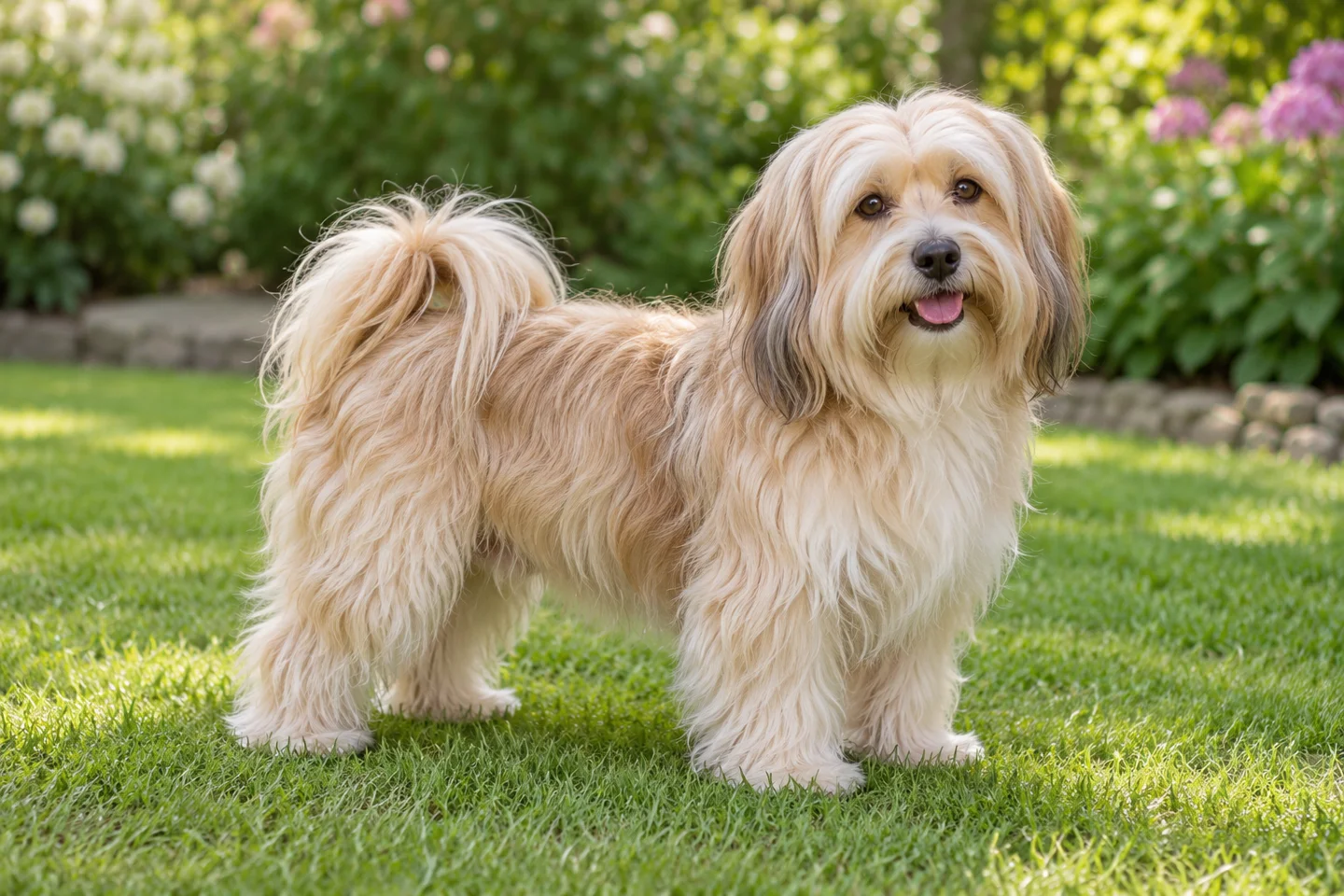
- Illustrated coat
- Long soft cream-and-gold waves
- Care priorities
- Coat access to skin, calm handling, appropriate company and training
General information for owners. These articles have not been reviewed by a veterinarian. Medical decisions need your dog's history and an examination.
A small companion with daily care of its own
A Havanese needs more than a warm place on someone's lap. Its care includes appropriate walks, clear teaching, regular coat work, and experience of comfortable time apart from people. Decide who will provide those things during the ordinary working week and when the household travels. A compact body may fit a smaller home, but floor space alone does not establish suitability. Consider noise, access to safe outdoor areas, grooming help, and the routines of any children or other animals before choosing a puppy or adult.
Meet adults and ask about everyday behavior rather than choose entirely from an appealing face. How does the dog rest while people are busy, respond when its coat is handled, and manage a familiar person leaving? A useful source can describe what has been observed and where experience remains limited. Explain your expectations plainly. An animal can be affectionate and playful while still needing substantial teaching. The household should be prepared for the care of the individual rather than depend on a promise that a small companion is automatically an easy one.
Cuban identity and a bichon background
The FCI identifies Cuba as the Havanese's origin and places it among bichons and related companion breeds. Its historical account links Mediterranean dogs with development in Cuba and later survival of lines outside the island. Keep the distinction between the standard's account and a documented family history for a particular puppy. A recognized breed name does not identify which experiences the dog has had. Ask to see relevant records and discuss how it was raised, handled, and introduced to ordinary household activity.
The Havanese is separate from the Bolognese, Bichon Frise, Maltese, and other small companions, despite some visual resemblance. A long light-colored coat alone cannot establish identity or equivalent screening needs. Confirm what the source means, particularly in a mixed or uncertain rescue. An adult with incomplete ancestry can still be assessed through real dimensions, coat maintenance, and observed behavior. Preserve uncertainty where records are absent instead of inventing an exact pedigree or treating a familiar-looking photograph as proof of parentage.
Adult height, soft coat, and practical equipment
The FCI adult height reference is 23 to 27 centimeters, with a tolerance from 21 to 29. The outline is slightly long, with abundant soft hair and a tail carried over the back. The illustrations use cream and gold waves, natural ears, and a full tail. These AI-generated images provide general context rather than a promise of exact mature size or shade. An individual dog's health, movement, and condition require assessment beyond the surface appearance of a full coat.
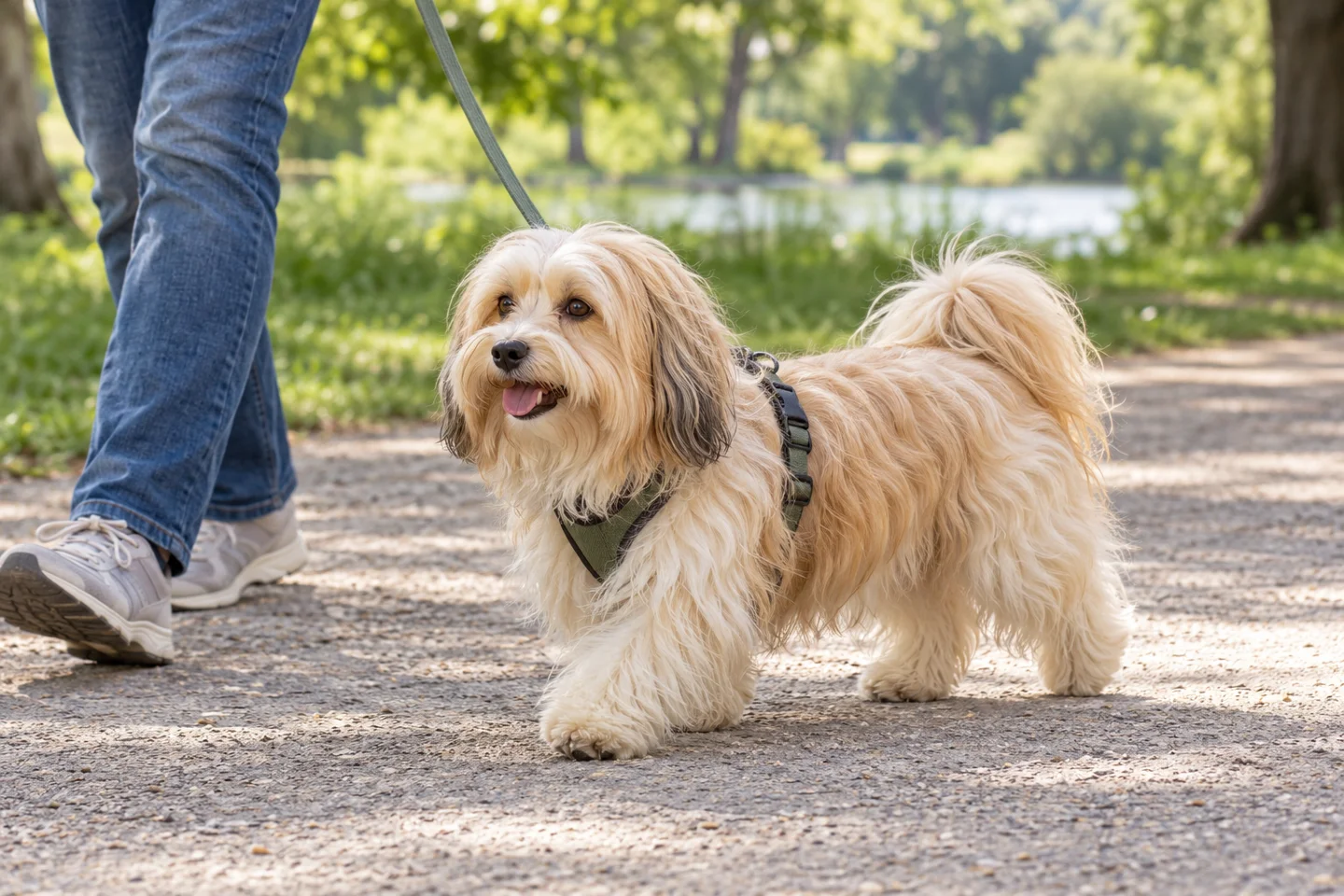
Fit equipment to the body beneath the hair. Check that straps do not trap a tangle or rub behind the forelegs, and review fit during growth. Choose a travel arrangement where the dog can lie comfortably and remain suitably restrained. Consider safe household access without assuming every small animal should be lifted through each task. Teach any necessary handling with support and a clear routine. Ask the veterinary team about limitations if mobility or pain becomes a concern, and make changes according to the individual rather than a general rule about toy breeds.
Company, solitude, and a workable schedule
A companion role does not mean the dog can never learn to rest away from a person. Introduce comfortable independence in small steps while you can observe the response. Provide a quiet resting place and predictable breaks, and avoid making every separation a sudden long event. Ask the source what has already been practiced. A puppy accustomed to constant familiar company may need a different starting point from an adult that has managed brief absences comfortably in a foster home.
If the animal shows persistent distress, obtain advice rather than simply extending the time until it stops responding visibly. Another dog, a crate, or extra exercise cannot be assumed to solve every cause. Keep a dated account of what happens before, during, and after absence. A qualified professional can use that information to plan suitable steps, and temporary care support may be needed. The household should resolve its actual schedule honestly. Expecting an unprepared animal to adapt instantly to a full working day can make the first weeks unnecessarily difficult for everyone.
Training and learning ordinary household skills
Teach useful responses with clear rewards: coming toward the handler, pausing at a door, walking on equipment, and moving to a resting place. AVSAB recommends reward-based methods and advises against aversive techniques. Small size is no reason to skip teaching or to force the dog physically through every task. A capable instructor should show how to begin at an achievable level and how to reduce difficulty when the animal cannot respond. A short successful lesson can be more useful than carrying on until frustration takes over.
Keep expectations consistent among carers. Decide how the dog will greet people and what happens when food is prepared. If one person rewards jumping and another restrains it for the same approach, the intended lesson becomes unclear. Practice outside the familiar room gradually, retaining safe control while recall develops. Being carried past a distraction may be a practical choice on one occasion, but it does not teach the response needed on future walks. Build skills the animal can use comfortably on the ground as well as routines for occasions when lifting is necessary.
Exercise through real exploration rather than constant carrying
Give the Havanese suitable opportunities to walk, sniff, learn, and move on safe surfaces. The amount and intensity should follow age, health, condition, and response afterward. A puppy, fit adult, and older dog need different plans. Ask the veterinary team about growth or medical limits before a major change. Watch later movement and willingness to go out, not only excitement at the beginning. A small animal should not be denied exploration simply because carrying it is convenient, or pushed through an outing chosen for a much larger companion.
Choose conditions carefully in heat and keep water, shade, and a shorter route available. If breathing, coordination, or general condition becomes concerning, stop and contact a veterinarian. Consider the journey and any waiting in a vehicle as part of the outing. A coat trim cannot make unsuitable heat safe by itself. For days when the usual route is unavailable, prepare a manageable alternative with short learning or searching activities. A useful routine can change with the individual instead of depending on one fixed number of minutes for every Havanese.

Aggression and the risk of dismissing warnings
A small dog's growl or snap deserves a serious, factual account. Note who approached, what the animal had, whether it could leave, and any signs of pain. A warning during face handling differs from conflict over a chew. Prevent another exposure while advice is sought, and arrange veterinary assessment for a new change in tolerance of touch or movement. Avoid laughing off the event, punishing the warning, or asking someone to repeat the approach because the possible injury seems smaller than with a large dog.
Use qualified behavior support for a plan matched to the circumstances. VCA explains that reactions toward unfamiliar dogs can have different motivations, so releasing a barrier to test friendliness is unsafe. Keep distance and suitable handling. Teach safe exchanges for objects and leave meals undisturbed. Carers need honest information about bites, snaps, and near misses. If muzzle conditioning is advised, ask about an appropriate design, fit, and gradual introduction. It remains part of a broader plan and cannot make rough lifting, crowding, or repeated provocation acceptable.
Children and respectful handling
An adult must supervise contact and manage lifting. A child should not pick up or carry the dog without appropriate adult control, pull its coat, or follow it into a resting place. Protect meals and chewing from interruption and explain that moving away ends an interaction. Provide a comfortable area children cannot enter. If the supervising person needs to concentrate elsewhere, separate rather than expect the animal to tolerate whatever happens. A companion breed description does not guarantee safety around every child's age, movement, or level of excitement.
Ask about the individual dog's observed experience before placement. Comfortable behavior with older children does not establish readiness for a toddler. Plan quiet activities suited to both animal and child, with the adult responsible for the arrangement. Encourage children to ask for help instead of removing an object or holding a collar. If a warning occurs, create space, record the event, and seek informed advice. The aim is to change the conditions that caused difficulty and prevent repetition, rather than make either the child or dog prove they can manage the same interaction again.
Other dogs, cats, and differences in size
Introduce another dog in a setting where both handlers can move away and the smaller animal is not trapped. Begin quietly and preserve access to separate rest, feeding, and carers at home. Play needs observation even when both dogs initially seem interested. A much larger partner can overwhelm or injure a smaller dog accidentally. If one repeatedly tries to withdraw, interrupt and revise the arrangement. An enthusiastic approach from the larger animal should not determine whether the Havanese must continue contact.
Cats and other species need separate assessment. Ask what the source has observed and maintain protected routes and spaces where necessary. A calm moment in one setting cannot guarantee every response to fast movement or shared resources. Avoid forcing the animals together for a photograph or using unrestricted access as the first test. A successful initial walk or greeting provides limited evidence, while living together introduces more conditions. If the household cannot maintain necessary supervision or separation, resolve that practical issue before accepting a placement that could put an existing animal at risk.
Grooming through soft hair to the skin
Part the coat and work gently through it, paying attention behind ears, beneath equipment, and where limbs move. Brushing only the outer surface can leave tangles closer to skin. Ask a knowledgeable groomer to demonstrate tools, handling, and a maintenance schedule for the actual coat. A companion trim may make routine work more manageable, but it does not remove the need to inspect. Tight mats need skilled help rather than scissors used against an unseen surface. Painful pulling can turn an ordinary care task into a lasting difficulty.
Introduce grooming before a demanding session becomes necessary. Use a stable nonslip surface and teach a comfortable position in short steps with rewards and pauses. Keep moisture and trapped material around the beard and feet under observation. Irritation, persistent odor, hair loss, or new sensitivity needs veterinary advice rather than stronger products or more force. Explain your practical goals to the groomer and ask what you should maintain between appointments. A useful plan remains achievable during an ordinary week and can be continued by another competent carer when you are away.
Mouth, ears, nails, and cooperative checks
Ask your veterinary team to demonstrate a suitable mouth-care routine and what changes should be reported. Notice altered chewing, dropping food, bad breath, or reluctance to accept familiar face handling. Those observations are more useful than assuming a small mouth always looks the same. Build brief lip and foot touches into comfortable moments, with a clear pause available. Nail care should use an appropriate method and competent help when needed, rather than wait until an urgent trim requires a prolonged struggle.
Observe ears for redness, odor, discharge, scratching, or repeated head shaking. An episode needs assessment of its cause; old medication is not automatically suitable. Have prescribed cleaning demonstrated and avoid pushing cotton buds into the canal. A new resistance to grooming or lifting may reflect pain, so do not assume every objection is a training failure. Keep notes about affected areas and current instructions. A sitter or groomer needs that information before handling begins, especially where the animal has a temporary restriction or an appointment pending for investigation.
Health screening through hip, patella, and eye evidence
The AKC's current national-club recommendations for Havanese list hip evaluation, patella evaluation, and ophthalmologist evaluation. Ask a breeder to show the identified records and explain the actual findings. These assessments address different structures, so one certificate should not be presented as covering the whole list. Check which dog the report concerns and when it was performed. If an adult rescue has no parental records, current examination remains worthwhile, but missing ancestry information should stay explicit rather than be filled with assumed clearances.
Use the paperwork to organize questions for your own veterinarian. Was follow-up advised, has the dog developed a related problem, and are there significant diagnoses in close relatives? A lively puppy walking around a room cannot reproduce a formal assessment, while an old reassuring result cannot explain a new clinical sign. Discuss changes in vision, gait, or comfort in ordinary settings and keep copies of specialist findings. Screening information helps reduce particular uncertainties. It does not promise that every future condition has been excluded or remove the need for continuing clinical care as the animal grows older.
Food, ownership costs, and health changes
Choose complete nutrition appropriate to life stage and discuss measured portions with the clinic. Include small training rewards in the total rather than assume their size makes them irrelevant. Review body condition beneath the hair and keep water available. Persistent changes in eating, drinking, weight, or digestion need assessment rather than repeated product changes without a plan. Obtain current local estimates for preventive care, training, grooming, transport equipment, and cover during absences. Regular coat work deserves its own budget and a realistic place in the household schedule.
Review insurance terms or another way to meet urgent expenses and ask the source about follow-up and return provisions. Keep clinic details, medication information, and a clear transport arrangement for carers. Collapse, breathing distress, severe injury, suspected poisoning, or repeated unsuccessful retching calls for prompt veterinary advice. Do not give human medication while waiting for an online explanation. An apparently quiet dog can still be ill or painful, so meaningful changes in normal activity deserve attention. Sustainable care includes the time and funding for necessary assessment, not only ordinary feeding and affection.
Mixes and dogsDating company suited to the individual
A Havanese cross may be described by another known parent or an informal mixed-breed name. Such names do not create a recognized Havanese variety or guarantee a particular coat, mature size, health, or temperament. Clarify documented ancestry and request relevant evidence for both known parents. Crossing breeds does not remove every inherited condition. An adult rescue with uncertain parentage can still be assessed through its actual care needs and behavior. Avoid promises of only convenient traits or no grooming simply because a puppy has mixed ancestry.
On dogsDating, describe the animal's preferred pace, size considerations, and comfort with greetings. Share an approximate area, keep exact coordinates and your home address private, and use a public route with room to leave. Each adult should manage their own dog. Begin with parallel walking and postpone shared toys or food. Increase distance or finish if either animal withdraws repeatedly or cannot settle. A calm familiar walking companion can be a useful match without rough play. The arrangement should fit both individuals, including the smaller dog's ability to pause and leave comfortably.
Sources and editorial notes
Sources checked October 21, 2026. Breed measurements describe reference ranges, not a diagnosis or an individual dog's ideal weight. Images are AI-generated breed illustrations and do not document a particular dog or health condition.
- AVSAB: Humane Dog Training Position Statement
- VCA Animal Hospitals: Food aggression in puppies
- VCA Animal Hospitals: Common emergencies in dogs
- Orthopedic Foundation for Animals: CHIC health screening programs
- VCA Animal Hospitals: Aggression toward unfamiliar dogs, diagnosis
- VCA Animal Hospitals: Grooming and coat care for your dog
- VCA Animal Hospitals: Ear infections in dogs (otitis externa)
- AAHA: Feeding plans for healthy, appropriate weight cats and dogs
- VCA Animal Hospitals: Heat stroke in dogs
- AVSAB: Puppy Socialization Position Statement
- VCA Animal Hospitals: Dog behavior problems, aggression toward children
- Official breed standard: Havanese
- American Kennel Club: Toy Group Health Testing Requirements
Keep getting to know dogs.
Read another guide or return to your dogsDating community.
Explore breed guidesBack to dogsDating