Hellenic Shepherd Dog
A large Greek flock guardian whose home needs reliable boundaries, manageable visitor routines, comfortable care, and careful animal introductions.
How these guides are researched and reviewed
- Origin
- Greece; Ellinikos Poimenikos
- National minimum height
- Males 66 cm; females 60 cm
- National minimum weight
- Males 40 kg; females 32 kg
- Illustrated example
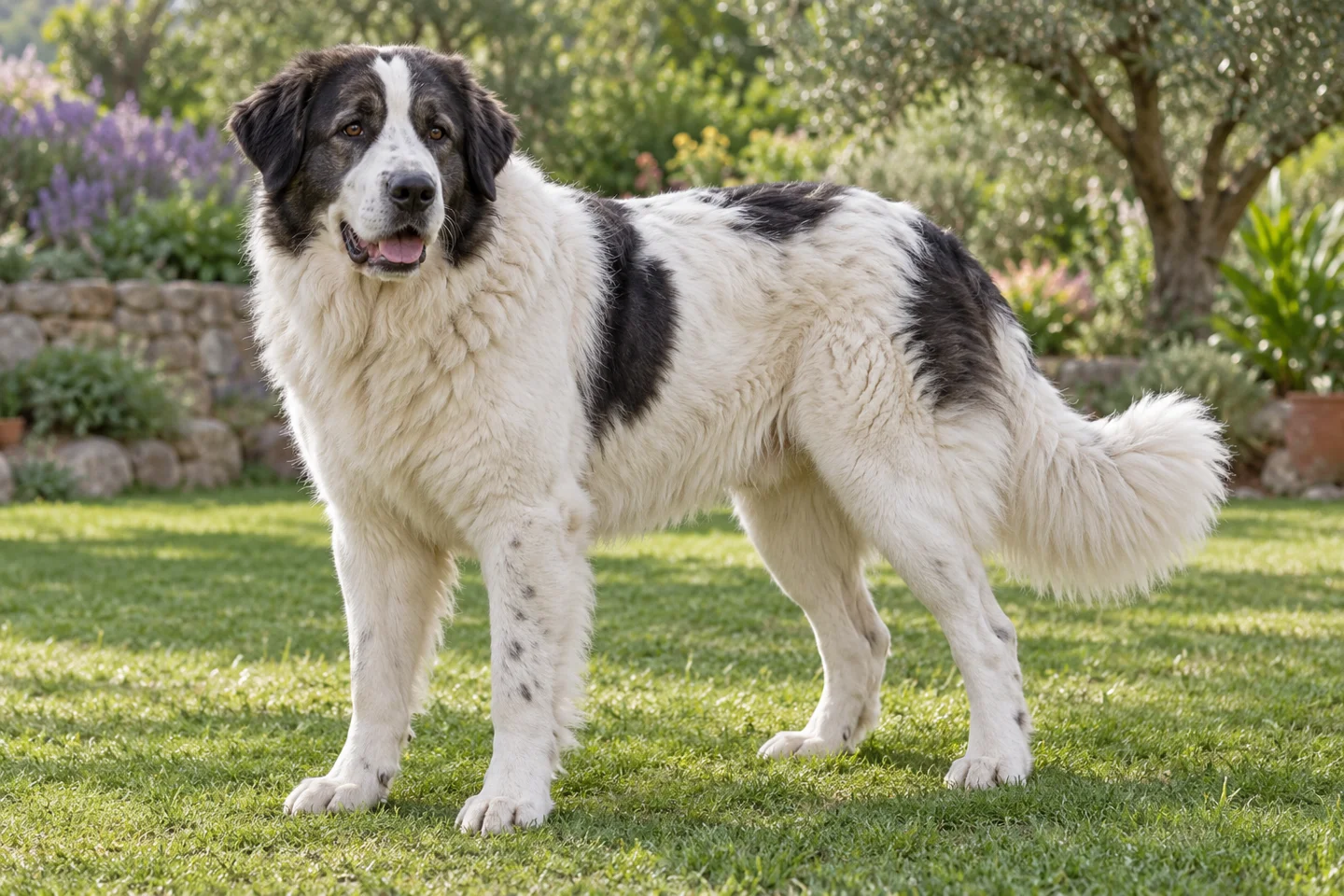
- White and black, natural ears and full tail
General information for owners. These articles have not been reviewed by a veterinarian. Medical decisions need your dog's history and an examination.
A flock guardian in a companion home
The Hellenic Shepherd Dog is a large Greek livestock guardian. A suitable home needs a workable plan for boundaries, visitors, veterinary care, and life around other animals. Start with those arrangements before choosing a puppy. A broad garden is useful only if the people responsible can manage its gates and provide daily care. Consider who enters your property during an ordinary week, including delivery drivers, tradespeople, and visiting children. The dog will experience those arrivals even when the person who usually handles it is absent.
The Kennel Club of Greece publishes the breed under the Greek name Ellinikos Poimenikos. ARCTUROS describes its long use with mountain flocks and runs a breeding and placement programme for livestock farmers, started in 1998. That work gives context for understanding the dog. It does not establish that every puppy can guard animals safely without preparation or that every domestic setting suits the breed. Ask about the actual parents, rearing environment, and placement expectations. A dog raised around livestock may need substantial help learning the routines of a busy residential street.
Size, coat, and the illustrated example
The Greek national description gives minimum heights of 66 cm for males and 60 cm for females, with minimum weights of 40 kg and 32 kg respectively. These are reference minima, not a feeding target or a reason to select the largest available puppy. The description includes a dense double coat in medium and longer forms and several colors. Our illustrations show a white-and-black dog with natural hanging ears and a full bushy tail. They illustrate one example and cannot establish ancestry or clinical soundness.
Measure the adult you are considering wherever possible. Check that it can lie comfortably in the intended vehicle space, turn in a hallway without being crowded, and reach a quiet resting area. If an injury prevented it from walking, you would still need a transport arrangement. Ask your veterinary team how to plan assistance rather than trying an improvised lift in an emergency. Fit equipment to the actual neck and chest, with a second check after changes in coat or condition. An attractive picture supplies none of those measurements.
Temperament and information from the source
A guardian background makes it especially useful to ask what an individual does when someone approaches its space. Request examples from daily life: a familiar visitor arriving unexpectedly, a person walking past a fence, or an adult entering to provide care. Words such as loyal or independent leave too much unspecified. Ask how the dog recovers after the arrival and what handling is needed. A household should understand both the observed behavior and the precautions already in use before agreeing to a placement.
Meet the dog in more than one manageable situation when the source can arrange it safely. Notice how instructions are given and whether the animal has a comfortable place to retreat. Avoid asking a breeder or foster carer to provoke a reaction for your assessment. Discuss what support is available after adoption and which circumstances would make the placement unsuitable. A candid conversation about limitations is useful evidence of how the source works. It also helps the household decide whether it can maintain the proposed arrangements during illness, travel, or a change in routine.
Gates, boundaries, and arrivals
Draw the route a visitor follows from the road to your door. Mark the points where the dog could reach that person or slip into an open vehicle entrance. Then decide how each point will be secured. A two-stage entrance can help keep an open outer gate from becoming immediate access to the dog. Every household member needs to understand which barrier is closed before the next one opens. If your arrangements depend on somebody remembering to catch the collar at the last moment, revise them before placement.
Make a separate plan for workmen and deliveries. Tell visitors where to wait, move the dog into a comfortable secured area before access is needed, and allow enough time to do that without rushing. Do not ask a stranger to walk past an uncertain dog because you are confident it recognizes good intentions. Use signs and clear instructions where appropriate, but remember that a notice cannot physically prevent contact. Check the system after changes to fencing, outdoor storage, or vehicle parking. A newly placed object can alter how easily an animal reaches an entrance.
Training for the jobs a household needs
Prioritize skills that make ordinary care possible. Moving behind a gate, coming away from an entrance, standing comfortably for a harness, and resting while another person moves about are practical starting points. Teach each in a quiet arrangement and reward small successes. Introduce one extra difficulty at a time. If a dog can move to its bed while the house is empty, do not assume the same cue will work during the first visit from a noisy group. Arrange the environment so the lesson remains achievable.
AVSAB recommends reward-based training and advises against techniques that cause pain or fear. Choose an instructor who can explain how a lesson will be taught and what will happen if the dog struggles. A guardian's strength does not make physical confrontation a useful teaching plan. Rehearse handling and barriers before an urgent situation. Keep instructions consistent across carers, and write down restrictions plainly. If only one person can manage the dog, obtain help expanding safe care options while that person is still available to participate.
Socialization with control over distance
Discuss a puppy's exposure plan with your veterinary team while its preventive programme develops. Safe socialization involves experience at a manageable level, with room to withdraw. Sitting well away from a quiet car park may offer more useful learning than being surrounded by people who all want to touch the puppy. Watch whether it remains able to explore, take a break, and respond to familiar help. End an encounter when the animal is repeatedly avoiding it. Staying in the situation longer does not automatically make it educational.
An adult arriving from another setting also needs time to learn what happens in your home. Start with clear routines and a few predictable people. Introduce unusual equipment or household activity in stages, and keep a quiet area available throughout. Record patterns that recur so a professional can help you adjust the plan. If the dog repeatedly reacts at a specific doorway, look at the approach, noise, space, and timing. Calling the response a breed trait does not tell you which practical change would make that doorway easier to manage.
Aggression, bites, and a factual incident record
A Hellenic Shepherd label does not establish an individual's safety. Treat a snap, bite, threatening approach, or repeated stiffening as a reason to change the immediate arrangement. Keep people and animals away from the difficult situation while professional advice is sought. Write down what preceded the event, where everyone was, and what happened once distance increased. Include near misses. A later carer needs to know that an incident occurred even if you believe the animal had an understandable reason for reacting.
New or worsening sensitivity to touch calls for veterinary assessment. Pain can affect behavior, and the clinical team should know about handling concerns before the appointment. Avoid punishing warning signals or recreating the event to show that it has disappeared. A veterinary behavior professional can help assess risk and plan management. Any recommended muzzle needs appropriate fit and gradual conditioning; it cannot justify forcing an animal into a meeting it cannot handle. Some situations may require continuing separation. A useful plan must be realistic for every adult responsible for maintaining it.
Children and the right to rest
Give the dog a resting place that children cannot enter, and teach adults to use separation before attention is divided. Children should leave a dog alone while it eats, sleeps, or works on a chew. Do not let a child hold a collar to stop a large dog moving, take food away, or follow it after it has withdrawn. An adult must supervise contact actively rather than assume that being in the same room is enough. If the adult needs to cook, answer a door, or leave briefly, separate them first.
When assessing an adult dog, ask exactly what contact with children has been observed. Ages, activity, setting, and management matter. Calm behavior beside one older child cannot predict a response to several running toddlers. Plan visits with the child's carer and retain an easy way to end contact. Avoid staged photographs that require a child to hug the dog's head or lie across it. A comfortable household relationship develops through repeated ordinary experiences in which adults protect the needs of both the child and the animal.
Livestock, household pets, and chasing
Previous experience with one flock does not establish safe behavior around every animal. Ask what species, ages, and activities a dog has lived with and how introductions were managed. A household cat, visiting small dog, and newly born farm animal present different situations. Prepare secure separation before arrival and use experienced guidance for livestock work. Never discover an animal's response by allowing an uncontrolled chase. The smaller animal also needs escape and protection from contact while you assess whether coexistence is feasible.
If another dog lives at home, agree on a gradual introduction with a professional when the history raises concerns. Arrange separate food and sleeping areas and avoid crowding animals together at a gateway. Observe their ability to leave one another alone, as well as any interest in greeting. Shared space should not mean that one dog loses access to its resting place or carer. Keep the plan adjustable. Two animals that can walk near one another outdoors may still need careful management around valued items or narrow passages indoors.
Exercise with purpose and recovery
Plan movement around the individual dog's age, clinical findings, and response afterward. A short exploratory route with enough space may be more suitable than a crowded running event. Growing puppies and dogs returning from injury need their own advice about activity. Avoid calculating an exercise quota from a working description of the breed. Watch how the dog rises after resting and whether it remains comfortable on the next outing. Report persistent stiffness, reluctance, or altered gait rather than trying to overcome those signs with more exercise.
Outdoor time also requires company and oversight. A large fenced area can offer opportunities to explore, but it does not explain who notices an injury or helps the dog cope with an unusual event. Build quiet recovery into the day and keep a practical alternative for poor weather. In hot conditions, reduce demands before signs of distress appear and provide access to water and shade. If the dog struggles with heat, stop activity and contact a veterinarian promptly. A thick coat and a history of outdoor work cannot certify tolerance of a particular day's conditions.
Grooming a double coat with comfort
Learn to inspect beneath the surface of the coat. Part the hair in small areas and check places that rub against equipment or remain damp after activity. A full outer coat can conceal skin trouble or tangles, particularly around moving limbs and behind the ears. Ask a groomer to demonstrate tools and technique on your dog. Work gently and leave tight mats to skilled help. Avoid using scissors close to hidden skin, where a sudden movement or a fold drawn into the tangle can lead to injury.
Introduce the care position separately from a long grooming session. Standing on a secure surface, accepting a brief touch, and pausing while someone checks a foot are useful lessons in their own right. Keep supplies accessible so care does not depend on catching a dog that is already tired or wet. An unusual ear smell, discharge, head shaking, or sensitivity needs veterinary advice. Ask about any prescribed cleaning routine and avoid probing the ear canal. Record recurring skin or ear problems so future treatment begins with a usable history.
Feeding and body condition beneath the hair
Ask your veterinary team to help choose an appropriate complete diet and starting amount. The coat can make visual judgments about condition difficult, so learn how to assess the body beneath it. Measure meals and account for rewards used in training. AAHA recommends that treats and other extras provide no more than ten percent of total calories, with complete balanced food supplying the rest. A standard minimum weight should not become a target to reach through larger portions regardless of the individual's condition.
Make the arrangement suitable for everyone who feeds the dog. Write down the food and amount, identify any prescribed restrictions, and explain how rewards are counted. Feed apart from other animals when needed and allow the dog to eat without children approaching. Avoid testing tolerance by repeatedly lifting the bowl. If appetite, weight, drinking, or digestion changes persistently, arrange assessment. A dog that spends much of its time outside still needs someone who can describe what it has actually eaten and whether its ordinary habits have changed.
Health records and the limits of available data
The sources used here do not establish a universal health-testing panel or reliable disease-prevalence figures for this breed. Ask the relevant national organization and the source of a proposed dog which recommendations they follow and why. Request identifiable results and discuss important diagnoses in relatives. A claim that working animals are naturally healthy does not replace clinical evidence. Equally, copying a list of disorders from another large guardian would not establish that those conditions have the same frequency in Hellenic Shepherd Dogs.
Have the records interpreted alongside a current examination. Ask what each assessment covers, whether findings need follow-up, and what useful information remains unavailable. With an adult whose parental history is unknown, keep the gap explicit and build care around present needs. Store reports so another clinic can see the actual findings later. New weakness, unusual fatigue, altered movement, persistent skin trouble, or changed tolerance of handling warrants attention even after reassuring earlier results. Breed information should help you frame questions; it cannot determine the cause of an individual animal's symptoms.
Emergency access and poison prevention
ARCTUROS identifies poisoned baits as a threat to Greek shepherd dogs. For an owner, the practical response is to supervise access, remove opportunities to scavenge where possible, and know how to reach veterinary care. If ingestion is suspected, call a veterinarian immediately and explain what was found and when. Do not delay while waiting for unmistakable symptoms or try an improvised remedy. When safe, keep packaging or a photograph for the clinician without exposing people or other animals to the material.
Prepare transport and reception arrangements for other emergencies too. Tell the clinic about the dog's size, mobility, and handling needs. Breathing difficulty, collapse, serious injury, or repeated unsuccessful attempts to vomit need urgent contact. Decide in advance who can help if the usual driver is absent. Keep contact details accessible to carers and provide the medical record when traveling. A written plan is useful only if the people expected to follow it know where the vehicle restraint and relevant equipment are kept and can use them safely.
Mixes, names, and placement decisions
Hellenic Shepherd, Greek Shepherd, and Ellinikos Poimenikos are names that may appear in discussions of this dog. A seller still needs to explain the identity and evidence for the particular animal. A shepherd mix is not a recognized new variety merely because a guardian-looking parent is suspected. Ask what parentage is documented and what is inferred from appearance. For a mixed adult, assess observed behavior and actual dimensions. Leave more room for uncertainty when selecting a puppy with incomplete parental information.
Look at the complete care commitment before paying a fee. Obtain current local estimates for food, training support, veterinary care, grooming help, secure transport, and care during absences. Read any contract and discuss support if the placement proves difficult. Conservation of a working population and suitability for your home are separate questions that both deserve honest answers. A desire to help a breed does not make an unsuitable placement workable. Choose from the care you can provide consistently, including the less convenient parts of daily management.
dogsDating meetings with enough space
Describe your dog through observed needs in its dogsDating profile. Explain how much space it needs, which settings are manageable, and whether professional advice currently limits introductions. Keep exact home coordinates and your home address private. Use an approximate area when finding potential walking partners, then agree on a public location where both adults can move away easily. A narrow gate, busy cafe entrance, or gathering of loose dogs leaves too few options for an uncertain first meeting.
Each adult should handle their own dog. Begin with walking in the same direction at a comfortable distance, with no expectation of immediate physical contact. Stop or increase space if either animal becomes tense, repeatedly tries to leave, or cannot disengage. Leave shared food and toys out of the first outing. Afterward, discuss what you actually observed and adjust the next plan. A calm walk without greeting can be worthwhile. If a history of bites or serious threats makes a casual meeting inappropriate, follow the professional management plan instead of using a social match as a test.
Sources and editorial notes
Sources checked October 21, 2026. Breed measurements describe reference ranges, not a diagnosis or an individual dog's ideal weight. Images are AI-generated breed illustrations and do not document a particular dog or health condition.
- AVSAB: Humane Dog Training Position Statement
- VCA Animal Hospitals: Food aggression in puppies
- VCA Animal Hospitals: Aggression toward unfamiliar dogs, diagnosis
- VCA Animal Hospitals: Grooming and coat care for your dog
- VCA Animal Hospitals: Ear infections in dogs (otitis externa)
- AAHA: Feeding plans for healthy, appropriate weight cats and dogs
- VCA Animal Hospitals: Heat stroke in dogs
- VCA Animal Hospitals: Common emergencies in dogs
- Orthopedic Foundation for Animals: CHIC health screening programs
- AVSAB: Puppy Socialization Position Statement
- VCA Animal Hospitals: Dog behavior problems, aggression toward children
- Kennel Club of Greece: Ellinikos Poimenikos national breed description
- ARCTUROS: Greek shepherd dog breeding and placement programme
- ARCTUROS: Greek shepherd dog, working background and threats
Keep getting to know dogs.
Read another guide or return to your dogsDating community.
Explore breed guidesBack to dogsDating