Ibizan Hound
The Podenco Ibicenco is a lean Balearic hunting dog whose life as a companion needs secure boundaries, cooperative training, suitable exercise, and informed health screening.
How these guides are researched and reviewed
- Origin
- Spain; Balearic Islands
- Adult standard size
- Males 66–72 cm; females 60–67 cm
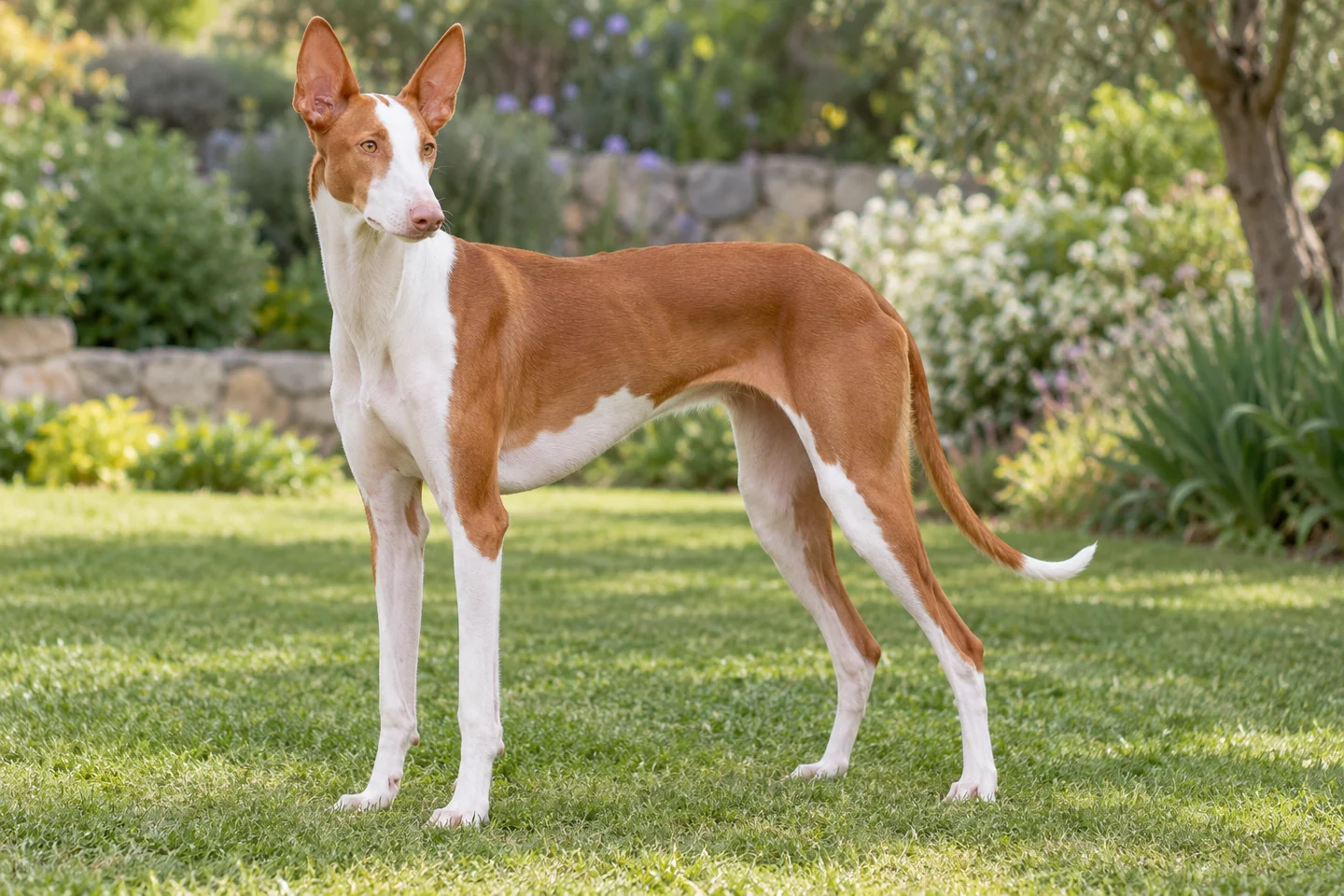
- Illustrated coat
- Smooth red and white
General information for owners. These articles have not been reviewed by a veterinarian. Medical decisions need your dog's history and an examination.
The Ibizan Hound and its Balearic identity
The Ibizan Hound is the Podenco Ibicenco, a hunting breed from Spain's Balearic Islands. Those names refer to the same breed, rather than a podenco cross that needs a separate article. Its tall ears and red-and-white outline are recognizable, but identity should come from records and a knowledgeable source. Ask what the dog does during an ordinary day, how it responds to moving animals, and which household situations it already understands. An expressive photograph answers none of those practical questions.
The FCI describes rabbit hunting that draws on scent and hearing as well as sight. Calling the animal simply a visual chaser can therefore leave out useful information about its interests. The standard includes ancient-origin stories, some expressed as possibilities. Such accounts should not be turned into a claim that every modern dog is an unchanged survivor from an ancient painting. For a companion home, current family behavior, early experiences, and the support offered by the breeder or rescue provide more actionable evidence than a dramatic ancestry narrative.
Adult height and a distinctive head
FCI height references are 66–72 cm for males and 60–67 cm for females. The breed has a long fine head, flesh-colored nose, light amber eyes, and mobile upright ears. Its body is lean and long-legged, with a long tapering tail. The illustrations use a smooth red-and-white example. A healthy individual should be assessed on its own condition and function, not forced to match a photograph. AI illustrations cannot establish pedigree, proper movement, or freedom from a medical problem.
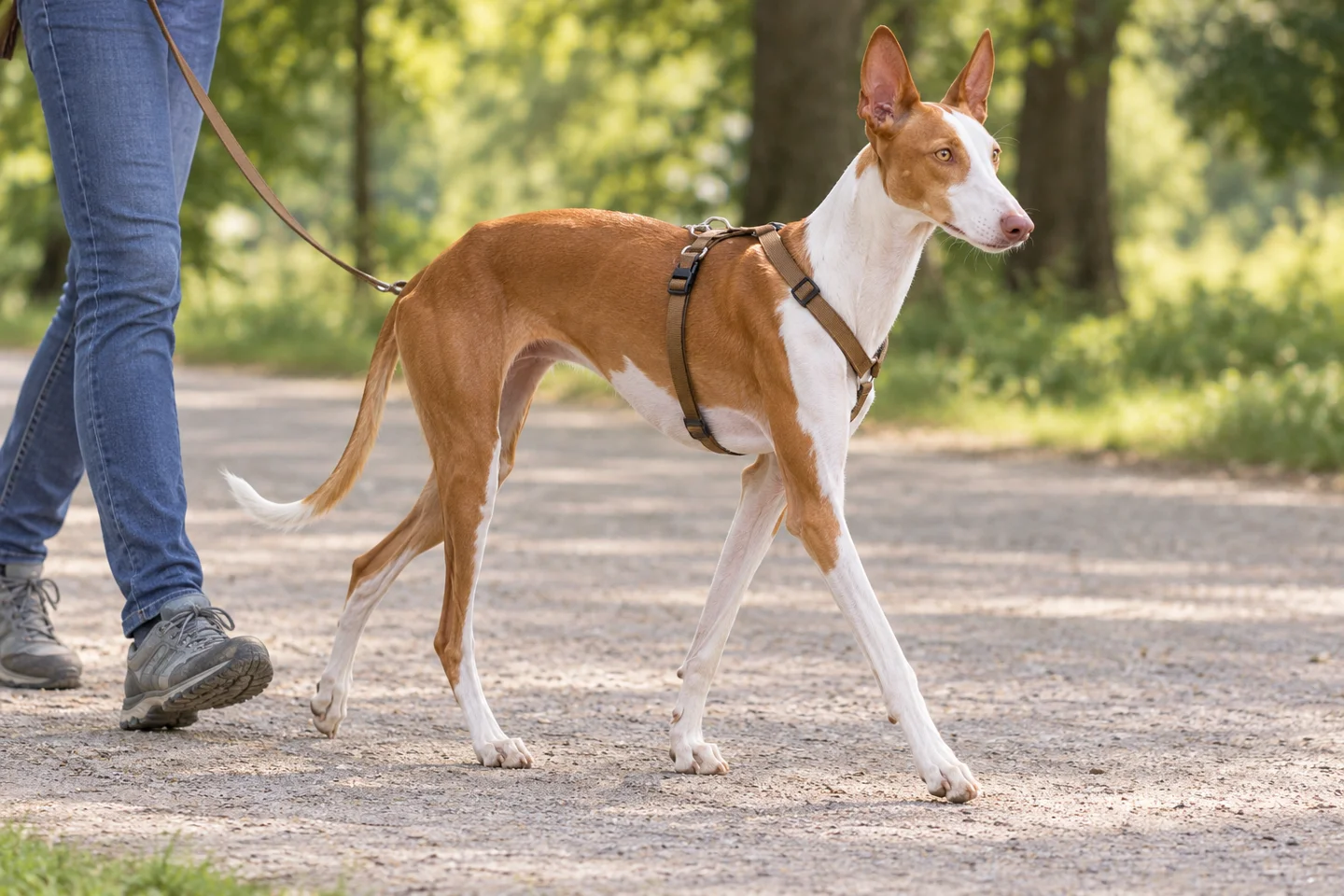
Check equipment around the narrow head and deep chest with help from someone familiar with fitting. Ensure the dog cannot back out when startled without making straps uncomfortably tight. Measure its travel area for standing, turning, and resting, and plan the door-opening sequence at a destination. A tall dog can leave a vehicle quickly if restraint is removed too early. Explain those steps to every carer. The breed's light appearance should not obscure the practical strength and reach of an adult when it decides to move toward something interesting.
Coat varieties and grooming needs
The FCI standard describes smooth, rough, and long hair. A rough-coated Ibizan is not automatically an Ibizan crossed with a terrier, and smooth illustrations should not erase the other coats. Ask which variety a puppy comes from and what the adults look like. Hair texture changes practical maintenance, while the broader needs for safe activity, handling, and veterinary care remain individual. Avoid buying a dog solely because a particular coat looks unusual or because someone promises that one variety will solve allergy concerns.
For a smooth coat, use gentle tools to remove loose hair and inspect skin after outdoor activity. A rougher coat may trap different debris and need advice from a groomer familiar with the variety. Check where equipment rubs, around the feet, and any area the dog repeatedly licks. Seek clinical advice for persistent irritation, hair loss, or tenderness. Introduce toweling and brushing in brief cooperative sessions. The fact that a coat appears low-maintenance does not mean the animal can be held through uncomfortable procedures without preparation or that skin changes can be ignored.
Boundaries should be assessed before exercise
Choose secure environments deliberately. Check the complete perimeter, gates, and nearby distractions before allowing freer movement. A previous dog's use of a field does not prove it is suitable for an agile Ibizan. Speak with experienced owners about the actual enclosure and keep control where its suitability is uncertain. Avoid testing recall beside a road or small animal to discover whether the boundary plan is adequate. The cost of a failed experiment can be far greater than the inconvenience of choosing another activity.
Inside and around the house, manage access to entrances and tempting objects. A dog with long legs can reach surfaces that a smaller previous pet could not. Store food and unsafe items securely and teach an alternative place to wait while you work. Check that visitors understand the gate routine. Use physical arrangements to support learning rather than relying on everyone remembering to react quickly. A practical setup should work during deliveries, bad weather, and rushed departures, when people are least likely to manage an improvised instruction successfully.
Training for attention in a moving world
Begin with easy responses: orienting to the handler, moving a short distance with a cue, and standing while equipment is fitted. Reward success clearly. Add distraction in small steps so the dog can still think and respond. If a running animal absorbs all attention, move farther away and choose an easier exercise. Repeating a cue without changing the situation does not supply the learning stages that are missing. A good instructor can help set workable distances and demonstrate safe use of equipment in suitable locations.
AVSAB recommends reward-based methods for teaching and behavior change. Avoid physical confrontations and punishment presented as a necessary way to manage an independent hunting dog. Practice a return cue in a secure setting and make arrival worthwhile. Do not assume a response at home is ready for an open area with strong distractions. Keep a record of places and conditions where the skill works. Another walker needs that information before taking responsibility, especially if they are accustomed to a different dog whose outdoor choices are easier to predict.
Exercise and suitable outlets for investigation
Plan a mixture of controlled exploration and appropriate movement rather than relying on one spectacular sprint. A quiet walk can include useful sniffing, changes of direction, and brief lessons. A suitable enclosed area may add freer activity when conditions and the individual allow it. Sport requires separate instruction and conditioning. Ask your veterinarian about structured running during growth, after injury, or when increasing work. The breed's hunting history is not a ready-made exercise prescription for every pet.
Watch how the dog feels afterward. Reluctance to rise, a changed stride, persistent licking of a limb, or unusual fatigue deserves attention. Adjust for weather, footing, and access to water. A short coat and Mediterranean origin do not establish that a dog can exercise safely in any heat. Stop if it struggles and obtain urgent veterinary guidance for concerning heat-related signs. Keep a practical alternative for days when the original outing is unsuitable. Activity should remain sustainable for the household and comfortable for the animal, including during an ordinary week when plans change.

Aggression and honest interpretation of warnings
An Ibizan's lean body or gentle expression cannot certify that it will never bite. If it guards an object, stiffens when approached, snaps during handling, or threatens another dog, make space and prevent repetition while arranging help. Record who approached, what was present, and whether the animal could leave. Avoid treating a warning as a request to demonstrate control. Recreating the event with another person adds risk without explaining the underlying problem.
Contact your veterinarian about new behavior or sensitivity, especially when touch or movement seems uncomfortable. A qualified behavior professional can assess patterns and help make a management plan. Leave meals undisturbed and teach exchanges for safe objects under suitable conditions. Do not punish warning signals or force greetings. Where a basket muzzle is recommended, condition it gradually, check fit, and preserve ventilation and space. Equipment can support a plan but cannot make painful restraint or unsuitable proximity acceptable. Tell carers about actual incidents and current limits so they can make informed decisions before taking responsibility.
Small animals and the difference between a sighting and a test
Discuss prey-related responses before bringing an Ibizan into a home with cats, birds, rabbits, or other small animals. Ask about specific observations, including movement outdoors. A dog that remains calm beside a stationary cat through a barrier has not been cleared for unrestricted access to a running animal. Maintain reliable separation and protected escape routes while deciding what is suitable. Do not allow a chase to find out whether it will stop. Some combinations need permanent management, and some placements will not meet everyone's needs safely.
Use the same care around wildlife and livestock on outings. A handler can allow investigation while maintaining control over access. If the animal becomes fixed on movement, create distance before it is unable to respond. Avoid promising that training will remove every hunting response in every setting. Tell sitters which areas and situations require particular care. Their ability to follow a clear plan matters more than a general claim to be good with dogs. A household should resolve practical separation and walking arrangements before an incident exposes a gap in the plan.
Other dogs and a comfortable pace of introduction
Meet a potential canine companion where both handlers have room to move away. Begin with walking apart in the same direction and observe whether each dog can pause and disengage. Avoid an immediate face-to-face encounter at a narrow gate. Another Ibizan may still have a different play style or comfort level, and a smaller companion may find fast pursuit overwhelming. Judge the meeting by both dogs' choices rather than by the excitement of the more persistent one.
At home, protect rest and feeding from avoidable competition. Keep valuable items separate while the relationship develops and ensure a resident animal can reach its owner without being followed constantly. If play begins, provide breaks and notice whether both choose to return. Repeated tension needs professional help and revised management, not repeated forced proximity. A successful walk supplies a useful starting point for another encounter. It cannot predict every situation involved in sharing a home, including fatigue, food, visitors, and restricted space.
Health screening with the actual reports
The AKC's national-club recommendations for Ibizan Hounds list hip evaluation, ophthalmologist evaluation, thyroid evaluation, and BAER hearing testing. Ask for identified reports and the dates and methods behind them. A puppy's routine veterinary visit and formal parental screening answer different questions. Check the specific finding rather than accepting a phrase such as fully tested. If a source follows another country's program, ask it to explain that program and its documentation.
BAER testing assesses hearing; an animal appearing to hear familiar household sounds is not the same evidence as the named test. Likewise, a broad DNA panel does not replace every clinical examination. Discuss family history, later diagnoses, and interpretation with the appropriate veterinary or breed-health professionals. No completed screening program can guarantee lifelong freedom from illness. With an adopted adult, keep missing records explicit and arrange care based on current findings. New changes in movement, vision, responsiveness, appetite, or stamina deserve assessment even if parental paperwork was reassuring.
Food, handling, and urgent clinical changes
Choose a complete diet suited to life stage and review portions with your veterinary team. Body shape and muscle should be assessed on the individual. Avoid using a show photograph as a feeding target, and include rewards in the daily record. Clear instructions help a sitter maintain the same plan. Persistent weight loss, digestive change, or unusual thirst needs attention rather than a series of unplanned food switches. Ask before adding supplements to a balanced diet, particularly when a puppy is growing.
Teach brief ear, foot, and mouth checks during comfortable moments. Contact the clinic about persistent discharge, sensitivity, altered chewing, or lameness. Plan transport and keep urgent-care details accessible. Collapse, serious breathing difficulty, suspected poisoning, severe injury, or repeated unproductive retching warrants immediate veterinary contact. Explain observed signs and handling needs and follow the clinic's instructions. Do not delay assessment while an online discussion chooses a possible diagnosis. A lively dog can still be ill, and a recognizable breed background cannot determine the seriousness of a new symptom at home.
Mixes, sources, and realistic expenditure
A podenco description can cover several distinct breeds and dogs of uncertain ancestry. An Ibizan mix should not be registered in your mind as a purebred merely because of upright ears and red patches. Ask what is documented and what is inferred. Where parents are known, discuss relevant health information for both. Crossing cannot guarantee a particular temperament or remove every inherited concern. For an adult, current behavior, size, coat, and handling provide useful evidence even when ancestry remains uncertain.
Budget using local prices for food, preventive care, training, safe transport, equipment, and competent care during absences. Review insurance conditions and emergency finances. Ask a breeder or rescue what support continues after handover and how an unsuitable placement would be managed. Meet the animal in a setting that permits observation rather than accepting a rushed transfer. If the home lacks secure activity options or a carer able to follow the handling plan, address those gaps first. Enthusiasm for the breed's appearance needs practical support throughout an ordinary working year.
dogsDating outings for an Ibizan Hound
Use the profile to describe your individual dog's current needs, including preferred distance, responses to small animals, and whether direct greetings are useful. Share an approximate area and choose a public meeting point while keeping your home address and exact coordinates private. Agree that each adult manages their own dog and select a route with space to turn away. A crowded enclosure is an unsuitable place to discover whether unfamiliar dogs enjoy high-speed pursuit together.
Start with calm parallel walking and keep toys and shared food games out of the first meeting. Increase space or finish if either animal stiffens, repeatedly retreats, becomes fixed, or cannot respond to its handler. Record what actually worked so another outing has a sensible starting point. A compatible partner may be a dog that enjoys walking nearby without contact. There is no need to progress to chasing because both animals are athletic. The useful outcome is an experience that respects each dog's comfort and leaves both handlers able to make safe choices.
Sources and editorial notes
Sources checked October 21, 2026. Breed measurements describe reference ranges, not a diagnosis or an individual dog's ideal weight. Images are AI-generated breed illustrations and do not document a particular dog or health condition.
- AVSAB: Humane Dog Training Position Statement
- VCA Animal Hospitals: Food aggression in puppies
- VCA Animal Hospitals: Common emergencies in dogs
- Orthopedic Foundation for Animals: CHIC health screening programs
- VCA Animal Hospitals: Aggression toward unfamiliar dogs, diagnosis
- VCA Animal Hospitals: Grooming and coat care for your dog
- VCA Animal Hospitals: Ear infections in dogs (otitis externa)
- AAHA: Feeding plans for healthy, appropriate weight cats and dogs
- VCA Animal Hospitals: Heat stroke in dogs
- AVSAB: Puppy Socialization Position Statement
- VCA Animal Hospitals: Dog behavior problems, aggression toward children
- American Kennel Club: Hound group health testing requirements
- Fédération Cynologique Internationale: Ibizan Hound official breed standard
Keep getting to know dogs.
Read another guide or return to your dogsDating community.
Explore breed guidesBack to dogsDating